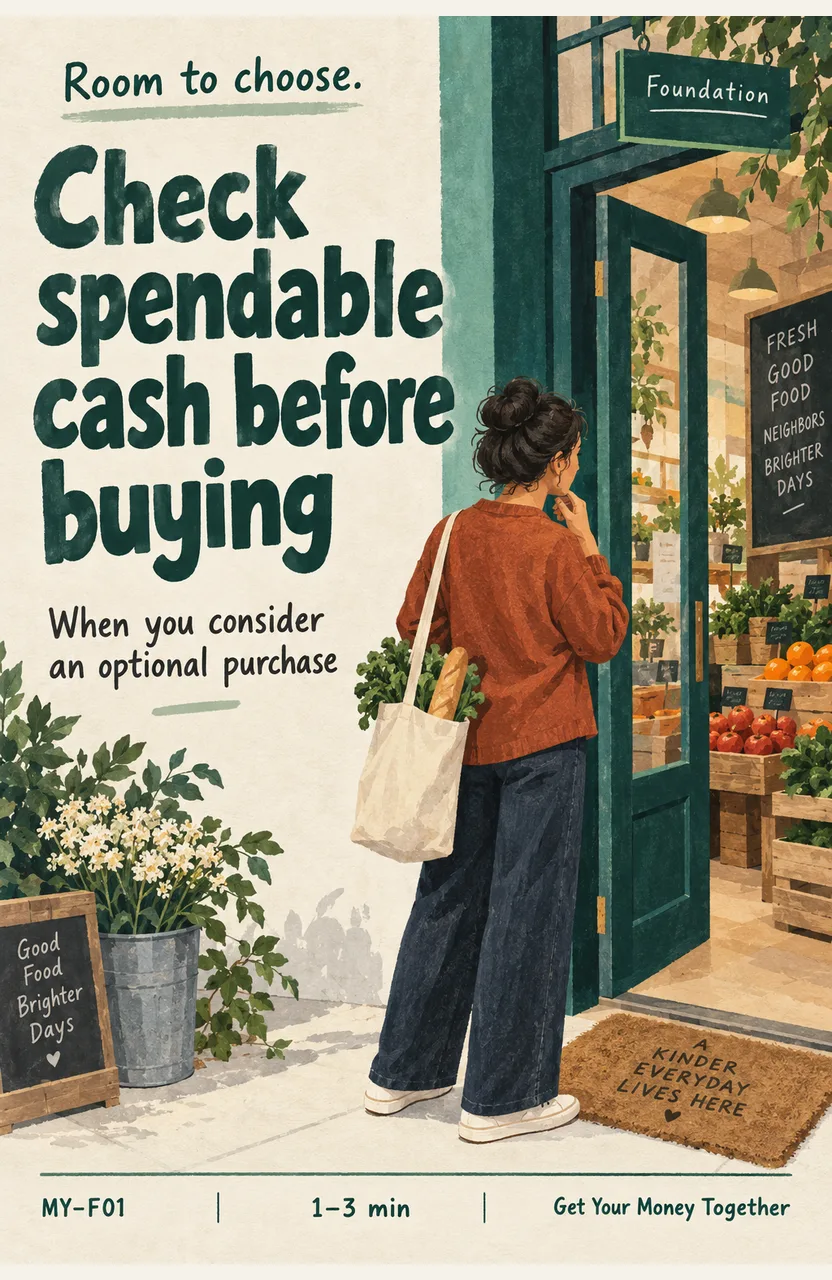
MY-F011–3 minCheck spendable cash before buying
Topic deck · 22 cards · prefix MY
Get Your Money Together
Get ahead of bills, debt and payday, one decision at a time.
You'd rather not look at the numbers, so bills land as surprises and payday disappears. You want a calmer routine that fits the income you actually have. Built around Canadian rules.
- Foundation 8
- Growth 6
- Mastery 4
- Challenge 4
10 sources citedCard evidence: 22 C. Grades describe evidence, not deck quality.
Is this deck for you?
Where it takes you.
Protect the next payday, make debt manageable, prepare for irregular costs and share money decisions with a clear route into the future. Choose a small combination of practical reminders for your situation. Consequential rules use Canada.
From
Avoiding the numbers and reacting to bills as they land
To
Checking in weekly and giving each payday a plan
What the cards have you do
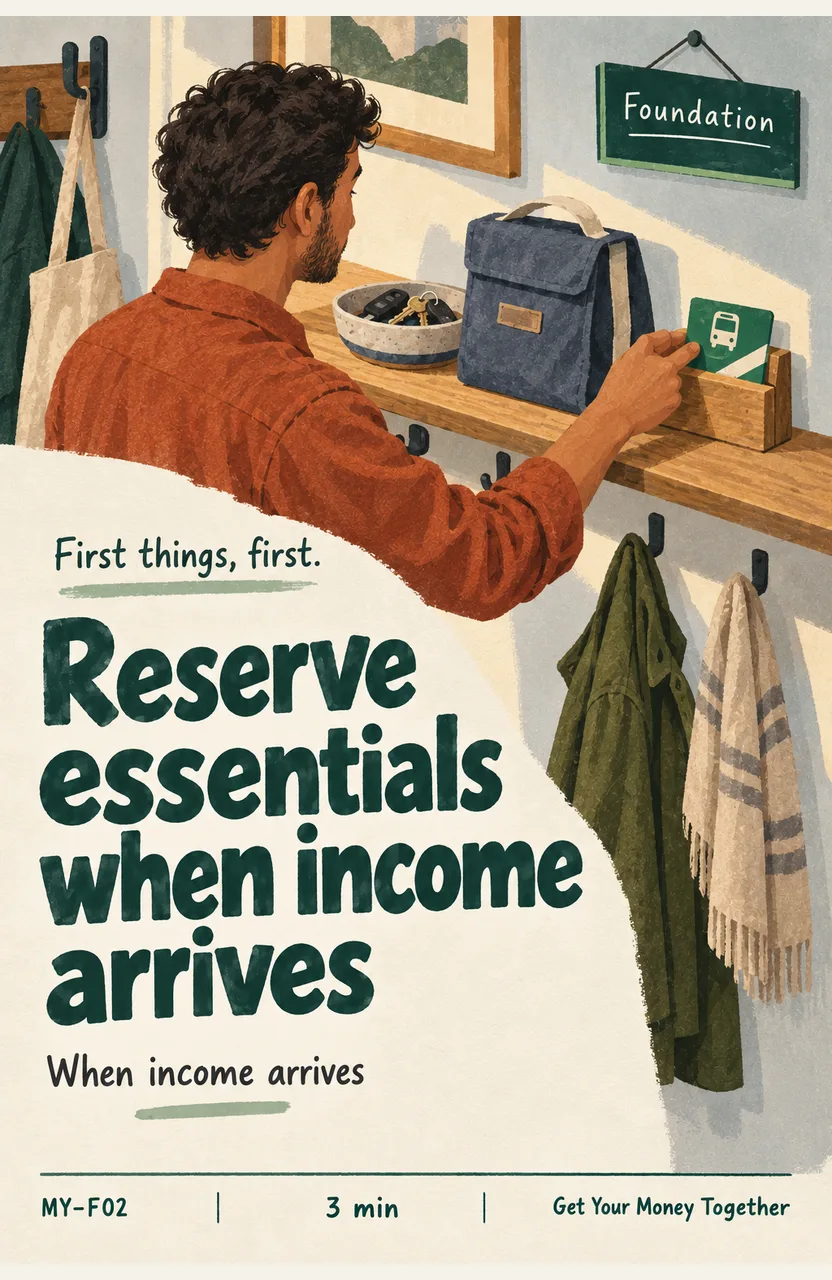
- Reserve essentials when income arrives and check spendable cash before buying, so the next bills come first.
- Set payment reminders, fund one irregular bill each payday, and call your creditor before a payment falls short.
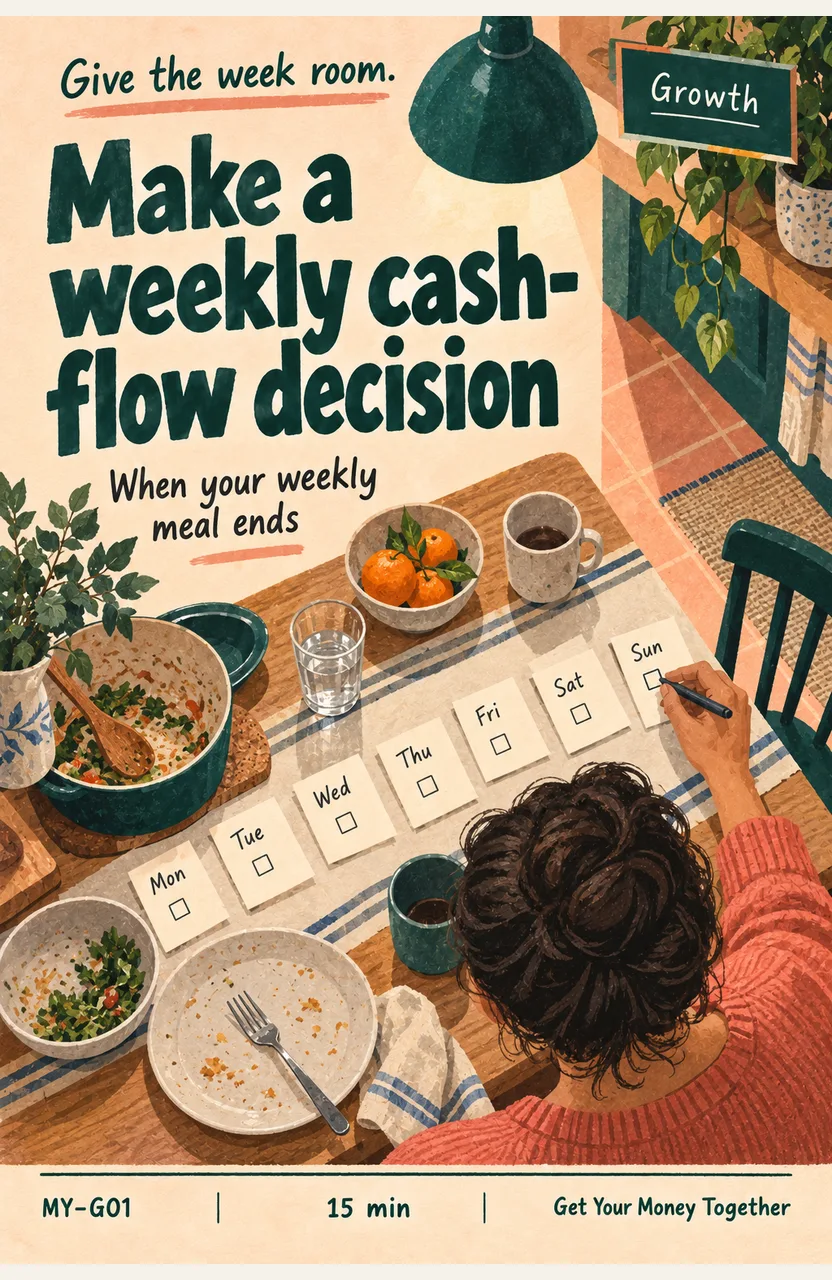
- Make one cash-flow decision each week, looking only at your balances, the next two weeks of bills and reliable pay.
- Take on a bounded mission: fund and date a full bill cycle, or choose an affordable debt route and take its first step.
The world of this deck
Four ways to use this deck.
Everyday Options: sophisticated editorial gouache and cut-paper planes, ordinary lives and financial choices, with integrated painted lettering.
Foundation
Small choices and transfers at real money cues.
Growth
Payment routes, savings pots, conversations and defaults.
Mastery
Sustained shared agreements, variable-income resilience and future decisions.
Challenge
Bounded missions that combine practices into working money systems.
Direct, humane and practical; room for choices without wealth-status promises.
The wall
All 22 cards.
Choose recurring practices that work together, or take on a special mission. Tap any card to flip it.
22 cards · tap a card to flip it
Foundation 8
Small recurring actions with little setup. Choose anchors that fit your day.
MY-F023 minReserve essentials when income arrives
MY-F033 minPay the required credit-card minimum on time
MY-F041 minLeave an unplanned purchase until tomorrow
MY-F053–5 minCompare total borrowing cost before signing
MY-F063–5 minCheck the charges on each new statement
MY-F071–3 minState your limit before shared spending
MY-F082 minTransfer an affordable amount to your buffer
Growth 6
Practices that need preparation, a recurring slot or a useful tool.
MY-G0115 minMake one cash-flow decision each week
MY-G0210 min setupSet a payment reminder for each bill
MY-G0310 min setup; 3 min repeatFund a known irregular bill each payday
MY-G0415–30 min + holdAsk your creditor before a payment falls short
MY-G0520–30 minCompare a renewal with another suitable quote
MY-G0620 min setup; 5 min repeatSend affordable extra money to one chosen debt
Mastery 4
Practices you develop over weeks through skill, planning and trade-offs.
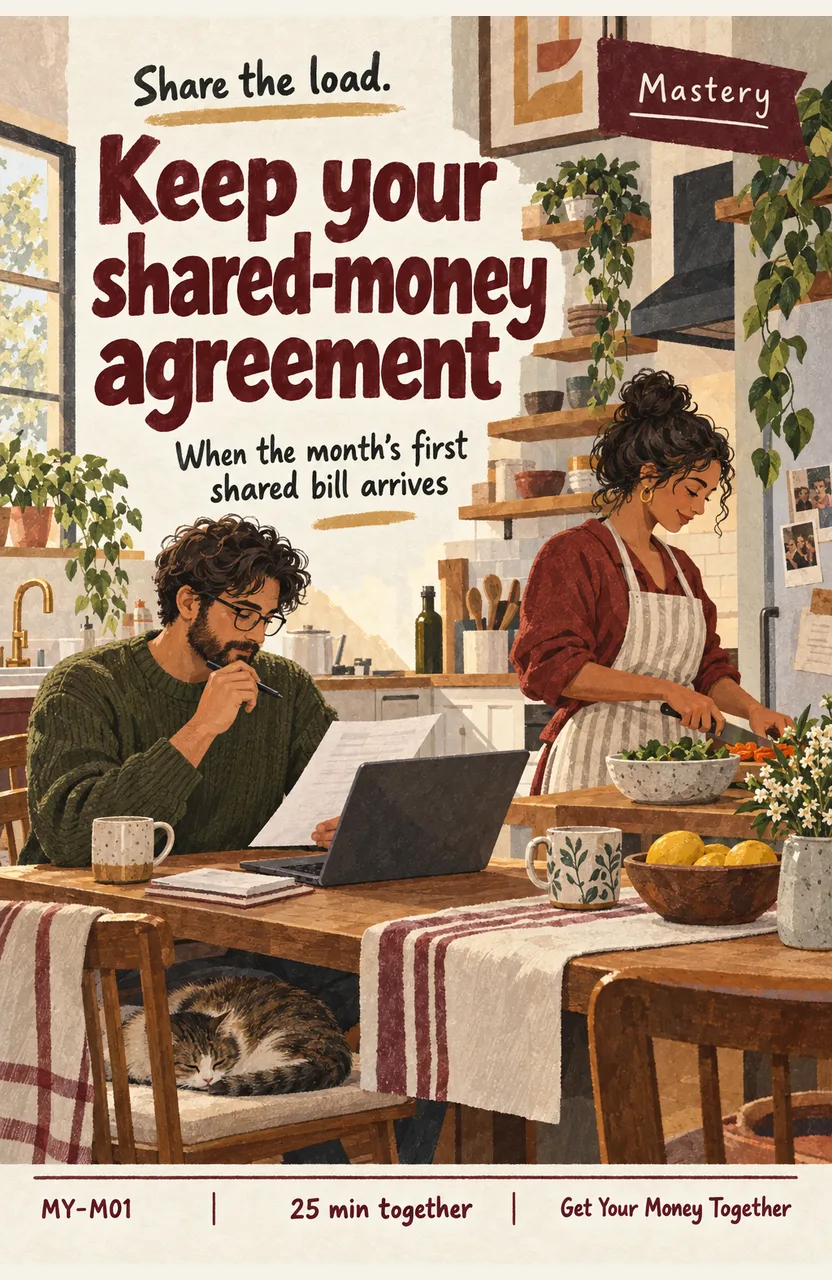
MY-M0125 min togetherKeep a shared-money agreement each month
MY-M0230–45 minMatch future contributions to your goal
MY-M0320 min monthlyReserve good-month income for lean months
MY-M0430–60 min + adviceReview protection after a life change
Challenge 4
A bounded mission with a clear finish. It can combine practices over days or weeks.
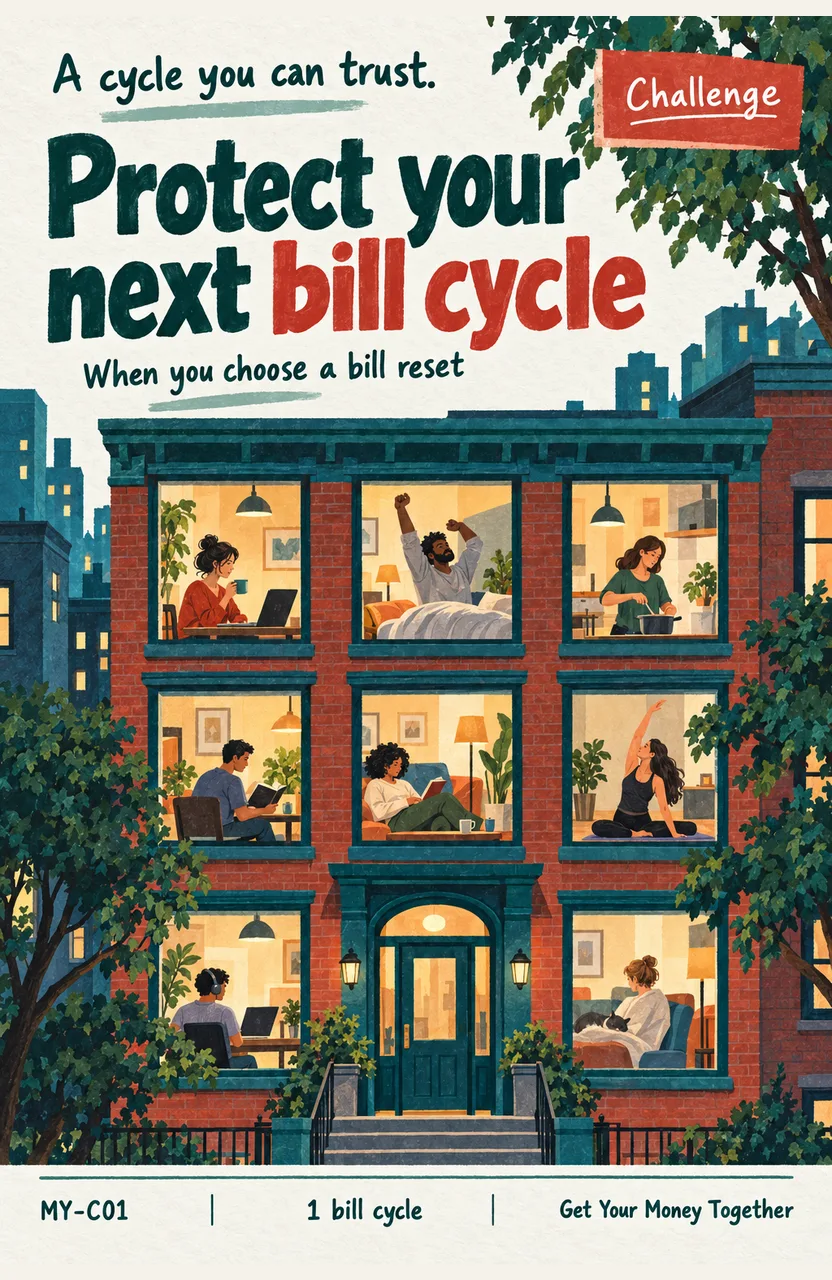
MY-C011 bill cycleProtect a full bill cycle
MY-C021 weekBuild a repayment plan
MY-C031 monthTest a shared-money agreement
MY-C042 weeksStart future savings
Start with your situation
Ways into this deck.
Find a useful first step, with related cards from across the library.
7 cards · draft
How can I prepare for irregular costs and lean months?
Start with protected essentials (F02), a spendable balance before optional buying (F01), and one known annual cost funded each payday (G03). An accessible emergency transfer (F08) has a separate purpose. With variable income, add M03 to carry affordable good-month surplus into lean months; without a reserve, allocate actual receipts rather than borrowing to imitate a salary. Allow 30–45 minutes for first setup, then around 10 minutes per income receipt and 20 minutes monthly; F01 takes 1–3 minutes at optional purchases. C01 tests a protected bill cycle. Add protection review (M04) when a move, dependent or job change alters needs.
10 cards · draft
How can I stop being surprised by bills?
Start today with spendable cash before optional buying (F01), earmark essentials when income arrives (F02), and meet the statement minimum by its due date (F03). Allow 3 minutes at payday, 1–3 minutes per optional purchase and 3 minutes per credit statement; a first inventory may take 20 minutes. If essentials exceed income, use G04’s creditor call before adding savings or extra debt payments. When required payments fit, add G06 for affordable extras to one chosen debt. G01/G02 create a short weekly decision and dependable dates; C01/C02 combine these into a protected cycle or a workable debt route. Canada is the consequential-rule jurisdiction.
11 cards · draft
How can we share money decisions and plan ahead?
Start by stating an affordable limit at the next shared purchase (F07) and making one weekly cash-flow decision (G01). Add M01 at the next shared bill to agree owners, contributions, personal freedom and a shortfall fallback. Add M02 quarterly only after essentials and required debt payments fit, choosing one future goal and a checked contribution route. Allow 15 minutes weekly, 25 minutes together monthly and 30–45 minutes quarterly; first setup or regulated advice may take longer. C03 tests the agreement for one month; C04 makes a future route executable or records a safe stop. Franklin’s BF-F08 helps name spending trade-offs. Shared work must be safe and voluntary; Canada account rules require current checks.
Get the deck
Free to download. Worth printing.
The same 22 cards either way. Download and print them at home today, or get the printed edition and have them ready to pin up.
Free · digital download
Print it at home
$0
- All 22 cards, front and back
- Print on your own printer or save as a PDF
- Each card's full page online, with its source
- No account, no email
Paid · printed edition
Keep it in print
Price set before launch
- Professionally printed, full-colour fronts and backs
- Cut, stacked and ready to pin up
- QR codes that open each card's page
- Pays for the free library
Printed edition in the works · waitlist open
What's the difference between the free deck and the printed deck?
The cards are the same. The free deck is a download: open it in the print studio and print it at home or save it as a PDF. The printed edition is professionally printed, front and back, with each card's QR code, so it's ready to pin up the day it arrives.
Can I buy a printed deck right now?
Not yet. The original boxed decks are sold out, and the printed editions of the library decks are being prepared. Join the waitlist on any deck and we'll email you once when it's ready to order.
Do I have to do a card every day?
No. You can pin one card and keep at it until it sticks, or draw a card a day for variety. Both work. The point is repeating something worthwhile at a moment you already have.
What if I miss a day?
Pick it up the next time the cue comes round. In the best-known study of habit formation, missing a single day didn't measurably set people back. Every card also says how the habit usually slips and what to do about it.
Are Challenge cards required?
No. They're bounded missions with a clear finish, from one evening to a few weeks. Do one when you want a stretch, and skip any that don't fit your life or health.
From the screen to the fridge
Put the card where the habit happens.
Every deck is free to download and print at home, then pin up: on the fridge, the mirror, beside the monitor. Or get the printed edition, ready to pin up the day it arrives.