Count the actual work.
Use a unit that fits: words drafted, sketches completed or minutes of a named practice. A ten-word fallback adds ten words. Mark it differently from a full session.
The Compounding Habit Method
Repeat worthwhile work. Get better at it. Make something happen.
Choose a cornerstone habit—the work that moves you forward. Keep that card in play. Add habits that strengthen it, learn from the results, and take on a Challenge with a real finish.
Sam wants to draw again. His sketchbook is shut and his tutorials keep piling up. Here’s how he could build a hand that gets used.
See how the cards work togetherIllustrative walkthrough · AI-created scenes · existing Back Yourself cards.

The pyramid / One connected practice
Foundation means load-bearing. It can be a substantial writing session, a regular walk or the care that keeps your plants alive.
Growth improves the conditions for doing that work. Mastery uses what you learn from one attempt to change the next, then checks whether the change helped. A Challenge puts the practice to use. Add a card when you can name what it contributes and where it fits in your week.
You choose a manageable hand. There is no required card count, tier timetable or number of ticks to unlock the next level.
Repeat the cornerstone that moves you towards your goal.
Prepare, remove friction or support recovery.
Inspect. Correct. Apply next time. Check again.
Complete a mission with a finish you can recognise.
Foundation / Do the work
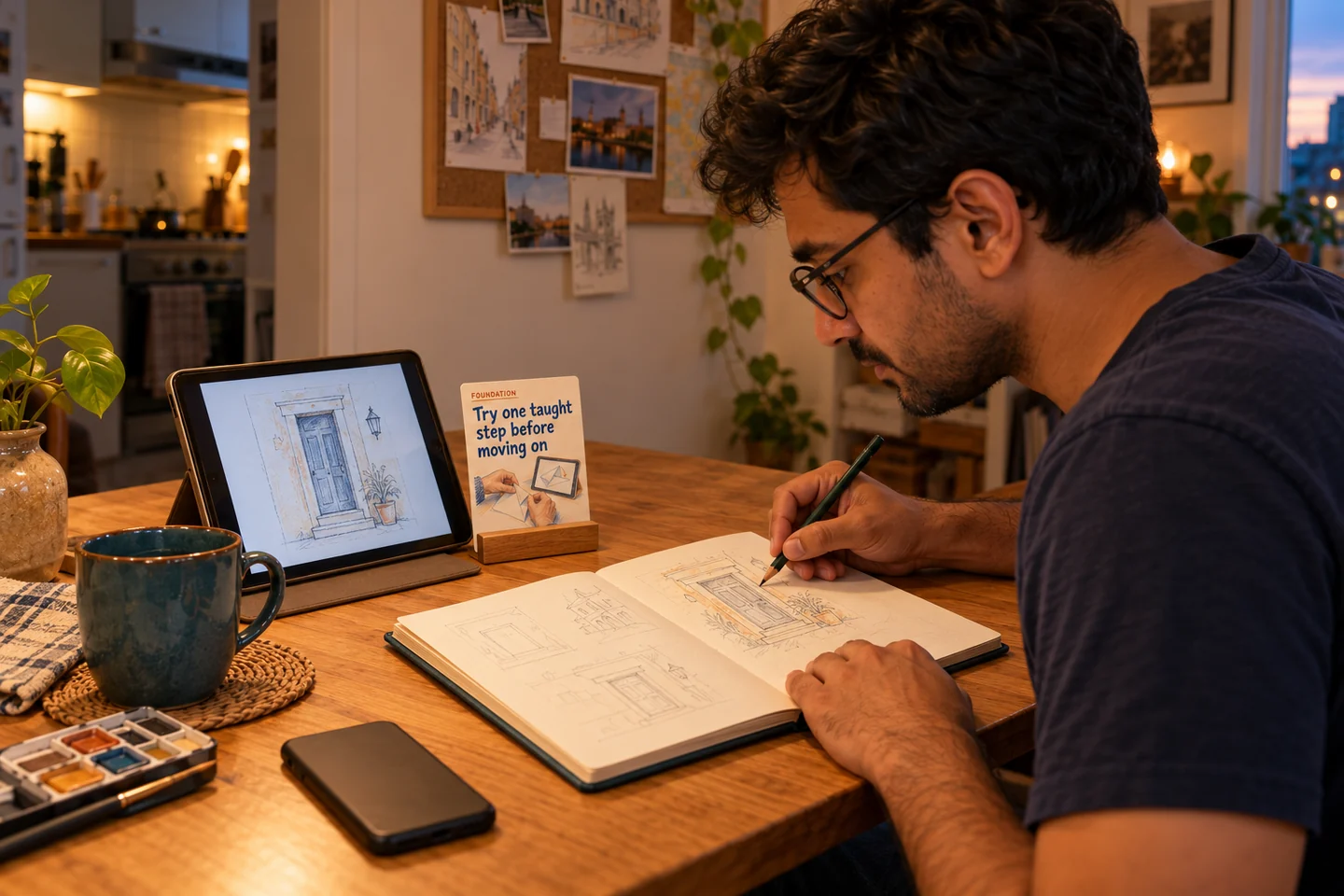
Sam chooses one card and props it beside the lesson. When the tutor draws a doorframe, he pauses the video and draws his own. He checks it against the example, corrects a line and carries on.
This is the work he wants to repeat: draw, compare and correct. The card stays beside the tablet for the next lesson. A saved tutorial is becoming something he can do.
Your move
Choose the worthwhile work at the centre of your goal. Give it a useful, sustainable dose and keep returning to it. Your Foundation carries the practice.
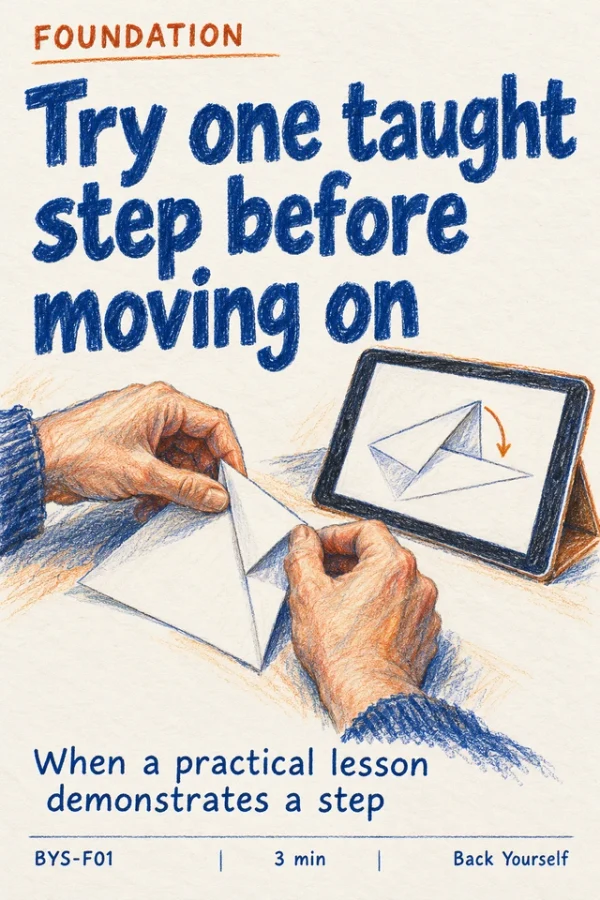 Foundation · 3 minTry one taught step before moving onOpen the full card ↗
His hand now
One action to practise.
Pause the lesson and try the step on its practice material. Compare your result with the example. Reopen the instructions where you get stuck, correct the attempt, then continue.
Pashler et al. (2007), Organizing Instruction and Study to Improve Student Learning, recommendation 2. Read the source ↗ — worked examples alternating with supported practice. Tutorial cue and three-minute start are editorial adaptations; evidence is mainly from structured instructional tasks.
Growth / Strengthen the practice
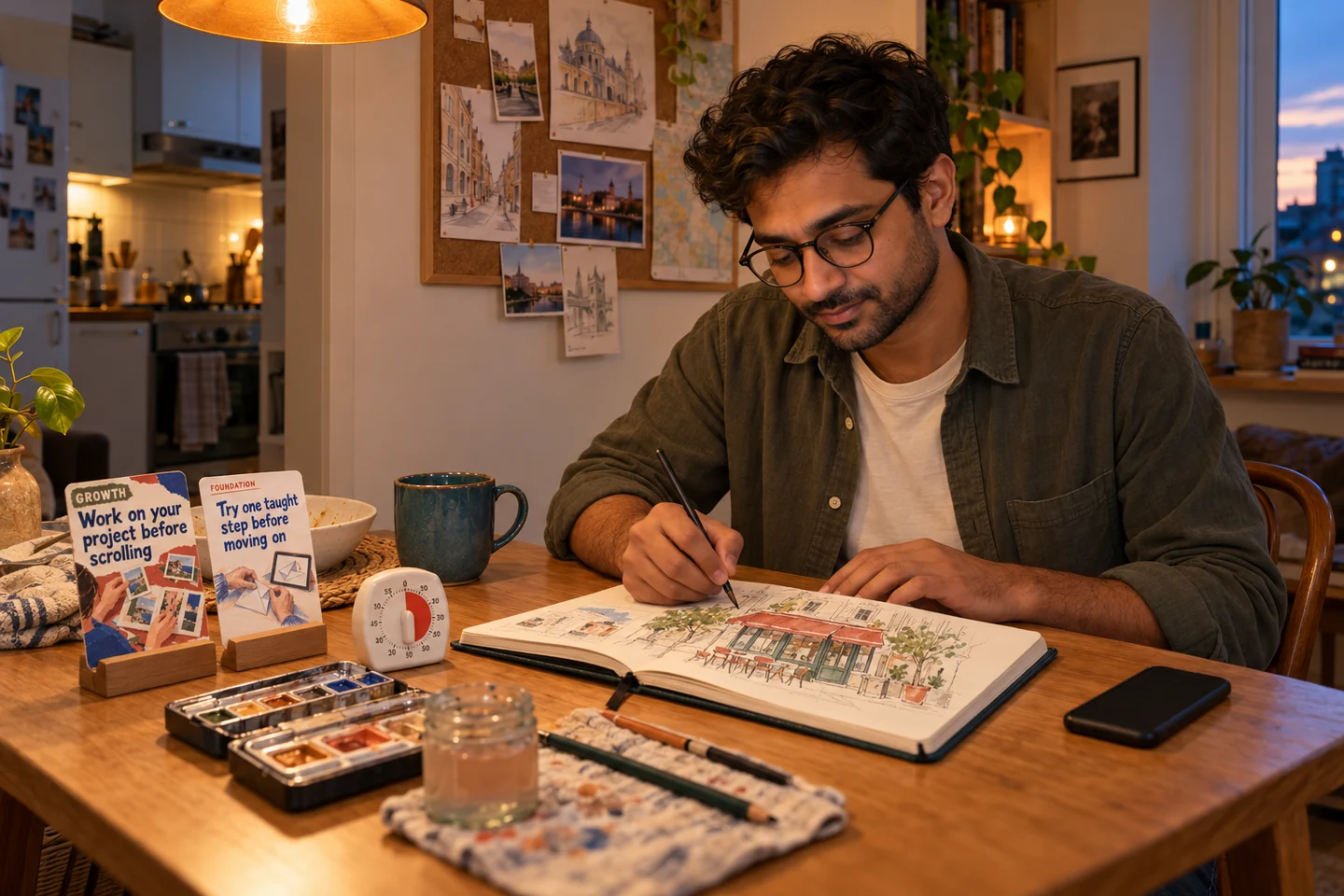
One good evening is a start. Sam wants a place for the next one, so he adds a second card: work on the project before scrolling. He chooses three evenings and gives the same piece 15 minutes after dinner.
The first card stays in his hand. The new card solves a specific problem: starting before the evening disappears. Both serve the same drawing practice.
Your move
Attach your practice to something that already happens. Add a second card when it solves a real problem in keeping the first one going.
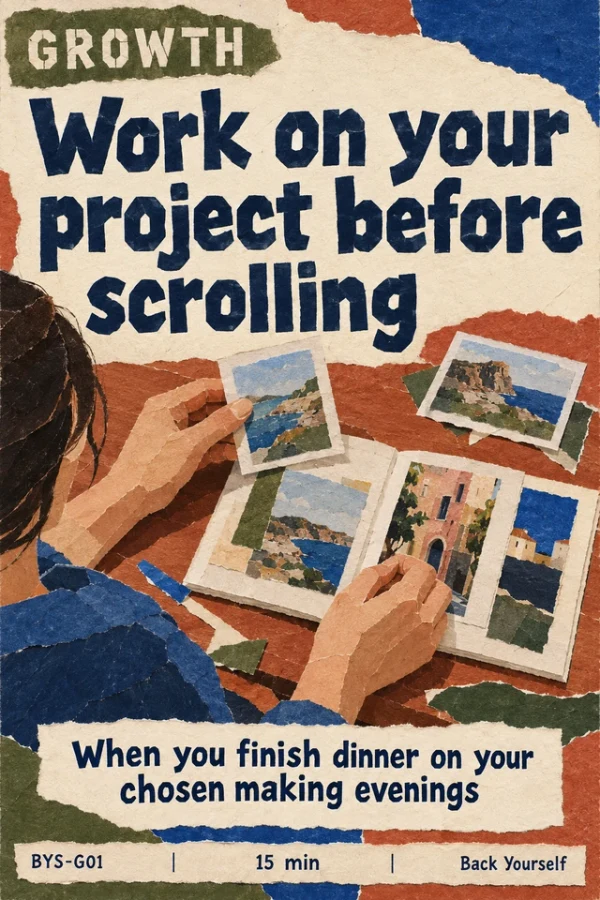 Growth · 15 minWork on your project before scrollingOpen the full card ↗
His hand now
A regular slot + an action to practise.
Choose three evenings this week. After dinner, work directly on one personal project for 15 minutes before opening a feed. Resume the same piece each time until it is finished.
A place to start · Draft the next paragraph, edit the next photograph, or build the next working calculation.
HabitSets editorial making routine, informed by Austin Kleon, Show Your Work!, author overview. Read the source ↗ — ongoing creative process is documented practice; before-feed ordering, three evenings and 15 minutes are editorial choices, not a tested dose.
Mastery / Refine through use
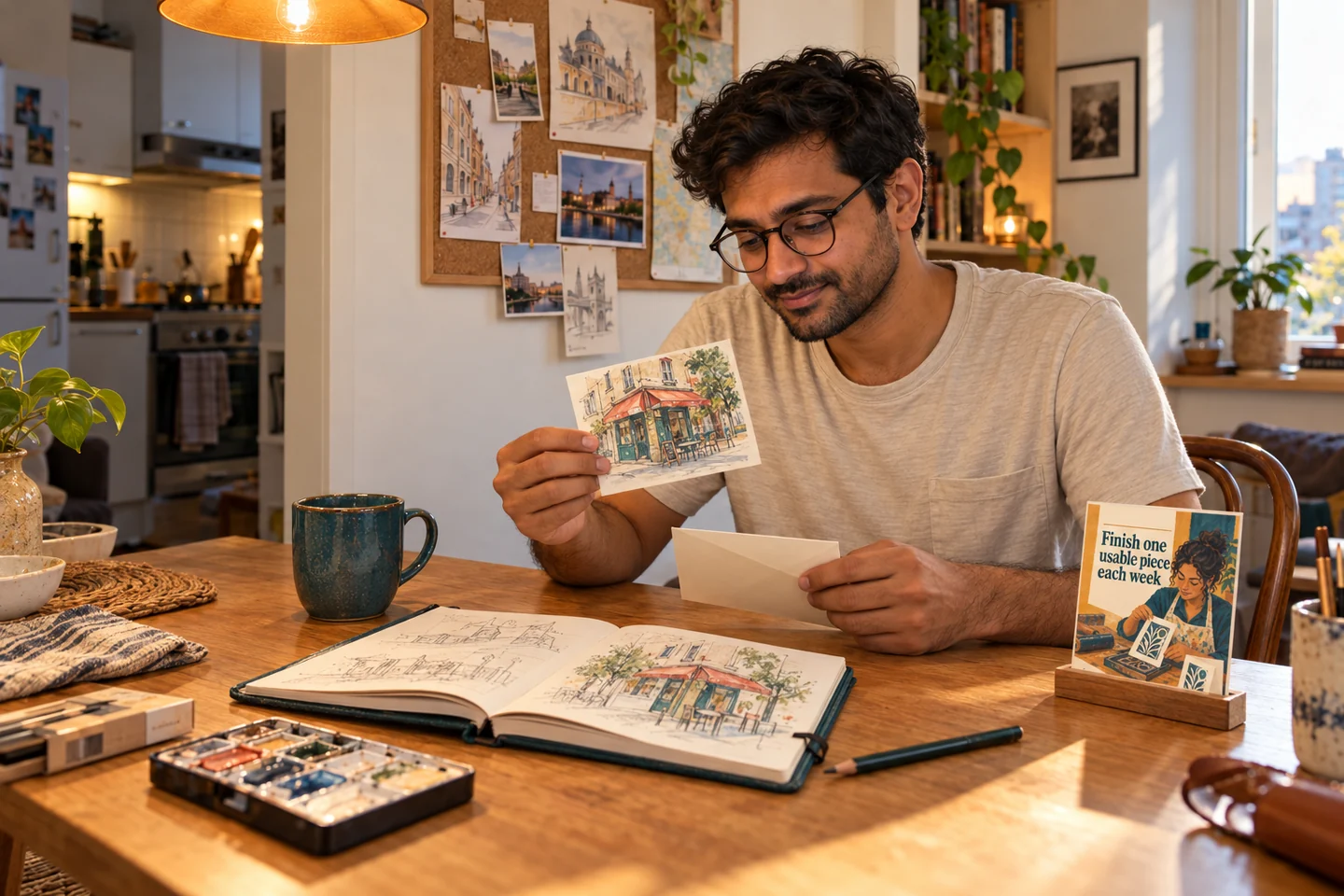
As he returns to drawing, Sam notices another familiar pattern: lots of studies, nothing quite finished. He adds a weekly finish session, using one of his making slots and allowing the time the card asks for.
He chooses a postcard of the café around the corner. Before sending it, he checks whether the doorway reads clearly, corrects its angle and finishes the card. At his next drawing session, he checks that angle earlier.
Your move
Inspect something your practice produced. Make one specific correction, then carry that lesson into the next repetition. Give feedback a job.
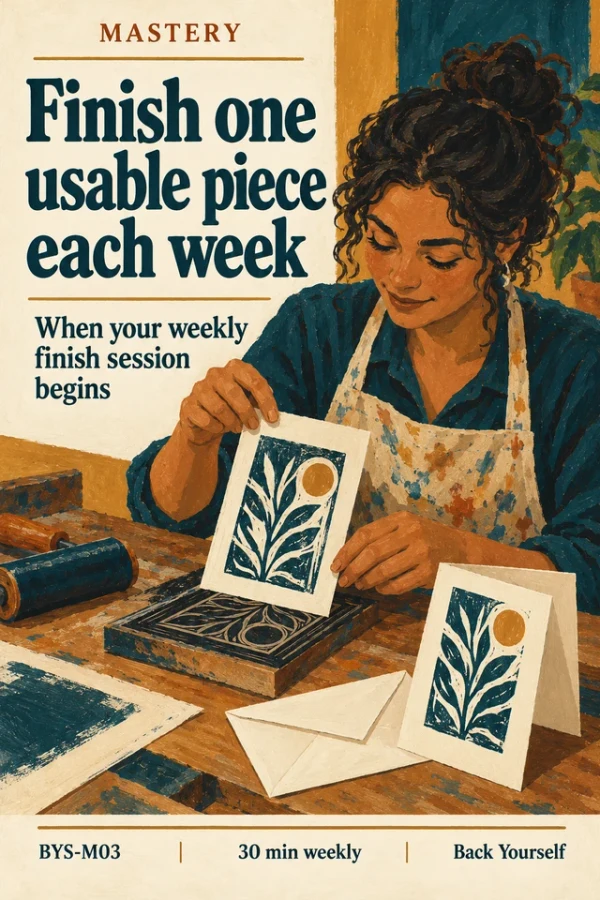 Mastery · 30 min weeklyFinish one usable piece each weekOpen the full card ↗
His hand now
The same practice + a weekly finish and correction.
Choose a piece small enough to complete this week. Finish it, check that it does its intended job, then use it or send it to its intended recipient. If it is too large, cut its scope to something still useful.
A real finish · Complete a shared-expense sheet and use it for an actual bill, or send a short explanation to the person who needs it.
Schwaber & Sutherland (2020), The Scrum Guide, usable increments. Read the source ↗ Austin Kleon, Show Your Work!, author overview. Read the source ↗ — adjacent documented methods; weekly completion is an editorial commitment. Reuses FS-M03’s usable-piece principle; no productivity or audience-success promise.
Challenge / Put it to use
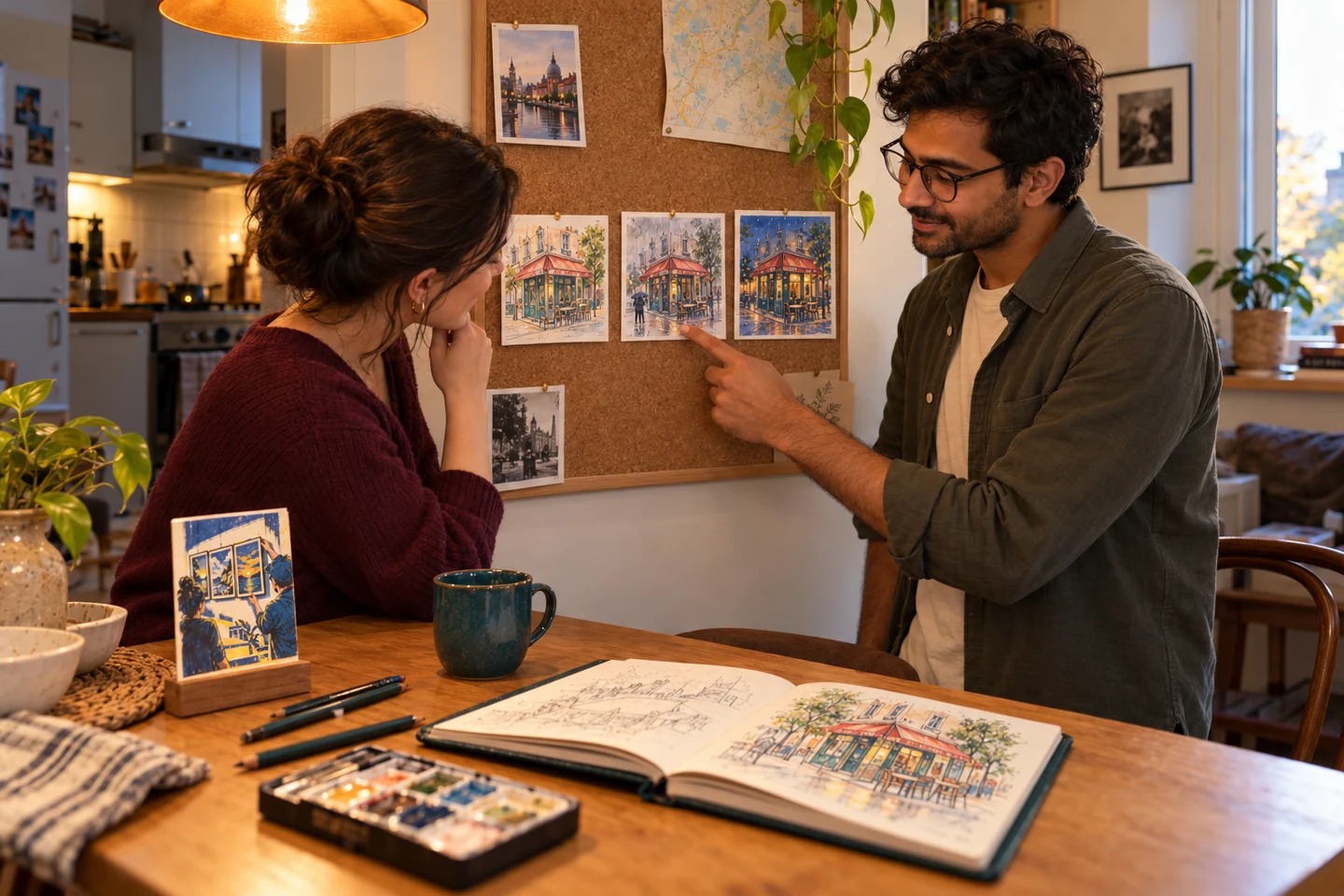
Sam chooses a Challenge: make three connected pieces. He sets its window and draws the same café in morning light, afternoon rain and evening blue. His existing making sessions become time for the series.
He shows the sequence to a friend, asks what connects it, makes a revision and titles the finished set. The three finished pieces mark the Challenge’s completion. His drawing cards stay in play.
Your move
Choose a mission you’d like to complete. Use the practices already in your hand to work towards its finish line.
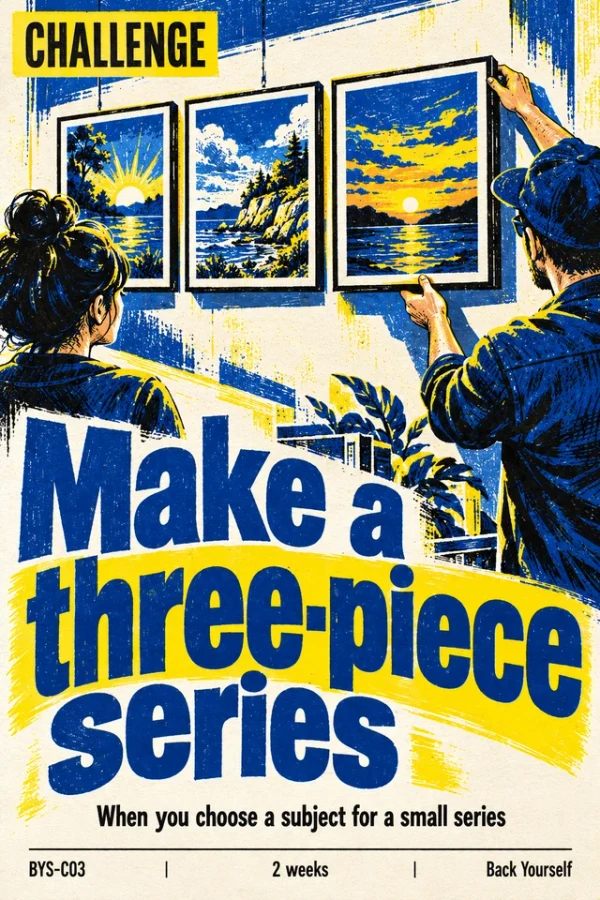 Challenge · 2 weeksMake a three-piece seriesOpen the full card ↗
His hand now
His active practices + one mission with a finish.
Make three connected pieces that explore one subject, then edit and present them as a finished series.
International Center of Photography, Karen Marshall faculty interview (2025), editing and sequencing. Read the source ↗ — official interview inspected. Three-piece/mixed-medium/two-week mission is editorial; related BI-M02 and PH-C03.
This is what the cards build together
Sam keeps practising. A reliable start helps him return. Checking a finished piece teaches him what to change next time. The Challenge gives that work a shared destination.
This is the compounding idea: earlier work can make later work better. A correction becomes a skill he can use again. The useful cards stay in his hand.
Keep the core work in the week. Supporting habits should help it happen or improve it; a Challenge can use those same sessions.
Make the work visible
Keep a simple tally on paper. Decide what one completed repetition means, then mark the work you actually did.
An illustrative writing example. The arithmetic counts drafted words; the quality of the writing still needs reading, revision and feedback.
Use a unit that fits: words drafted, sketches completed or minutes of a named practice. A ten-word fallback adds ten words. Mark it differently from a full session.
Read a finished piece. Compare two drawings. Ask where a reader got lost. Use one specific finding in your next attempt.
A missed day leaves earlier work intact. Return at the next planned moment. For care and maintenance, look for a healthy plant or a working routine; doing more is not always better.
Now make the first move yours
Choose something you want to do, improve or maintain. Give the core practice a place in your ordinary week.
Pick the work that moves you towards your destination. Set a sustainable amount and read the instructions before you begin.
Put the card where its cue happens. Repeat the practice, tally what you do and use its smaller start when needed.
Each week, look at what happened. Keep helpful cards, change one thing that got in the way, and choose a Challenge when its requirements fit.
The free starter contains three Foundation cards, including Sam’s first card. Or explore the separate free printable library.
Before you begin
Keep the cornerstone active and add cards for a useful reason. Foundation does the core work; Growth strengthens it; Mastery refines it; Challenges put it to use. You can build a useful practice without using every tier.
Add one when it addresses a specific problem and fits your week. If you struggle to start, choose support for starting. If the work repeats the same mistake, choose feedback that helps you correct it. Increasing the dose of an existing practice does not need a new card.
Build a hand, keep playing its actions and make completed work visible with a paper tally. Choose a Challenge with a result you want; when finished, keep a record of it while your useful habits stay active. A random draw can introduce a new card to try, but your main hand stays consistent.
It shows the work you completed. Improvement needs a separate check: a clearer piece of writing, a drawing you can assess, or a useful result. Feedback gives you something specific to change in later repetitions. Some practices protect what you already have, rather than create ever-increasing output.
Yes. Each boxed collection has a free starter set. The digital library also has separate free decks to read and print. Use the same approach: one useful card, a real moment to act, and another chance to return.