Start with a question

Habits for the moment you’re in.

Topic pages start from what people actually search for, then collect the cards that help, beginning with three easy ones.

12 cards · draft

What are age-appropriate chores for kids?

Choose chores by what your child can safely do with support. Toddlers can carry a napkin or help wipe plain water; preschoolers can sort laundry; older children can learn more steps beside an adult. Start small and advance by demonstrated skill.
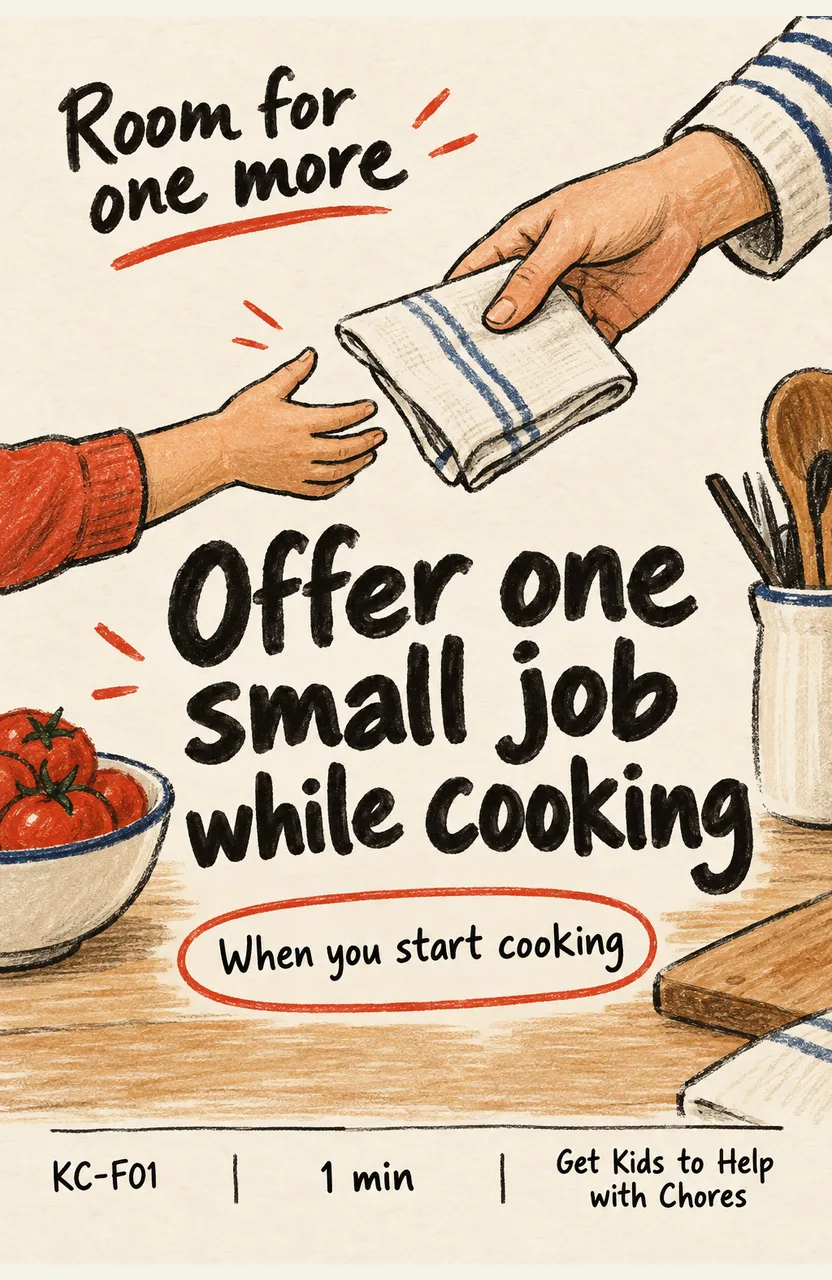
Offer One Small Job While Cooking When: you start preparing a meal
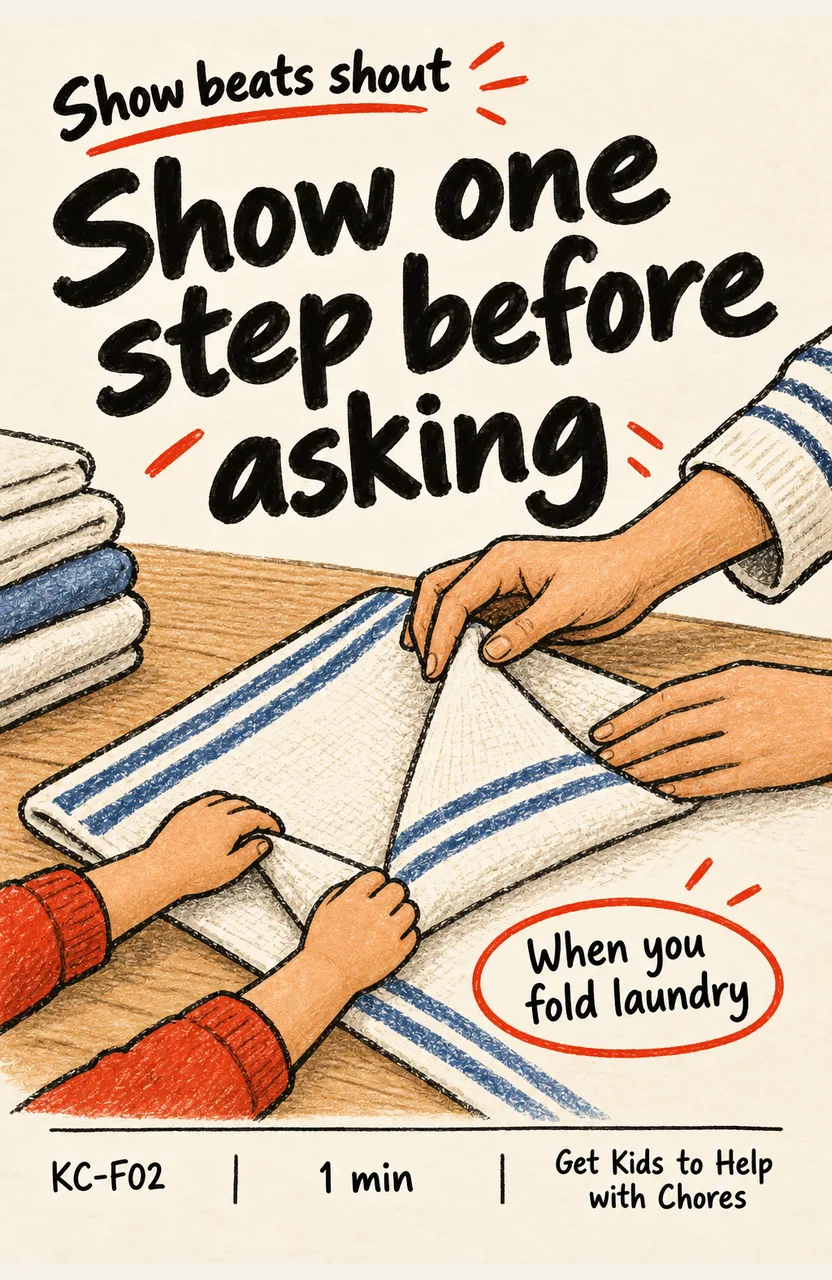
Show One Step Before Asking for Help When: you begin folding clean laundry
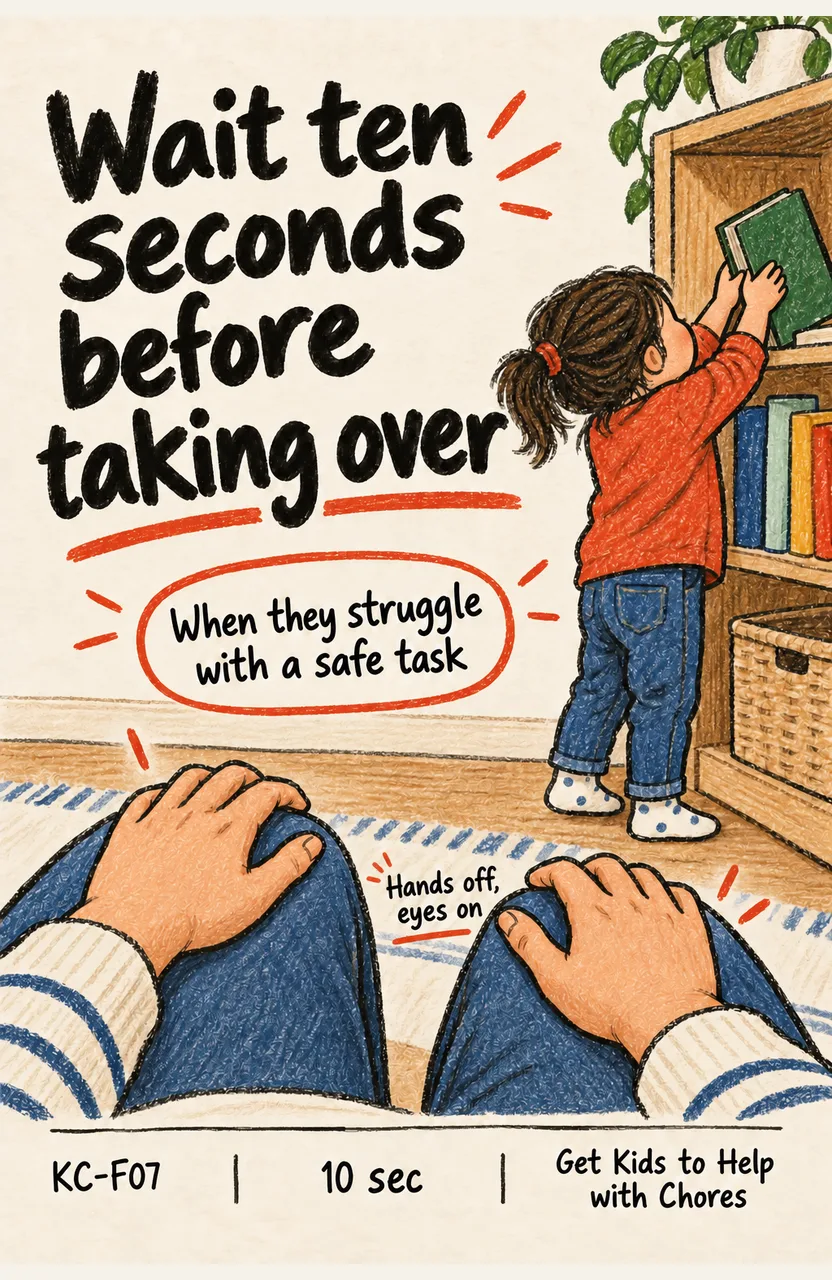
Wait Ten Seconds Before Taking Over When: your child struggles with a safe task
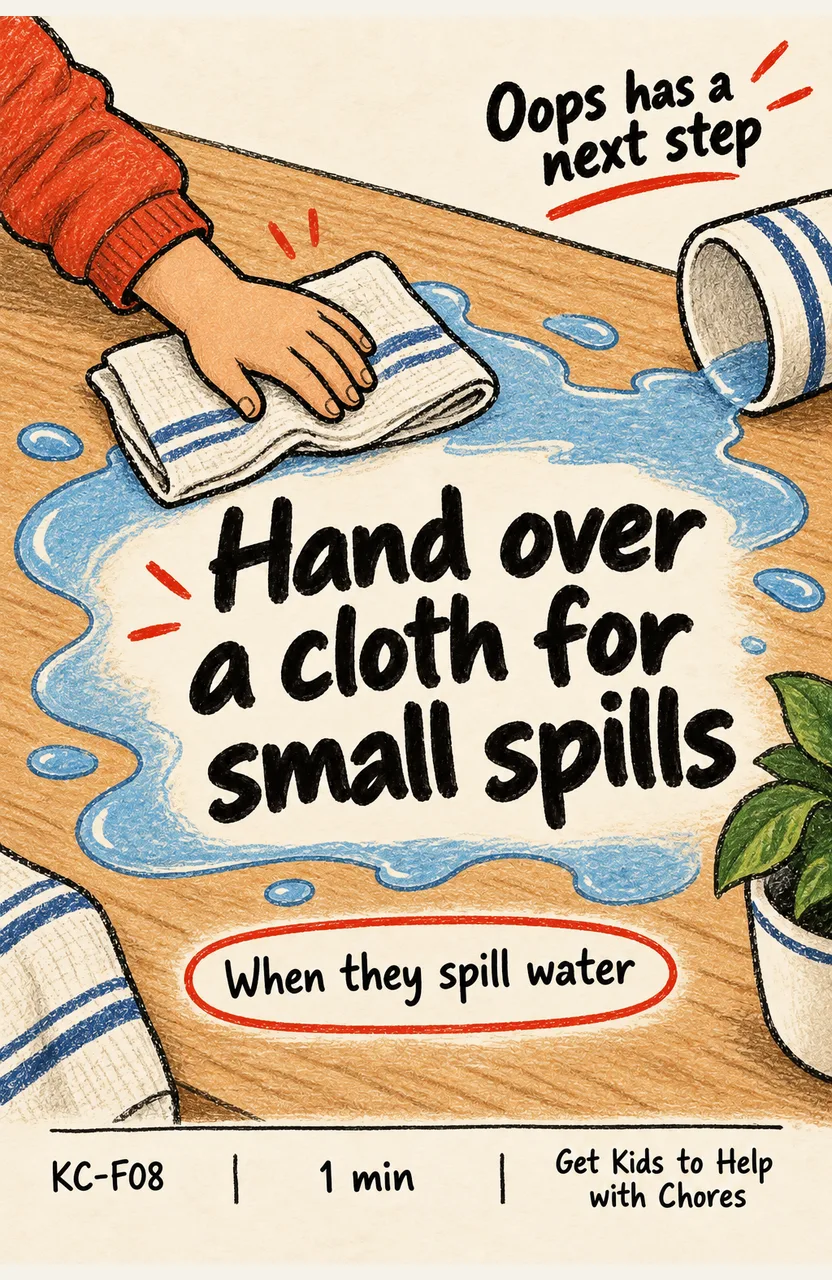
Hand Over a Cloth for a Small Spill When: your child spills water at the table
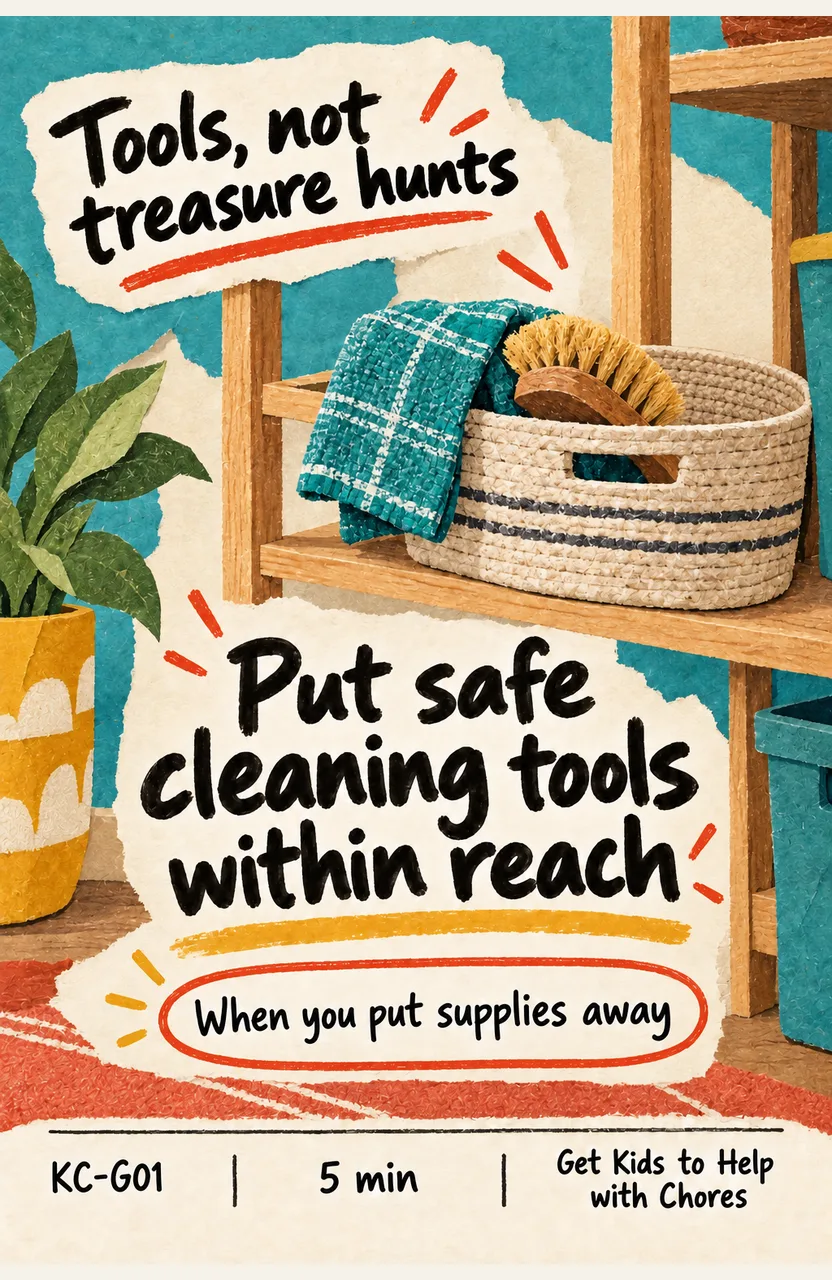
Put Safe Cleaning Tools Within Reach When: you put cleaning supplies away
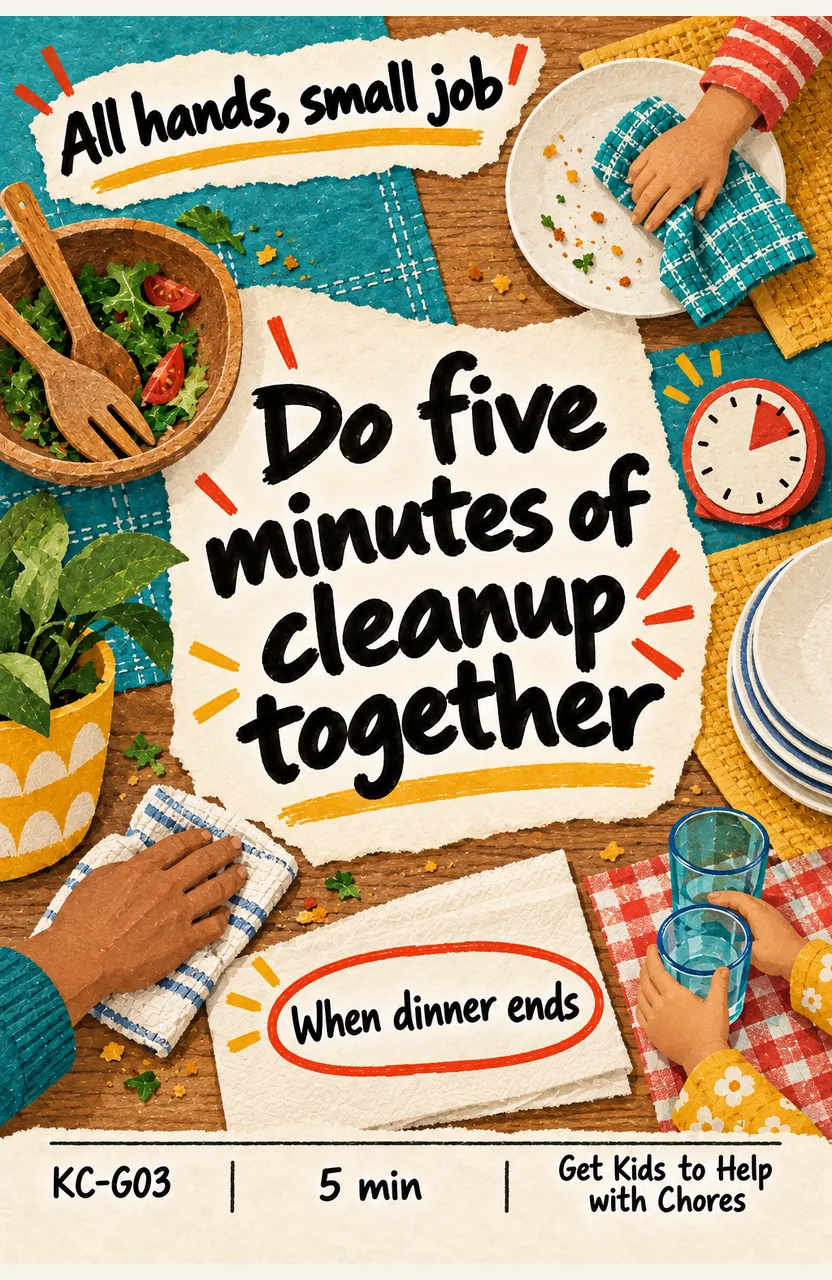
Do Five Minutes of Cleanup Together After Dinner When: you finish the evening meal

9 cards · draft

How can I build stamina without a gym?

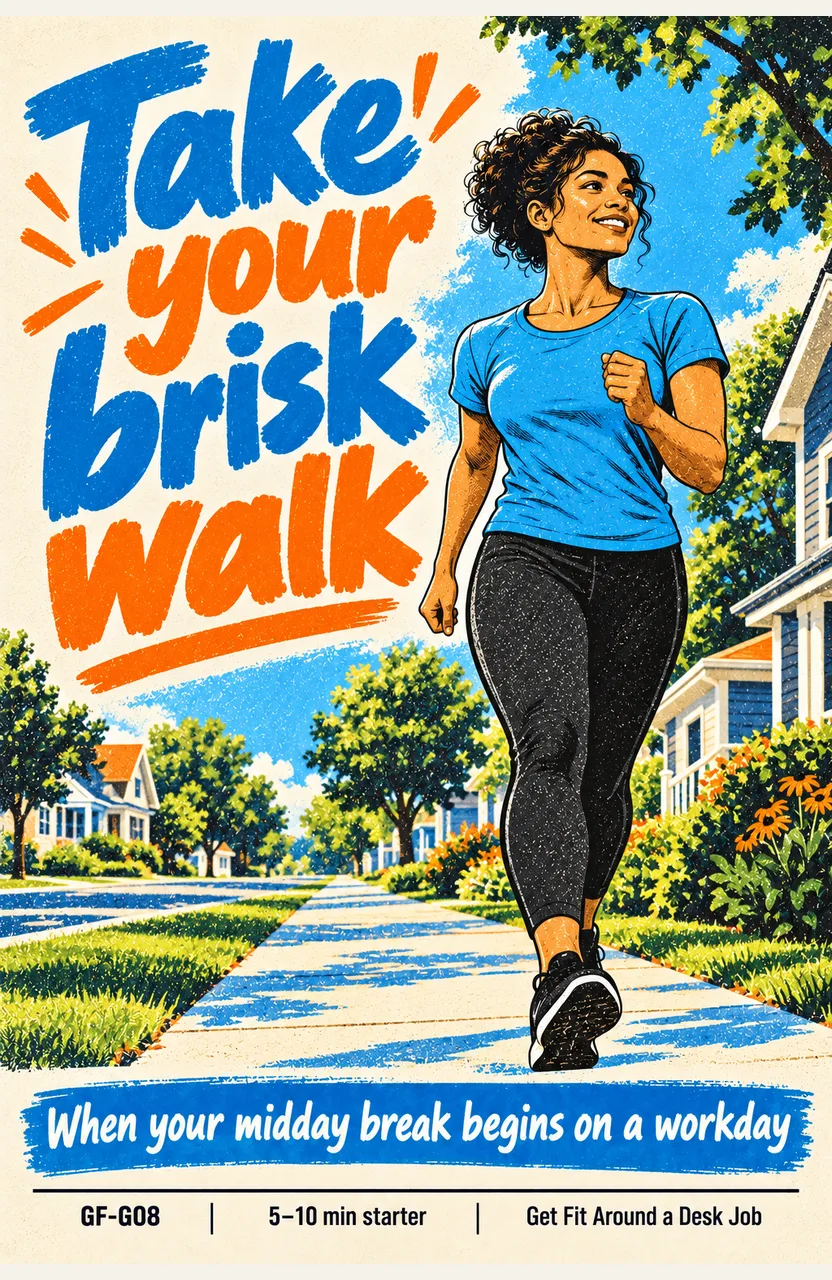
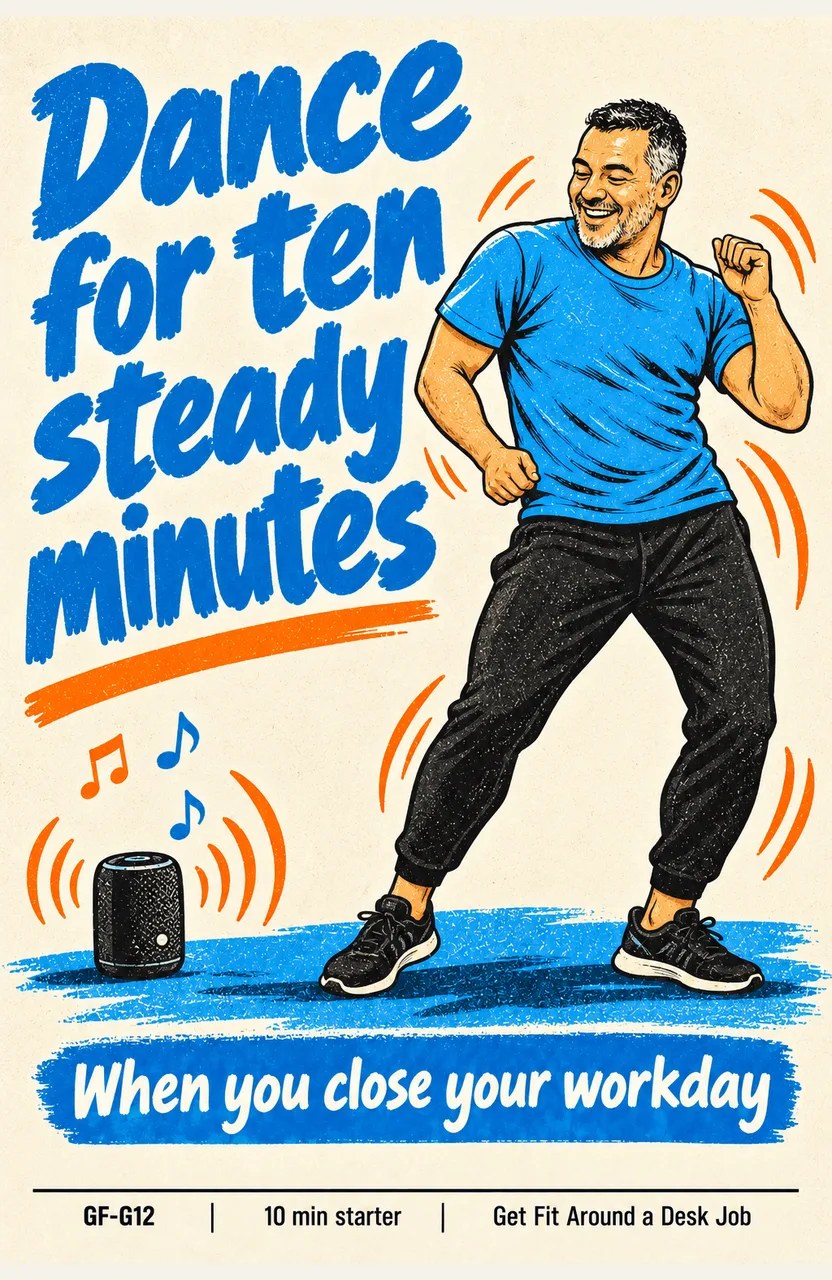
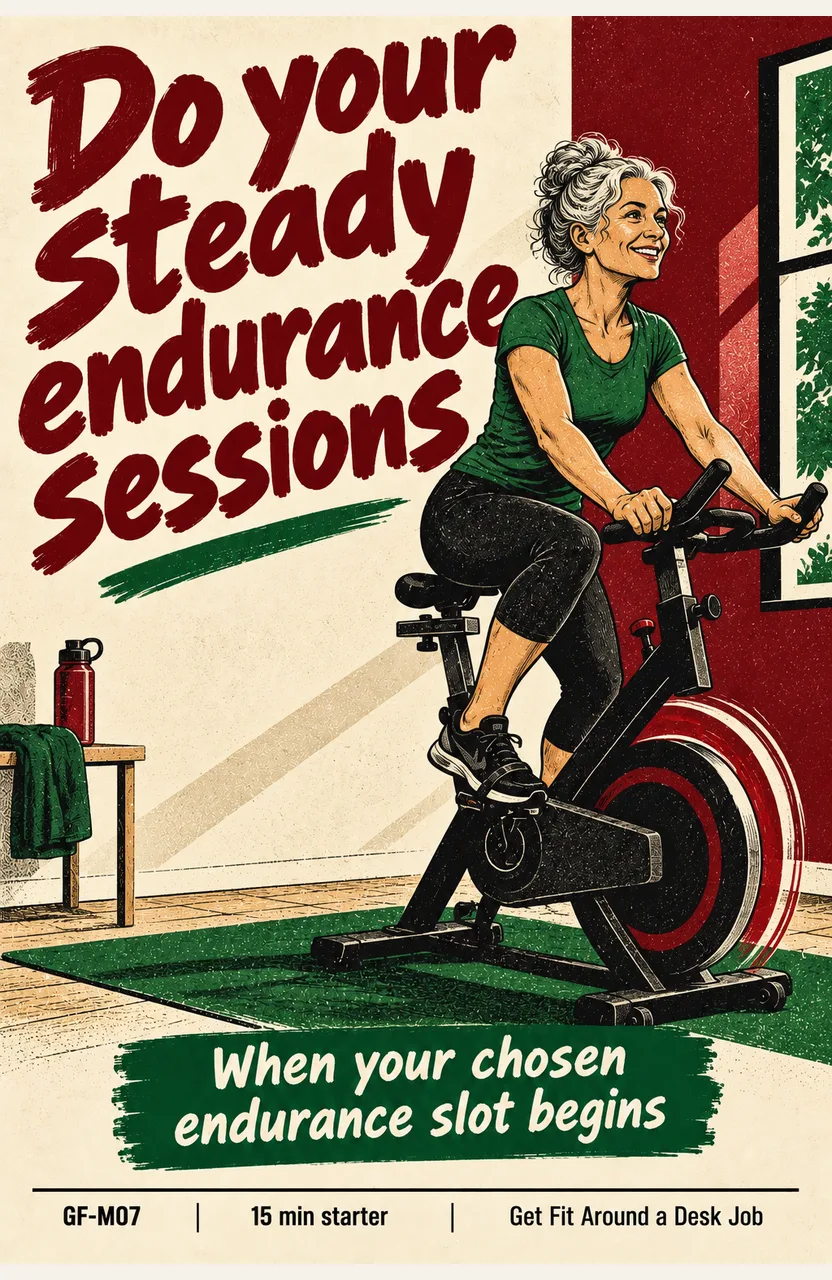
Begin with GF-F09 marching at a midday break, or choose GF-G08 brisk walking or GF-G12 dancing. GF-M07 supplies two repeatable steady-cardio appointments; add time gradually from a comfortable start. GF-C07 helps you try activities and keep one you enjoy, while GF-C08 gives your movement a local destination. Short breaks help you move during desk days; a two-minute break alone is not a complete conditioning program. Pair aerobic practice with two strength days. Related DB walking cards remain available as alternatives.
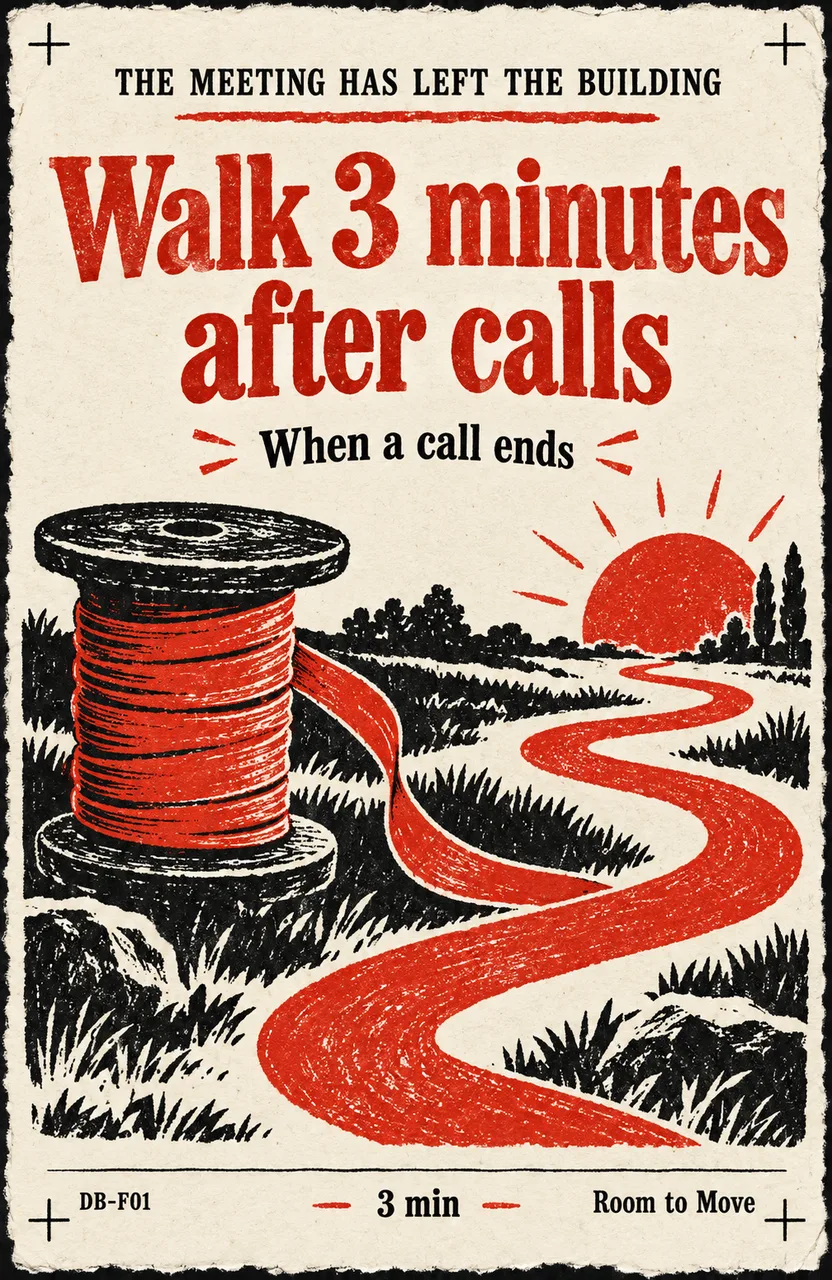
Walk for 3 minutes after calls When: a video call ends
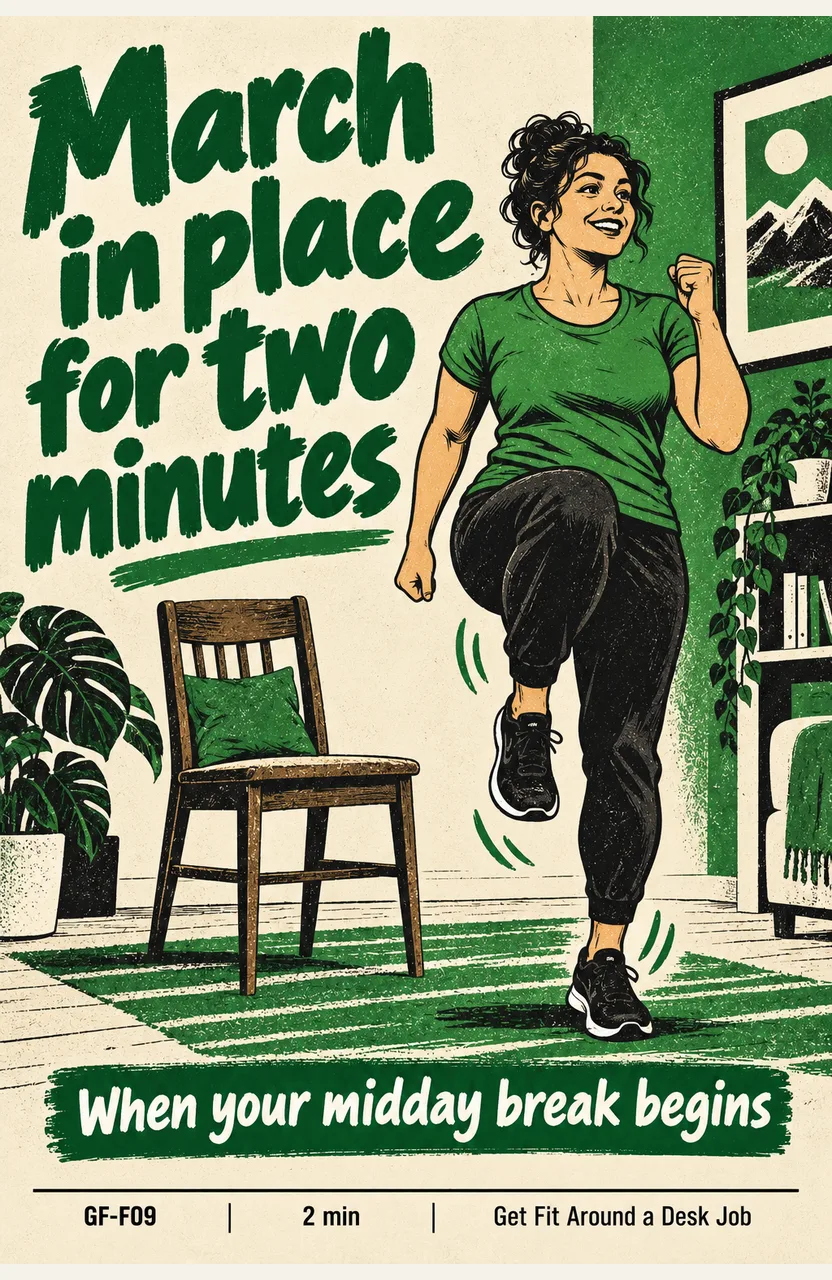
March in place for two minutes When: your midday break begins
Take your brisk walk When: your midday break begins on a workday
Dance for ten steady minutes When: you close your workday
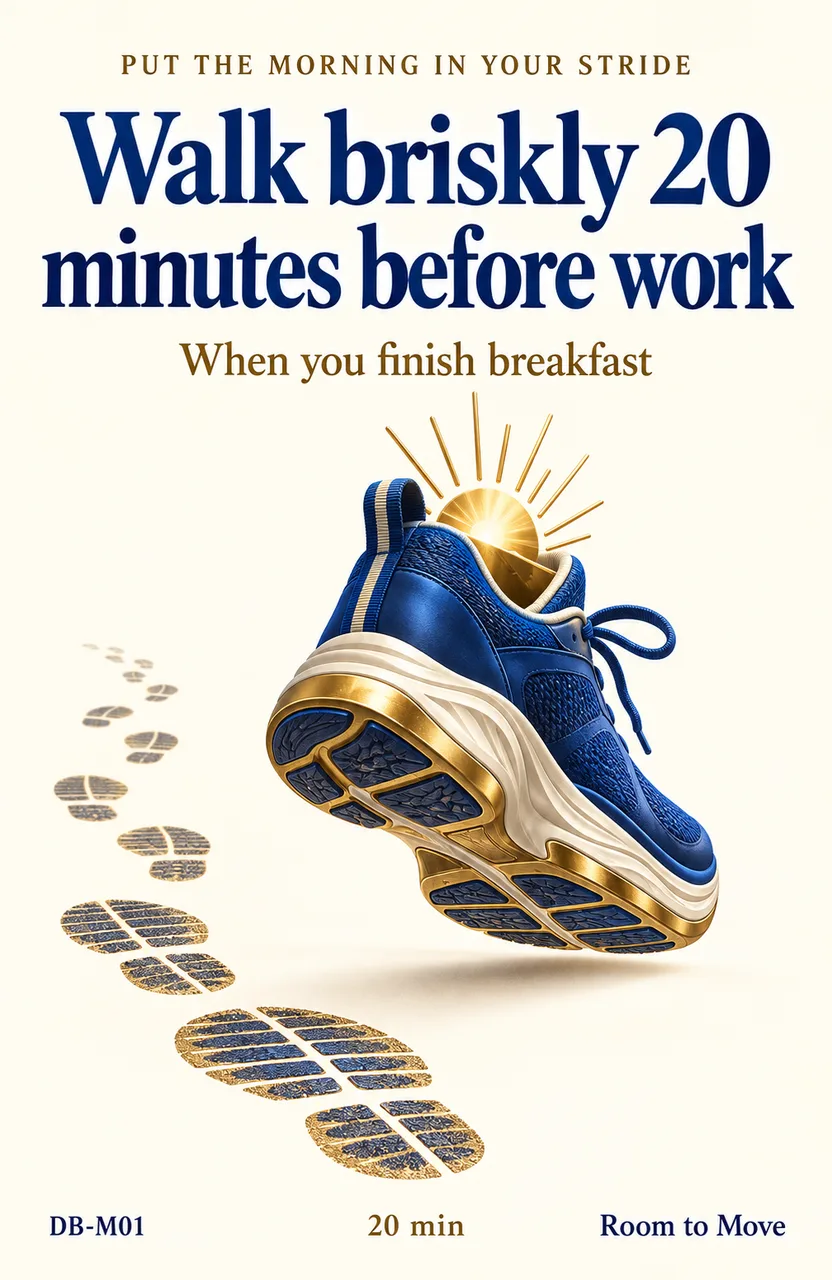
Walk briskly for 20 minutes before work When: you finish breakfast on a workday
Do your steady endurance sessions When: your chosen endurance slot begins

13 cards · draft

How can I switch off when the workday ends?

Choose where your workday keeps reopening: unfinished tasks, messages, a late meeting or an evening with no activity of your own. Thirteen cards offer small stopping cues and harder boundary practices. A restart plan has direct research support; other exact recipes are practical experiments shaped by your role and team agreements.
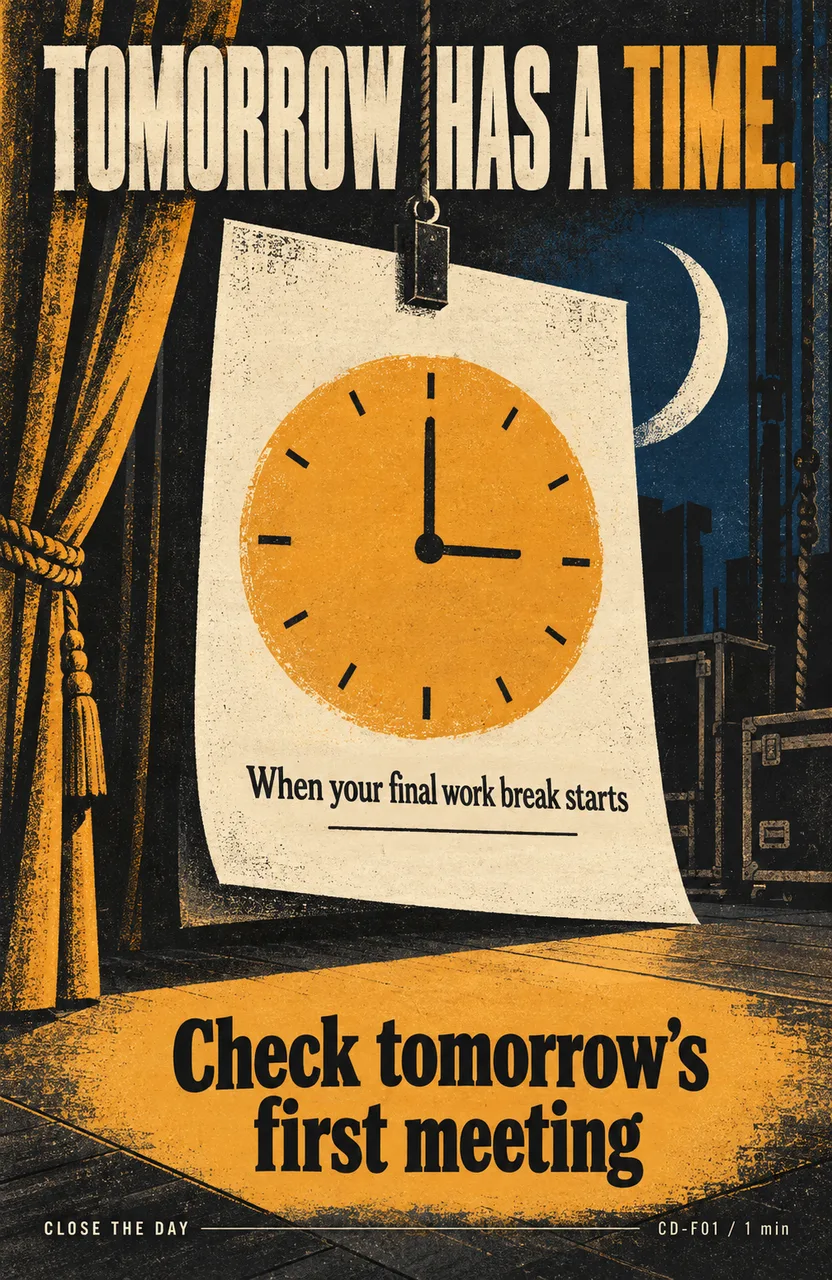
Check tomorrow's first meeting before stopping work When: your final scheduled break starts
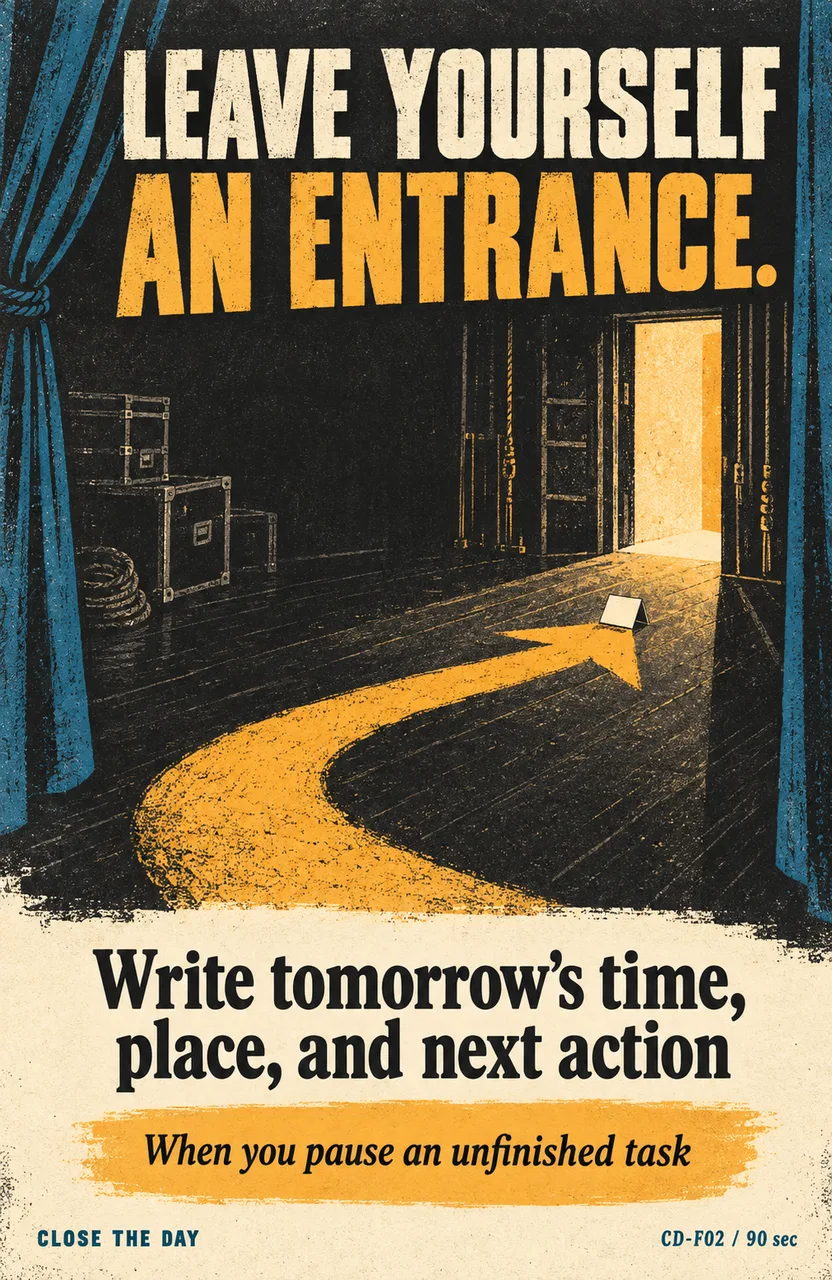
Write a restart plan before pausing work When: you pause an unfinished task for the day
Save your work, then close work windows When: you are about to lock your screen
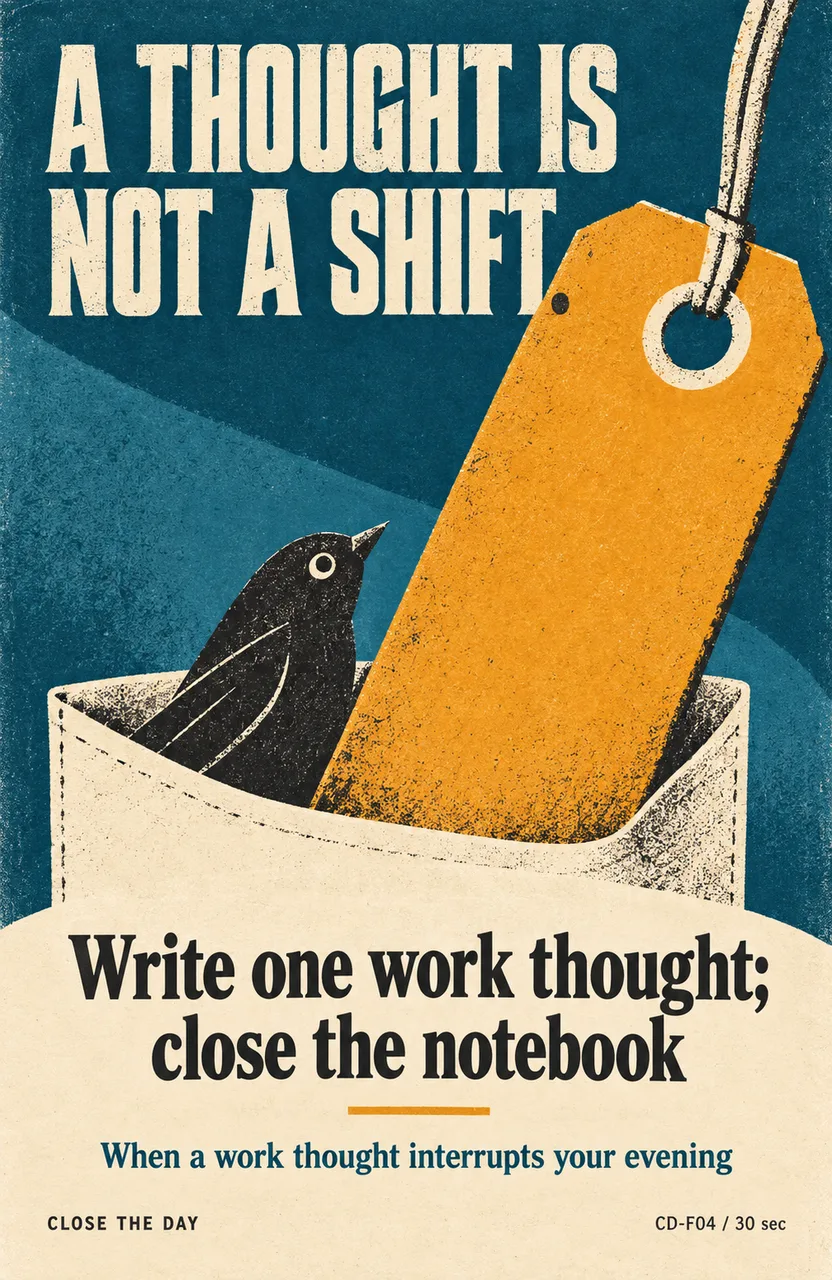
Write one work thought, then close the notebook When: a work thought arrives during personal time
Change one layer after leaving your desk When: you leave your workspace for the day
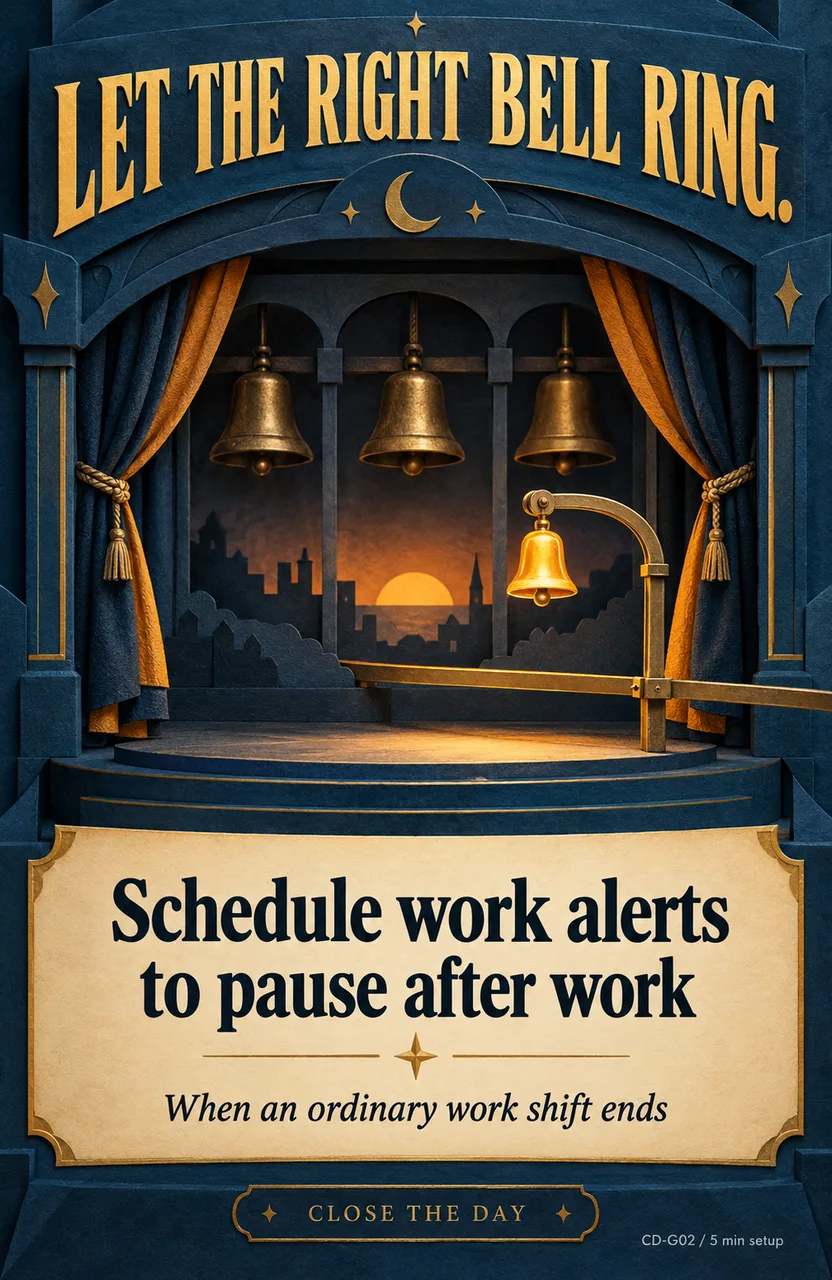
Schedule work alerts to pause after work When: you finish an ordinary shift with no on-call duty

18 cards · draft

How do I decide what still fits after my life changes?

Separate what you know from what is still open, review goals and roles against current conditions, and try a next direction at a scale you can choose. You can keep, adapt, pause or stop; none of these practices is a required stage.
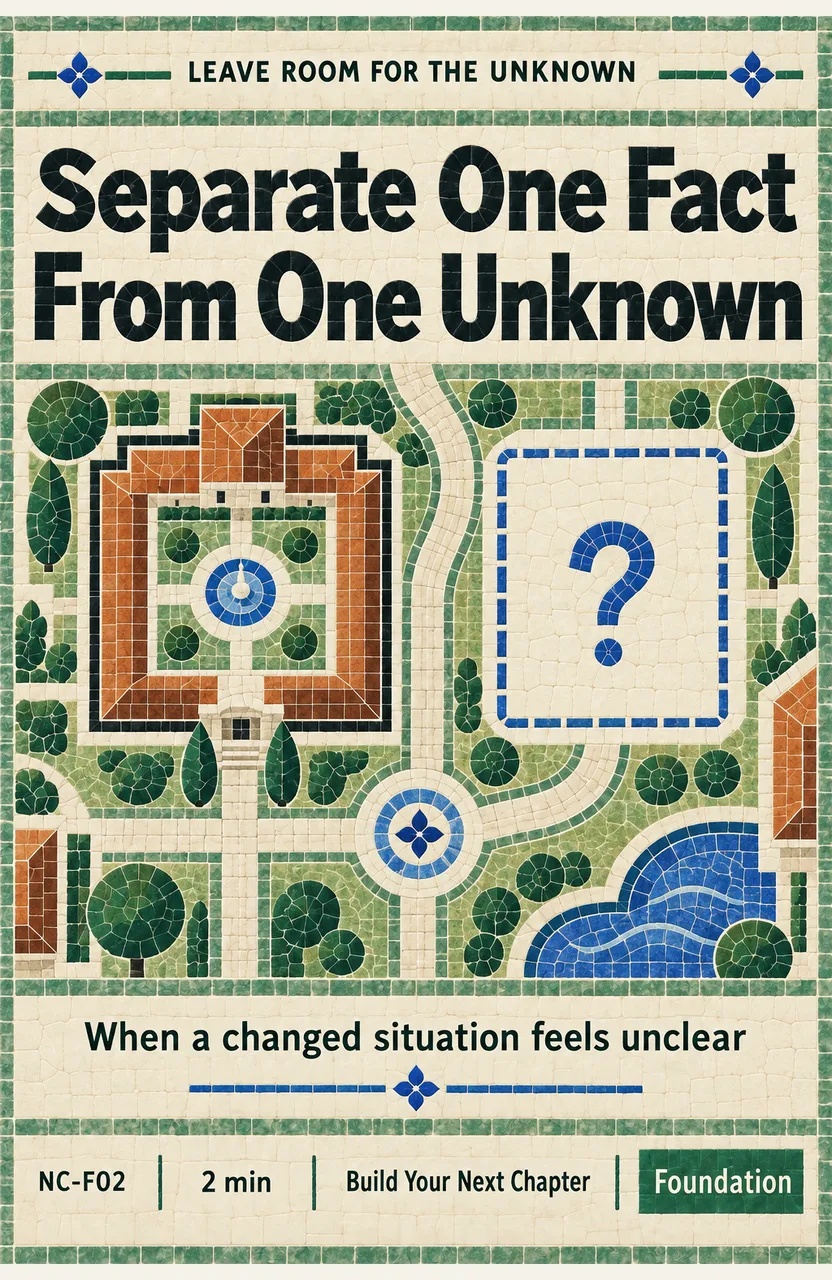

Separate One Fact From One Unknown When: a changed situation feels unclear
Name Three Things You Can See When: attention is pulled from the present
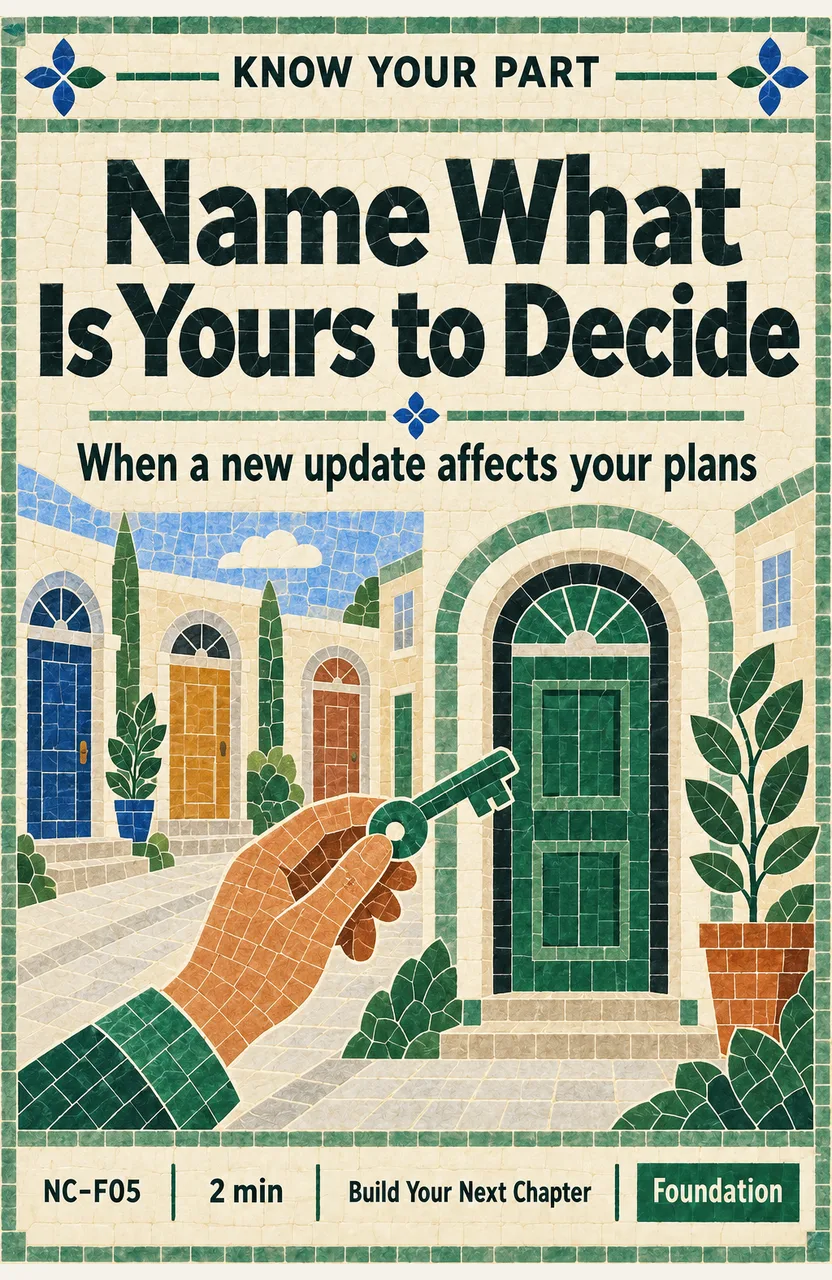
Name What Is Yours to Decide When: a new update affects your plans
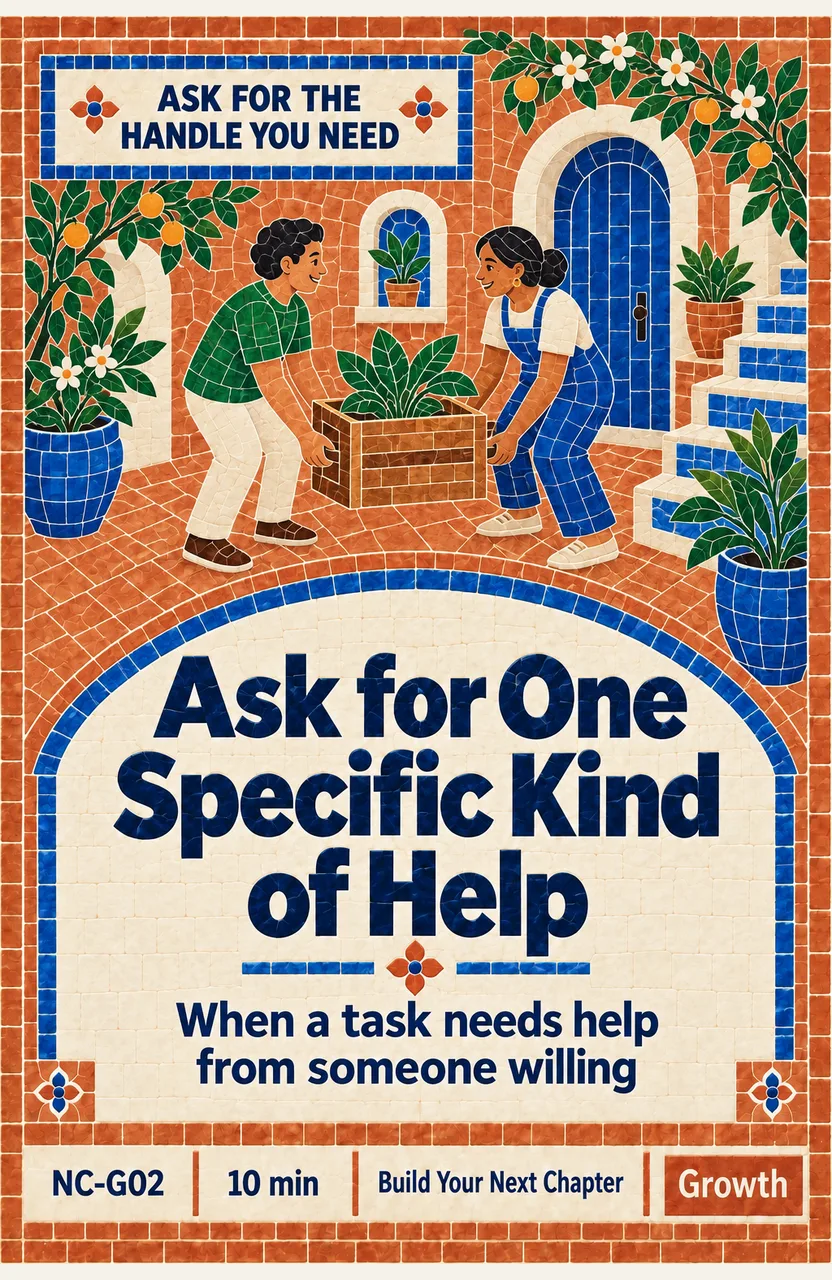
Ask for One Specific Kind of Help When: a task needs help from someone willing
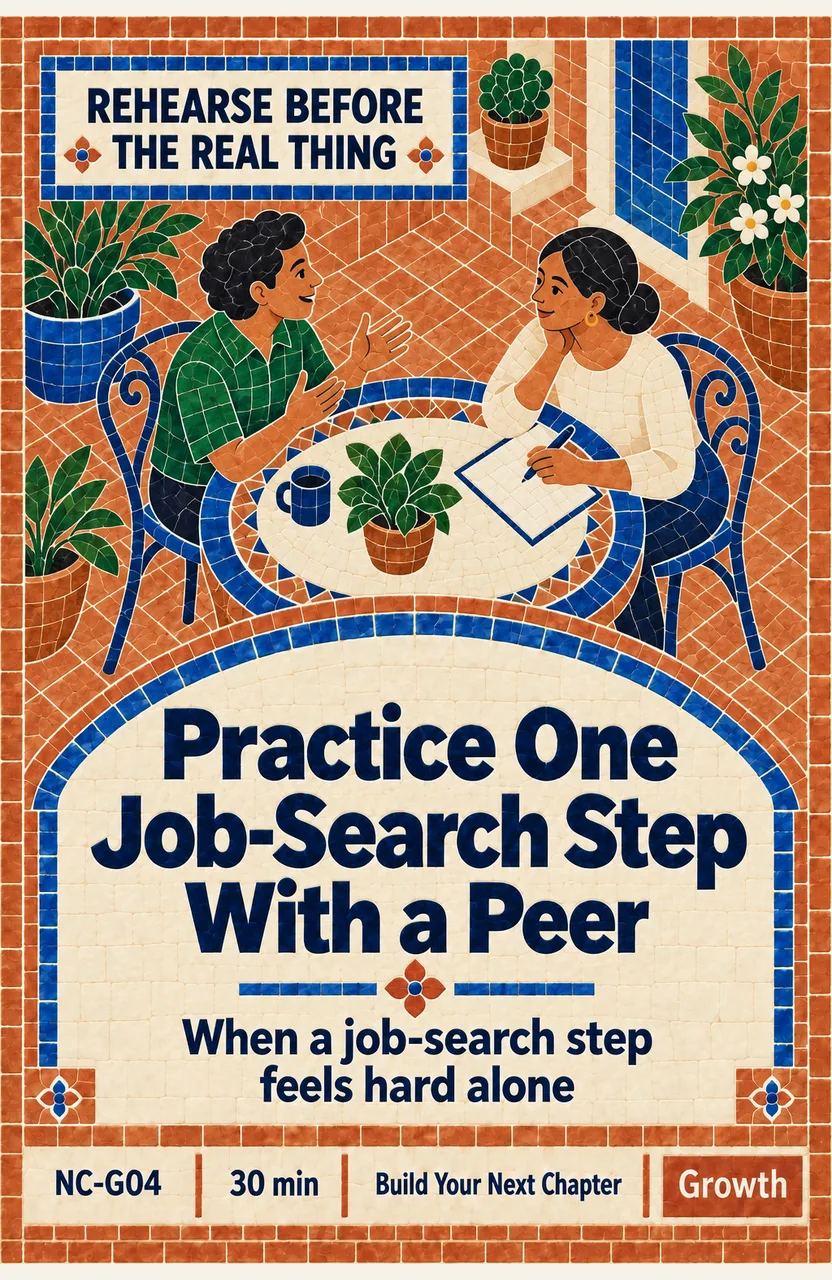
Practice One Job-Search Step With a Peer When: a job-search step feels hard alone
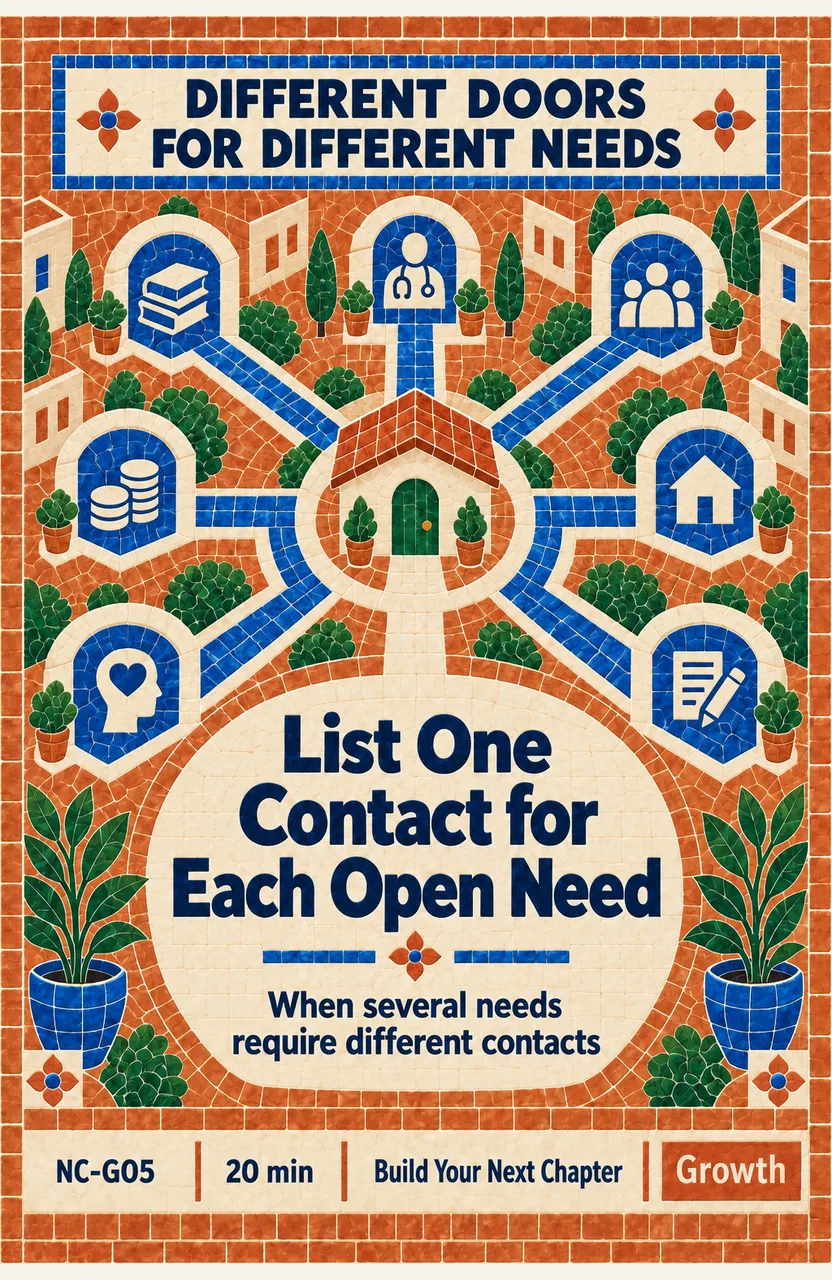
List One Contact for Each Open Need When: several needs require different contacts

15 cards · draft

How can I build a squat and reversible floor movement?

After a warm-up walk, try five heel-down ankle rocks per side, four supported hip switches and three supported squat visits. About seven extra minutes on Monday and Thursday. Choose your own range and secure support. Later combine the session with FL-M04 or choose the reversible floor-route mission; the full deck is not mandatory. Existing Get Fit strength cards remain useful companions.
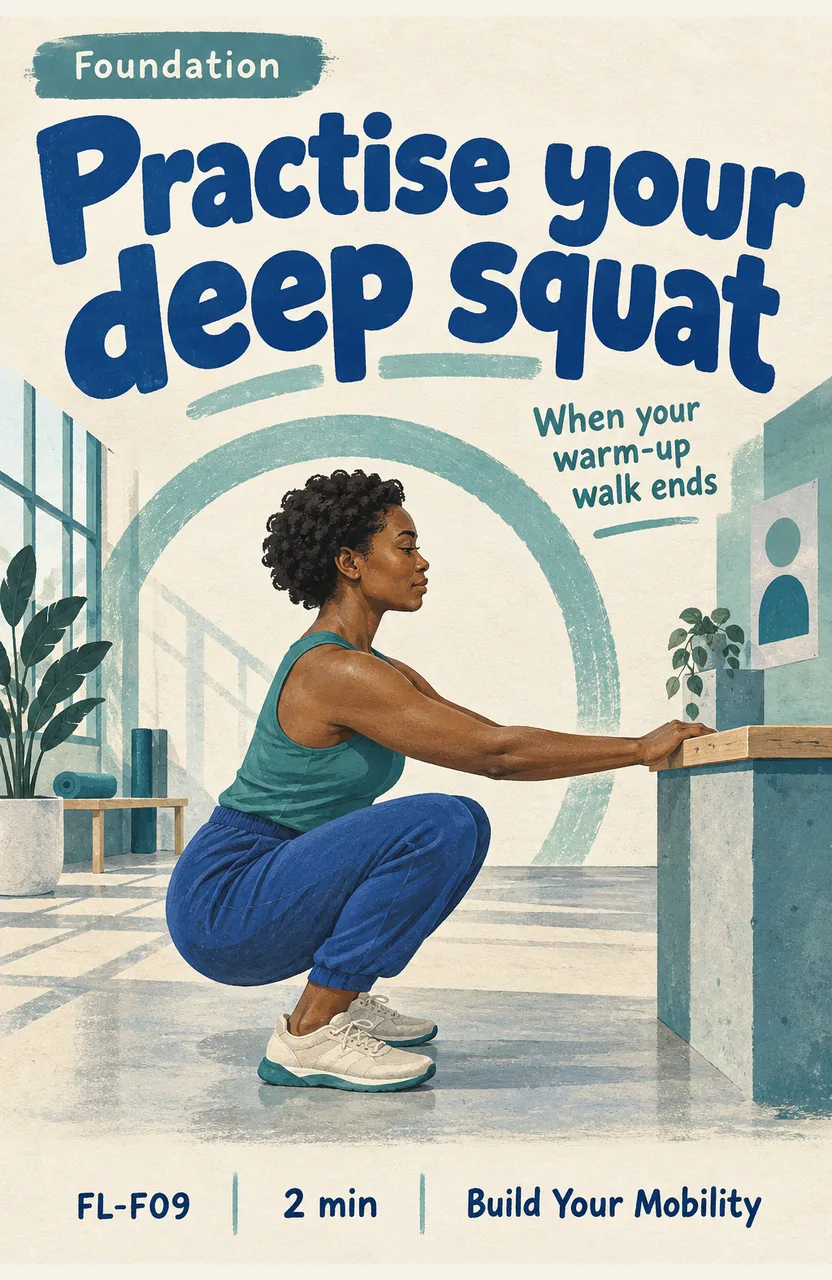

Practise your deep squat When: you finish a five-minute warm-up walk
Rock each ankle toward a wall When: you begin your warm-up beside a wall
Switch your hips through 90/90 When: you sit on your mat after warming up
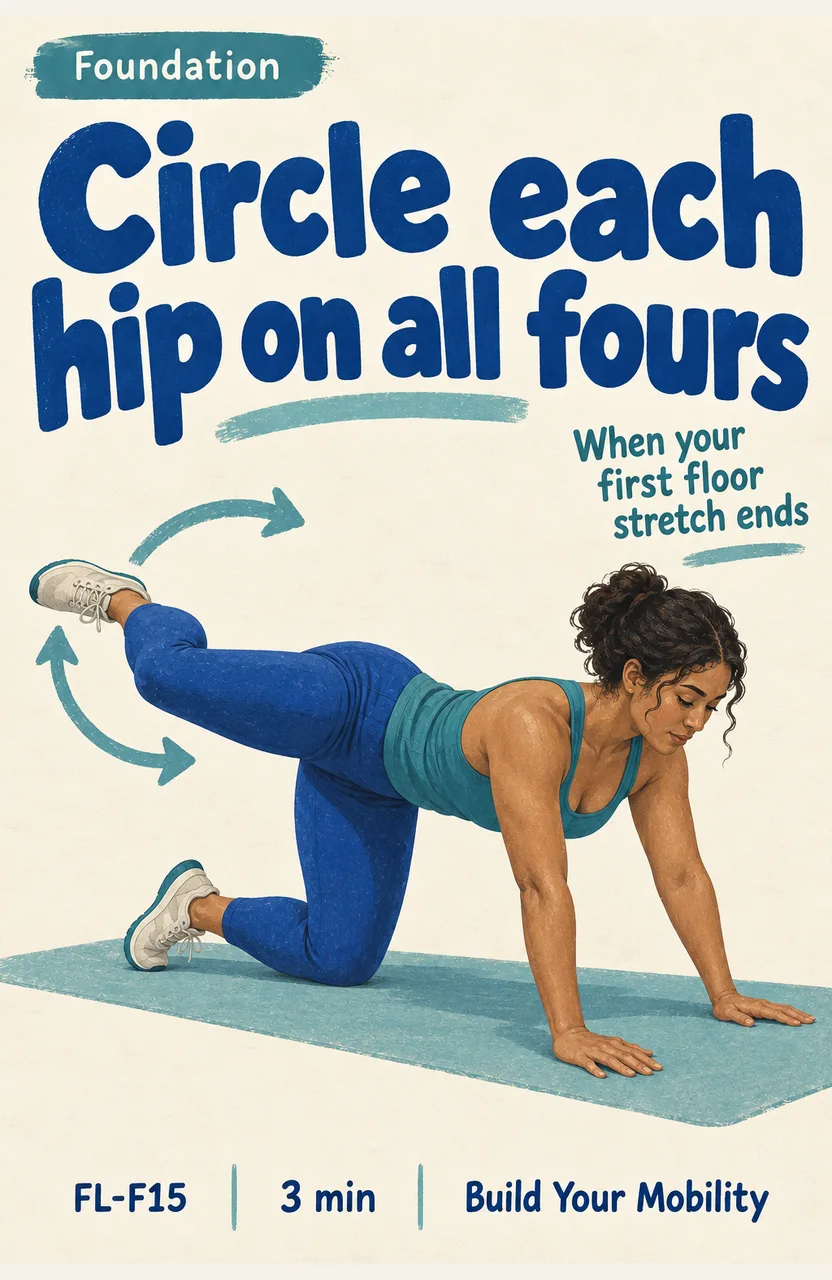
Circle each hip on all fours When: you finish the first floor stretch in your warm-up
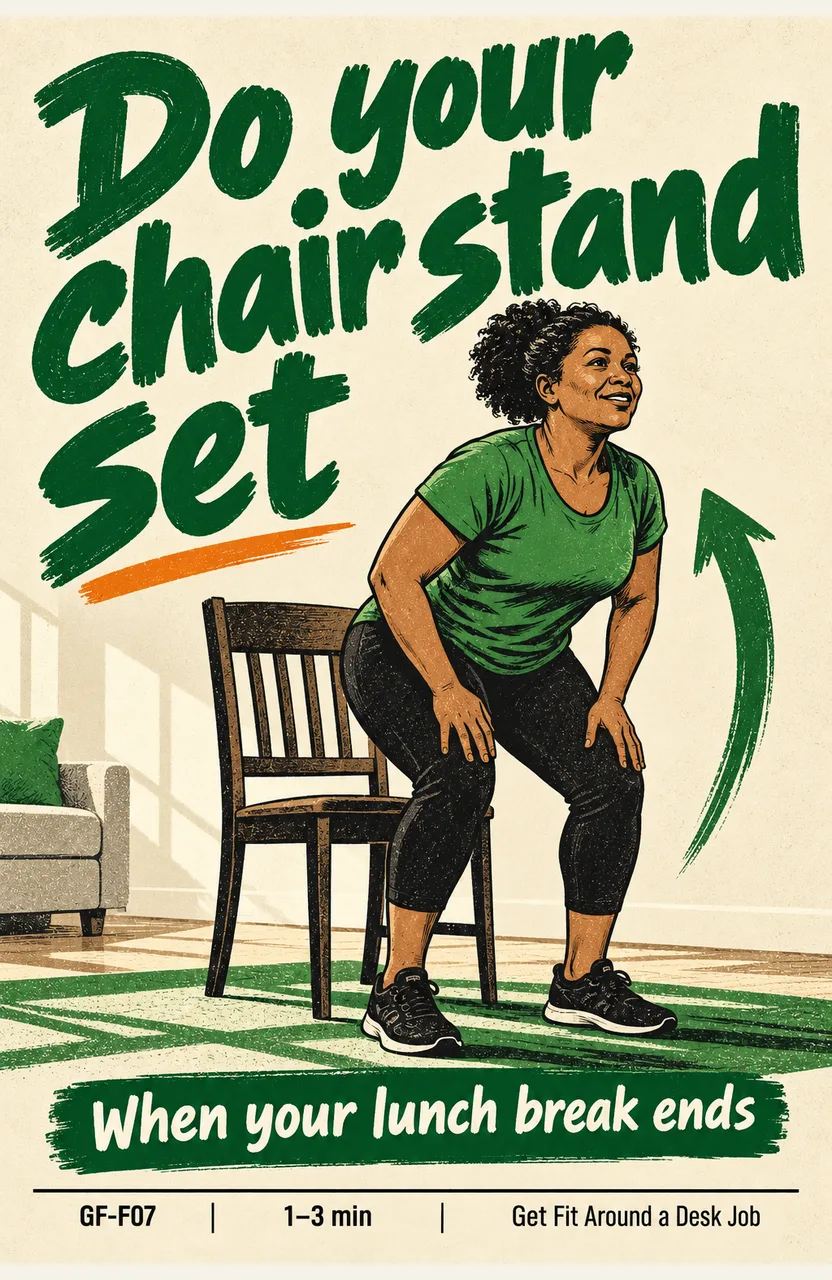
Do your chair stand set When: your lunch break ends
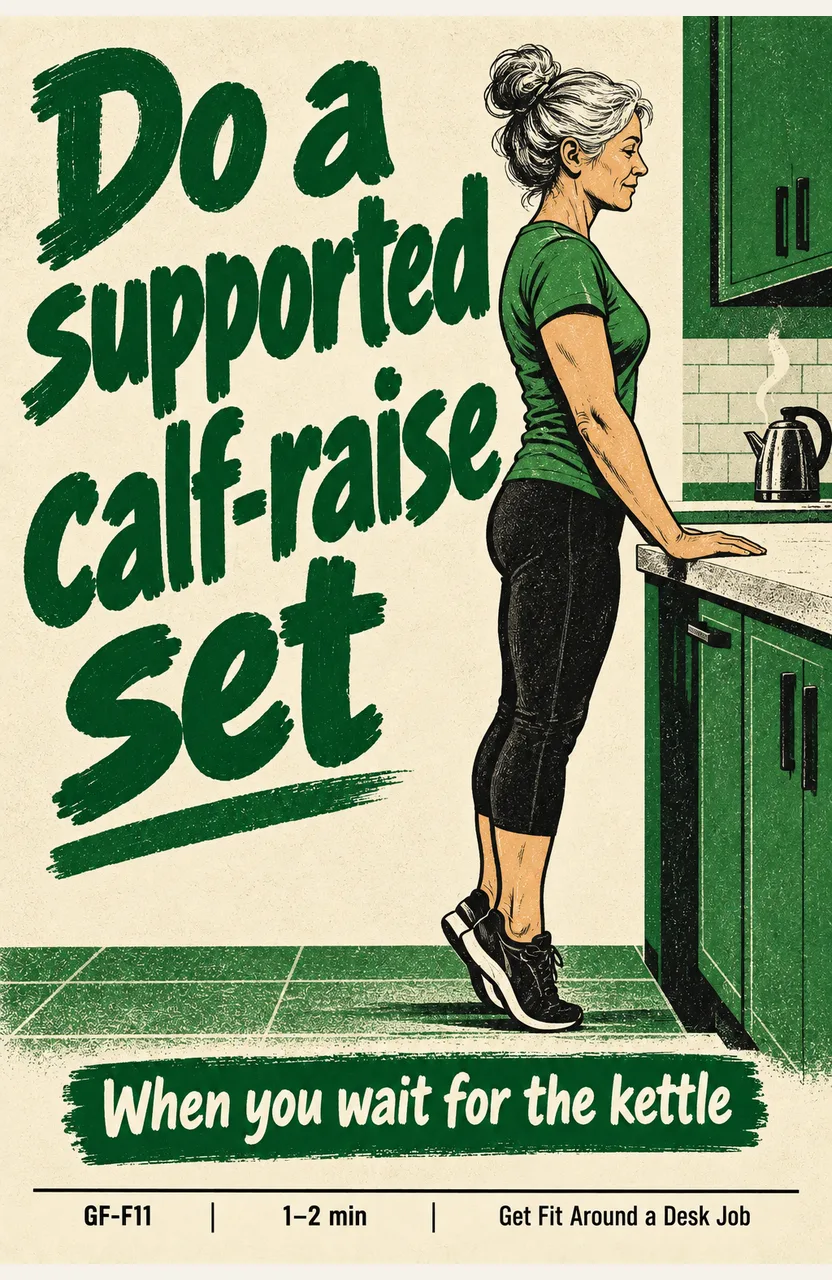
Do a supported calf-raise set When: you wait for the kettle

18 cards · draft

How can I make an ordinary dinner when time and energy are short?

Start with a no-cook plate or dressed beans, add vegetables, then choose one cooked recipe when you have room. Three reminders make a real meal; the weekly cards help it return.

Dress canned beans for a meal When: you need food without cooking
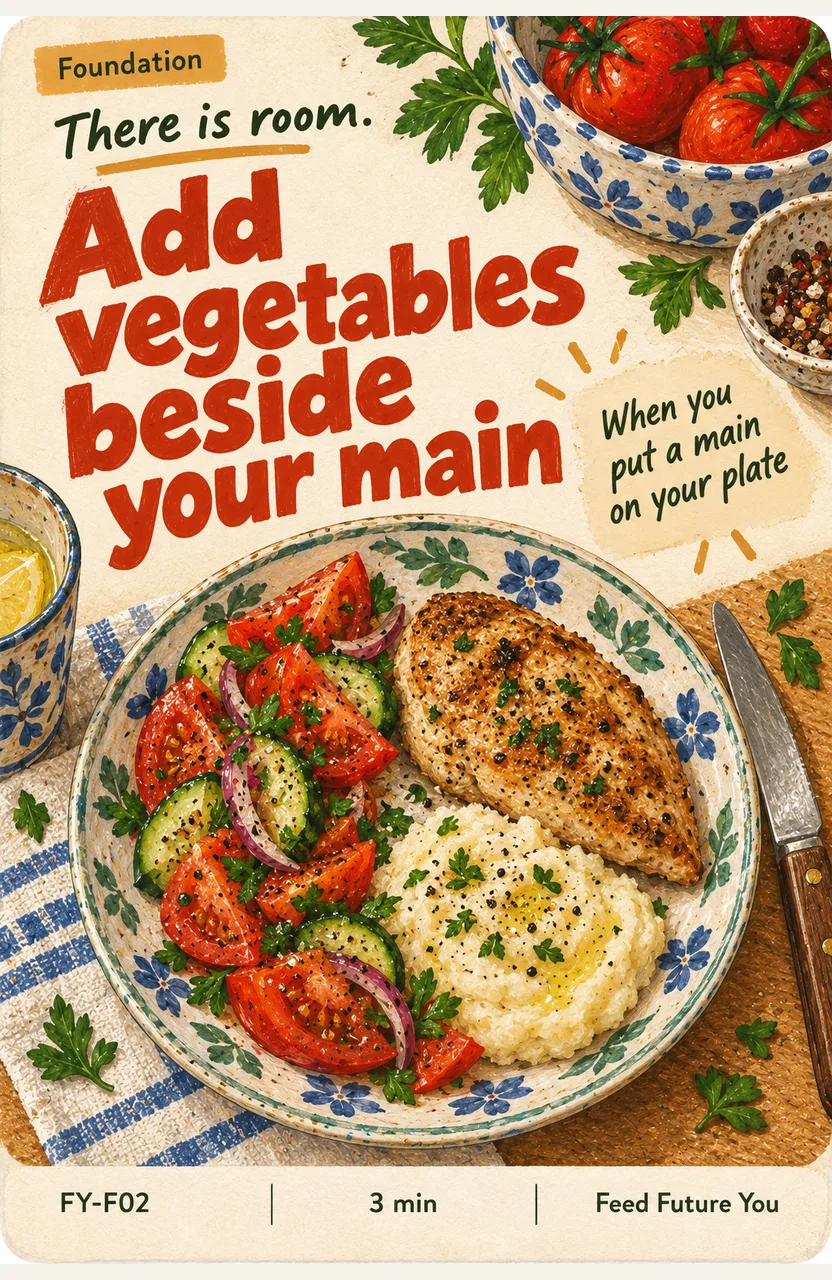
Add vegetables beside your main When: you put a main on your plate
Taste and adjust before serving When: your cooked food is ready to serve
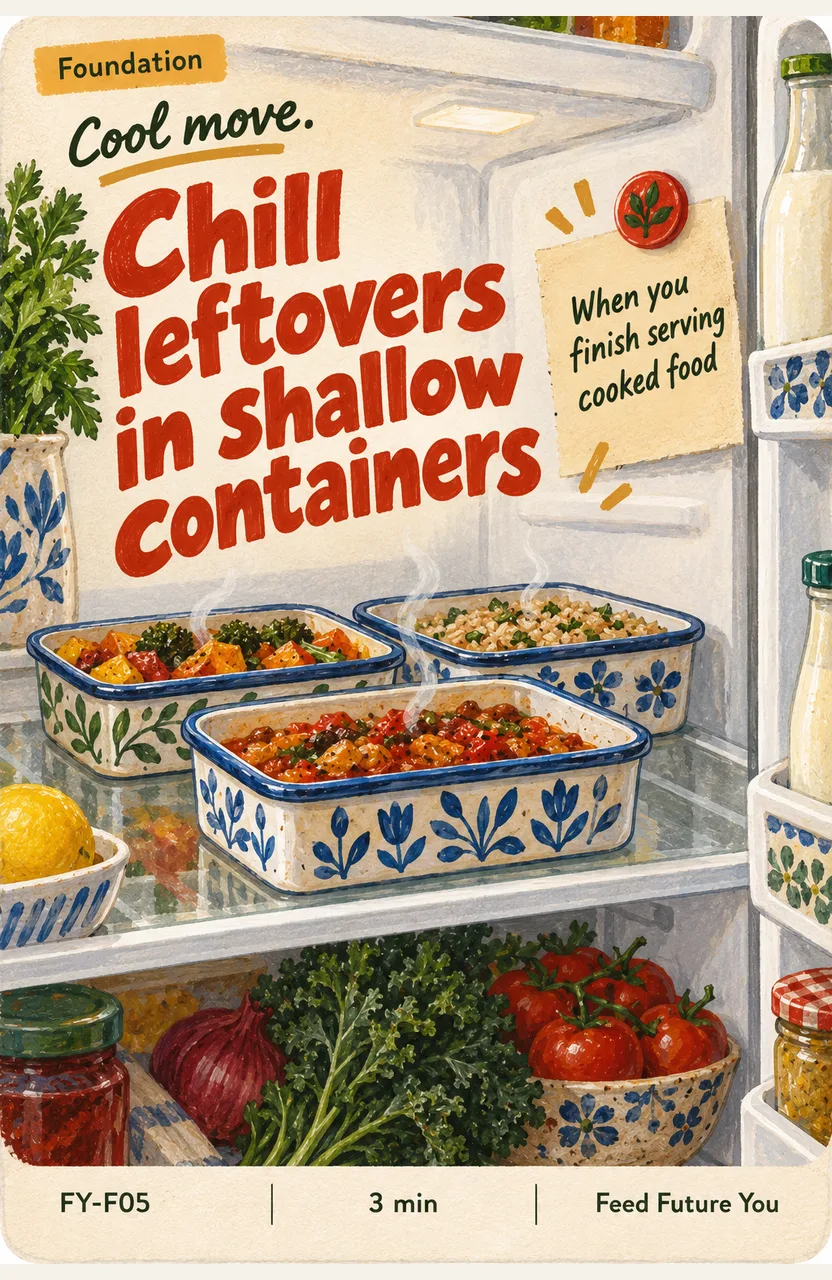
Chill leftovers in shallow containers When: you finish serving cooked food
Use a safe ingredient that needs using When: you open the fridge for a meal
Assemble a no-cook dinner plate When: cooking feels out of reach tonight

13 cards · draft

How can I connect with my young child through play and talk?

Begin with a response, a richer phrase or a moment of listening. Add one shared game or picture-book conversation when it fits. With a baby, follow a sound or gesture; with a toddler, join their exploration; with a preschooler, let their ideas lead. A small everyday exchange can be worth returning to.

Answer Your Child’s Bid for Attention When: your child looks or gestures toward you
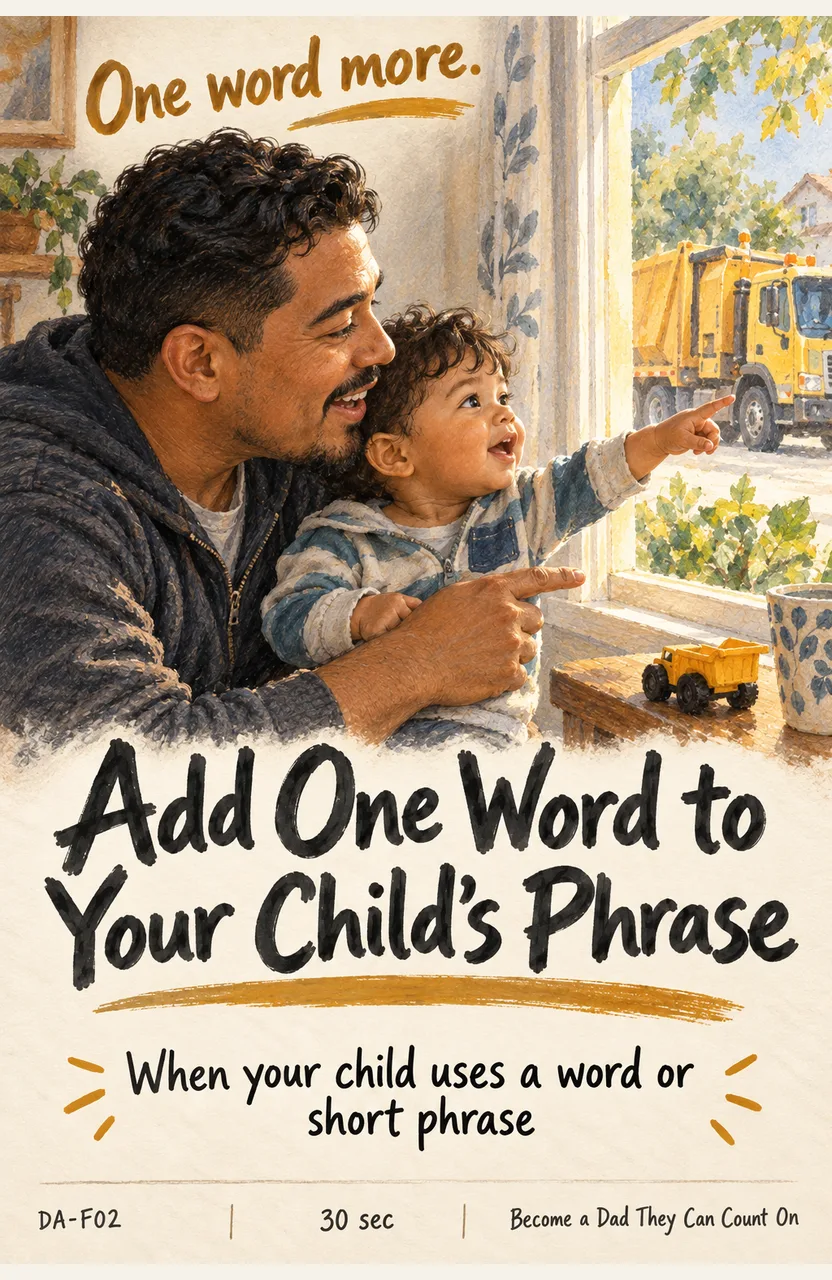
Add One Word to Your Child’s Phrase When: your child uses a word or short phrase
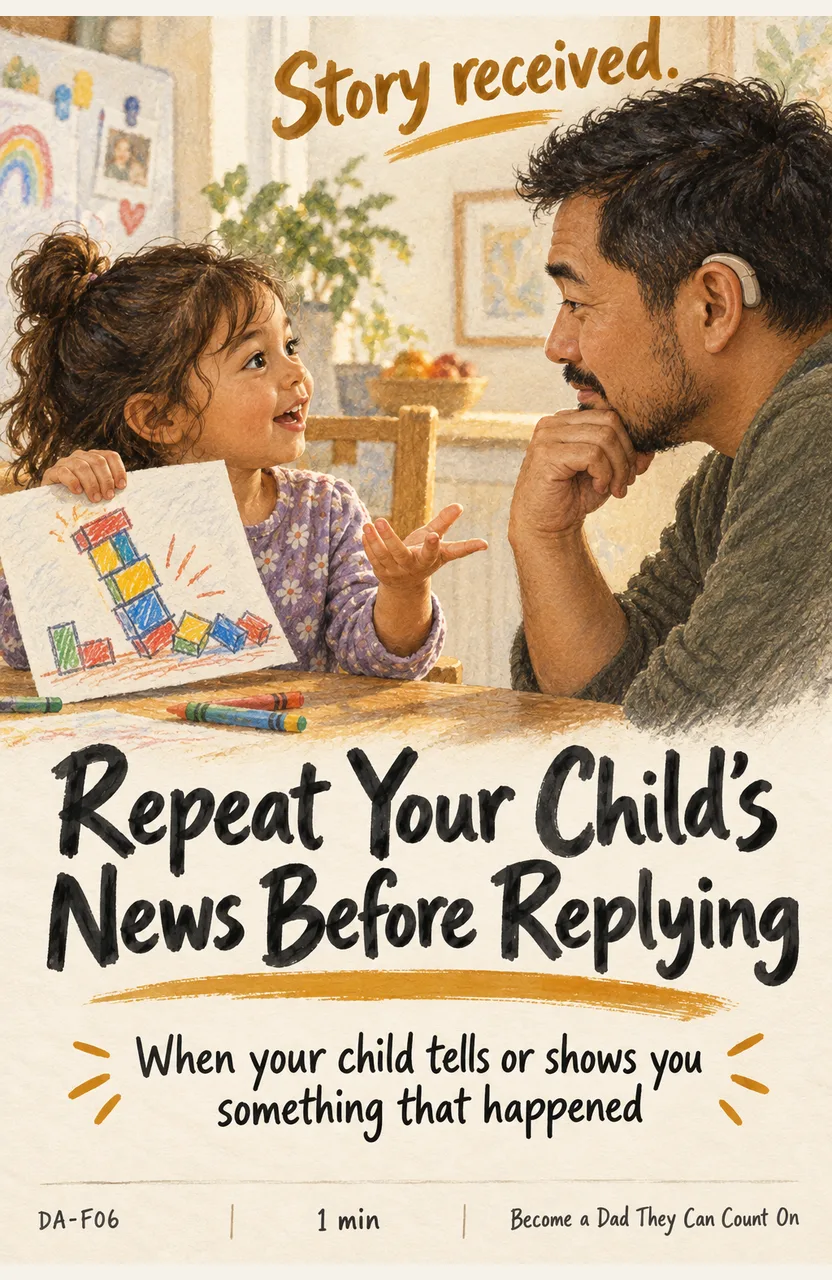
Repeat Your Child’s News Before Replying When: your child tells or shows you something that happened
Follow Your Child’s Play for Five Minutes When: your child starts a safe game
Talk About Pictures During One Shared Book When: your child brings a book or settles for storytime
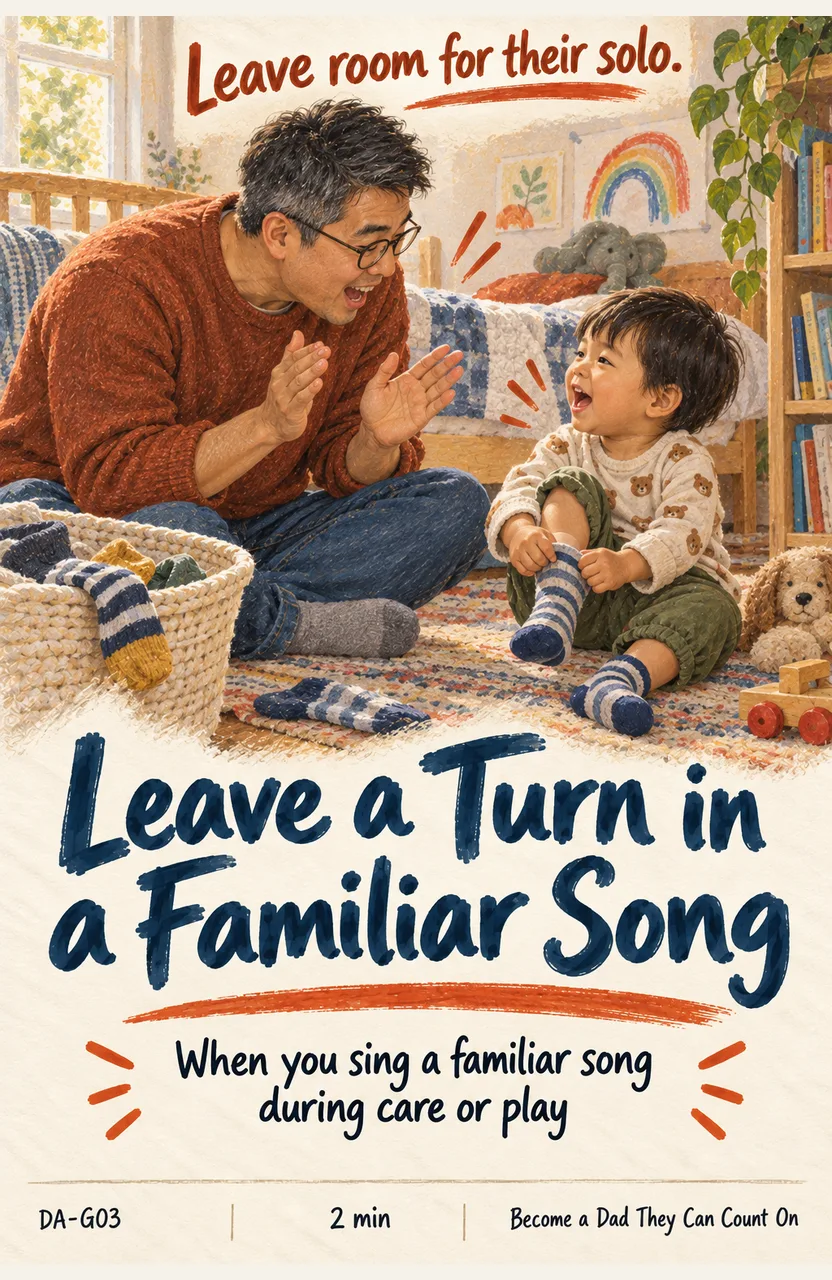
Leave a Turn in a Familiar Song When: you sing a familiar song during care or play

12 cards · draft

How can I guide big feelings and support growing independence?

Help your child know what is happening, read their need for a break and respect choices about touch. Keep unsafe behavior from hurting others, then offer a next move they can manage. Choose one experiment only when the ordinary moments feel workable. For babies, respond to signals; for older children, keep choices and explanations concrete.

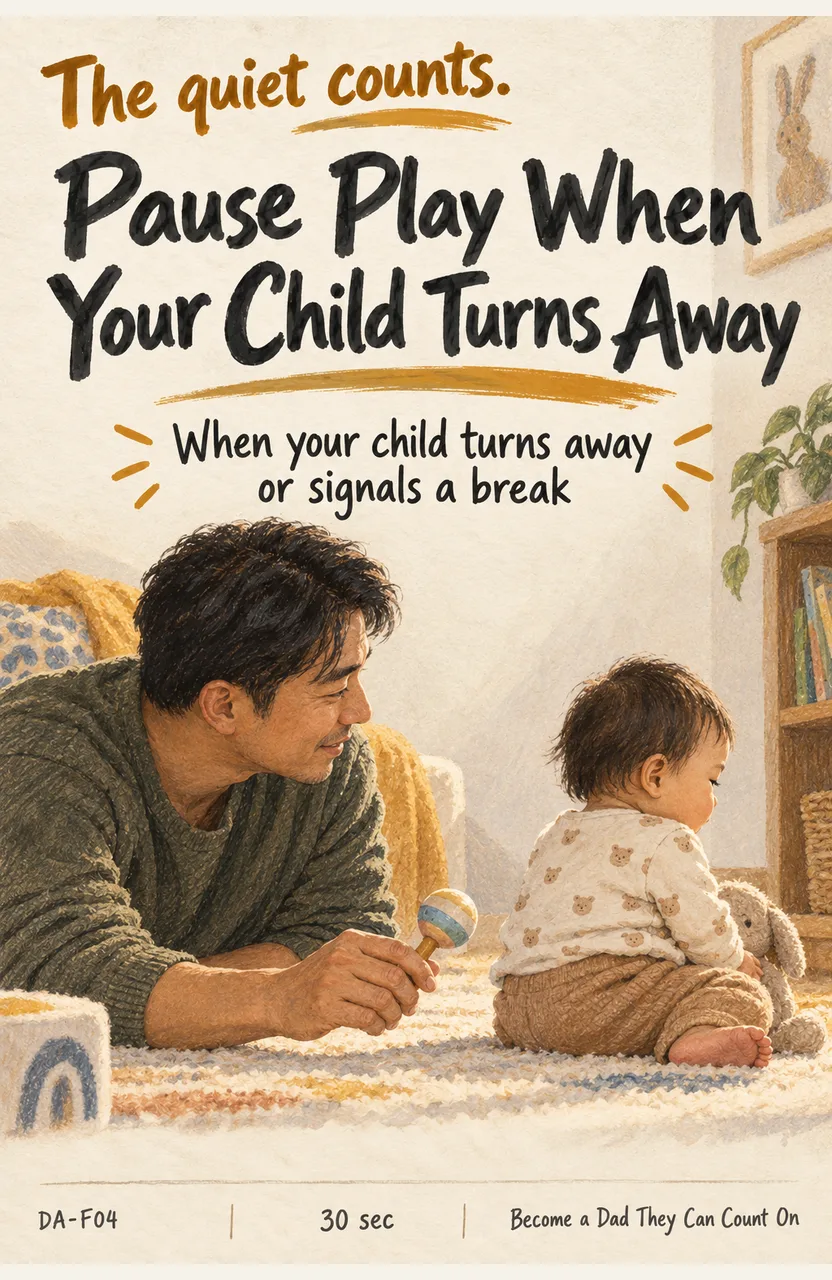
Describe the Next Care Step Before Touching When: you are about to help with dressing or washing
Pause Play When Your Child Turns Away When: your child turns away or signals a break
Let Your Child Choose a Greeting When: someone offers your child a hug or kiss
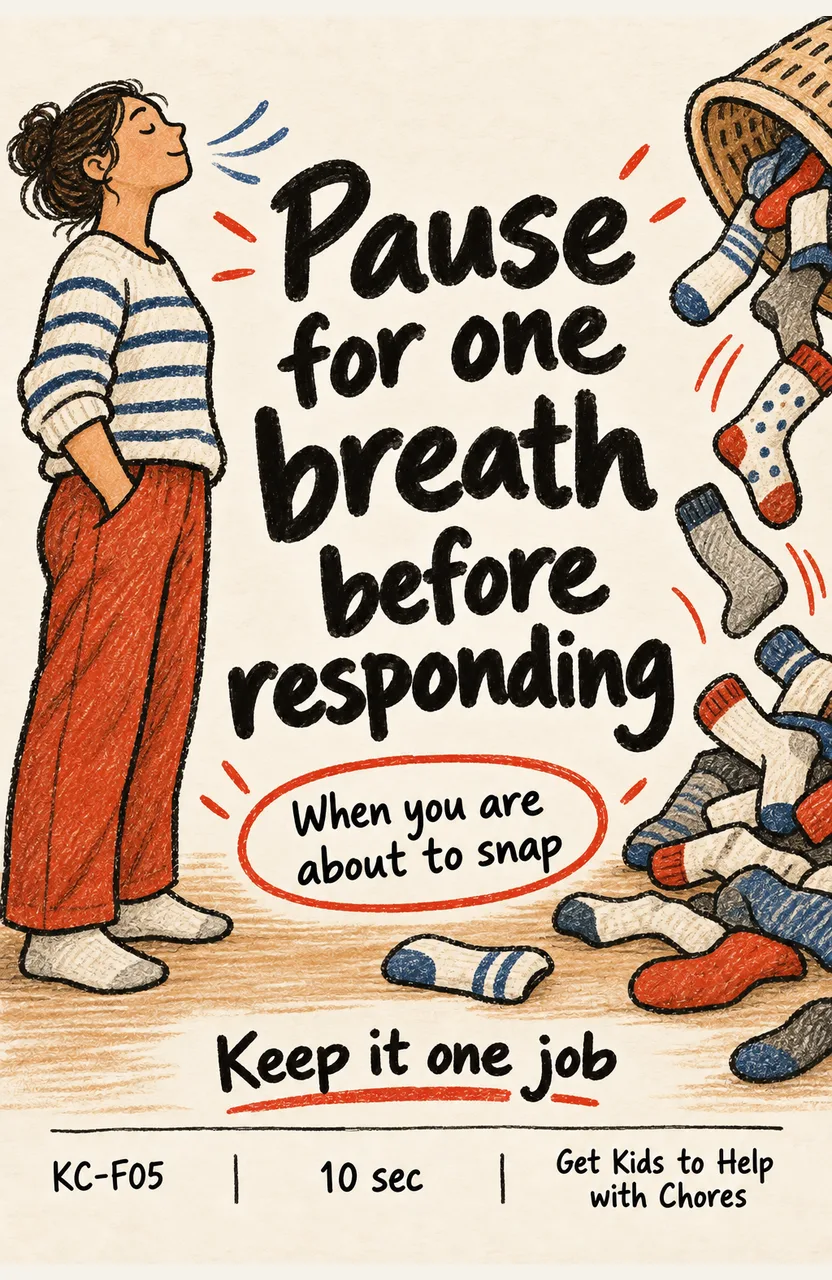
Pause for One Breath Before Responding When: you feel yourself about to snap during a chore
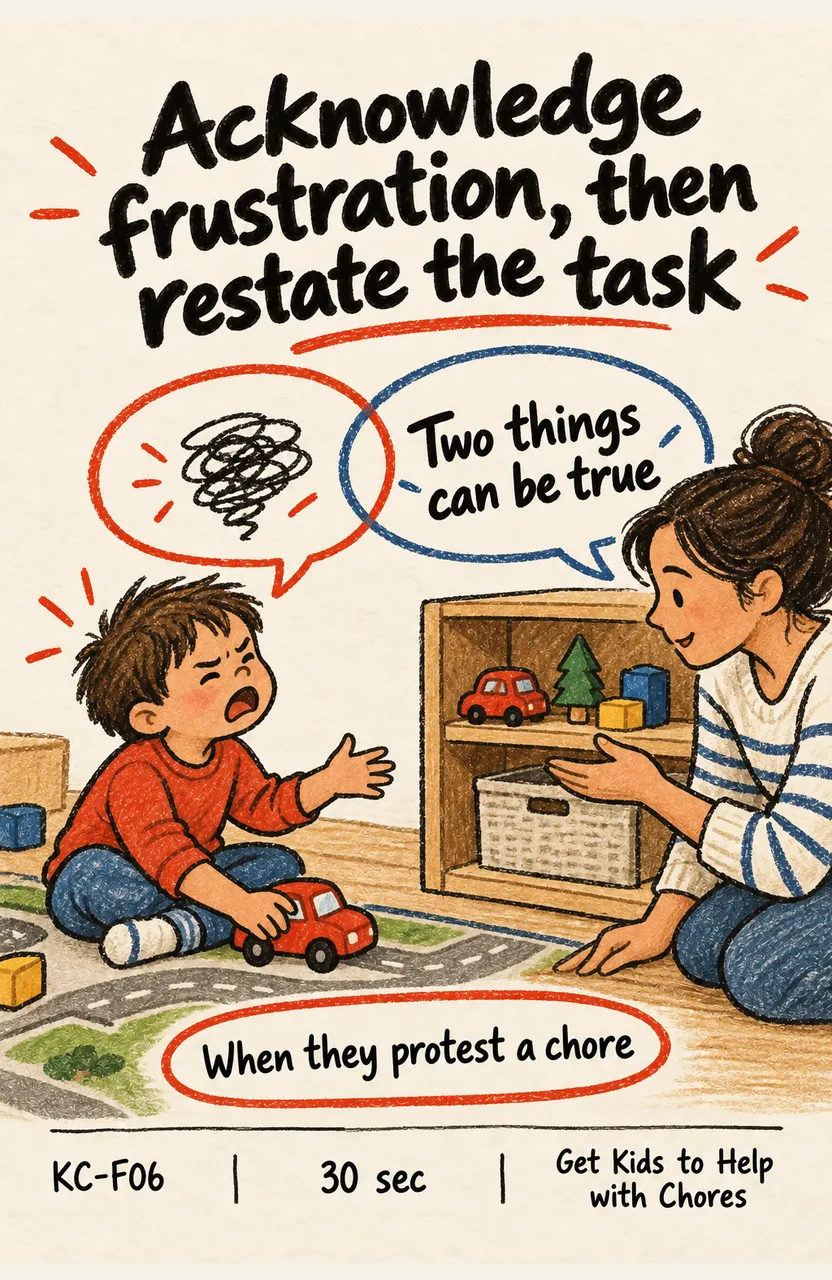
Acknowledge Frustration Before Restating the Task When: your child protests a routine chore
Wait Ten Seconds Before Taking Over When: your child struggles with a safe task

12 cards · draft

How can I become a dependable caregiver, including while apart?

Learn your child firsthand, share useful observations and say goodbyes you can stand behind. Agree safe handovers and care boundaries with the adults involved. When you are apart, prepare short familiar contact that fits your child and your real availability. Start with one responsive moment in the care you already provide, then choose a shared-care practice or mission.

Answer Your Child’s Bid for Attention When: your child looks or gestures toward you
Describe the Next Care Step Before Touching When: you are about to help with dressing or washing
Pause Play When Your Child Turns Away When: your child turns away or signals a break
Say Goodbye With a Truthful Return Cue When: you leave your child with a trusted caregiver
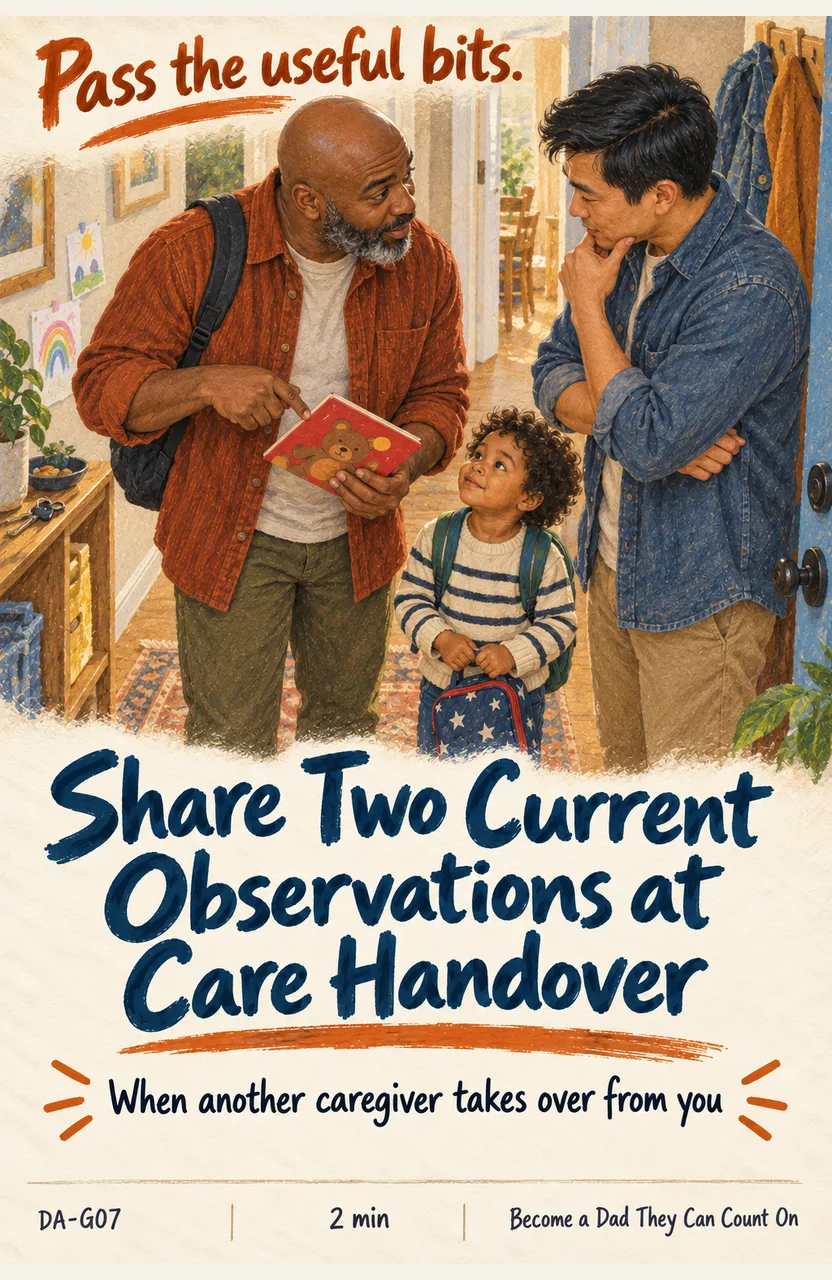
Share Two Current Observations at Care Handover When: another caregiver takes over from you
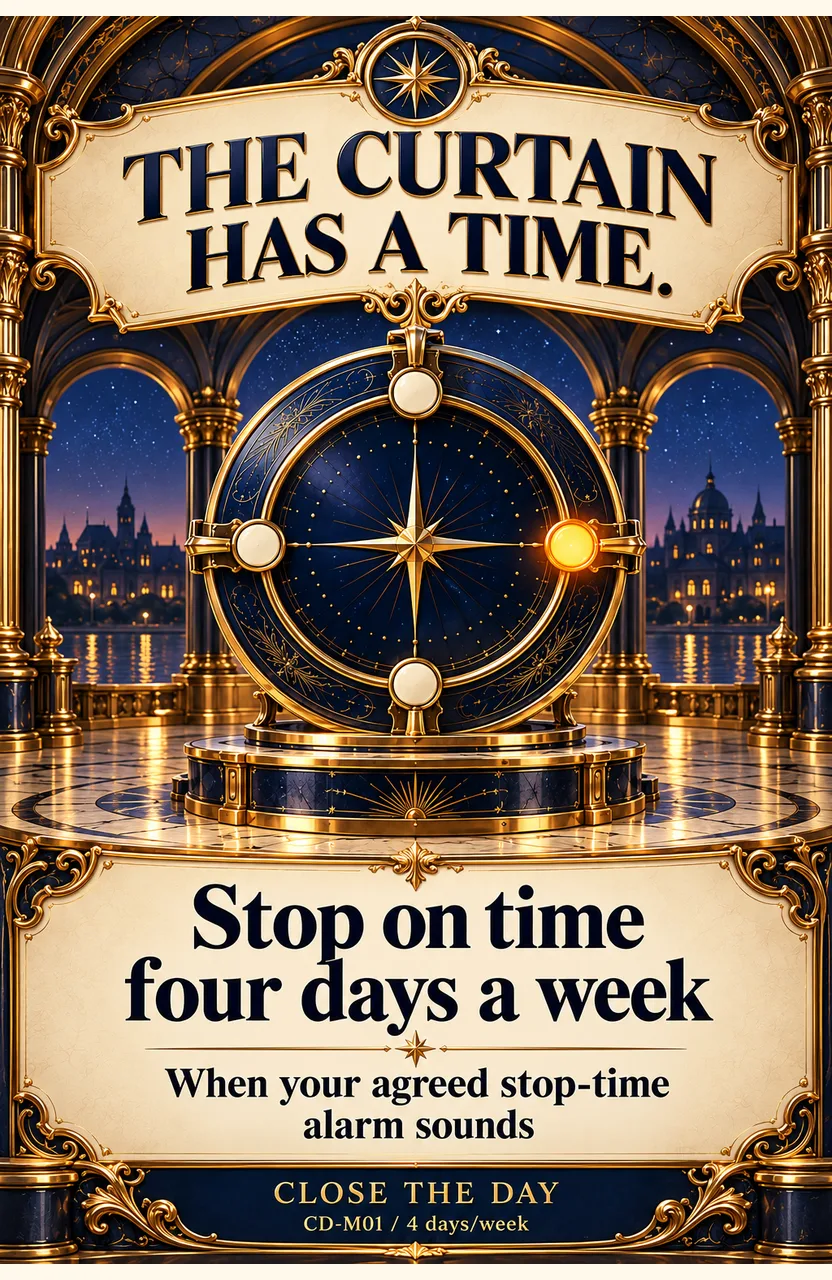
Stop on time four days a week When: your agreed stop-time alarm sounds on a chosen workday

15 cards · draft

How can I develop a photographic series?

Start by making one deliberate light image, framing a relationship and selecting a keeper. For a body of work, add one weekly project session and sequence a few selections; re-edit before adding more. General example, feedback and safe-copy practices are related library routes, not cards supplied in this physical deck.


Photograph a light-and-shadow boundary When: light or shadow catches your eye
Frame two elements in relation When: two things catch your eye together
Choose one image from similar frames When: you review several similar photographs
Compare your edit with the original When: an edit looks finished
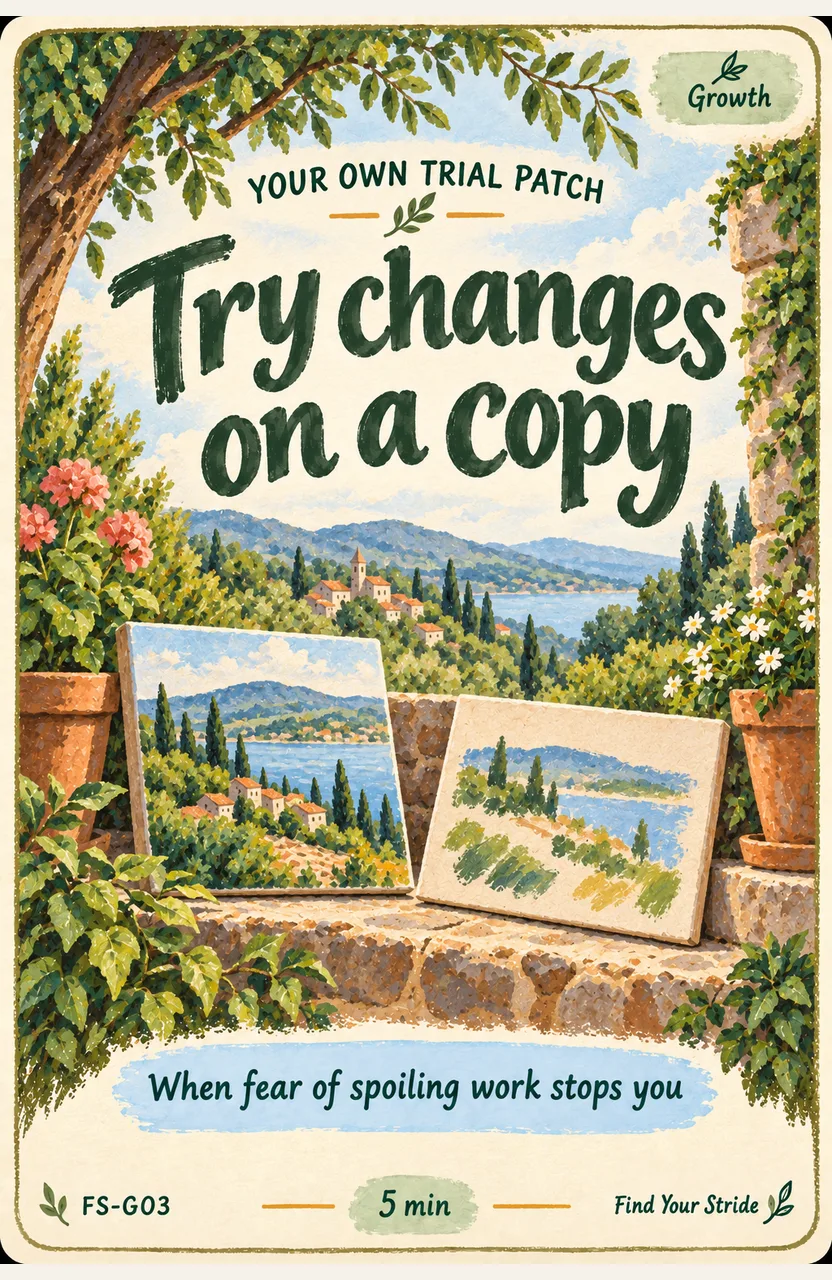
Try changes on a copy When: When fear of spoiling work stops you.
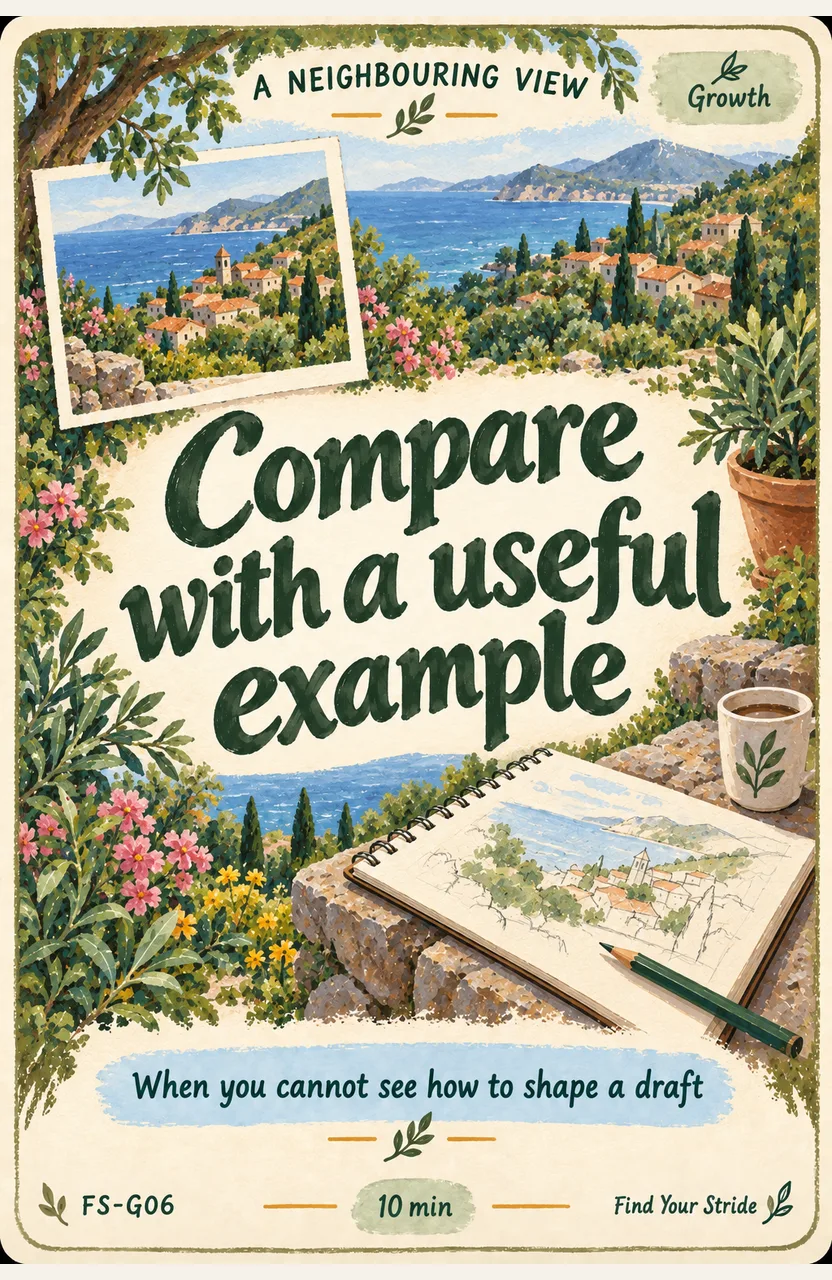
Compare with a useful example When: When you cannot see how to shape a draft.

11 cards · draft

How do I find interesting things close to home?

Use ordinary objects and nearby places as starting points. Follow what you notice through a field guide, a local record or a return visit; drawings can stand in for collecting.
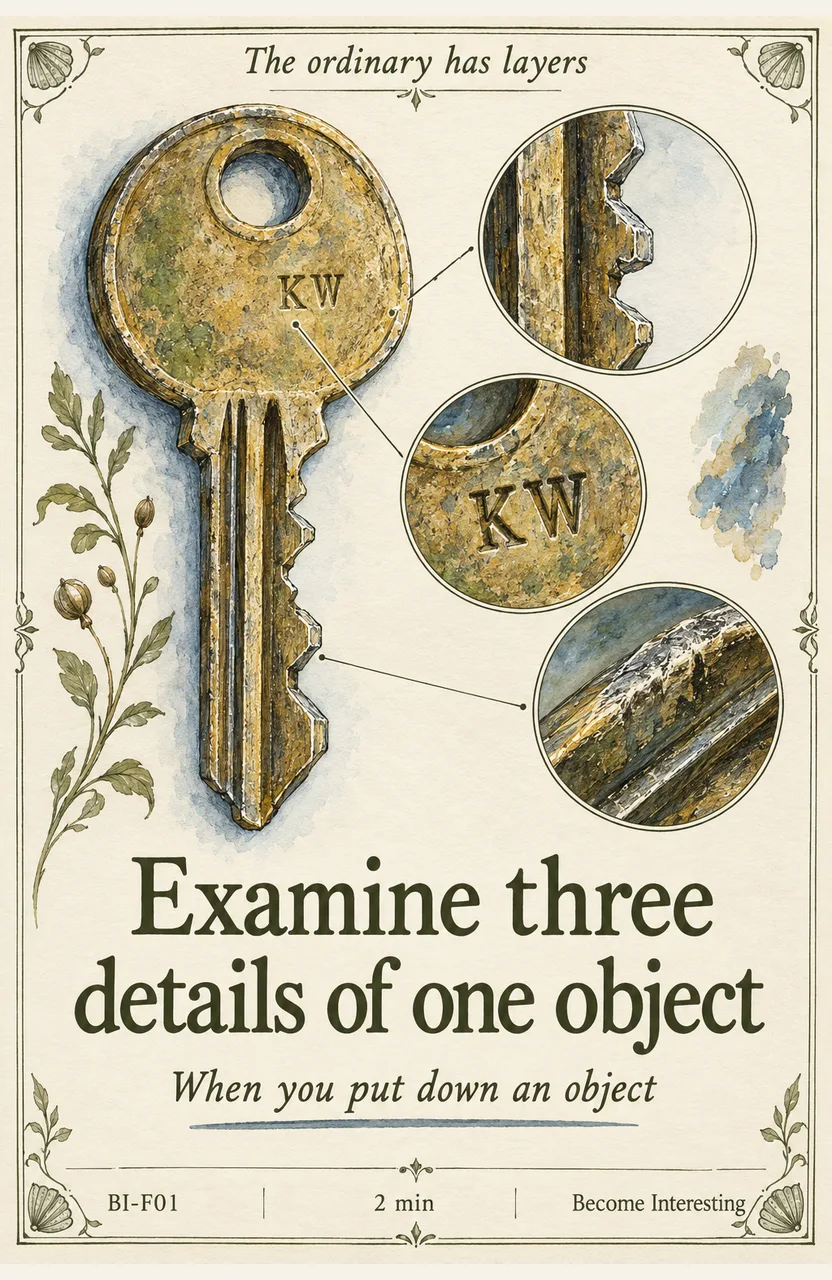
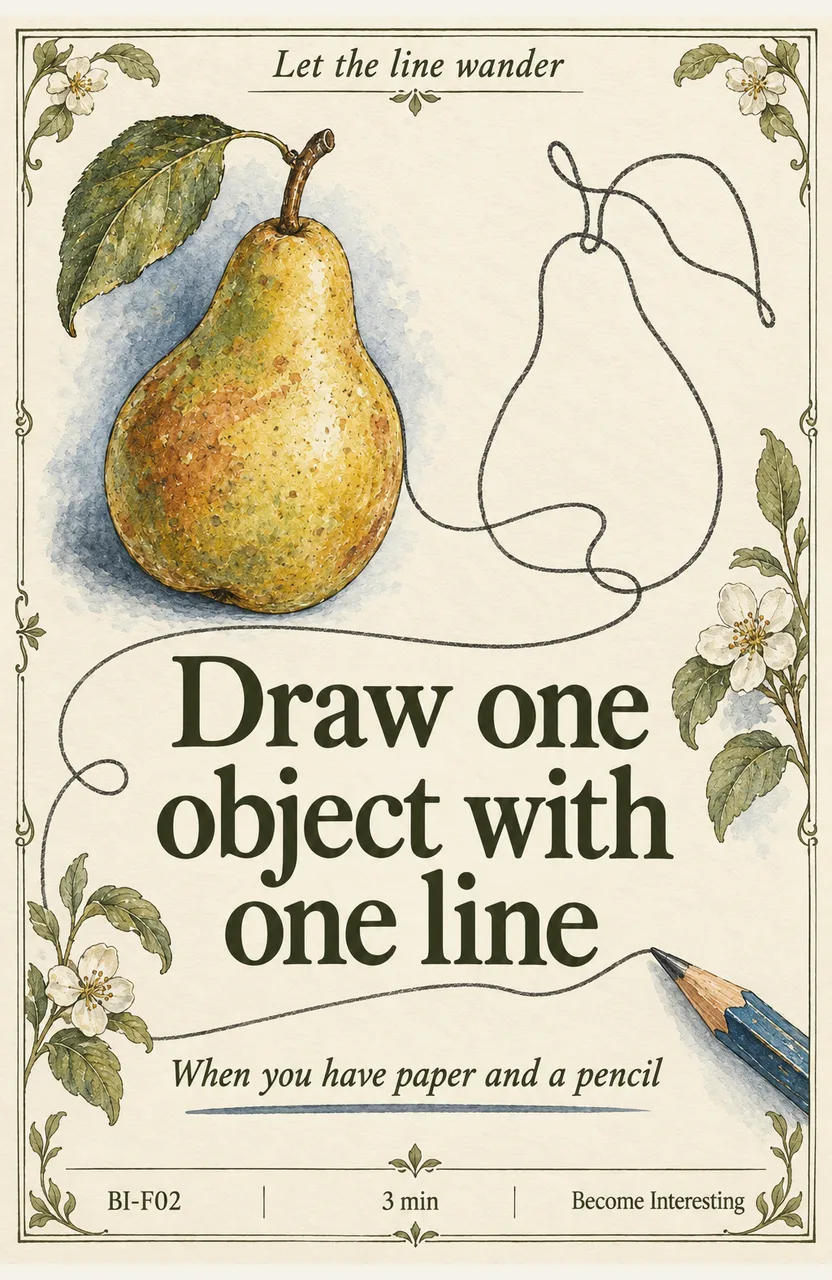
Examine three details of one object When: you put down an everyday object
Draw one object with a continuous line When: you sit with paper and a pencil
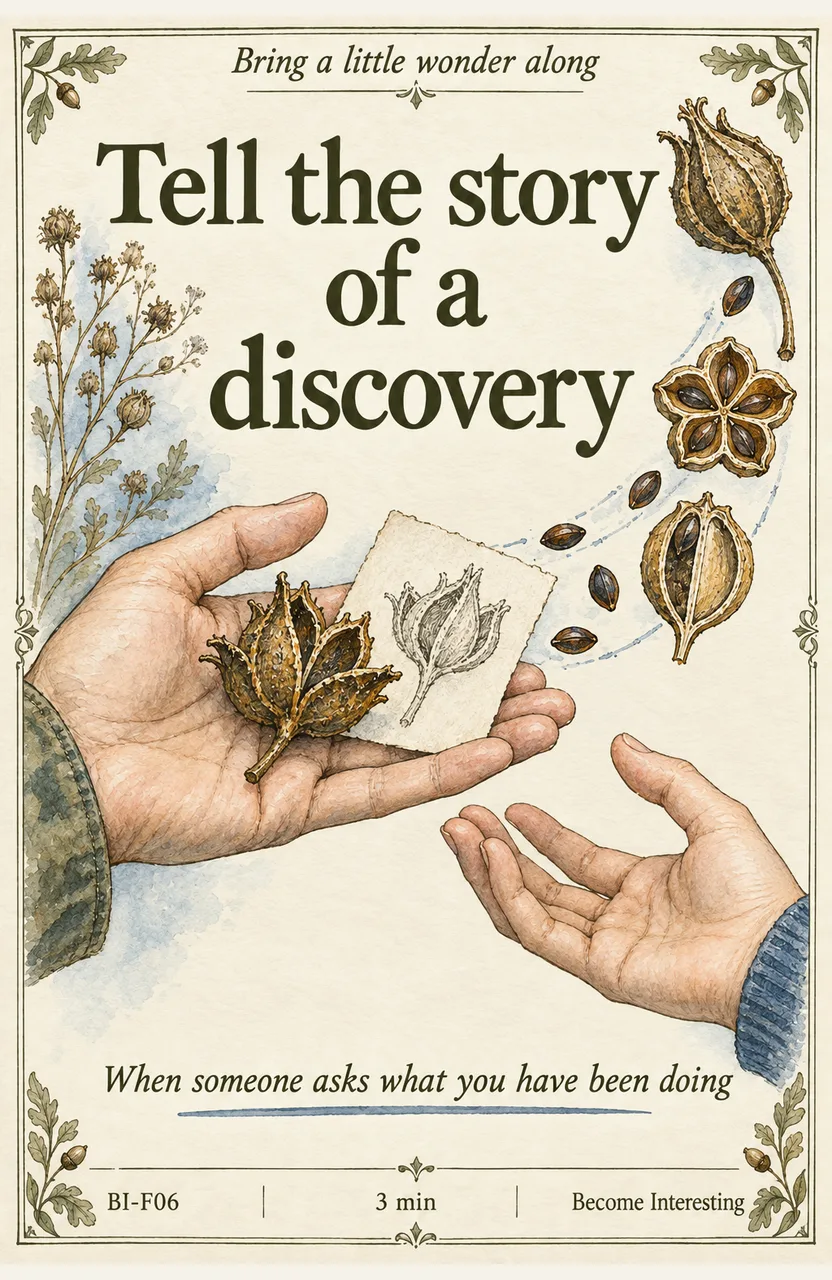
Tell someone the story of a discovery When: a willing person asks what you have been doing
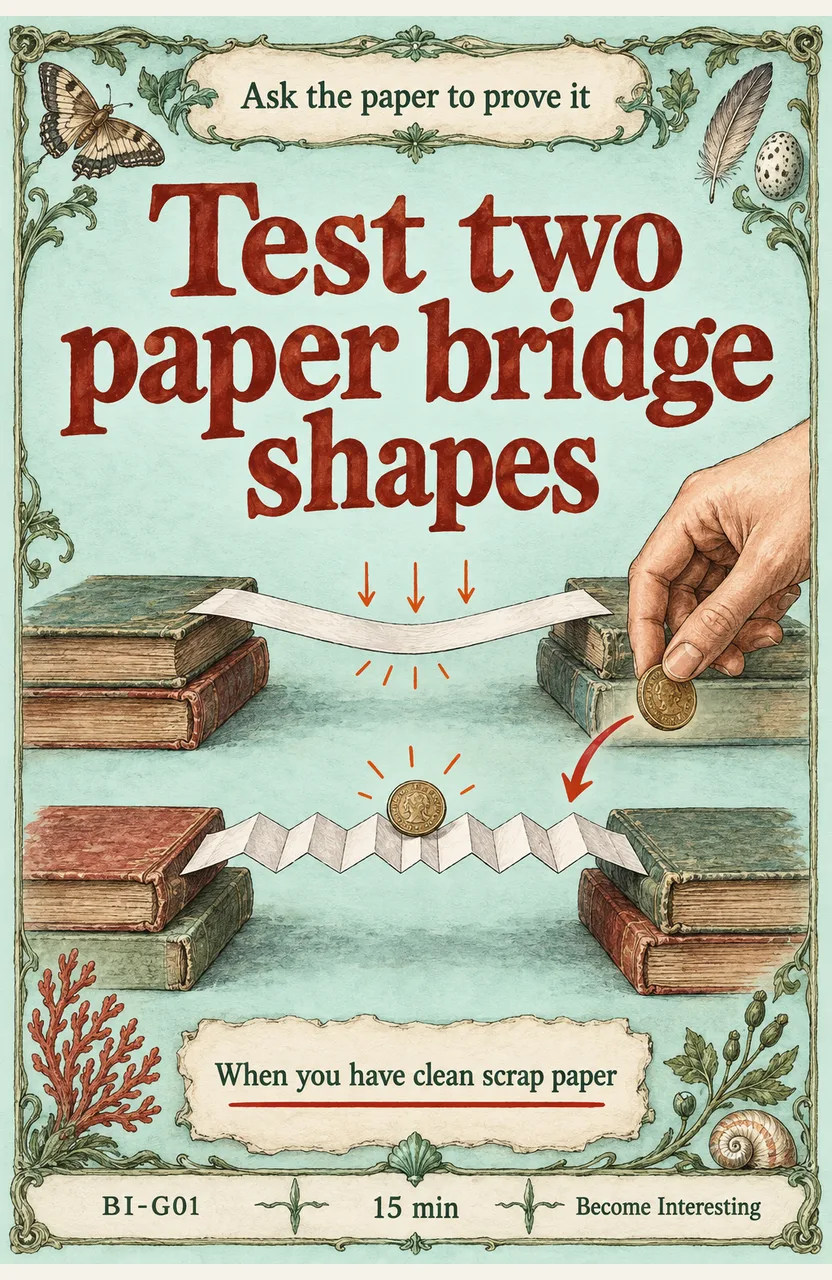
Test two shapes of a paper bridge When: you have clean scrap paper to reuse
Identify one nearby plant with a guide When: a plant catches your eye on a safe route
Ask a librarian for a starting resource When: you open your library’s help route or reach its desk

11 cards · draft

How can I make stronger everyday photographs?

At your next ordinary photo opportunity, use light, remove one edge distraction and choose the strongest frame. Start with those three; add a viewpoint or timing reminder when the pictures need it.
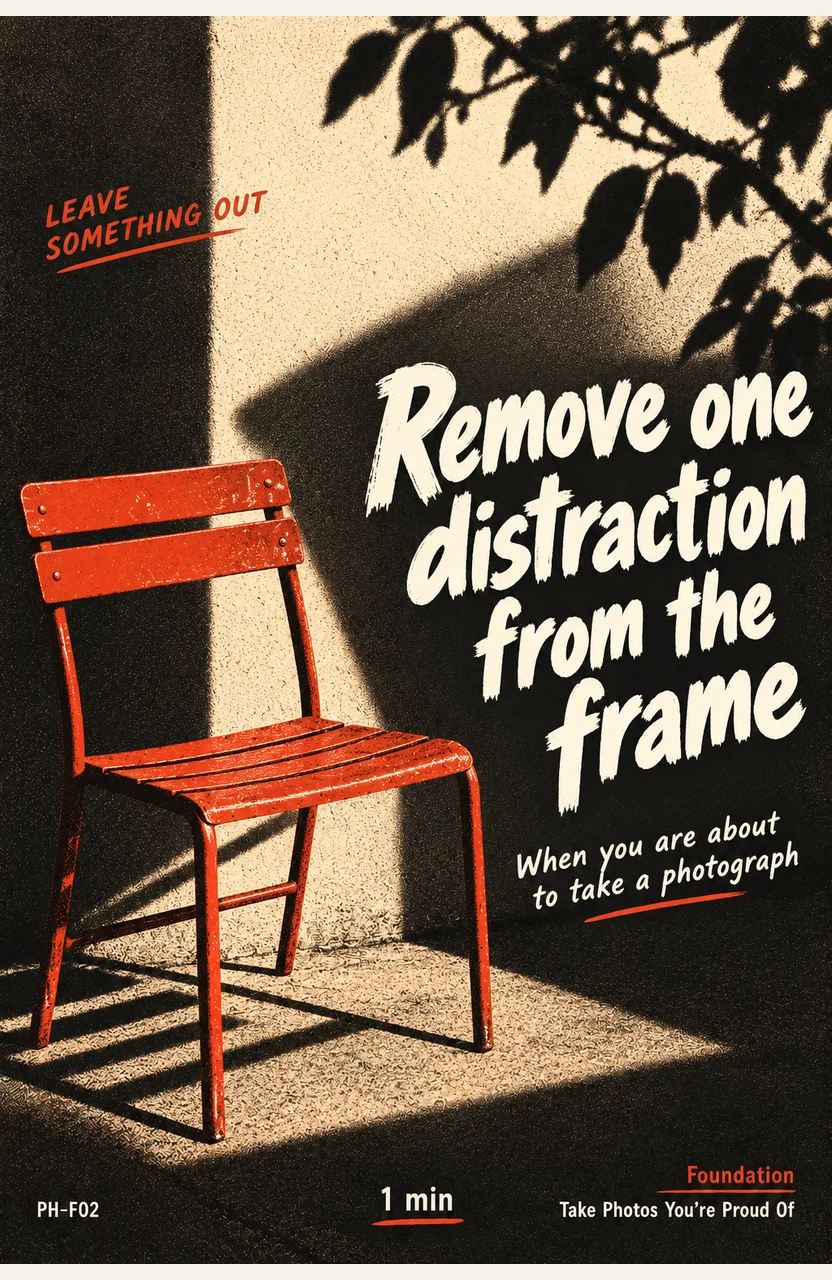

Photograph a light-and-shadow boundary When: light or shadow catches your eye
Remove one distraction from the frame When: you are about to take a photograph
Photograph your subject from another height When: you are about to leave a subject
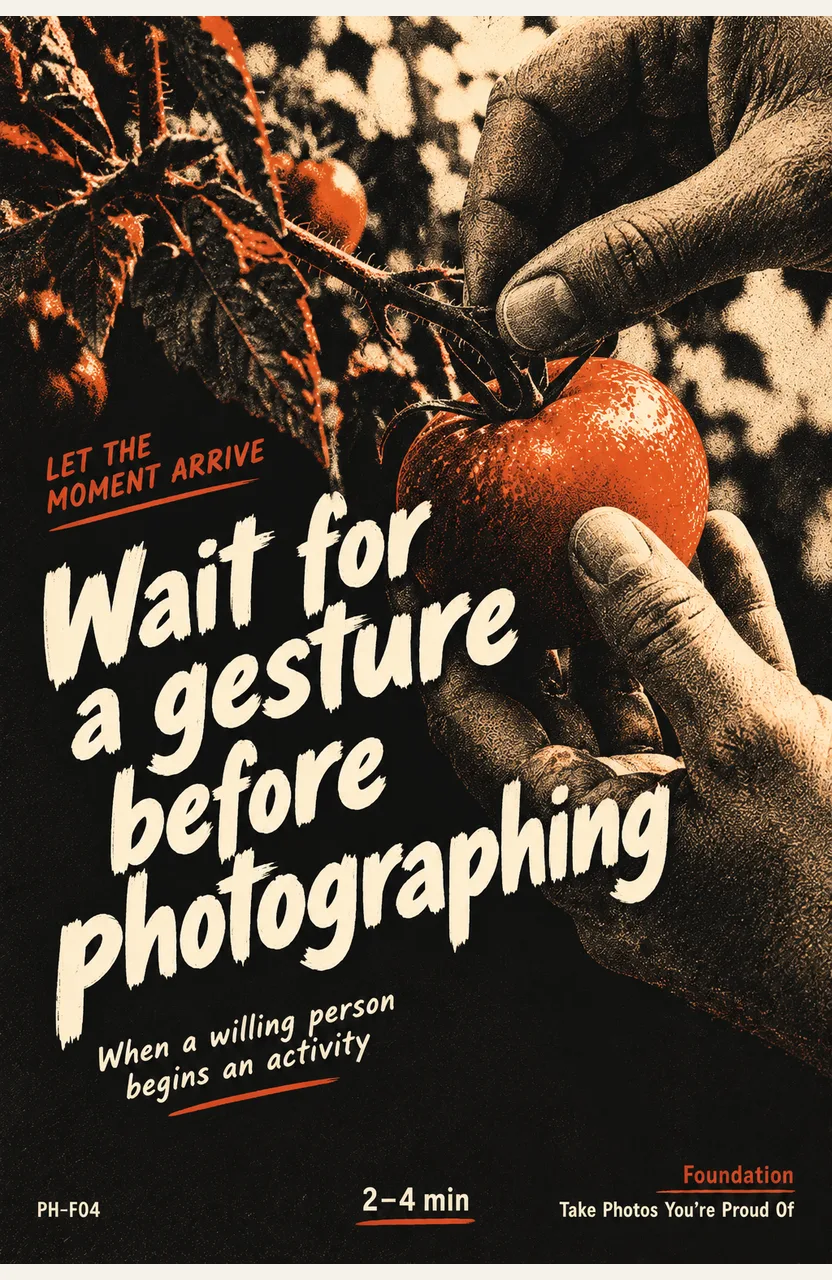
Wait for a gesture before photographing When: a willing person begins an activity
Frame two elements in relation When: two things catch your eye together
Choose one image from similar frames When: you review several similar photographs

10 cards · draft

How can I practise overhead reach and controlled turning?

After warming up, try three shoulder-blade circles each way, three upper-back turns per side and three lying arm raises. About six minutes, twice weekly. These rehearse shoulder-blade movement, trunk turning and active arm returns. Add a supported bench reach if useful, or use FL-M05 to combine overhead practice without double sets. This is a practice invitation, not a promised result.

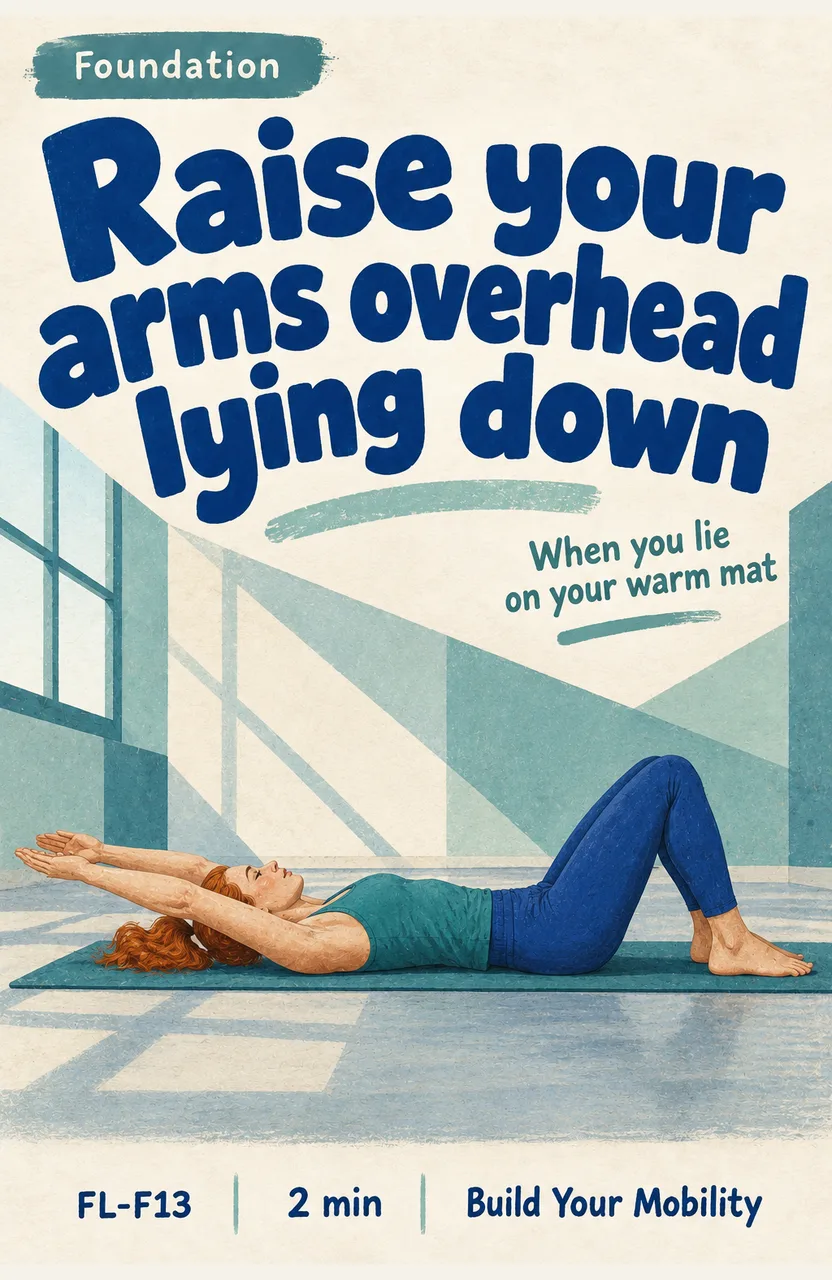
Circle your shoulder blades on all fours When: you begin the hands-and-knees part of your warm-up
Raise your arms overhead while lying down When: you lie on your mat after warming up
Rotate your upper back on all fours When: you finish your hands-and-knees warm-up
Rock gently over your palms When: you put your hands down for floor practice
Turn your head three times each way When: you close your morning inbox
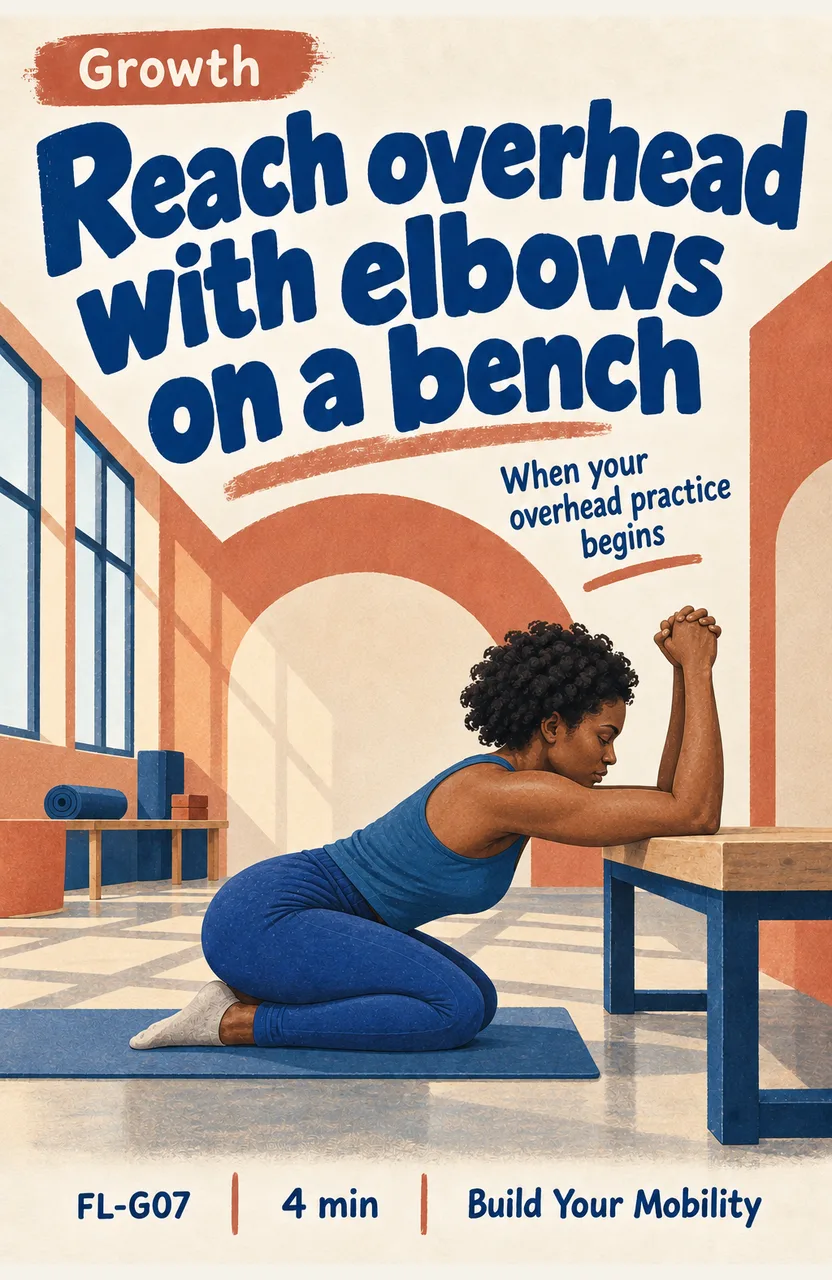
Reach overhead with elbows on a bench When: you start your dedicated overhead practice after warming up

8 cards · draft

What can I try for tired eyes during screen work?

Try readable text, fewer reflections and pauses away from the screen. The exact eye-break dose remains uncertain, and persistent discomfort or blurred vision needs an eye examination.
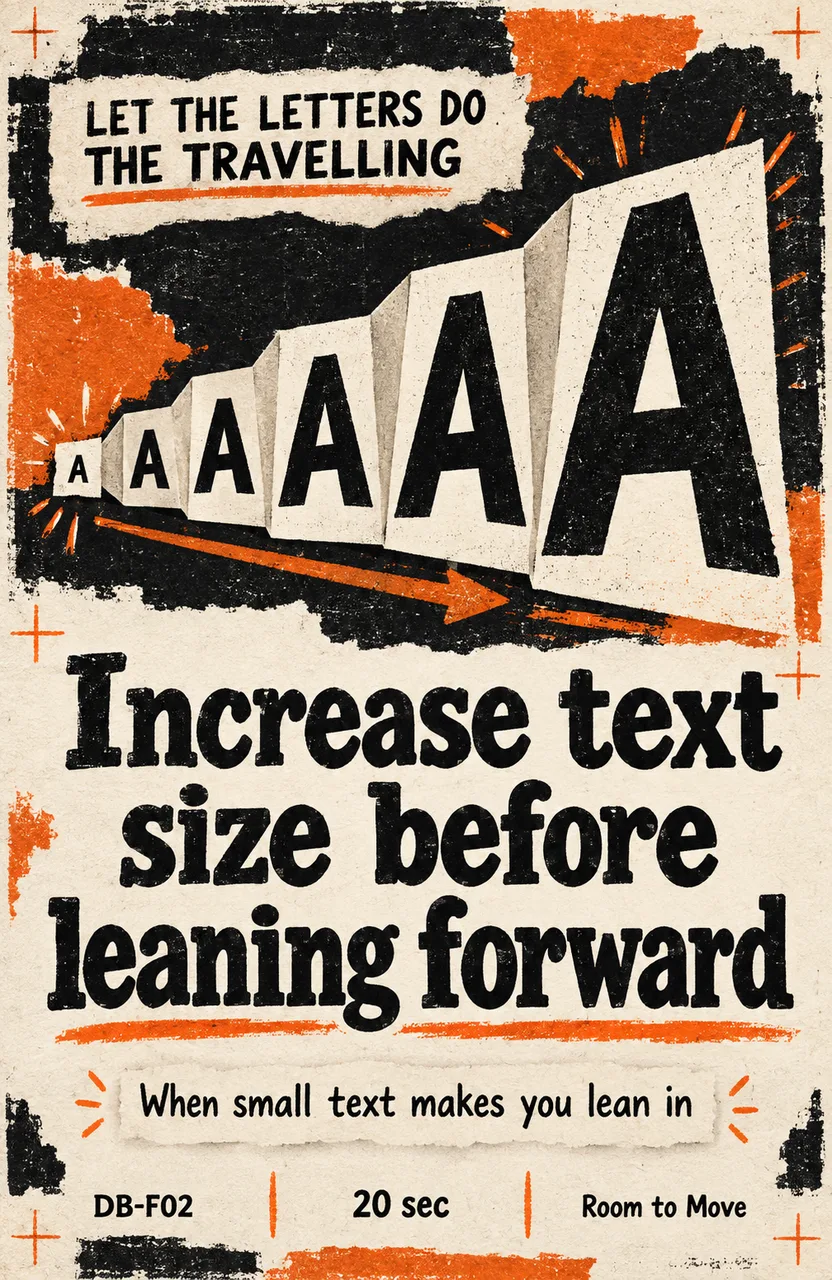
Increase text size before leaning forward When: you lean in to read small text
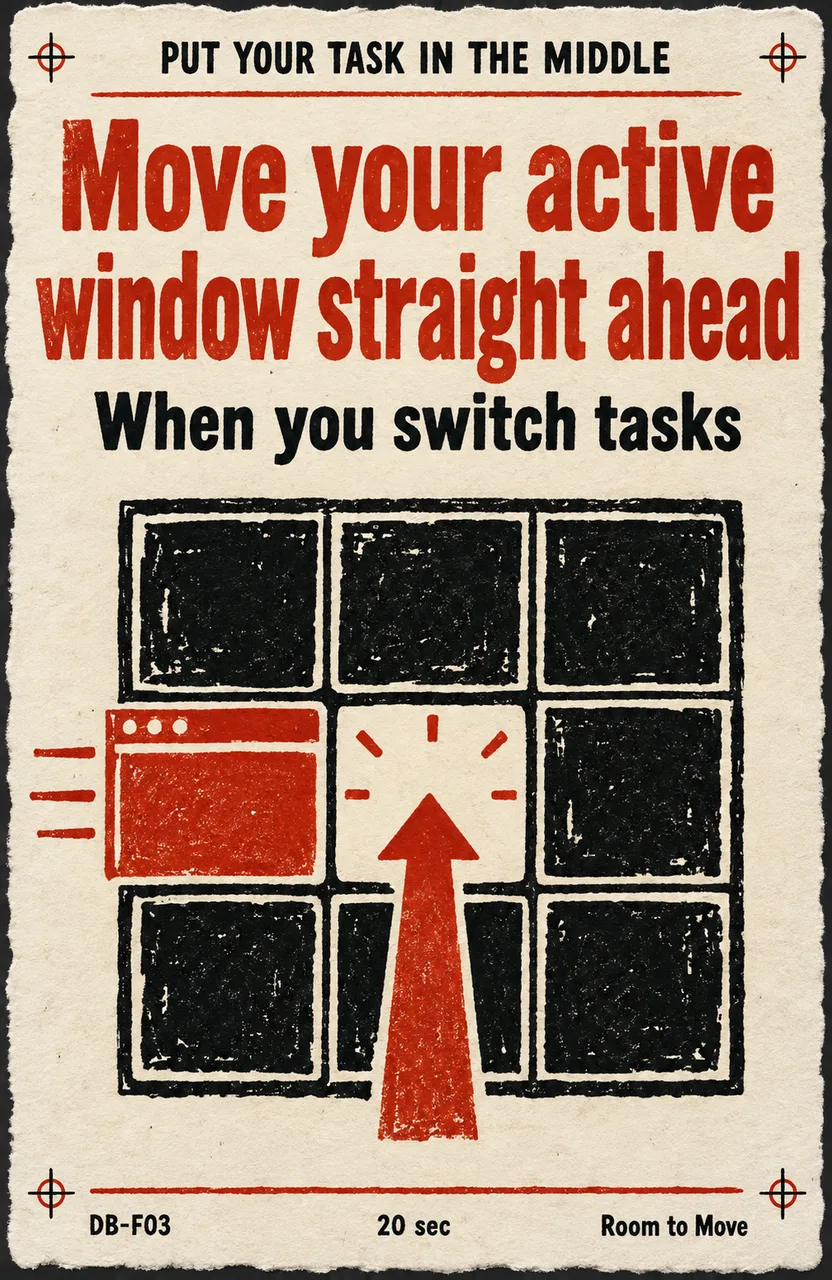
Move your active window straight ahead When: you switch to another long computer task
Look far away for 20 seconds When: you finish saving a document
Blink slowly five times after sending When: you send an email
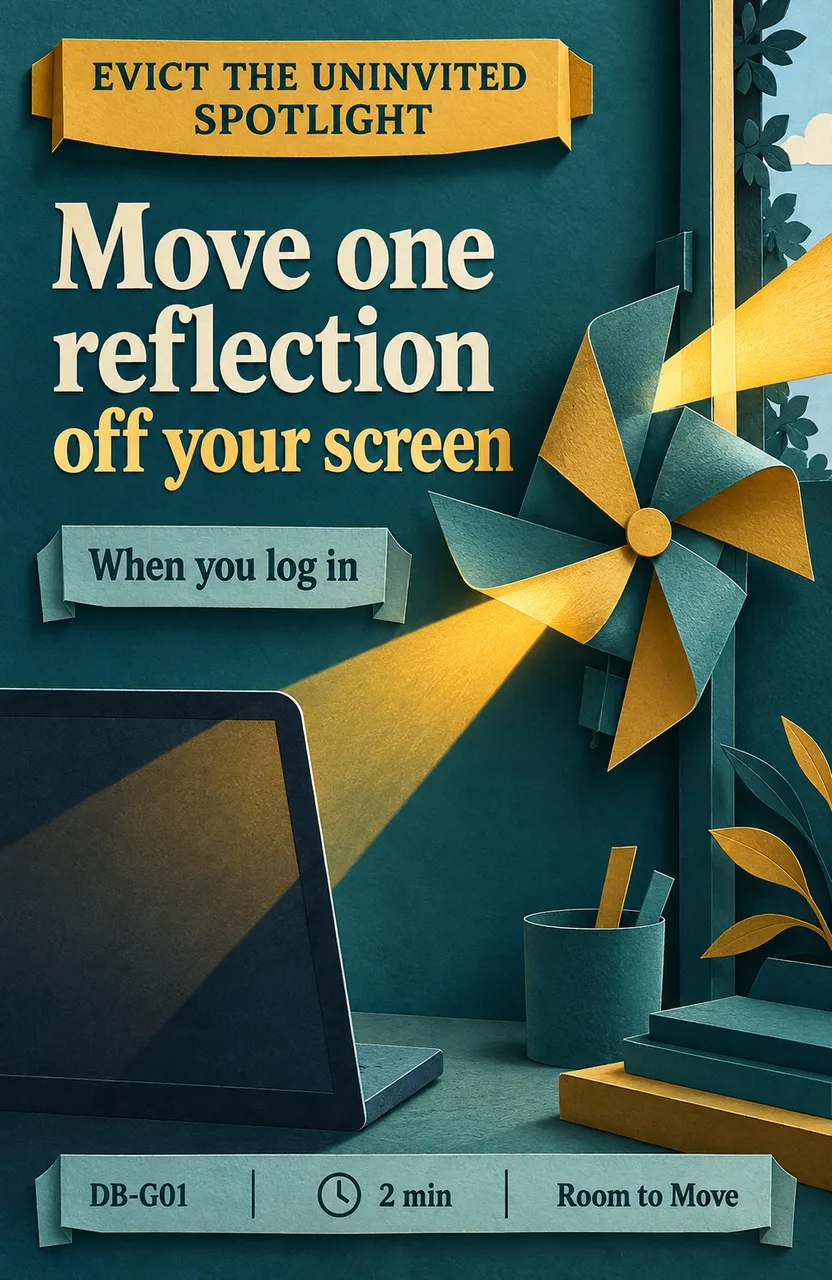
Move one reflection off your screen When: you see a bright reflection while logging in
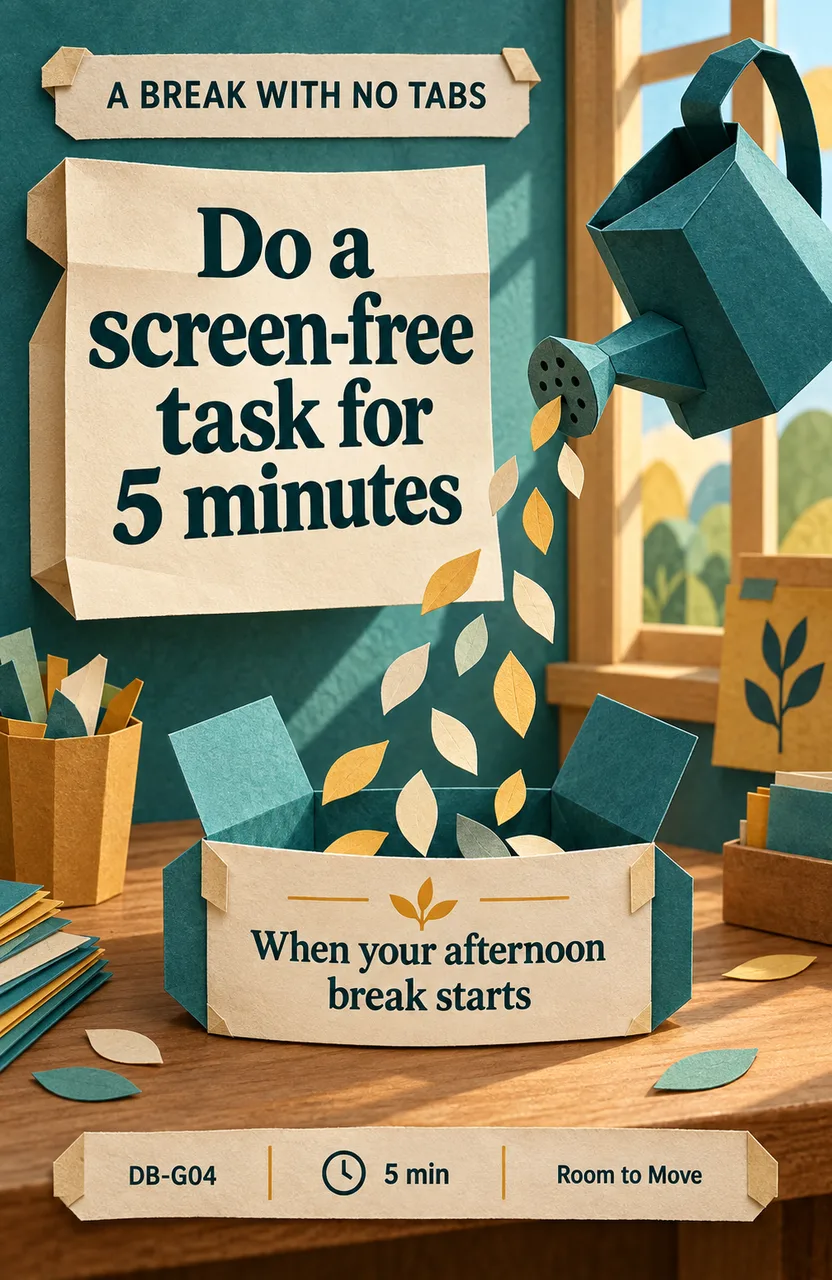
Do a screen-free task for 5 minutes When: your afternoon break begins

9 cards · draft

How do I restart work with other people?

Check that the shared request is current, renew the arrangement and make a specific request for feedback or a realistic deadline. A handover is complete when the next person knows and accepts what they are taking on.
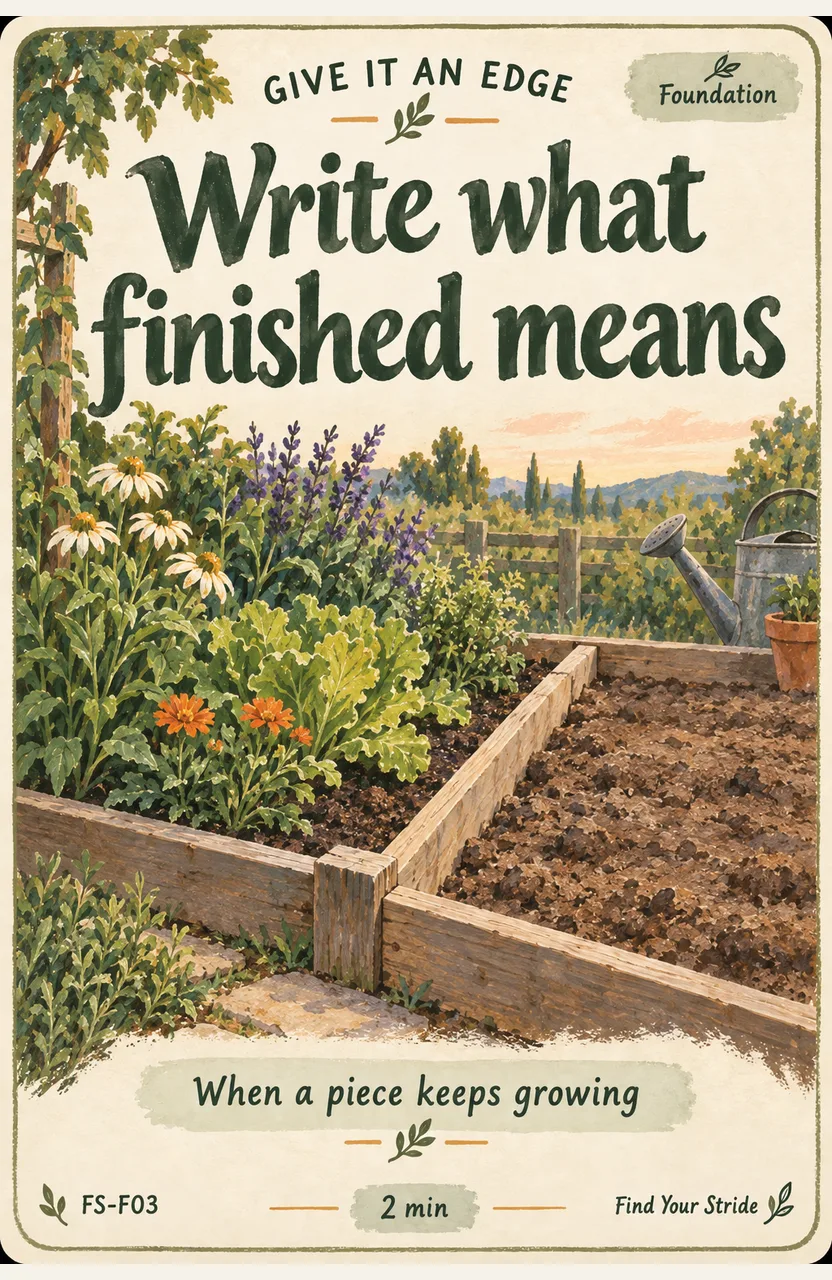

Write what finished means When: When a piece keeps growing.
Label the working version When: When several versions confuse your return.
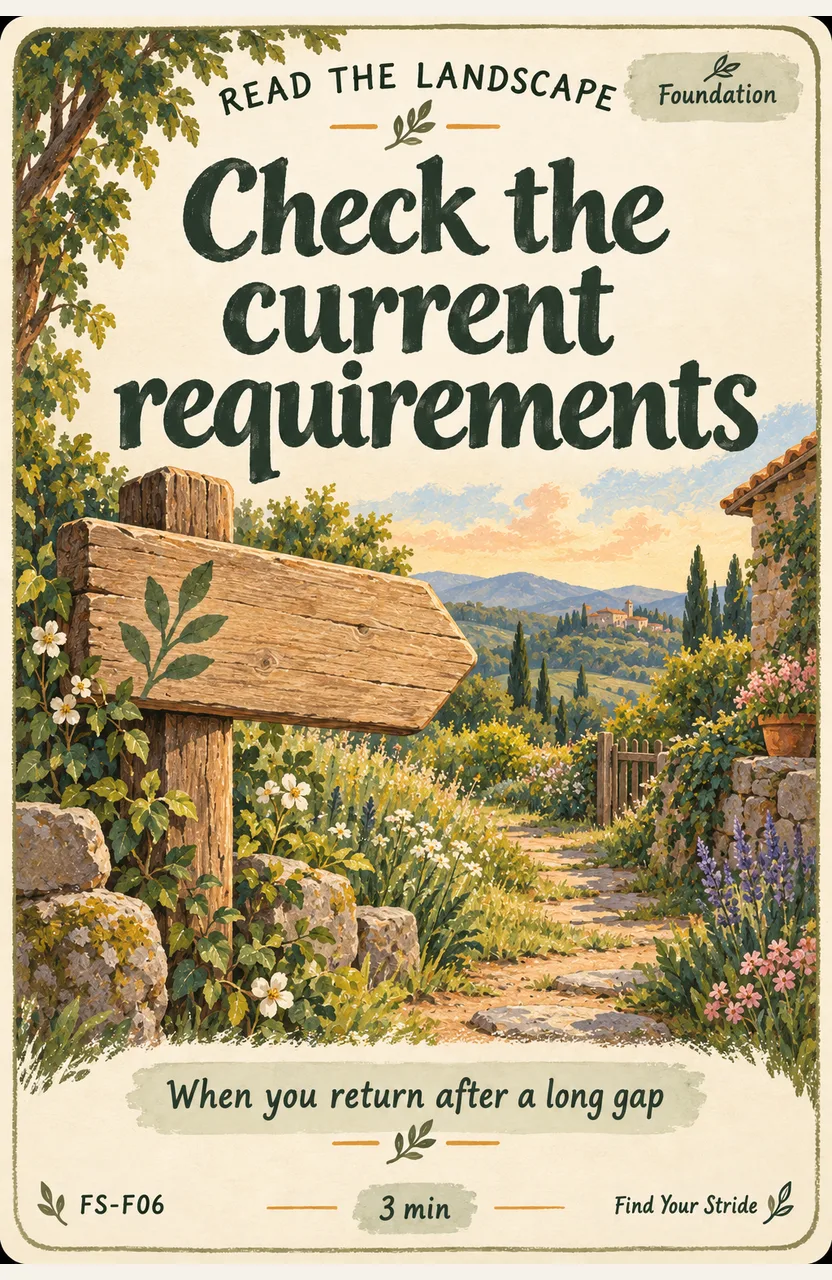
Check the current requirements When: When you return after a long gap.
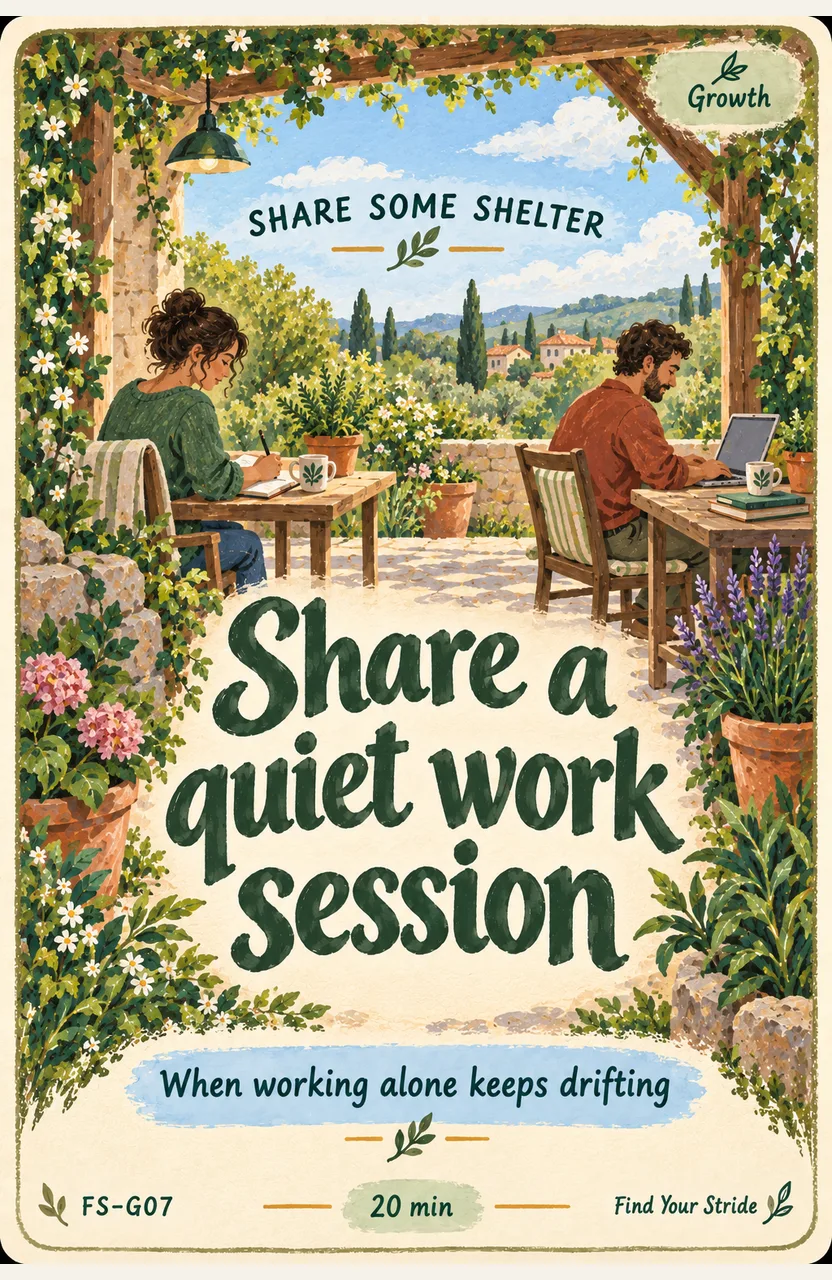
Share a quiet work session When: When working alone keeps drifting.
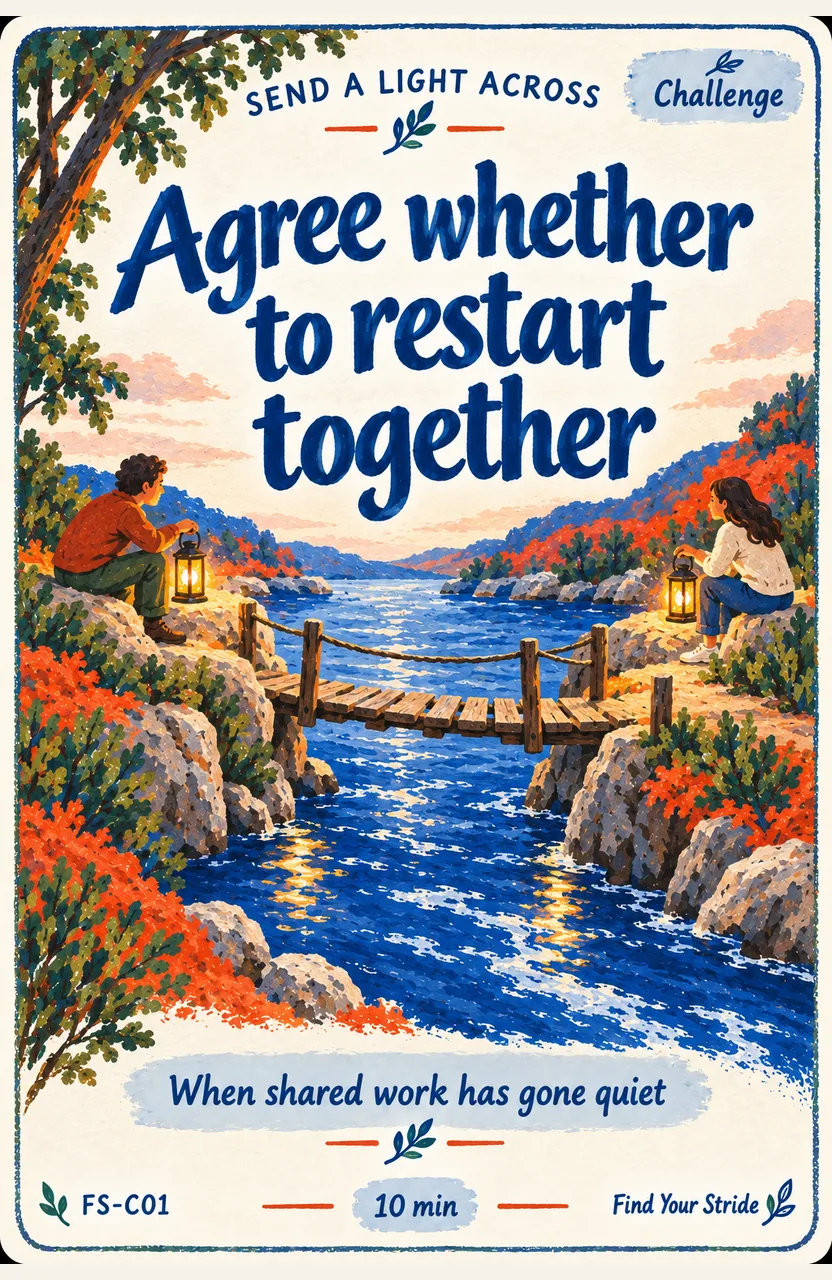
Agree whether to restart together When: When shared work has gone quiet.
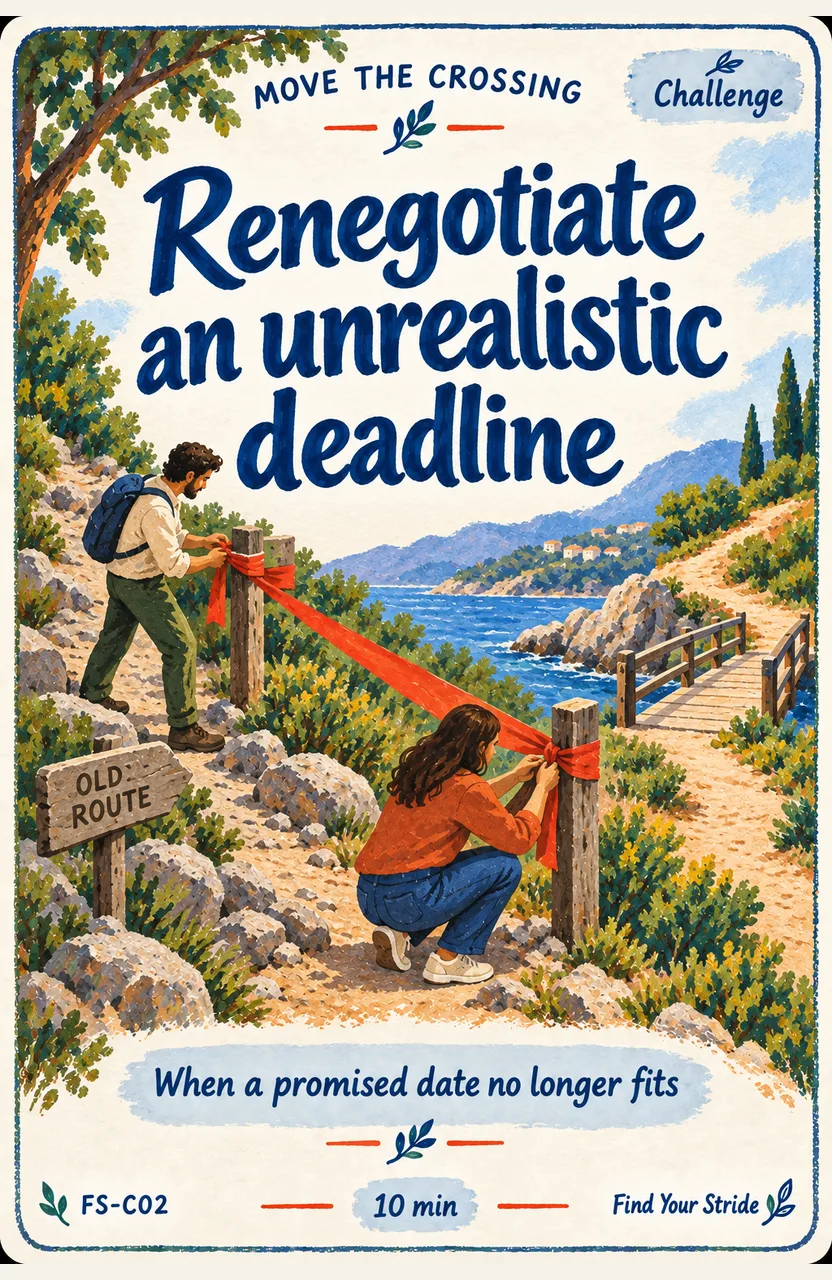
Renegotiate an unrealistic deadline When: When a promised date no longer fits.

10 cards · draft

How do I return to unfinished work?

Find the shape of what exists, identify the working version and check the request before rebuilding from scratch. A draft can stay imperfect while you recover your place.
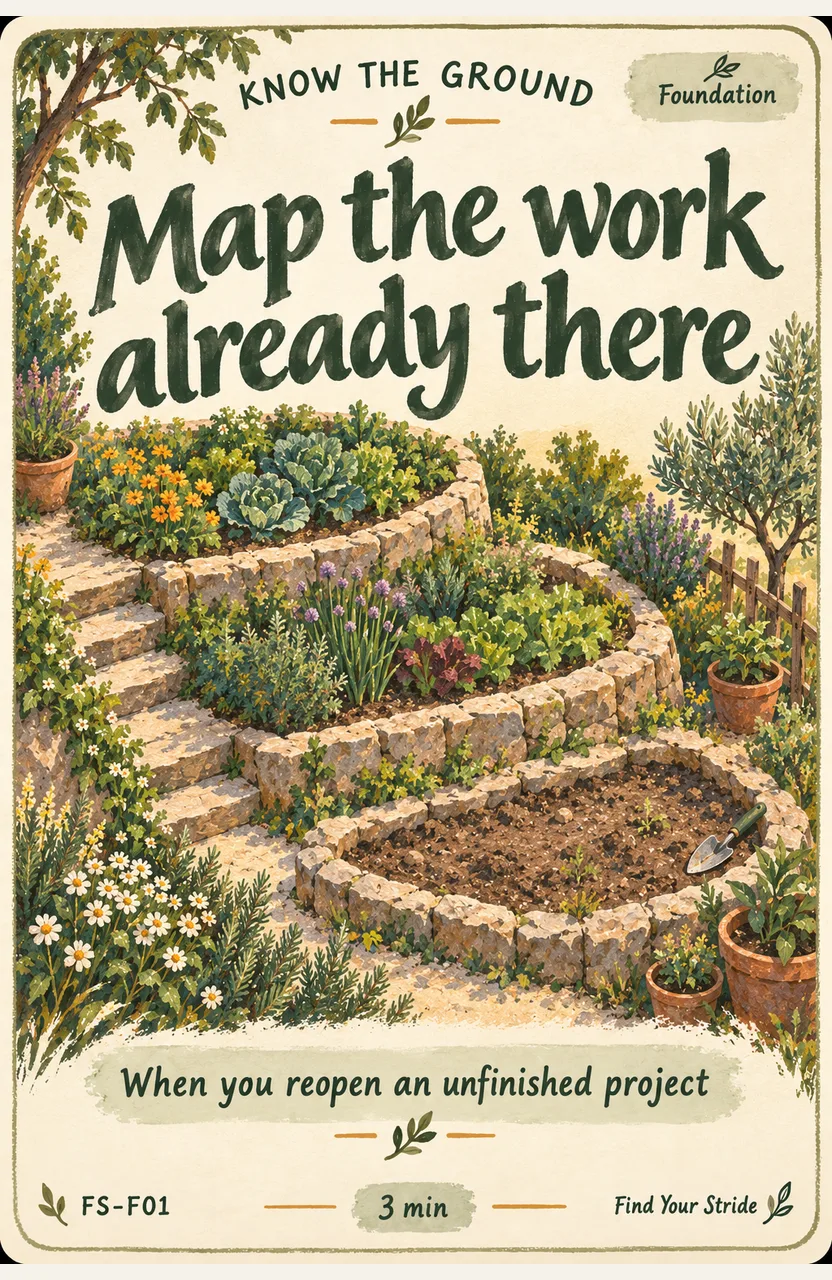
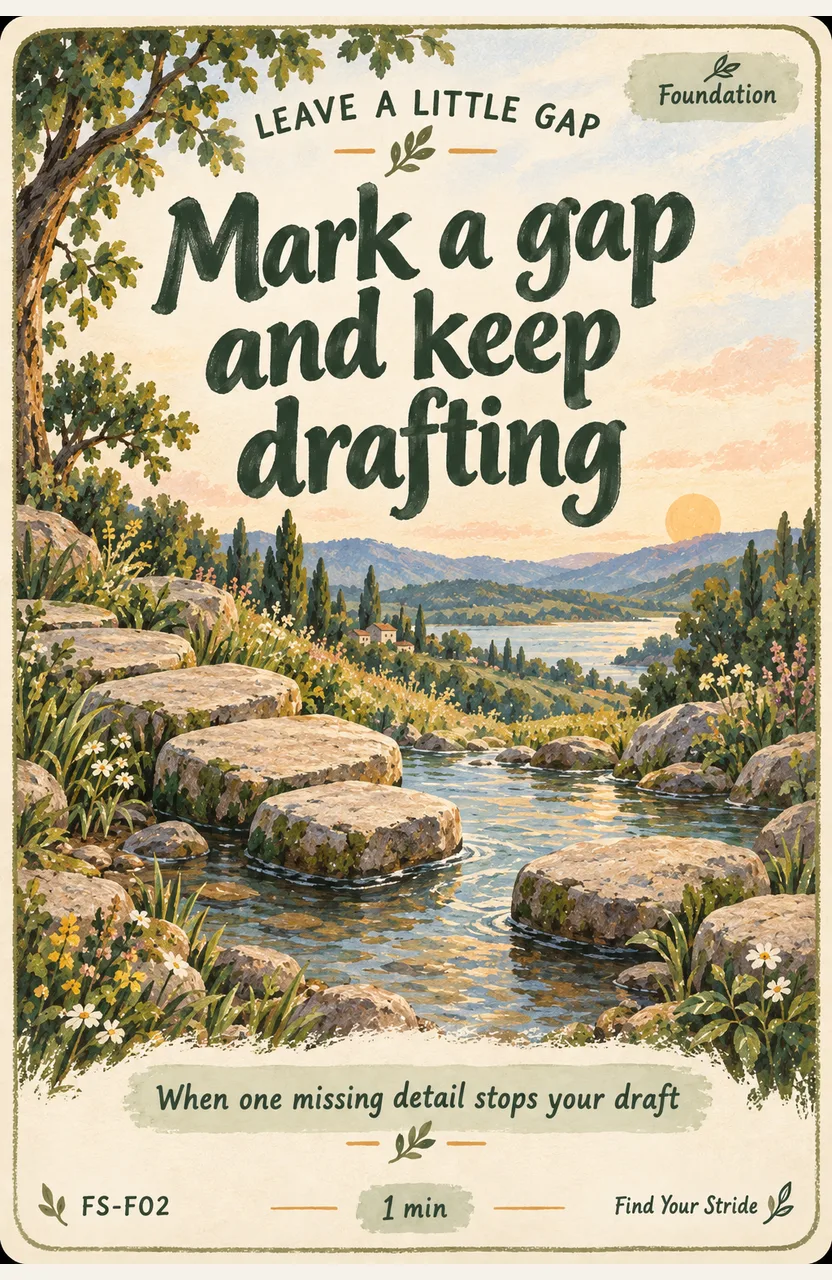
Write a restart plan before pausing work When: you pause an unfinished task for the day
Map the work already there When: When you reopen an unfinished project.
Mark a gap and keep drafting When: When one missing detail stops your draft.
Label the working version When: When several versions confuse your return.
Check the current requirements When: When you return after a long gap.
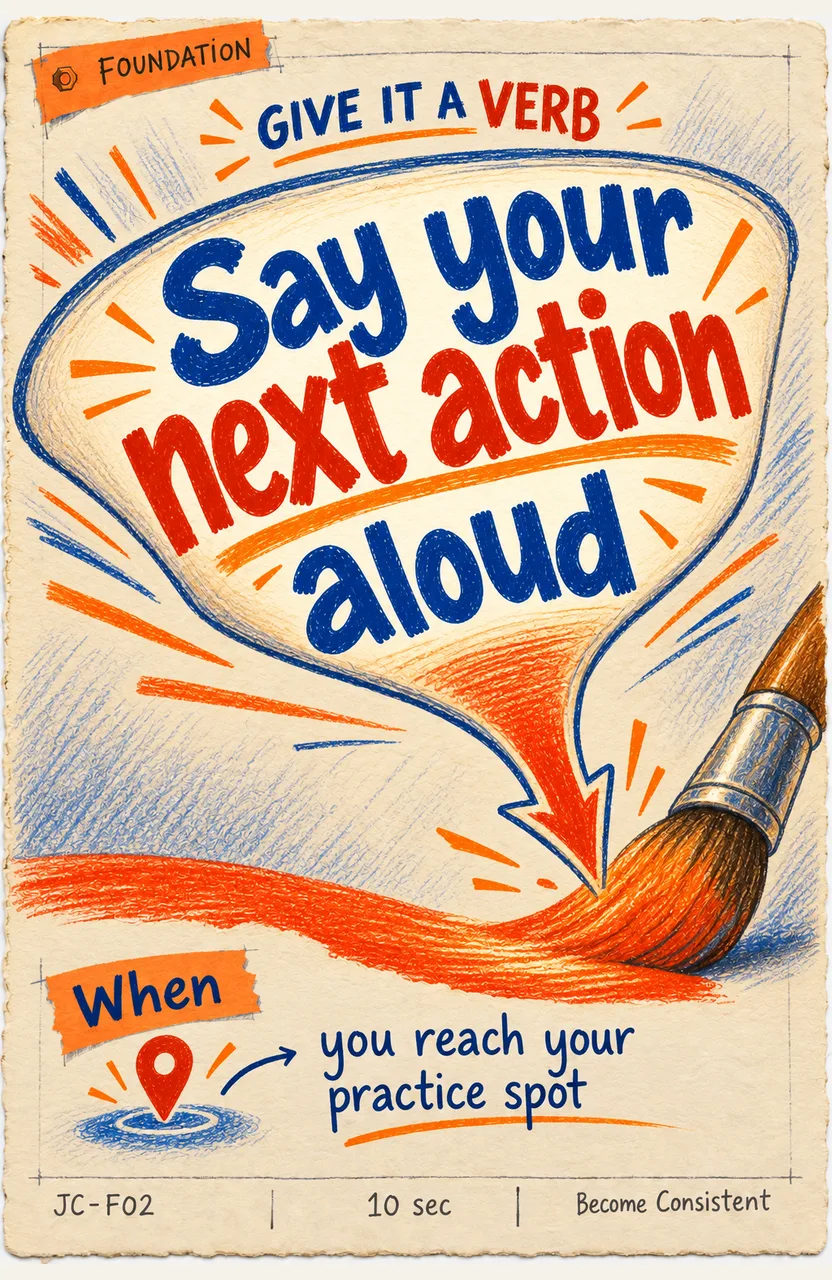
Say Your Next Action Before Starting Your Practice When: you reach your practice spot

11 cards · draft

How do I work at a pace I can sustain?

Set an edge for the current piece, leave space in the plan and use actual experience when forecasting. Your current capacity belongs in the plan, including days when work needs to be reduced or renegotiated.

Write what finished means When: When a piece keeps growing.
Check why this still matters When: When an old goal feels stale.
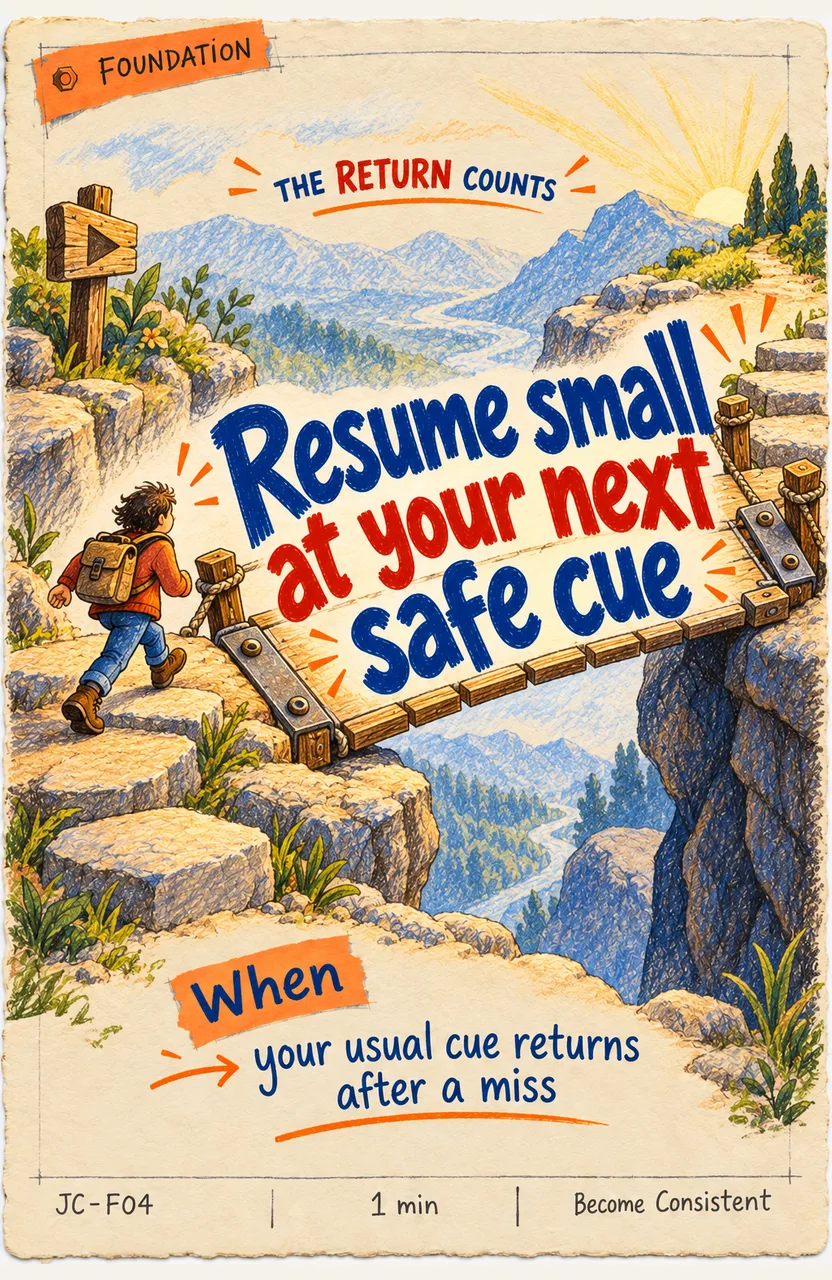
Resume Your Smallest Practice at the Next Safe Cue When: your usual cue returns after a miss
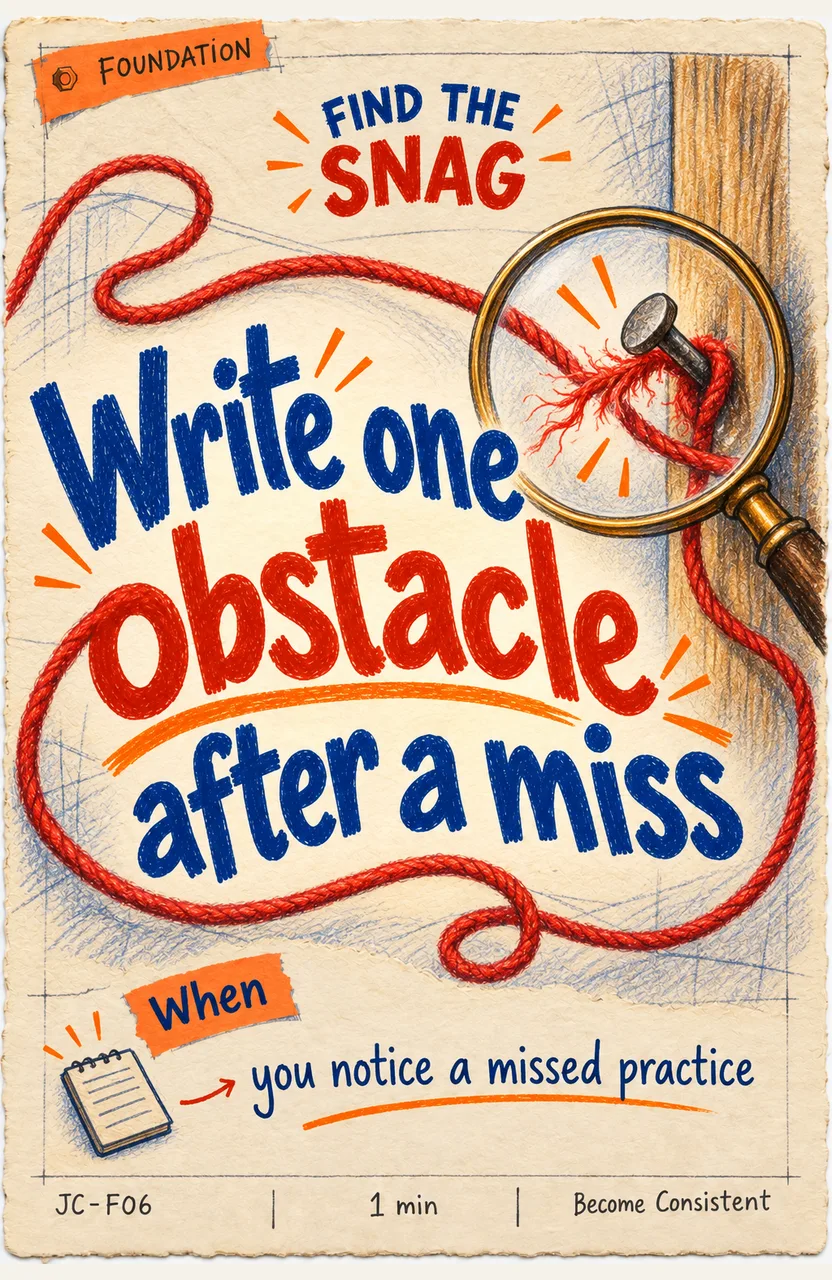
Write One Obstacle After a Missed Practice When: you notice a missed practice
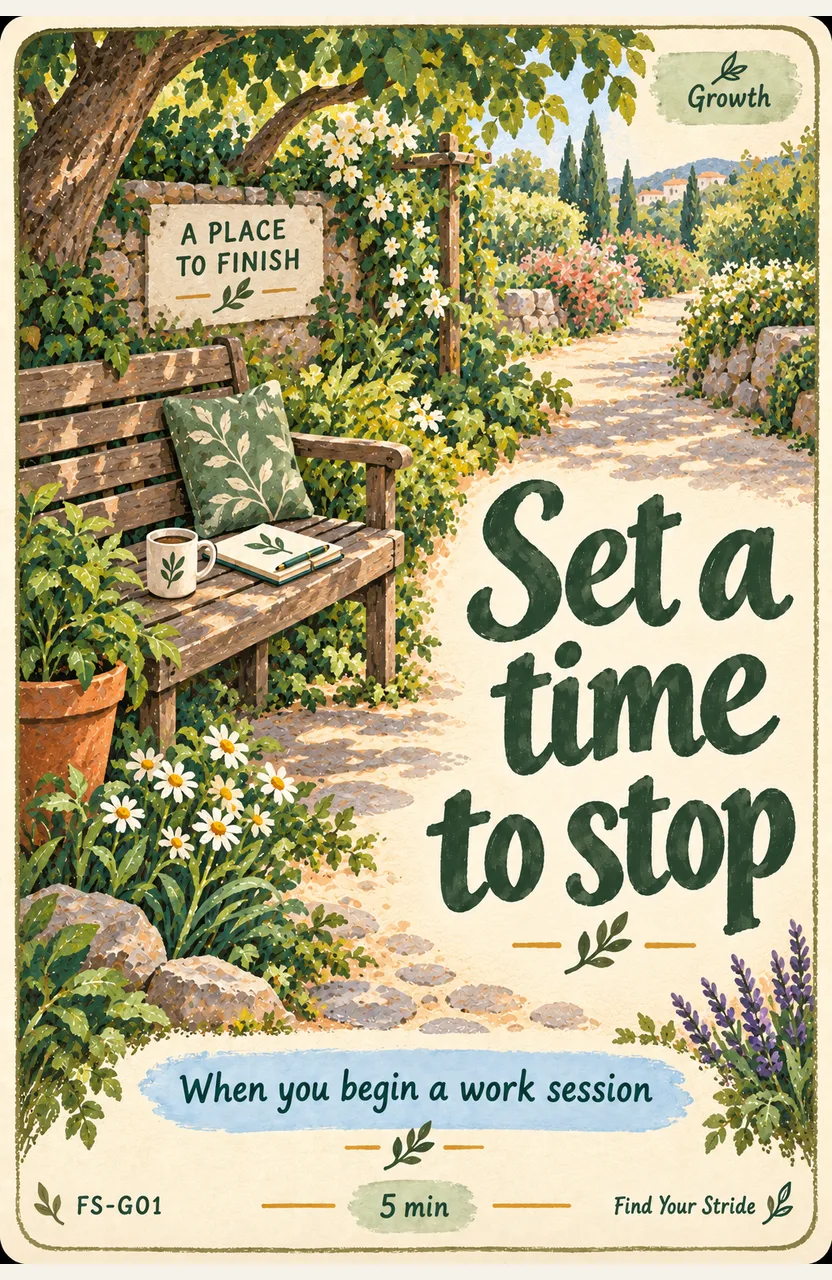
Set a time to stop When: When you begin a work session.
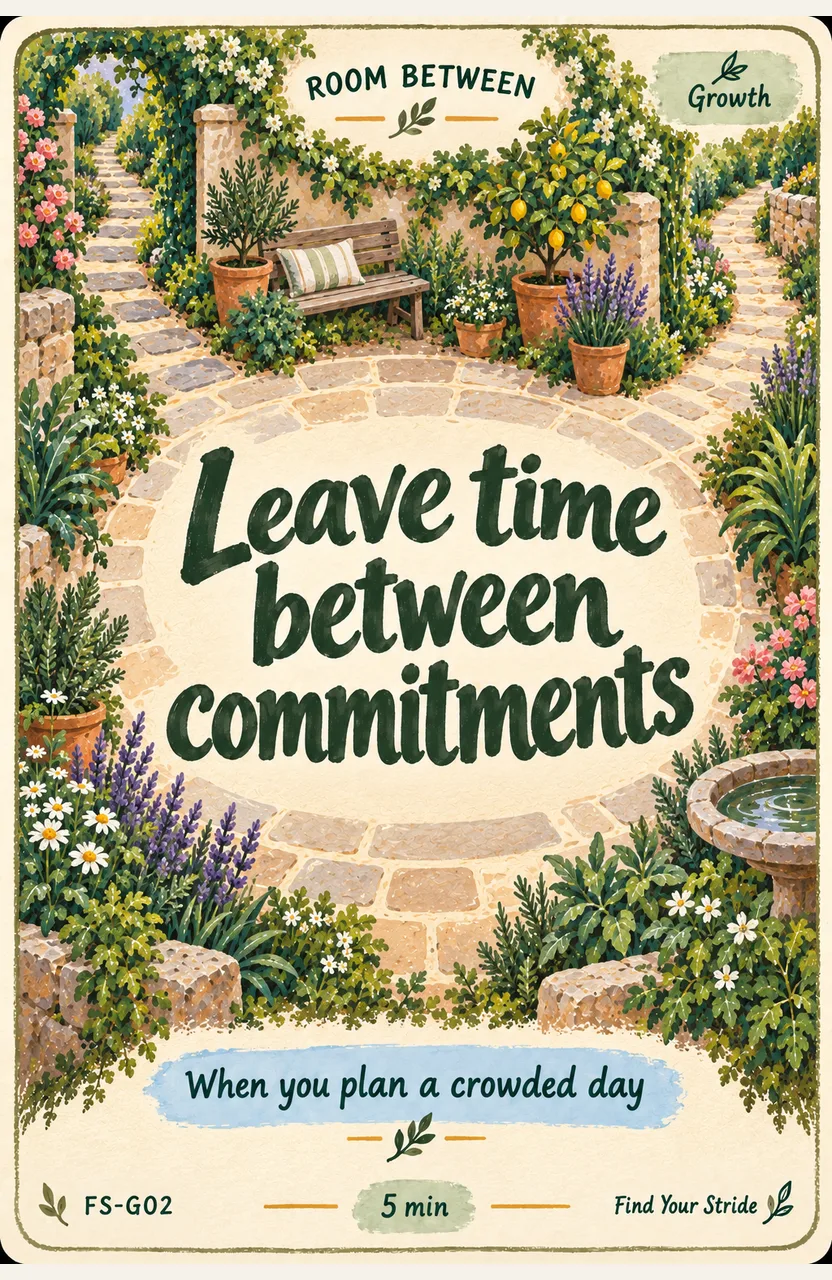
Leave time between commitments When: When you plan a crowded day.

14 cards · draft

How can I build a circle I see regularly?

Greet familiar people, welcome someone at the edge and invite a small shared activity. Return to one group, then consider a monthly circle with shared jobs. The missions test new possibilities with clear stopping points.

Greet a familiar face by name When: you arrive where you regularly see the same people
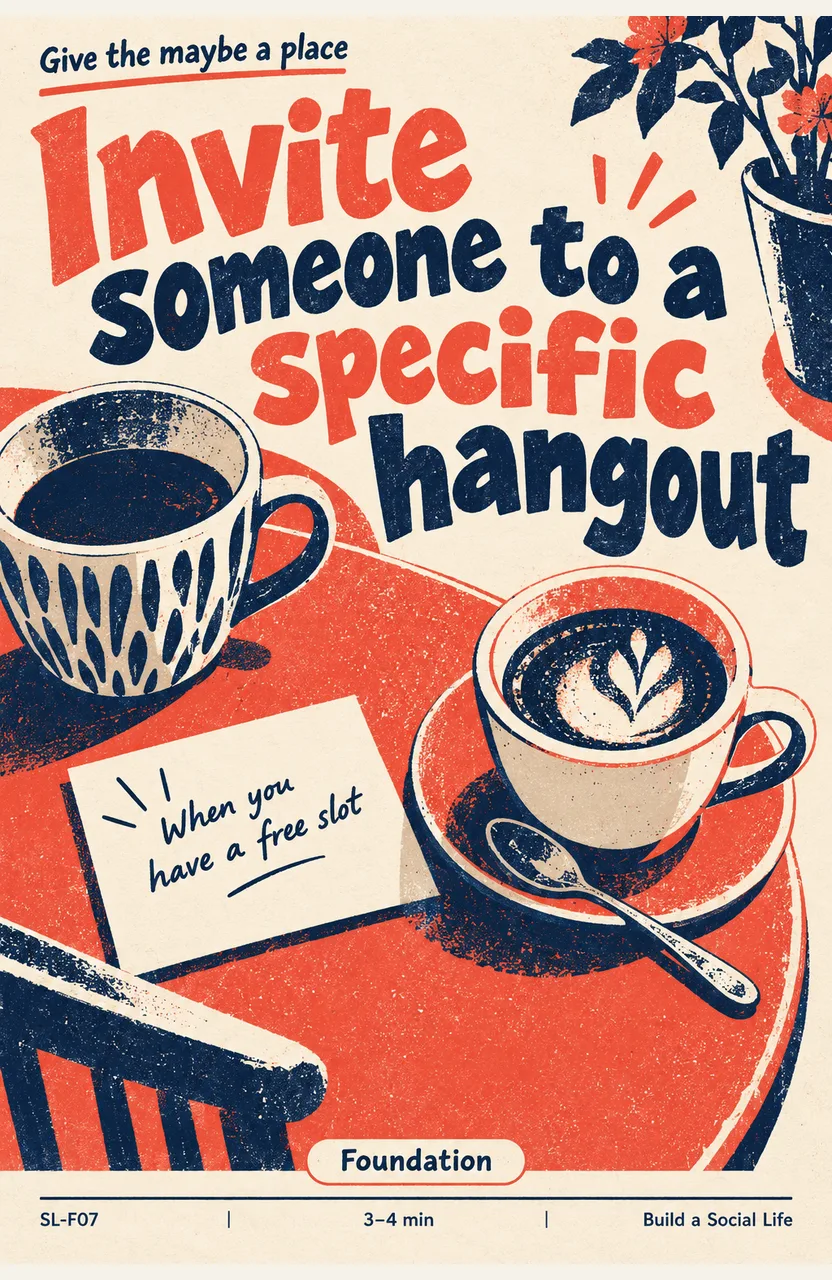
Invite someone to a specific hangout When: you notice a free slot for company
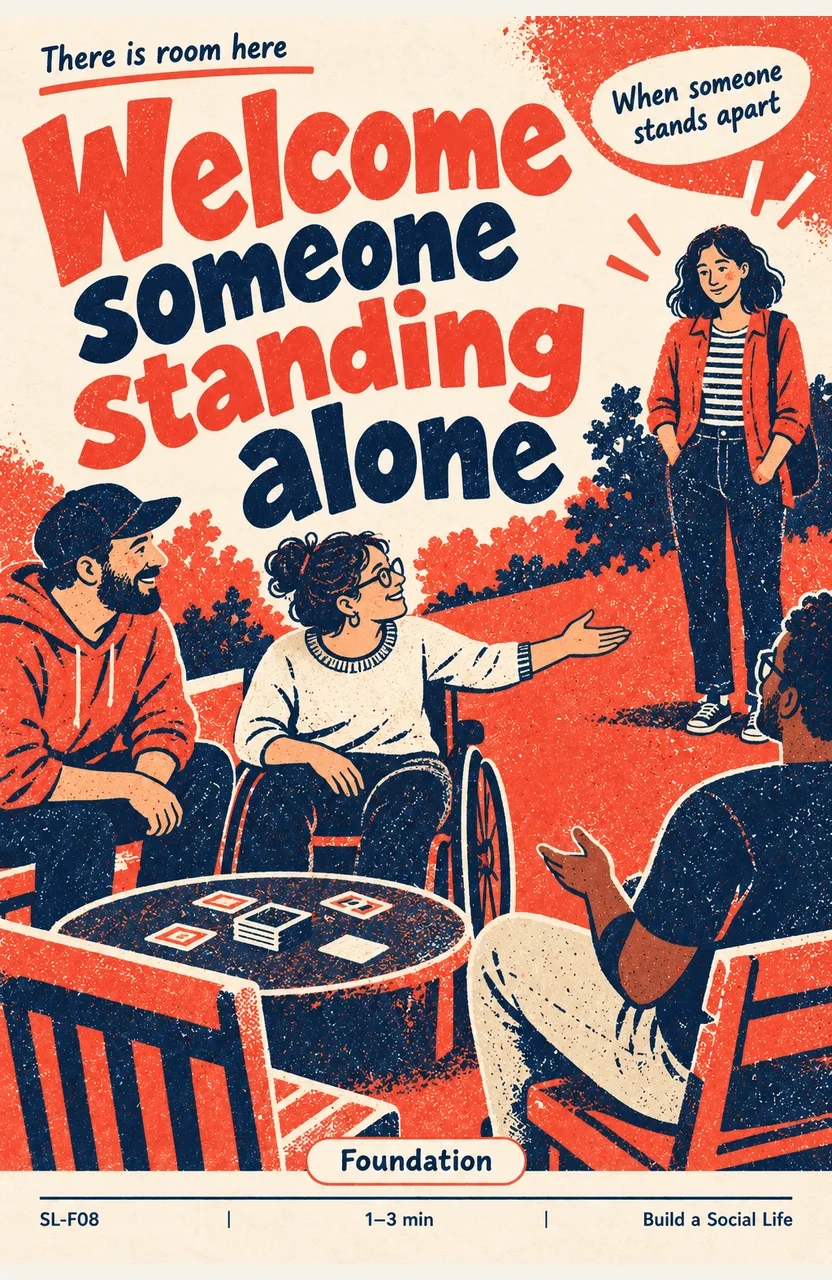
Welcome someone standing alone When: you notice someone on the edge of a gathering
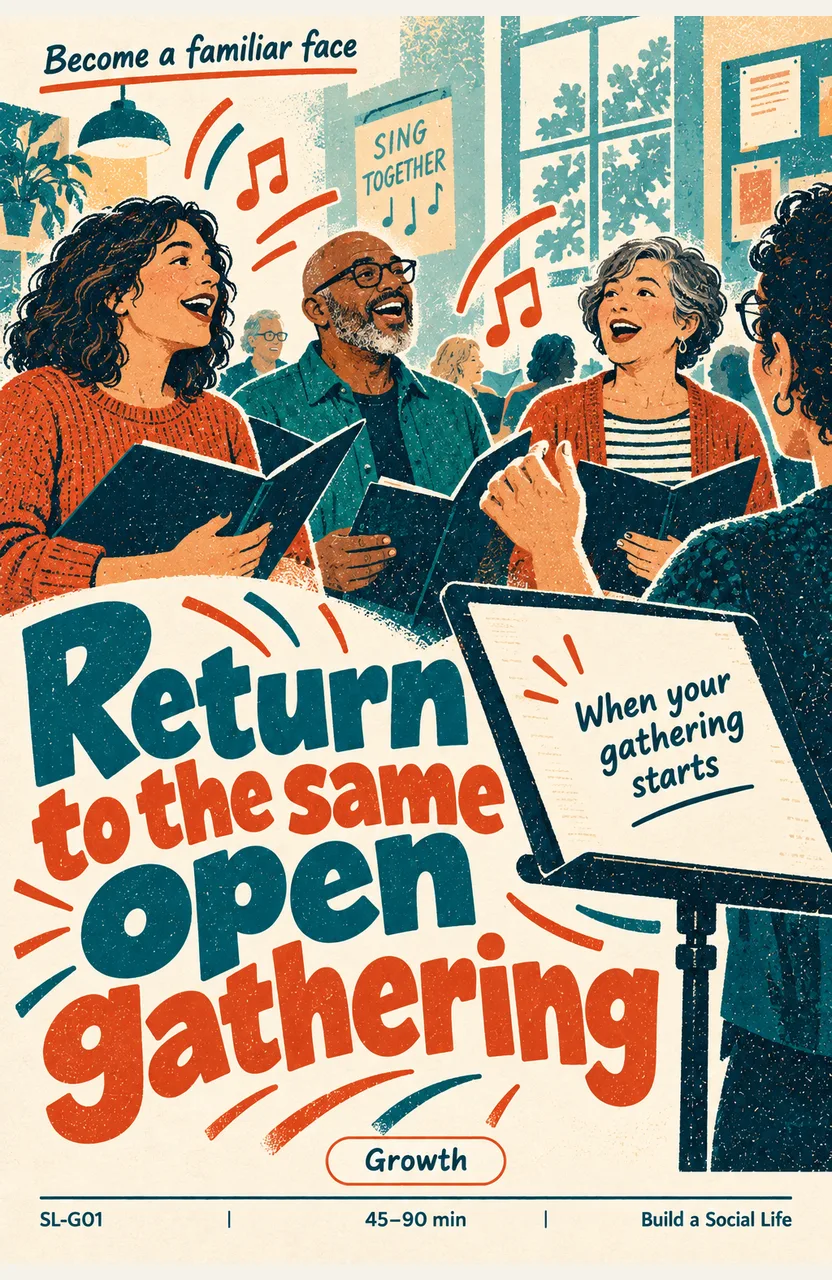
Return to the same open gathering When: your chosen recurring gathering is about to start
Host a small low-fuss hangout When: you have room for a short visit this week
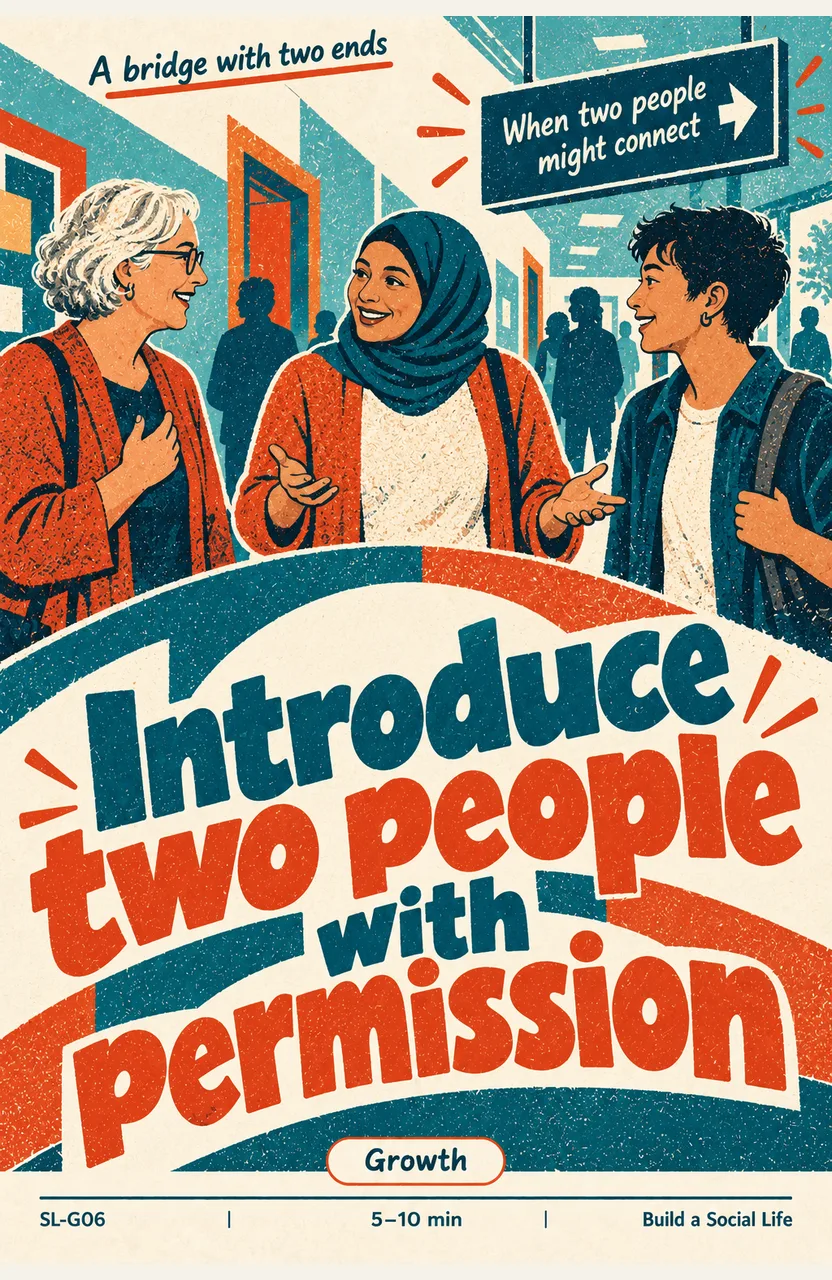
Introduce two people with permission When: two people you know may enjoy meeting

3 cards · draft

What should I track if I keep getting headaches at my desk?

A headache diary can support a conversation with a clinician without assuming the screen is the cause. Repeated or severe headaches need assessment; sudden extremely painful headache or new neurological symptoms needs emergency care.

Look far away for 20 seconds When: you finish saving a document
Move one reflection off your screen When: you see a bright reflection while logging in
Record headaches nightly for eight weeks When: you close your workday

24 cards · draft

How can I get fit around a work-from-home desk job?

Use GF-M05 for one supplied strength round on Monday and Thursday. Walk GF-G08 on Tuesday, Wednesday and Friday; start with 5–10 minutes, or use GF-F09 marching indoors. Learn chair stands, push-ups and rows from GF-F07, GF-F08 and GF-G07. Scale the version on each back. The tiny start keeps participation; it is not the full training dose. GF-C05 packages the first week. Pick optional additions later, rather than doing all twenty cards every day. Build gradually toward adult activity guidance.
Walk for 3 minutes after calls When: a video call ends
Do your chair stand set When: your lunch break ends
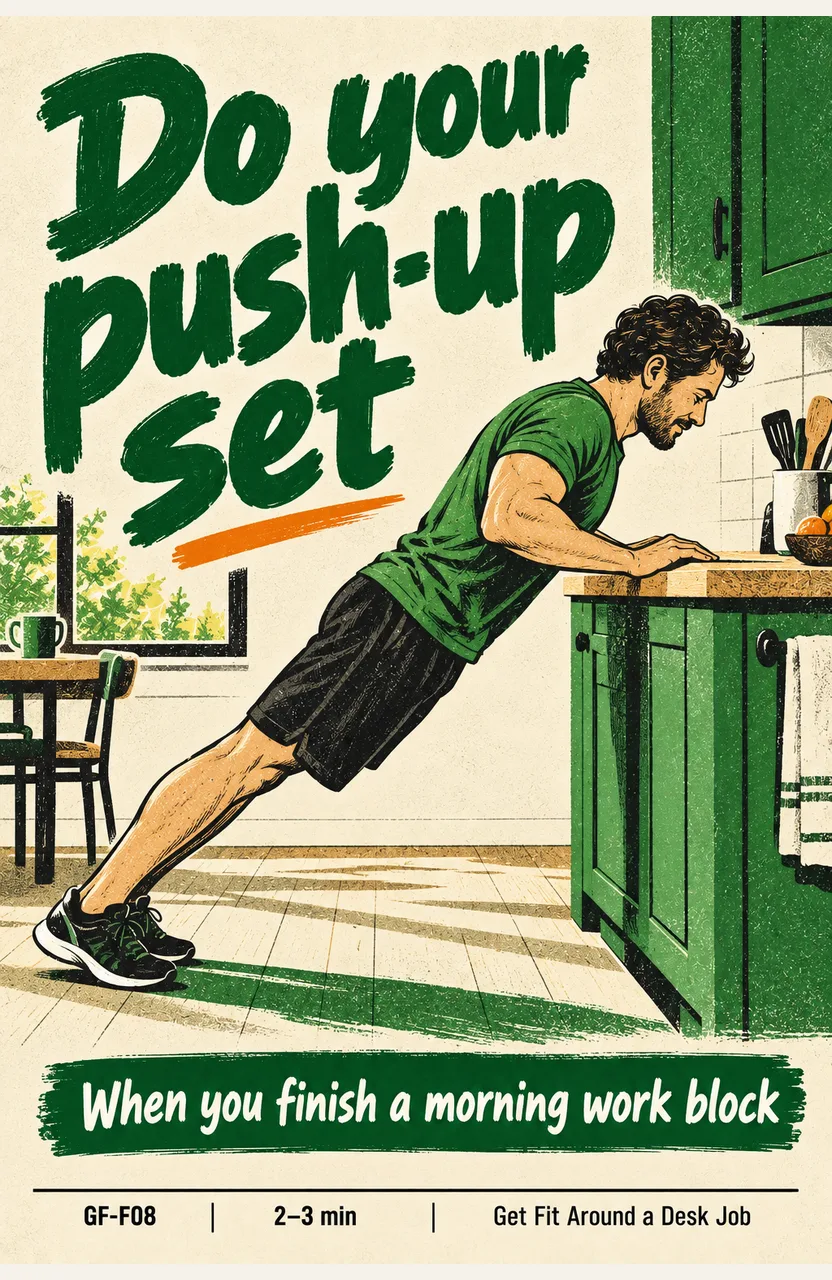
Do your push-up set When: you finish a morning work block
March in place for two minutes When: your midday break begins
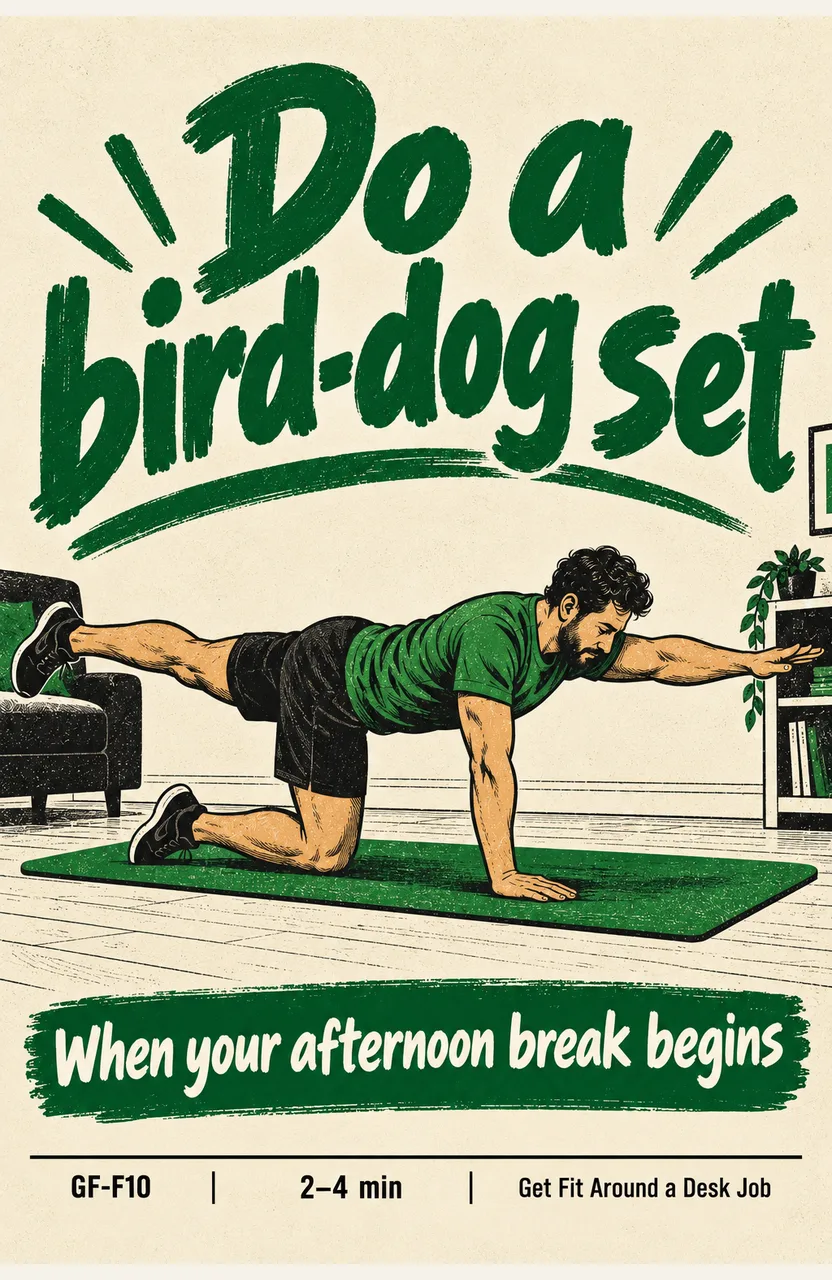
Do a bird-dog set When: your afternoon break begins
Do a supported calf-raise set When: you wait for the kettle

11 cards · draft

How can I make my practice fit my day and surroundings?

Use the routine already happening, prepare the first tool and edit the interruptions around it.
Say Your Next Action Before Starting Your Practice When: you reach your practice spot
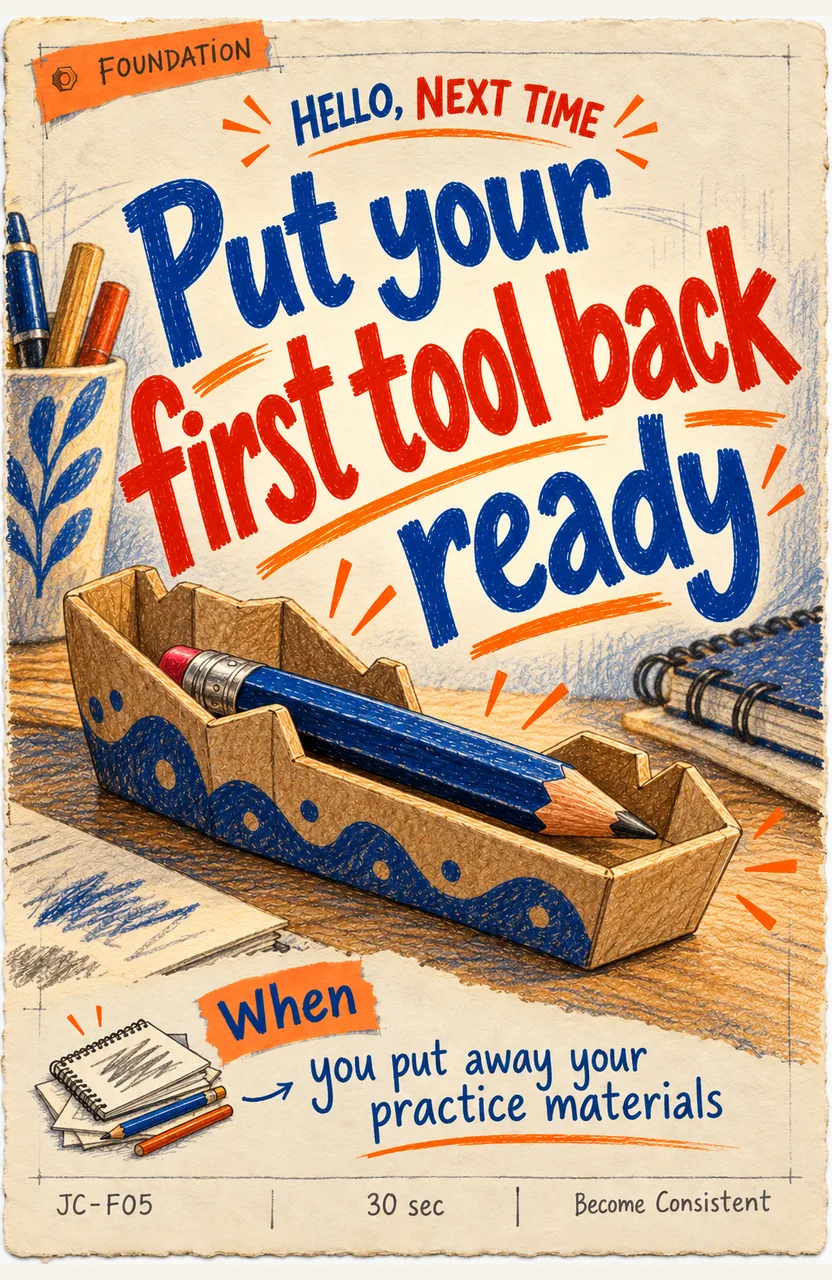
Put Your First Tool Back Ready After Use When: you put away your practice materials
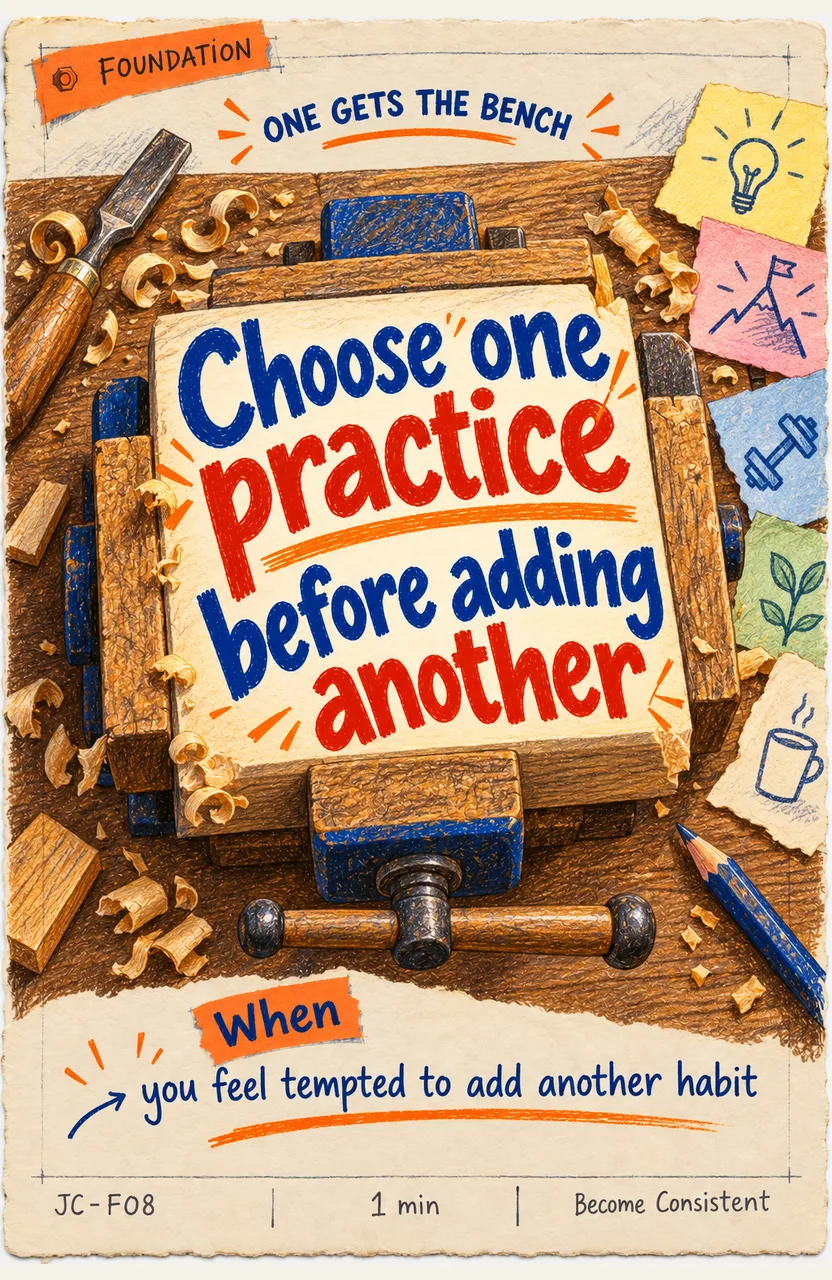
Choose One Practice Before Adding Another When: you feel tempted to add another habit
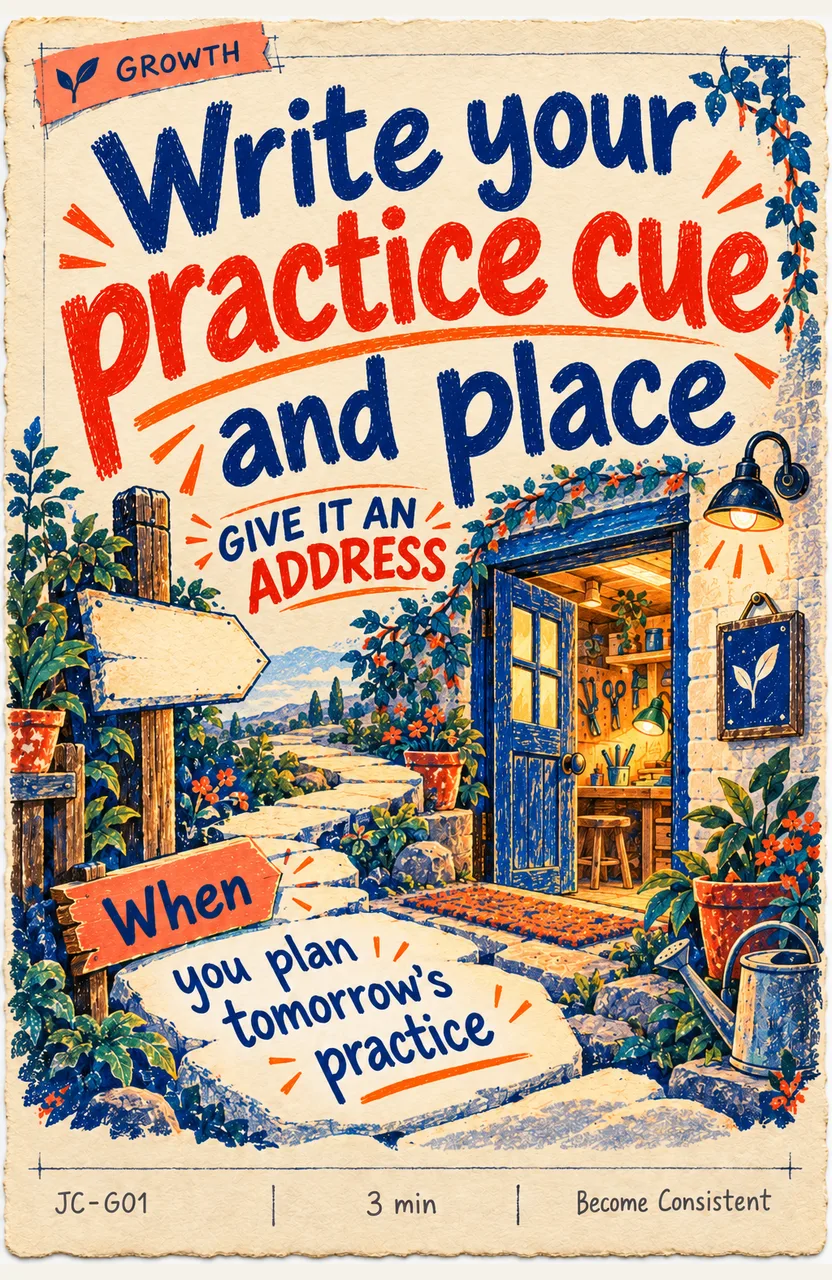
Write a Cue and Place for Your Practice When: you plan tomorrow’s practice
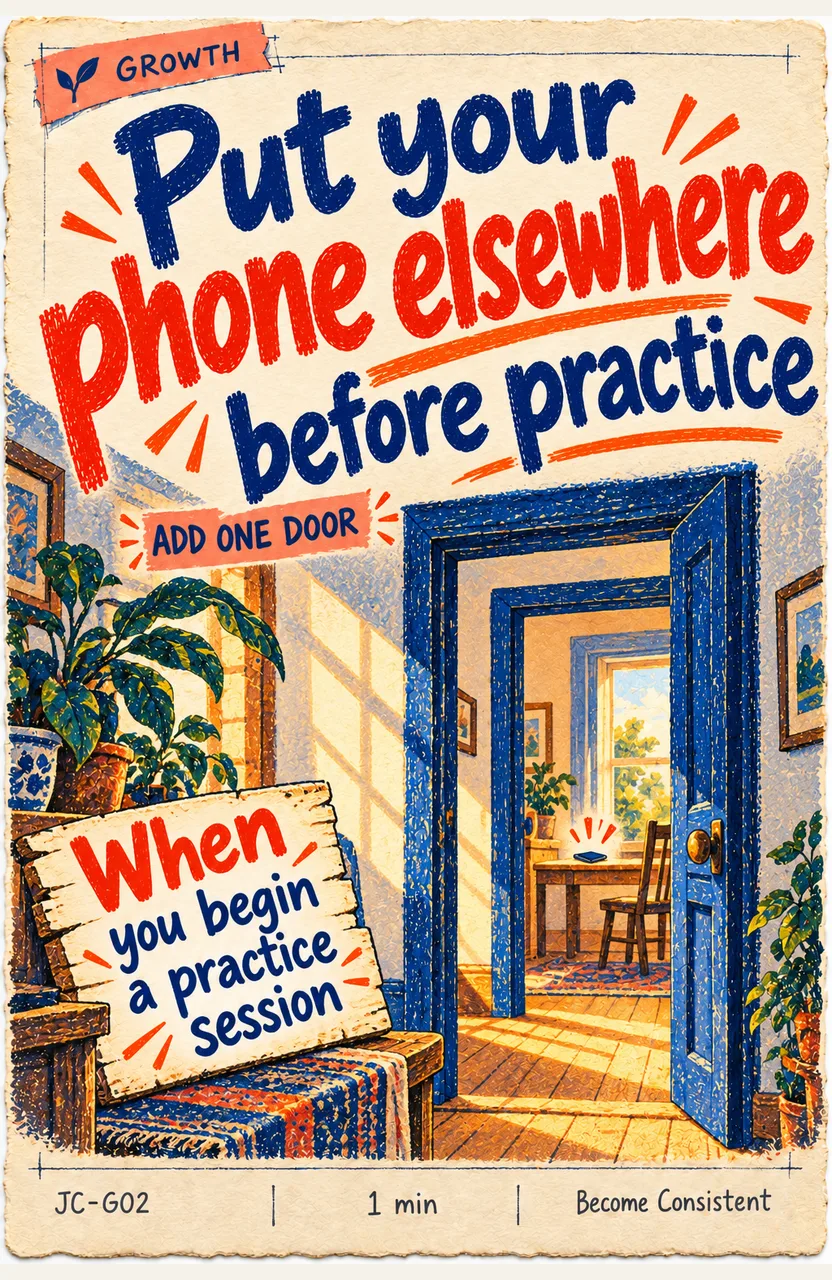
Put Your Phone Elsewhere Before a Practice Session When: you begin a practice session
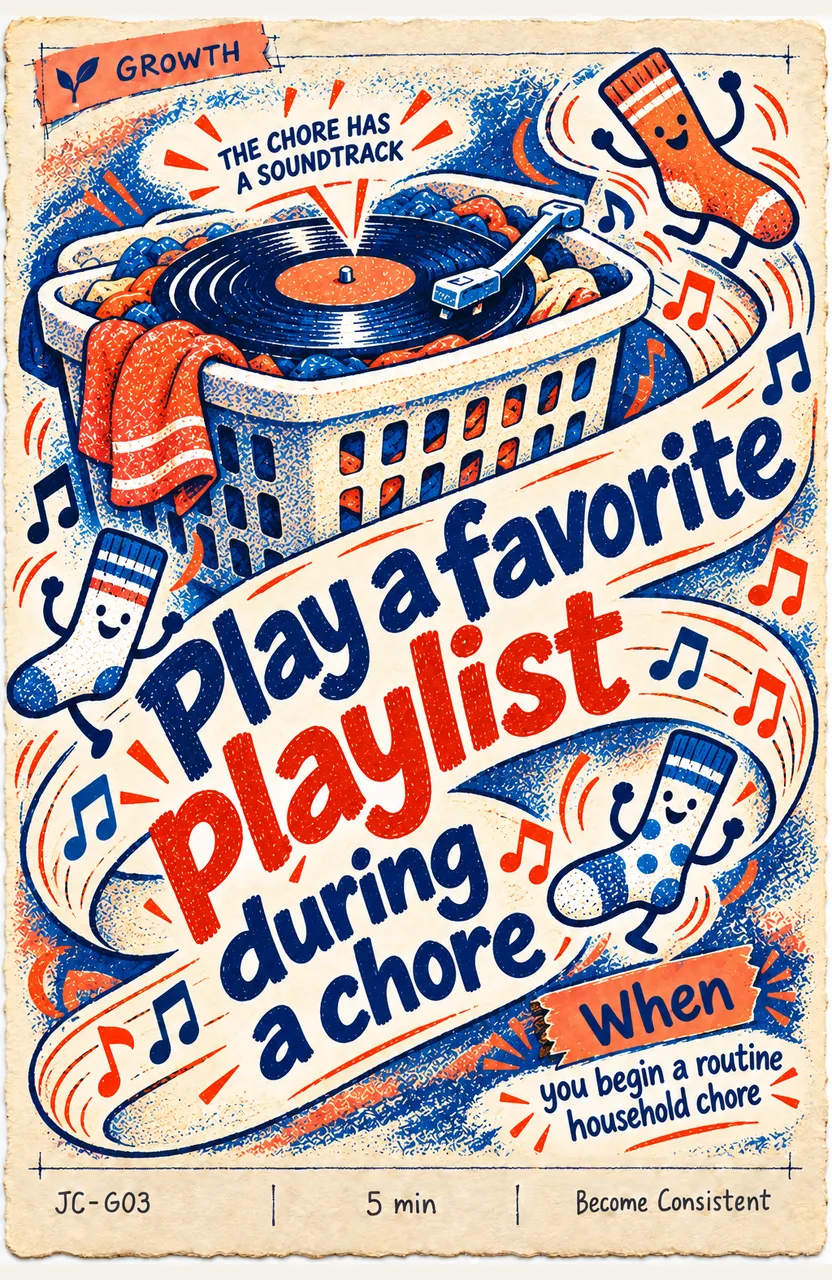
Play a Favorite Playlist While Doing a Chore When: you begin a routine household chore

8 cards · draft

How do I learn from practice and keep a useful commitment?

Notice what happened, check a specific result and use reviews or a willing partner to keep adapting.
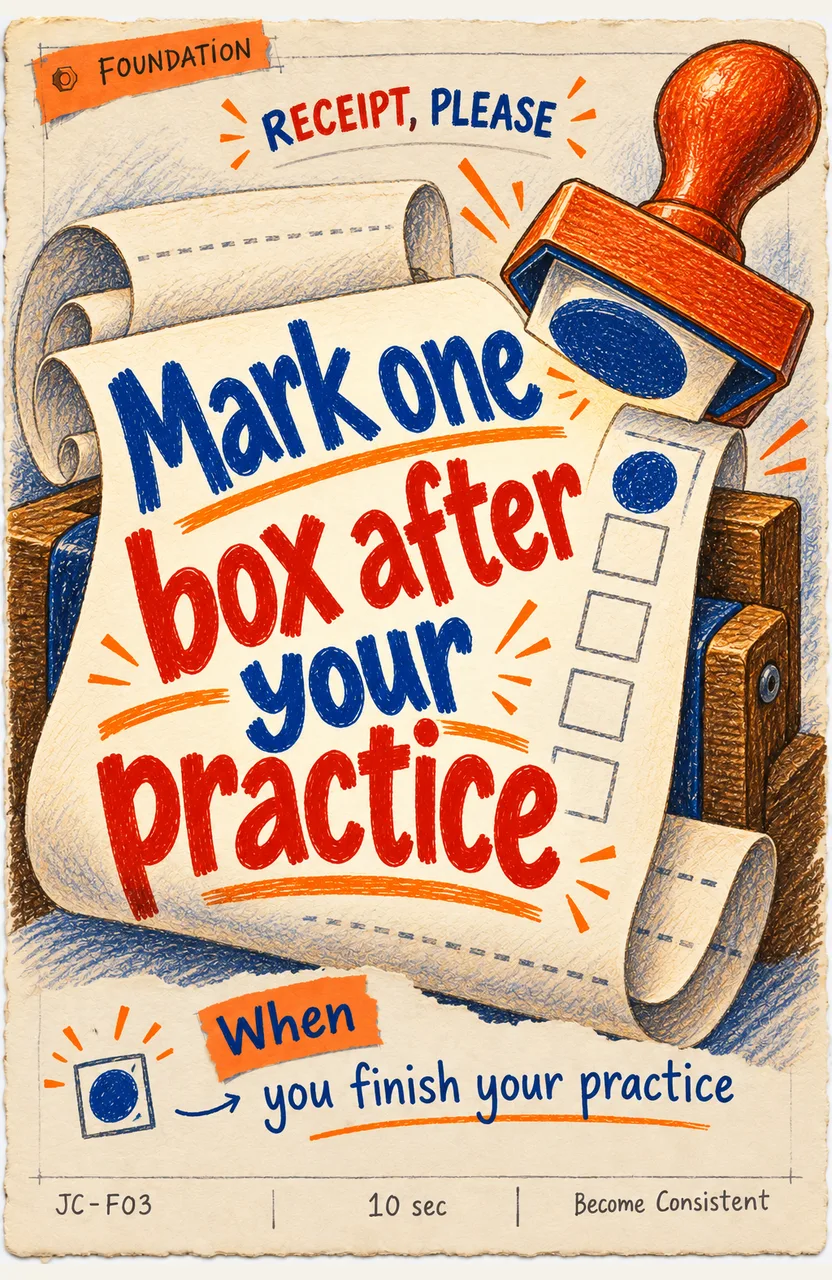
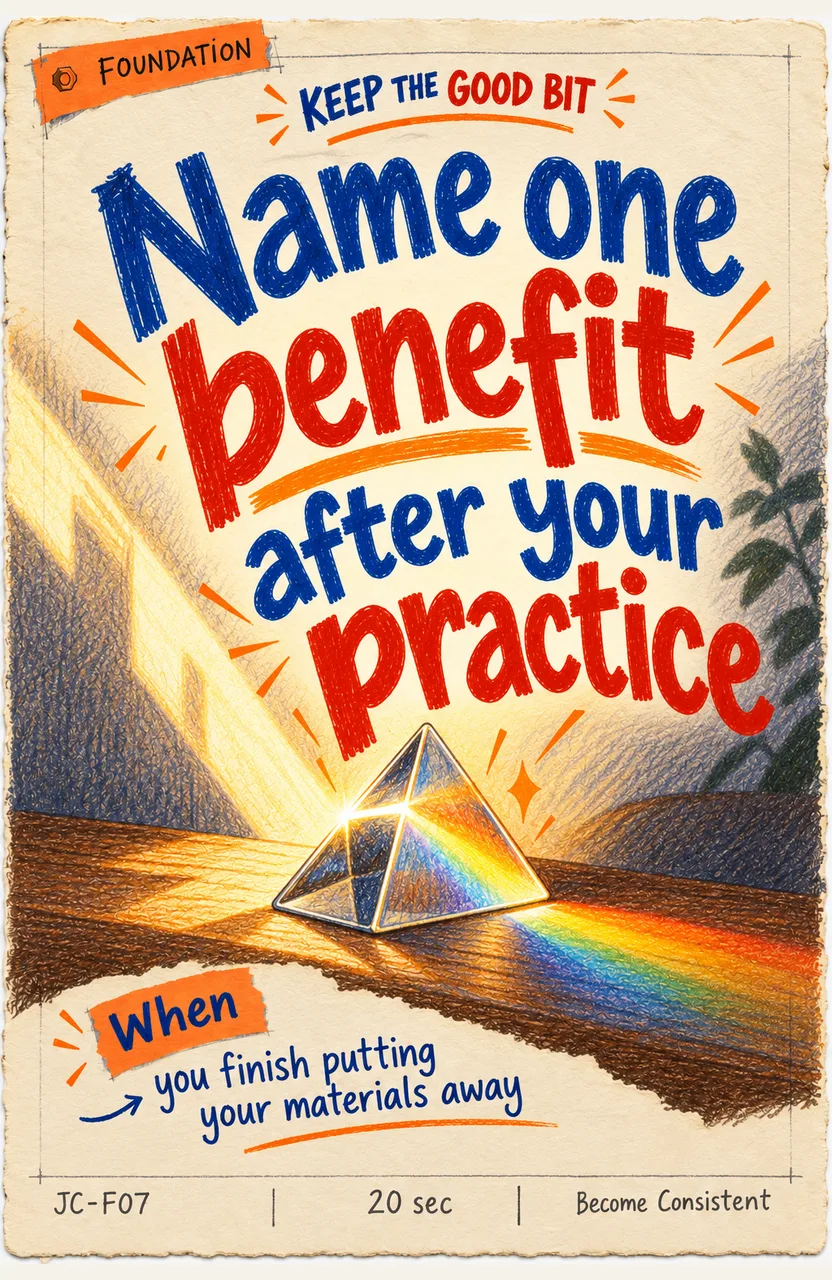
Mark One Box Immediately After Your Practice When: you finish your practice
Write One Obstacle After a Missed Practice When: you notice a missed practice
Name One Immediate Benefit After Your Practice When: you finish putting your materials away
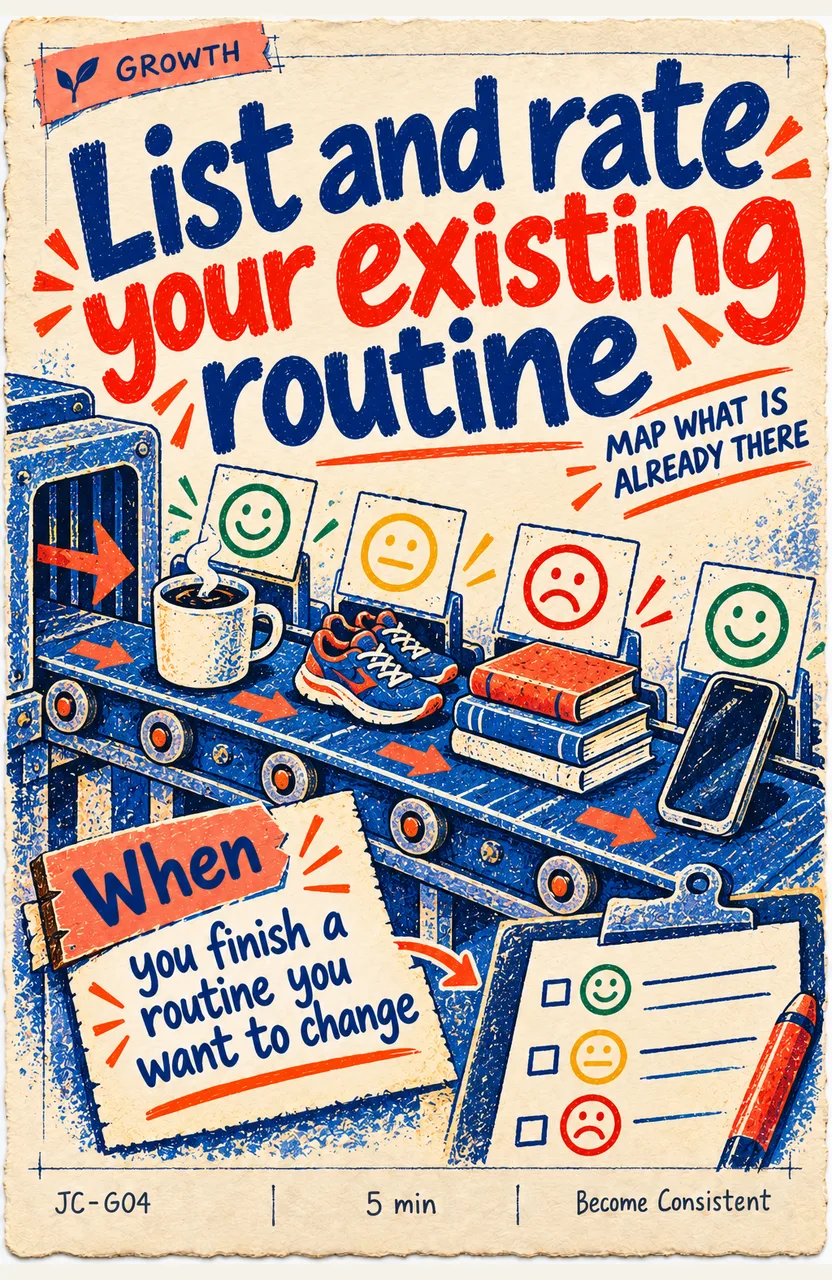
List and Rate Your Existing Routine Before Changing It When: you finish a routine you want to change
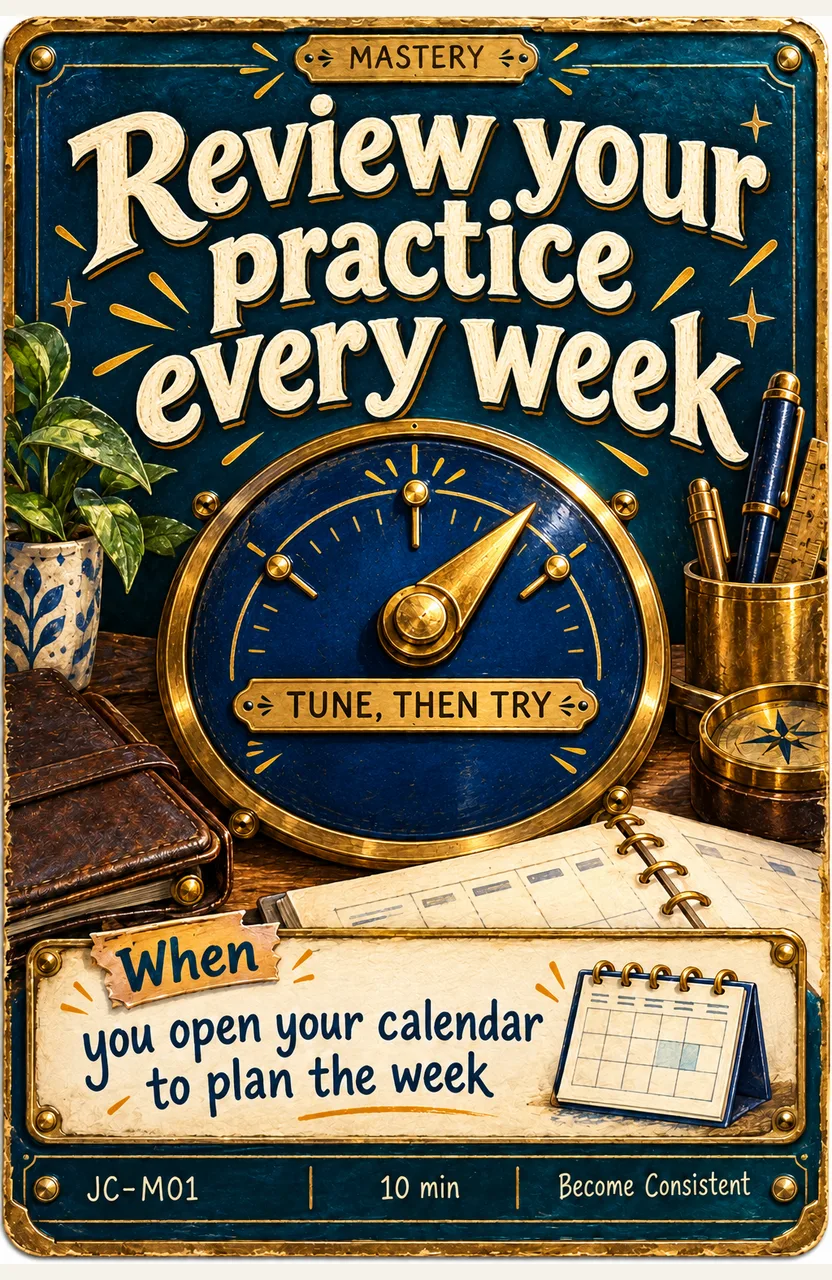
Review Your Practice and Test One Change Each Week When: you open your calendar to plan the week
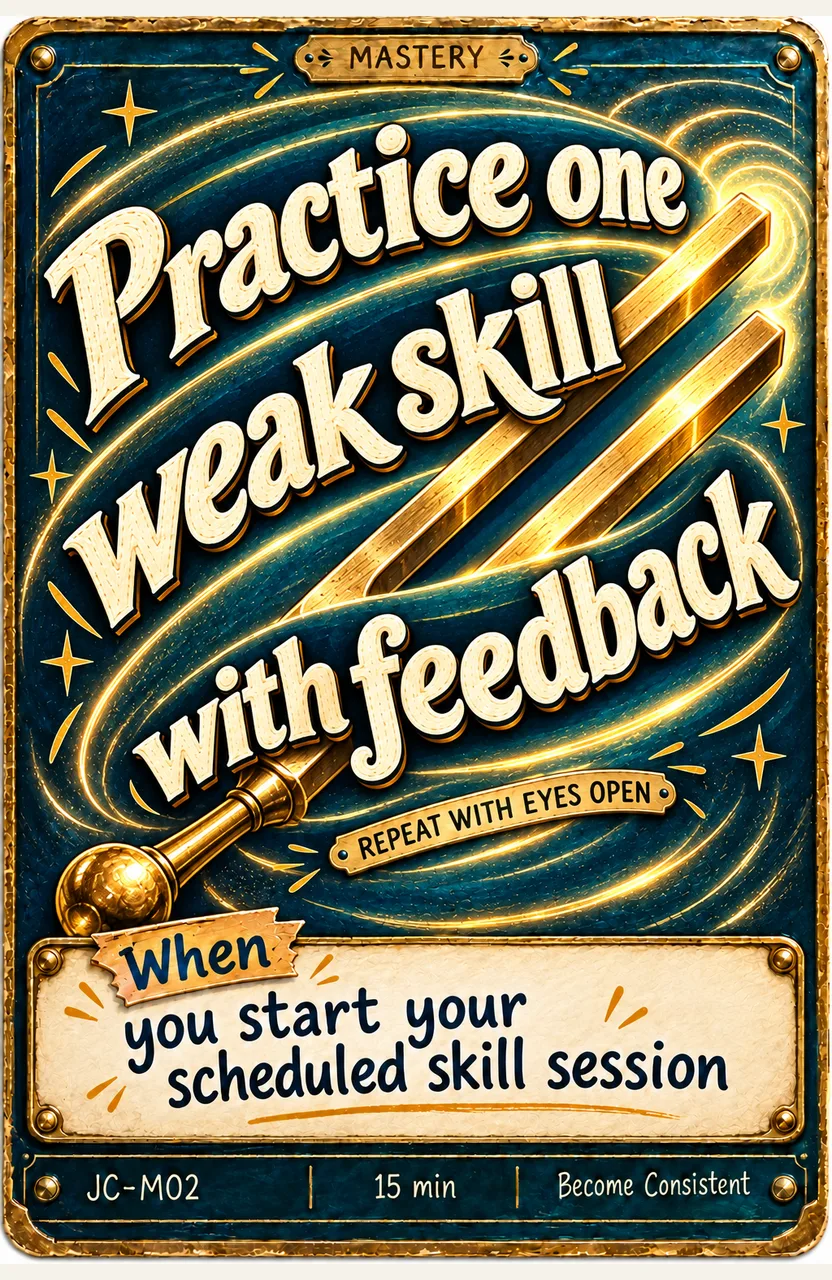
Practice One Weak Skill and Check the Result When: you start your scheduled skill session

6 cards · draft

How do I restart after missing my practice?

Return at the next safe opportunity, record what got in the way and choose a workable fallback.
Resume Your Smallest Practice at the Next Safe Cue When: your usual cue returns after a miss
Write One Obstacle After a Missed Practice When: you notice a missed practice
Choose One Practice Before Adding Another When: you feel tempted to add another habit
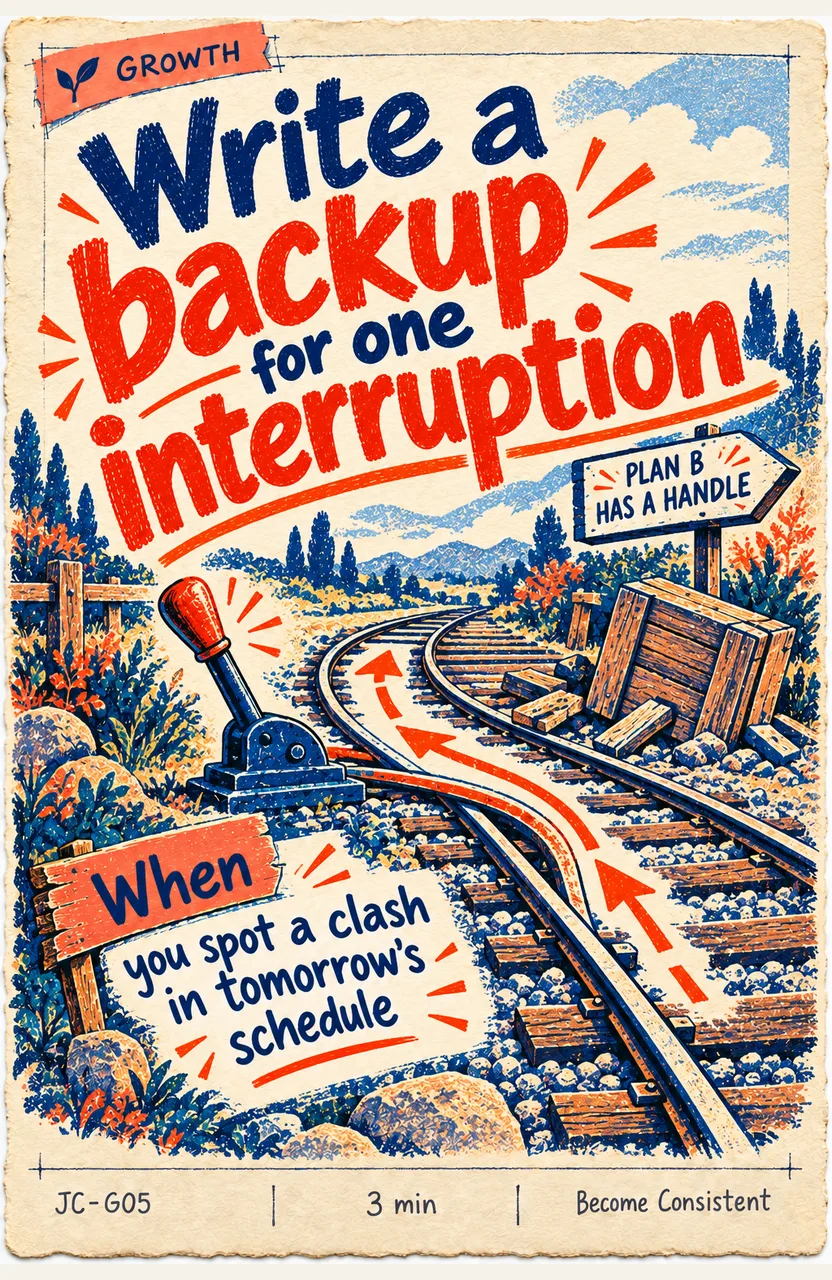
Write a Backup Action for Your Most Likely Interruption When: you spot a clash in tomorrow’s schedule
Review Your Practice and Test One Change Each Week When: you open your calendar to plan the week
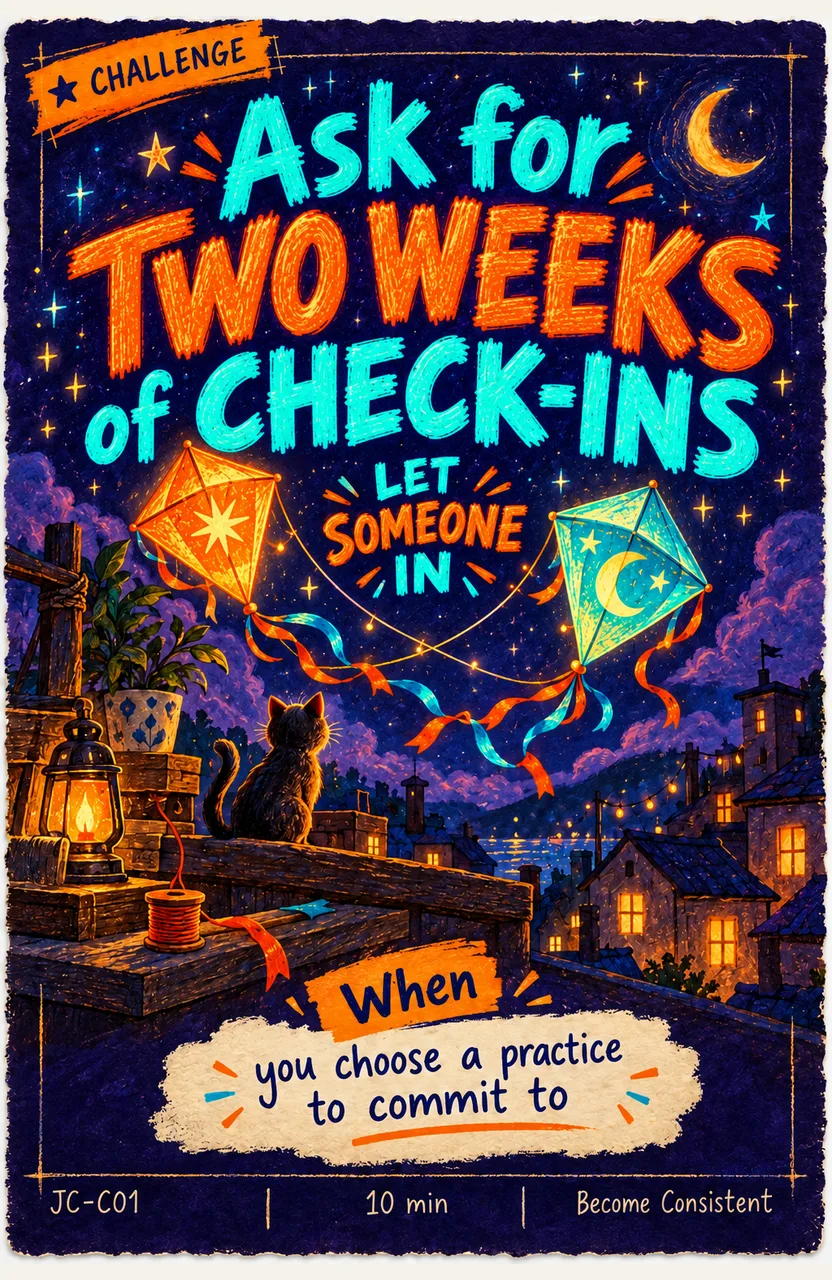
Ask Someone for Two Weeks of Practice Check-ins When: you choose a practice to commit to

6 cards · draft

How do I start a practice I can actually repeat?

Choose one practice, give it an unmistakable first action and start with something you can repeat.
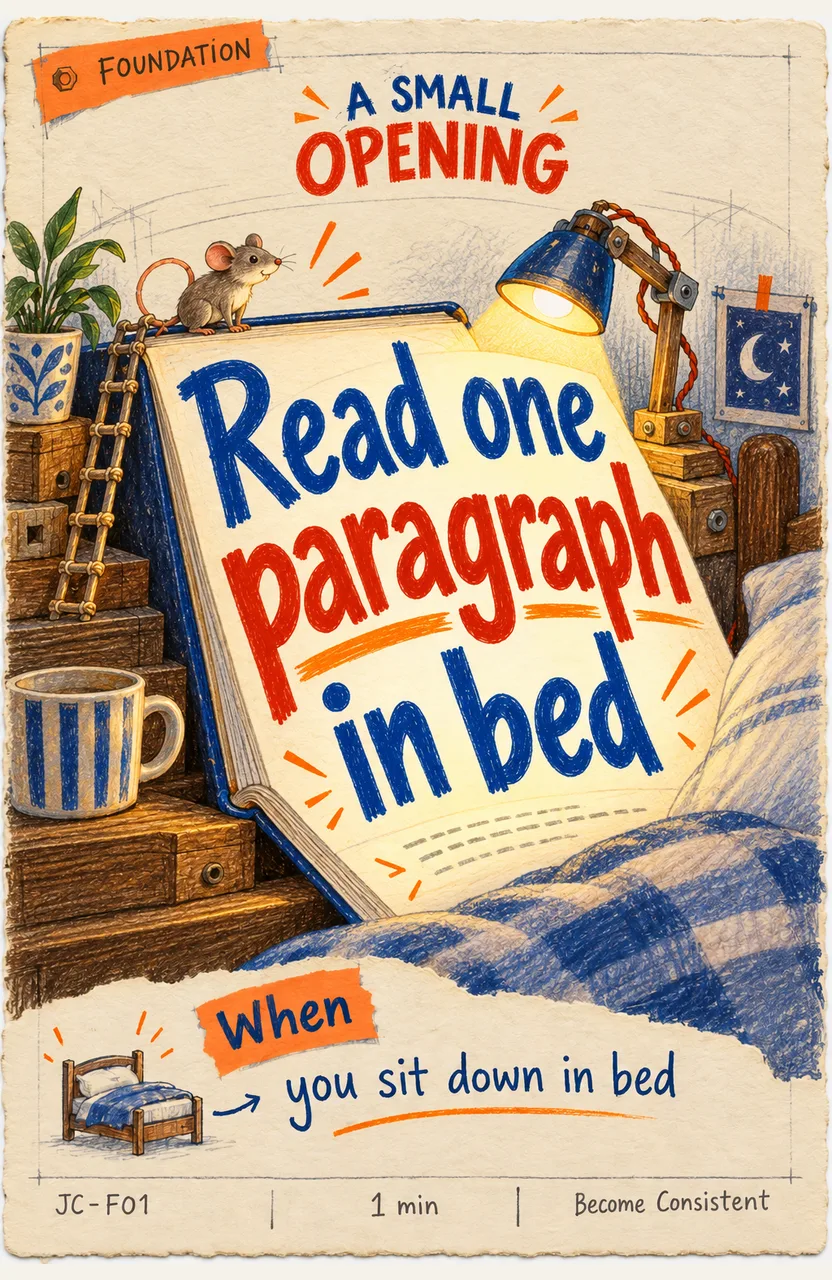
Read One Paragraph After Sitting Down in Bed When: you sit down in bed
Say Your Next Action Before Starting Your Practice When: you reach your practice spot
Choose One Practice Before Adding Another When: you feel tempted to add another habit
Write a Cue and Place for Your Practice When: you plan tomorrow’s practice
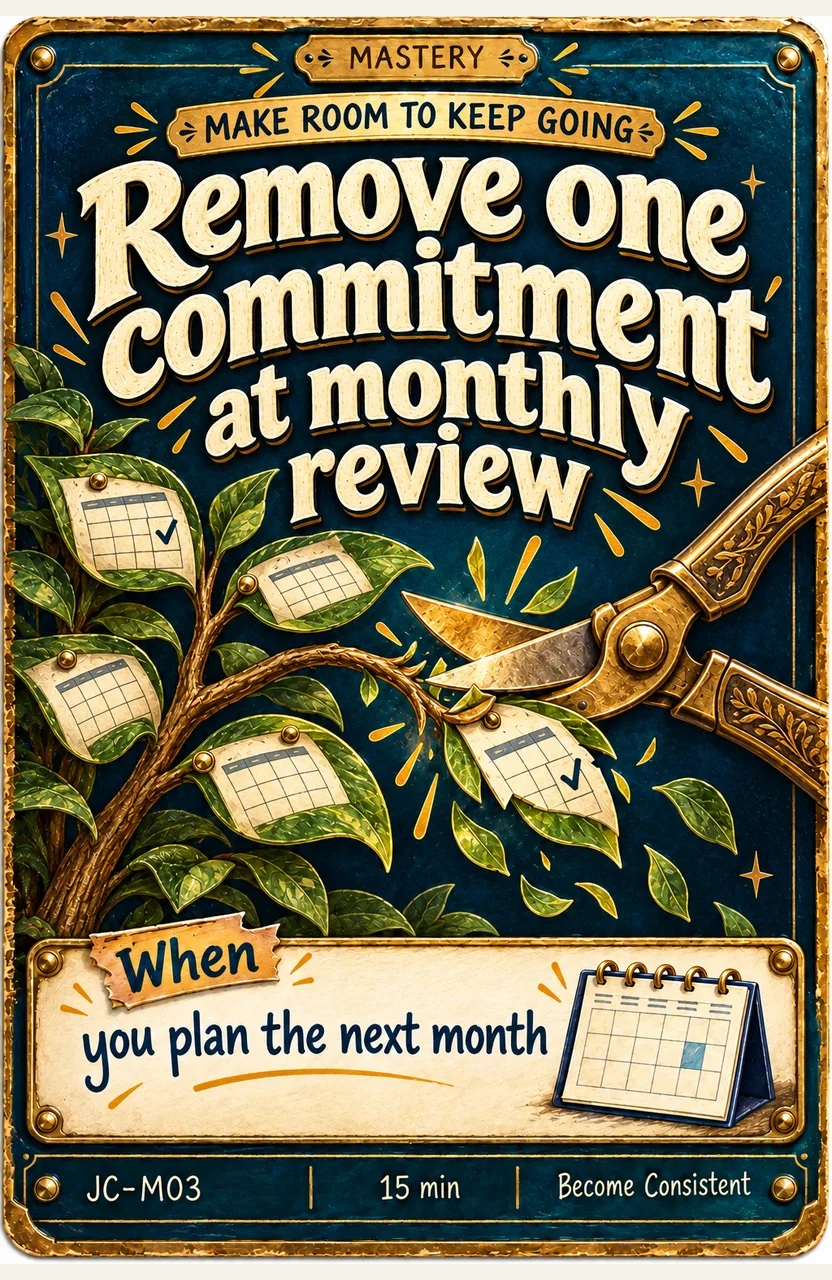
Remove One Commitment at Your Monthly Practice Review When: you plan the next month
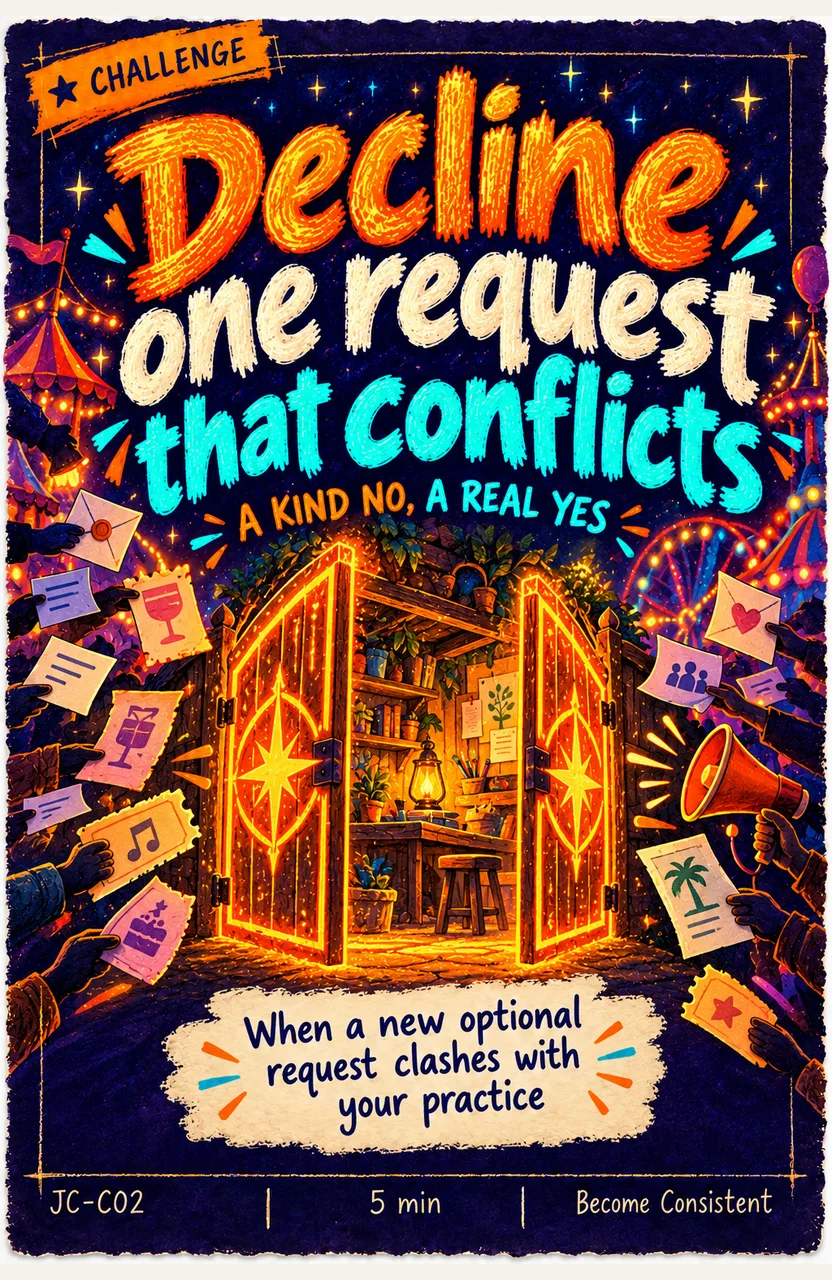
Decline One Request That Conflicts With Your Practice When: a new optional request clashes with your practice

10 cards · draft

How do I keep home care manageable?

Choose brief bathroom and clothing care, then one weekly clean or laundry slot. Add safe maintenance and repair as your capacity allows.
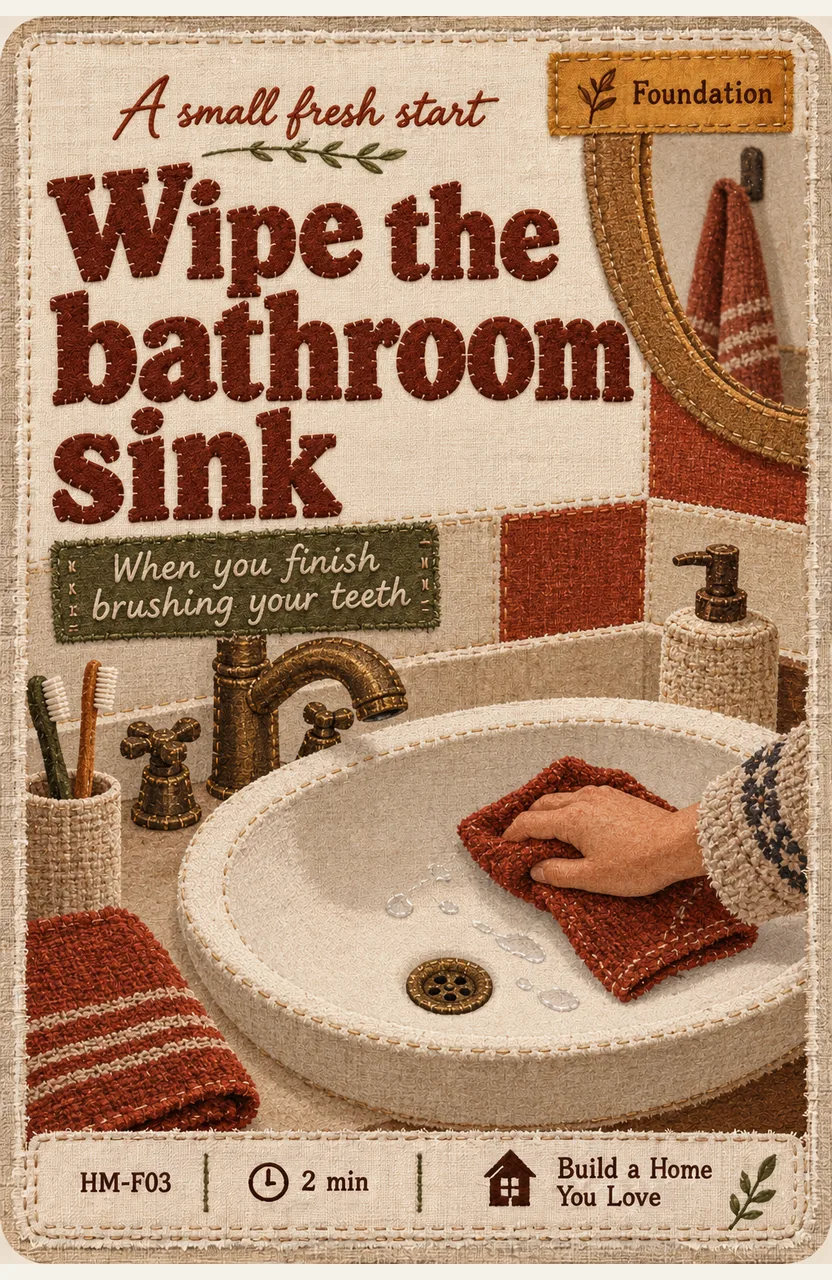
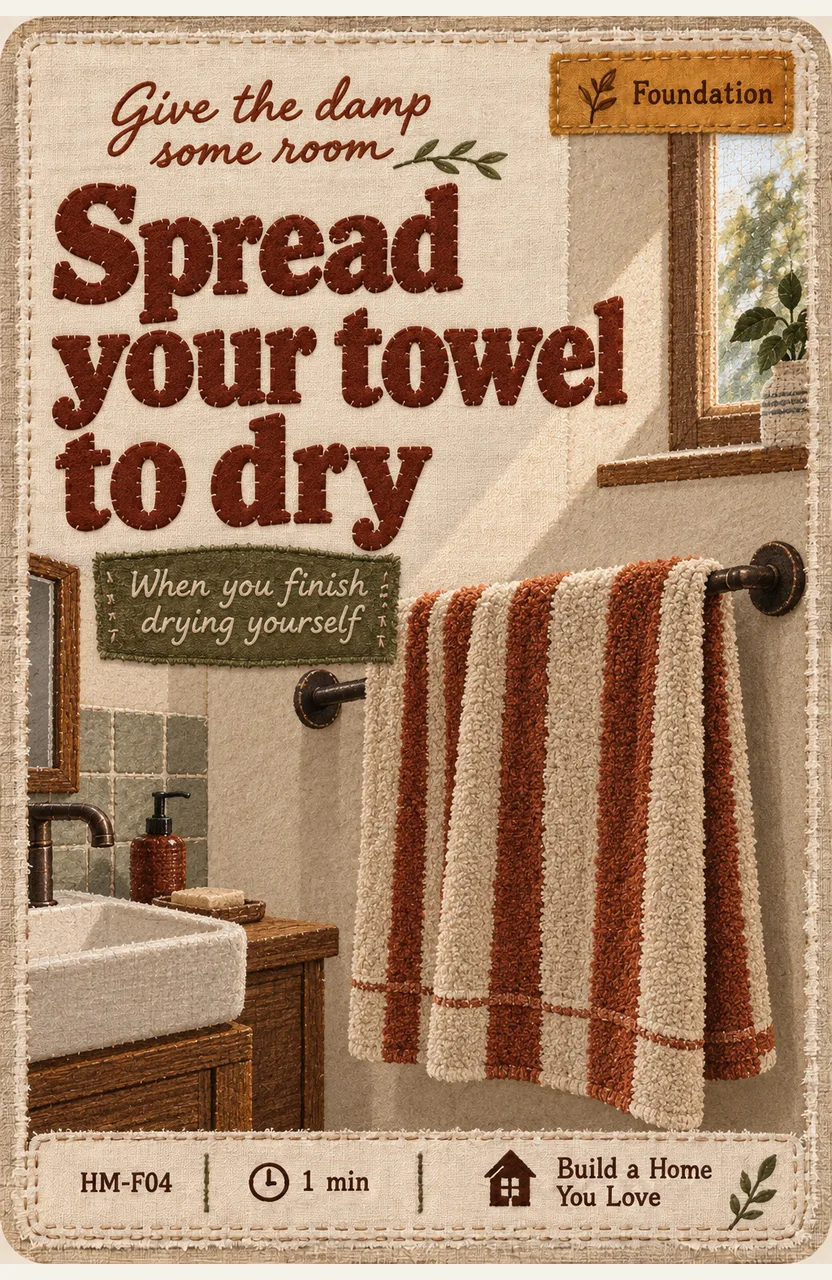
Wipe the bathroom sink When: you finish brushing your teeth
Spread your towel to dry When: you finish drying yourself
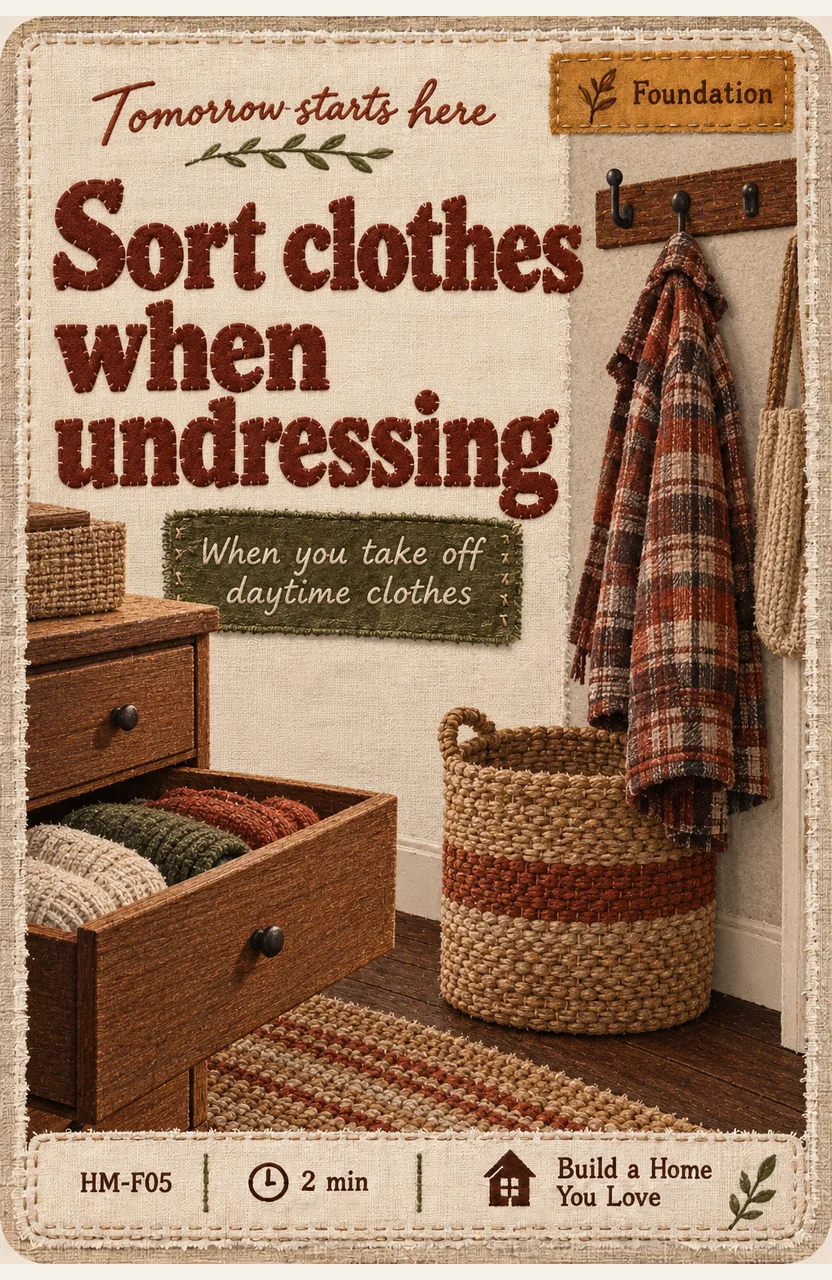
Sort clothes when undressing When: you take off daytime clothes
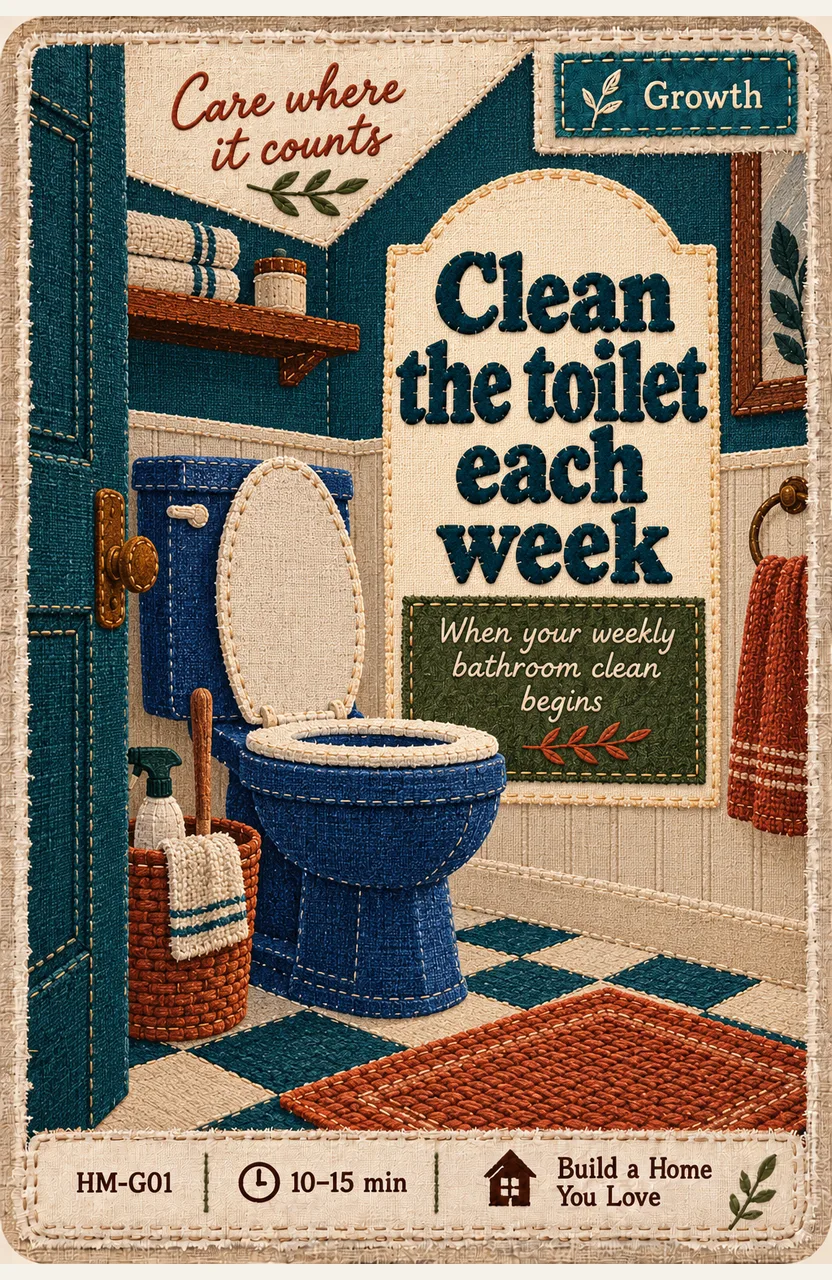
Clean the toilet each week When: your chosen weekly bathroom clean begins
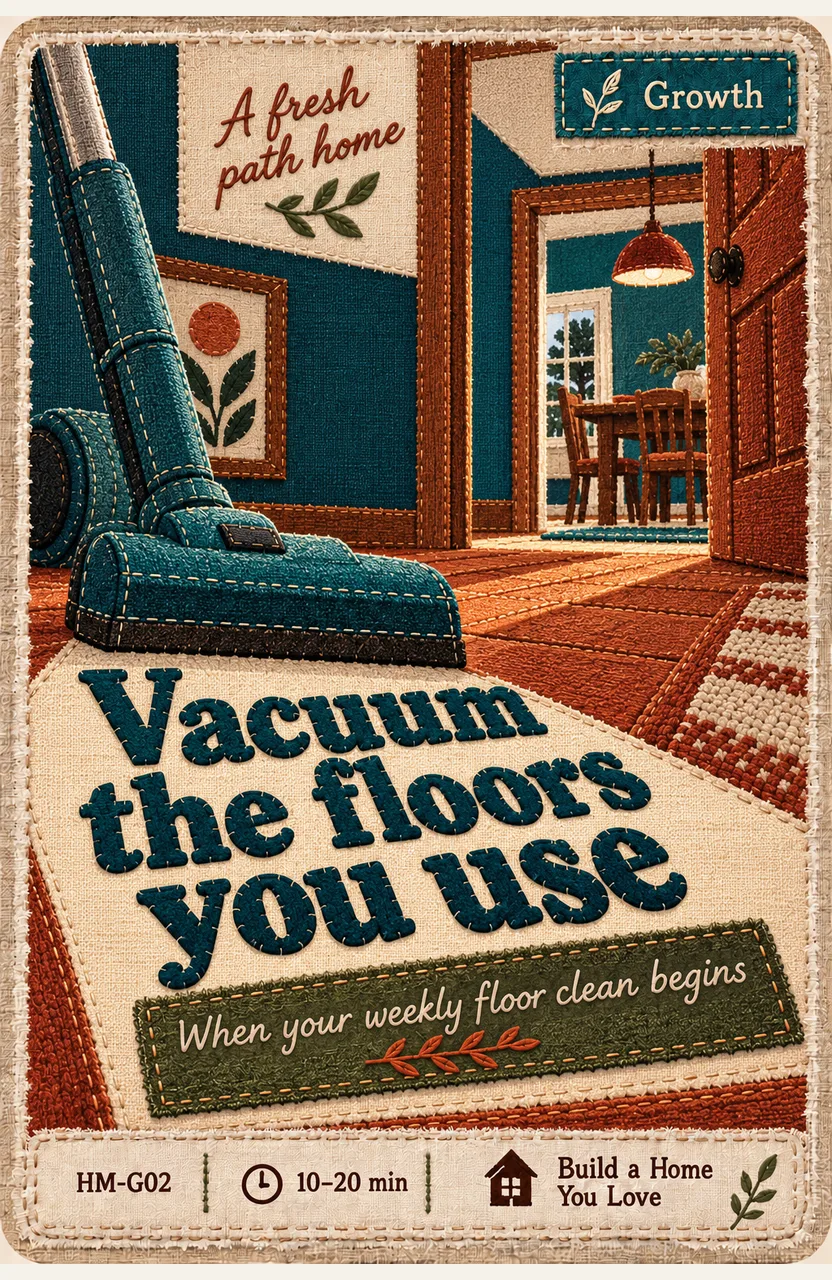
Vacuum the floors you use When: your chosen weekly floor clean begins
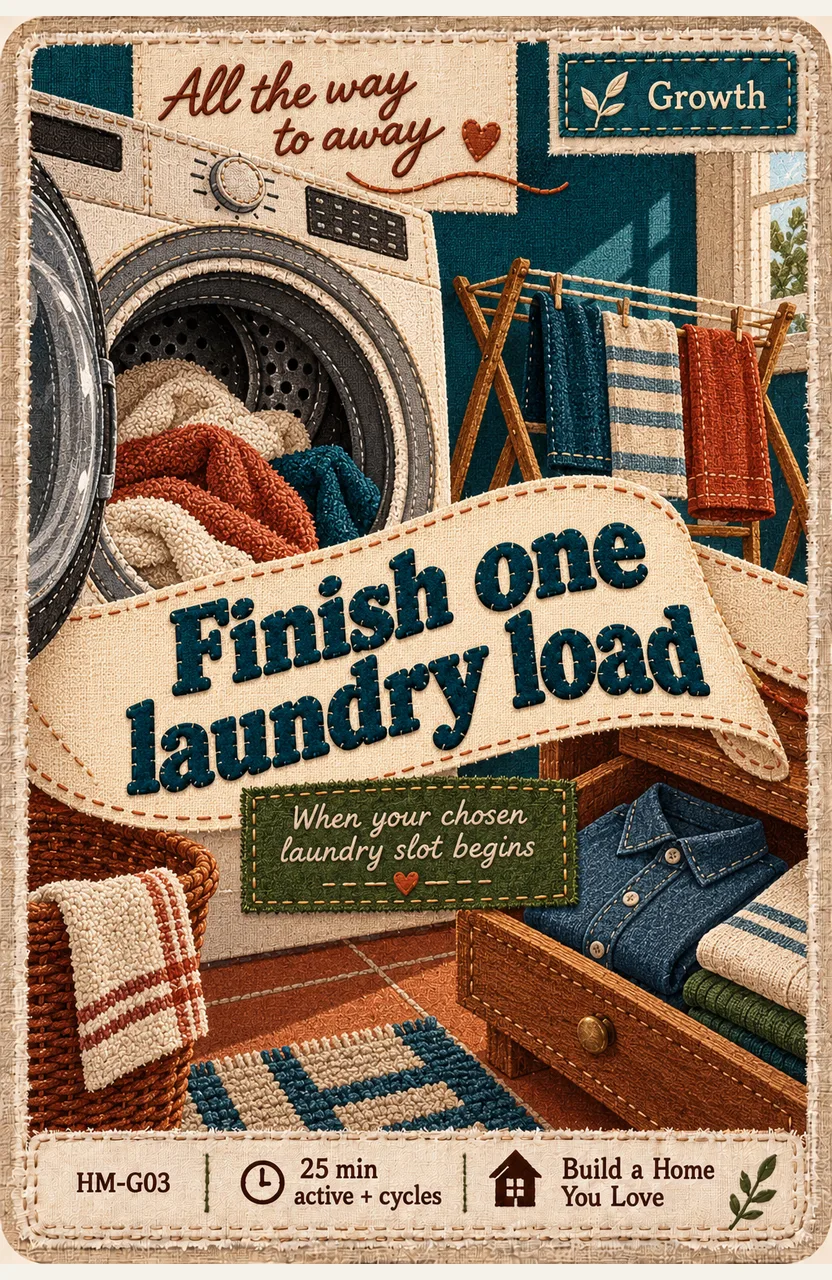
Finish one laundry load When: your chosen laundry slot begins

11 cards · draft

How do I get kids to do chores without nagging?

Make the first step clear, work alongside your child and build a predictable place for chores in the day. These habits help you replace repeated instructions with manageable jobs and useful support.
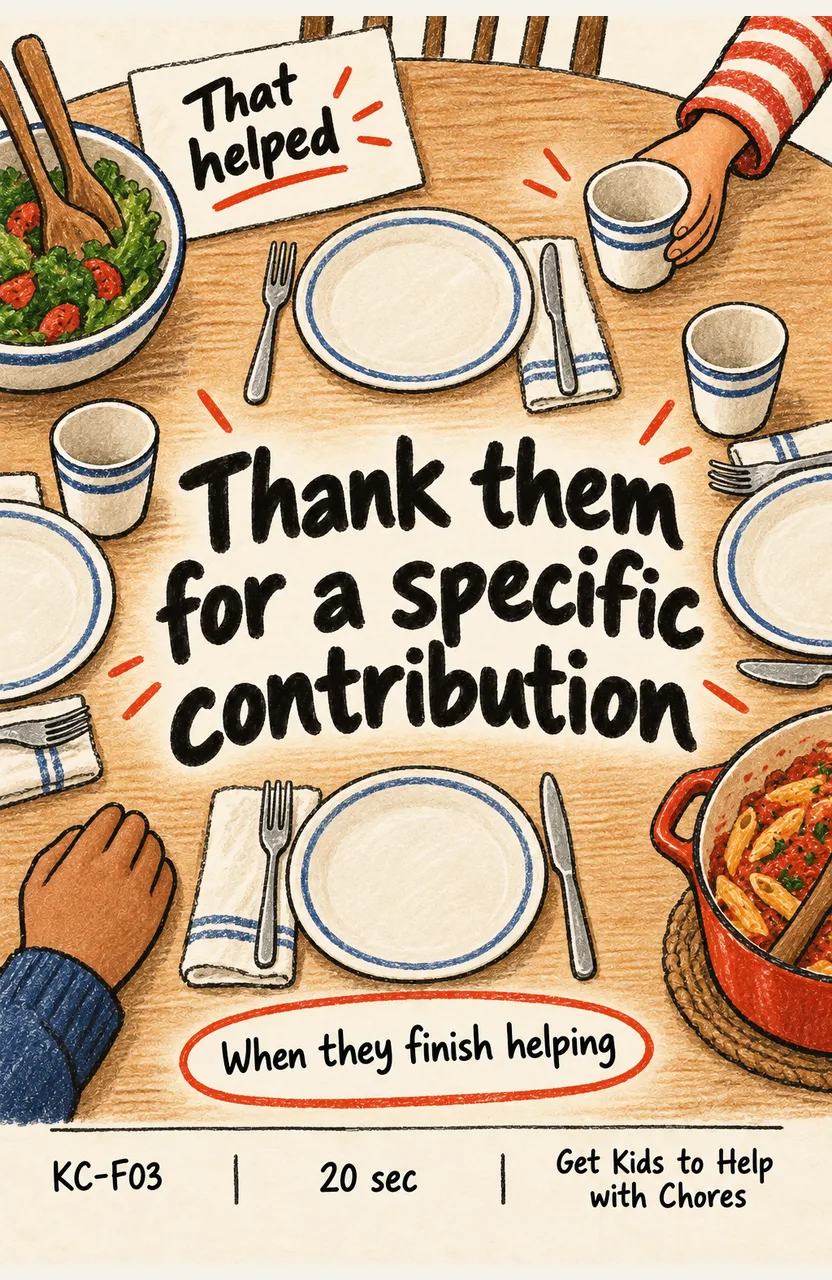
Thank Your Child for a Specific Contribution When: your child finishes helping
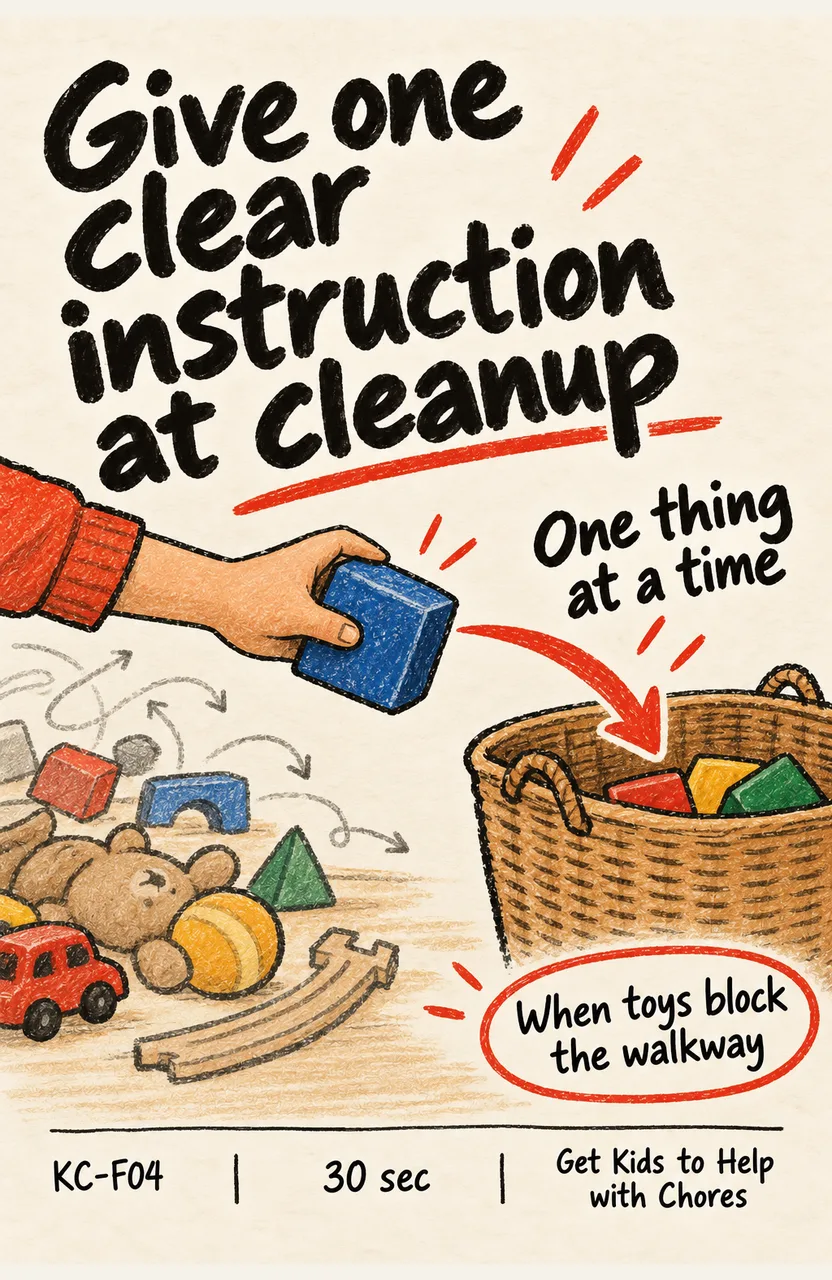
Give One Clear Instruction at Cleanup When: you notice toys blocking a walkway
Pause for One Breath Before Responding When: you feel yourself about to snap during a chore
Acknowledge Frustration Before Restating the Task When: your child protests a routine chore
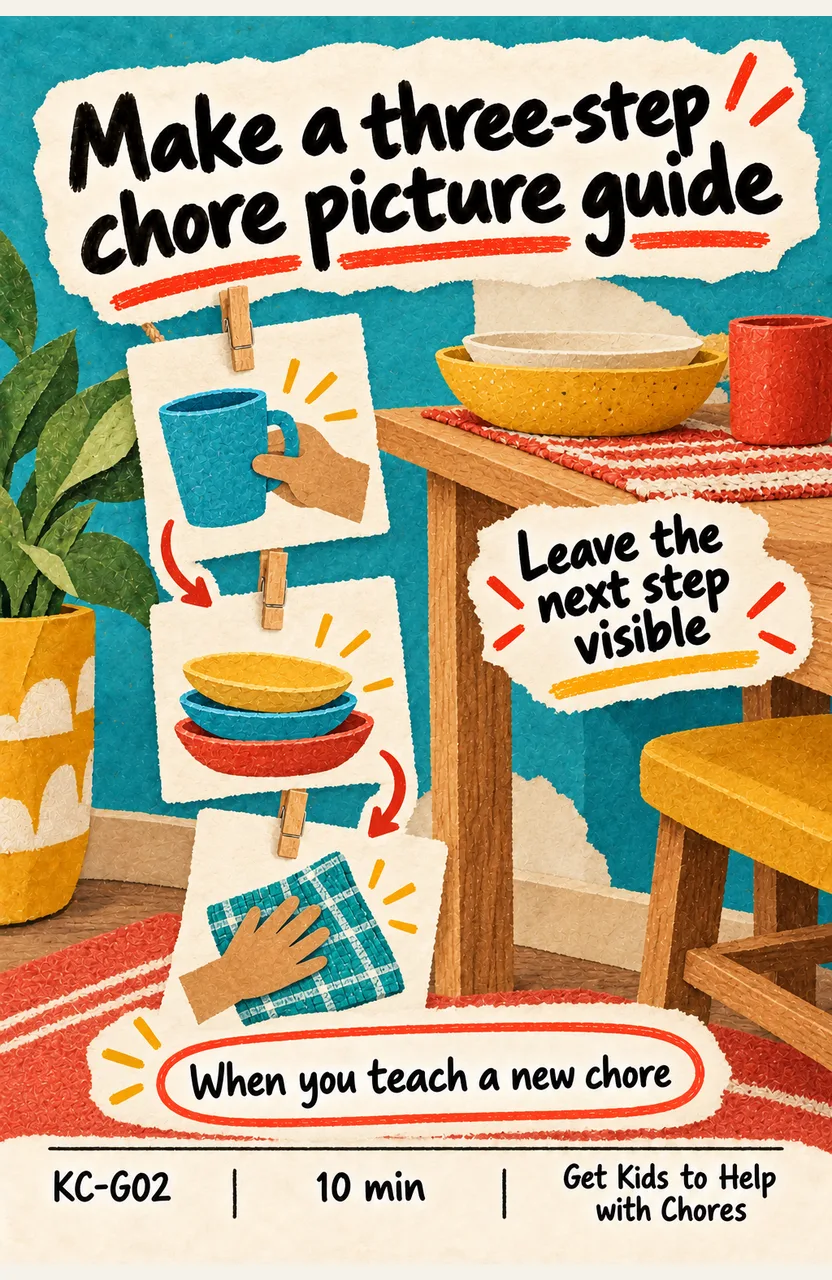
Make a Three-Step Picture Guide for One Chore When: you teach a chore with several steps
Do Five Minutes of Cleanup Together After Dinner When: you finish the evening meal

7 cards · draft

What can I try when my lower back feels stiff after sitting?

Start with comfortable movement and a setup you can vary. These habits do not identify the cause of back pain; persistent or worsening symptoms deserve assessment.
Walk for 3 minutes after calls When: a video call ends
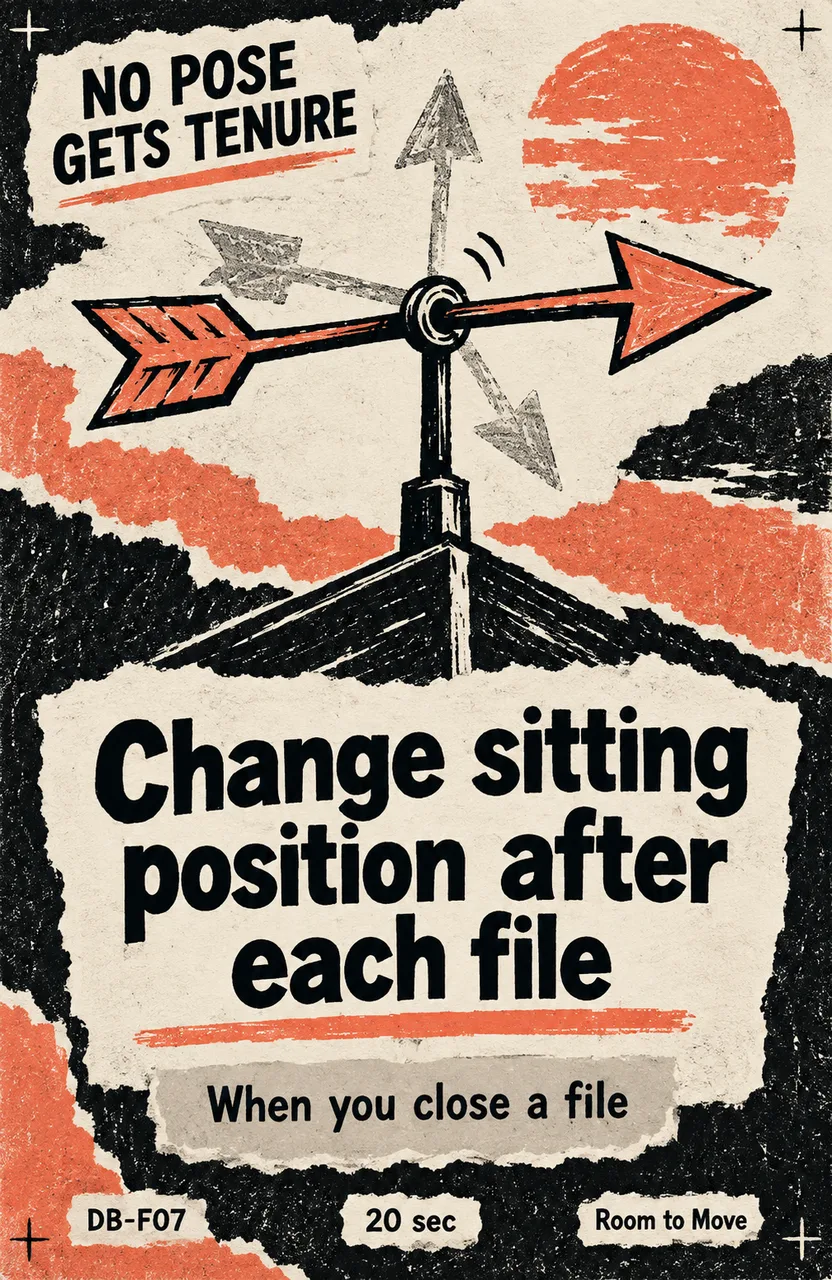
Change sitting position after each file When: you close a finished file
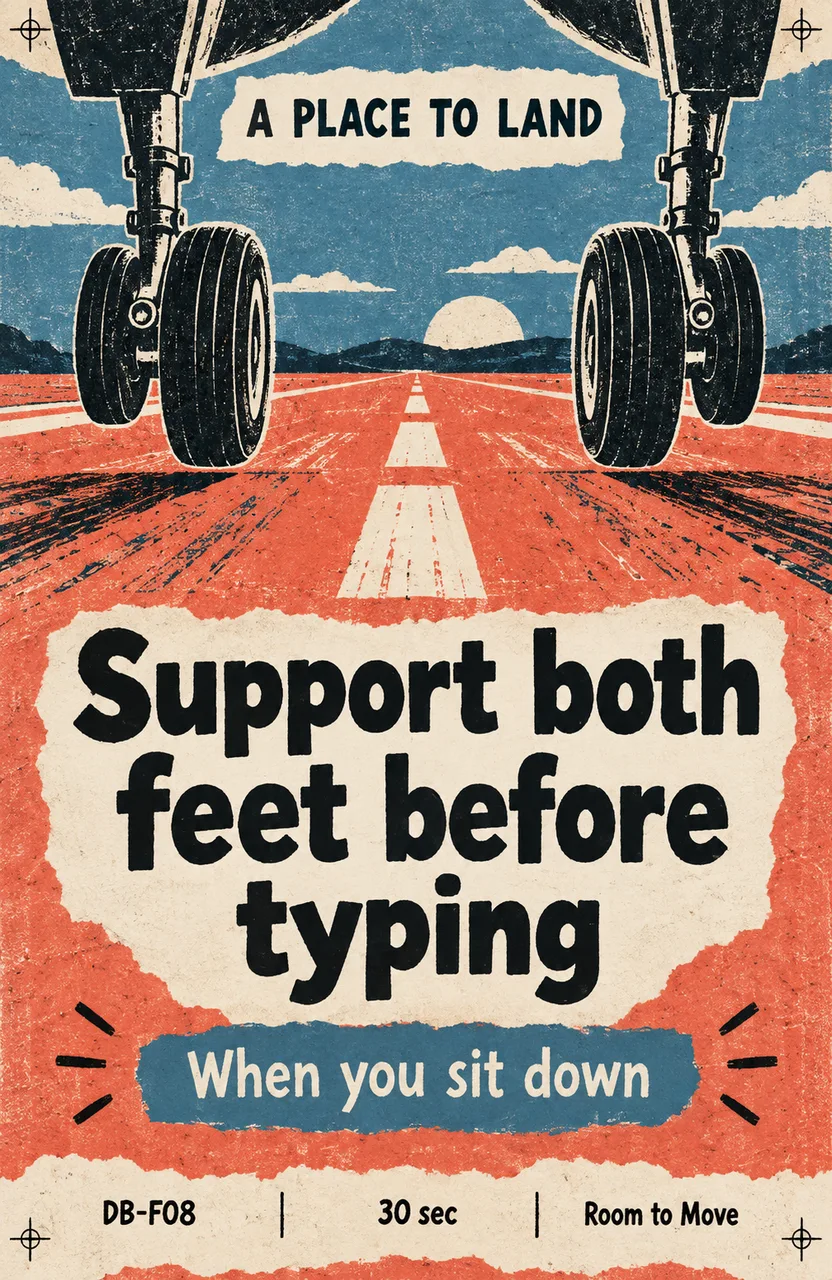
Support both feet before typing When: you sit down to start work
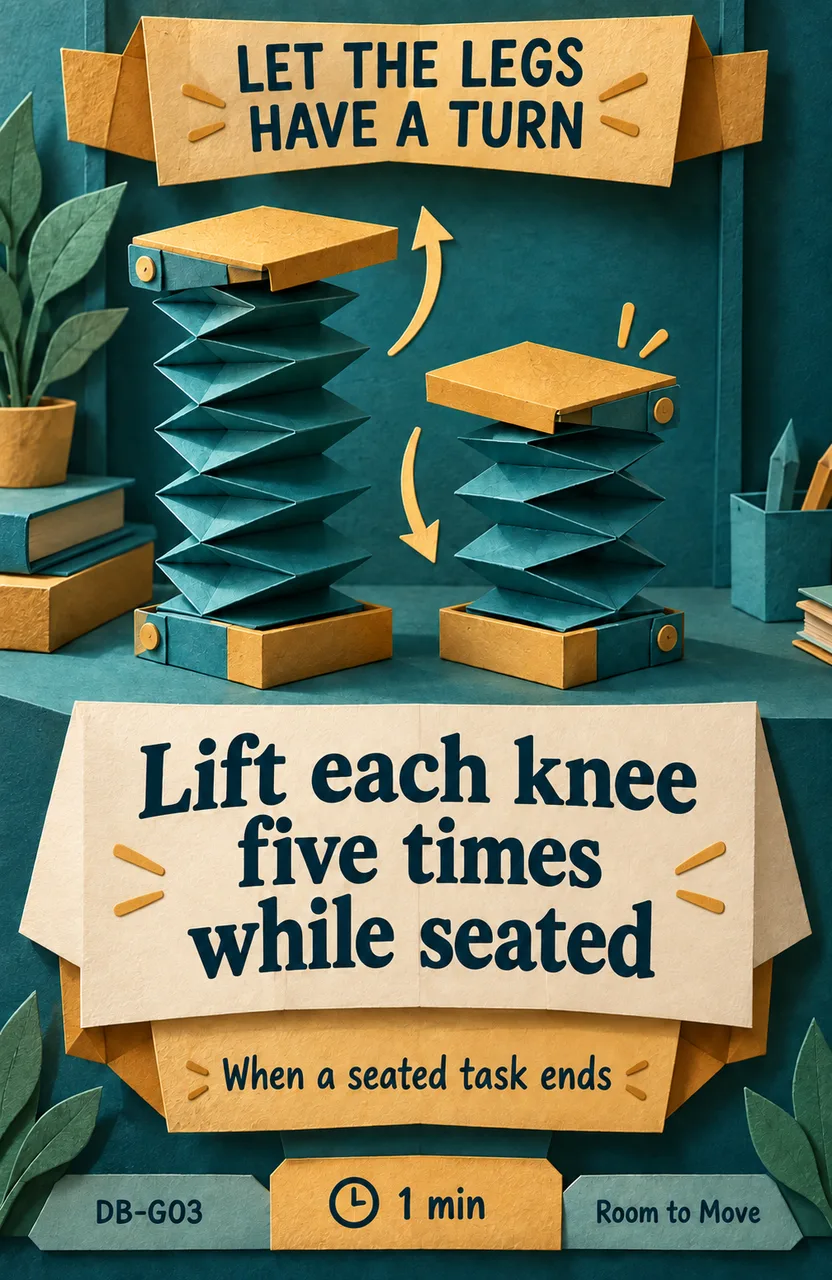
Lift each knee five times while seated When: you finish a long seated task
Walk briskly for 20 minutes before work When: you finish breakfast on a workday
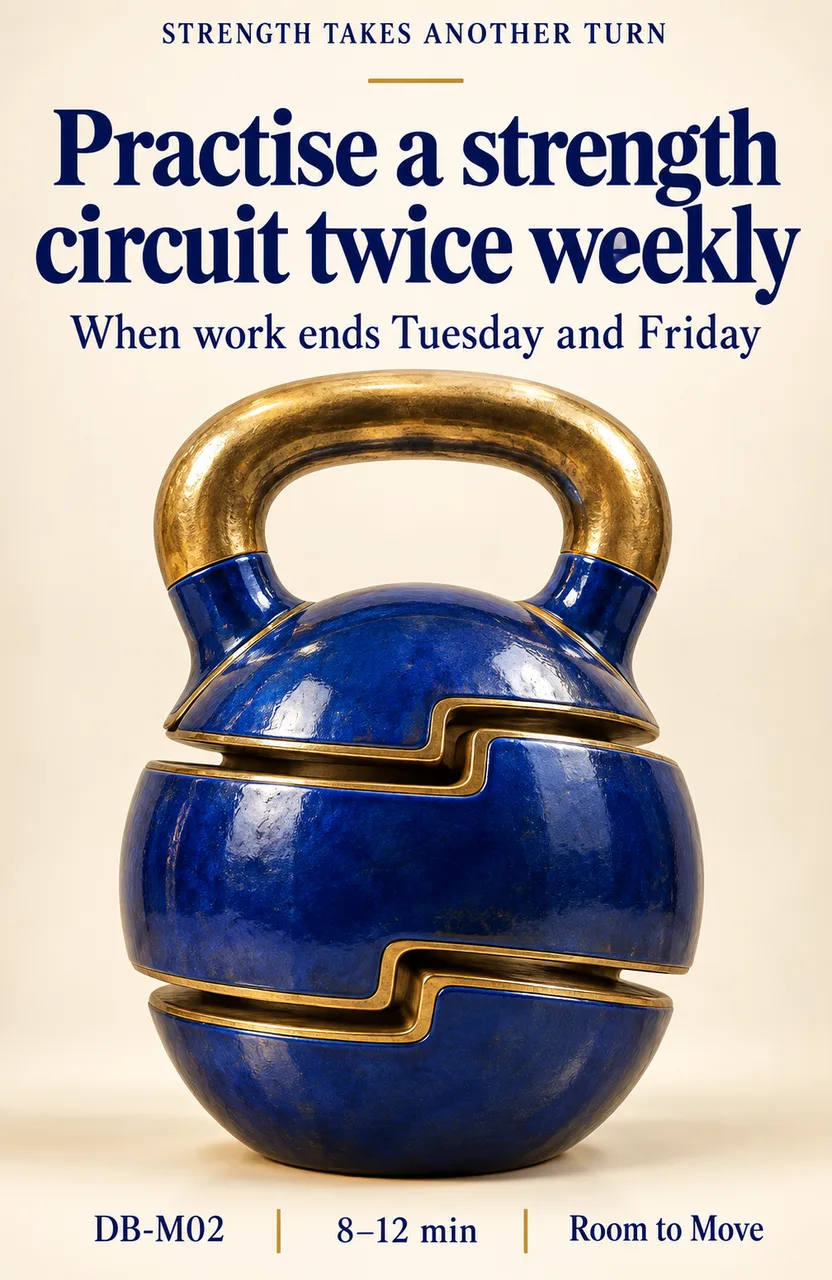
Practise a strength circuit twice weekly When: you finish work on Tuesday and Friday

20 cards · draft

How can I make clearer, more useful YouTube videos?

Start with an answer, a visible example and a clear sequence. Add sound, captions and release practices as your available time allows.


Answer one question on camera When: a viewer question gives you an idea
Rehearse your video opening When: you are about to record
Film a close-up of the result When: your demonstration reaches its result
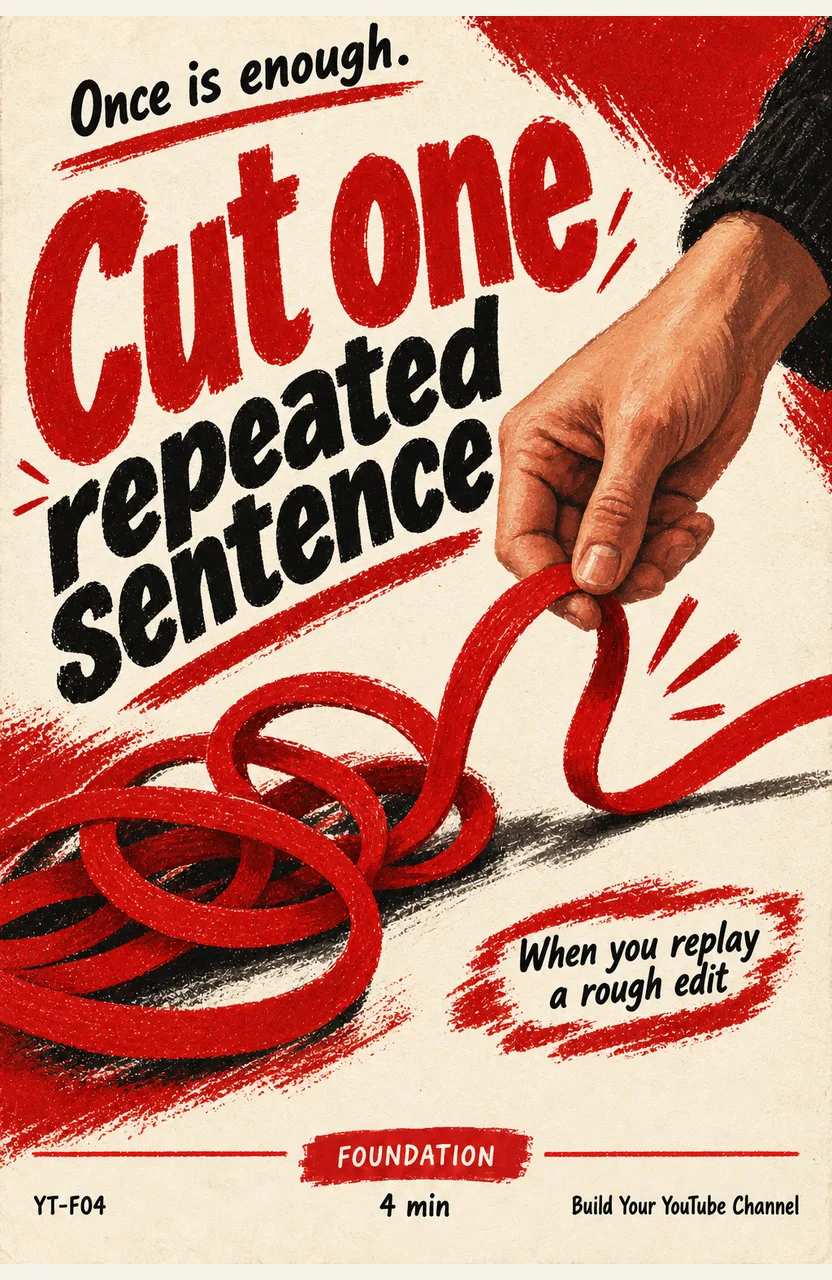
Cut one repeated sentence When: you replay a rough edit
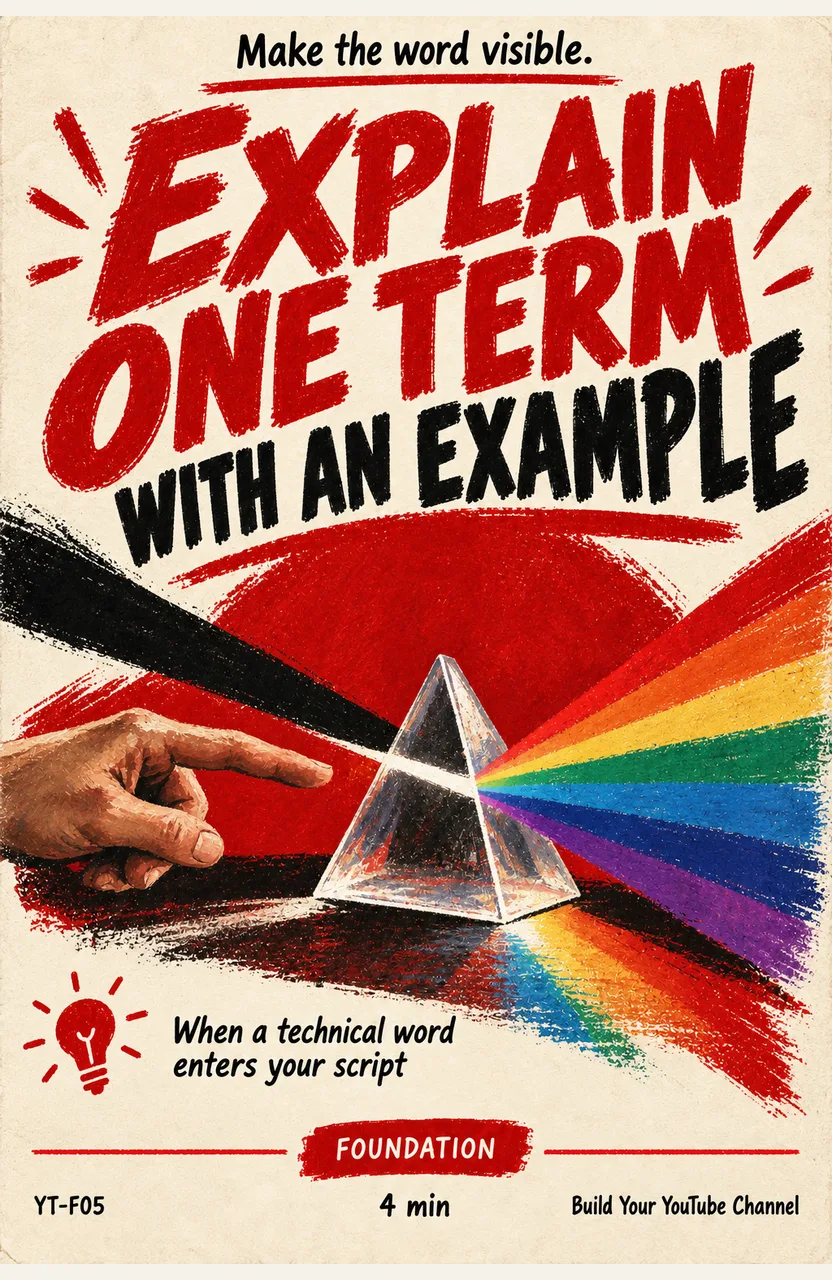
Explain one term with an example When: a technical word enters your script
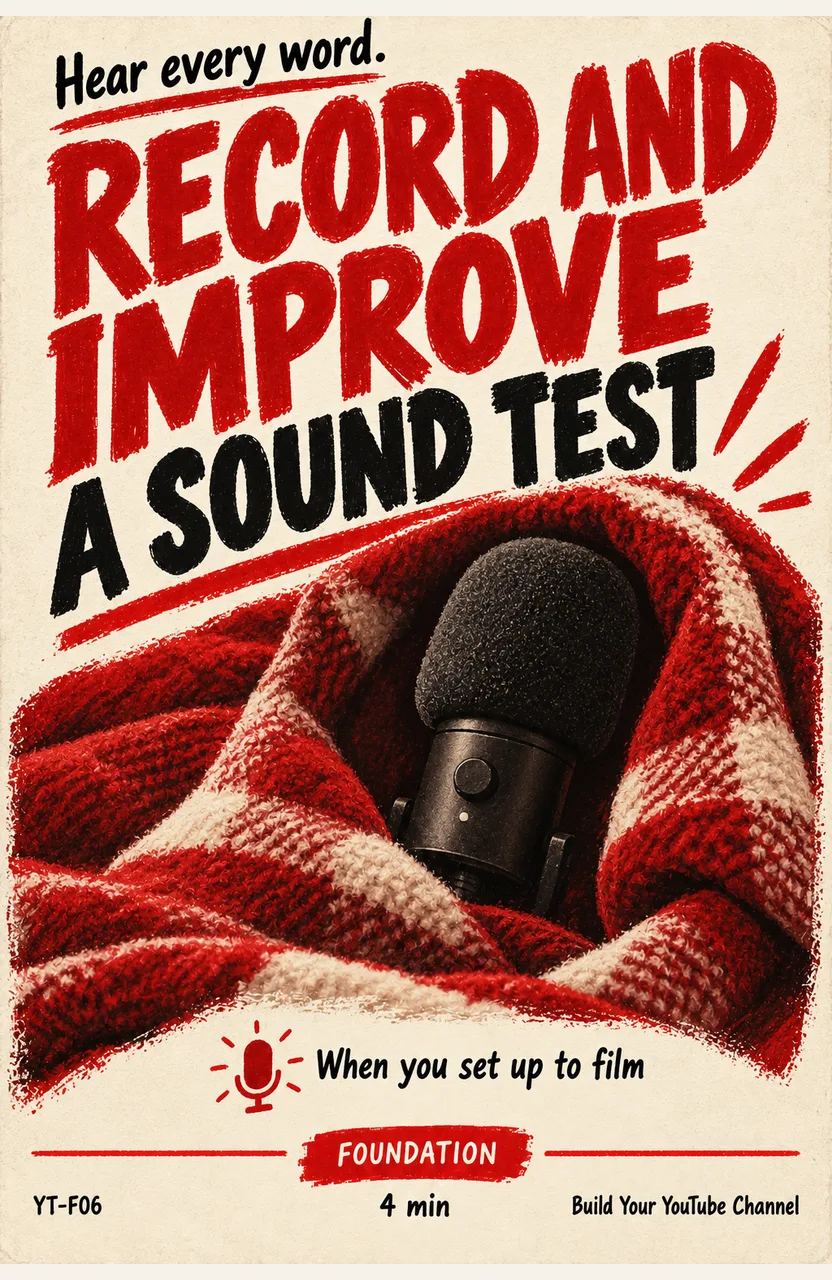
Record and improve a sound test When: you set up to film

12 cards · draft

How do I make my home easier to live in?

Start with a usable seat, a clear walking route and a place to enjoy. Add reachable storage or light where daily life catches.
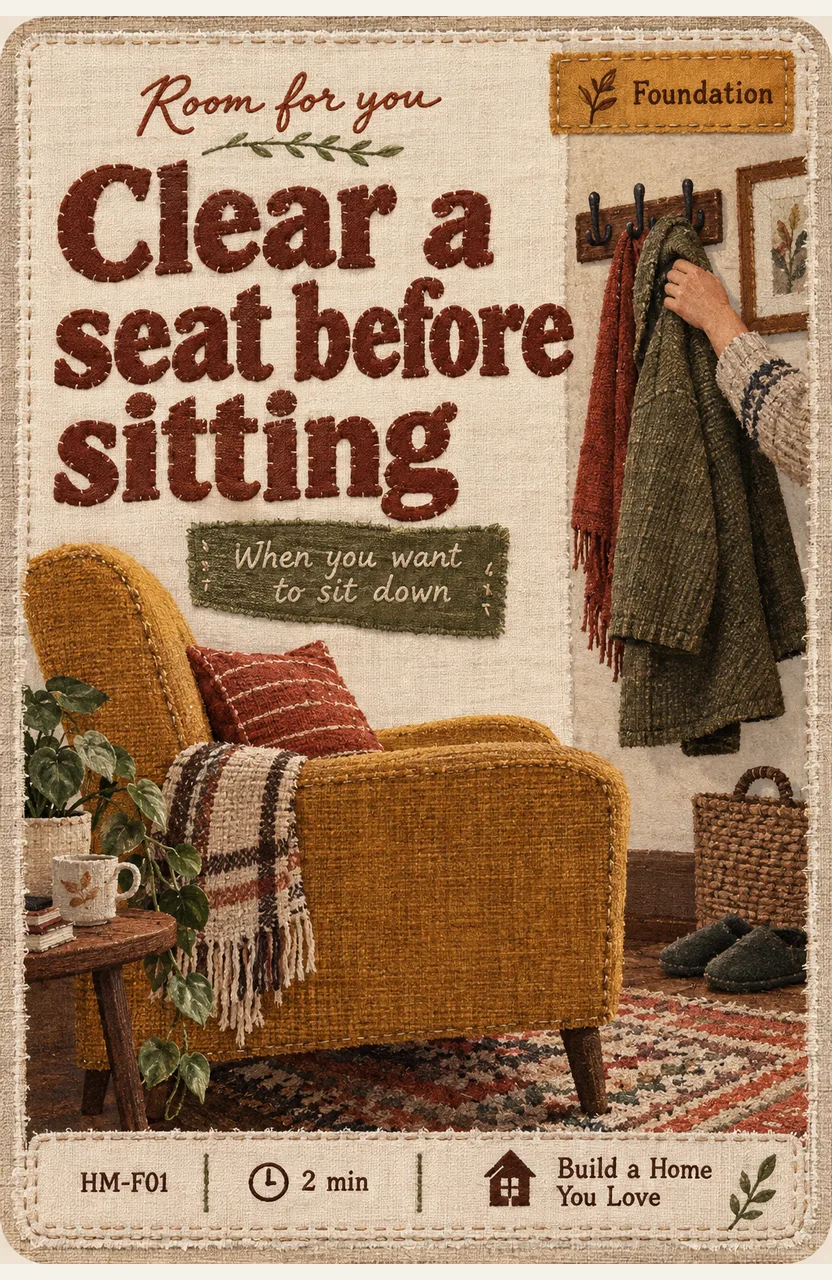
Clear a seat before sitting When: you want to sit down
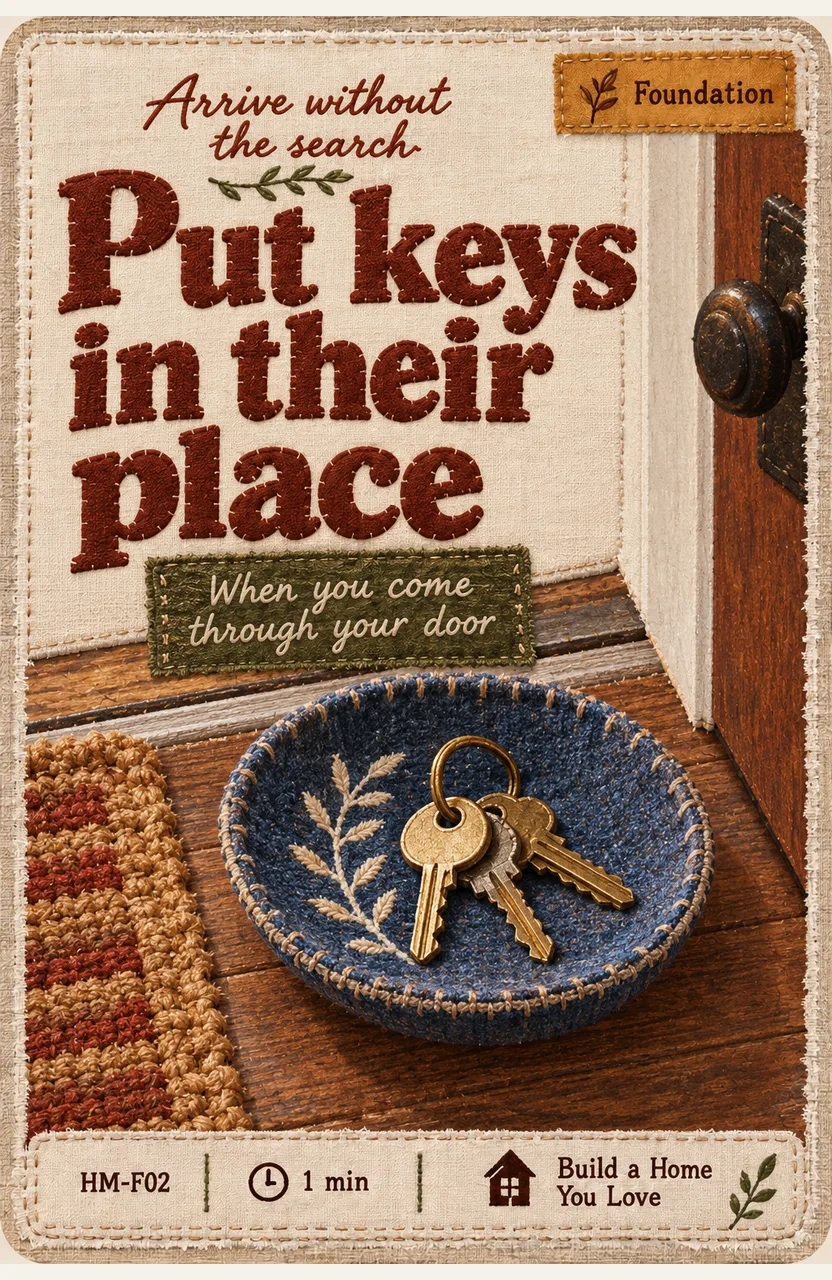
Put keys in their place When: you come through your door
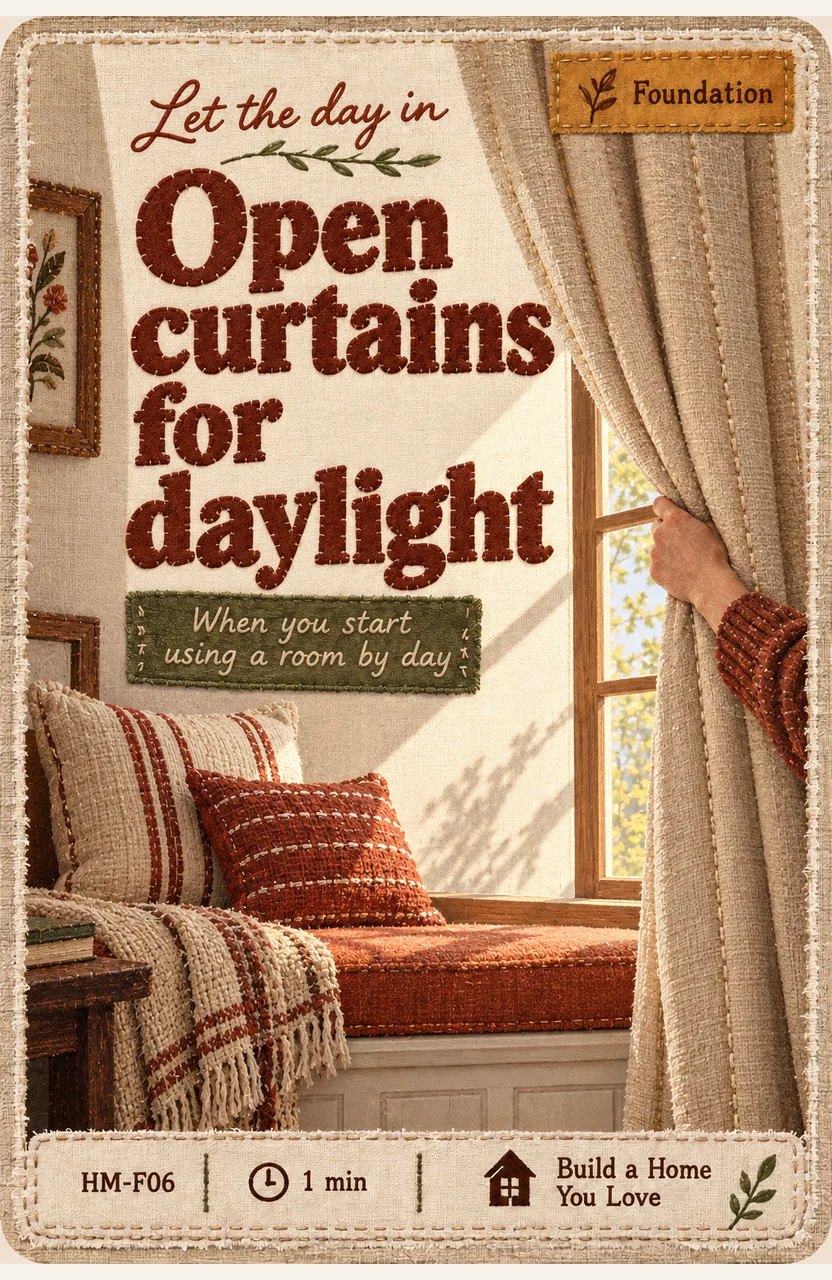
Open curtains for daylight When: you start using a room by day
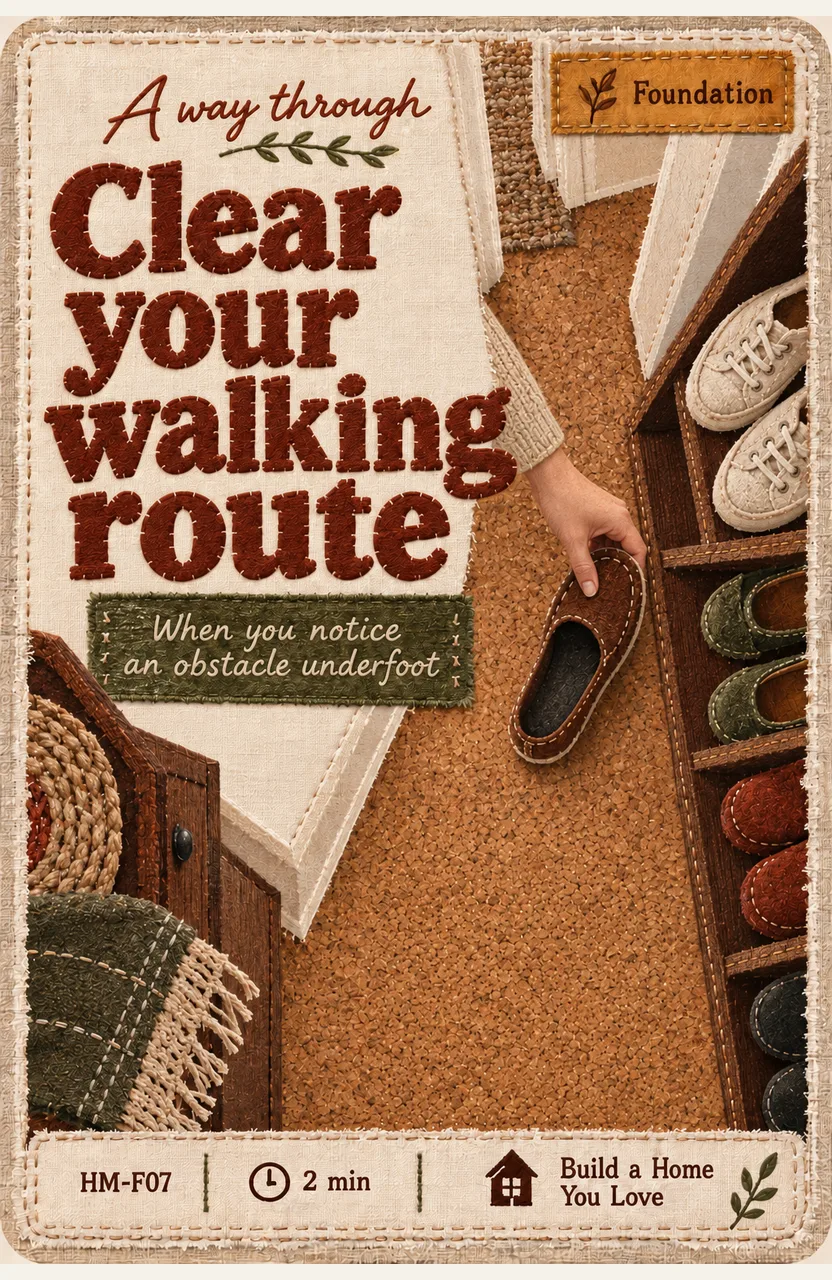
Clear your walking route When: you notice an obstacle underfoot
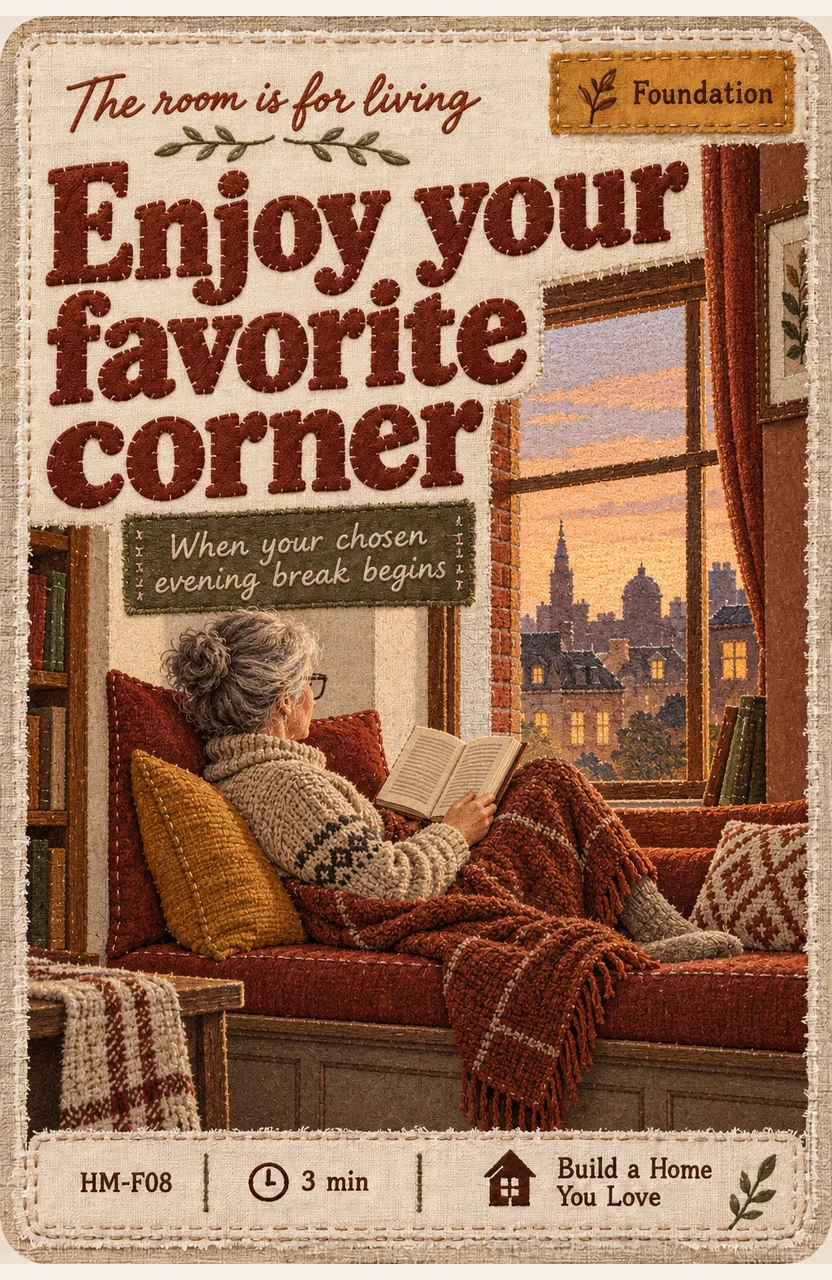
Enjoy your favorite corner When: your chosen evening break begins
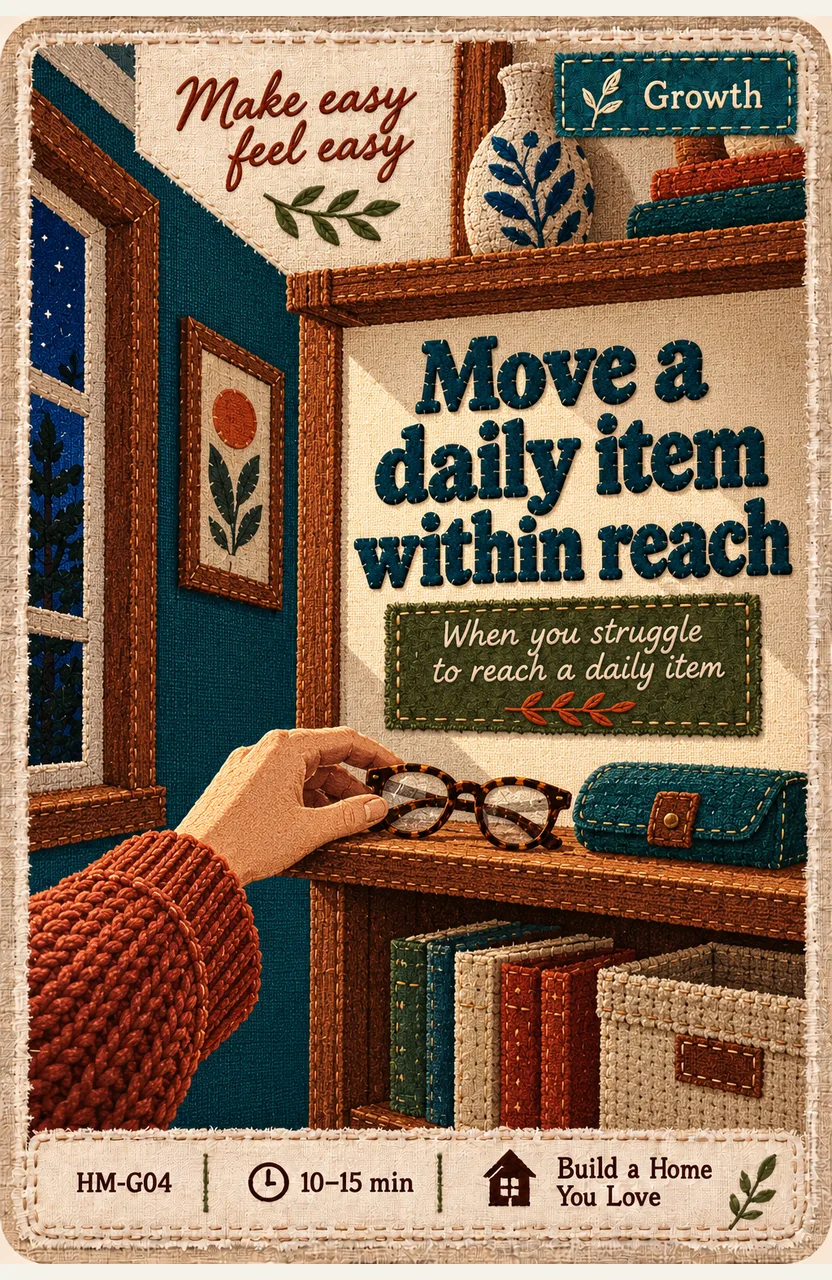
Move a daily item within reach When: you struggle to reach a daily item

16 cards · draft

How can I make time for friends in a busy week?

Start with a personal hello, a specific invitation and a remembered follow-up. Share an ordinary errand before adding a separate social commitment. Choose one repeat slot when the first connection fits.

Ask how someone found an interest When: someone mentions an interest in conversation
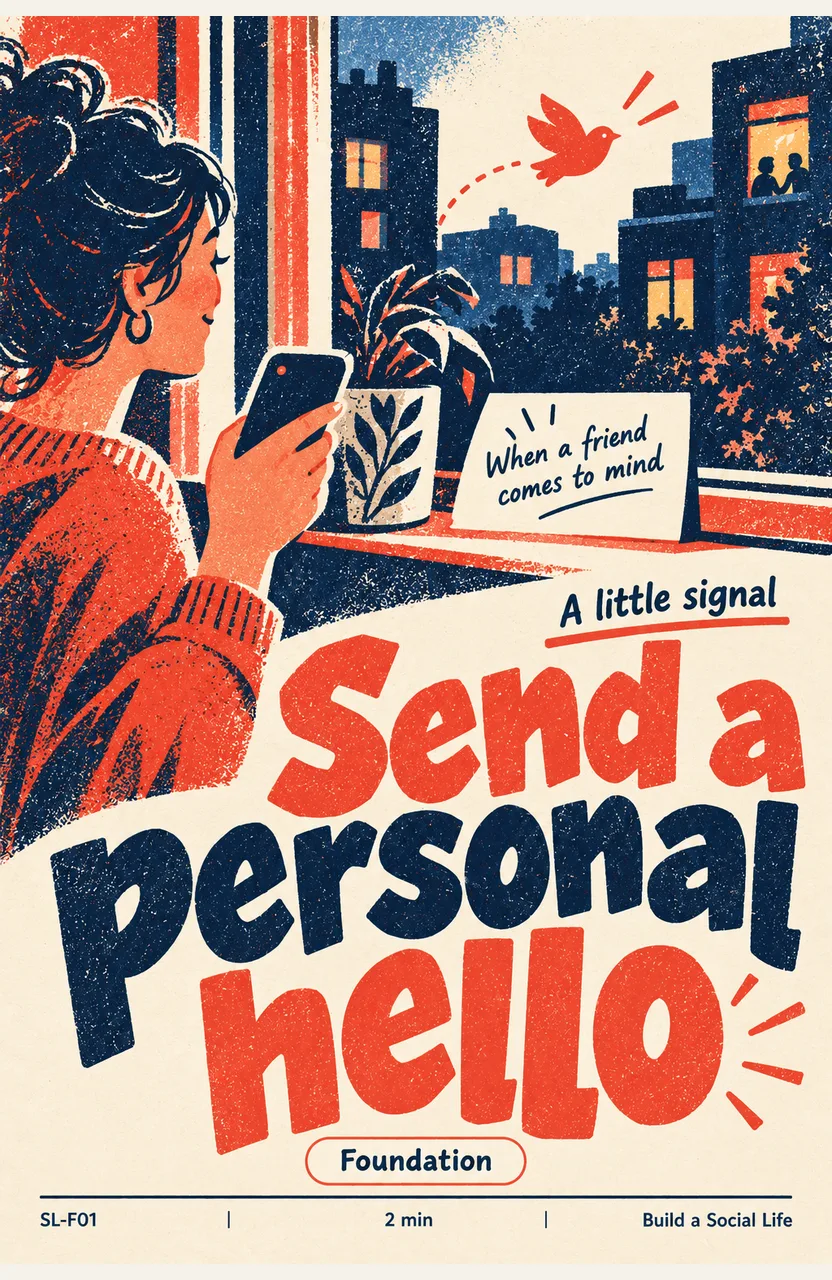
Send a personal hello When: someone you like comes to mind during a break
Greet a familiar face by name When: you arrive where you regularly see the same people
Ask about a friend’s earlier news When: a friend you spoke with before joins the conversation
Share one honest everyday update When: a friend asks how you are
Celebrate a friend’s good news When: a friend tells you something they are pleased about

4 cards · draft

What can I change when laptop work leaves my neck uncomfortable?

Try moving the task and its controls closer to where you comfortably look and reach. Gentle movement is an option, but these cards are not a neck-pain treatment programme.

Increase text size before leaning forward When: you lean in to read small text
Move your active window straight ahead When: you switch to another long computer task
Place your mouse beside the keyboard When: you clear space to begin typing
Turn your head three times each way When: you close your morning inbox

13 cards · draft

How do I make a clear offer and deliver my first paid work?

Check the desired result, ask clearly and agree a next step. Add a tailored quote and useful handover when the opportunity reaches that stage. A respectful no is a valid close.
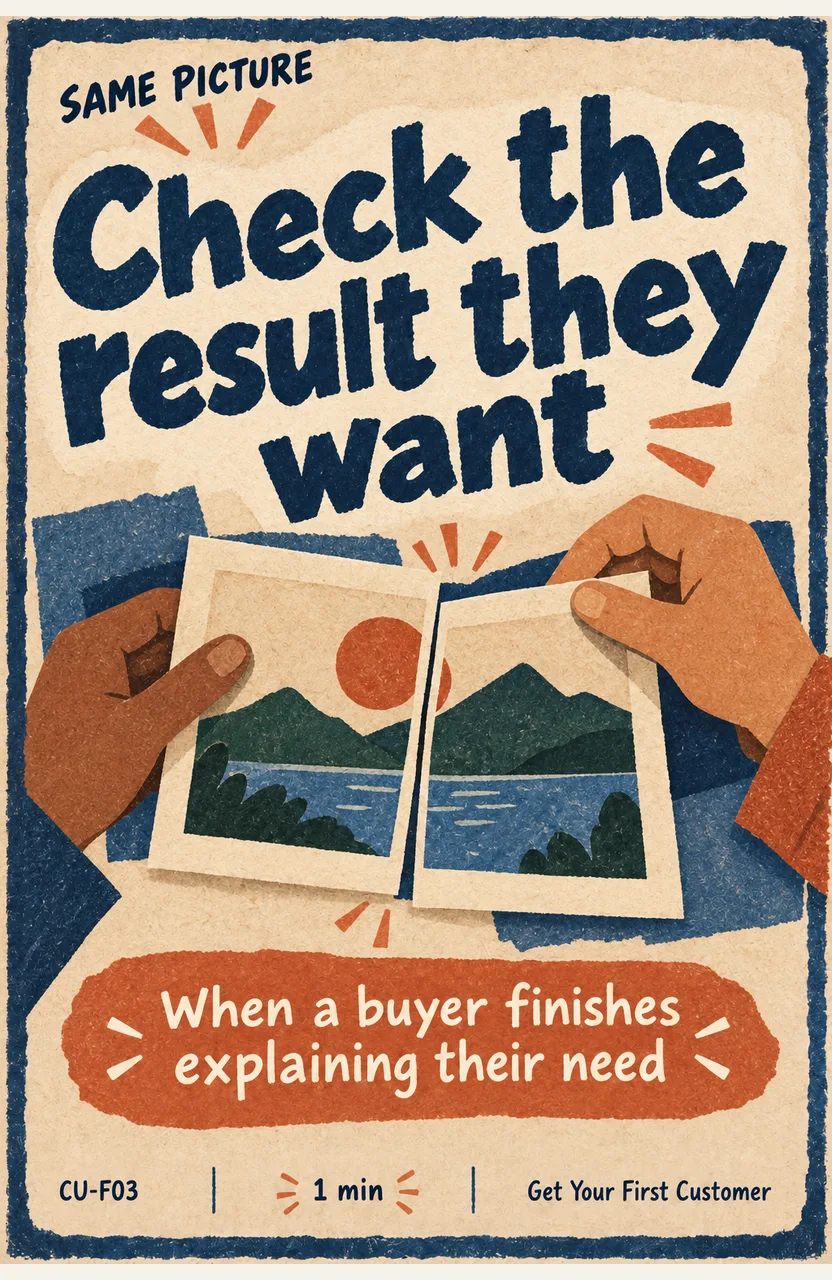
Check the result they want When: a buyer finishes explaining their need
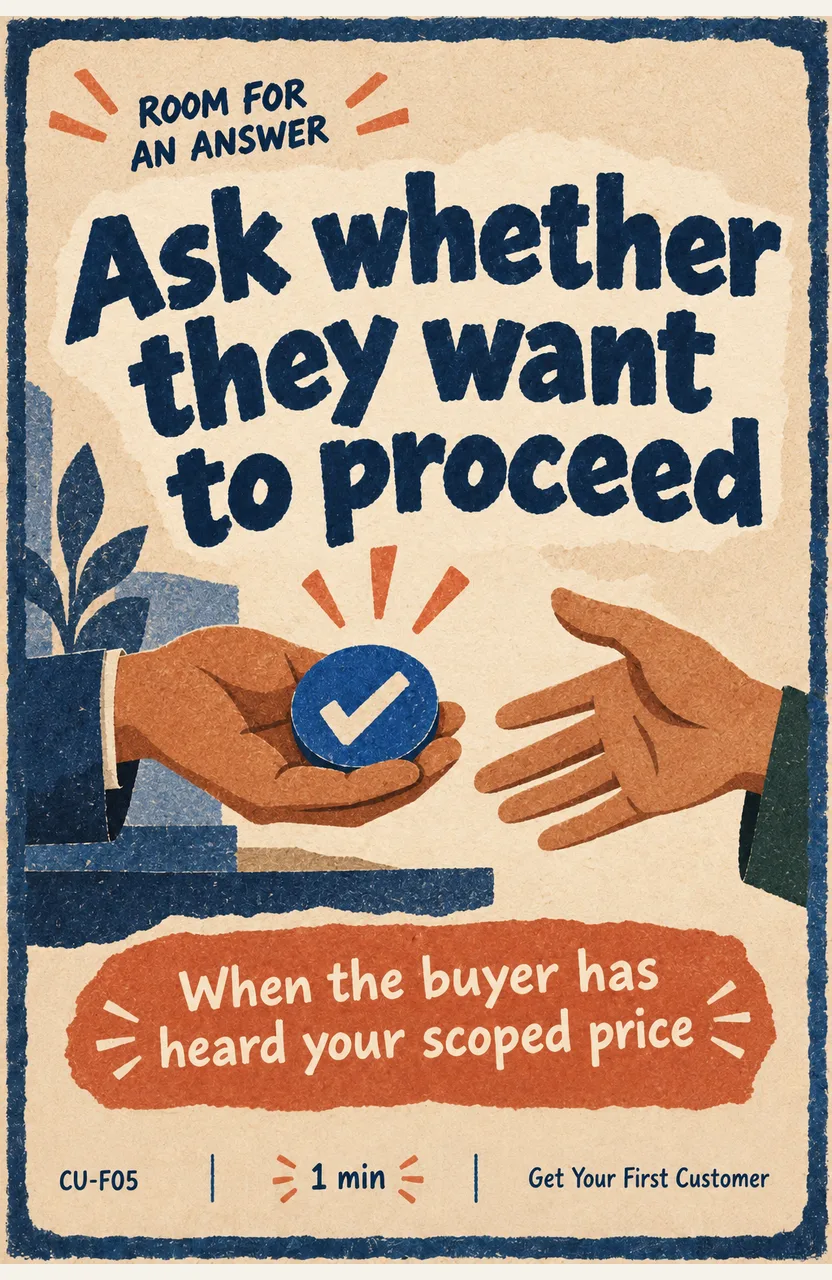
Ask whether they want to proceed When: the buyer has heard your scoped price
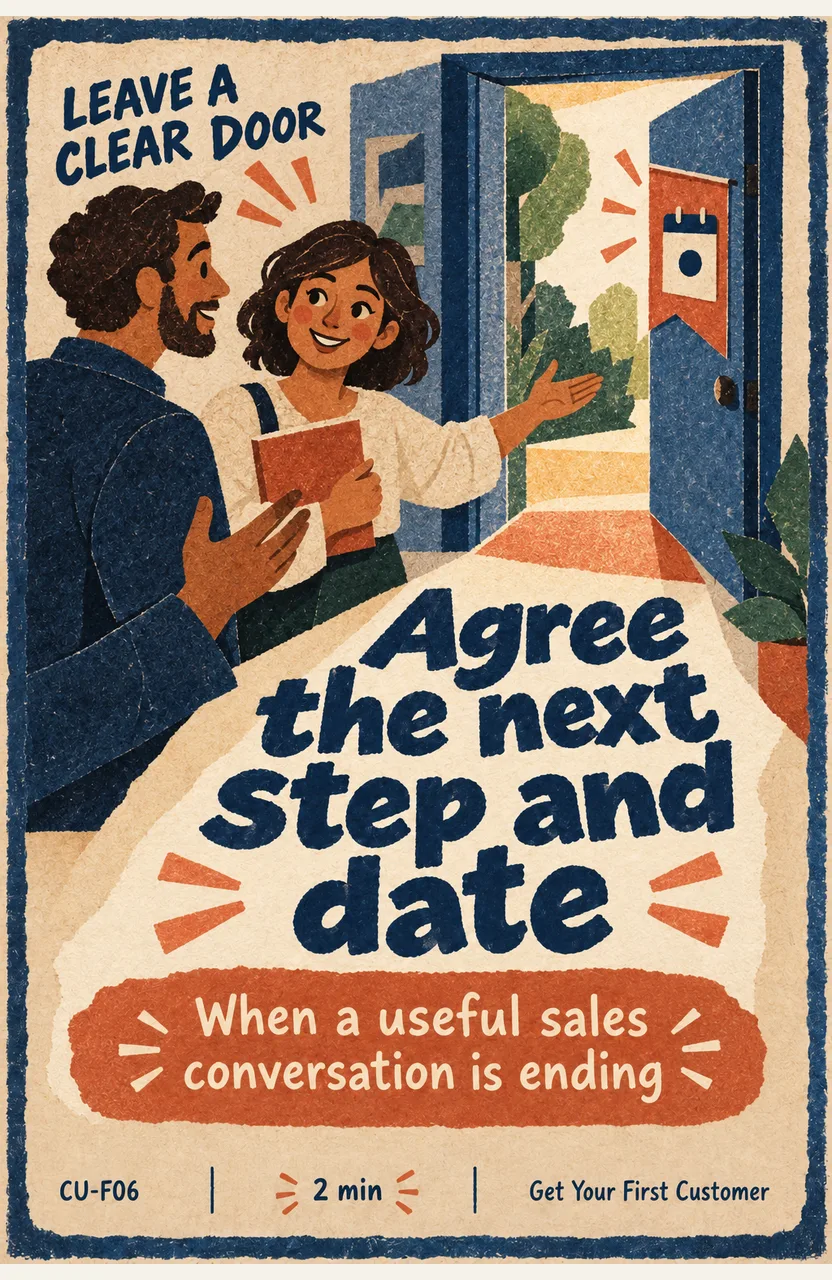
Agree the next step and date When: a useful sales conversation is ending
Write what finished means When: When a piece keeps growing.
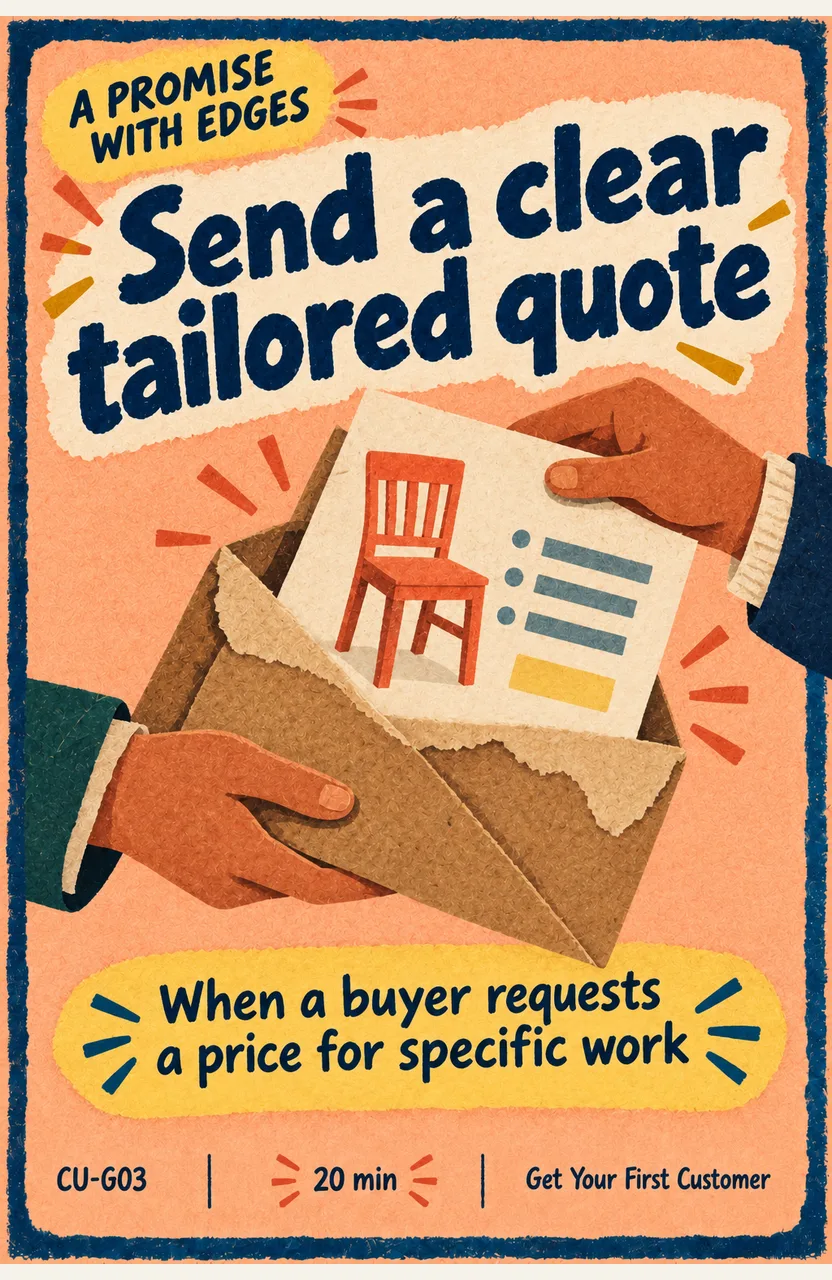
Send a clear tailored quote When: a buyer requests a price for specific work
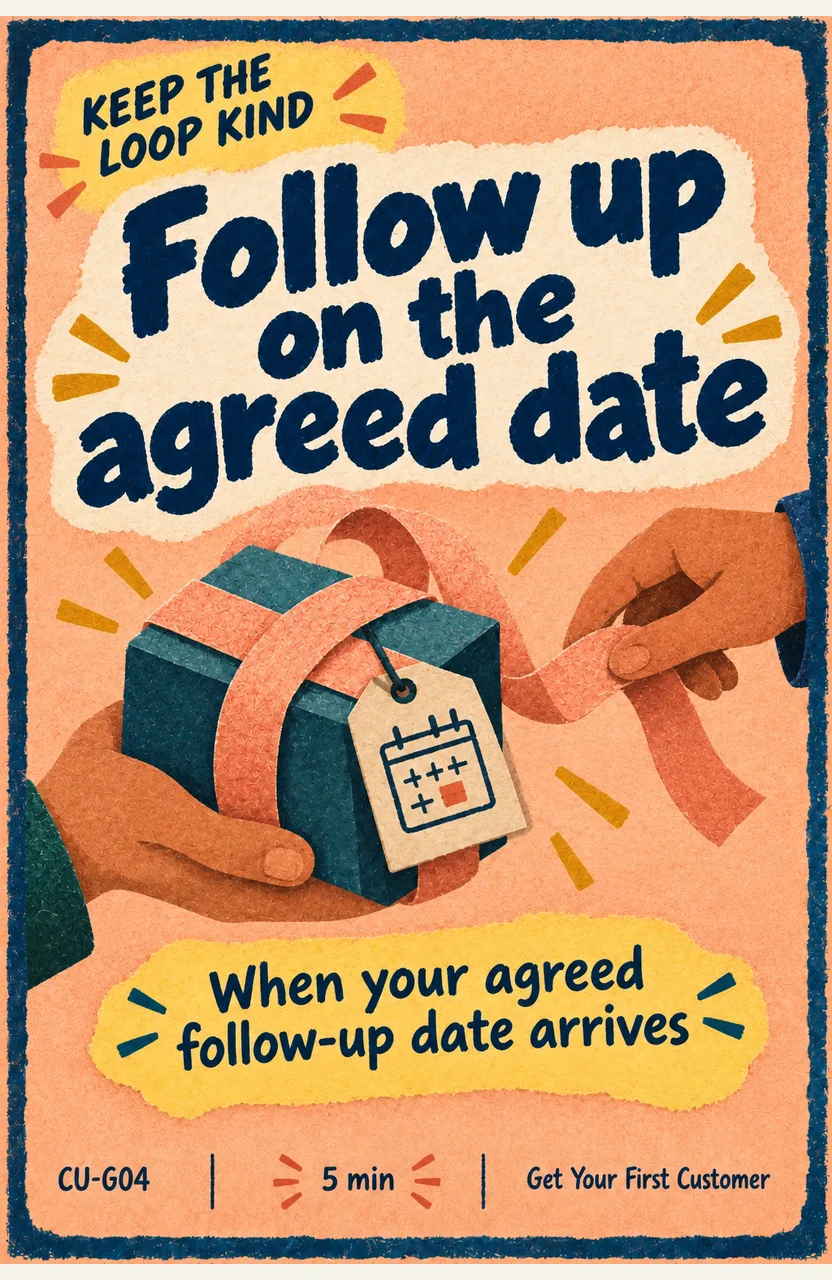
Follow up on the agreed date When: your agreed follow-up date arrives

8 cards · draft

How can I make portraits with ordinary equipment?

With a willing person, find comfortable soft light, simplify the frame and choose together. Add a short directed session when both want more. Agree separately before sharing.


Remove one distraction from the frame When: you are about to take a photograph
Wait for a gesture before photographing When: a willing person begins an activity
Place your portrait subject in soft light When: someone agrees to a portrait
Choose one image from similar frames When: you review several similar photographs
Give your portrait subject one direction When: your agreed portrait session begins
Edit a photograph for one emphasis When: you open a selected photograph to edit

8 cards · draft

What practical step should I take first after a major change?

Find the date, question or record that needs attention, then give the next practical step a clear route. Work with the time and support you actually have; an unknown date or an unavailable contact can stay marked as unknown.
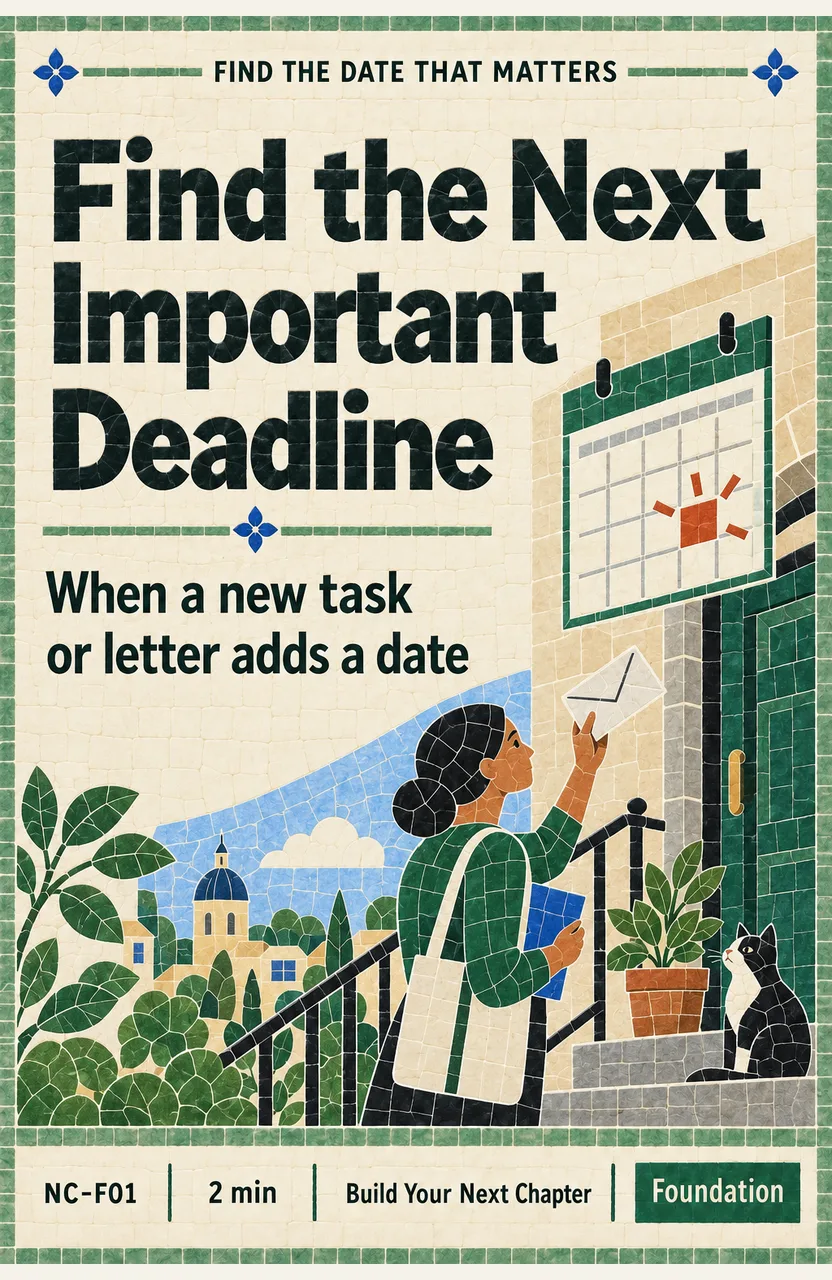
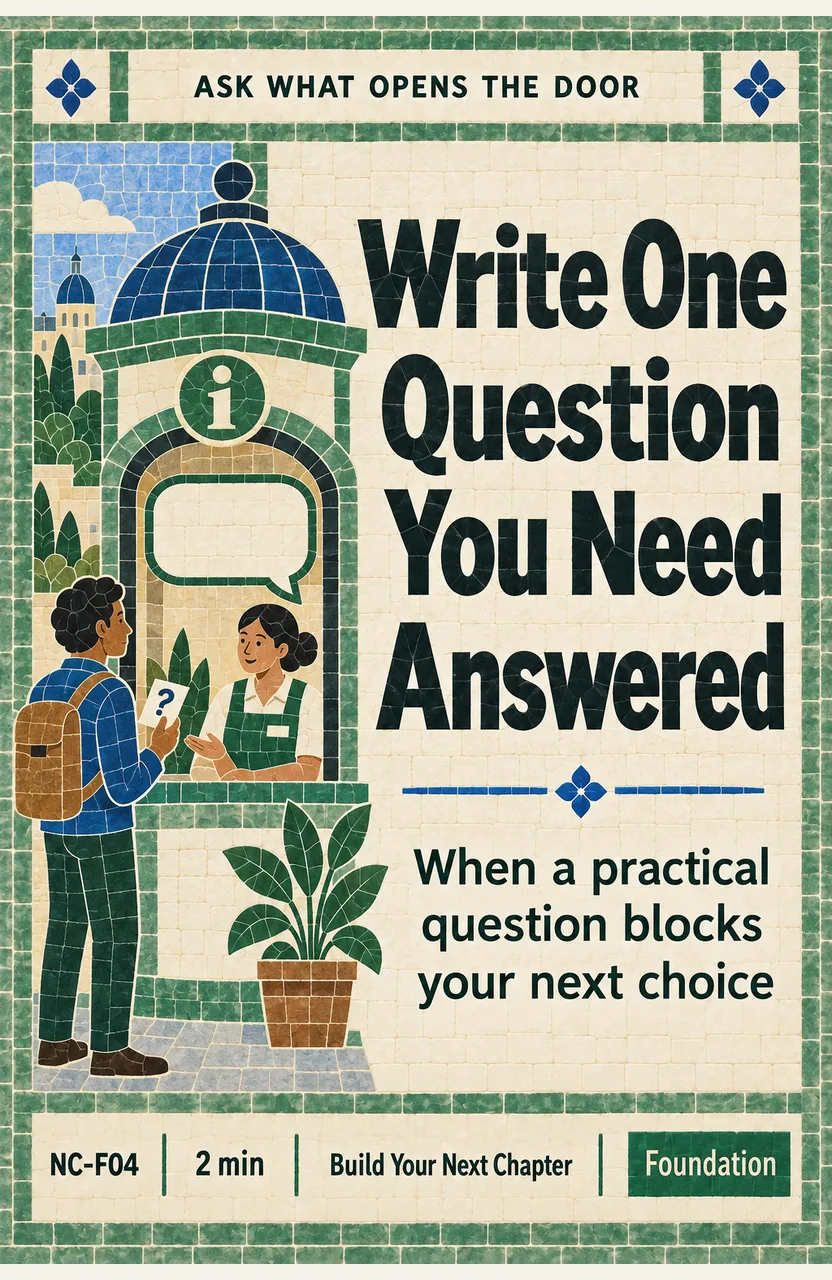
Find the Next Important Deadline When: a new task or letter adds a date
Write One Question You Need Answered When: a practical question blocks your next choice
File One New Document in One Place When: paperwork arrives for a changed situation
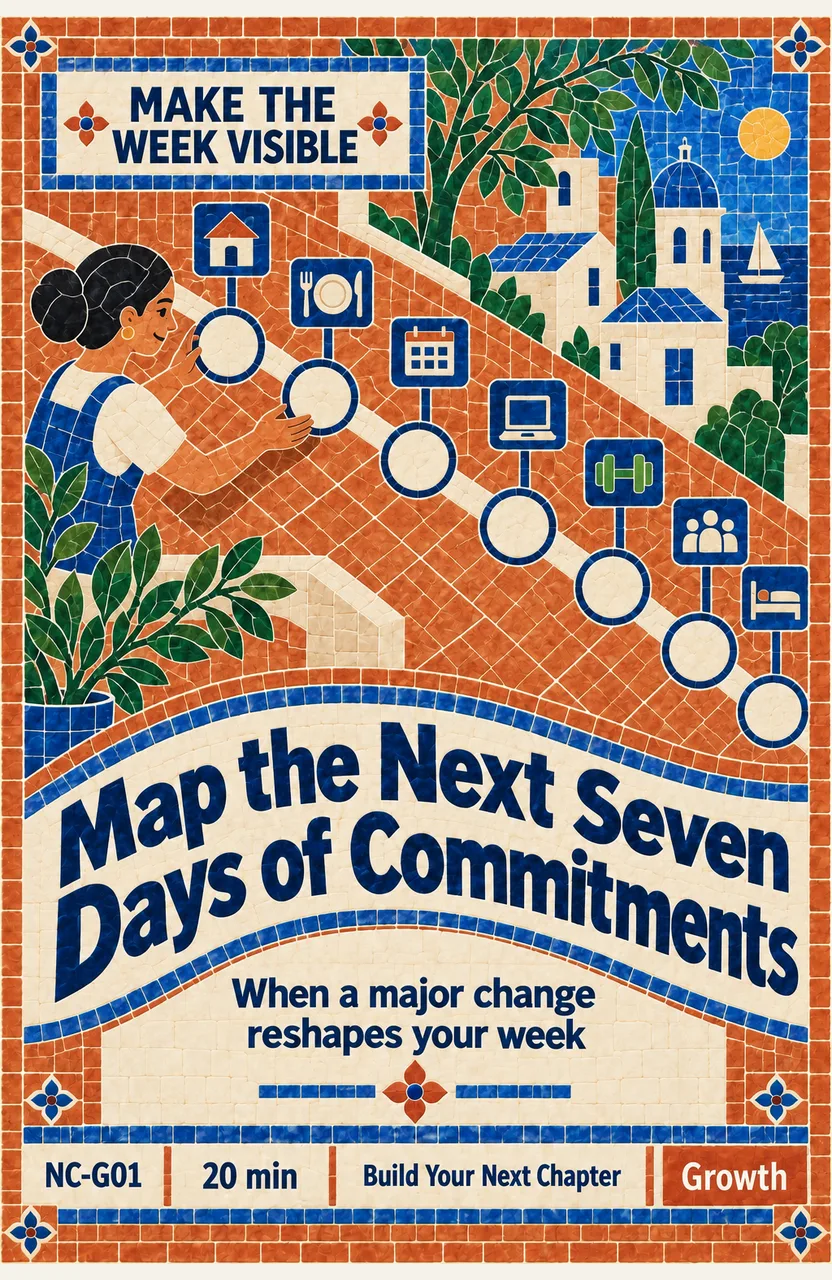
Map the Next Seven Days of Commitments When: a major change reshapes your week
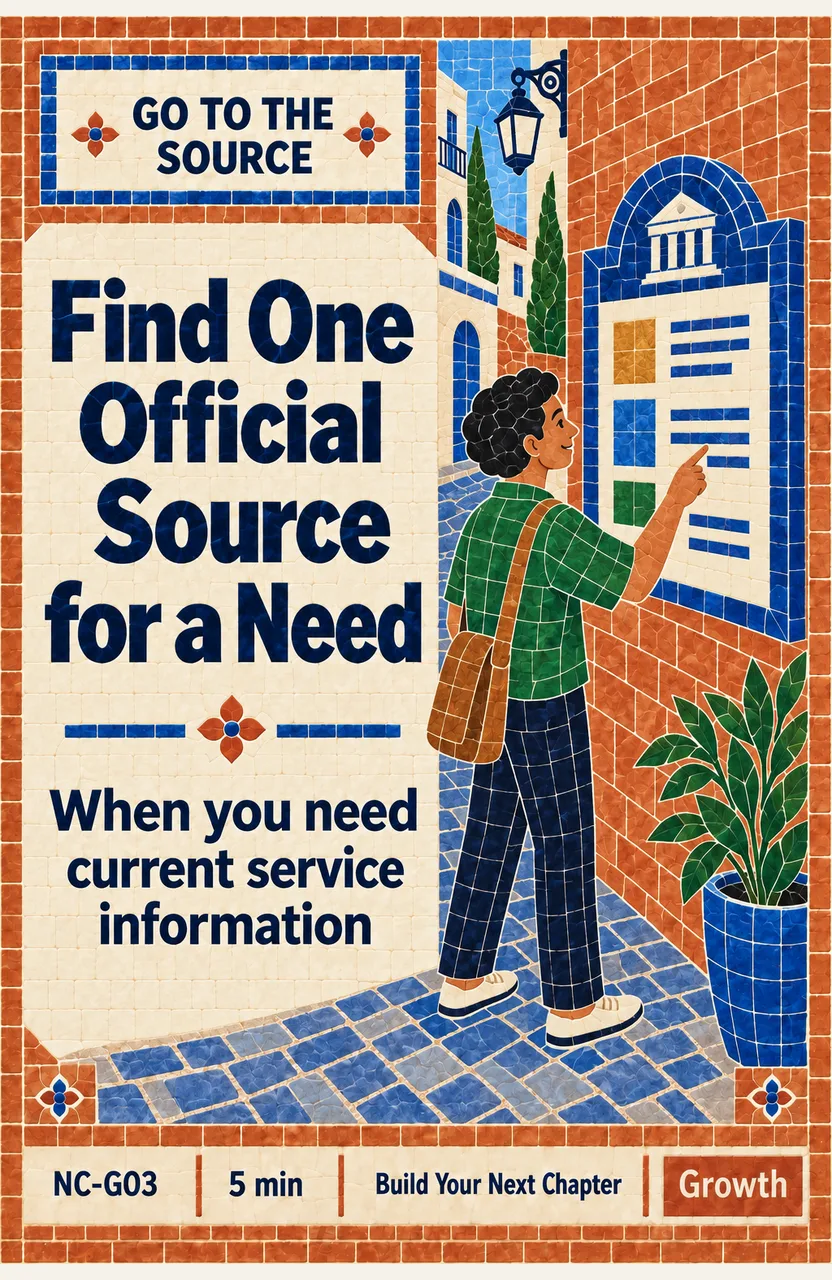
Find One Official Source for a Need When: you need current service information
List One Contact for Each Open Need When: several needs require different contacts

22 cards · draft

How can I get better at presentations with limited rehearsal time?

Use one purposeful rehearsal and a real listener response. Add a recurring exchange or revise an explanation from audience questions when it earns its place. Challenges finish with an actual presentation, not watching a recording.
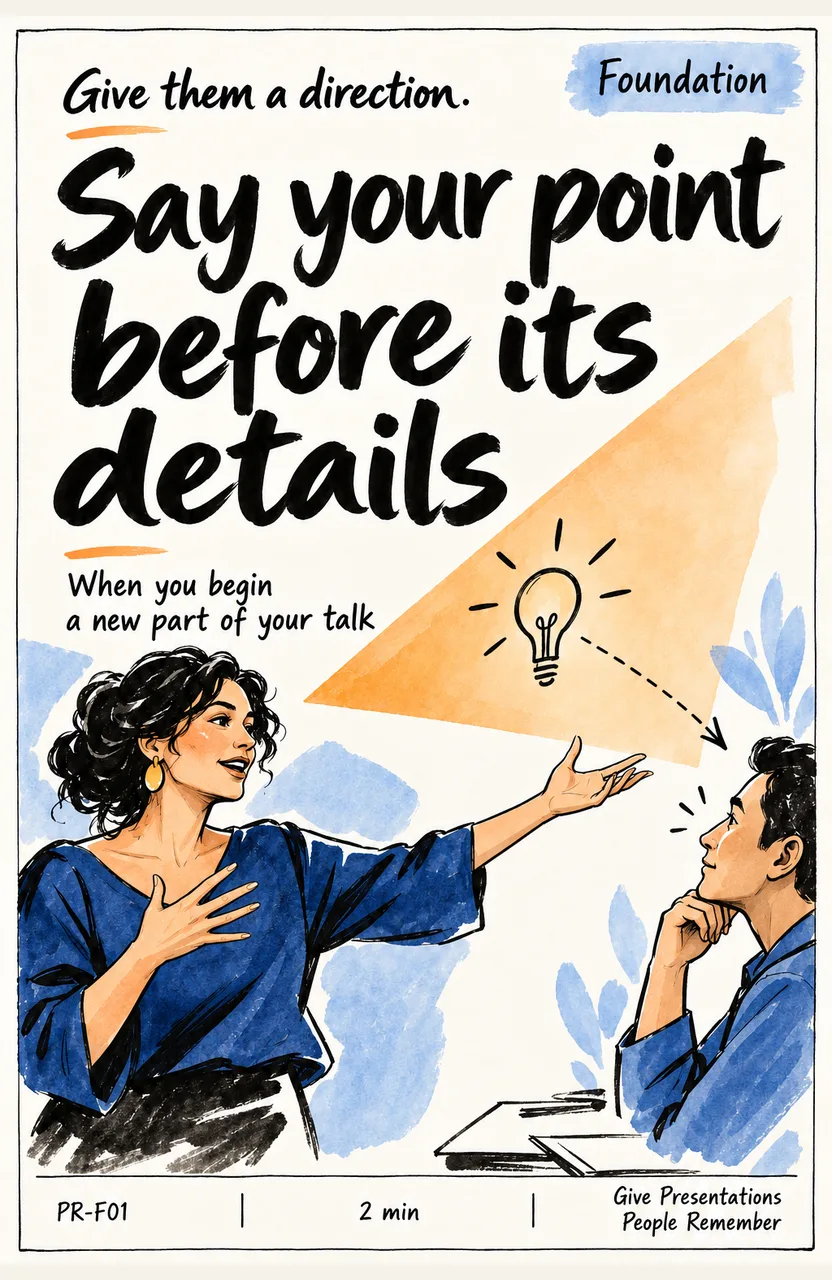
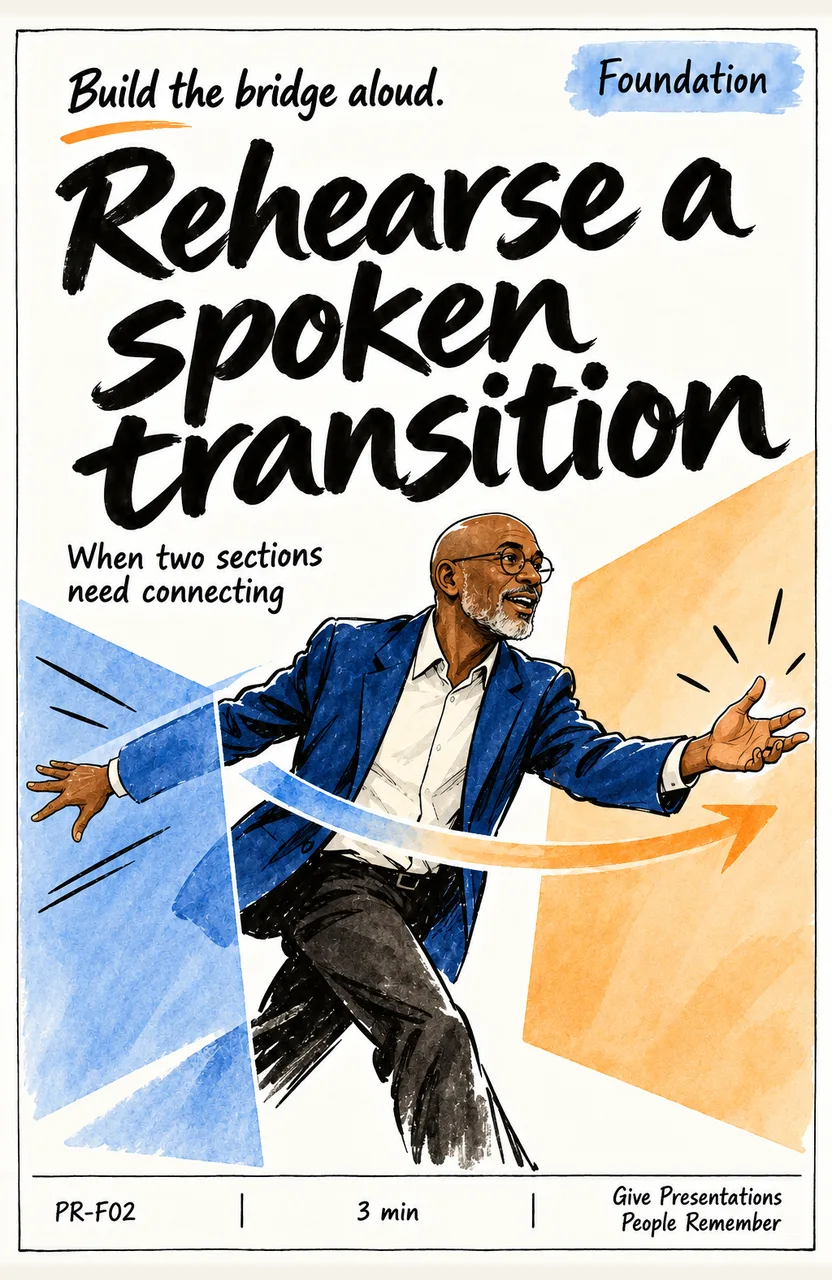
Say your point before its details When: you begin a new part of your talk
Rehearse a spoken transition When: two sections need connecting
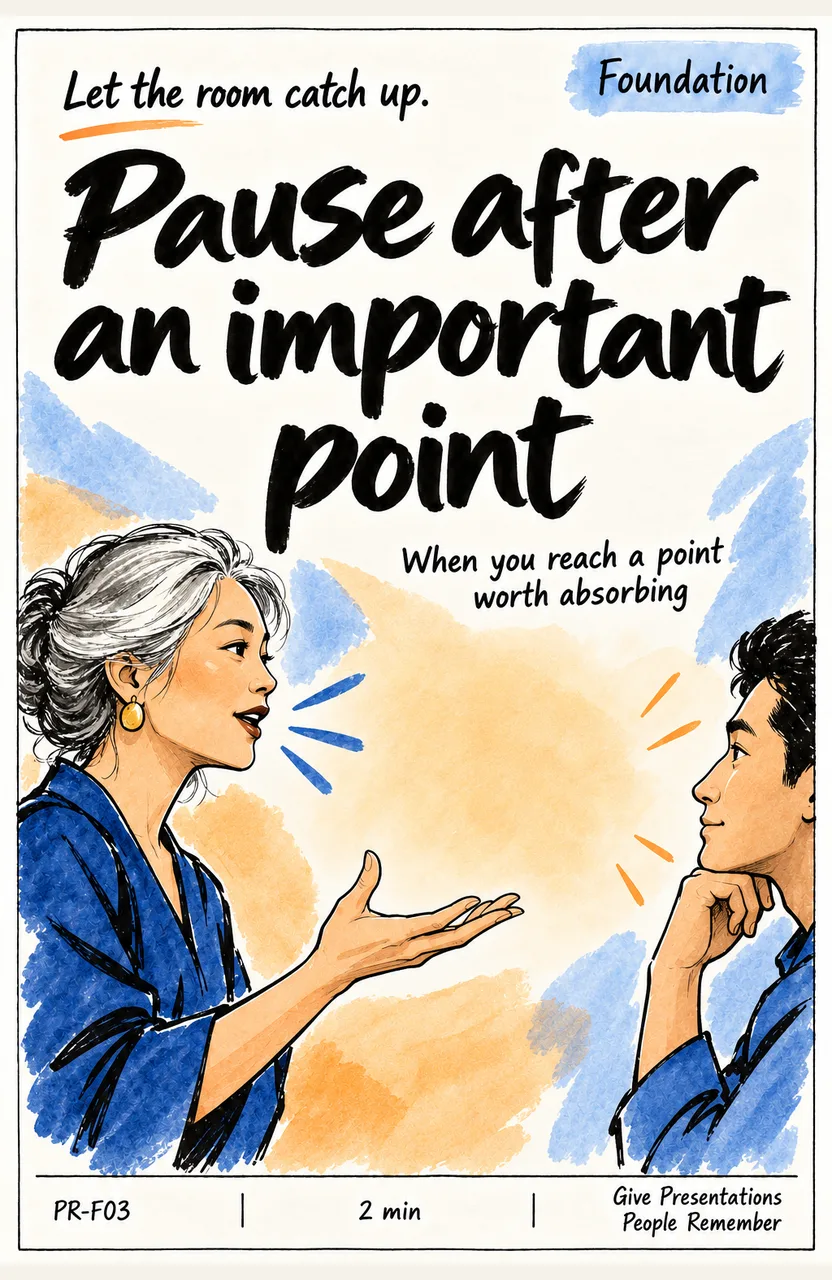
Pause after an important point When: you reach a point worth absorbing
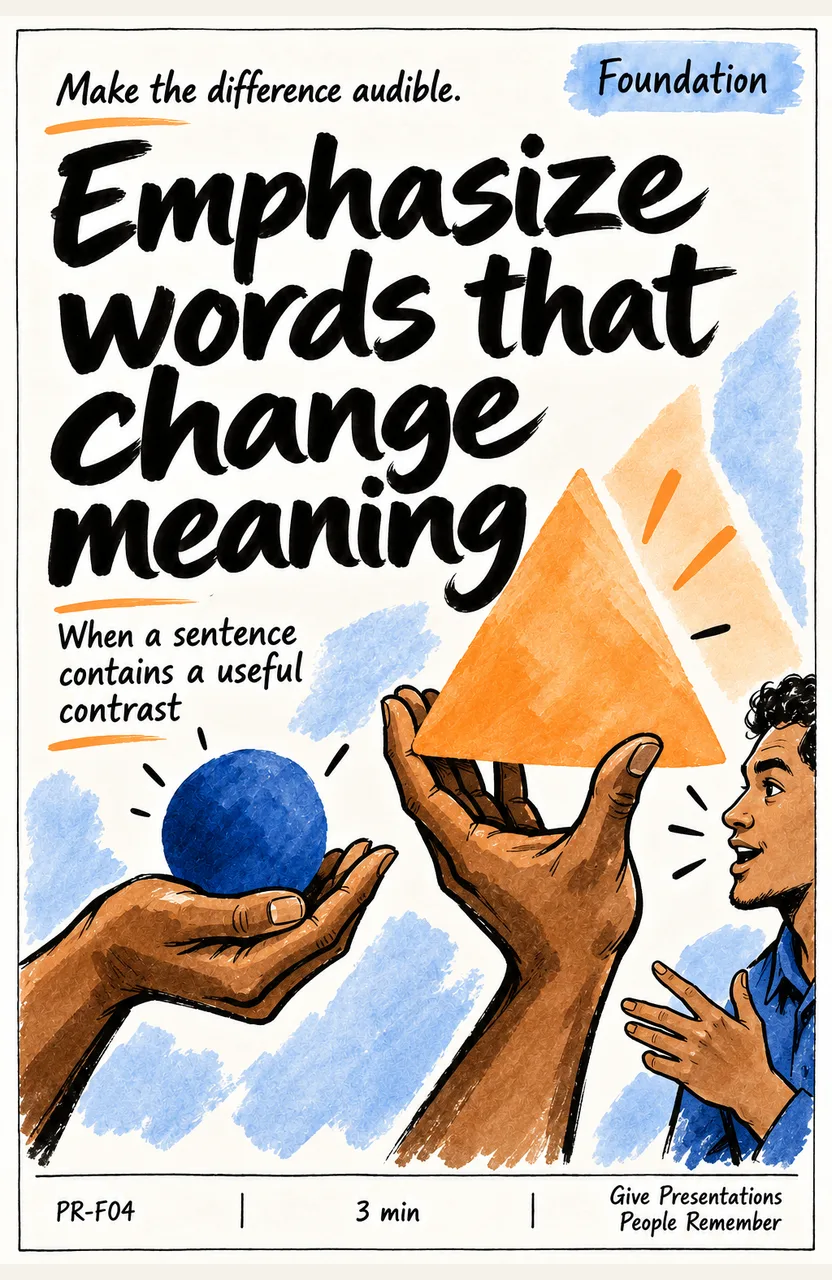
Emphasize the words that change meaning When: a sentence contains a useful contrast
Explain a chart without reading it When: you show a chart
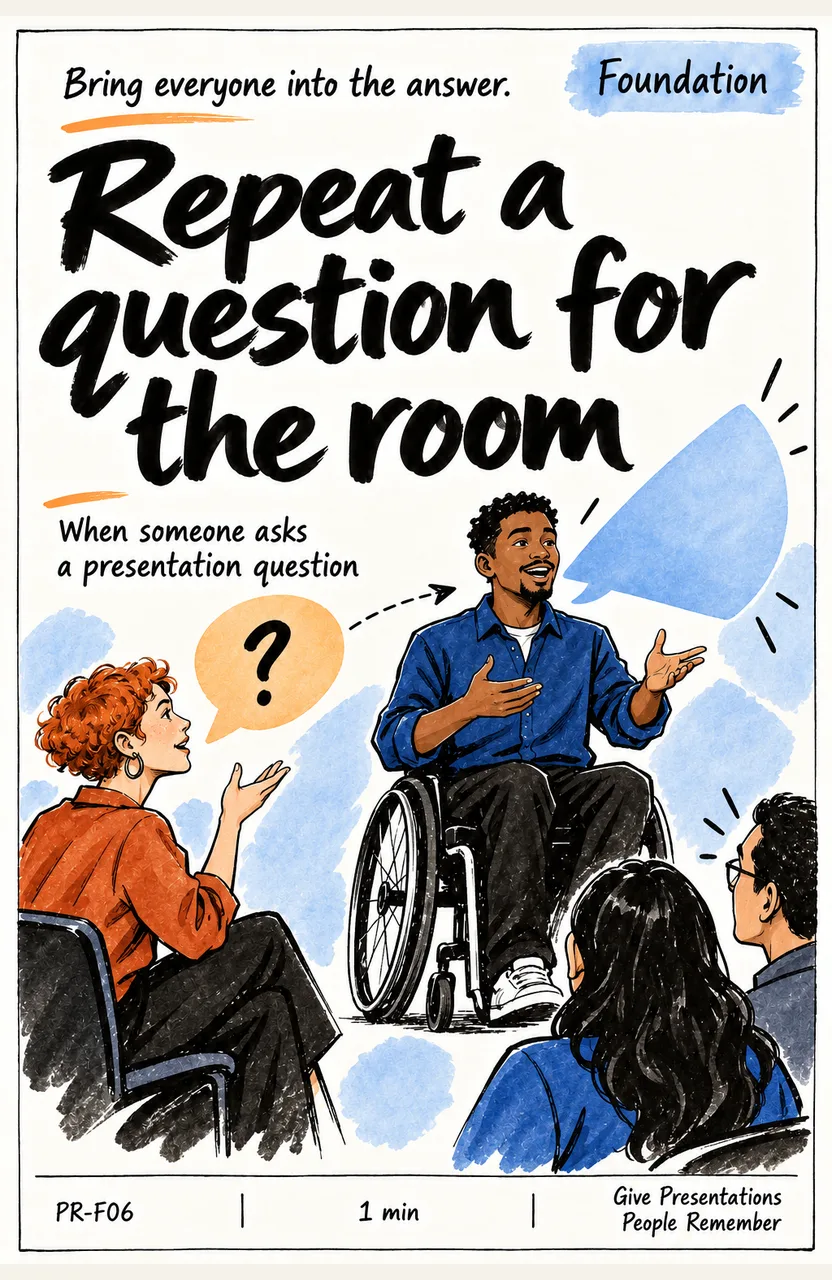
Repeat a question for the room When: someone asks a presentation question

7 cards · draft

How can I prepare for irregular costs and lean months?

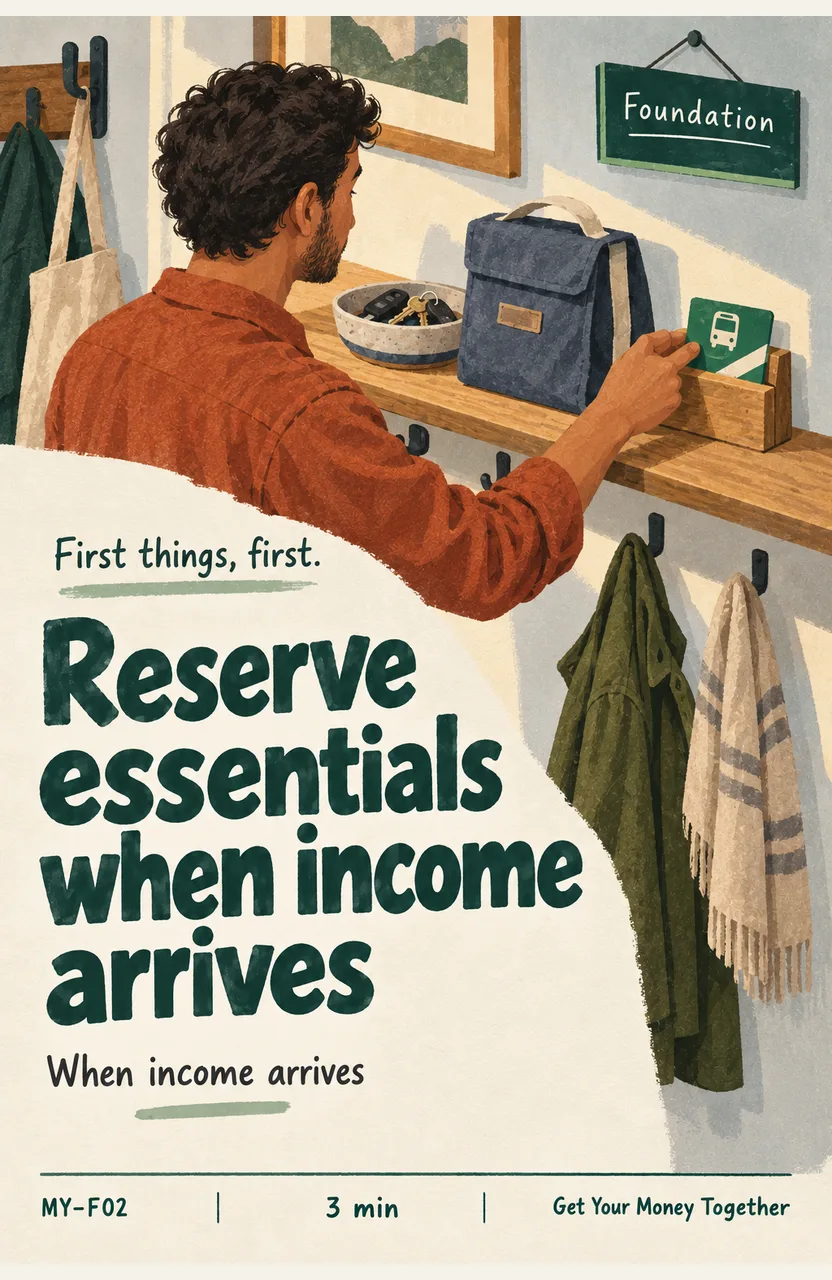
Start with protected essentials (F02), a spendable balance before optional buying (F01), and one known annual cost funded each payday (G03). An accessible emergency transfer (F08) has a separate purpose. With variable income, add M03 to carry affordable good-month surplus into lean months; without a reserve, allocate actual receipts rather than borrowing to imitate a salary. Allow 30–45 minutes for first setup, then around 10 minutes per income receipt and 20 minutes monthly; F01 takes 1–3 minutes at optional purchases. C01 tests a protected bill cycle. Add protection review (M04) when a move, dependent or job change alters needs.
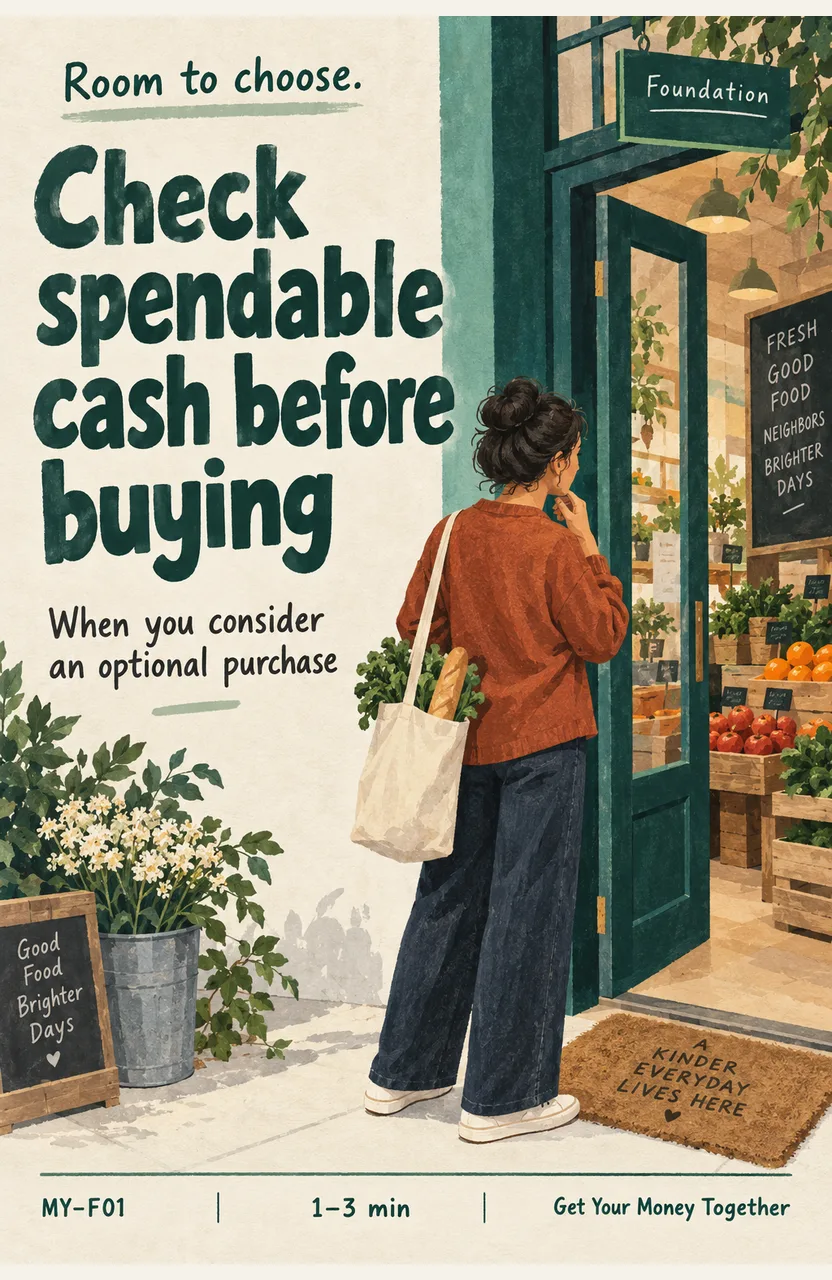
Check spendable cash before buying When: you are about to make an optional purchase
Reserve essentials when income arrives When: income lands in your account
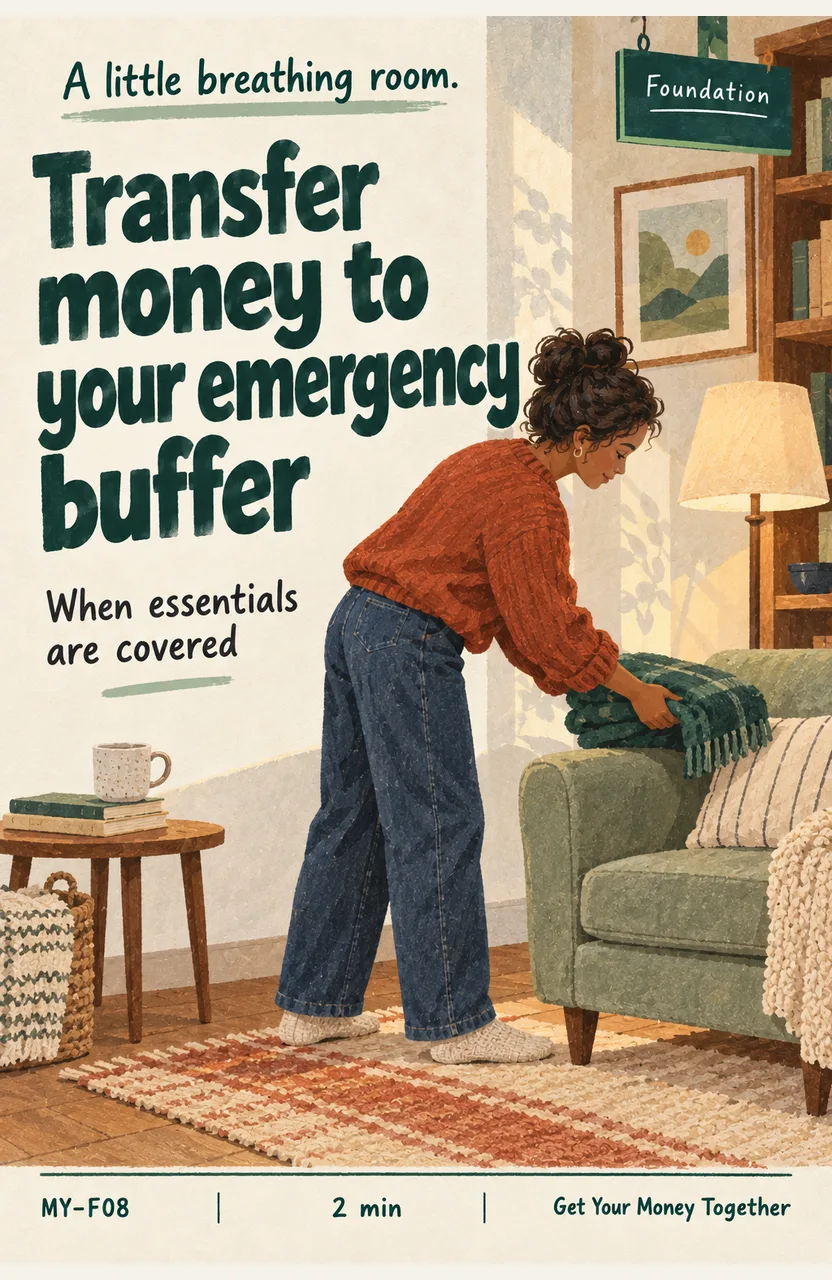
Transfer an affordable amount to your buffer When: income arrives and essentials are covered
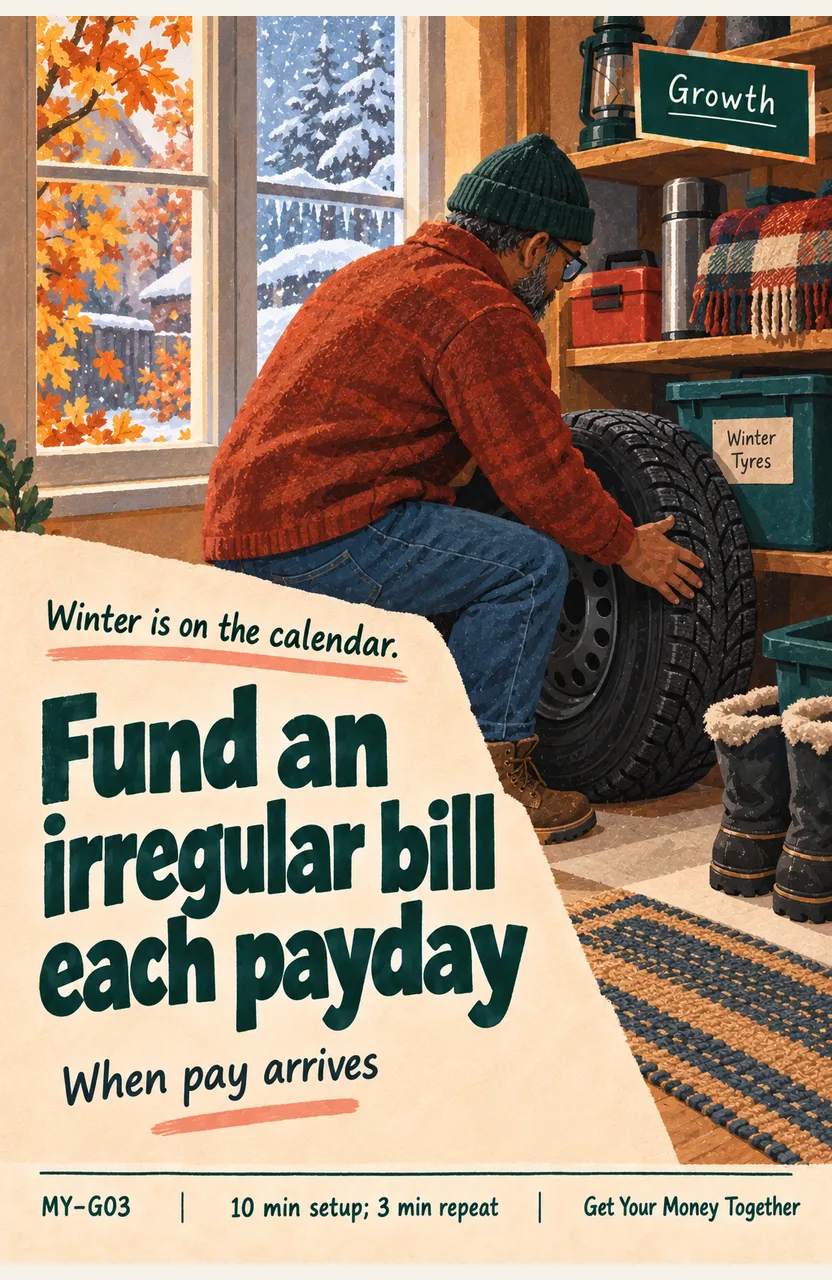
Fund a known irregular bill each payday When: pay arrives before your chosen irregular bill
Reserve good-month income for lean months When: a better-income month ends
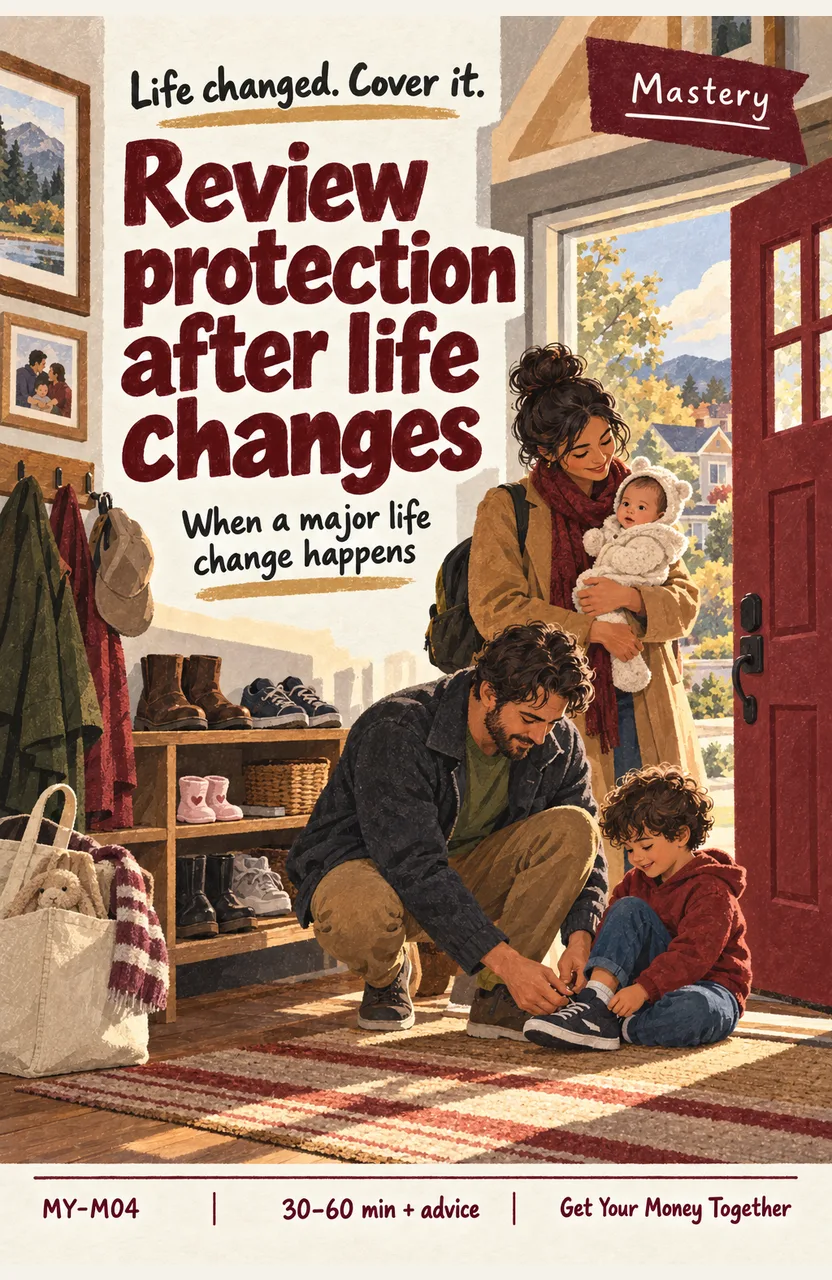
Review protection after a life change When: a move, dependent or job change alters your needs

10 cards · draft

How can I stop being surprised by bills?

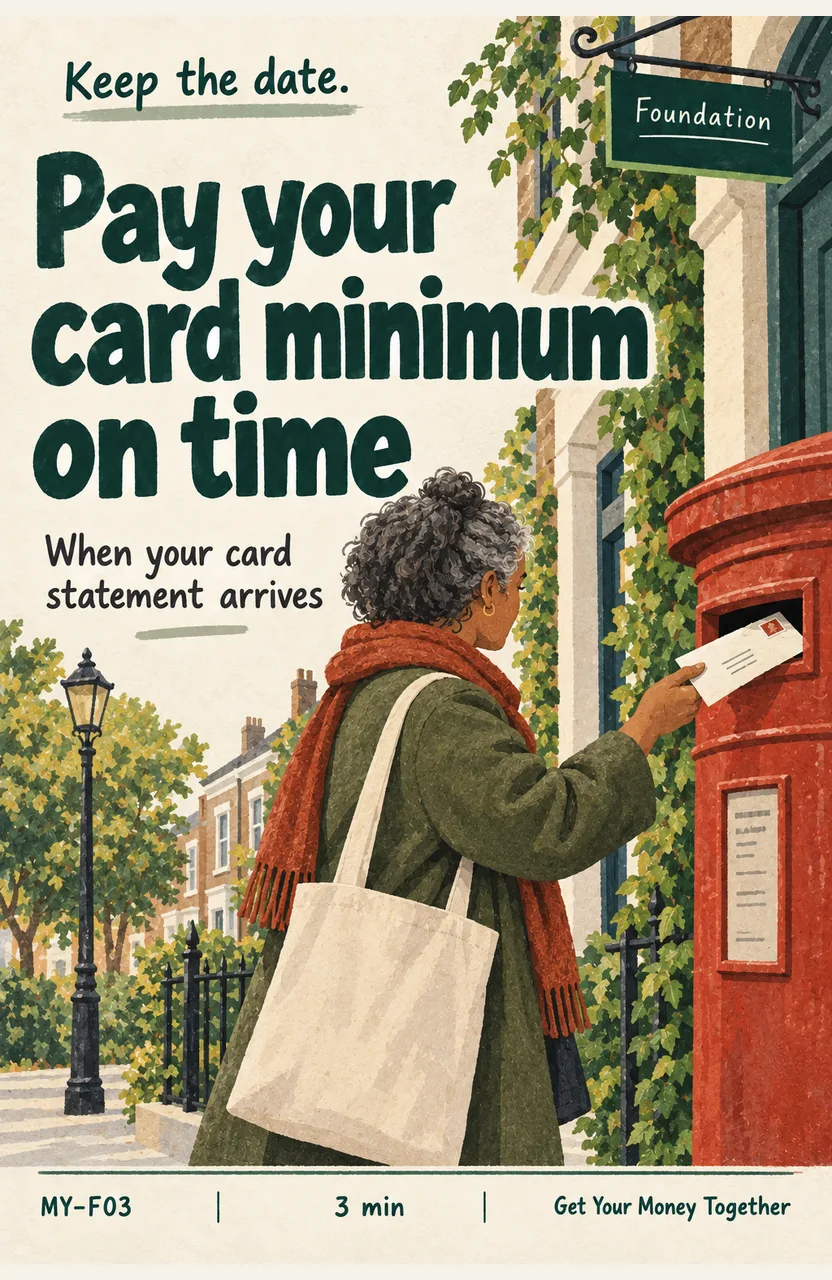
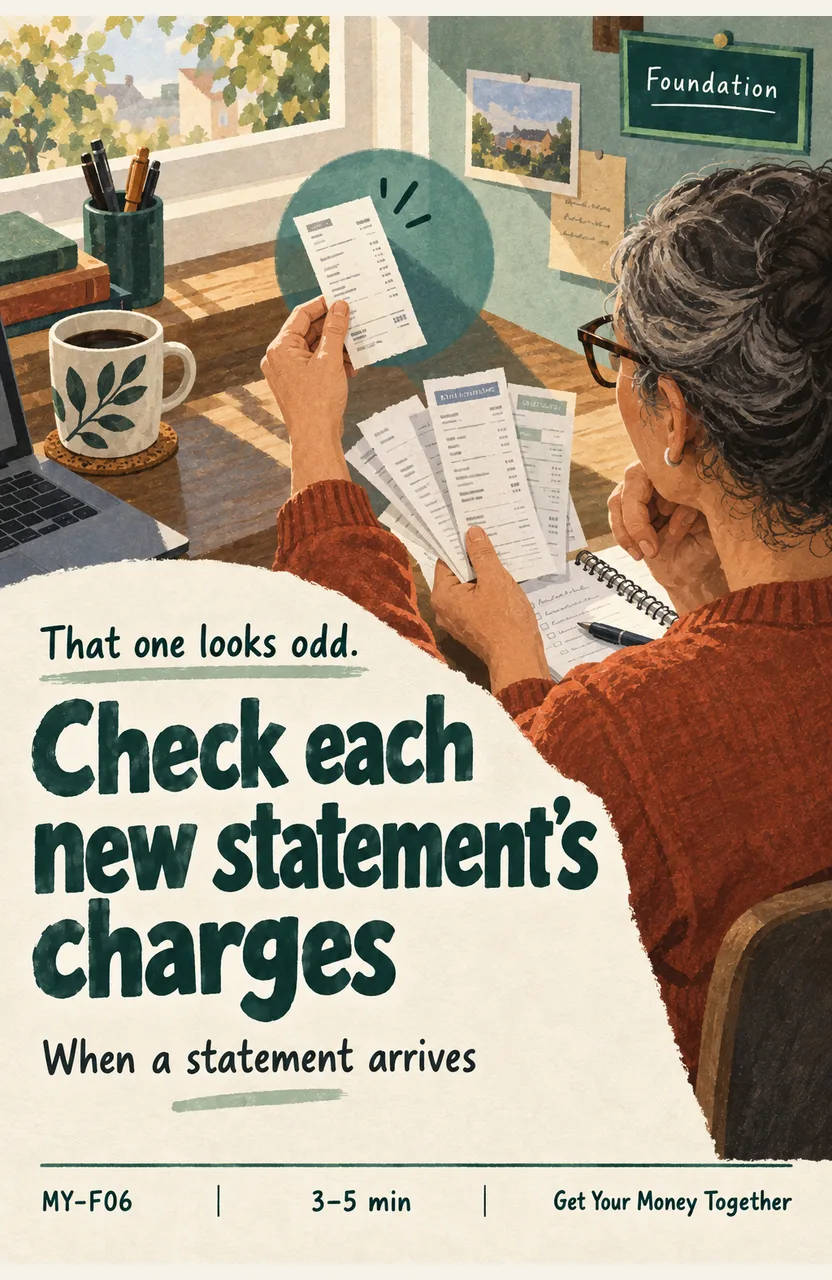
Start today with spendable cash before optional buying (F01), earmark essentials when income arrives (F02), and meet the statement minimum by its due date (F03). Allow 3 minutes at payday, 1–3 minutes per optional purchase and 3 minutes per credit statement; a first inventory may take 20 minutes. If essentials exceed income, use G04’s creditor call before adding savings or extra debt payments. When required payments fit, add G06 for affordable extras to one chosen debt. G01/G02 create a short weekly decision and dependable dates; C01/C02 combine these into a protected cycle or a workable debt route. Canada is the consequential-rule jurisdiction.
Check spendable cash before buying When: you are about to make an optional purchase
Reserve essentials when income arrives When: income lands in your account
Pay the required credit-card minimum on time When: a credit-card statement arrives
Check the charges on each new statement When: a bank or card statement arrives
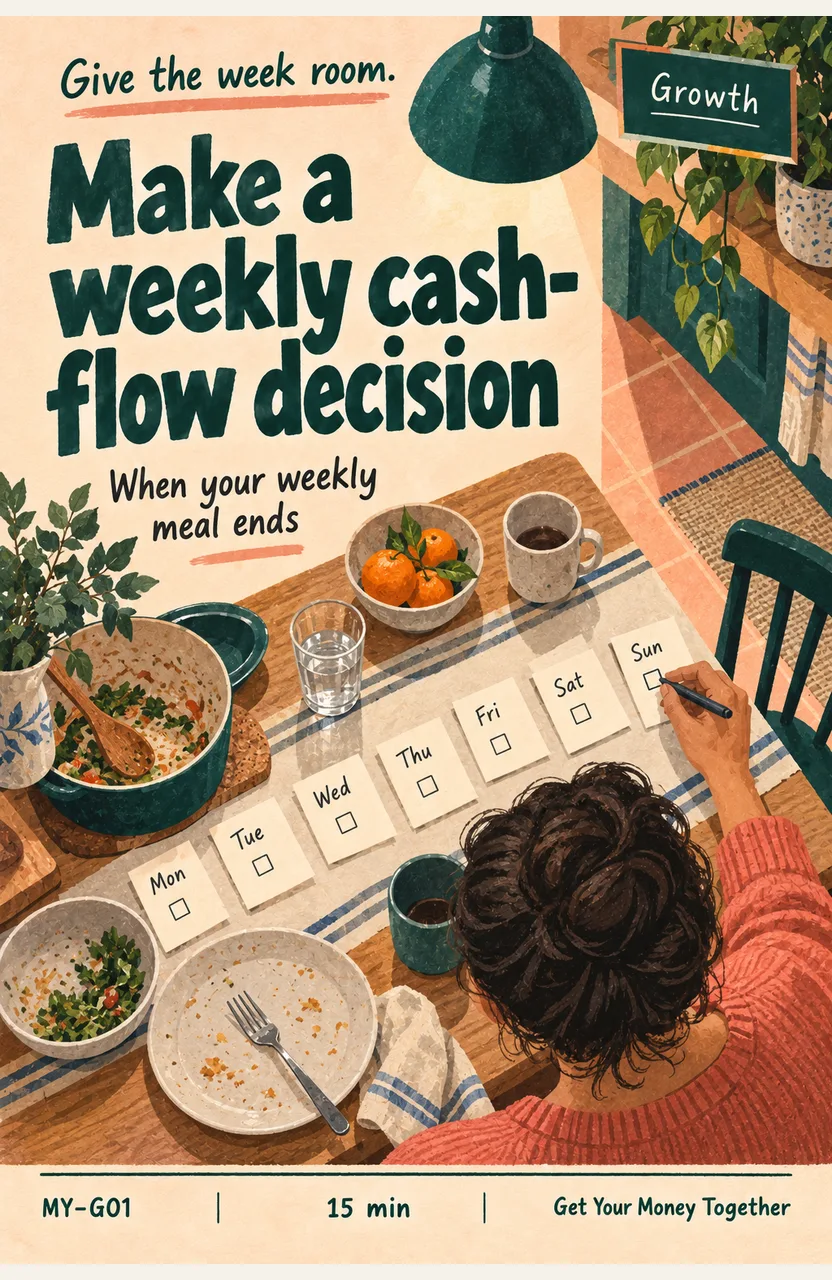
Make one cash-flow decision each week When: your chosen weekly meal ends
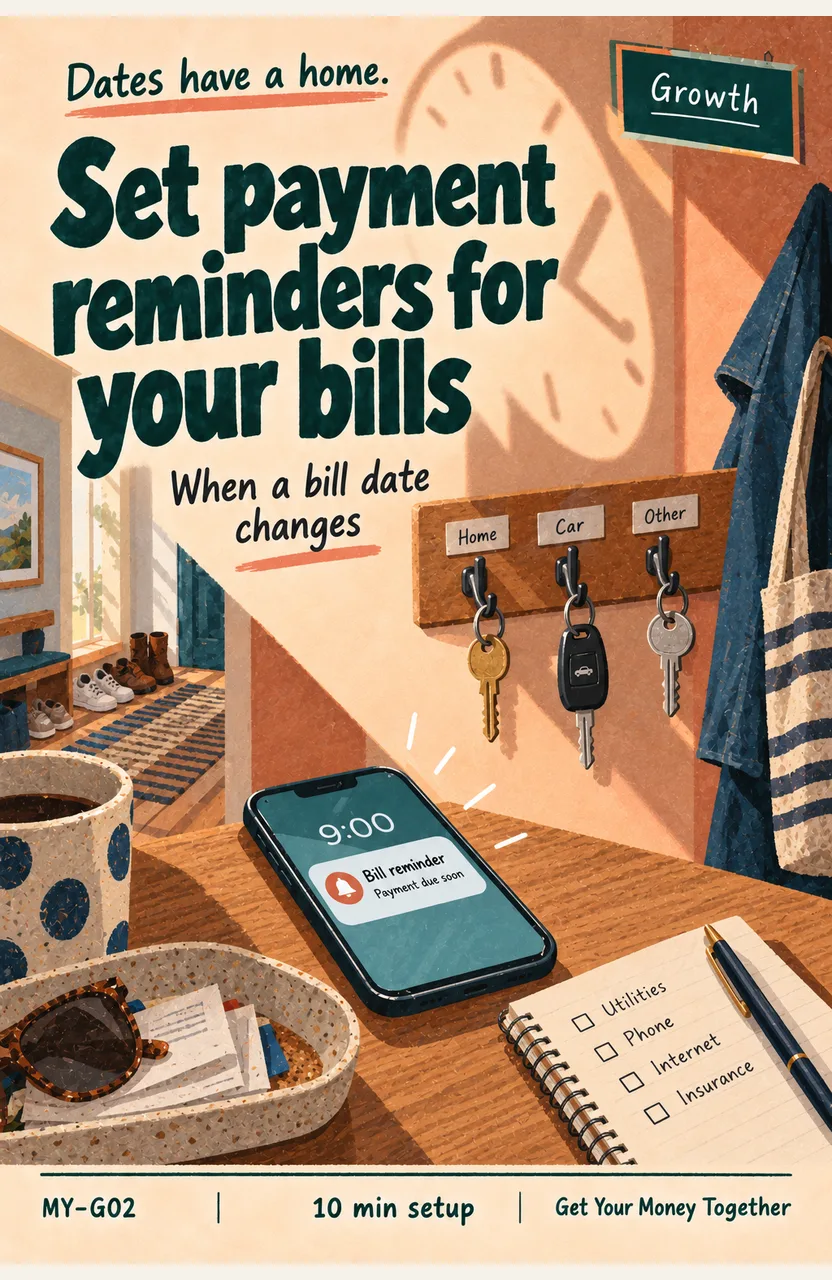
Set a payment reminder for each bill When: a bill adds or changes a due date

6 cards · draft

How can I protect an evening that work keeps taking over?

A reliable finish may depend on a handover, a calendar change or a team agreement as much as an individual cue. The harder cards here give those constraints a specific action, while a hobby session gives some personal time a purpose you chose. These are options to test within your role, not promises that a routine can fix understaffing.

Get a colleague's confirmation before handing over work When: an agreed colleague is taking over responsibility for a live task
Stop on time four days a week When: your agreed stop-time alarm sounds on a chosen workday
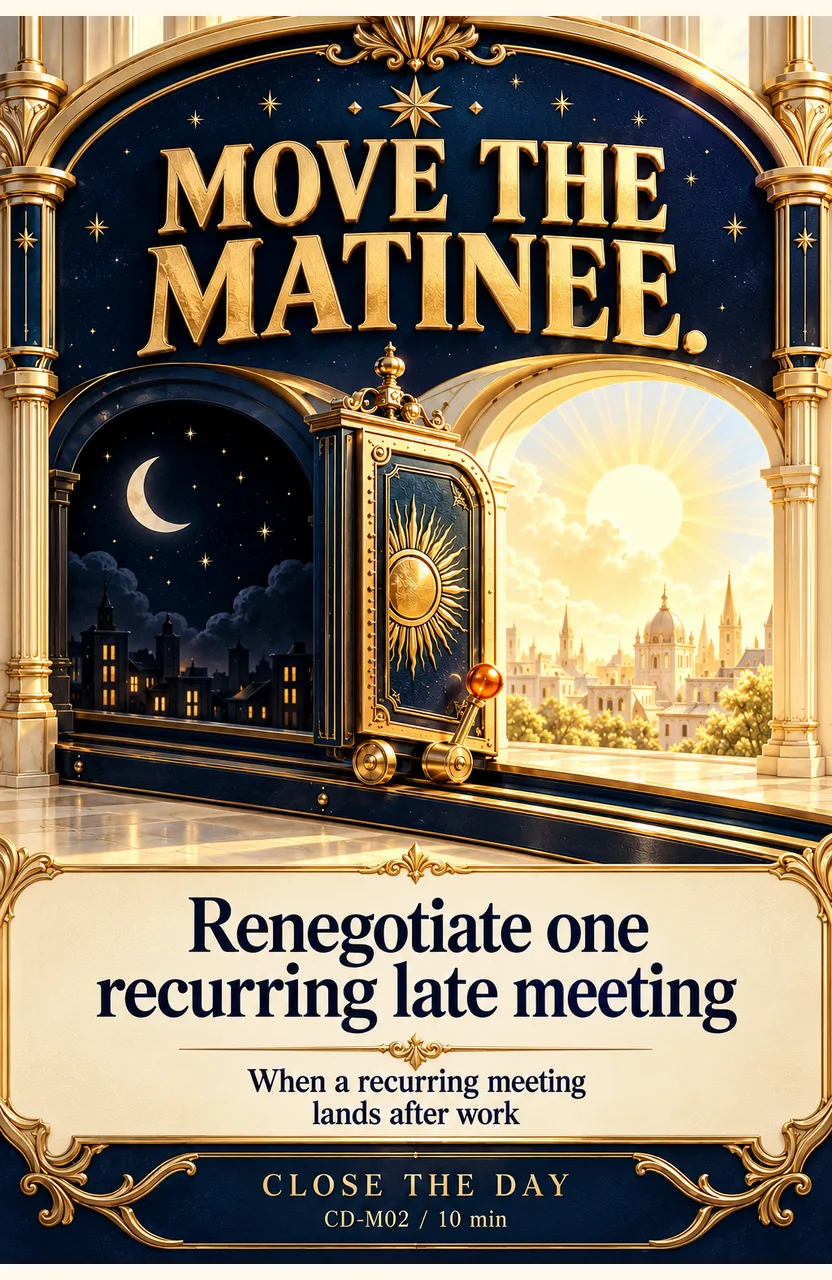
Renegotiate one recurring late meeting When: a recurring invitation lands beyond your agreed stop time
Give a hobby 20 minutes after dinner When: dinner ends on one of three evenings you chose for this week
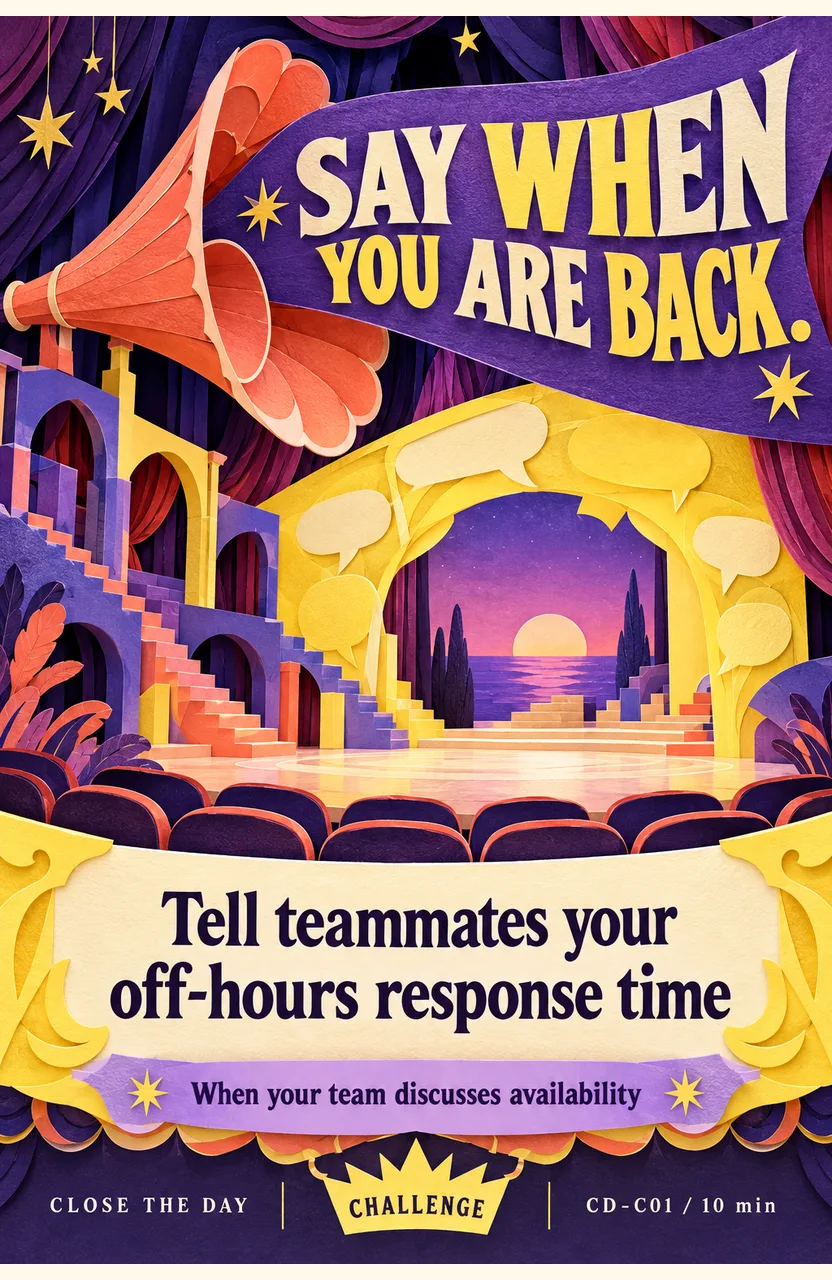
Tell teammates your off-hours response time When: your next team check-in offers a chance to discuss availability
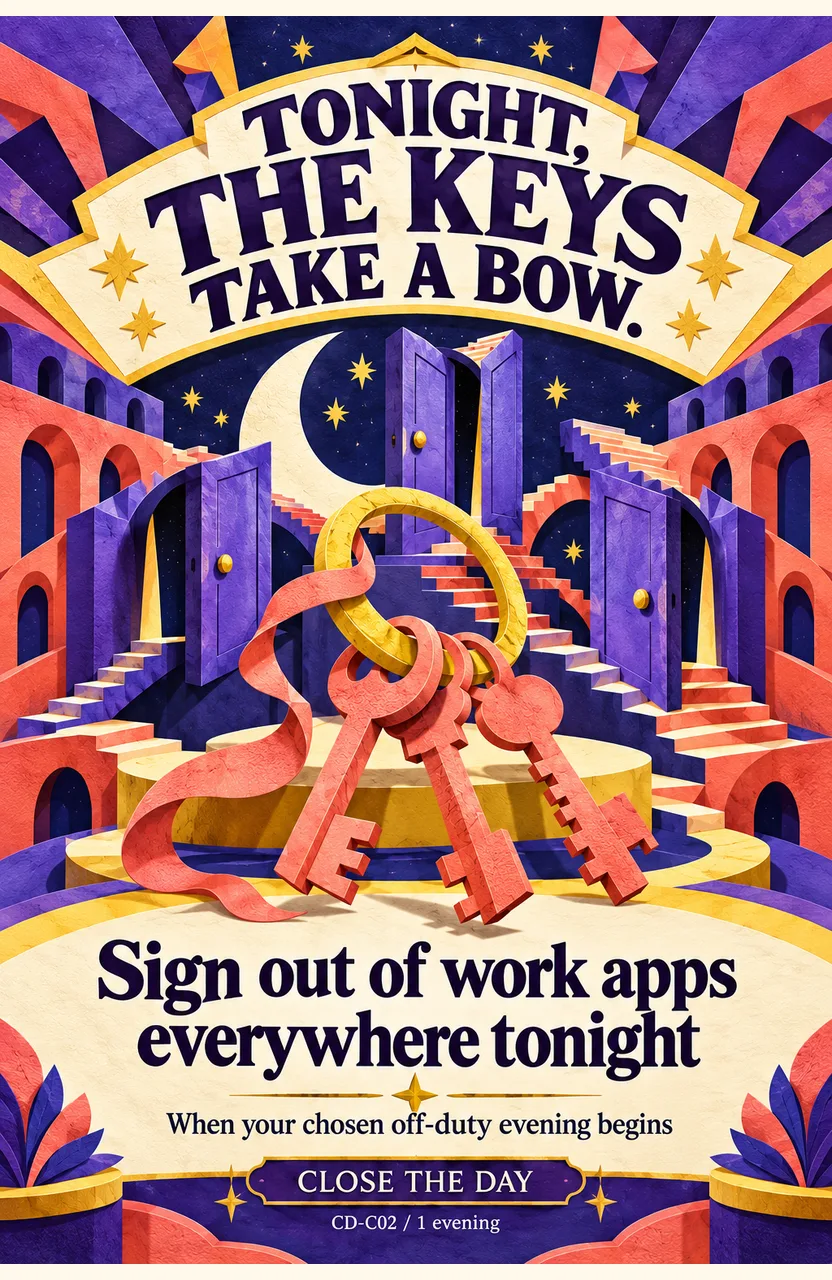
Sign out of work apps everywhere tonight When: a chosen evening begins when you have no required work coverage

11 cards · draft

How can we share money decisions and plan ahead?

Start by stating an affordable limit at the next shared purchase (F07) and making one weekly cash-flow decision (G01). Add M01 at the next shared bill to agree owners, contributions, personal freedom and a shortfall fallback. Add M02 quarterly only after essentials and required debt payments fit, choosing one future goal and a checked contribution route. Allow 15 minutes weekly, 25 minutes together monthly and 30–45 minutes quarterly; first setup or regulated advice may take longer. C03 tests the agreement for one month; C04 makes a future route executable or records a safe stop. Franklin’s BF-F08 helps name spending trade-offs. Shared work must be safe and voluntary; Canada account rules require current checks.
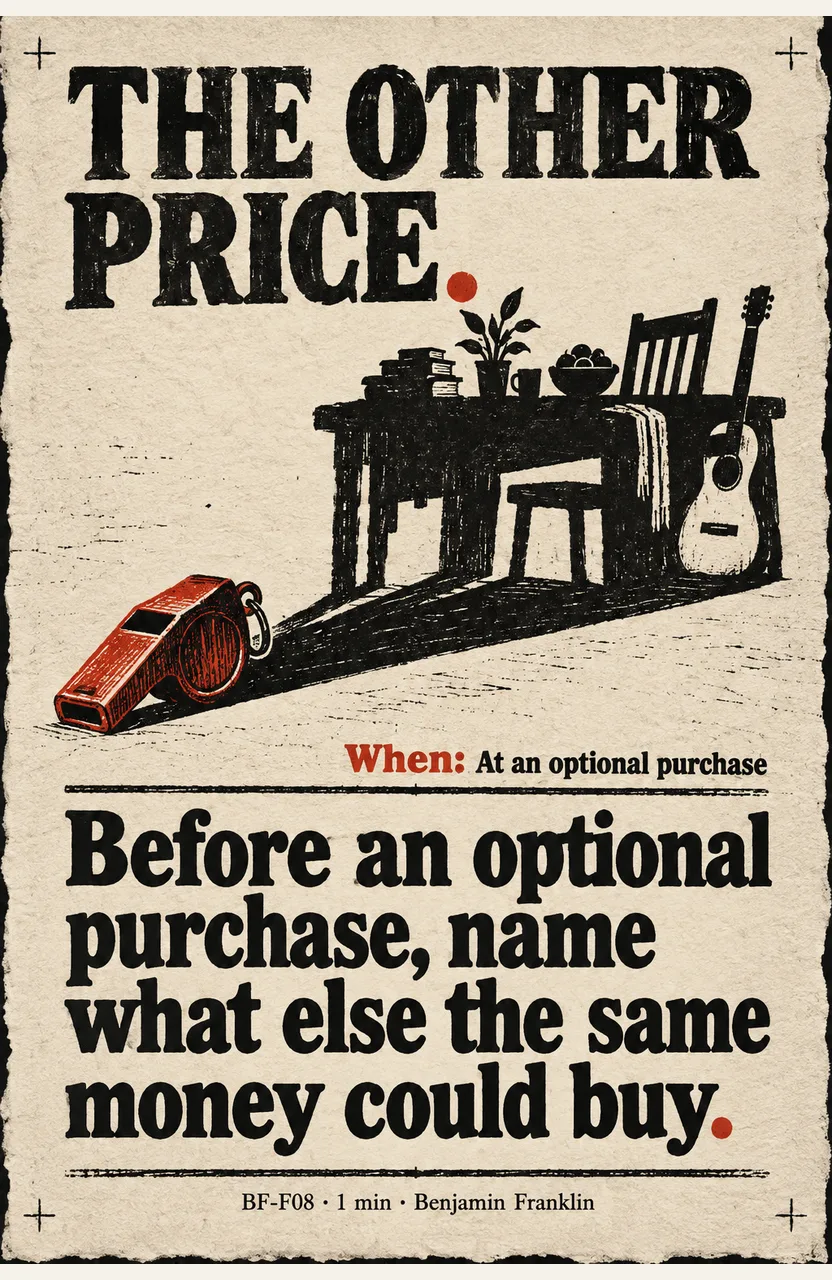

Before an optional purchase, name what else the same money could buy. When: At an optional purchase
Check spendable cash before buying When: you are about to make an optional purchase
State your limit before shared spending When: someone proposes spending together
Transfer an affordable amount to your buffer When: income arrives and essentials are covered
Make one cash-flow decision each week When: your chosen weekly meal ends
Compare a renewal with another suitable quote When: a renewal notice arrives

12 cards · draft

How do I have discoveries of my own to share?

Listen to someone else’s interest, make your own observations and tell the story of what you tried. An object, a drawing or a small demonstration gives the conversation something concrete.

Ask how someone found an interest When: someone mentions an interest in conversation
Read one short poem aloud When: you open a poem you want to read
Tell someone the story of a discovery When: a willing person asks what you have been doing
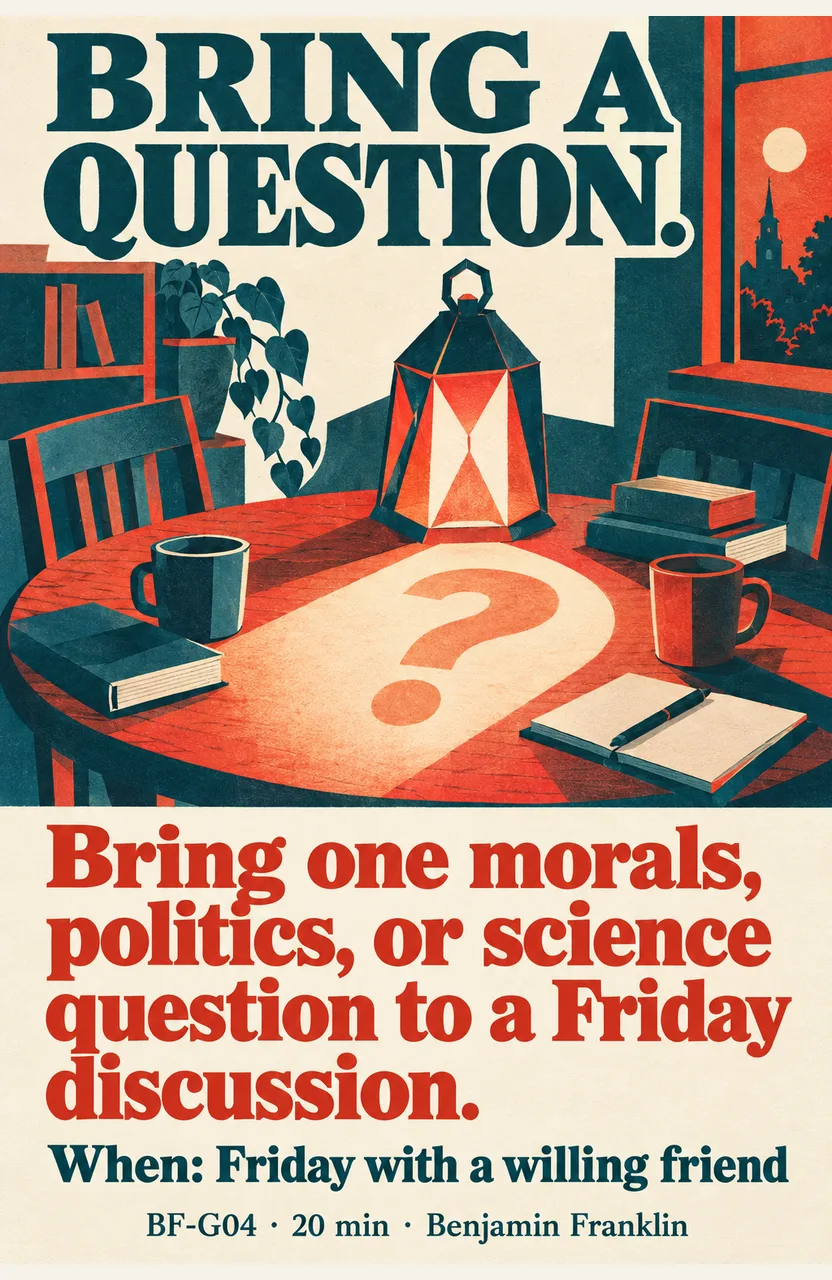
Bring one morals, politics, or science question to a Friday discussion. When: Friday with a willing friend
Ask a librarian for a starting resource When: you open your library’s help route or reach its desk
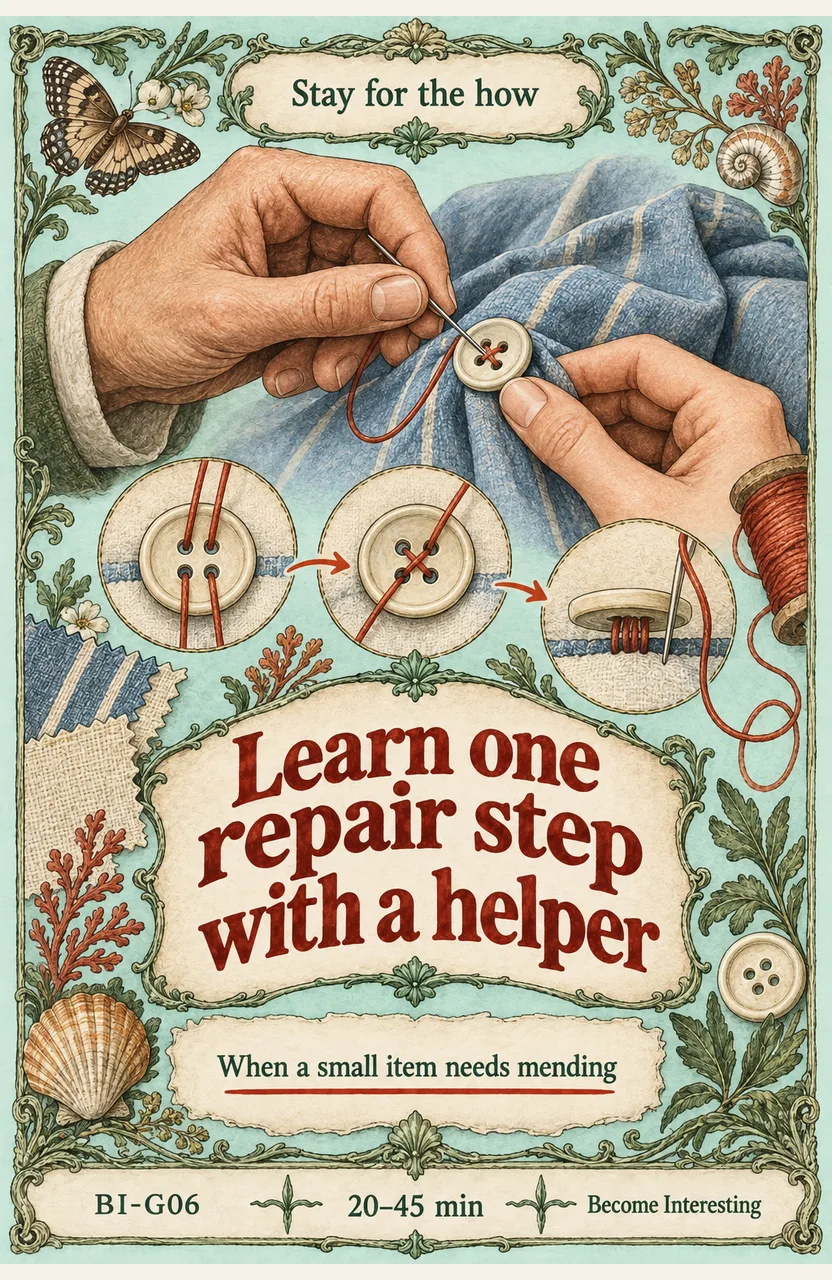
Learn one repair step with a willing helper When: a small safe item needs mending

13 cards · draft

How can I explain an idea so people can follow it?

Start with a spoken point and connection, then show what a visual means and invite questions. Choose the reminders needed for your next real explanation; you do not need all of them.

Say your point before its details When: you begin a new part of your talk
Rehearse a spoken transition When: two sections need connecting
Pause after an important point When: you reach a point worth absorbing
Emphasize the words that change meaning When: a sentence contains a useful contrast
Explain a chart without reading it When: you show a chart
Repeat a question for the room When: someone asks a presentation question

5 cards · draft

Do I have to stand all day instead of sitting?

A standing desk can reduce sitting time, but that is not proof of pain relief. Try manageable movement and comfortable position changes instead of an all-day standing target.
Walk for 3 minutes after calls When: a video call ends
Change sitting position after each file When: you close a finished file
Support both feet before typing When: you sit down to start work
Walk briskly for 20 minutes before work When: you finish breakfast on a workday
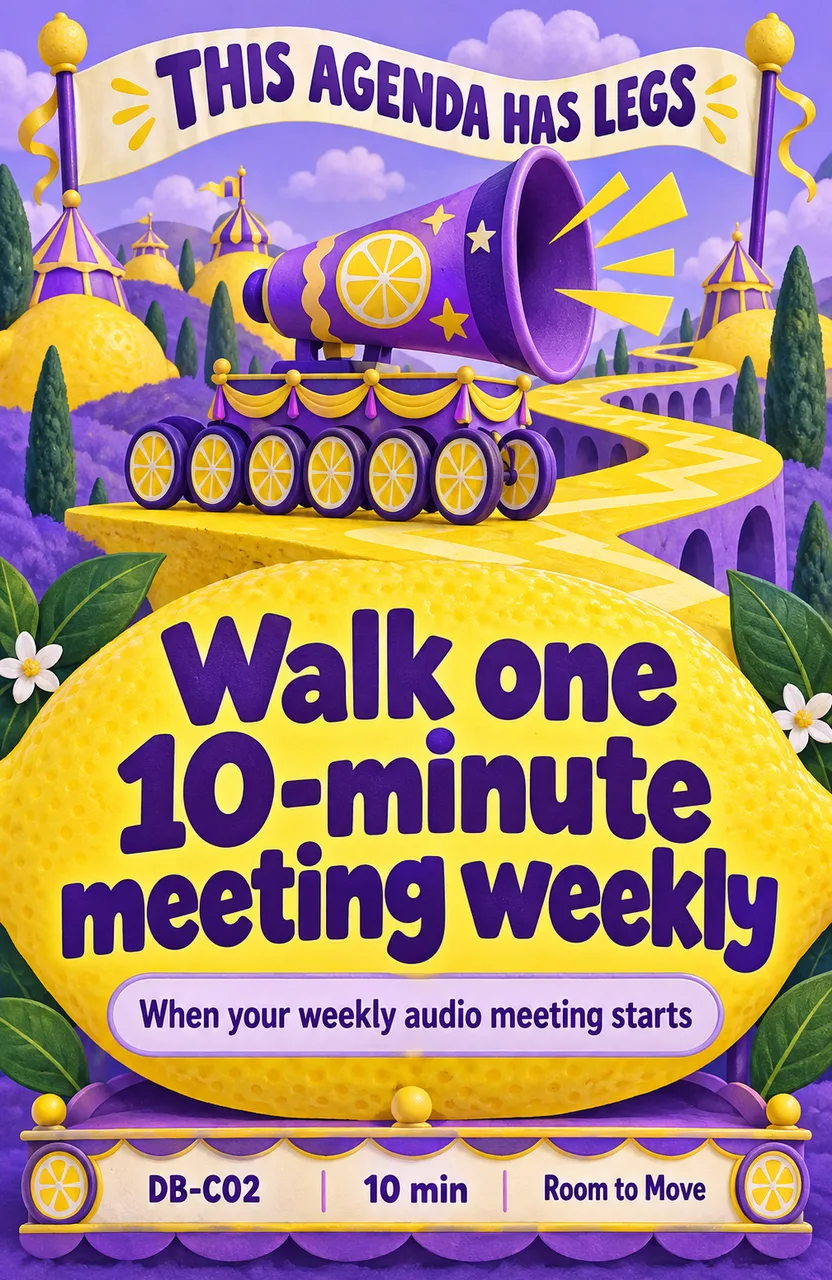
Walk through one 10-minute meeting weekly When: you begin a suitable weekly audio meeting

11 cards · draft

How do I start making more than I consume?

Begin with a nearby object, a pencil or a short piece of music. Make one small response before choosing a larger creative series or a finite mission.

Examine three details of one object When: you put down an everyday object
Draw one object with a continuous line When: you sit with paper and a pencil
Read one short poem aloud When: you open a poem you want to read
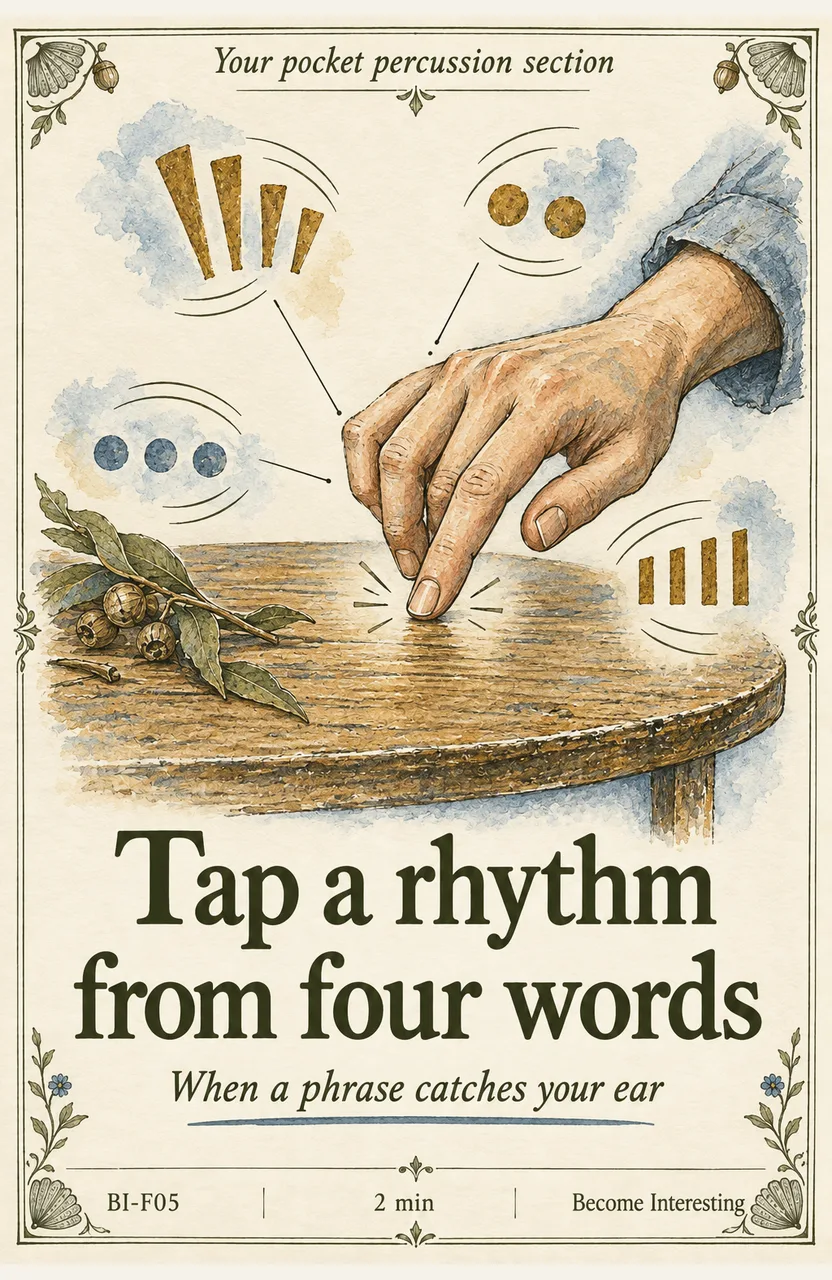
Tap a rhythm from four words When: a phrase catches your ear
Test two shapes of a paper bridge When: you have clean scrap paper to reuse
Make a paper model of something you saw When: you return with a shape you want to recreate

12 cards · draft

How can I start useful conversations with likely customers?

Begin with one welcome invitation, ask about a real recent problem and explain one useful service. Choose a few reminders; do not turn your relationships into a contact quota.
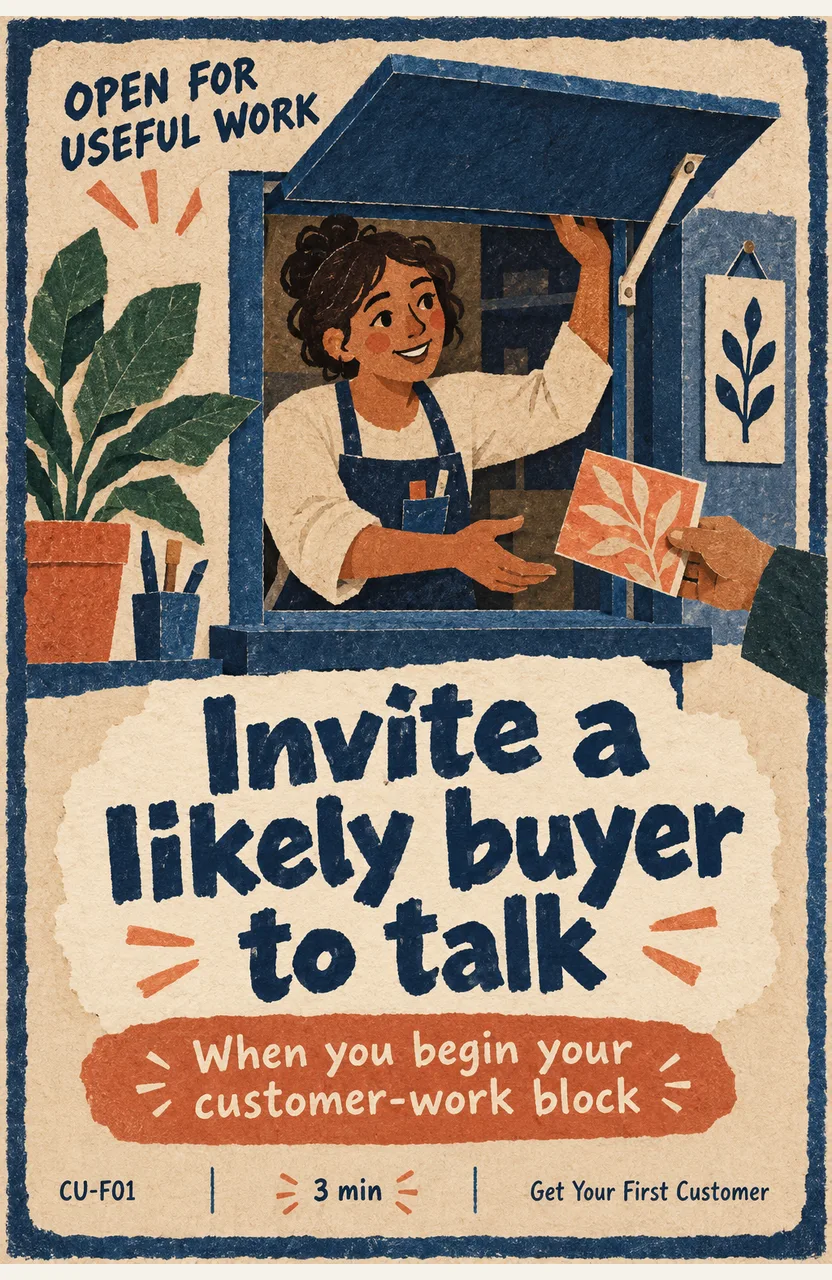
Invite a likely buyer to talk When: you begin your customer-work block
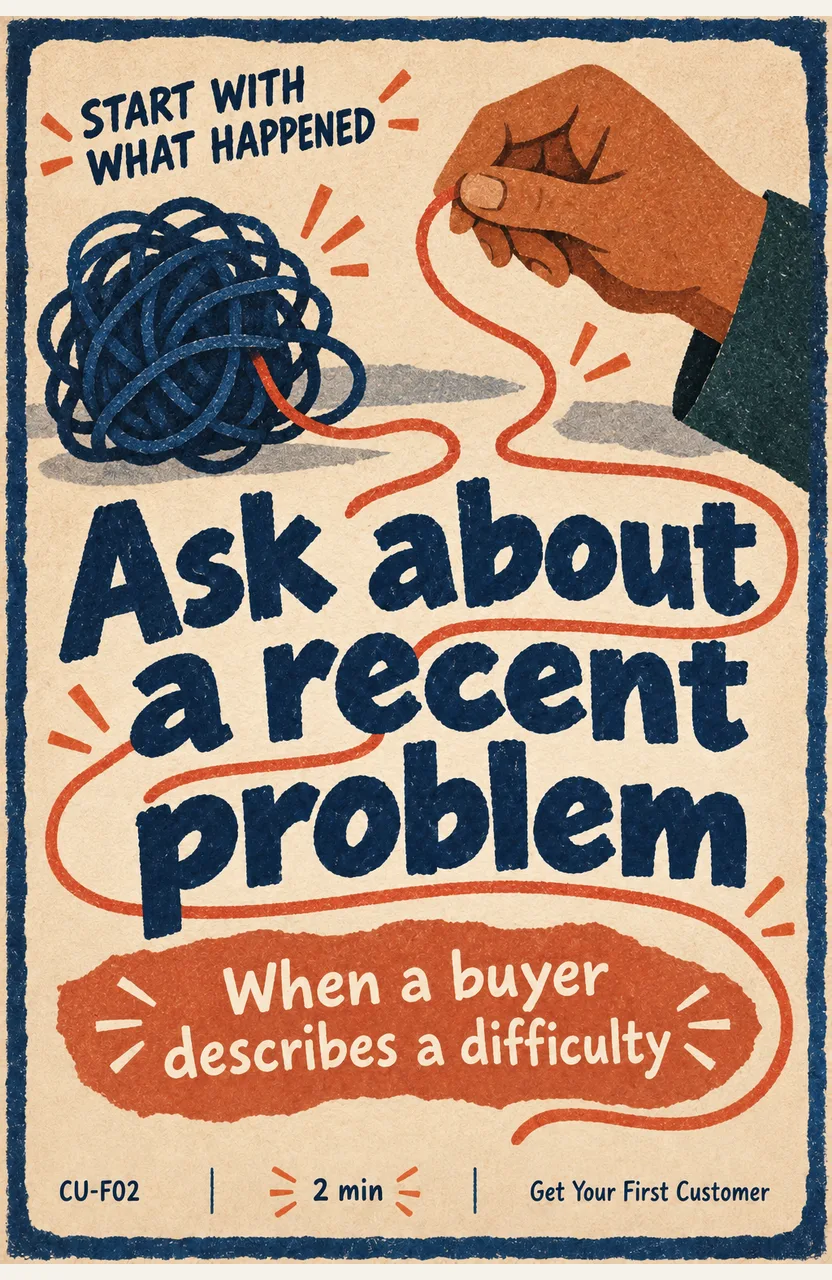
Ask about a recent problem When: a buyer describes a difficulty
Check the result they want When: a buyer finishes explaining their need
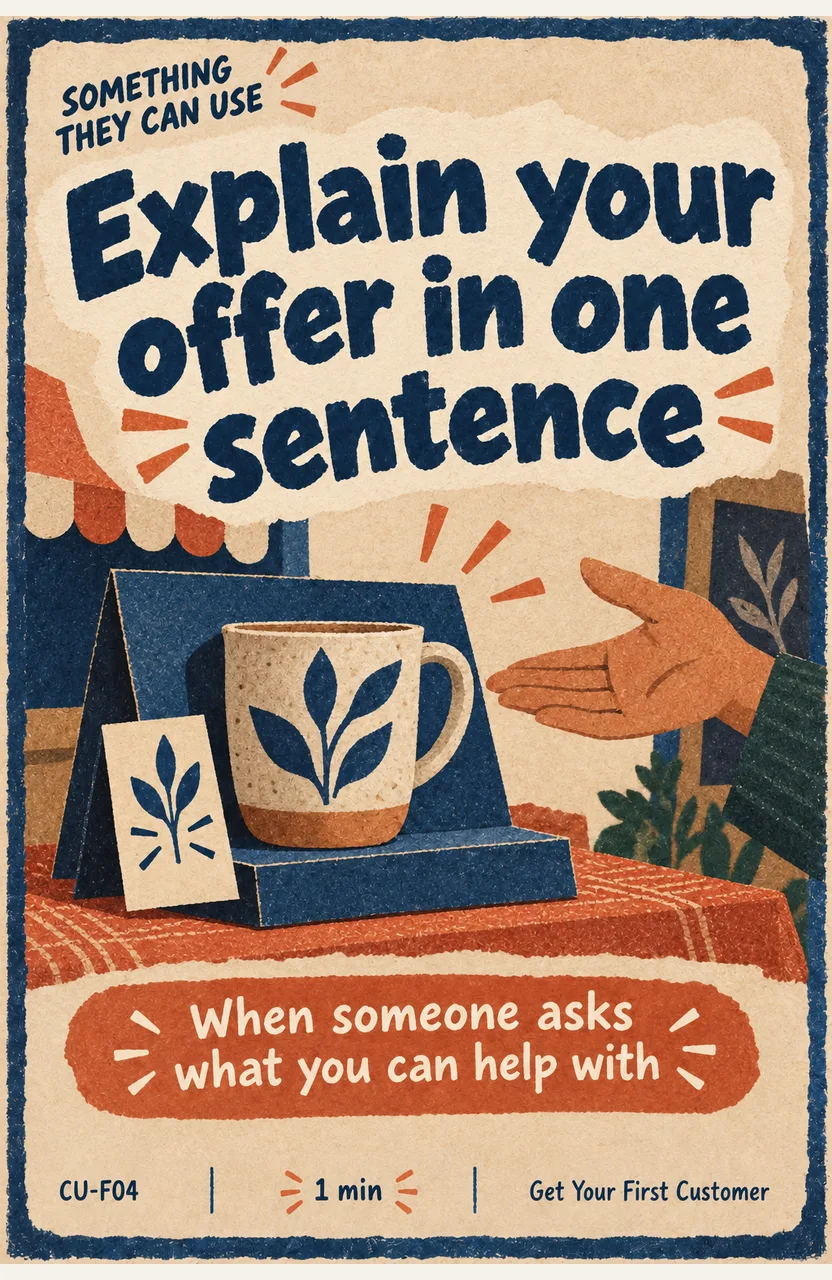
Explain your offer in one sentence When: someone asks what you can help with
Ask whether they want to proceed When: the buyer has heard your scoped price
Agree the next step and date When: a useful sales conversation is ending

7 cards · draft

What can I do when my hips feel stiff after sitting?

Use a comfortable movement option and let your sitting position vary. A tight feeling does not establish a diagnosis; worsening pain is a reason to stop and seek advice.

Walk for 3 minutes after calls When: a video call ends
Change sitting position after each file When: you close a finished file
Support both feet before typing When: you sit down to start work
Lift each knee five times while seated When: you finish a long seated task
Walk briskly for 20 minutes before work When: you finish breakfast on a workday
Practise a strength circuit twice weekly When: you finish work on Tuesday and Friday

15 cards · draft

How do I teach kids to help with household chores?

Show the skill before expecting the result. One demonstrated step, a visible guide and repeated practice give children a way into real household work while adults keep responsibility for safety and care.

Offer One Small Job While Cooking When: you start preparing a meal
Show One Step Before Asking for Help When: you begin folding clean laundry
Thank Your Child for a Specific Contribution When: your child finishes helping
Give One Clear Instruction at Cleanup When: you notice toys blocking a walkway
Wait Ten Seconds Before Taking Over When: your child struggles with a safe task
Hand Over a Cloth for a Small Spill When: your child spills water at the table

2 cards · draft

What can I do when work thoughts keep arriving in the evening?

A plan for unfinished work and a place to catch a later reminder serve different moments. Try a restart plan before leaving, or a short paper note if a thought arrives after work; neither promises to eliminate worry.

Write a restart plan before pausing work When: you pause an unfinished task for the day
Write one work thought, then close the notebook When: a work thought arrives during personal time

6 cards · draft

How can I fit movement into a desk day when I feel drained?

A brief transition can be a place to start, while a regular walk or strength session takes more planning. Small average fatigue benefits from breaks do not mean every tired feeling is caused by sitting.

Walk for 3 minutes after calls When: a video call ends
Do a screen-free task for 5 minutes When: your afternoon break begins
Walk briskly for 20 minutes before work When: you finish breakfast on a workday
Practise a strength circuit twice weekly When: you finish work on Tuesday and Friday
Eat lunch without screens for 20 minutes When: your chosen weekly lunch break starts
Walk through one 10-minute meeting weekly When: you begin a suitable weekly audio meeting

16 cards · draft

How do I make home strength progress visible?

First do useful strength work. Start with GF-F07 chair stands, GF-F08 push-ups and GF-F12 bridges, then use the ready GF-M05 round on two nonconsecutive days. GF-G07 adds a pull; optional hinge, carry, step-up and core cards broaden the practice. When one movement is consistently manageable, GF-M06 gives a small progression. GF-M08 records one actual set. GF-C06 compares the same comfortable sets after four weeks, without a maximum test or guaranteed result. The starter round is an entry, not an exhaustive exercise program.

Do your chair stand set When: your lunch break ends
Do your push-up set When: you finish a morning work block
Do a bird-dog set When: your afternoon break begins
Do a supported calf-raise set When: you wait for the kettle
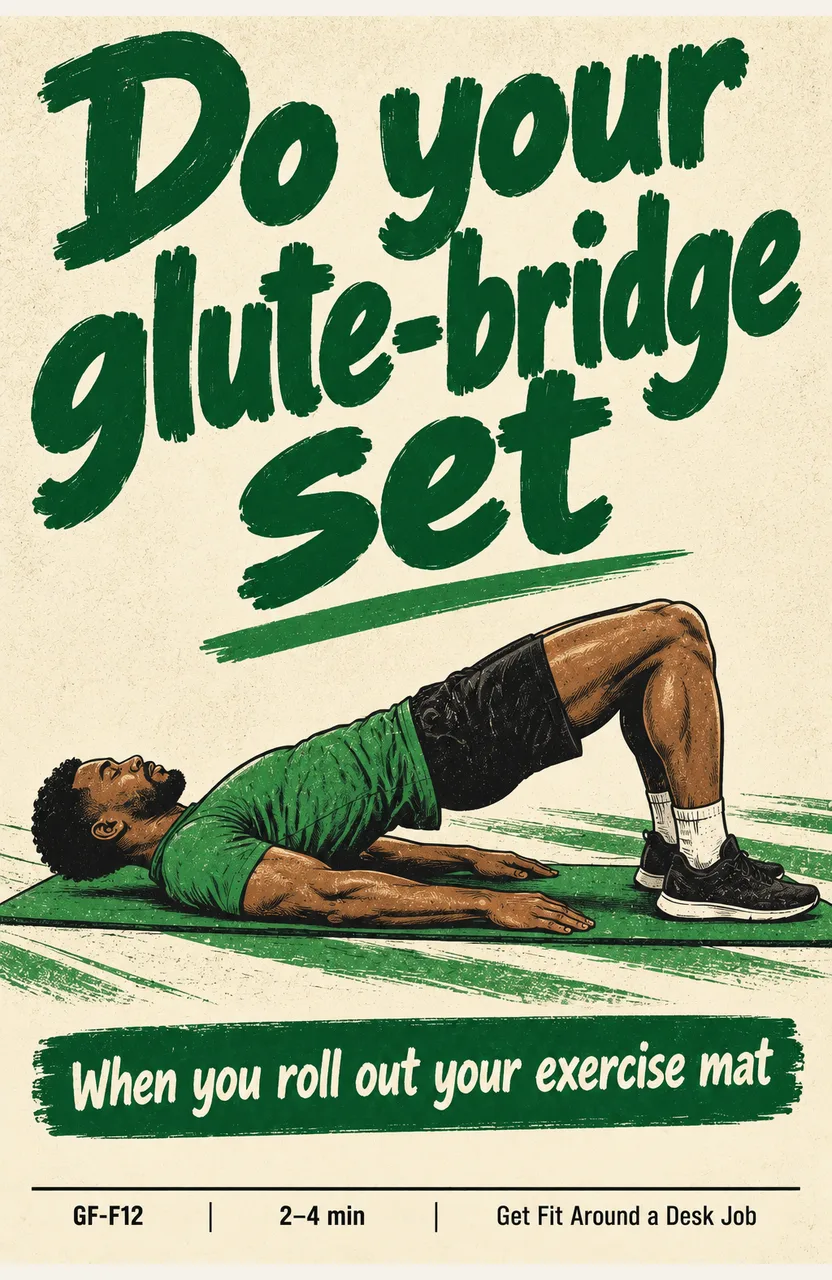
Do your glute-bridge set When: you roll out your exercise mat
Add seated band rows to strength days When: you finish your push-up set on a strength day

6 cards · draft

How can dinner make tomorrow easier without unsafe leftovers?

Reserve a lunch portion, chill it promptly, and use one safe ingredient today. Freeze food you cannot use soon and transform only safely stored leftovers.


Set aside tomorrow’s lunch portion When: you serve dinner with food to spare
Chill leftovers in shallow containers When: you finish serving cooked food
Use a safe ingredient that needs using When: you open the fridge for a meal
Turn cooked leftovers into a wrap When: you choose safe leftovers for lunch
Freeze an extra meal portion When: you have more cooked food than you’ll eat
Feed yourself through five demanding days When: a demanding week is coming

4 cards · draft

How can I pause routine work notifications after hours?

Incoming alerts, outgoing messages and other people’s expectations are different parts of an evening boundary. These cards offer a routine alert schedule, delayed non-urgent sending, a team conversation and an optional one-evening sign-out trial. Required coverage and emergency routes still apply.

Schedule work alerts to pause after work When: you finish an ordinary shift with no on-call duty
Schedule non-urgent evening messages for working hours When: you have already written a non-urgent work message after hours
Tell teammates your off-hours response time When: your next team check-in offers a chance to discuss availability
Sign out of work apps everywhere tonight When: a chosen evening begins when you have no required work coverage

From the screen to the fridge

Put the card where the habit happens.

Every deck is free to download and print at home, then pin up: on the fridge, the mirror, beside the monitor. Or get the printed edition, ready to pin up the day it arrives.