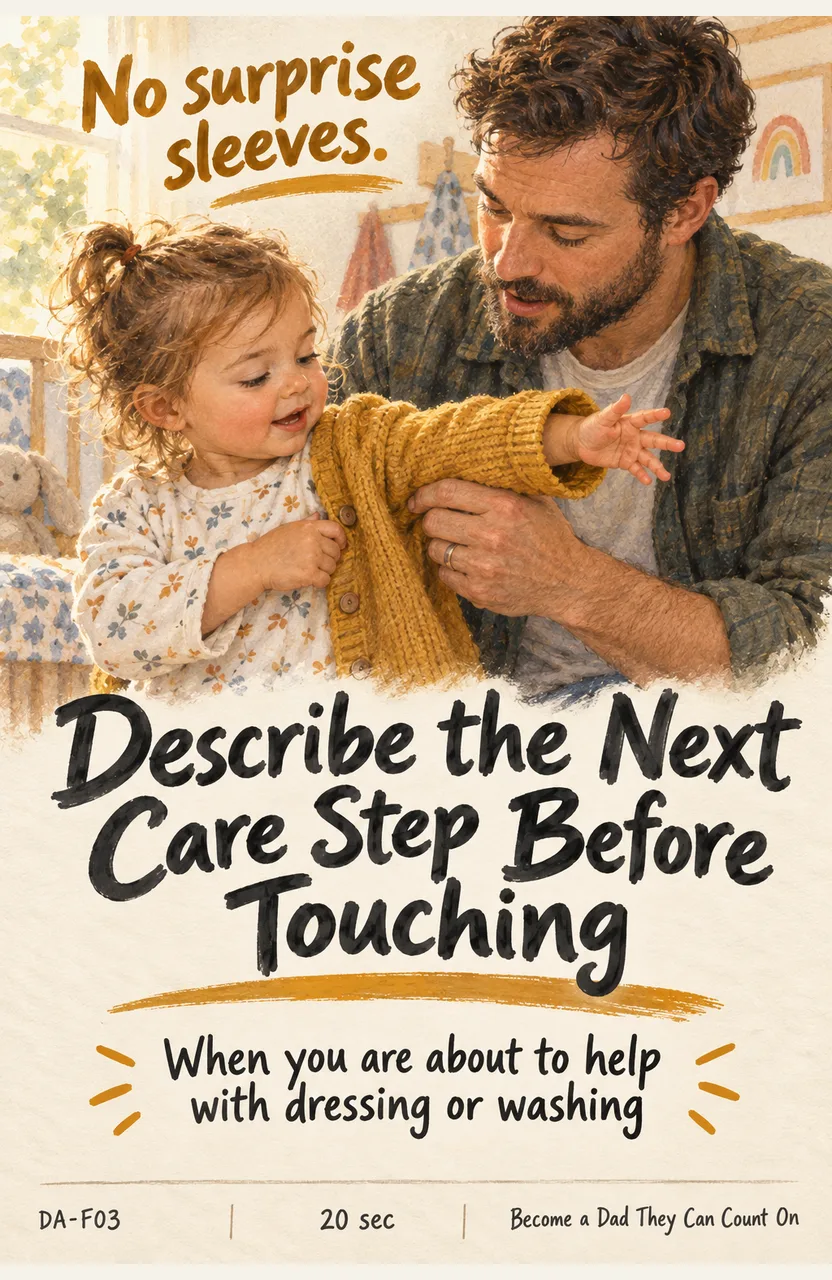
DA-F0320 secDescribe the Next Care Step Before Touching
Topic · 12 cards · draft
Help your child know what is happening, read their need for a break and respect choices about touch. Keep unsafe behavior from hurting others, then offer a next move they can manage. Choose one experiment only when the ordinary moments feel workable. For babies, respond to signals; for older children, keep choices and explanations concrete.
Cards to explore first
Read the full instructions and choose what fits your situation. Look for a repeatable practice that contributes to your goal, then keep that card in play.
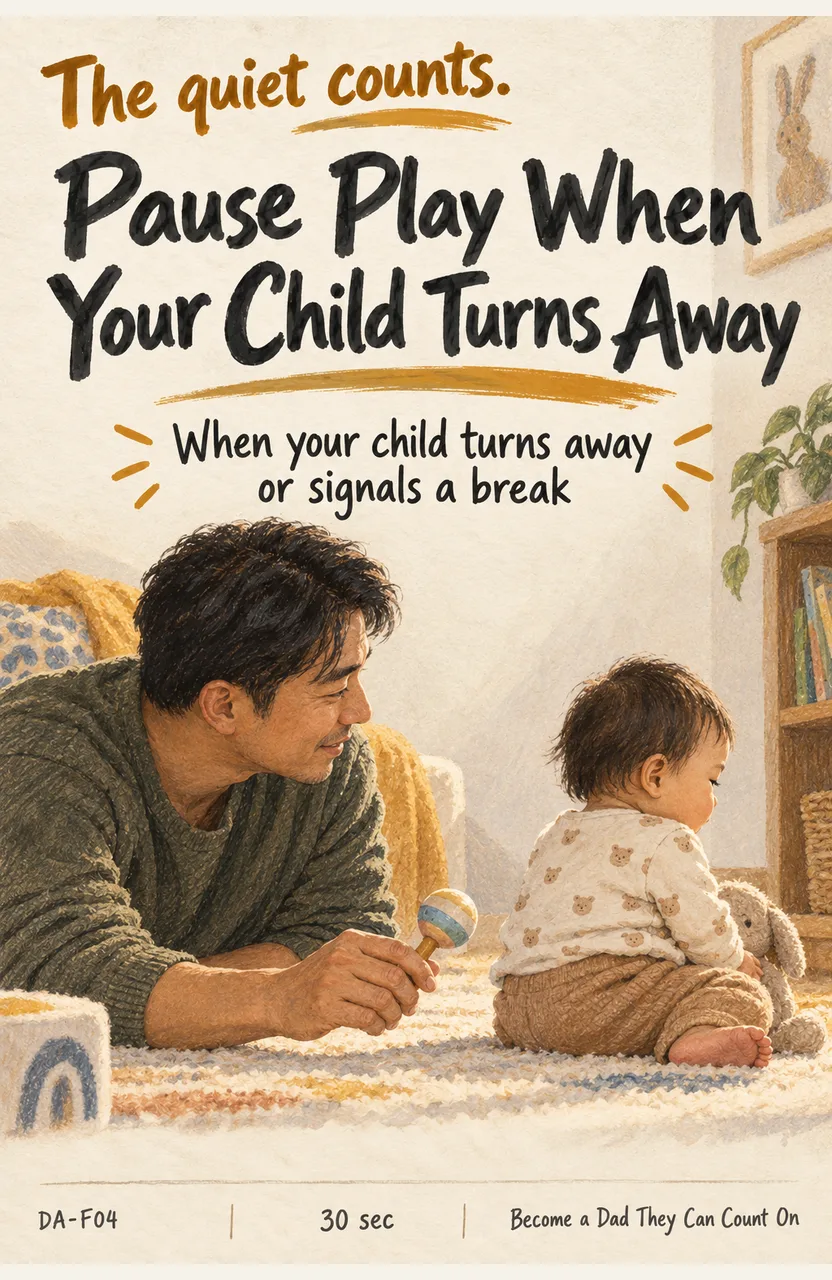
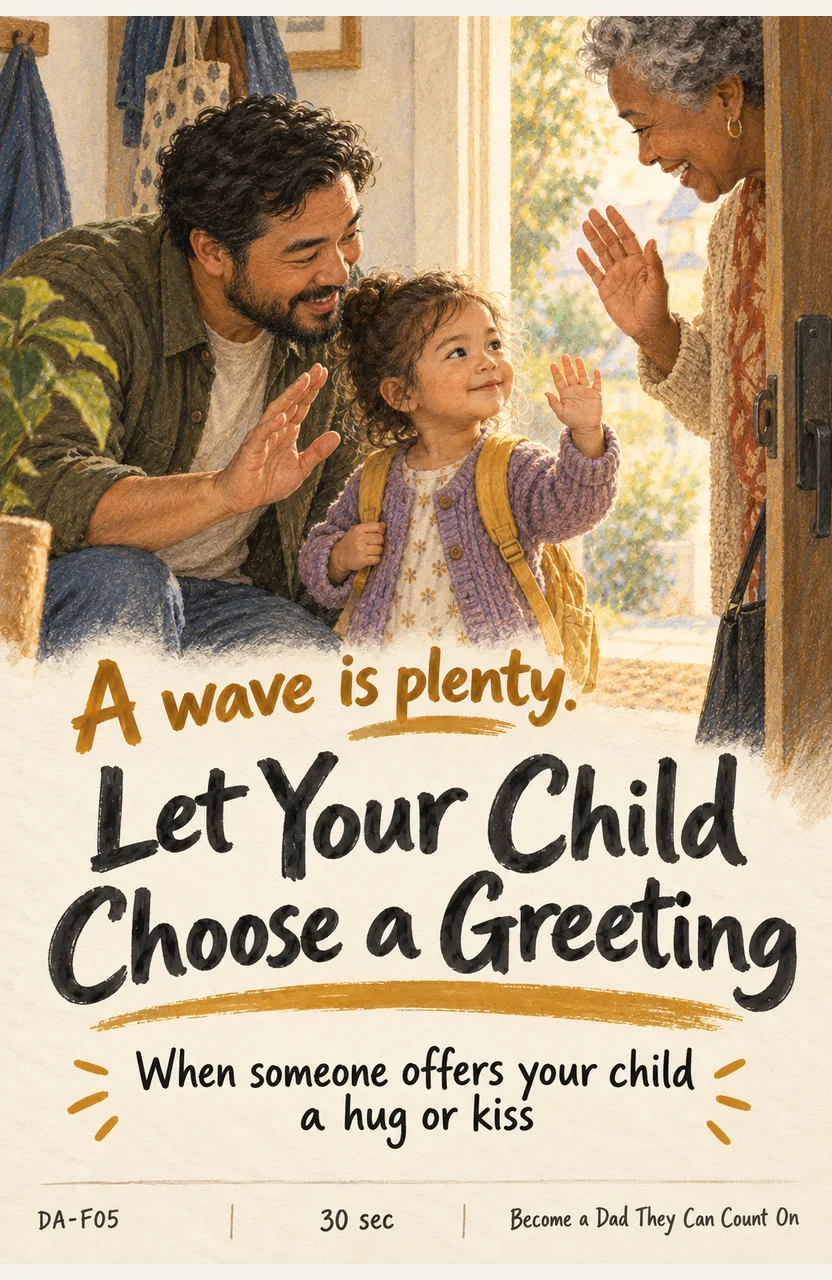
Every card for this topic
12 cards · tap a card to flip it
The load-bearing practices you return to. Build the base and keep it in play.
Supporting habits that improve the conditions for useful repetitions: preparation, consistency or necessary recovery.
Inspect your work, apply a specific correction in later practice and check whether it helped.
A bounded mission with an observable finish, supported by the practices you use.
Sources
ZERO TO THREE. What is Baby Saying? (2020). Read the source ↗
American Academy of Pediatrics, HealthyChildren.org. Preventing Child Sexual Abuse: What Parents Need to Know. Read the source ↗
CDC. Tips for Creating Rules (2026). Read the source ↗
NAEYC. Growing Independence: Tips for Parents of Toddlers and Twos. Read the source ↗
From the screen to the fridge
Library cards are free to read and print. Choose the ones you’ll use, put them where their cues happen, and keep returning to the practice. Our boxed collections are separate printed editions.