Make One Self-Care Step Easier to Reach
Whenyour child wants to do a safe self-care step
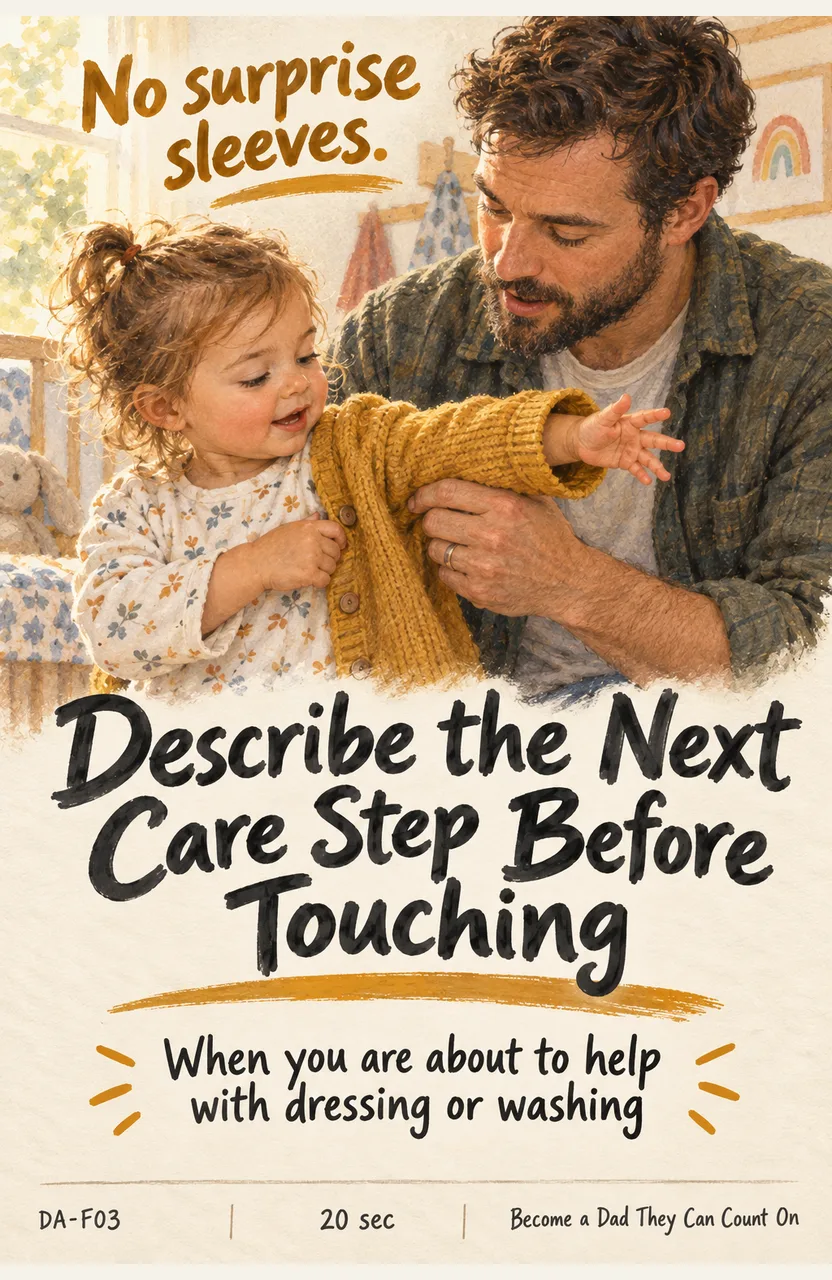
Goal: remove an adult-created access barrier to one self-care step. Window: three weeks. 1. Choose with your child a safe step such as selecting clothes or reaching a towel; observe what blocks access. 2. Change one physical setup with existing safe materials, such as putting two outfits in a low drawer. 3. On six ordinary opportunities, offer a choice of trying, getting help or having you do it; note which setup and help you offered. 4. Recheck safety and decide keep, adjust or remove the setup by week three. Finish after the access change, six respectful offers and your recorded decision. If opportunities are fewer, finish the review with that limit stated; independent completion is never required.
Why it works
Sometimes the next independence lesson is moving the drawer, not repeating the instruction.
Start tiny
Name one access barrier you can remove safely.
What you’ll notice
You change the surroundings so your child has a real option to participate.
When it slips
The setup creates climbing or frustration? Undo it. Choose a simpler accessible step or stop; your child can always choose help. Adapt: Birth–1: use responsive participation in dressing instead; no independence target. 1–3: two reachable choices. 3–6: child helps select accessible layout.
SafetySecure furniture and keep hazards inaccessible. Avoid unsupervised water, hot taps, medicines and climbing setups.
NAEYC. Growing Independence: Tips for Parents of Toddlers and Twos. Read the source ↗ Practice guidance; accessibility trial and window are editorial.
Challenge: A bounded mission with a clear finish. It can combine practices over days or weeks.