Work & focus / Free habit set
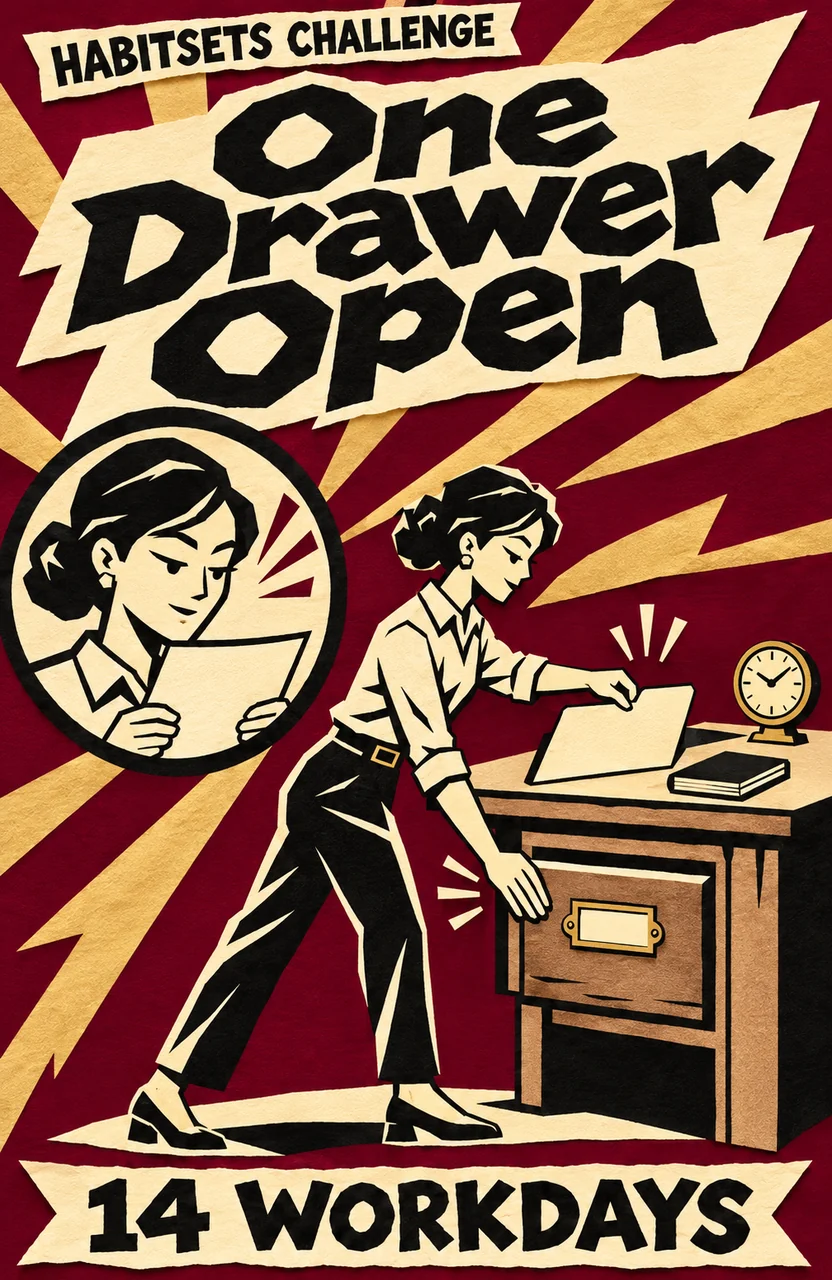
The Chest of Drawers
Close one drawer before opening the next
- 8 Foundation
- 6 Growth
- 4 Mastery
- 2 Challenge
20 cards · Free to print or save as PDF · Study notes: Napoleon Bonaparte ↗
01 / A place to start
Choose what you’ll
return to.
You juggle six projects in one brain, drown in un-triaged messages, and react to verbose status updates without concrete numbers.
- Starting point
- Cross-contaminated tabs, reactive inbox thrash, and vague team handoffs
- Work towards
- Locked single-topic drawers, condensed briefs, and concrete follow-through
Your recurring practice
Work one clean drawer per block, run delayed-inbox triage twice daily, and verify concrete numbers behind every operational promise.
One task manager or physical folder per active project, and a willingness to let non-urgent messages wait.Your cornerstone card
Tap to read the full practice · Choose for your situation
Your starting hand
Keep this practice in play.
One cornerstone carries the load. Everything else on this page exists to make those repetitions easier, better or put to use.
One task manager or physical folder per active project, and a willingness to let non-urgent messages wait.


Day one
Your first session
- 01
Clear your desk to ONE dossier/browser window and close everything unrelated cleanly before starting (NB-F01).
- 02
Defer low-urgency correspondence for a set wait window rather than replying piecemeal all morning (NB-F02).
- 03
Ask one person sending a dense multi-page update to summarize it on one page before your meeting (NB-F03).
- 04
Close your active block with a 2-line state summary so tomorrow opens cleanly.
After that
The loop you return to.
No streak to protect. Do the usual practice when its moment comes, keep it alive on a hard day, and let each one improve the next.
- Your usual practice
Work one clean drawer per block, run delayed-inbox triage twice daily, and verify concrete numbers behind every operational promise.
- On a difficult day
Shut all spare tabs, write one crisp next action for tomorrow’s top drawer, and end the workday cleanly.
- Make the next one better
Review your inbox every Friday to inspect how many 'urgent' messages resolved themselves while waiting.
See what adds up
Small reps, counted honestly.
Count clean single-drawer work blocks completed without mid-task inbox checks.
- Single-Drawer Focus
- Inbox & Decision Filtering
Growth and feedback
Add support when it helps.
Not a checklist. Add one when you can name the problem it solves in your practice.
- Foundation5 min
Compress updates to one page
Whena long report arrives

Replaces sprawling status prose with sharp 1-page decision summaries.
- Foundation3 min
Lock numbers in writing
Whena verbal agreement ends
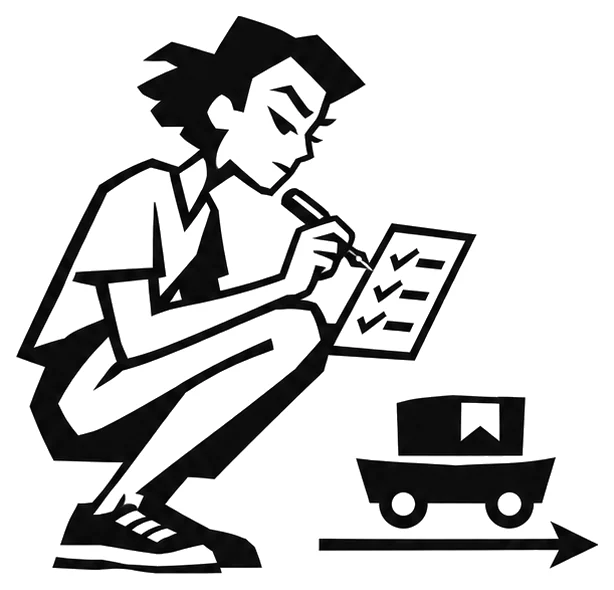
Dictates or rough-drafts quickly before polishing word choice.
- Growth5 min
Check raw counts past summaries
Whensomeone reports 'all fine'
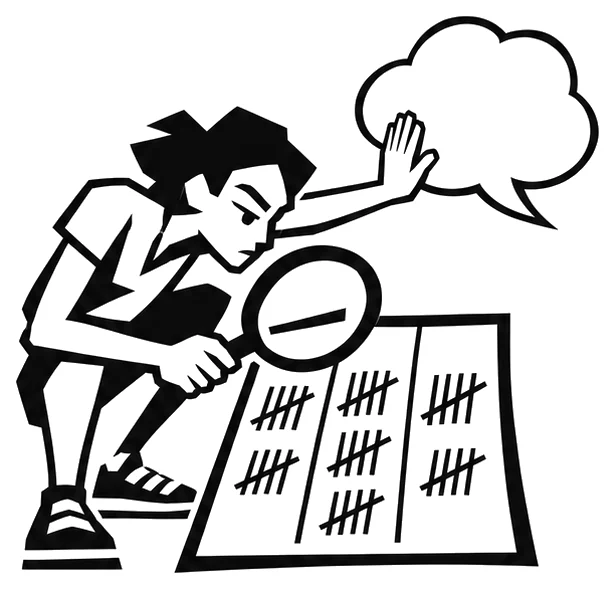
Counts exact resources and capacities rather than relying on reassurance.
- Growth5 min
Pack one standard travel kit
Whenworking outside your home desk

Keeps an identical compact mobile kit so transit or hotel rooms feel like your desk.
Choose a hand for your situation
Where are you right now?
Keep a small hand active. Pick the route that matches what’s actually in front of you.
When
Three competing projects bleed together mentally and nothing finishes cleanly.
Do this
Physically close tabs and put away files from Topic A, log a 1-line bookmark, and open Topic B with zero leftover clutter.
Work towardsClean mental separation across unrelated roles in one workday.
- Shut One Mental Drawer Completely Before Opening AnotherFoundation2 min
Shut one drawer before next
Whenyou switch tasks or topics

- Keep Your Desk Armed Only for the Single Active MissionFoundation2 min
Clear desk to active work
Whensitting down at your workspace

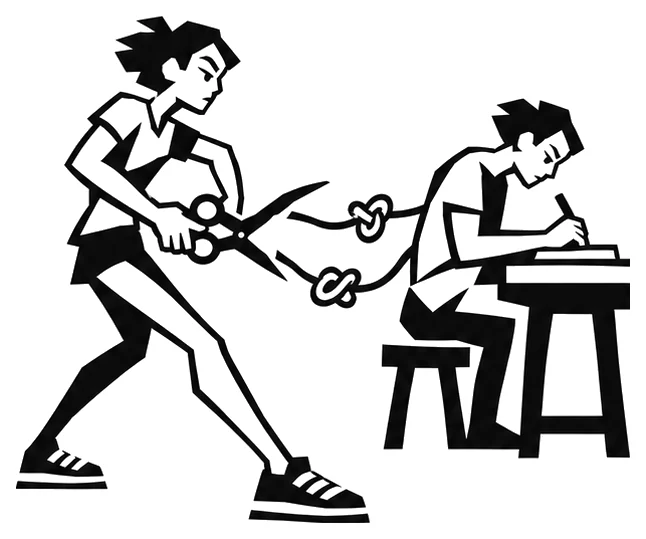
- Cut Unnecessary Approvals Between Execution and the Front LineGrowth10 min
Trim middle approval bottlenecks
Whena handoff stalls twice
03 / Inside the deck
Find what supports
your practice.
Browse all 20 cards and read their full instructions. Choose a manageable combination; keep the core work active as you explore support or a Challenge.
Put it to use. A bounded mission with an observable finish, supported by the practices you use.
Refine through feedback. Inspect your work, apply a specific correction in later practice and check whether it helped.
Strengthen the practice. Supporting habits that improve the conditions for useful repetitions: preparation, consistency or necessary recovery.
Do the core work. The load-bearing practices you return to. Build the base and keep it in play.
Use these roles to think about your hand. Read each card’s actual action and choose the contribution you need; a tier label alone doesn’t make it right for your goal.
20 cards · showing 12 · tap a card to flip it
Showing 12 of 20 cards
20 sources citedCard evidence: 4 A · 13 B · 3 C. Grades describe evidence, not deck quality.
Study notes: Napoleon Bonaparte ↗04 / From screen to everyday life
Put a good idea
within reach.
Print one card for the place you’ll use it, or make the whole deck. Choose your cards and layout in the print studio.
Open print studioFree · Print at home or save as PDF
- 01
Choose what you need.
The deck is preselected. Keep every card or just the ones you want to try.
- 02
Make it fit your space.
Choose A4 or US Letter, a card size, and fronts only or a layout with backs.
- 03
Put it where it happens.
Print, cut, and place a card where its cue will make sense to you.
Do I need to use a card every day?
Use the frequency and conditions that fit the practice. Return to the same core action when its cue happens. A missed occasion doesn’t erase earlier work; adjust the dose or cue if the same obstacle keeps returning.
When should I add another card?
Add one when it solves a problem in your practice or helps you improve. Keep the core work active. A Challenge gives that practice a bounded mission; it doesn’t require collecting every tier.
What about the sleeve in the picture?
The sleeve is a visual mockup of the collection. The print studio prepares the cards; a sleeve template is not included.
Prefer a professionally printed deck?
This set is a free printable. Explore our separate collection of physical decks →
Something else on your mind?
Find another habit set