Answer Your Child’s Bid for Attention
Whenyour child looks or gestures toward you
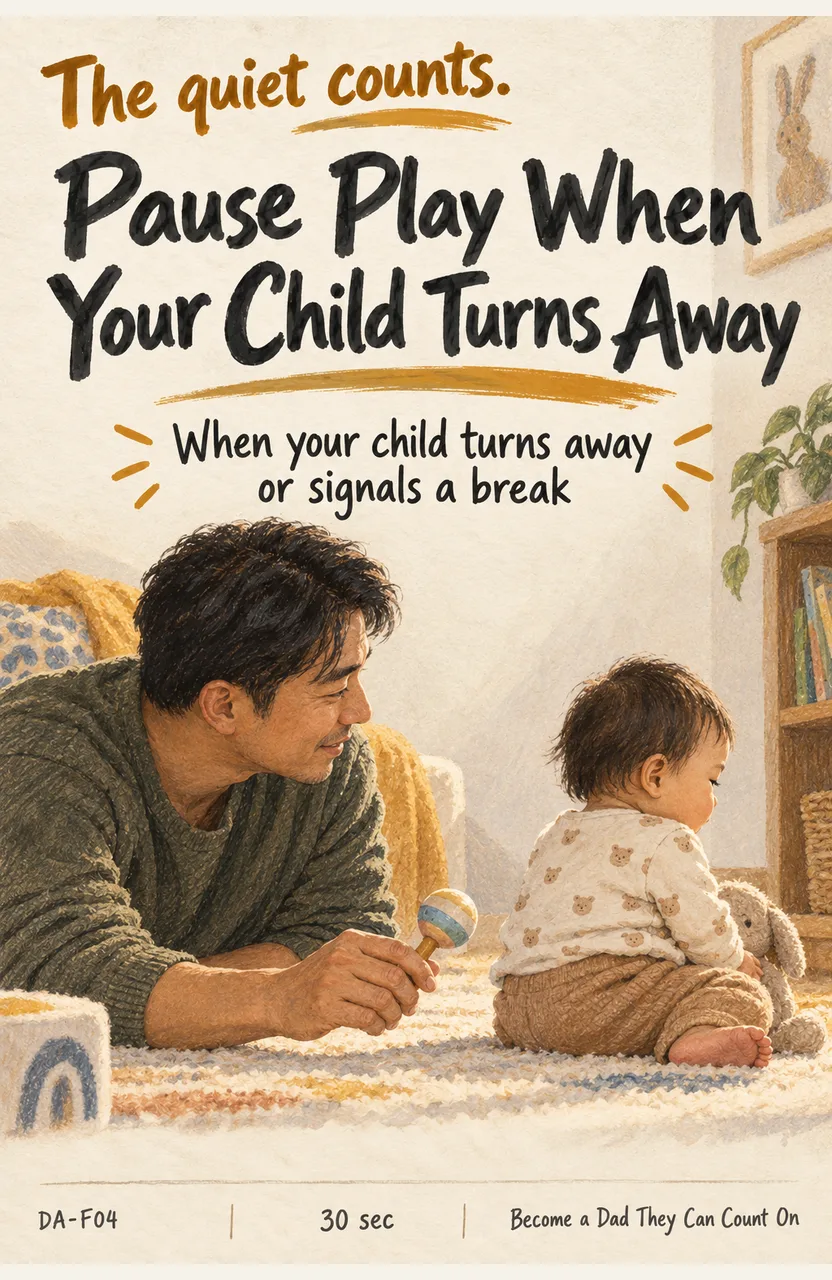
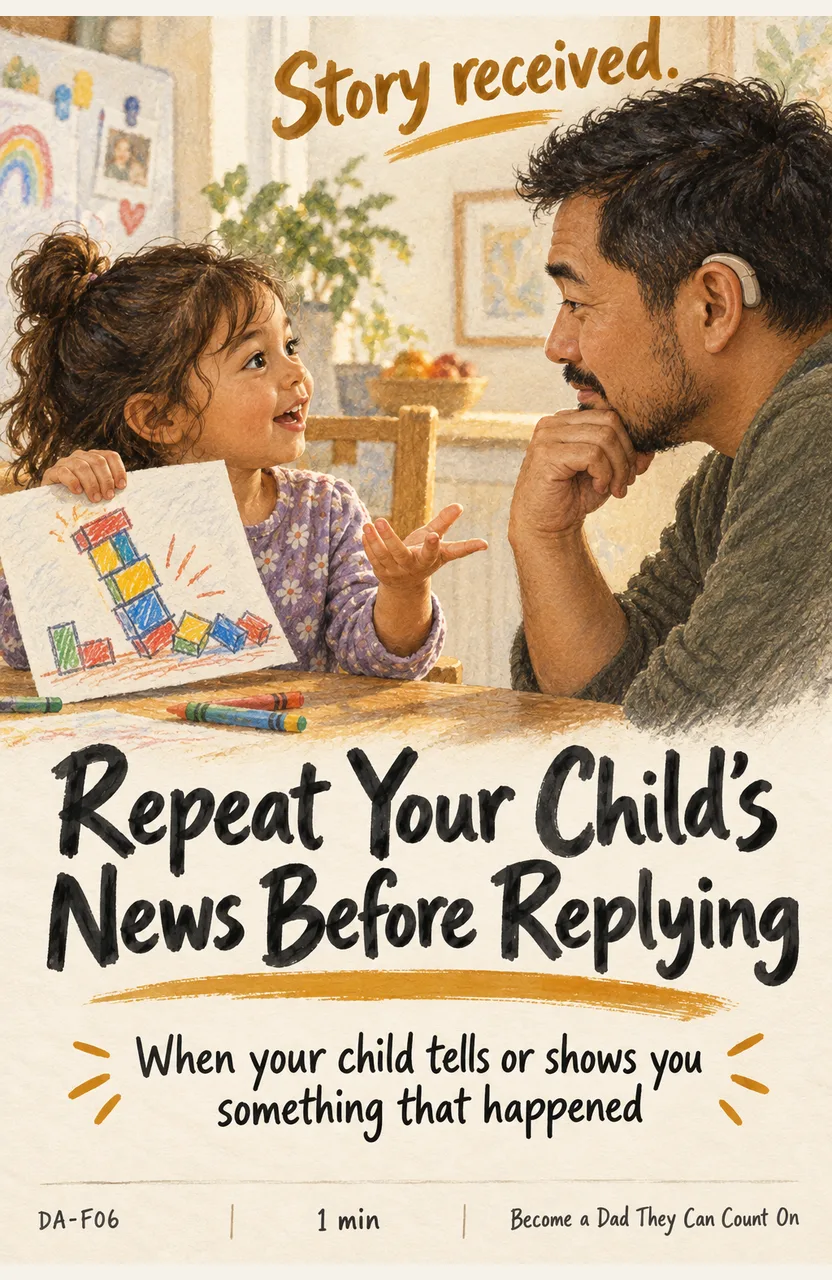
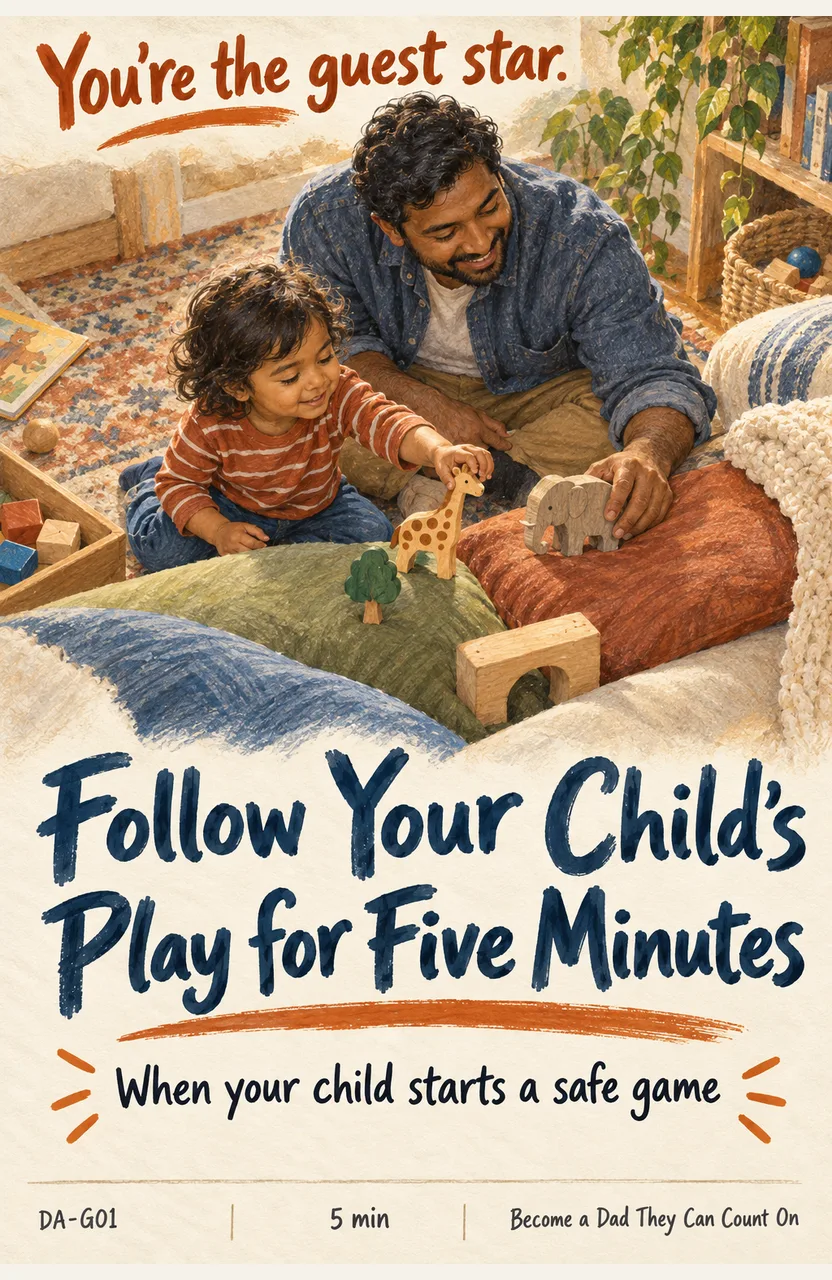
Turn toward the sound, gesture or look and answer with a word, expression or shared look at what interests them. Let their next signal set your next response; eye contact is optional.
Why it works
A conversation can begin long before anyone has words. A small signal is already an invitation.
Start tiny
Answer one signal with a warm word or gesture.
What you’ll notice
You catch little invitations you used to walk past.
When it slips
Busy hands? Say you noticed, make the task safe, then turn back. Do not promise a later return you cannot make. Adapt: Birth–1: answer coos or movement. 1–3: respond to a point. 3–6: follow what they show you.
Harvard Center on the Developing Child. Serve and Return. Read the source ↗ Responsive exchanges; specific card timing is editorial. World Health Organization (2020), Improving early childhood development: WHO guideline, responsive caregiving recommendation. Read the source ↗ Read the source ↗ Grade A refers to responsive caregiving evidence in the first three years; the short card format and adaptations for older children are not separately tested.
Foundation: Small recurring actions with little setup. Choose anchors that fit your day.