Follow Your Child’s Play for Five Minutes
Whenyour child starts a safe game
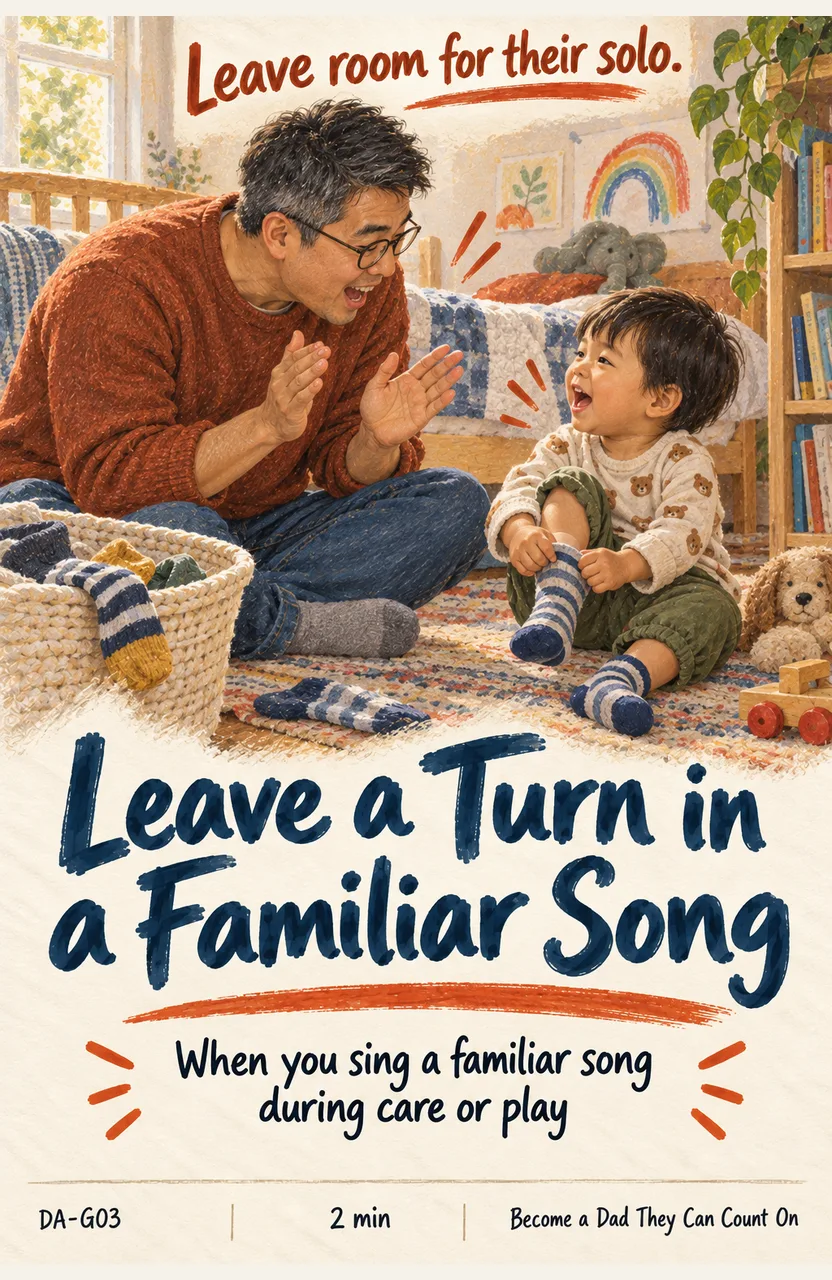
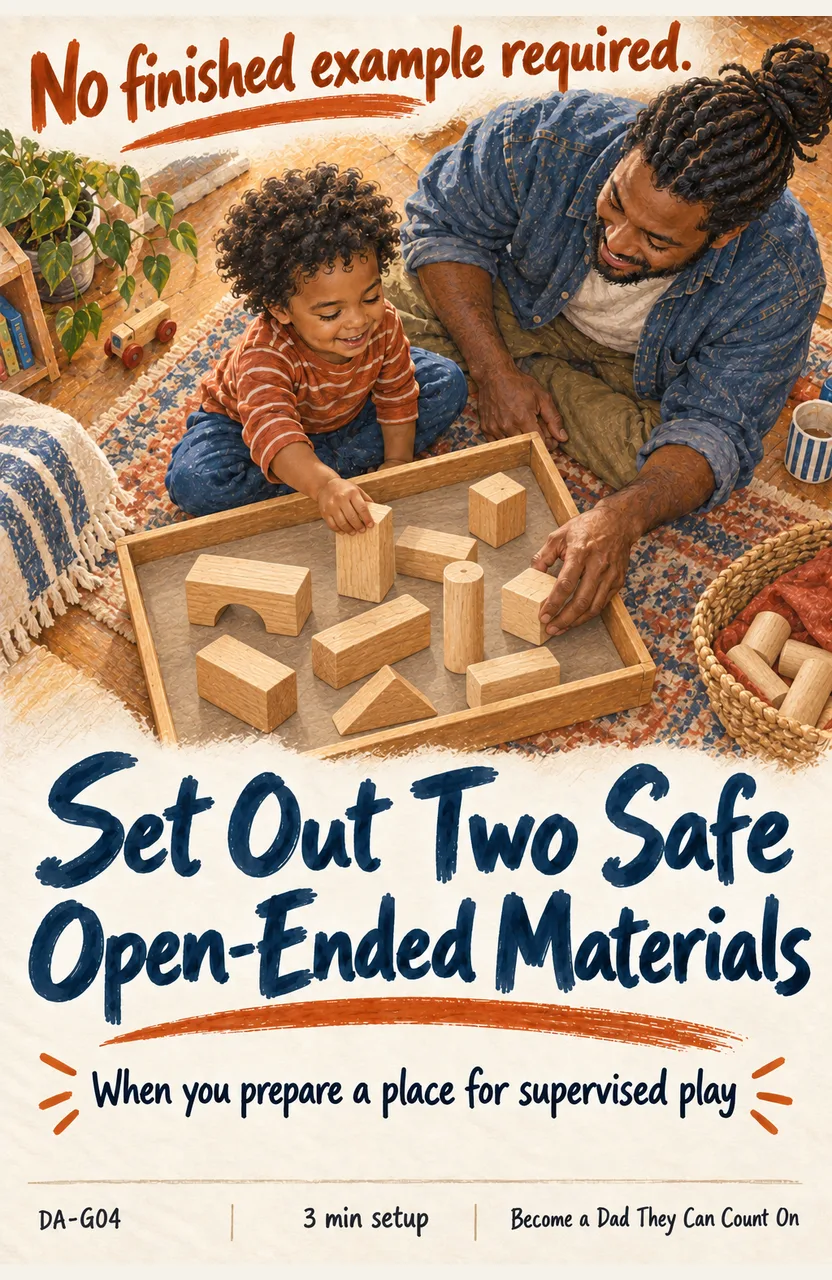
Join their game and follow their choice of what happens next. Copy, describe or take the role they offer; keep teaching, testing and fixing out of this short session. Stop or adapt when they are done.
Why it works
You do not need a better game. You need a turn inside theirs.
Start tiny
Join one move on their terms for a minute.
What you’ll notice
For a few minutes, you can enjoy the child instead of running the show.
When it slips
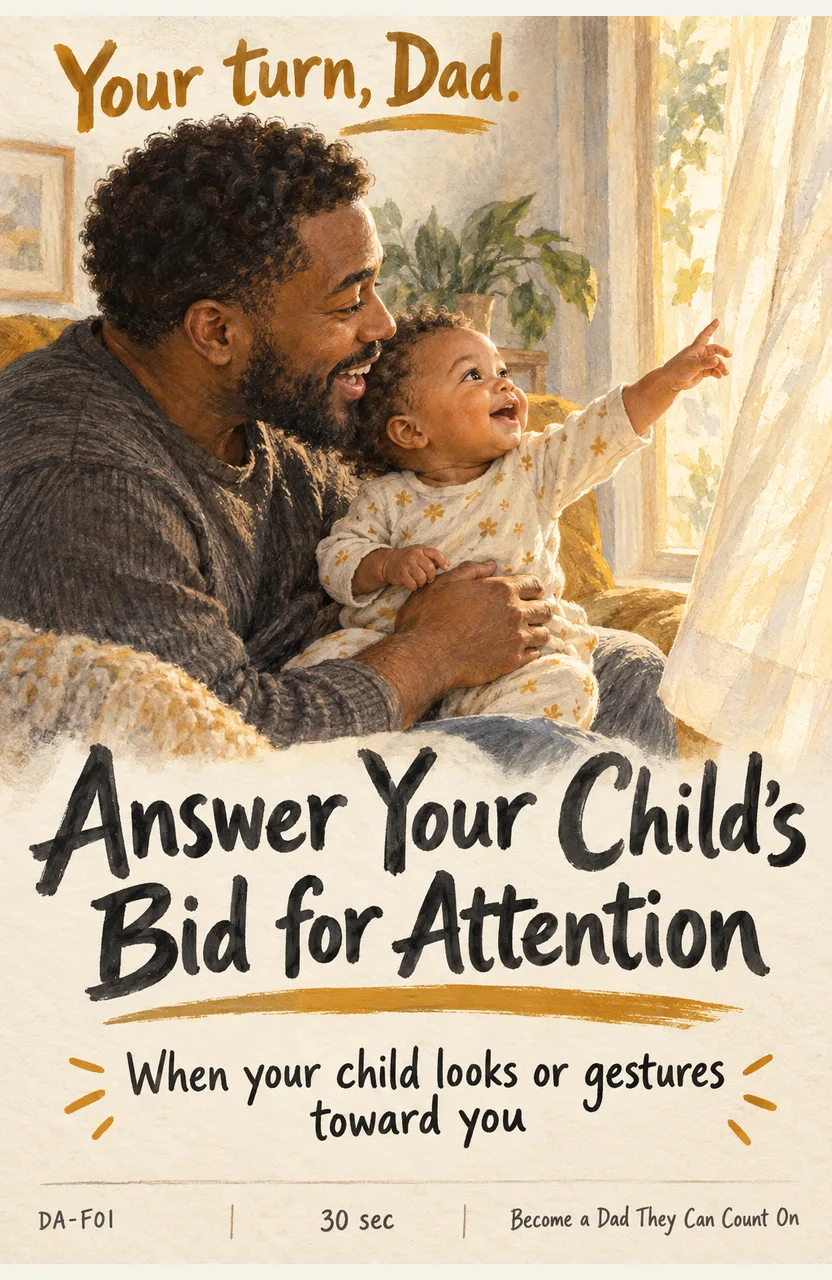
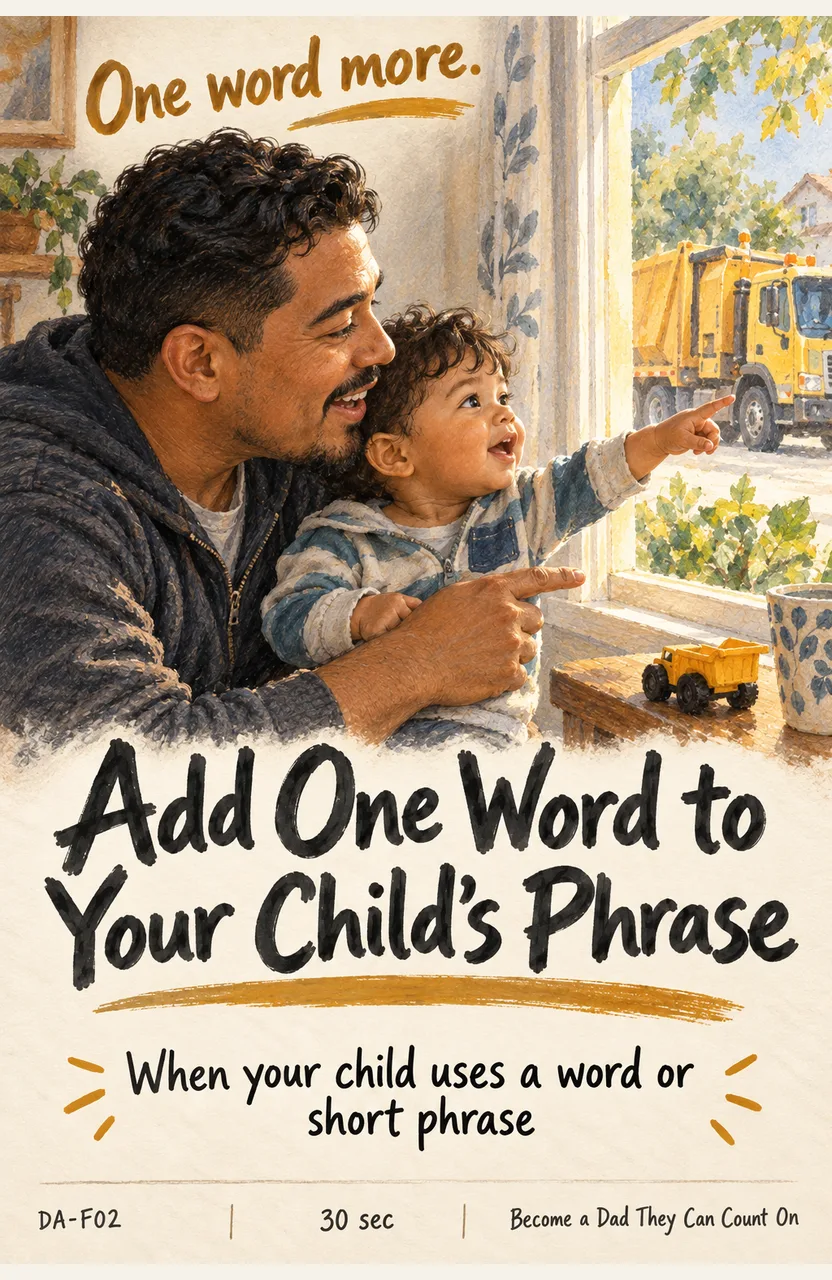
If you start directing, copy their next safe move. For a baby, follow a brief sound or movement exchange instead of a five-minute target. Adapt: Birth–1: brief responsive play. 1–3: imitate safe exploration. 3–6: take the pretend role they choose.
SafetyKeep age-appropriate supervision; intervene for real danger.
CDC. Tips for Child-led Play (2026). Read the source ↗ Guidance for ages 2–4; timing and younger/older adaptations are editorial. World Health Organization (2020), Improving early childhood development: WHO guideline, responsive caregiving recommendation. Read the source ↗ Read the source ↗ Grade A refers to responsive caregiving evidence in the first three years; the short card format and adaptations for older children are not separately tested.
Growth: Supporting habits that improve the conditions for useful repetitions: preparation, consistency or necessary recovery.