Free printable
One is a real start
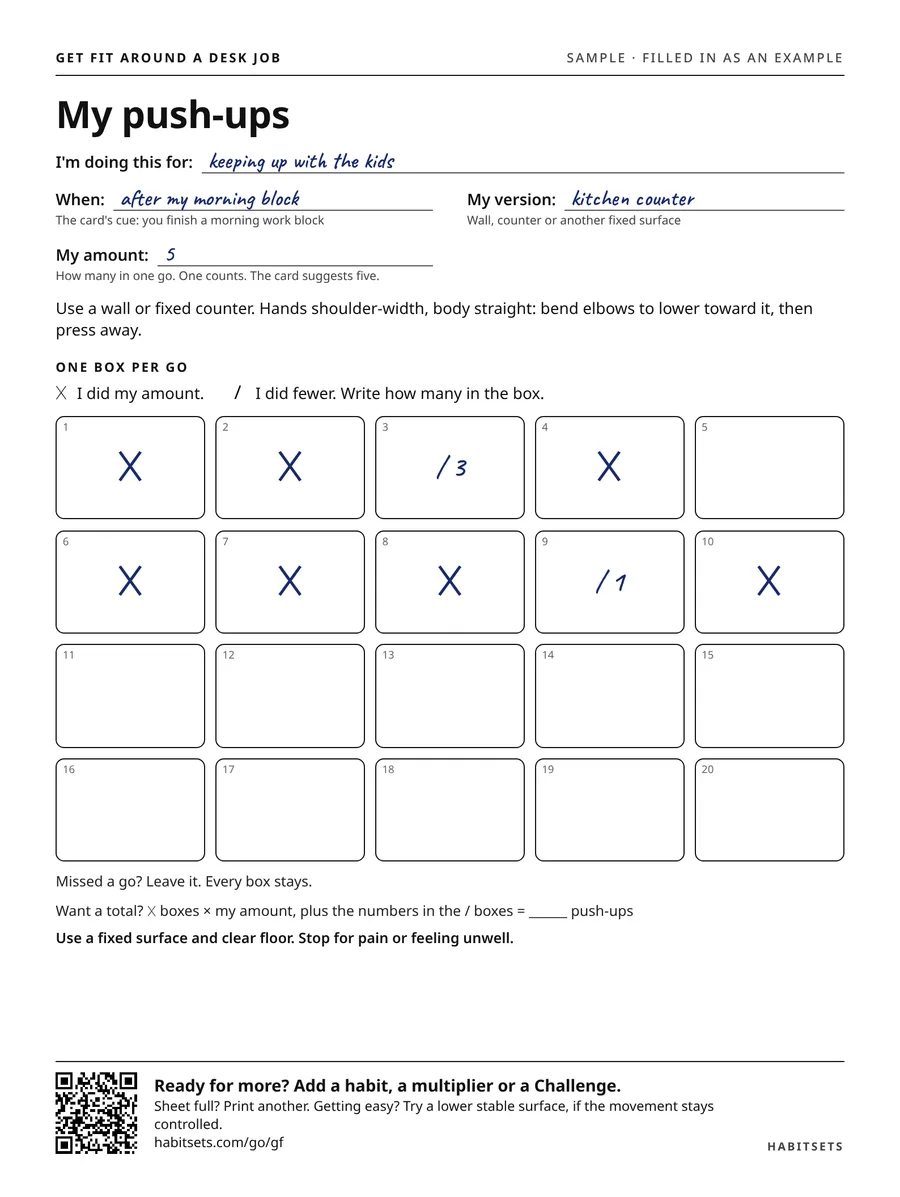
A plain sheet for beside your desk. Pick your version, pick your amount, then one mark per go.
One sheet. Prints at 100% on A4 or US Letter. No sign-up.
- Tape it up beside your desk. Write your version and your amount. One counts.
- Go done? ✕ the next box. Did fewer than your amount? Put / and write how many.
- Missed a go? Leave it. Every box stays. Full? Print another.
Use a fixed surface and clear floor. Stop for pain or feeling unwell.
How it works
Count chances, not streaks.
- One chanceYou choose when: the card suggests after a morning work block.
- One markYou did your amount: ✕ the next box. Did fewer? / and write how many.
- A missNo push-ups today? Leave it. Nothing already marked is erased.
Kept separateBoxes count work you did, not strength. Notice separately how the set feels and whether a lower steady surface gets easier.
Where this card sits
- ChallengeA mission that puts the practice to use, with a clear finish.
- MasteryFeedback: check earlier tries against a standard and change the next ones.
- GrowthSupport: makes the core work easier to do well.
- Foundation · this cardThe core work. Repeat it and the work itself adds up.
Start with the core work. Add support or feedback when you can name what it fixes. Higher tiers are different jobs, not harder levels.
See the whole deck: Get Fit Around a Desk Job →From the short · Just one
The habit from the short. Yours to print.
It's part of the habit card Do your push-up set. The card has the full practice: when to do it, how small to start, and what to watch out for.