Find Your Stride · the new backs

Turn it over.
Everything you need to start.

Each back carries the cue, the action, the support you need and a tiny first step, at a size you can read on the fridge.

20 backs, made for the hand.
Designed at Postcard size, 100 × 154 mm. The reading pages keep the extra explanation and full citations.

Print the deck →

Tap a card to compare its front and new back. The comparison prints at 100 × 154mm; use 100% scale and check the 50mm line.
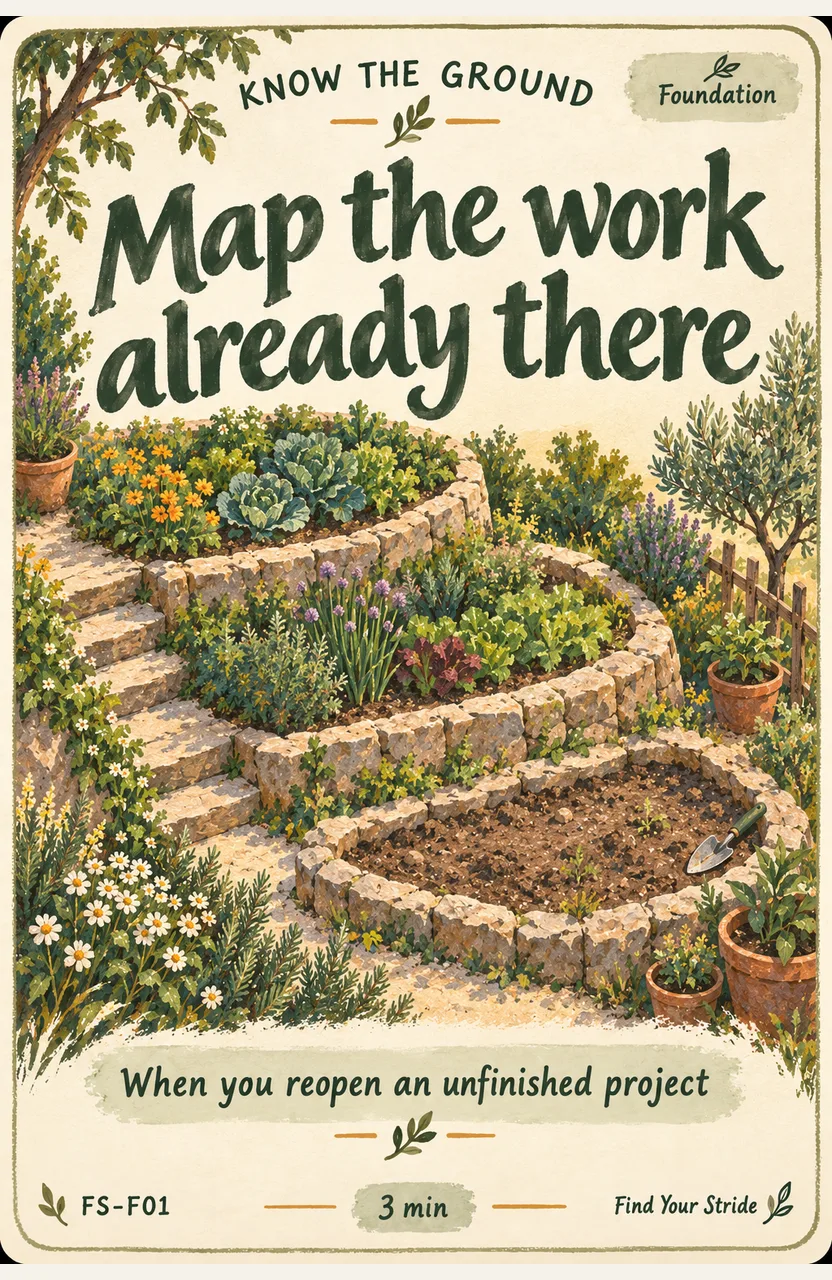
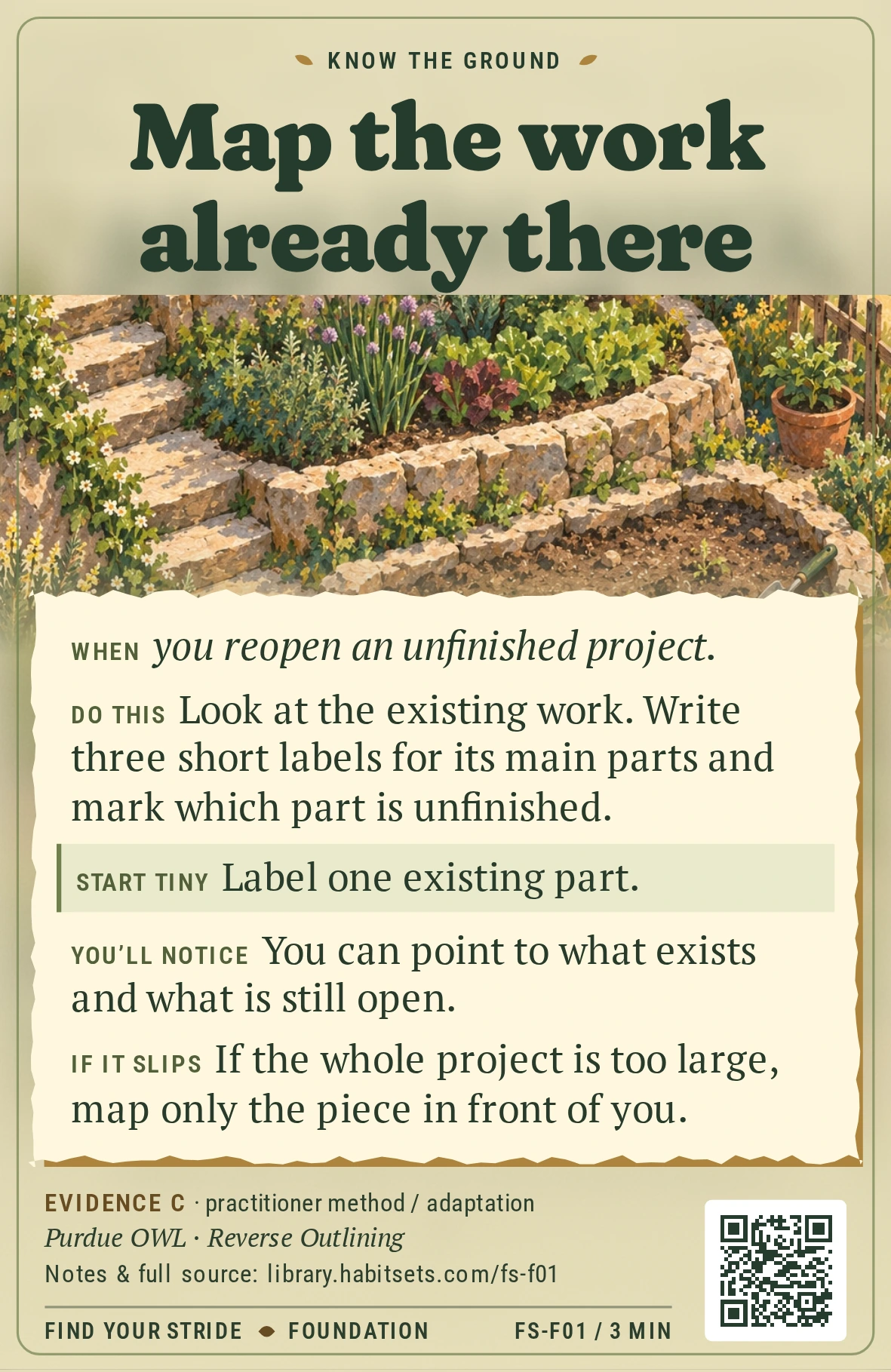
Front of FS-F01Back of card FS-F01: Map the work already there. When: When you reopen an unfinished project. Do this: Look at the existing work. Write three short labels for its main parts and mark which part is unfinished. Start tiny: Label one existing part.
50mm · FS-F01 · actual size
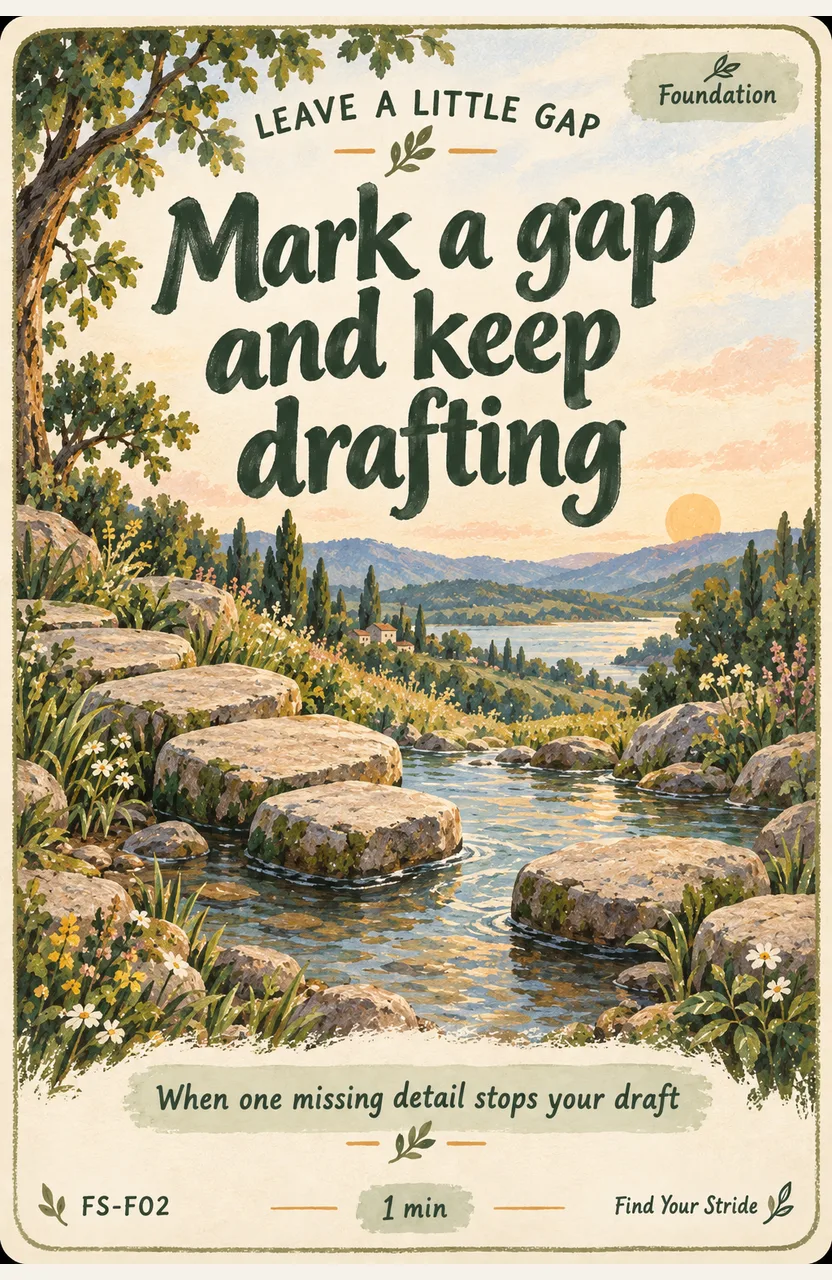
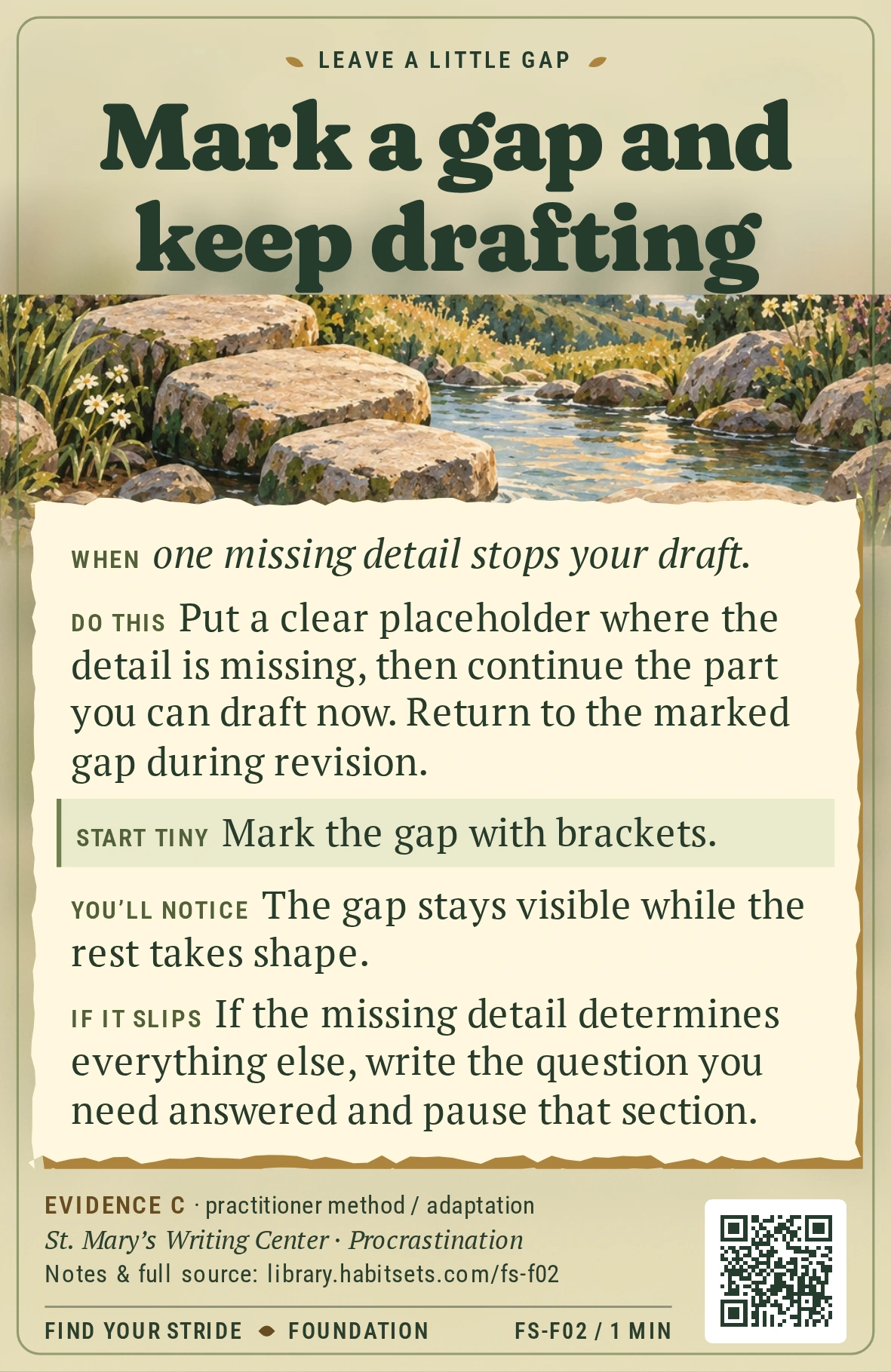
Front of FS-F02Back of card FS-F02: Mark a gap and keep drafting. When: When one missing detail stops your draft. Do this: Put a clear placeholder where the detail is missing, then continue the part you can draft now. Return to the marked gap during revision. Start tiny: Mark the gap with brackets.
50mm · FS-F02 · actual size
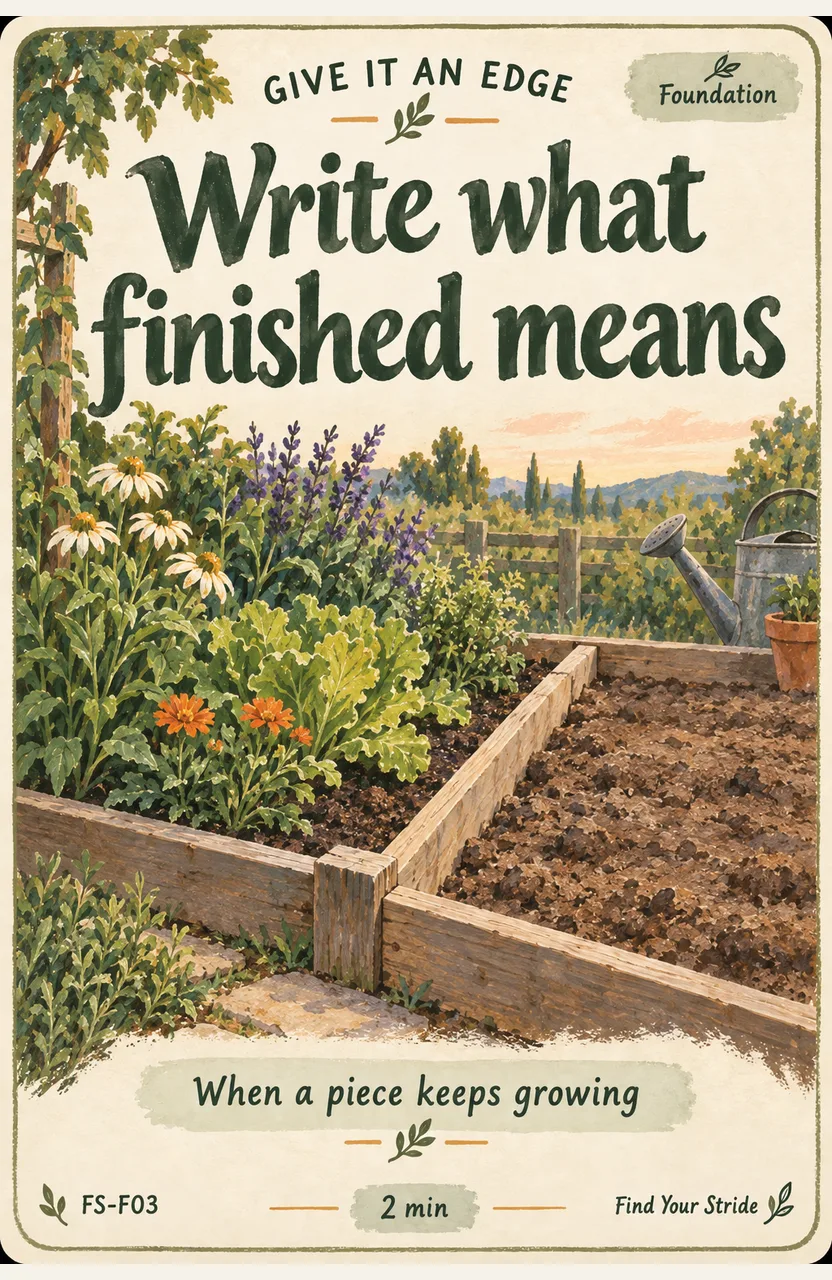
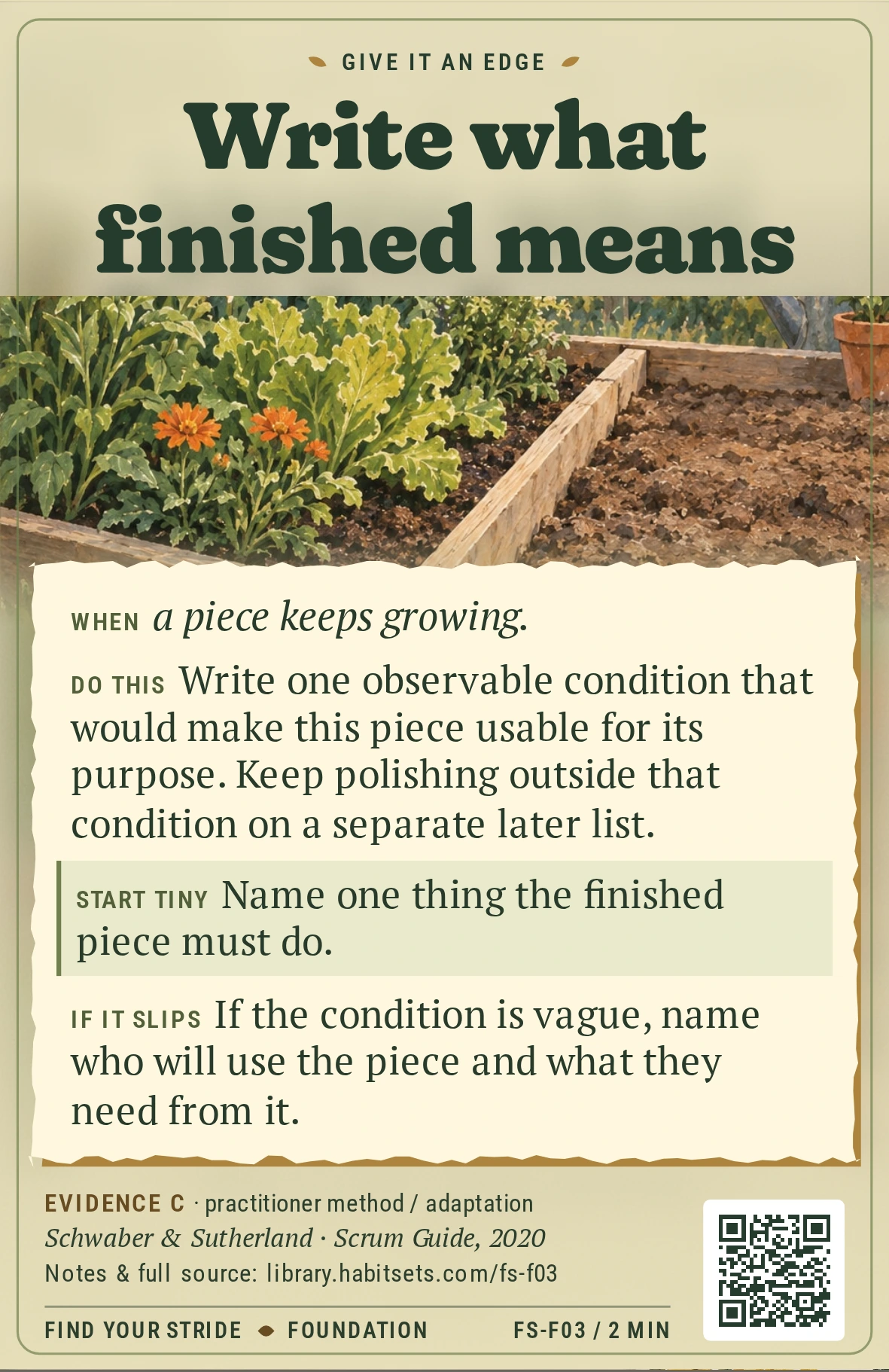
Front of FS-F03Back of card FS-F03: Write what finished means. When: When a piece keeps growing. Do this: Write one observable condition that would make this piece usable for its purpose. Keep polishing outside that condition on a separate later list. Start tiny: Name one thing the finished piece must do.
50mm · FS-F03 · actual size
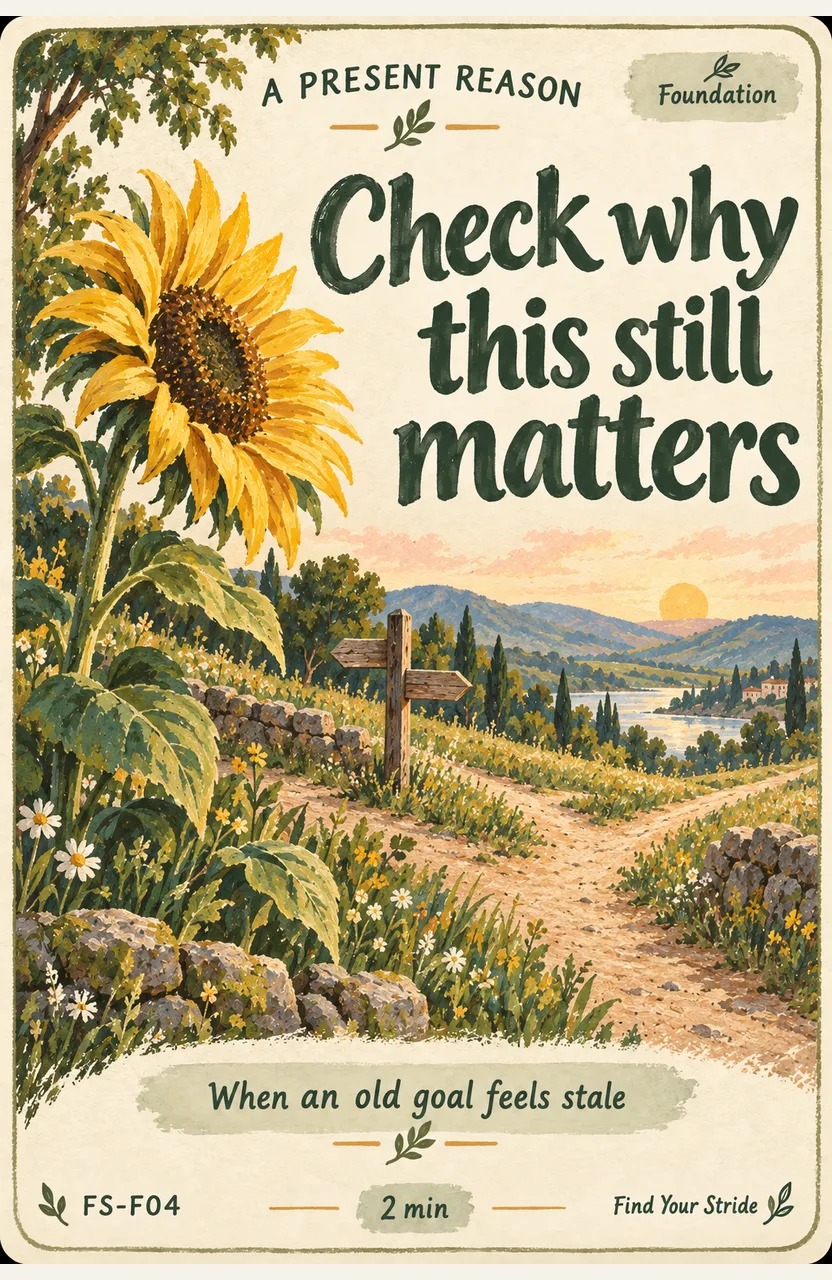
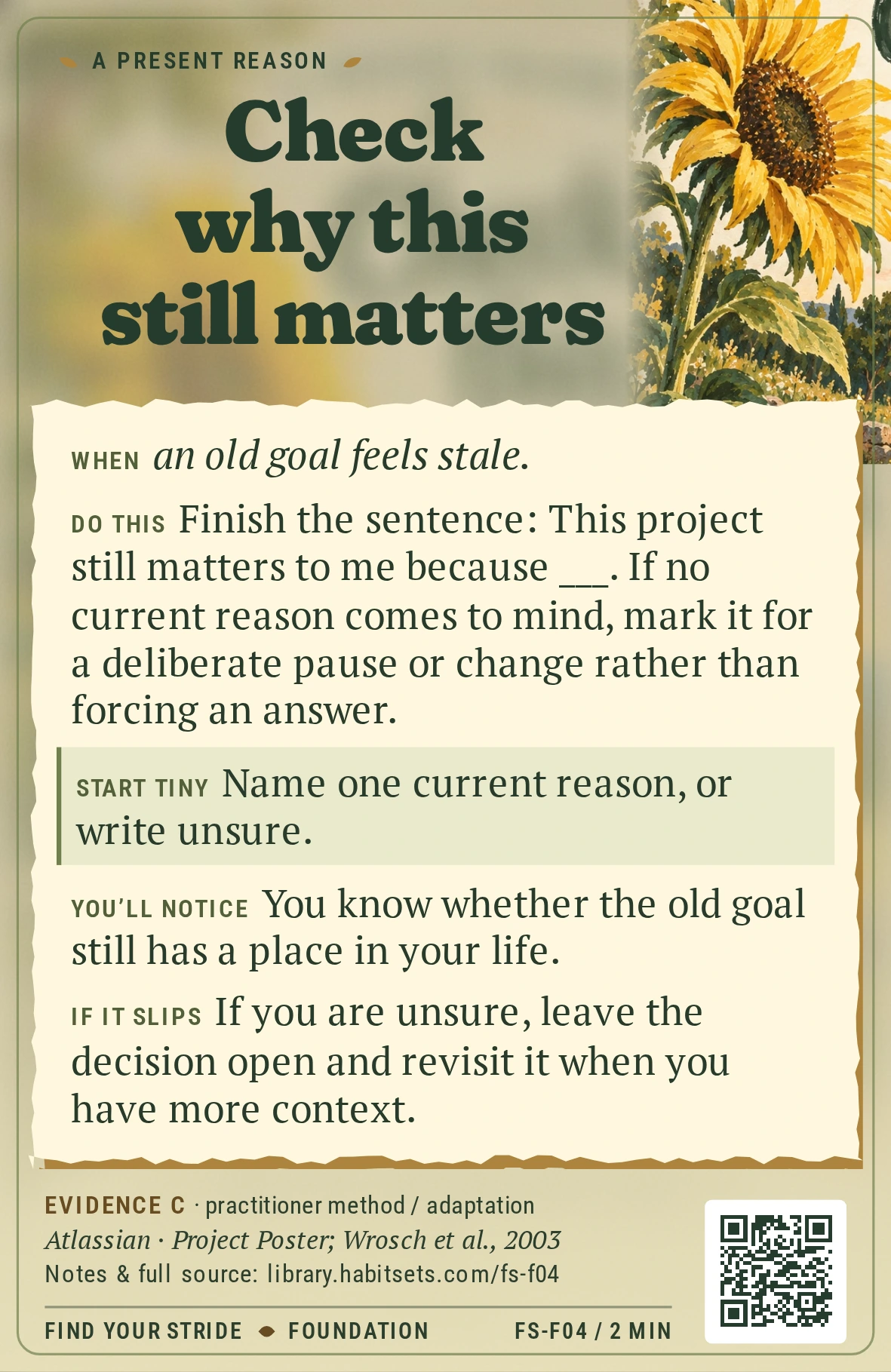
Front of FS-F04Back of card FS-F04: Check why this still matters. When: When an old goal feels stale. Do this: Finish the sentence: This project still matters to me because ___. If no current reason comes to mind, mark it for a deliberate pause or change rather than forcing an answer. Start tiny: Name one current reason, or write unsure.
50mm · FS-F04 · actual size
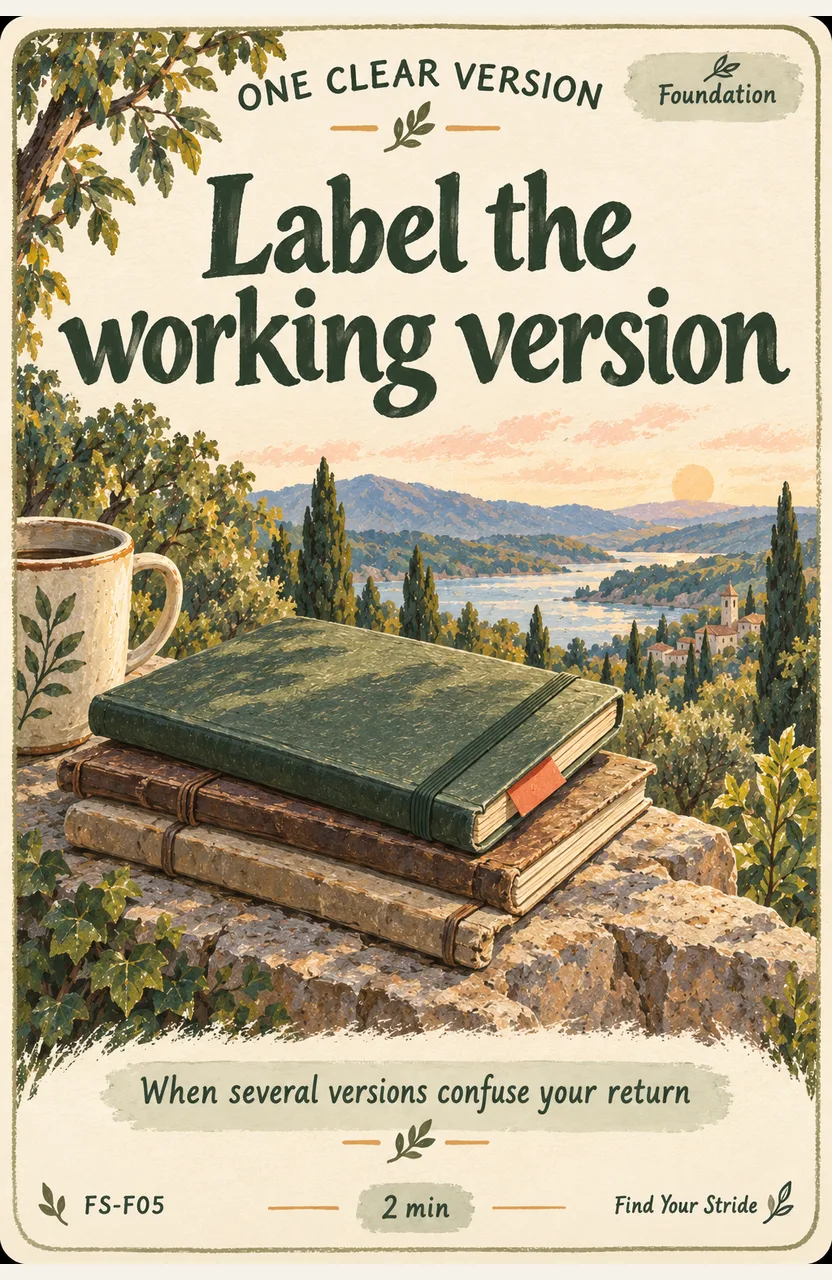
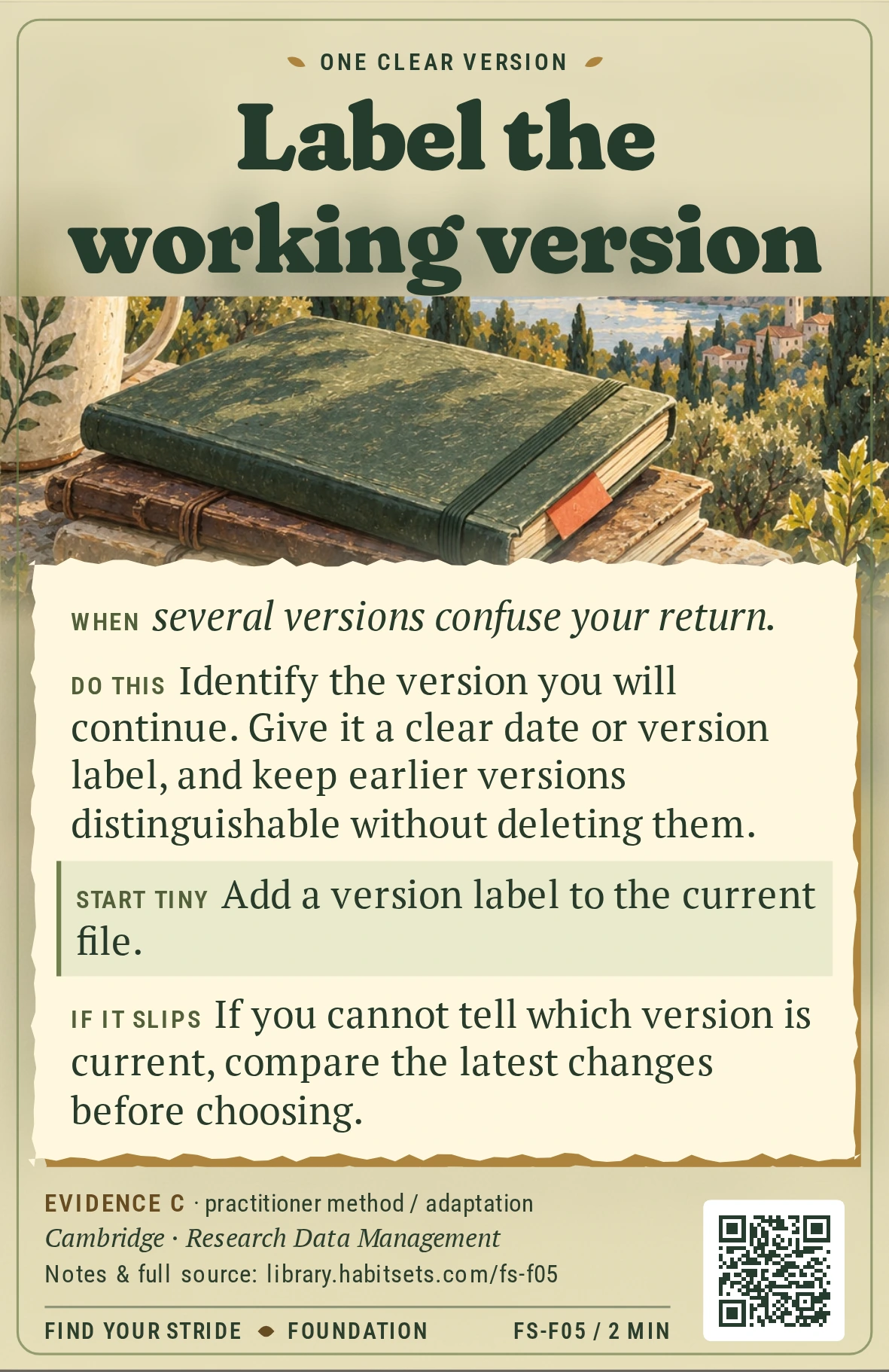
Front of FS-F05Back of card FS-F05: Label the working version. When: When several versions confuse your return. Do this: Identify the version you will continue. Give it a clear date or version label, and keep earlier versions distinguishable without deleting them. Start tiny: Add a version label to the current file.
50mm · FS-F05 · actual size
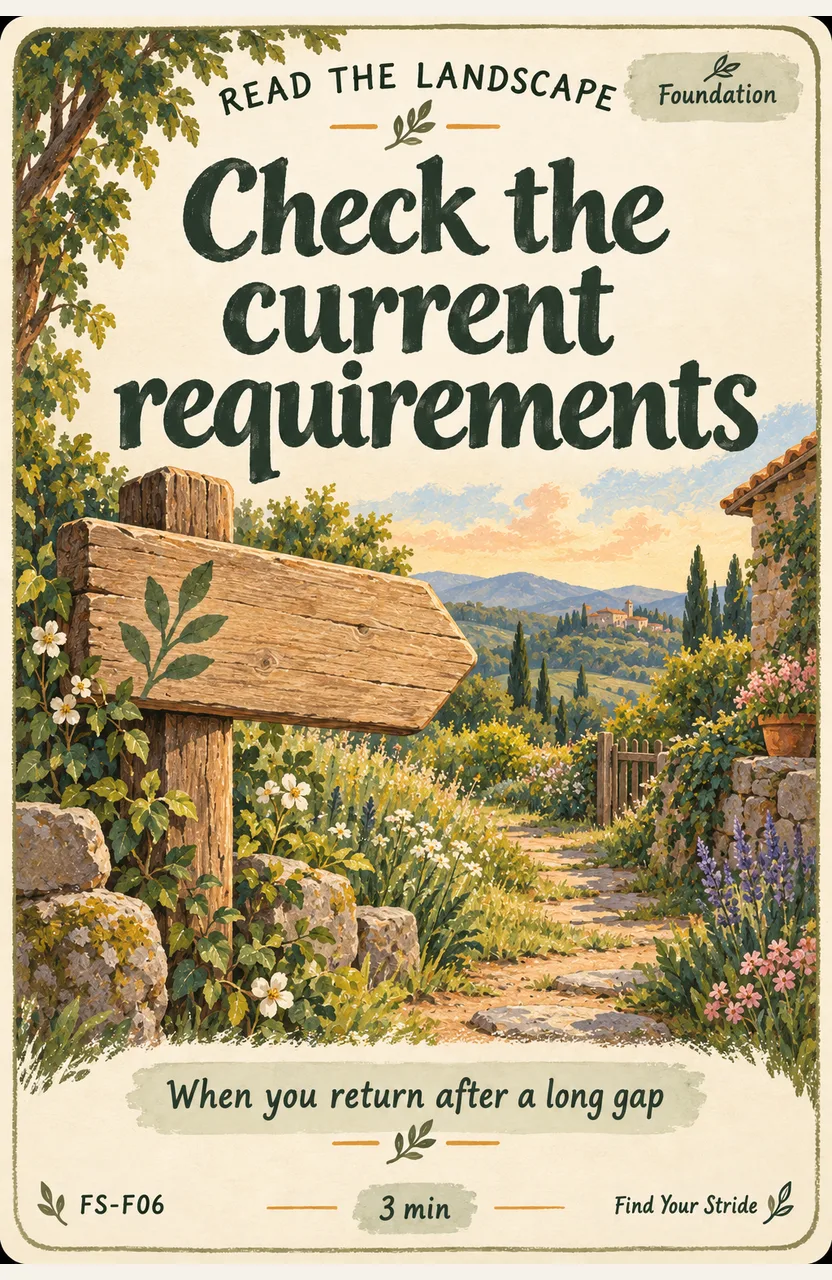
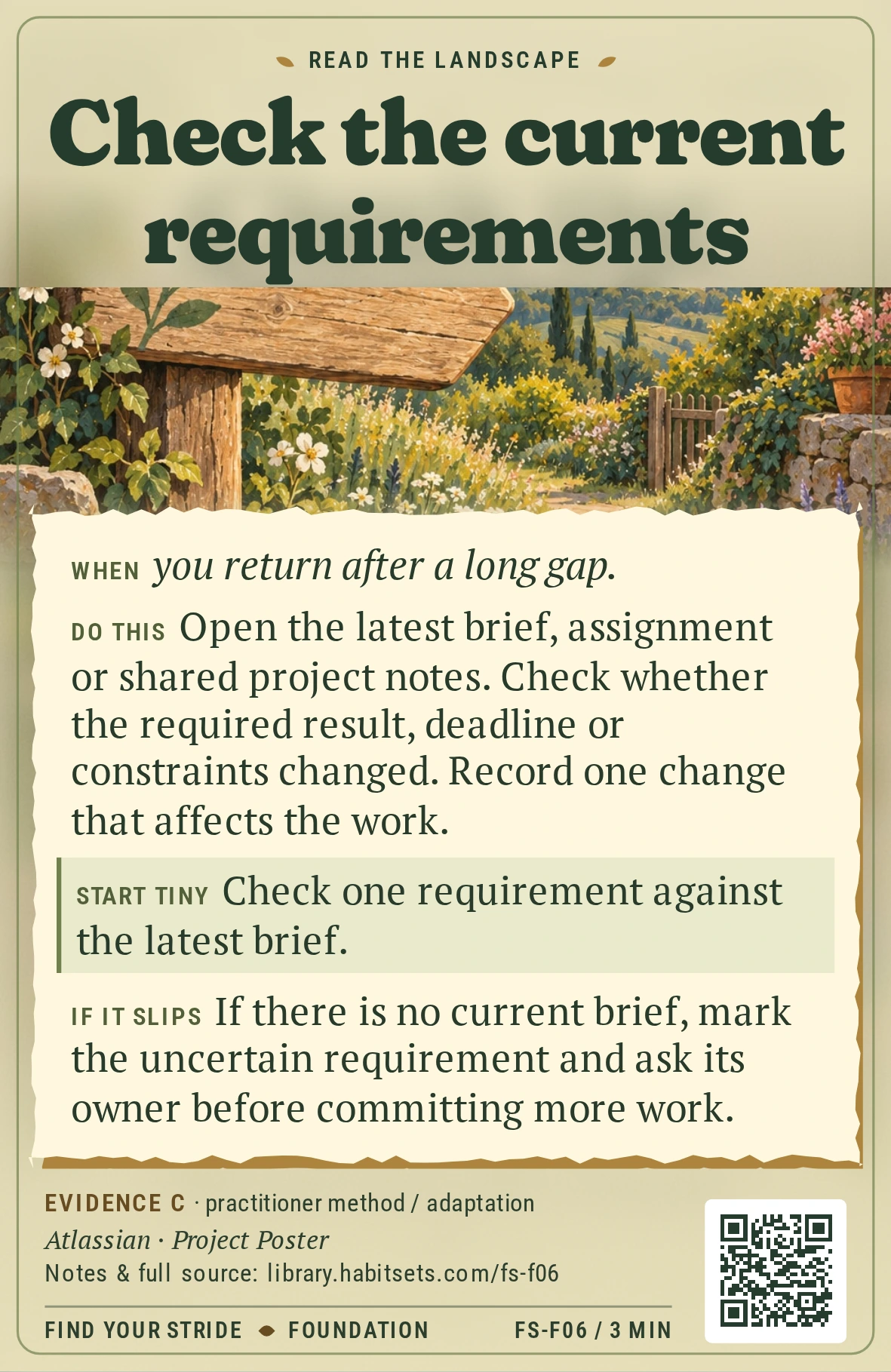
Front of FS-F06Back of card FS-F06: Check the current requirements. When: When you return after a long gap. Do this: Open the latest brief, assignment or shared project notes. Check whether the required result, deadline or constraints changed. Record one change that affects the work. Start tiny: Check one requirement against the latest brief.
50mm · FS-F06 · actual size
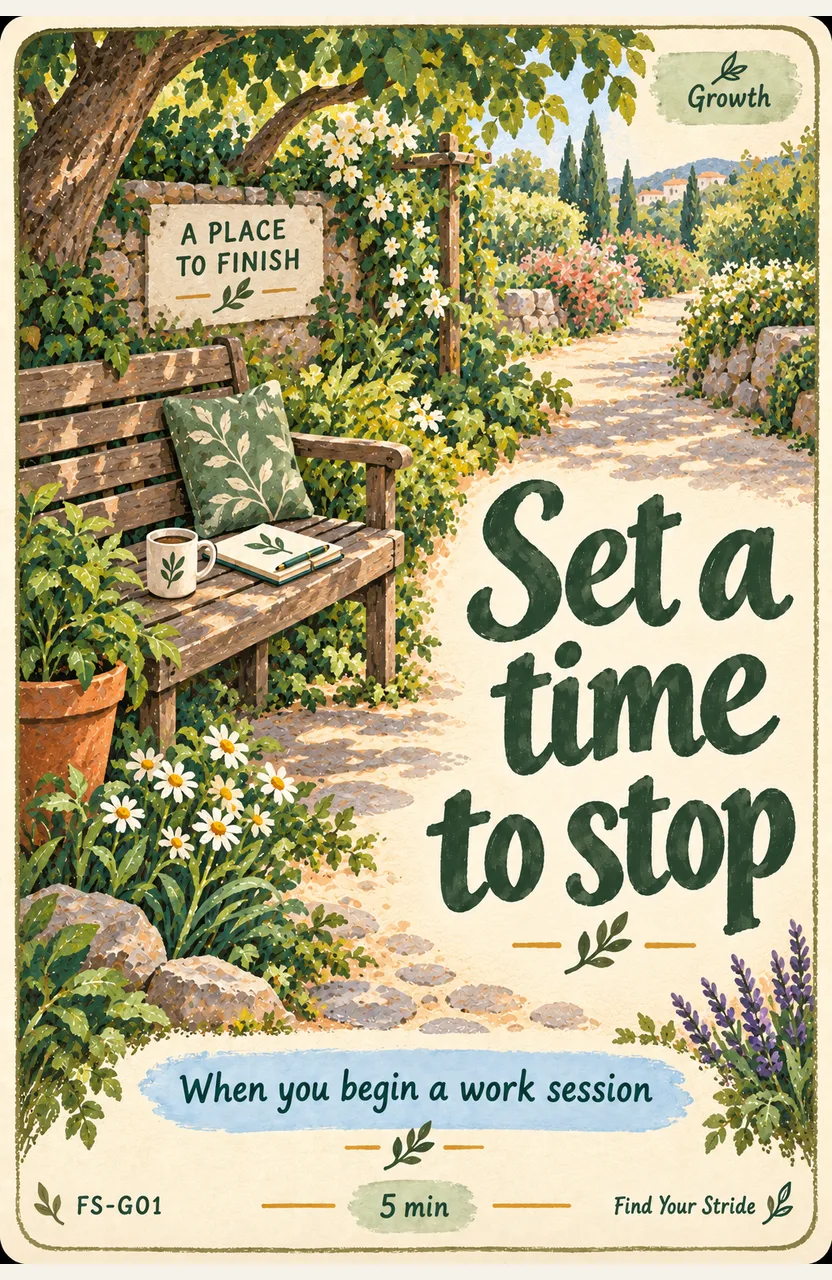
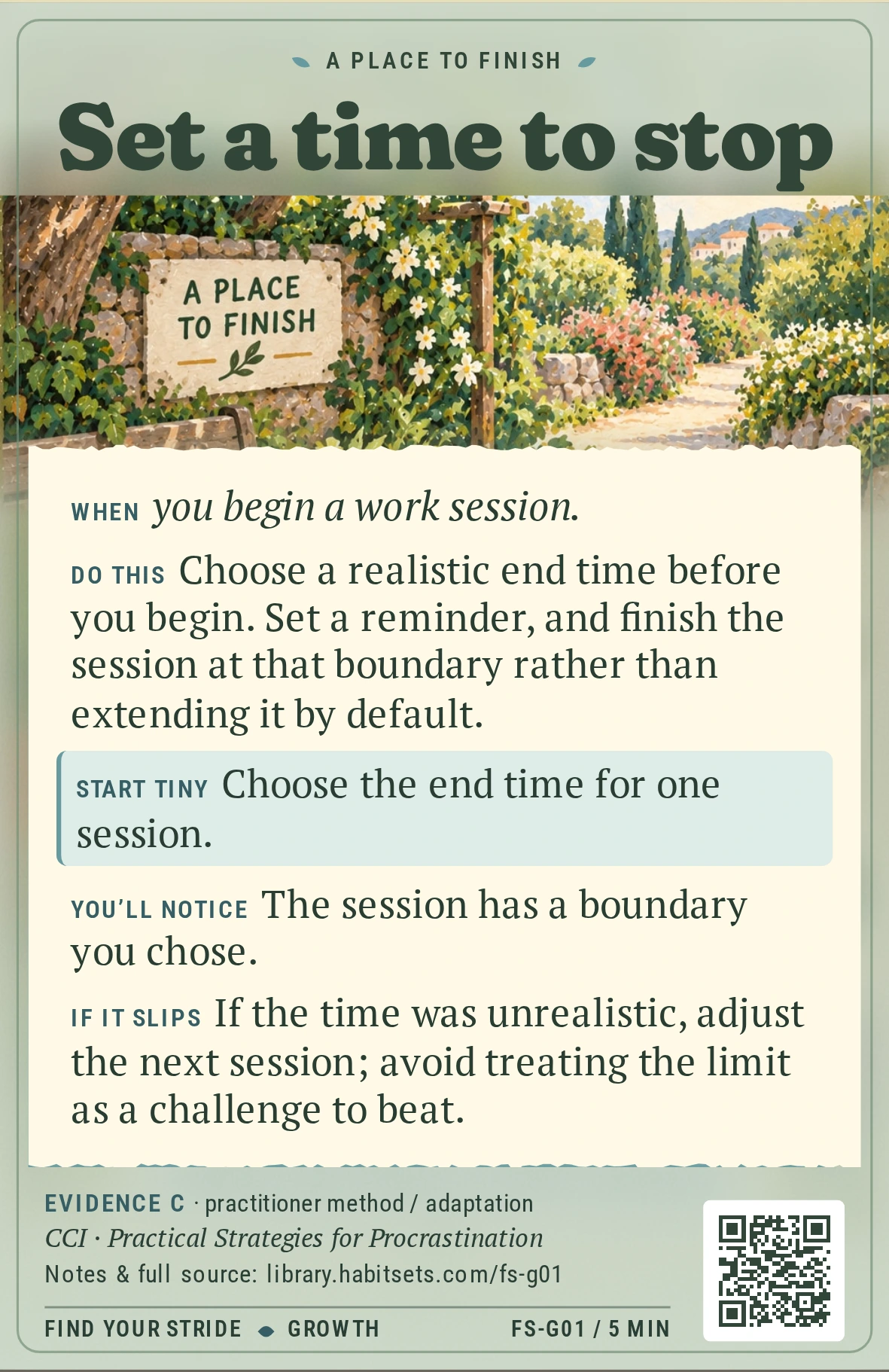
Front of FS-G01Back of card FS-G01: Set a time to stop. When: When you begin a work session. Do this: Choose a realistic end time before you begin. Set a reminder, and finish the session at that boundary rather than extending it by default. Start tiny: Choose the end time for one session.
50mm · FS-G01 · actual size
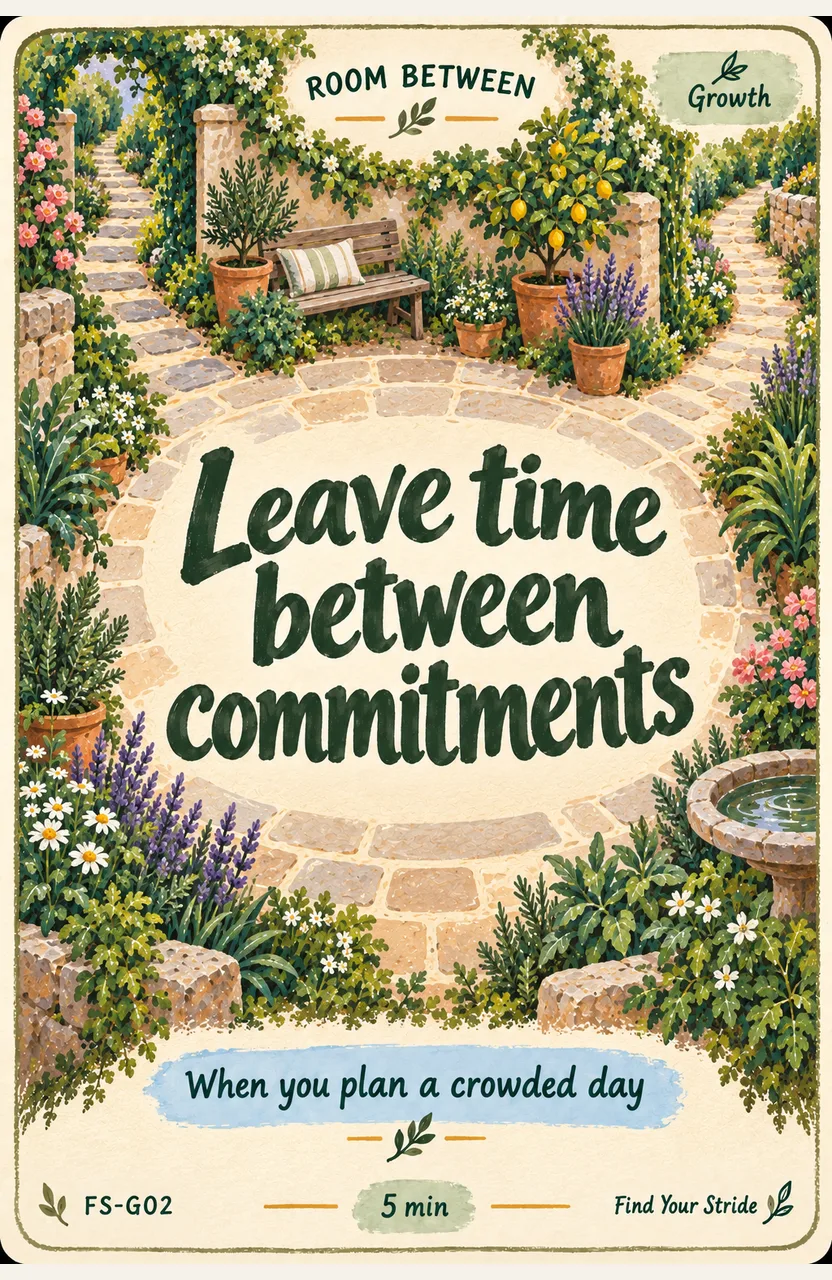
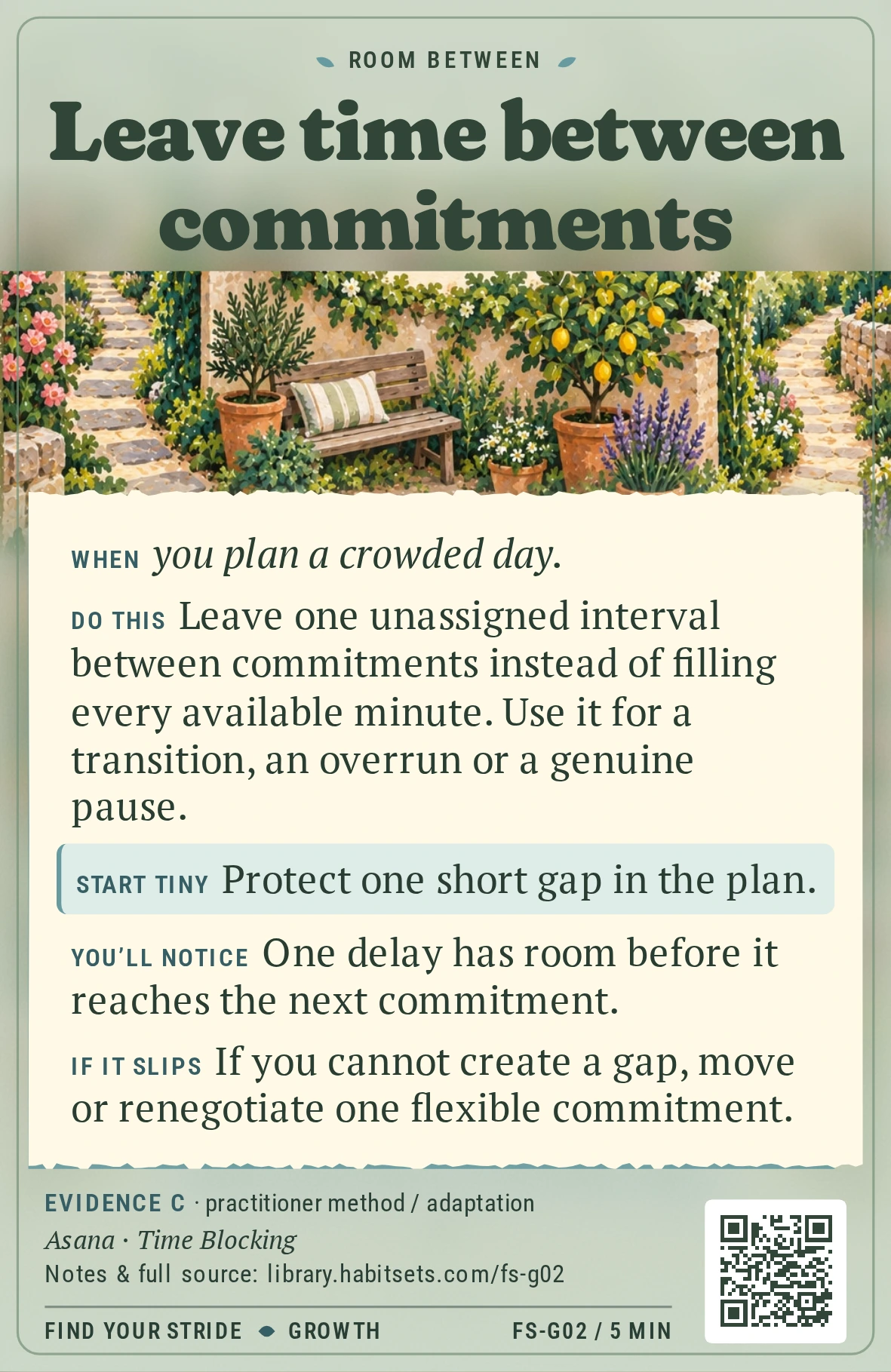
Front of FS-G02Back of card FS-G02: Leave time between commitments. When: When you plan a crowded day. Do this: Leave one unassigned interval between commitments instead of filling every available minute. Use it for a transition, an overrun or a genuine pause. Start tiny: Protect one short gap in the plan.
50mm · FS-G02 · actual size
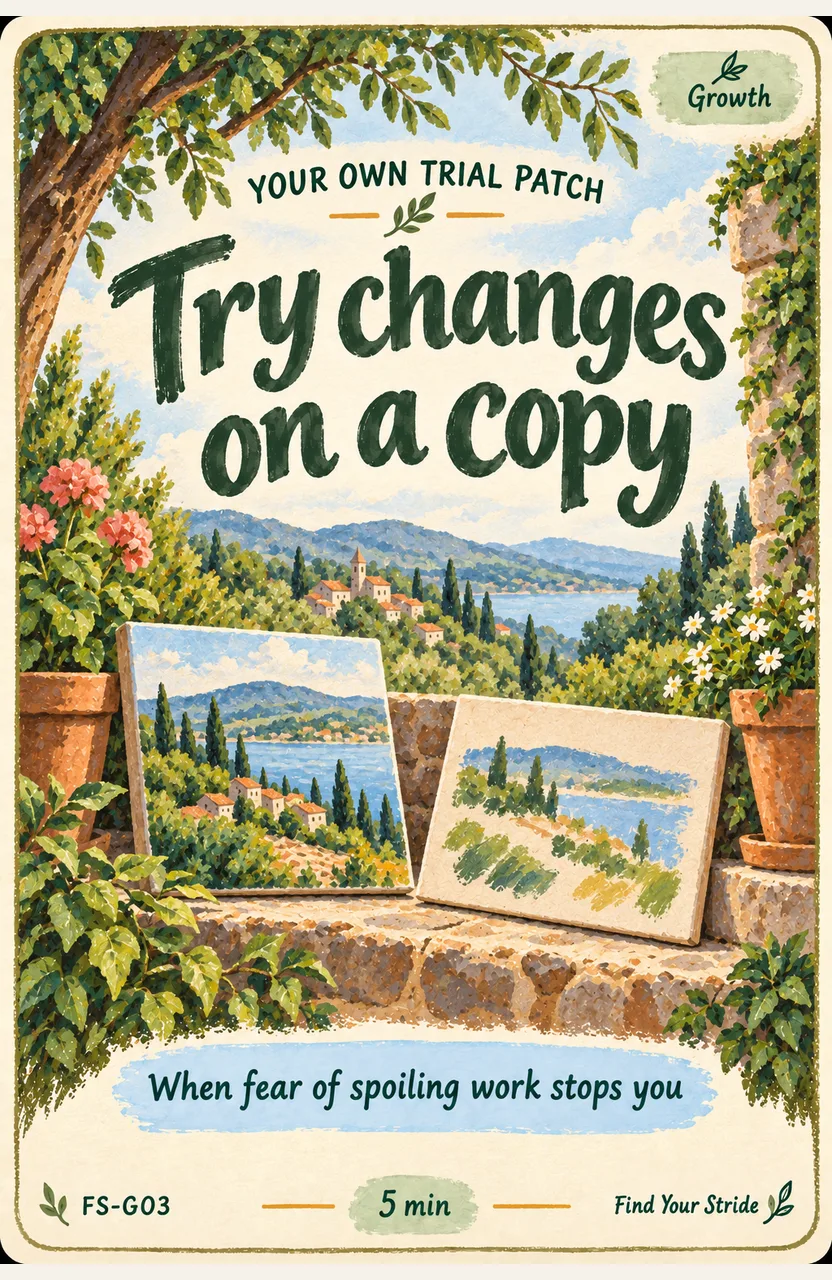
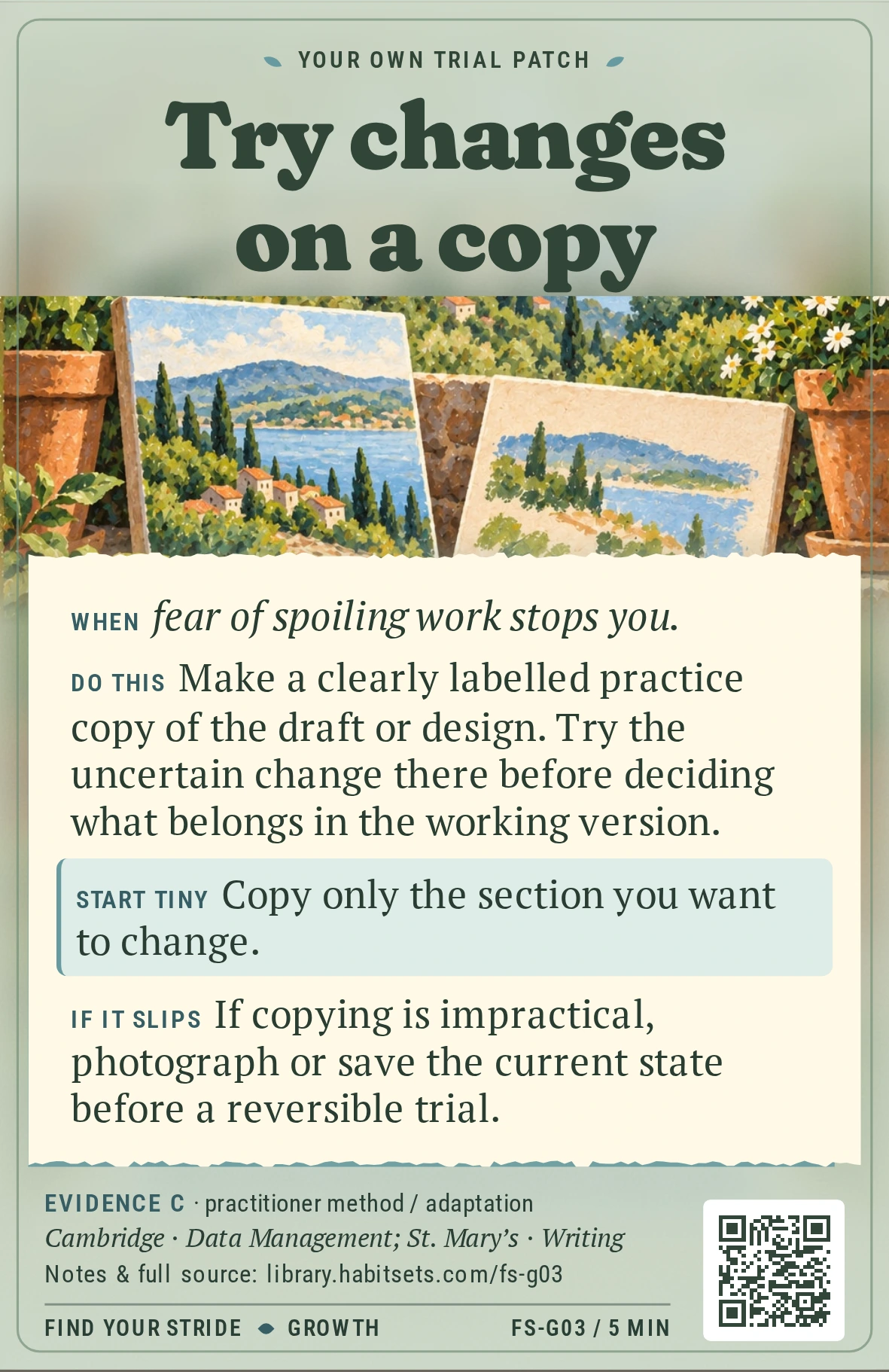
Front of FS-G03Back of card FS-G03: Try changes on a copy. When: When fear of spoiling work stops you. Do this: Make a clearly labelled practice copy of the draft or design. Try the uncertain change there before deciding what belongs in the working version. Start tiny: Copy only the section you want to change.
50mm · FS-G03 · actual size
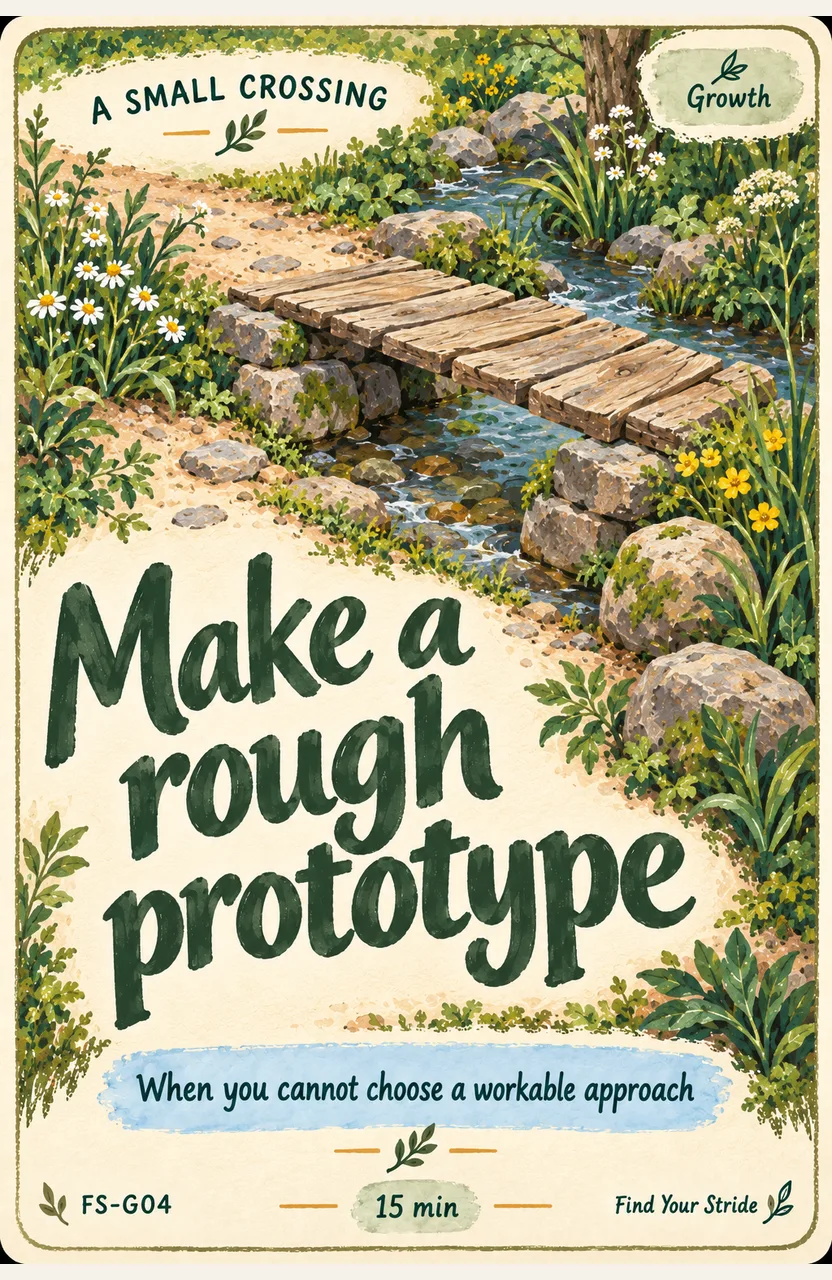
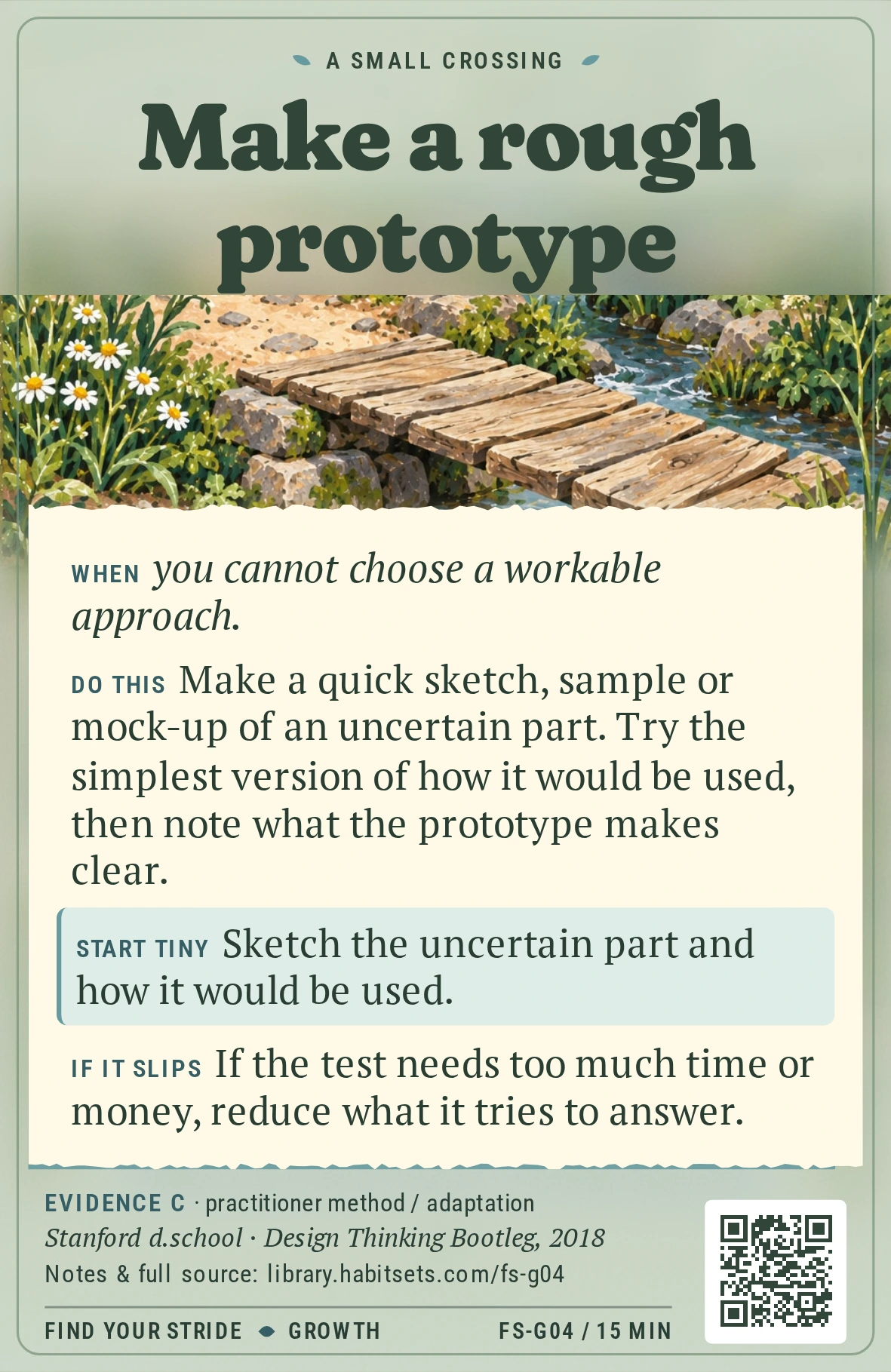
Front of FS-G04Back of card FS-G04: Make a rough prototype. When: When you cannot choose a workable approach. Do this: Make a quick sketch, sample or mock-up of an uncertain part. Try the simplest version of how it would be used, then note what the prototype makes clear. Start tiny: Sketch the uncertain part and how it would be used.
50mm · FS-G04 · actual size
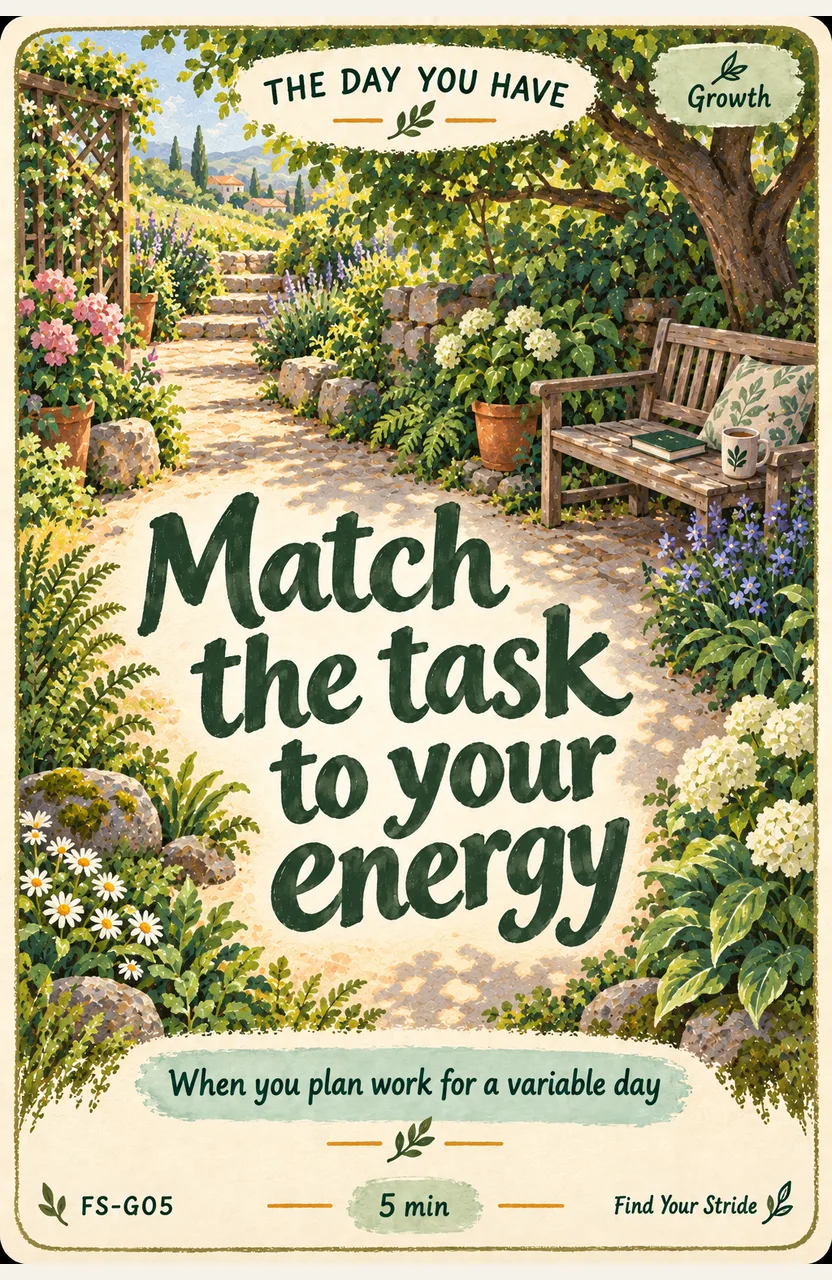
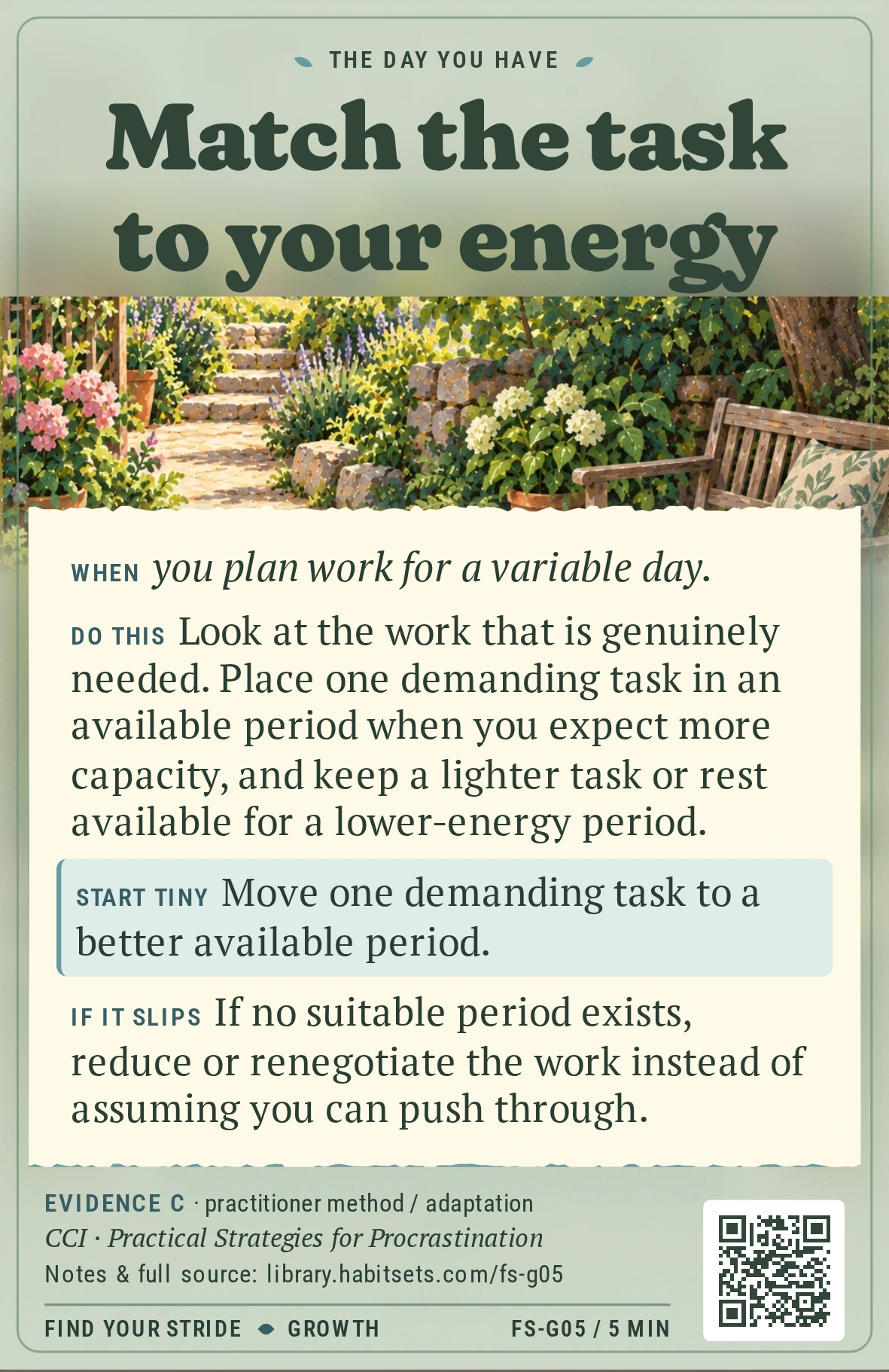
Front of FS-G05Back of card FS-G05: Match the task to your energy. When: When you plan work for a variable day. Do this: Look at the work that is genuinely needed. Place one demanding task in an available period when you expect more capacity, and keep a lighter task or rest available for a lower-energy period. Start tiny: Move one demanding task to a better available period.
50mm · FS-G05 · actual size
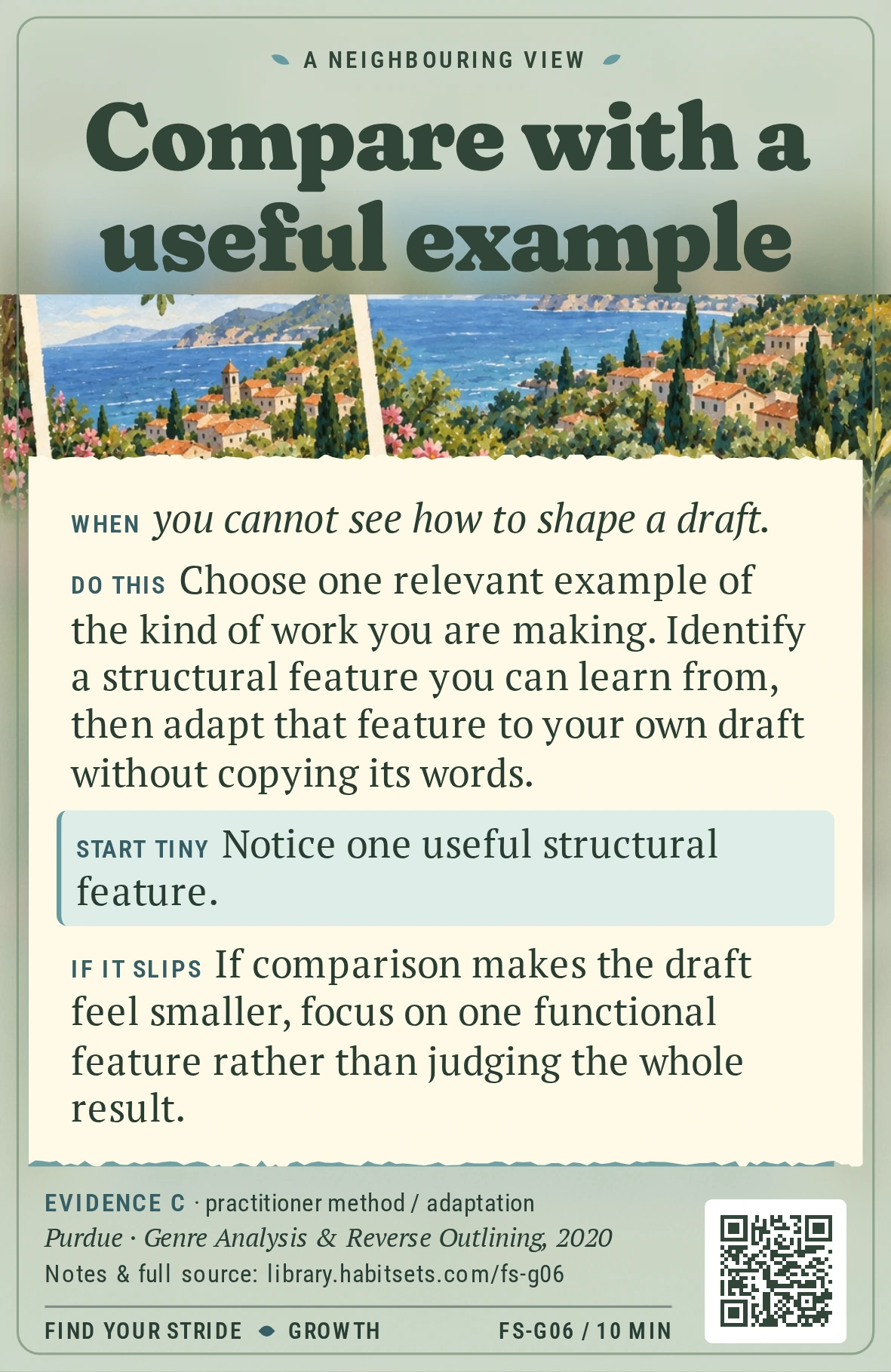
Front of FS-G06Back of card FS-G06: Compare with a useful example. When: When you cannot see how to shape a draft. Do this: Choose one relevant example of the kind of work you are making. Identify a structural feature you can learn from, then adapt that feature to your own draft without copying its words. Start tiny: Notice one useful structural feature.
50mm · FS-G06 · actual size
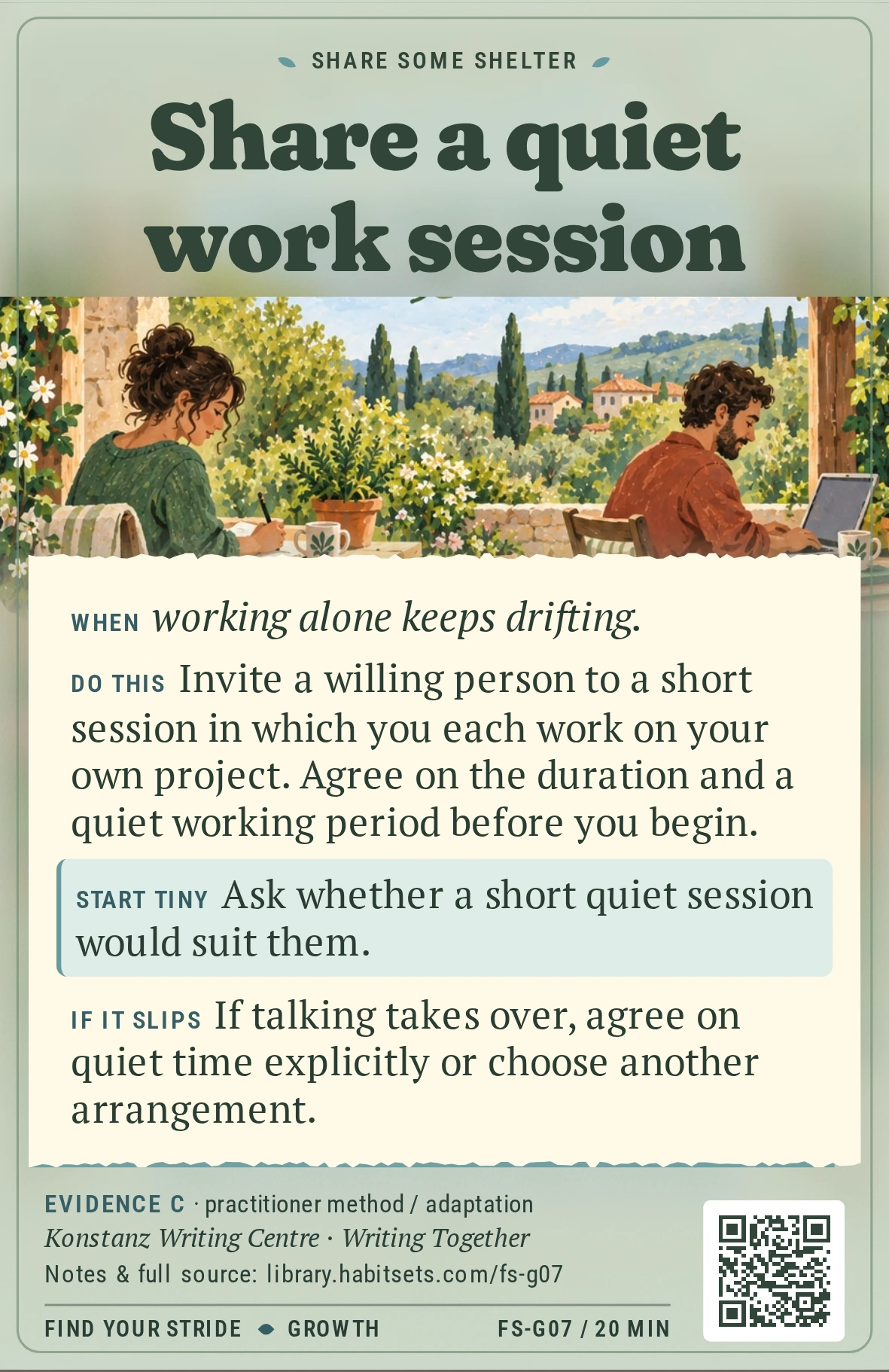
Front of FS-G07Back of card FS-G07: Share a quiet work session. When: When working alone keeps drifting. Do this: Invite a willing person to a short session in which you each work on your own project. Agree on the duration and a quiet working period before you begin. Start tiny: Ask whether a short quiet session would suit them.
50mm · FS-G07 · actual size
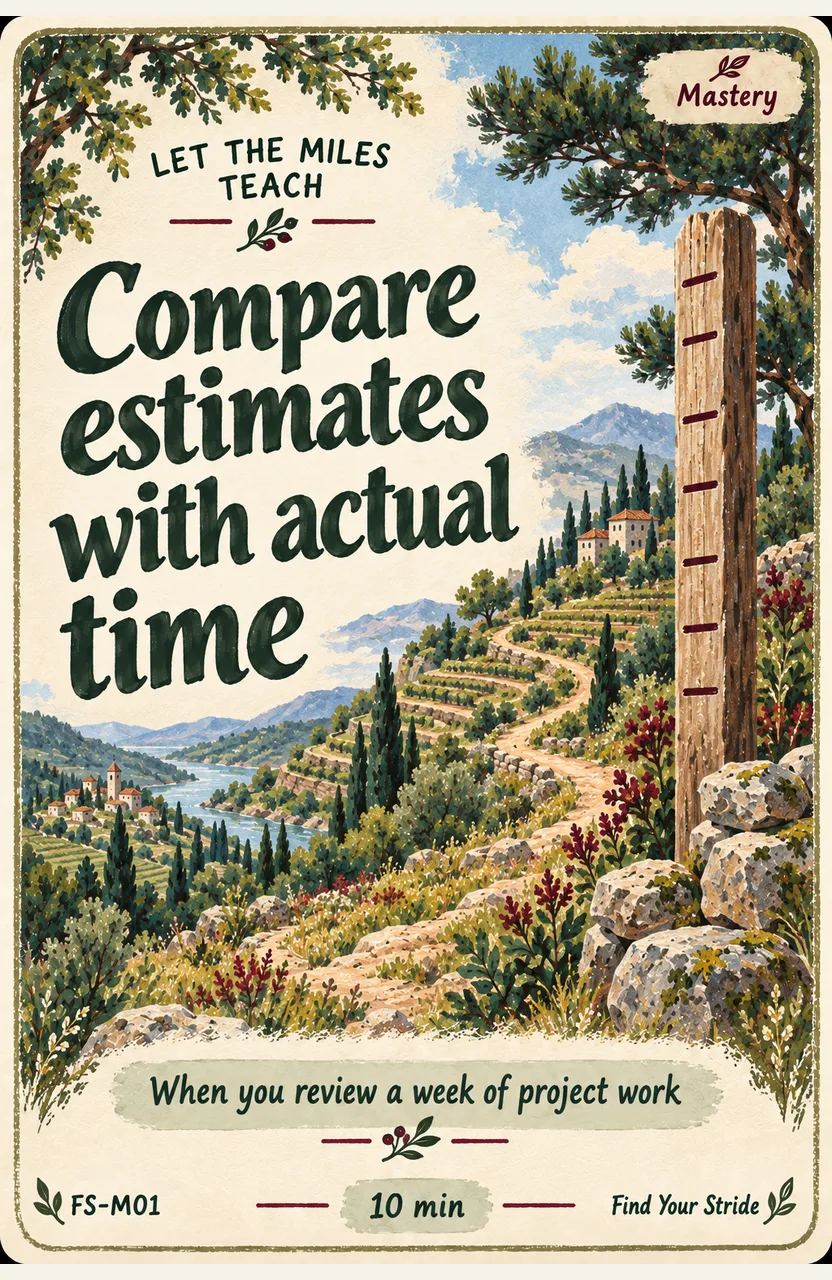
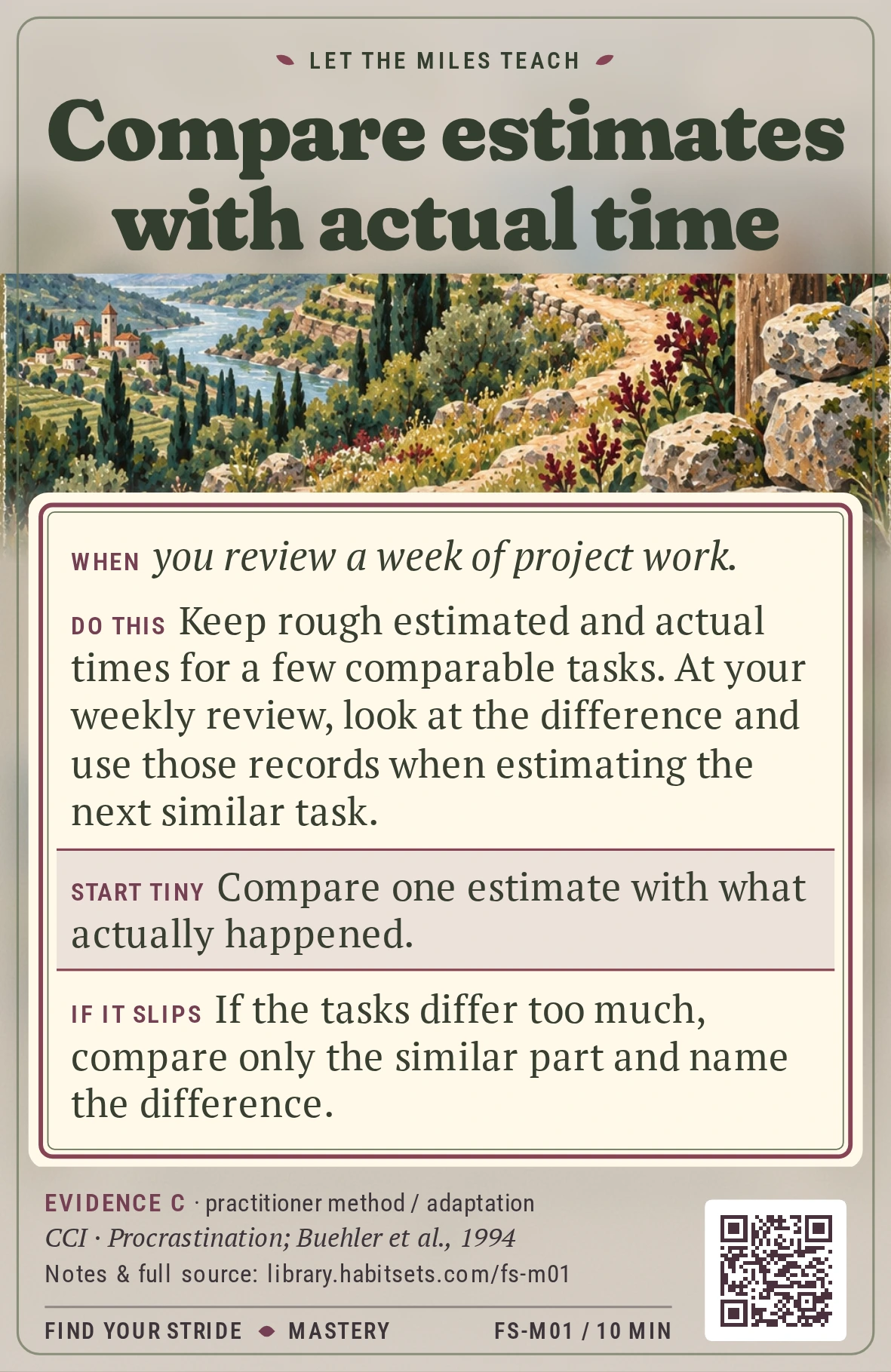
Front of FS-M01Back of card FS-M01: Compare estimates with actual time. When: When you review a week of project work. Do this: Keep rough estimated and actual times for a few comparable tasks. At your weekly review, look at the difference and use those records when estimating the next similar task. Start tiny: Compare one estimate with what actually happened.
50mm · FS-M01 · actual size
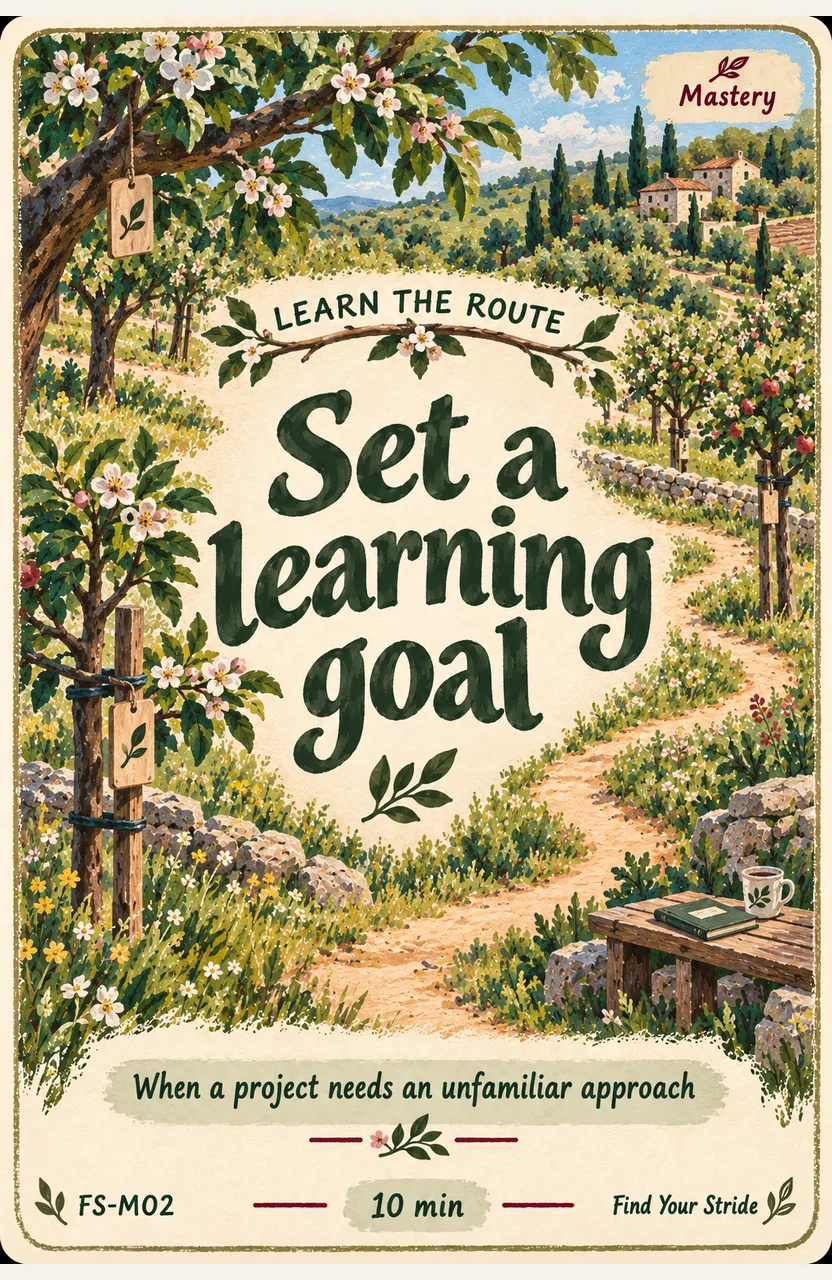
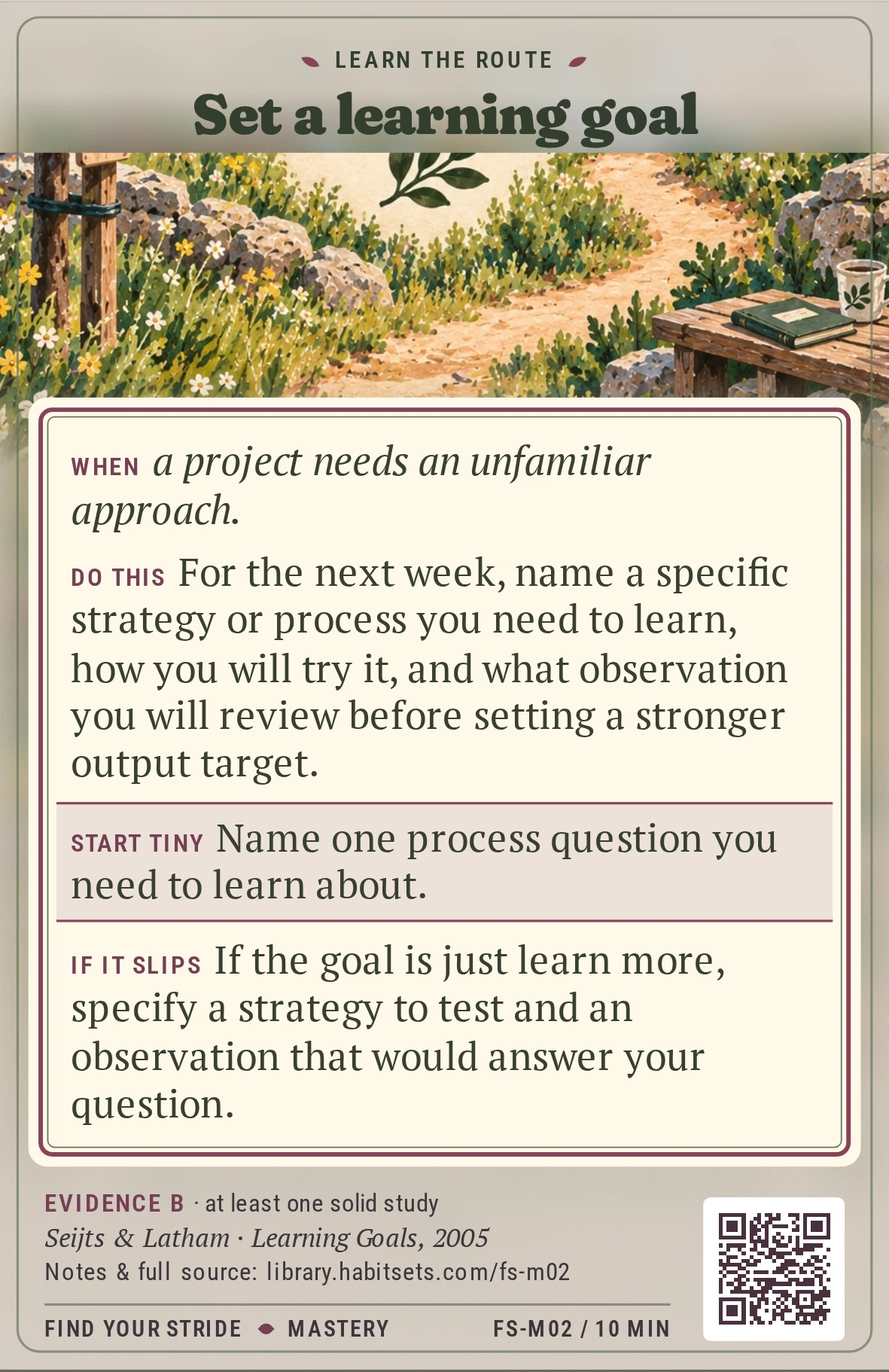
Front of FS-M02Back of card FS-M02: Set a learning goal. When: When a project needs an unfamiliar approach. Do this: For the next week, name a specific strategy or process you need to learn, how you will try it, and what observation you will review before setting a stronger output target. Start tiny: Name one process question you need to learn about.
50mm · FS-M02 · actual size
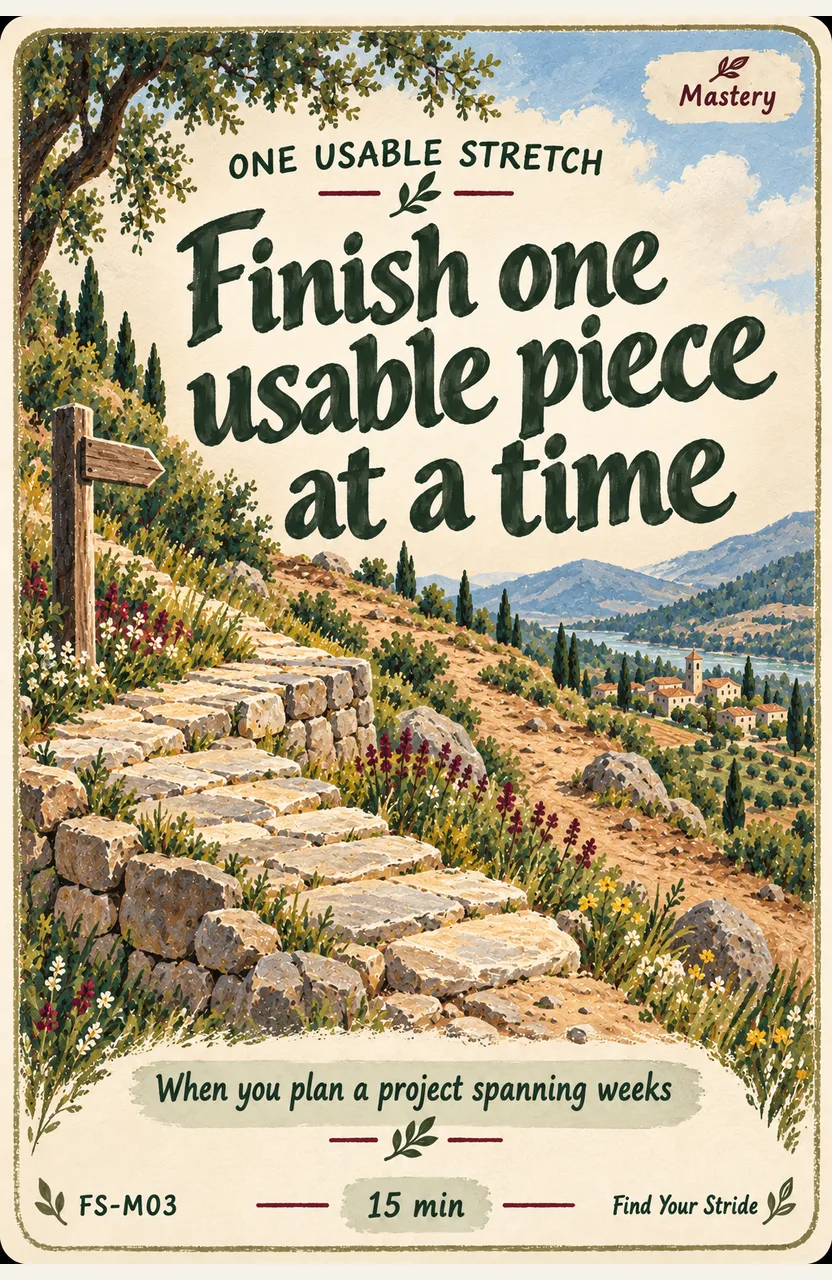
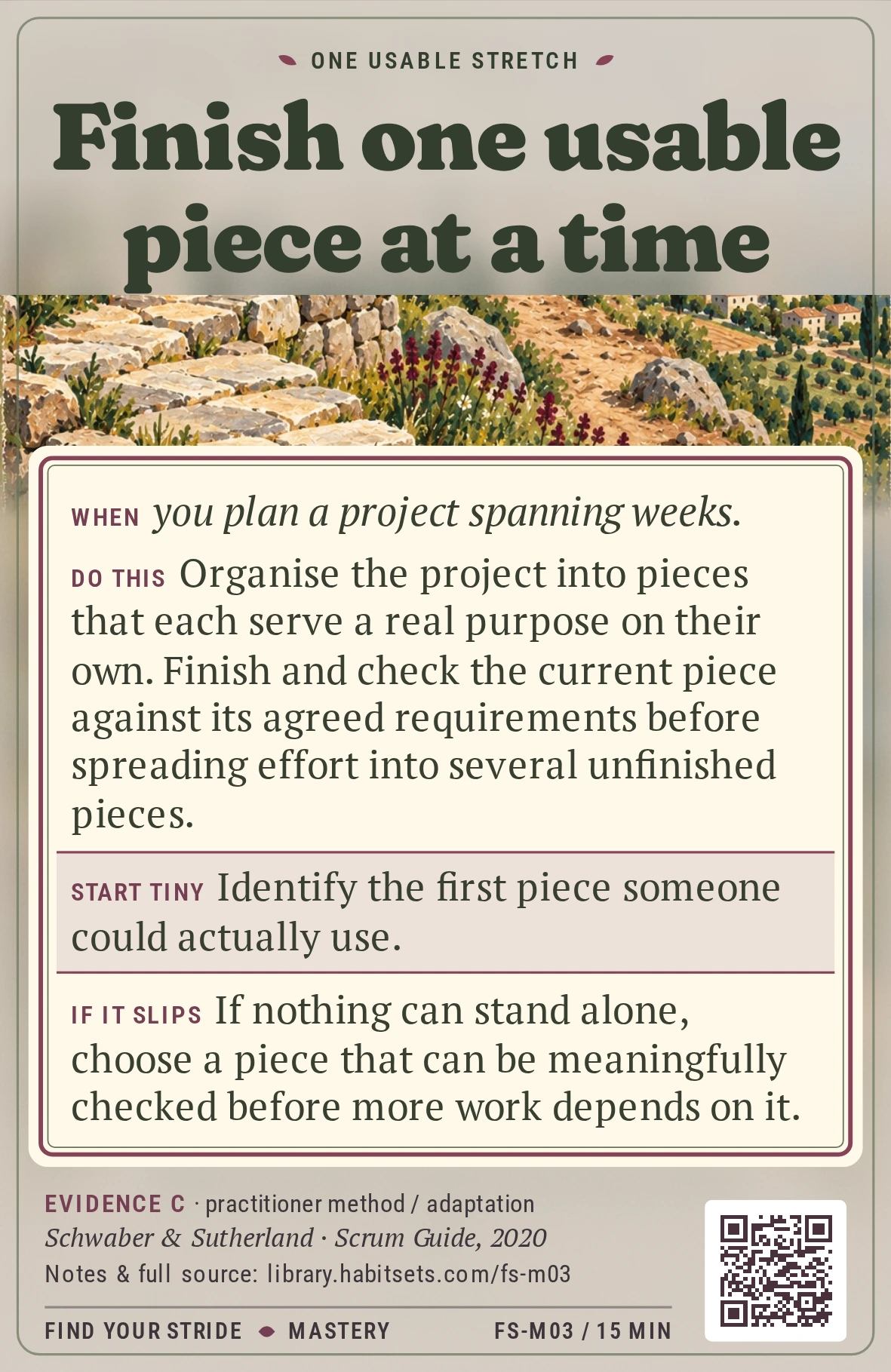
Front of FS-M03Back of card FS-M03: Finish one usable piece at a time. When: When you plan a project spanning weeks. Do this: Organise the project into pieces that each serve a real purpose on their own. Finish and check the current piece against its agreed requirements before spreading effort into several unfinished pieces. Start tiny: Identify the first piece someone could actually use.
50mm · FS-M03 · actual size
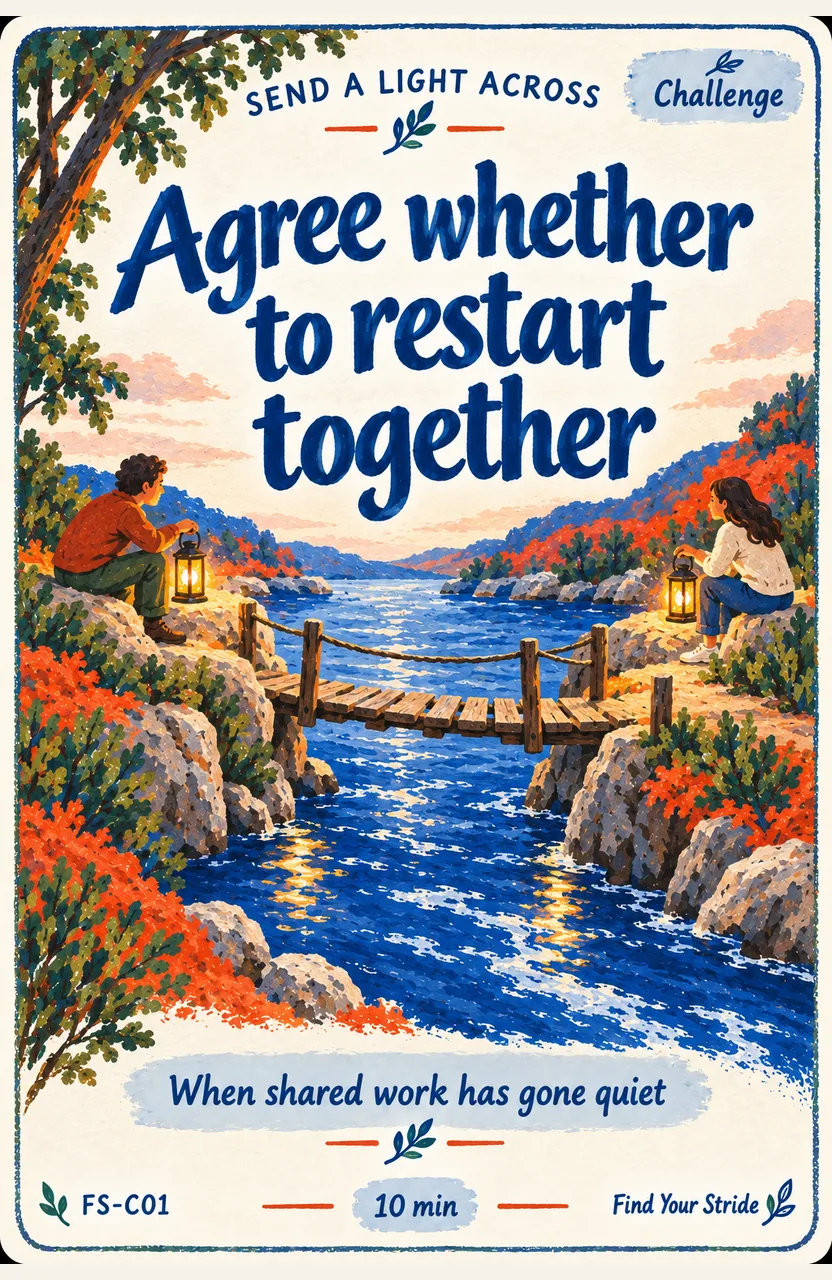
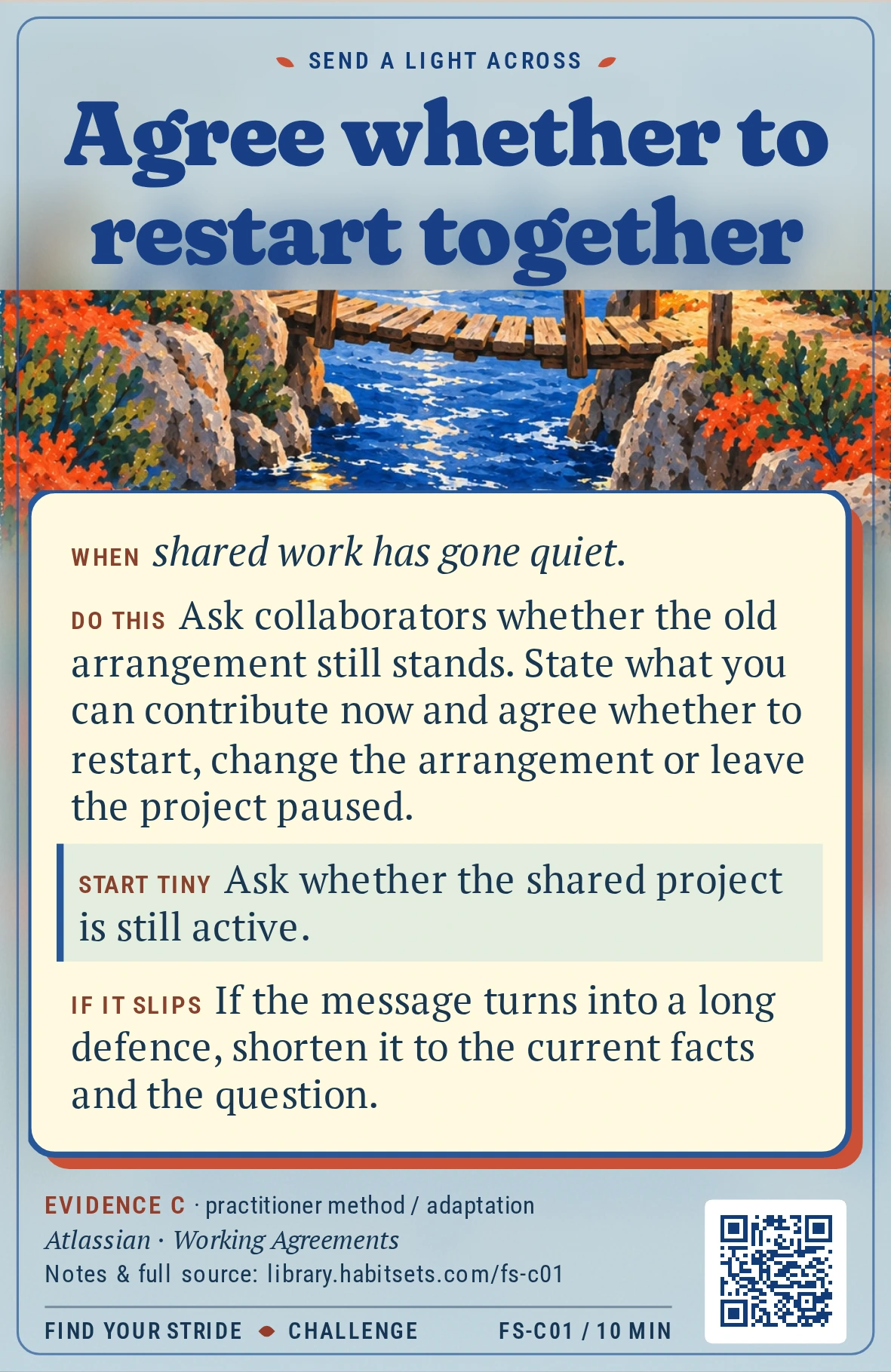
Front of FS-C01Back of card FS-C01: Agree whether to restart together. When: When shared work has gone quiet. Do this: Ask collaborators whether the old arrangement still stands. State what you can contribute now and agree whether to restart, change the arrangement or leave the project paused. Start tiny: Ask whether the shared project is still active.
50mm · FS-C01 · actual size
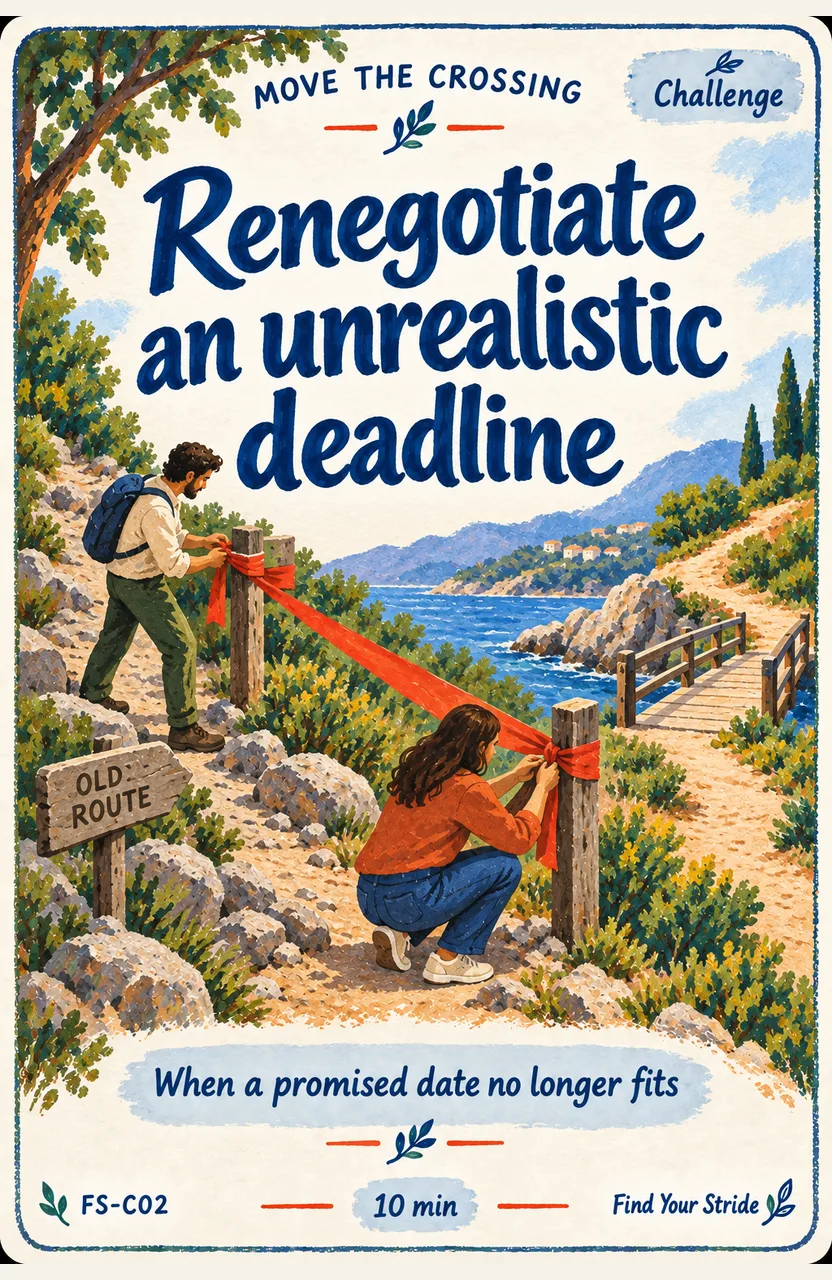
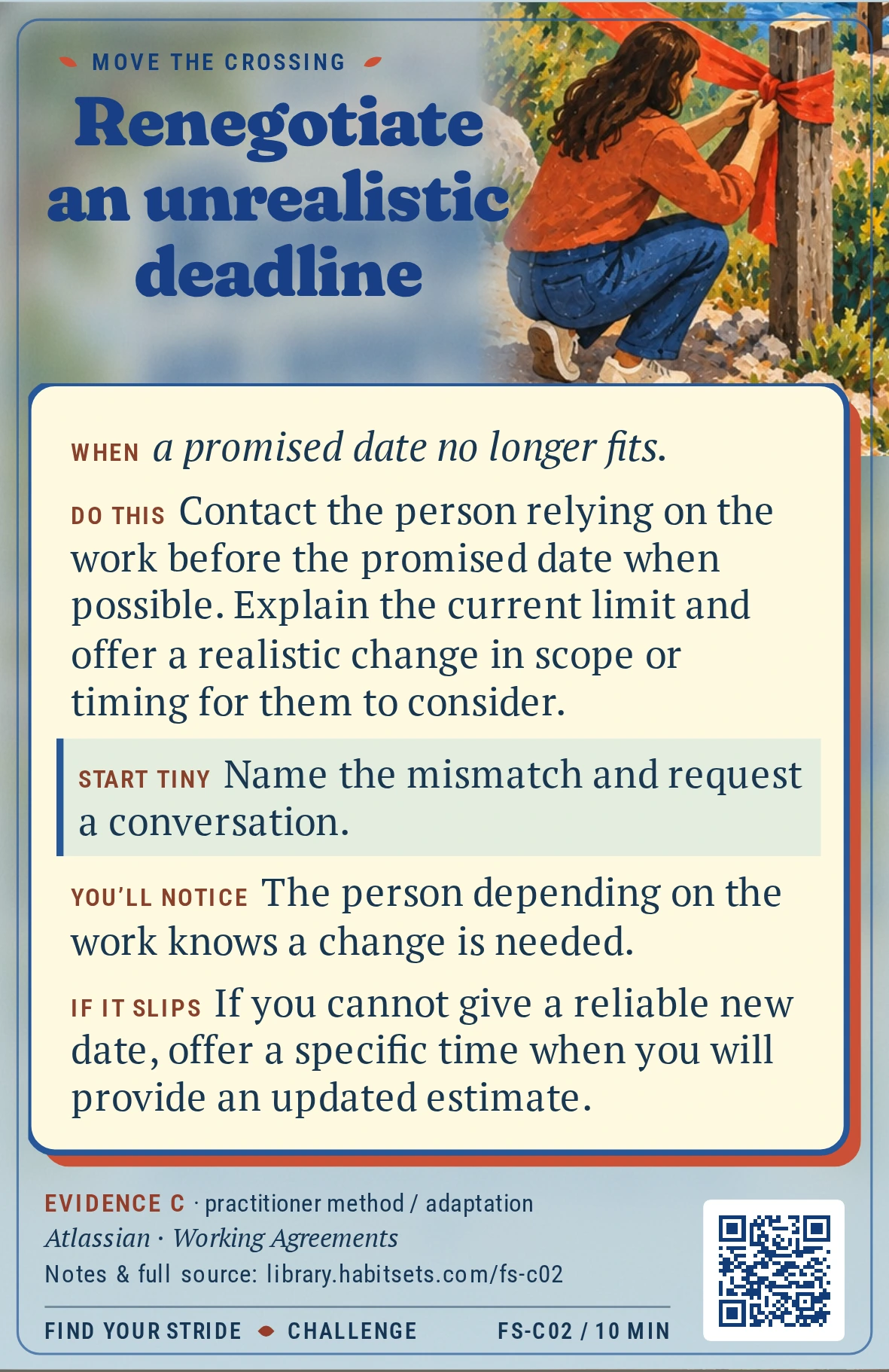
Front of FS-C02Back of card FS-C02: Renegotiate an unrealistic deadline. When: When a promised date no longer fits. Do this: Contact the person relying on the work before the promised date when possible. Explain the current limit and offer a realistic change in scope or timing for them to consider. Start tiny: Name the mismatch and request a conversation.
50mm · FS-C02 · actual size
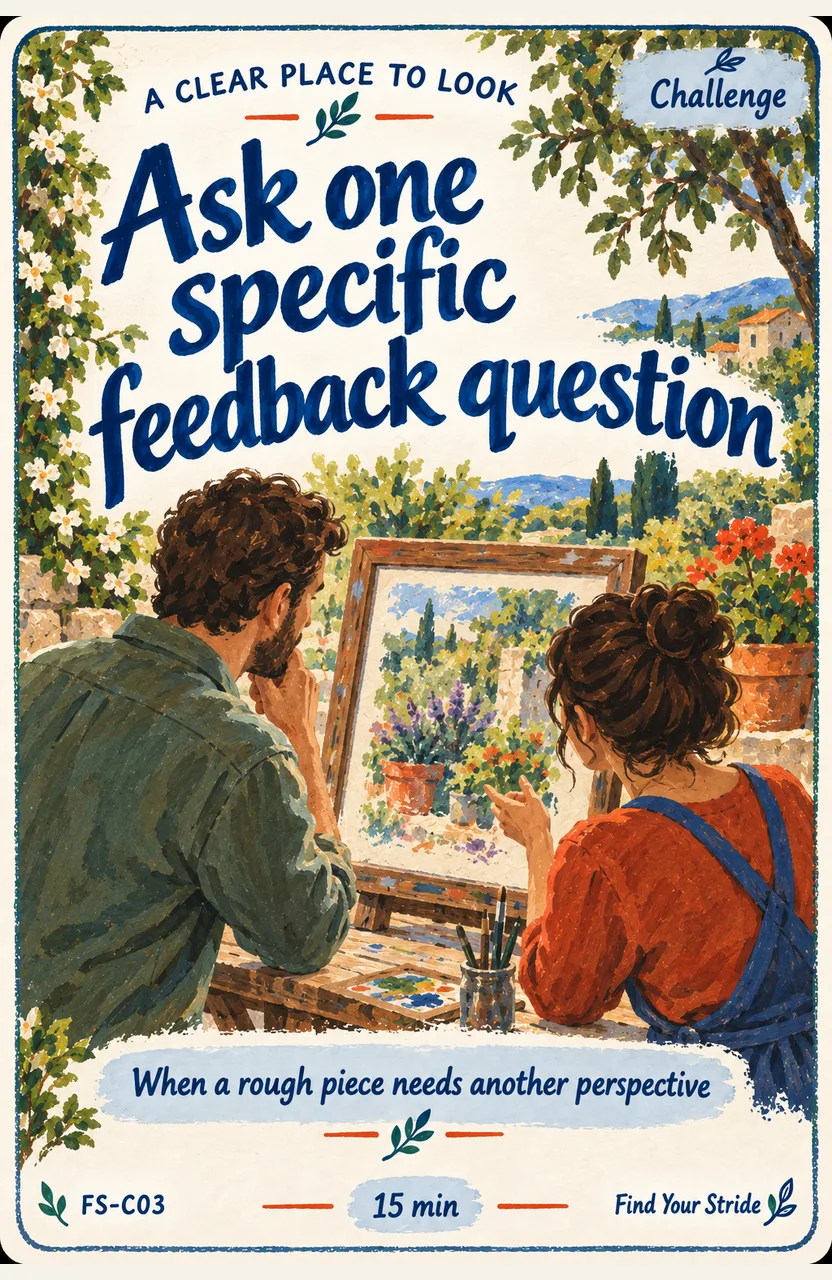
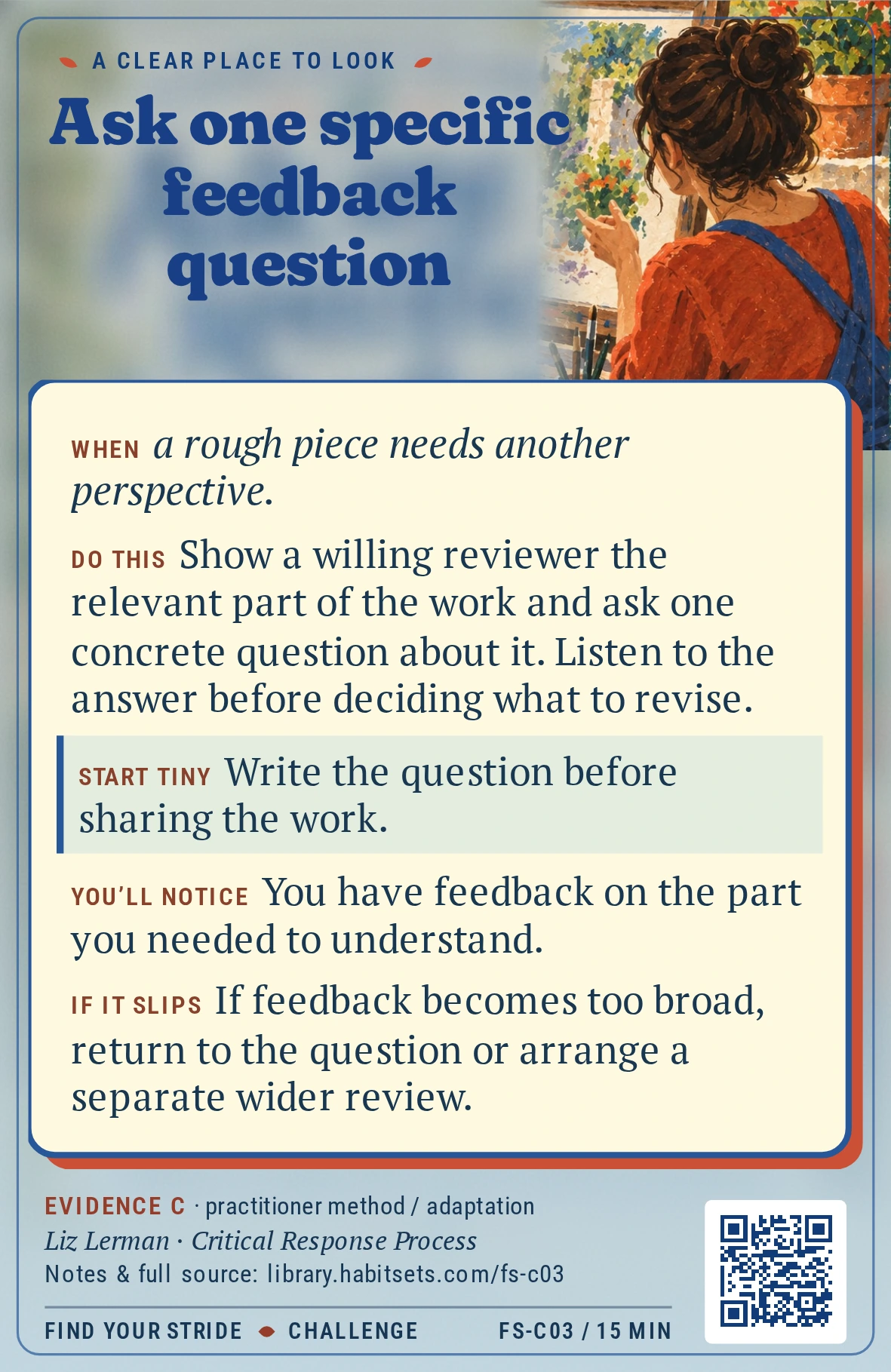
Front of FS-C03Back of card FS-C03: Ask one specific feedback question. When: When a rough piece needs another perspective. Do this: Show a willing reviewer the relevant part of the work and ask one concrete question about it. Listen to the answer before deciding what to revise. Start tiny: Write the question before sharing the work.
50mm · FS-C03 · actual size
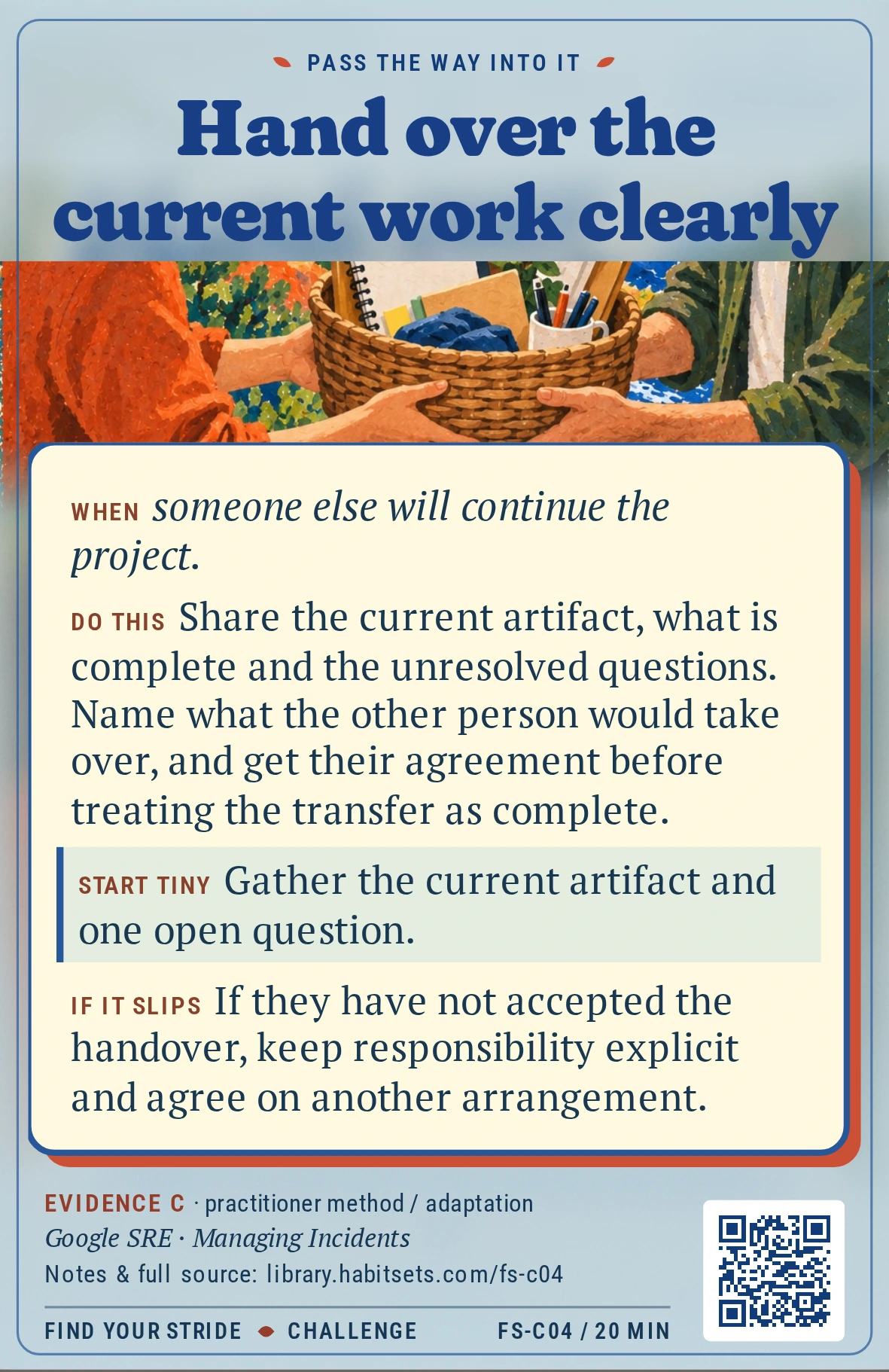
Front of FS-C04Back of card FS-C04: Hand over the current work clearly. When: When someone else will continue the project. Do this: Share the current artifact, what is complete and the unresolved questions. Name what the other person would take over, and get their agreement before treating the transfer as complete. Start tiny: Gather the current artifact and one open question.
50mm · FS-C04 · actual size
· Front & new back