Catch Low-Solar-Angle Sunset Light Outdoors
Whenwhen wrapping up the workday or before sunset
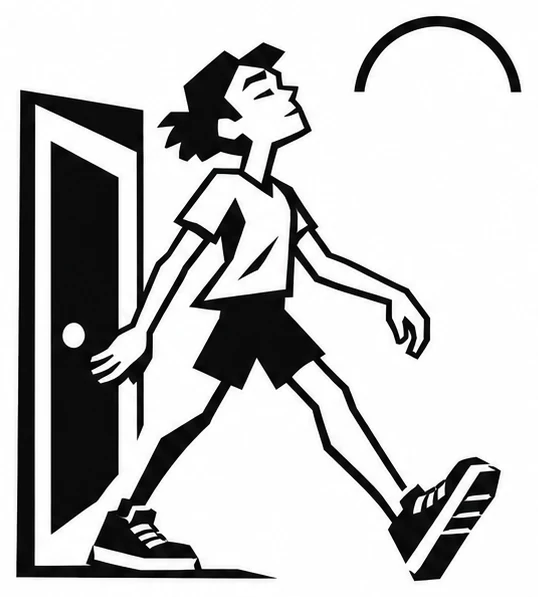
Step outside without sunglasses as the sun sits low in the sky for 5–15 minutes, letting your eyes scan forward toward the horizon while walking.
“View afternoon sunlight when the sun is at a low solar angle to reduce retinal sensitivity to artificial light at night.”
Andrew Huberman, Using Light to Optimize Health. Read the source ↗
Why it works
Huberman’s afternoon light nuance: the yellow-blue contrast of low-angle sunlight sends a second circadian cue signaling approaching night — which partially buffers retinal sensitivity against indoor evening light — while walking produces calming panoramic optic flow.
Start tiny
Walk outside for five minutes before dusk with your phone in your pocket.
What you’ll notice
Signals the close of the workday to both your eyes and nervous system.
When it slips
Already dark when work ends? Step out 30 minutes earlier before dusk drops, or catch afternoon sky during a late-afternoon break.
SafetyWatch street crossings and curbs; never stare directly at the sun.
Andrew Huberman, Using Light to Optimize Health, Huberman Lab Newsletter. Read the source ↗ (Afternoon/Evening Sunlight).
Foundation: The load-bearing practices you return to. Build the base and keep it in play.