Build Your Next Chapter · the new backs

Turn it over.
Everything you need to start.

Each back carries the cue, the action, the support you need and a tiny first step, at a size you can read on the fridge.

20 backs, made for the hand.
Designed at Postcard size, 100 × 154 mm. The reading pages keep the extra explanation and full citations.

Print the deck →

Tap a card to compare its front and new back. The comparison prints at 100 × 154mm; use 100% scale and check the 50mm line.
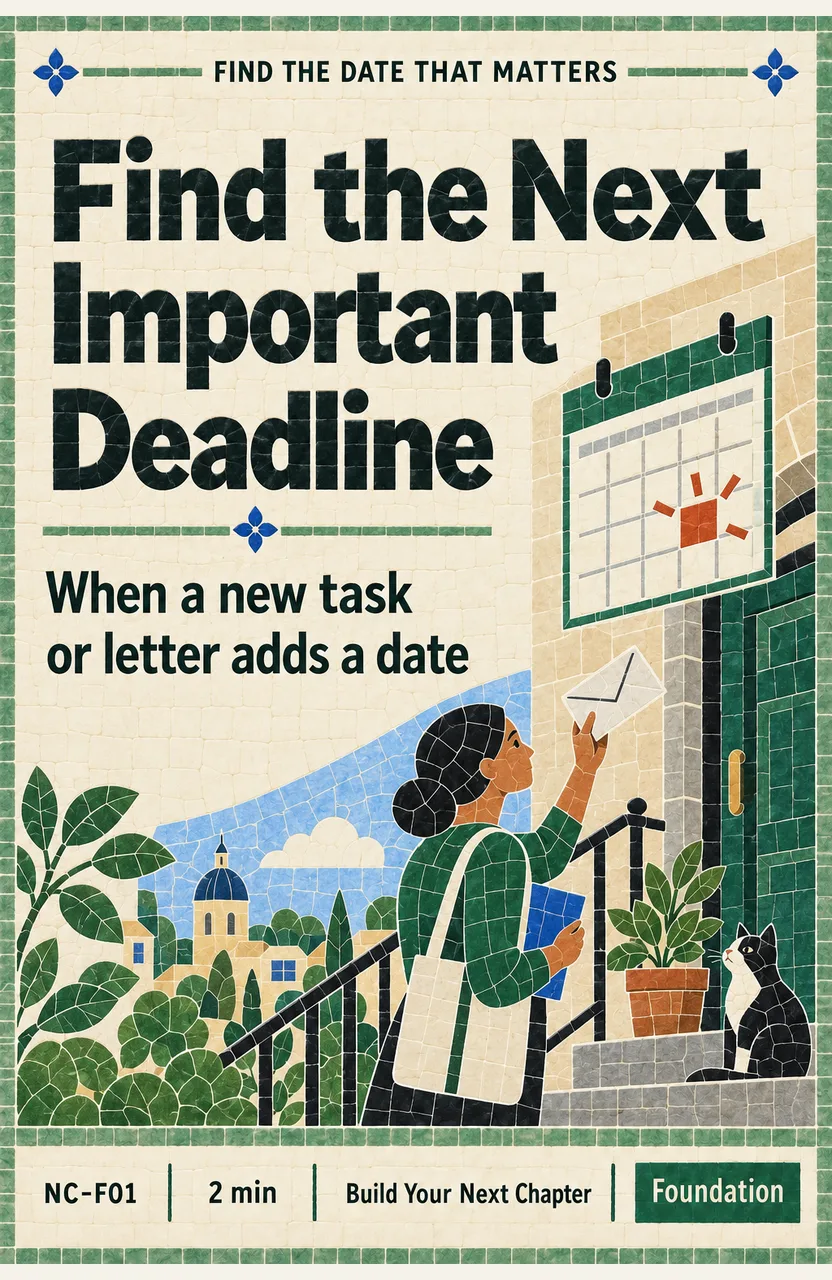
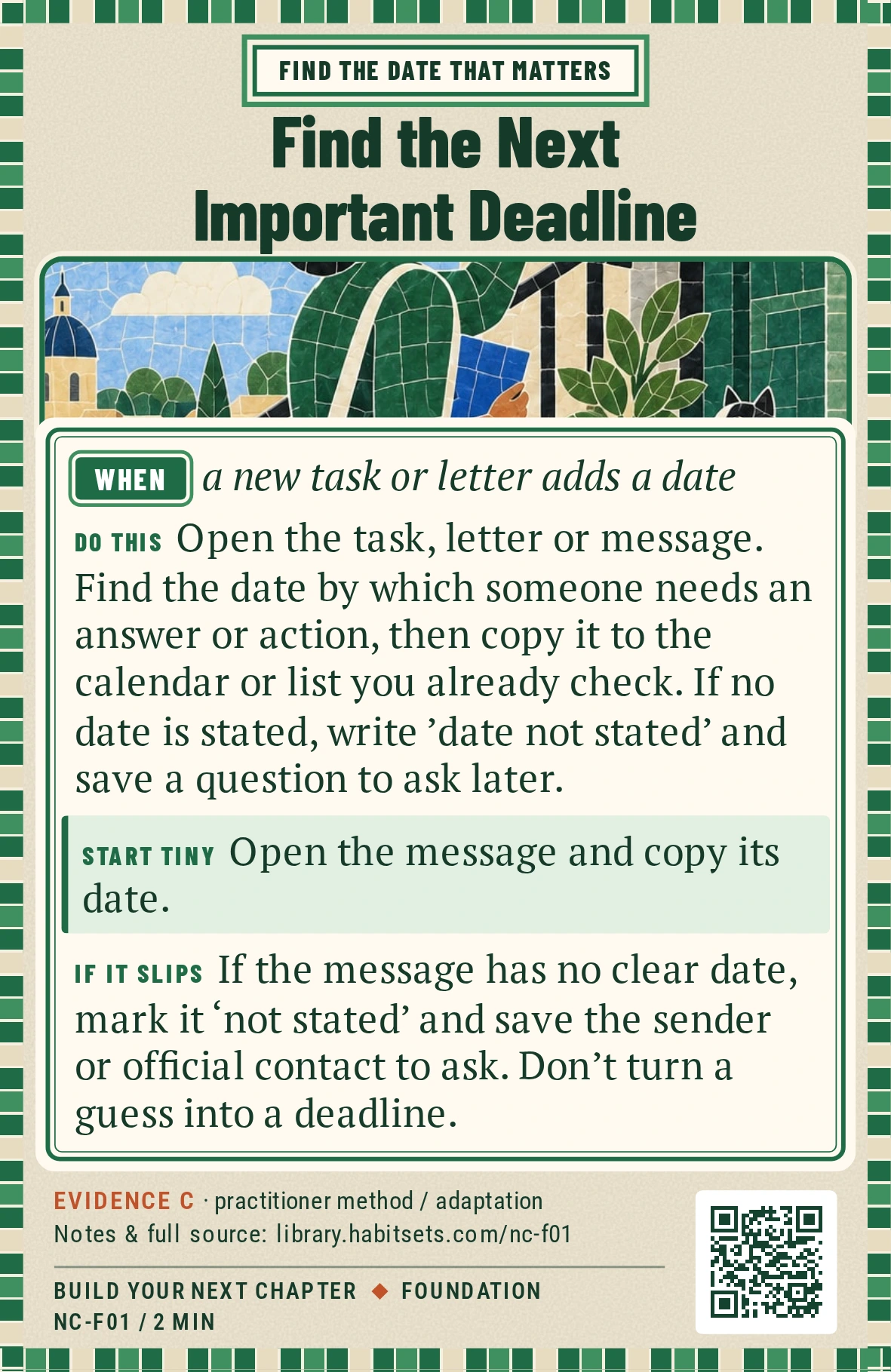
Front of NC-F01Back of card NC-F01: Find the Next Important Deadline. When: a new task or letter adds a date Do this: Open the task, letter or message. Find the date by which someone needs an answer or action, then copy it to the calendar or list you already check. If no date is stated, write 'date not stated' and save a question to ask later. Start tiny: Open the message and copy its date.
50mm · NC-F01 · actual size
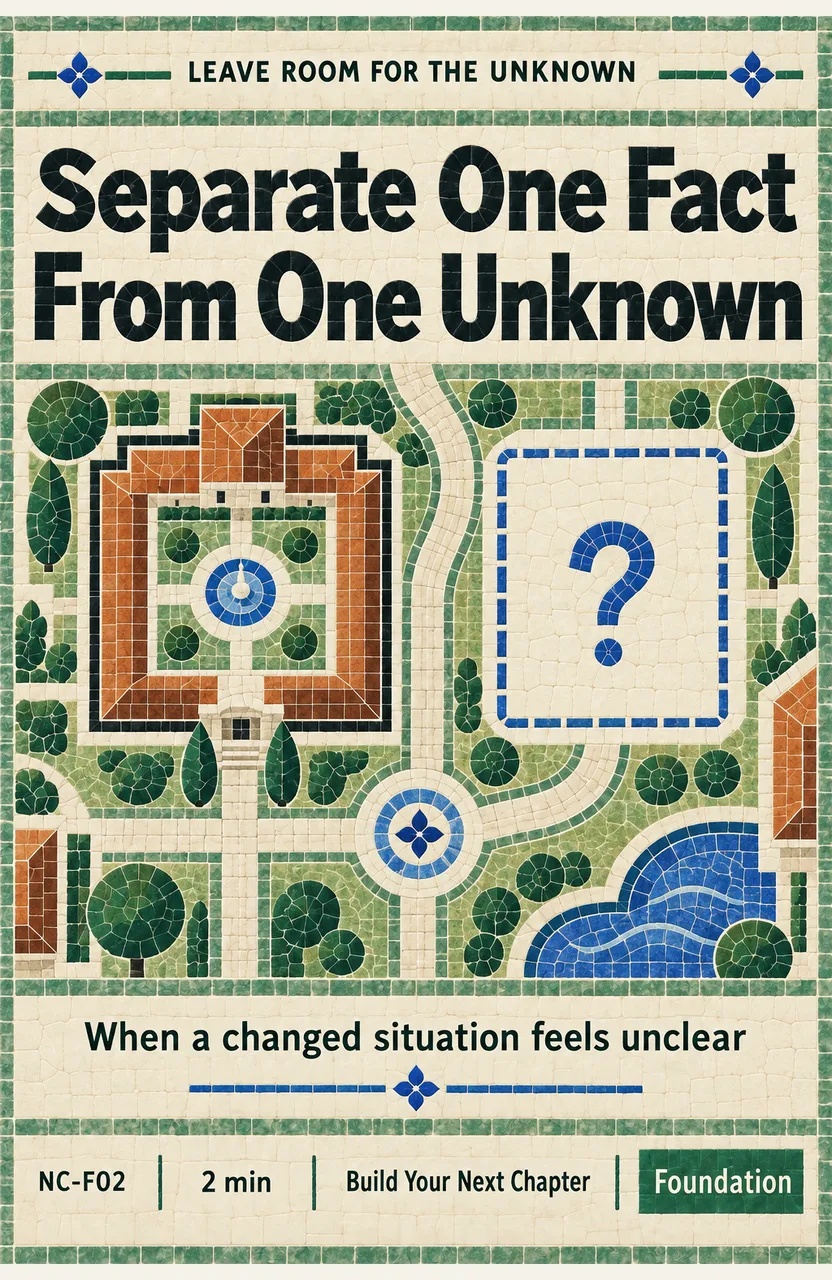
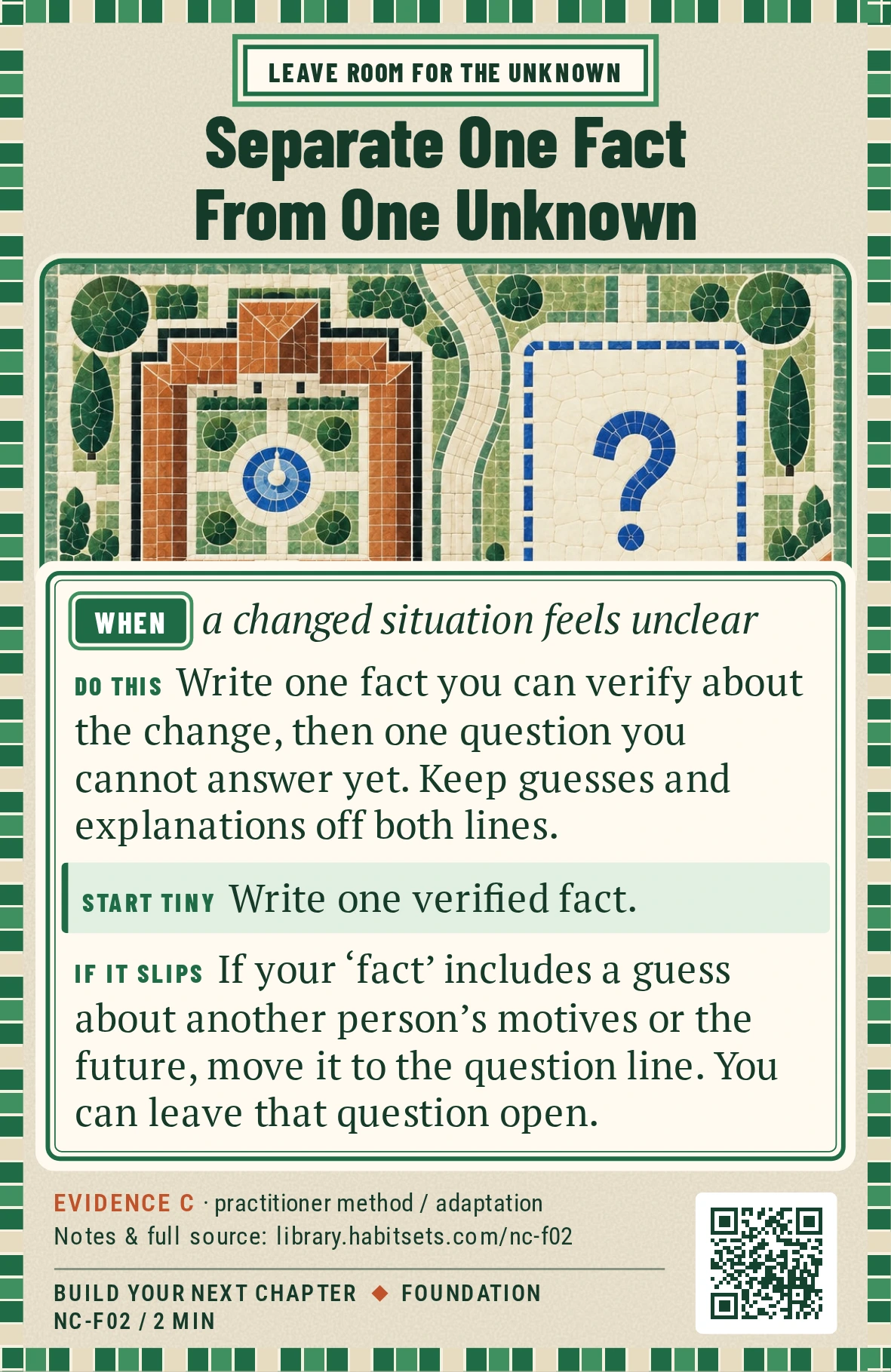
Front of NC-F02Back of card NC-F02: Separate One Fact From One Unknown. When: a changed situation feels unclear Do this: Write one fact you can verify about the change, then one question you cannot answer yet. Keep guesses and explanations off both lines. Start tiny: Write one verified fact.
50mm · NC-F02 · actual size
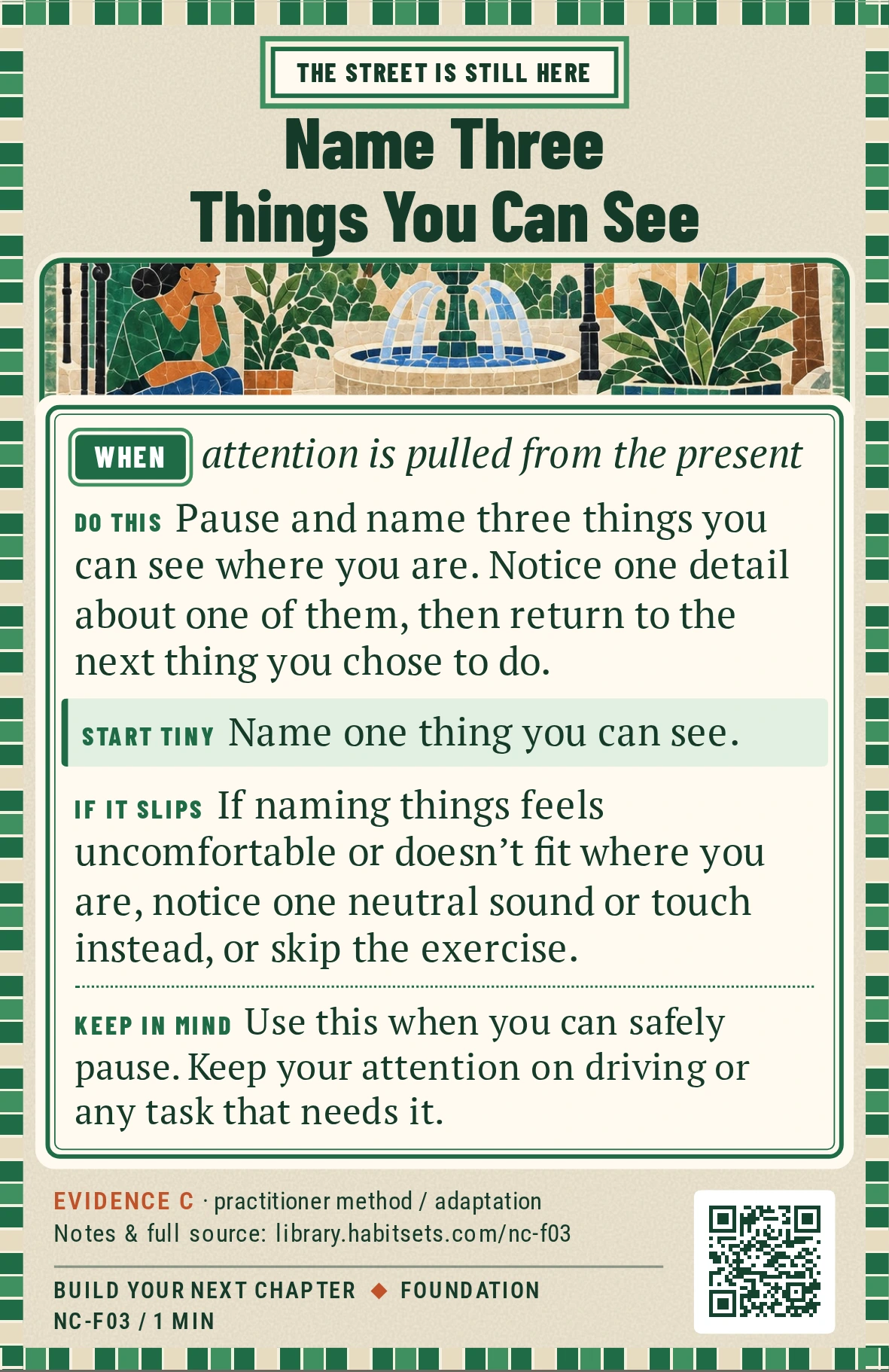
Front of NC-F03Back of card NC-F03: Name Three Things You Can See. When: attention is pulled from the present Do this: Pause and name three things you can see where you are. Notice one detail about one of them, then return to the next thing you chose to do. Start tiny: Name one thing you can see. Keep in mind: Use this when you can safely pause. Keep your attention on driving or any task that needs it.
50mm · NC-F03 · actual size
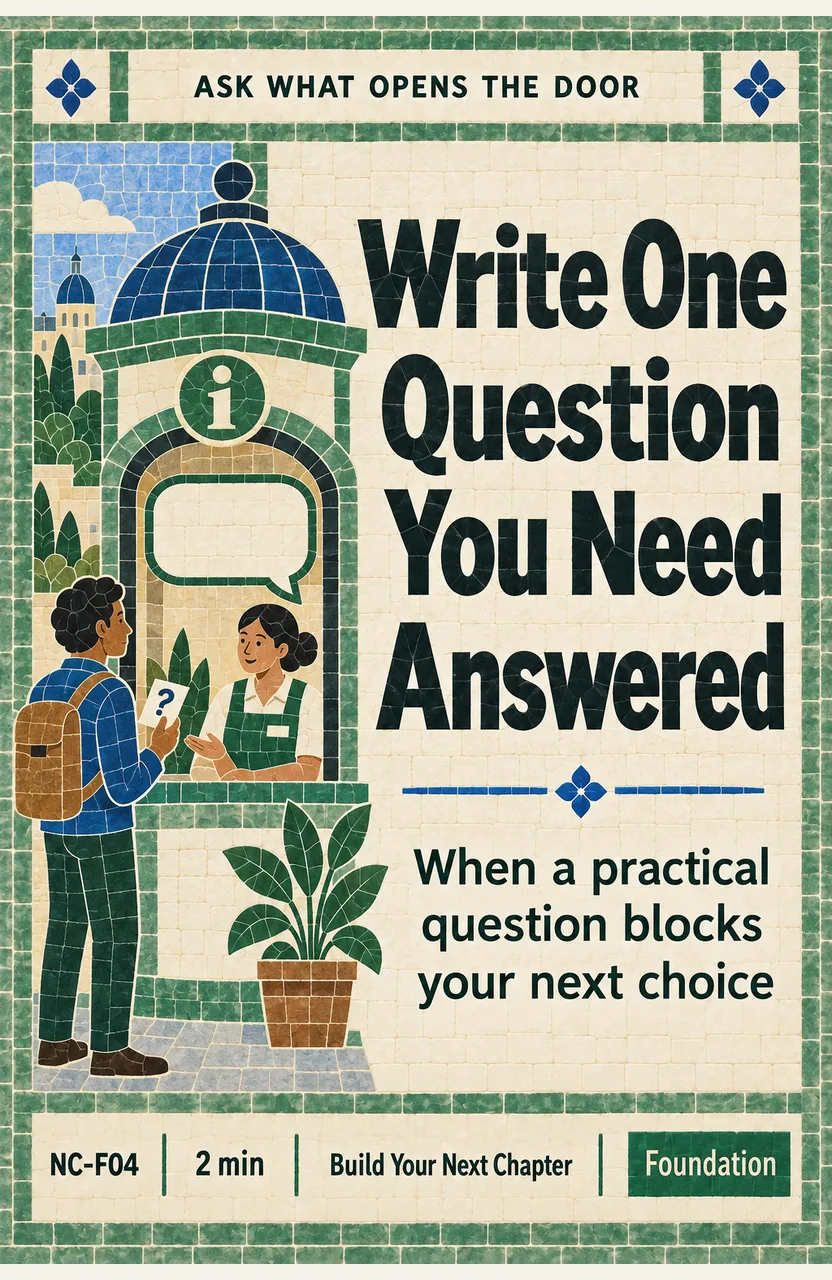
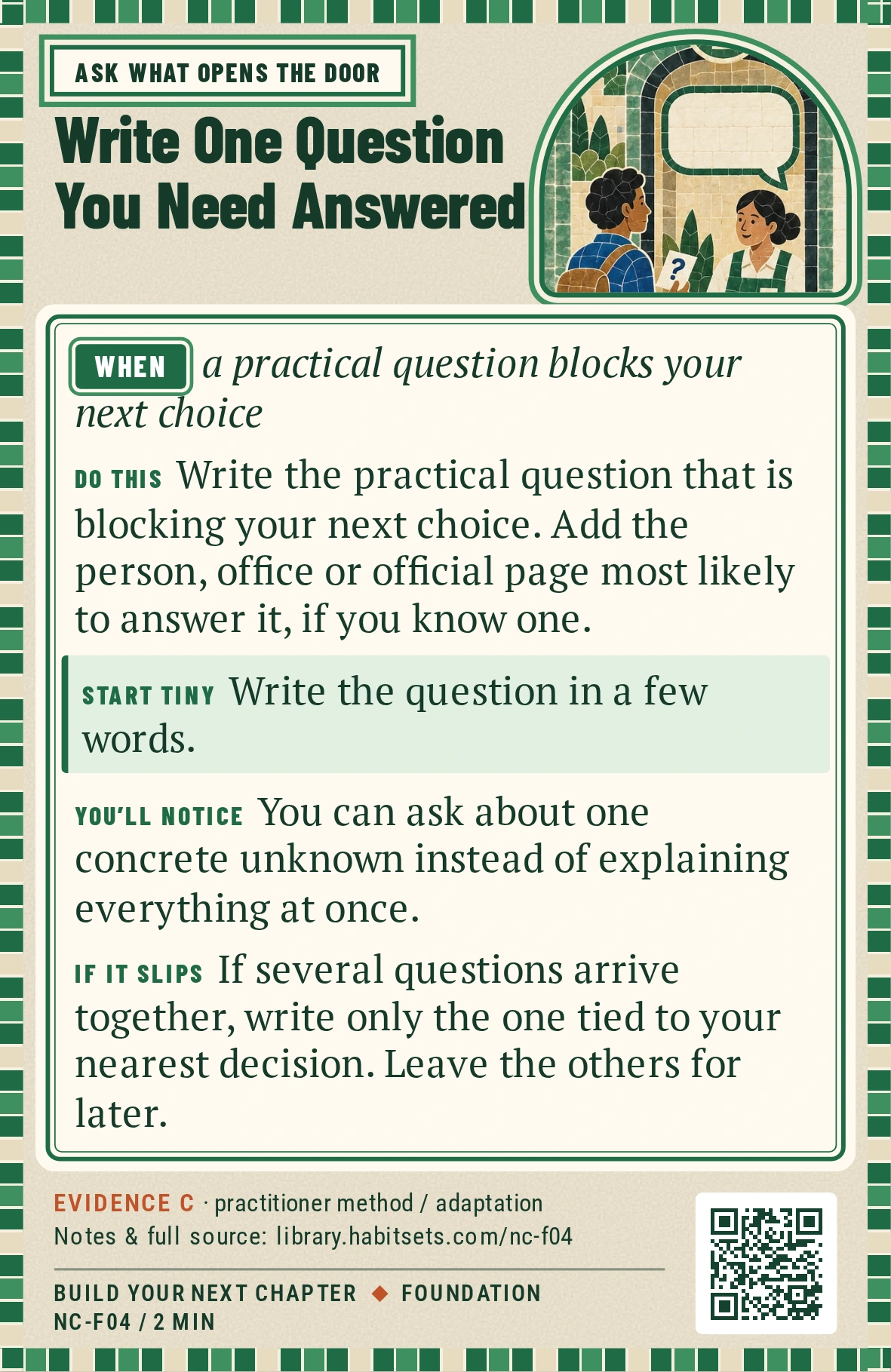
Front of NC-F04Back of card NC-F04: Write One Question You Need Answered. When: a practical question blocks your next choice Do this: Write the practical question that is blocking your next choice. Add the person, office or official page most likely to answer it, if you know one. Start tiny: Write the question in a few words.
50mm · NC-F04 · actual size
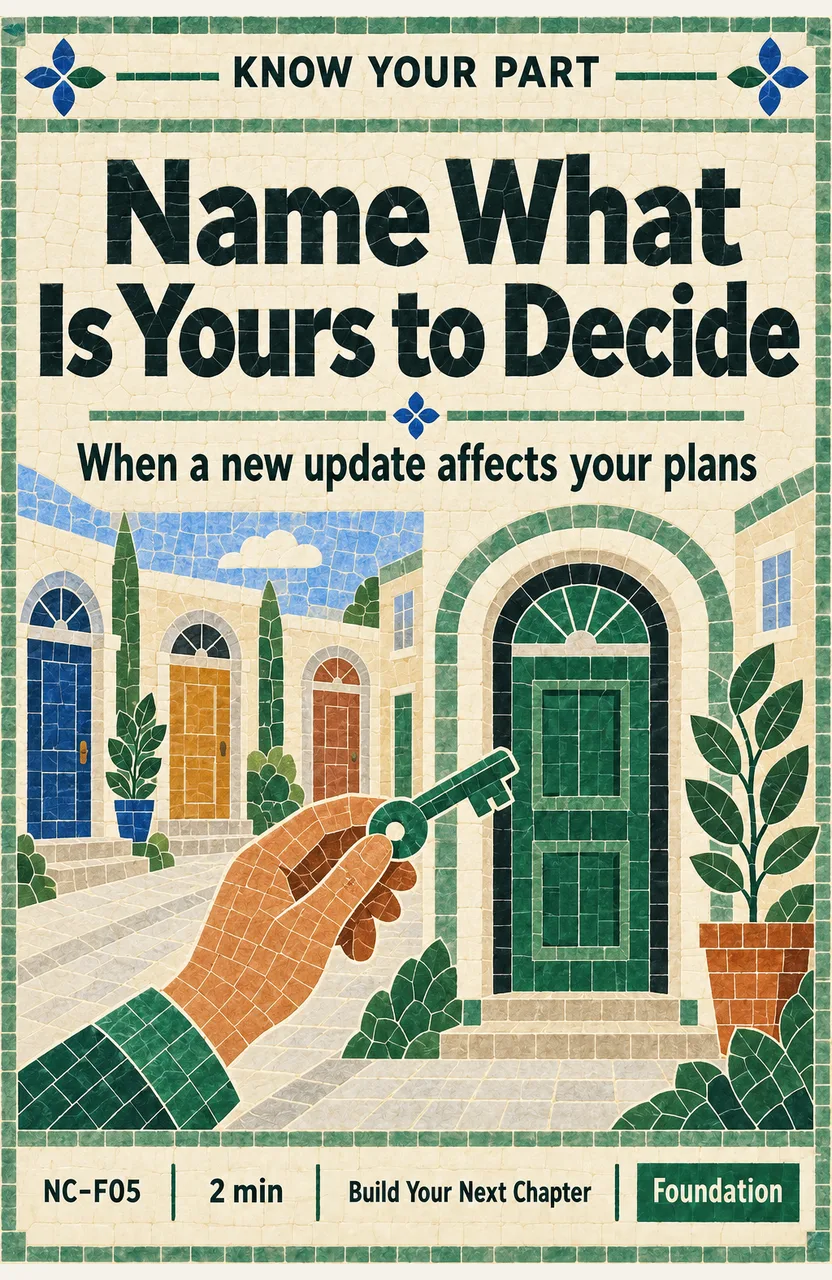
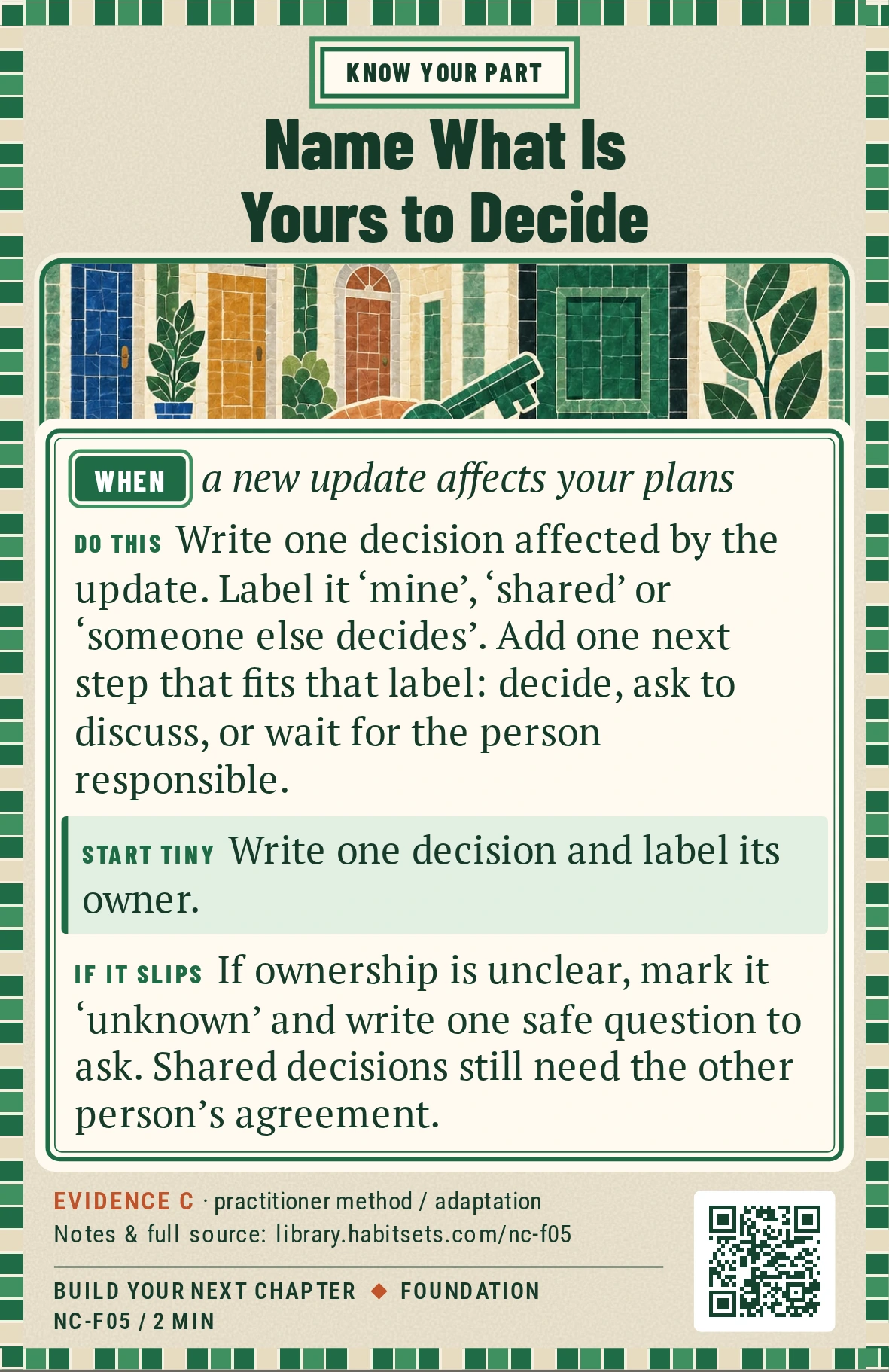
Front of NC-F05Back of card NC-F05: Name What Is Yours to Decide. When: a new update affects your plans Do this: Write one decision affected by the update. Label it ‘mine’, ‘shared’ or ‘someone else decides’. Add one next step that fits that label: decide, ask to discuss, or wait for the person responsible. Start tiny: Write one decision and label its owner.
50mm · NC-F05 · actual size
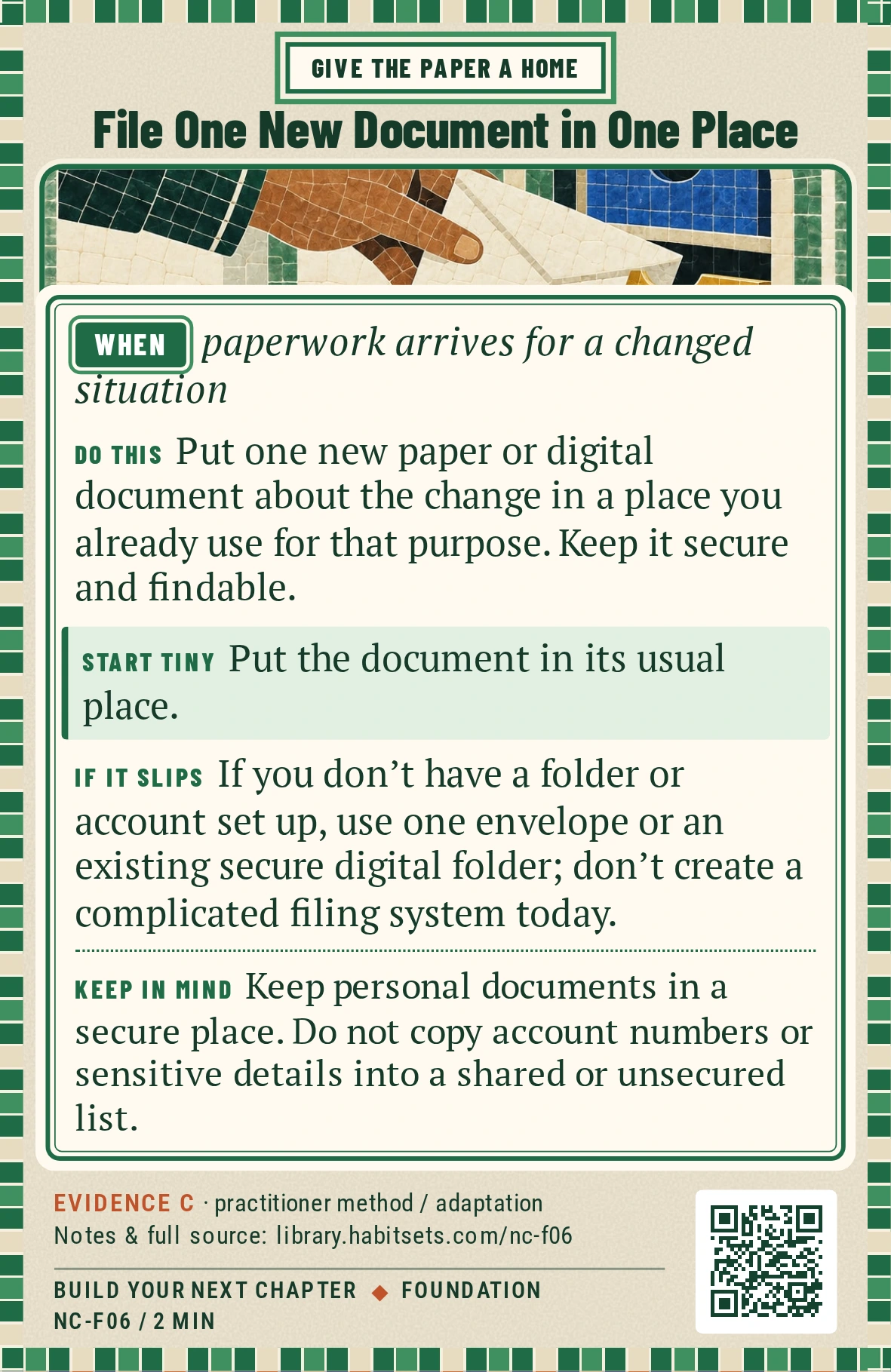
Front of NC-F06Back of card NC-F06: File One New Document in One Place. When: paperwork arrives for a changed situation Do this: Put one new paper or digital document about the change in a place you already use for that purpose. Keep it secure and findable. Start tiny: Put the document in its usual place. Keep in mind: Keep personal documents in a secure place. Do not copy account numbers or sensitive details into a shared or unsecured list.
50mm · NC-F06 · actual size
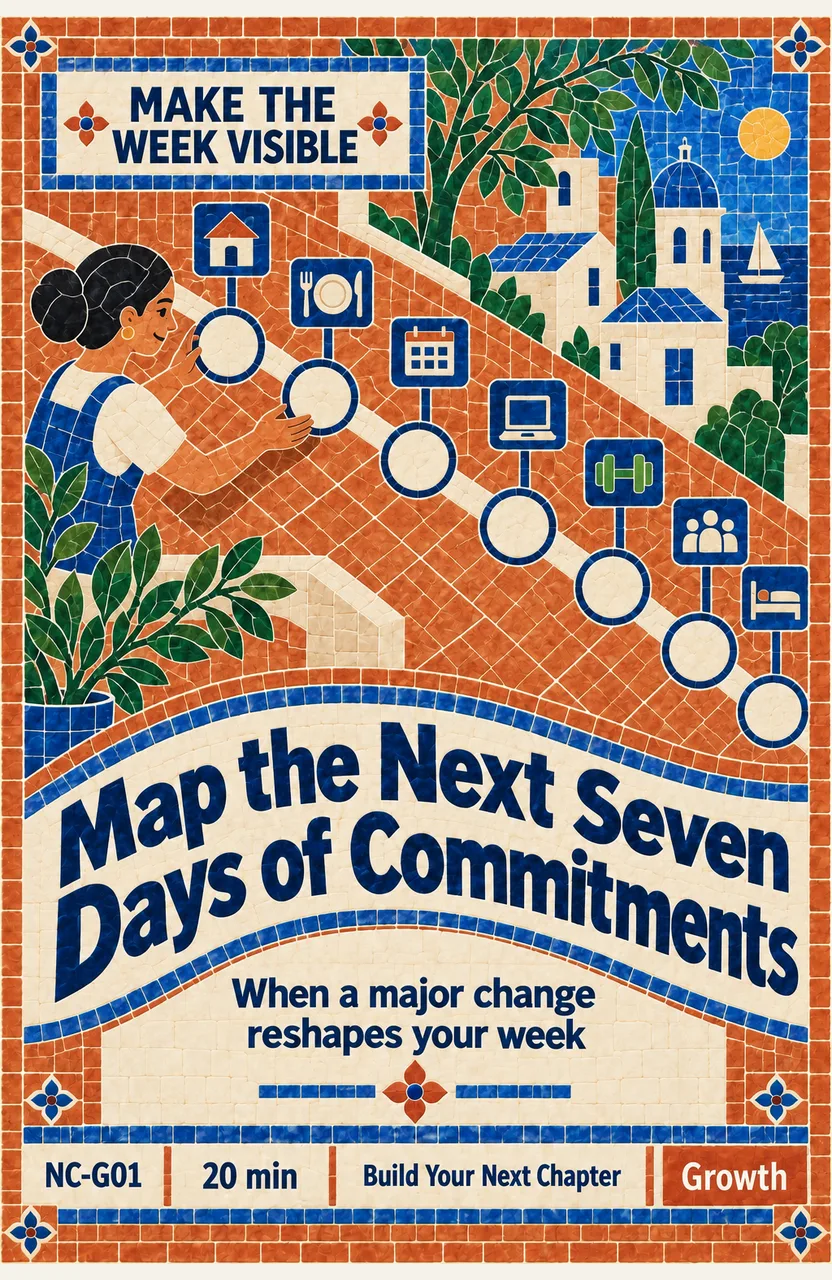
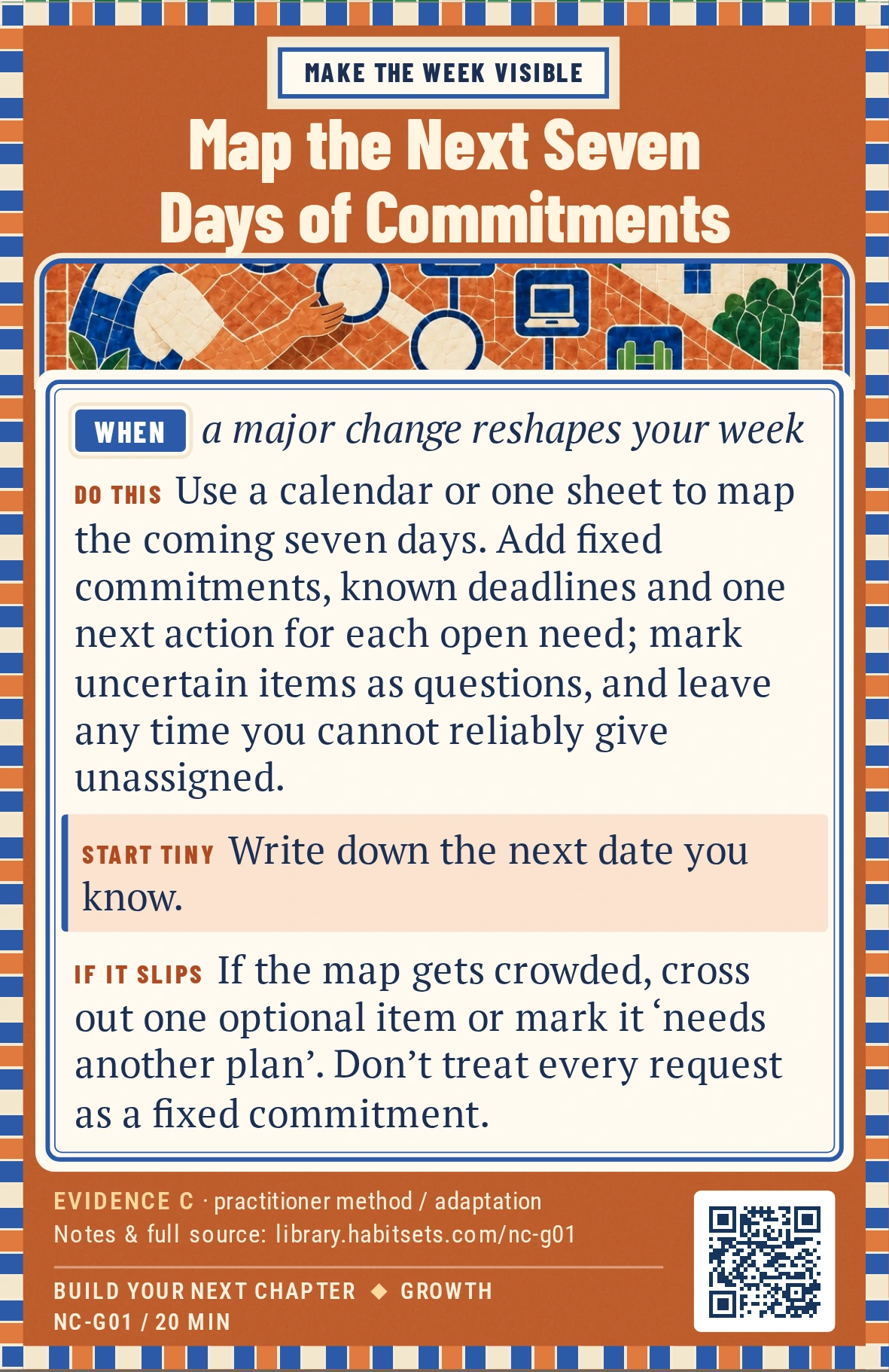
Front of NC-G01Back of card NC-G01: Map the Next Seven Days of Commitments. When: a major change reshapes your week Do this: Use a calendar or one sheet to map the coming seven days. Add fixed commitments, known deadlines and one next action for each open need; mark uncertain items as questions, and leave any time you cannot reliably give unassigned. Start tiny: Write down the next date you know.
50mm · NC-G01 · actual size
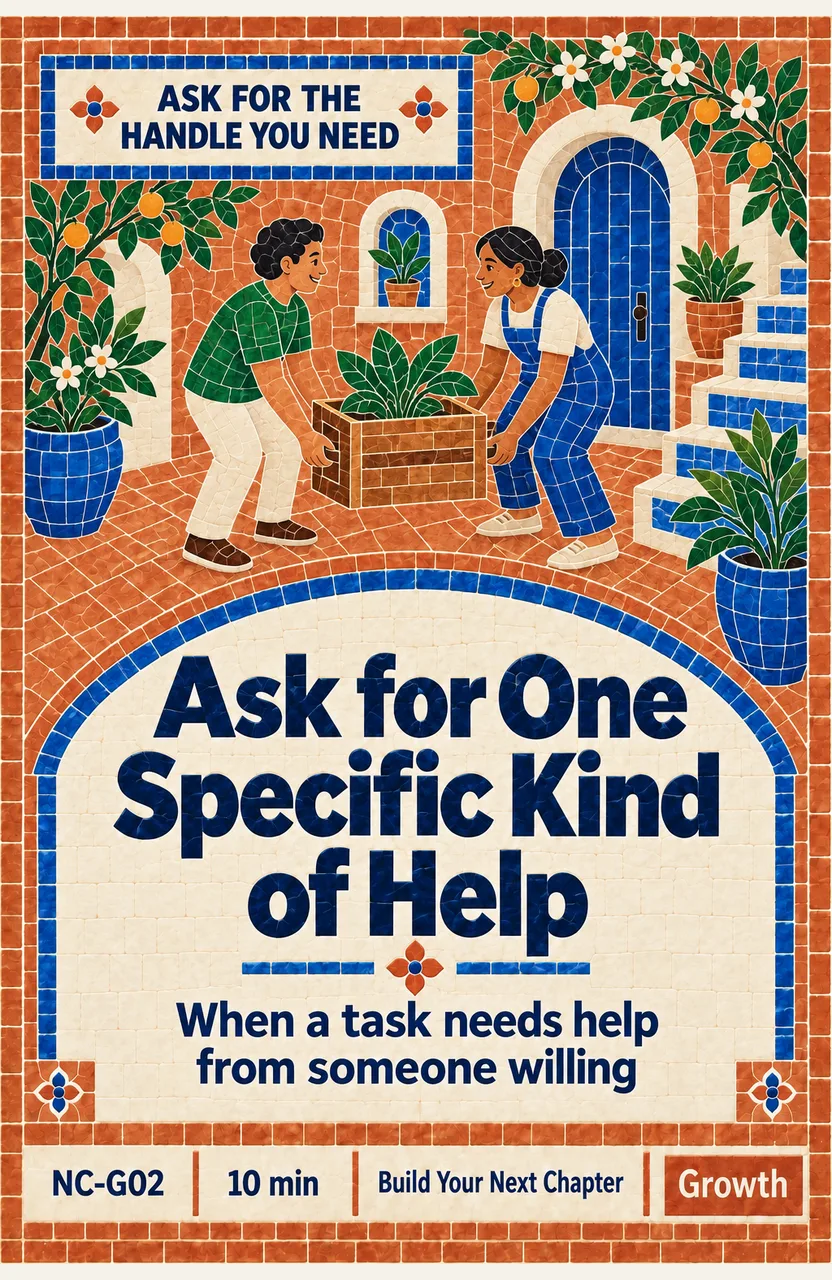
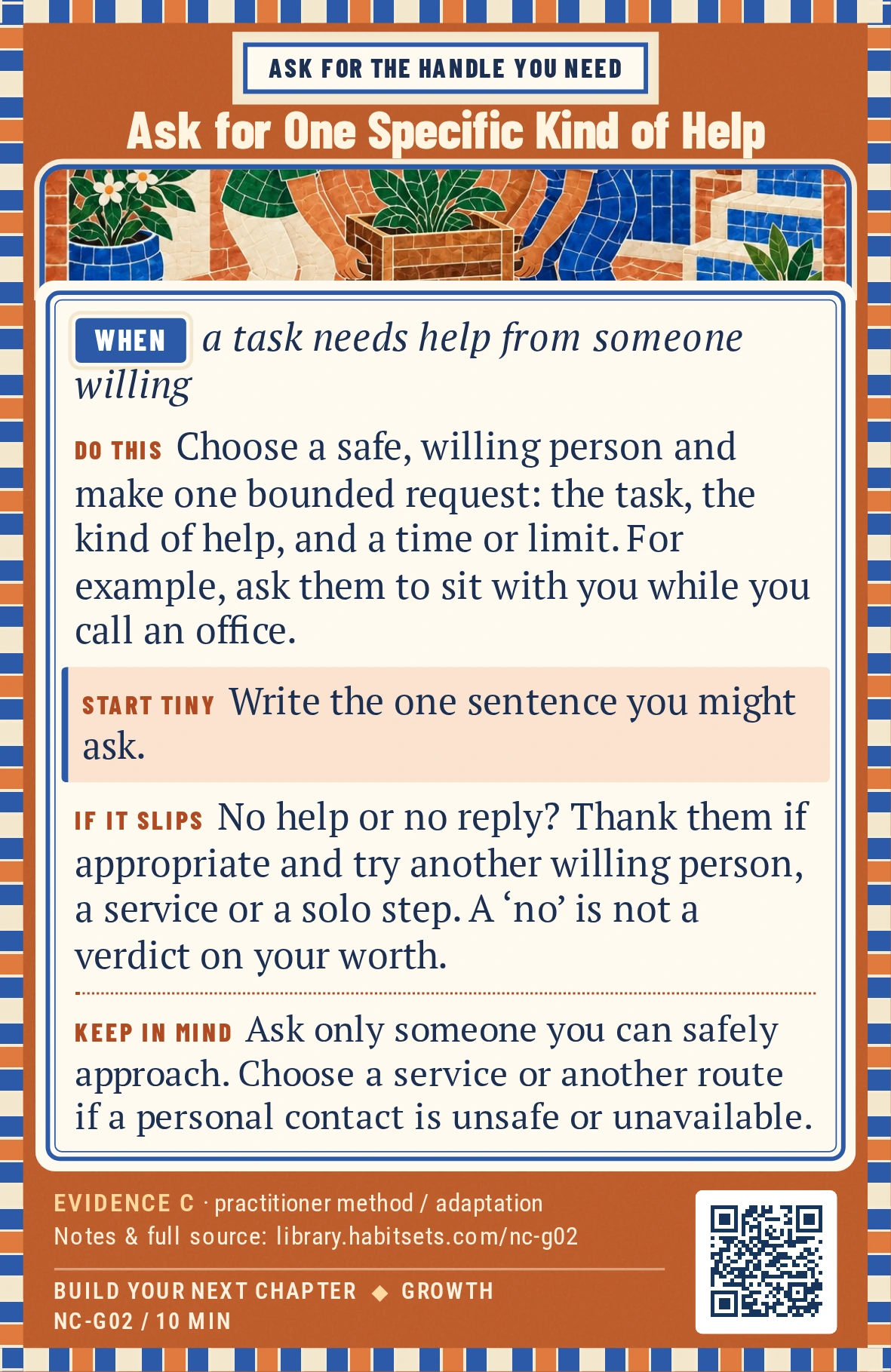
Front of NC-G02Back of card NC-G02: Ask for One Specific Kind of Help. When: a task needs help from someone willing Do this: Choose a safe, willing person and make one bounded request: name the task, the kind of help and a time or limit. For example, ask someone to sit with you while you call an office or listen to one practice interview answer. Start tiny: Write the one sentence you might ask. Keep in mind: Ask only someone you can safely approach. Choose a service or another route if a personal contact is unsafe or unavailable.
50mm · NC-G02 · actual size
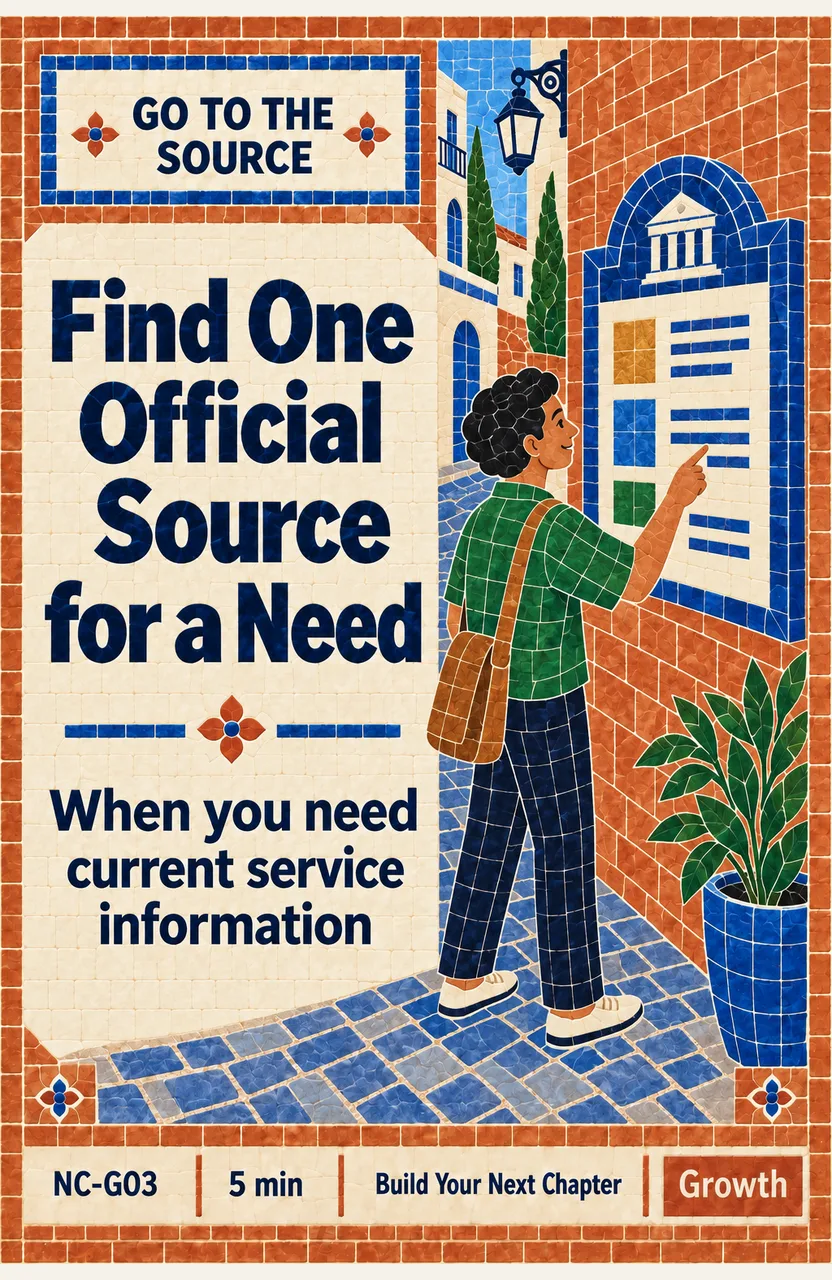
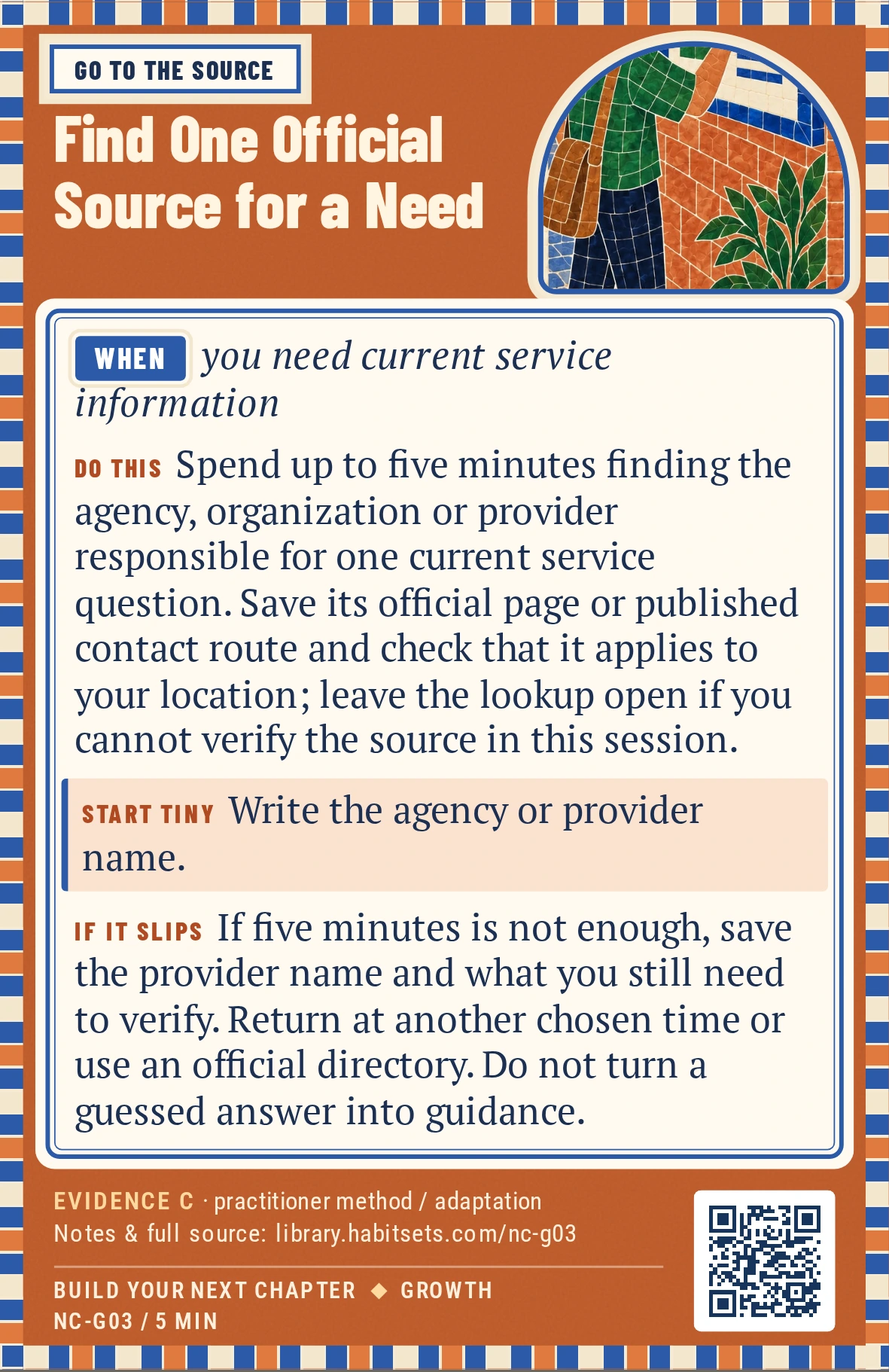
Front of NC-G03Back of card NC-G03: Find One Official Source for a Need. When: you need current service information Do this: Spend up to five minutes finding the agency, organization or provider responsible for one current service question. Save its official page or published contact route and check that it applies to your location; leave the lookup open if you cannot verify the source in this session. Start tiny: Write the agency or provider name.
50mm · NC-G03 · actual size
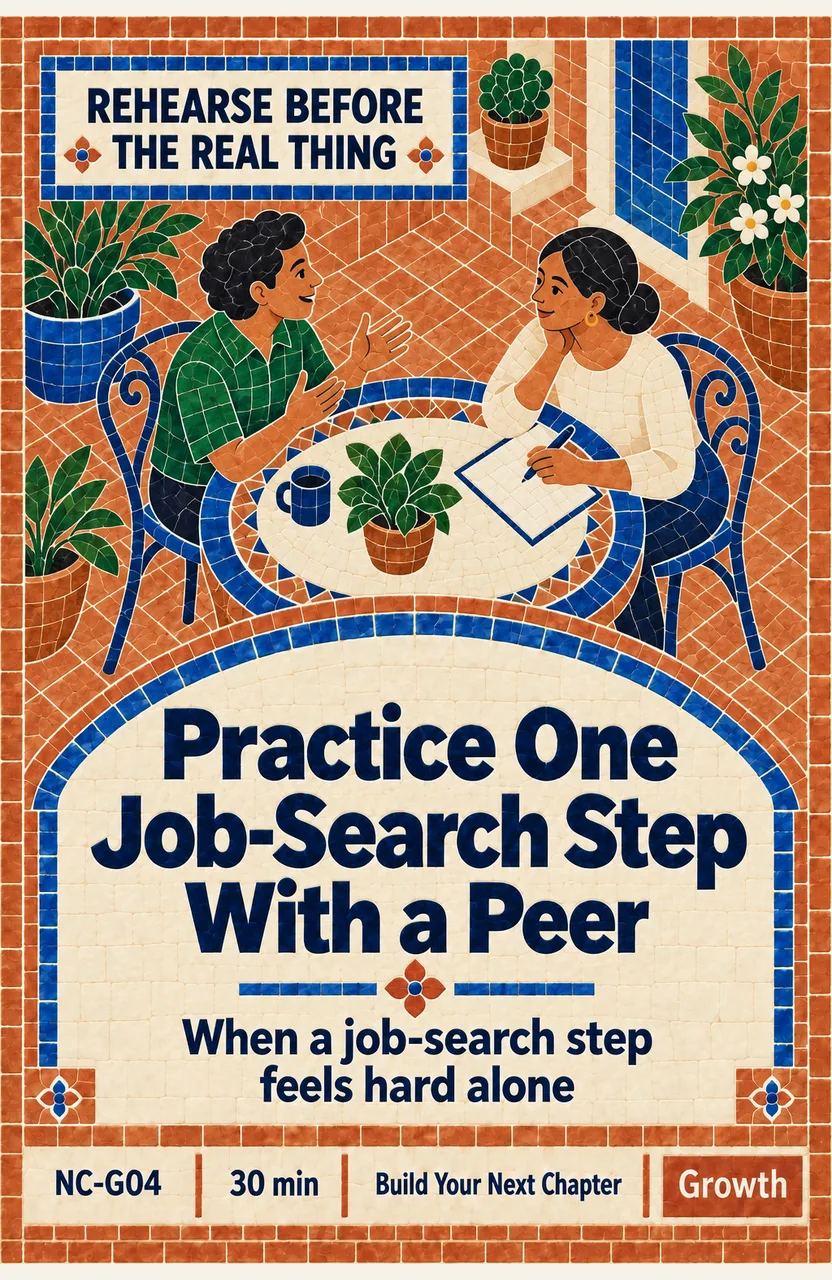
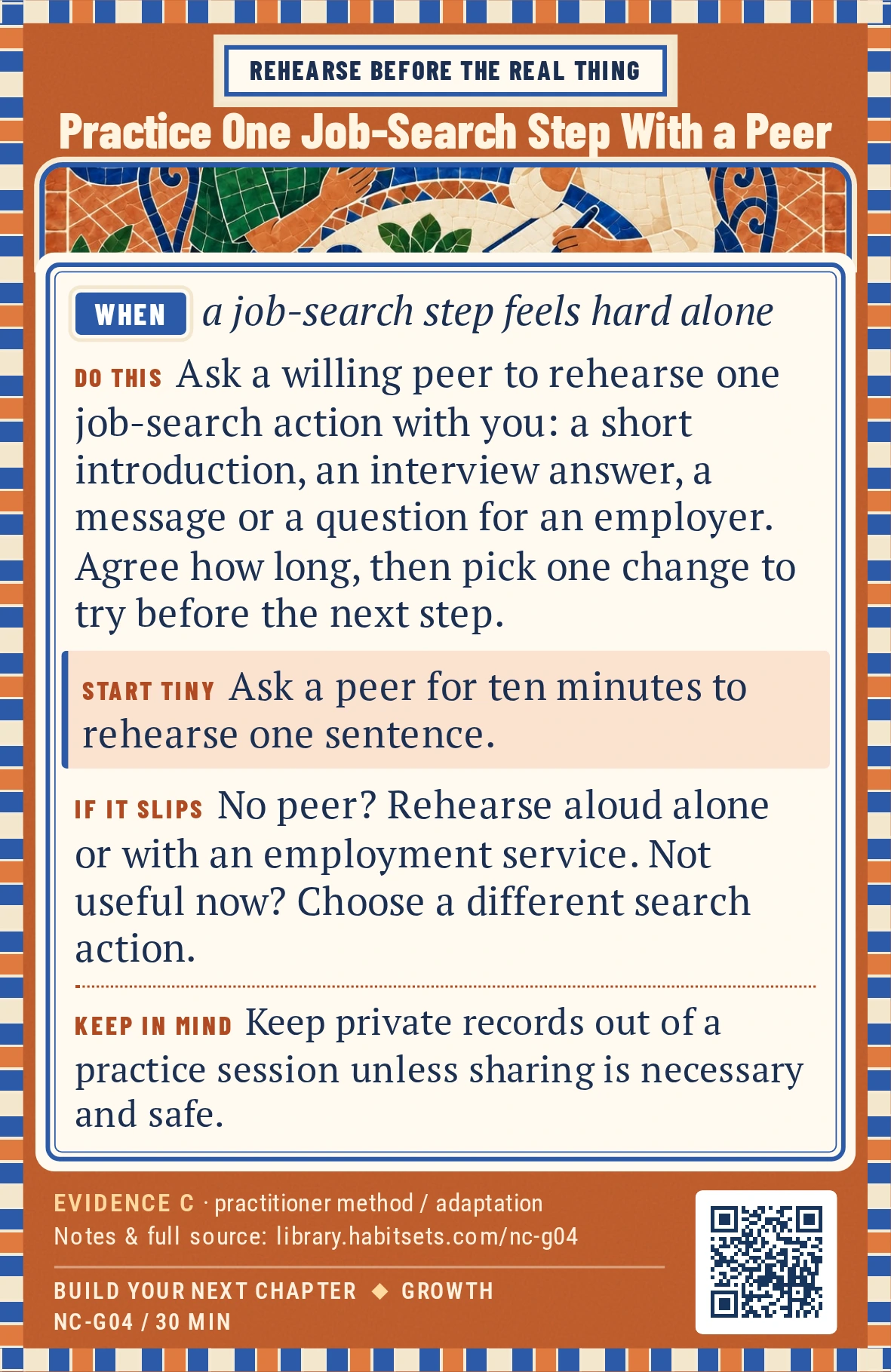
Front of NC-G04Back of card NC-G04: Practice One Job-Search Step With a Peer. When: a job-search step feels hard alone Do this: Ask a willing peer to rehearse one job-search action with you: a short introduction, one interview answer, a message to a contact or a question for an employer. Agree on the duration, then choose one change to try before the next step. Start tiny: Ask a peer for ten minutes to rehearse one sentence. Keep in mind: Keep private records out of a practice session unless sharing is necessary and safe.
50mm · NC-G04 · actual size
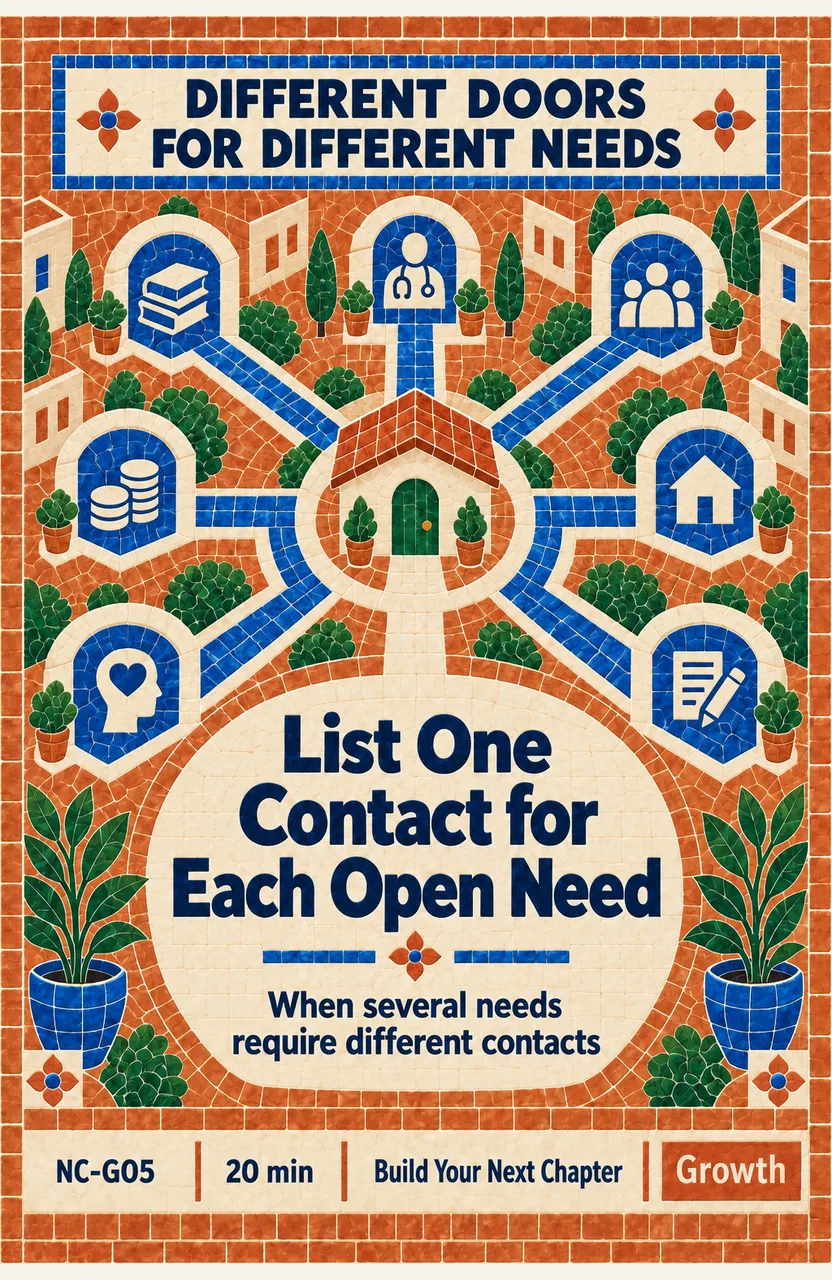
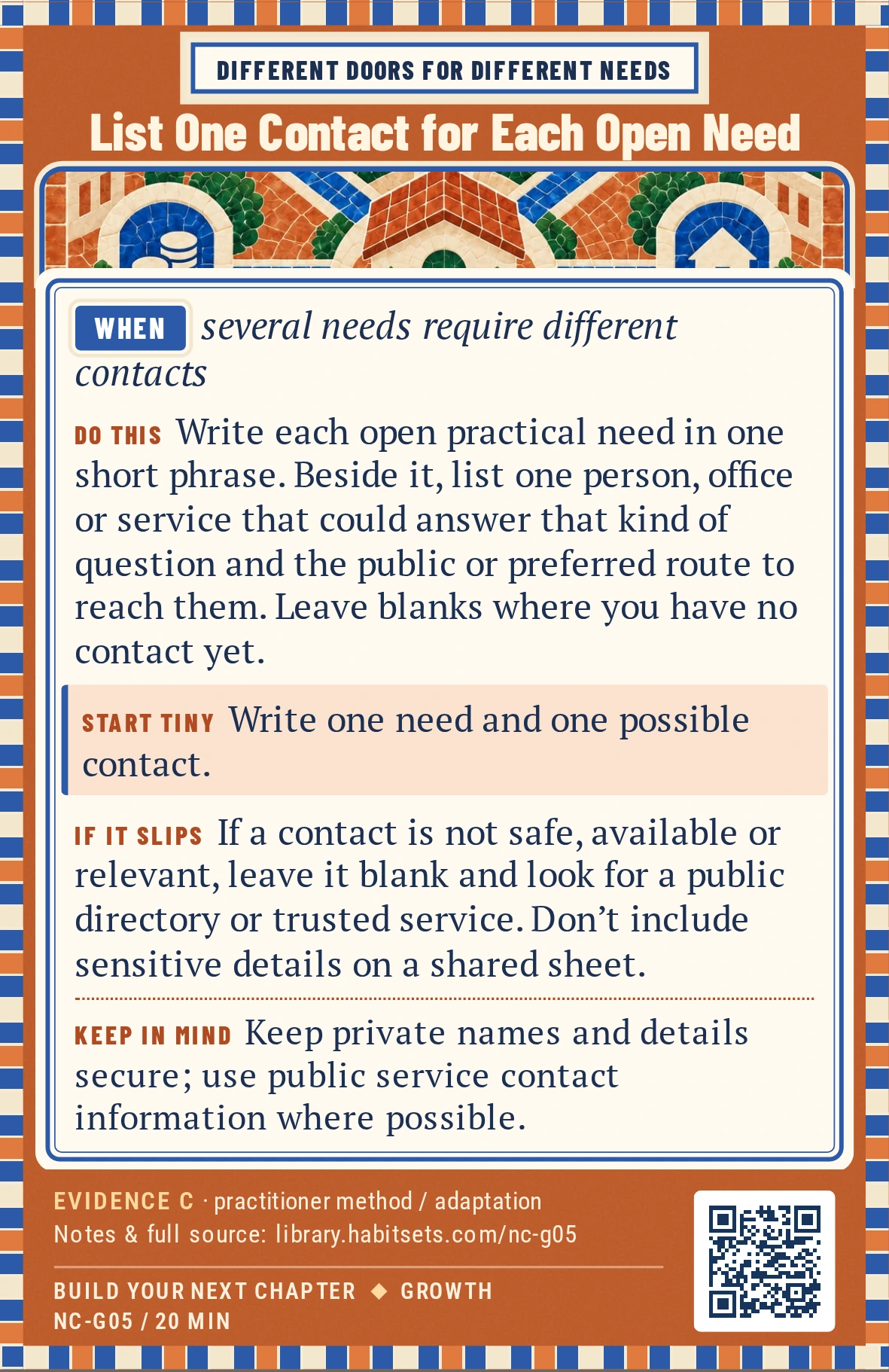
Front of NC-G05Back of card NC-G05: List One Contact for Each Open Need. When: several needs require different contacts Do this: Write each open practical need in one short phrase. Beside it, list one person, office or service that could answer that kind of question and the public or preferred route to reach them. Leave blanks where you have no contact yet. Start tiny: Write one need and one possible contact. Keep in mind: Keep private names and details secure; use public service contact information where possible.
50mm · NC-G05 · actual size
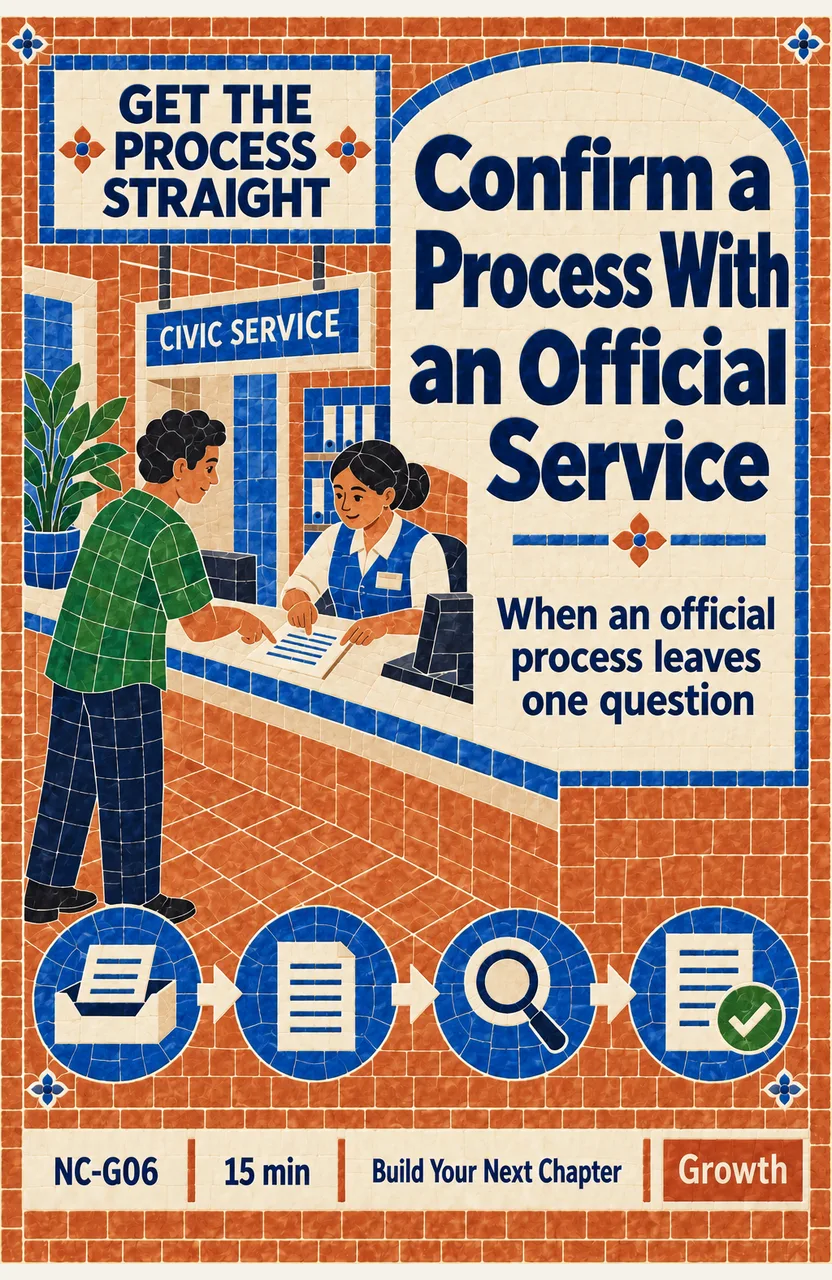
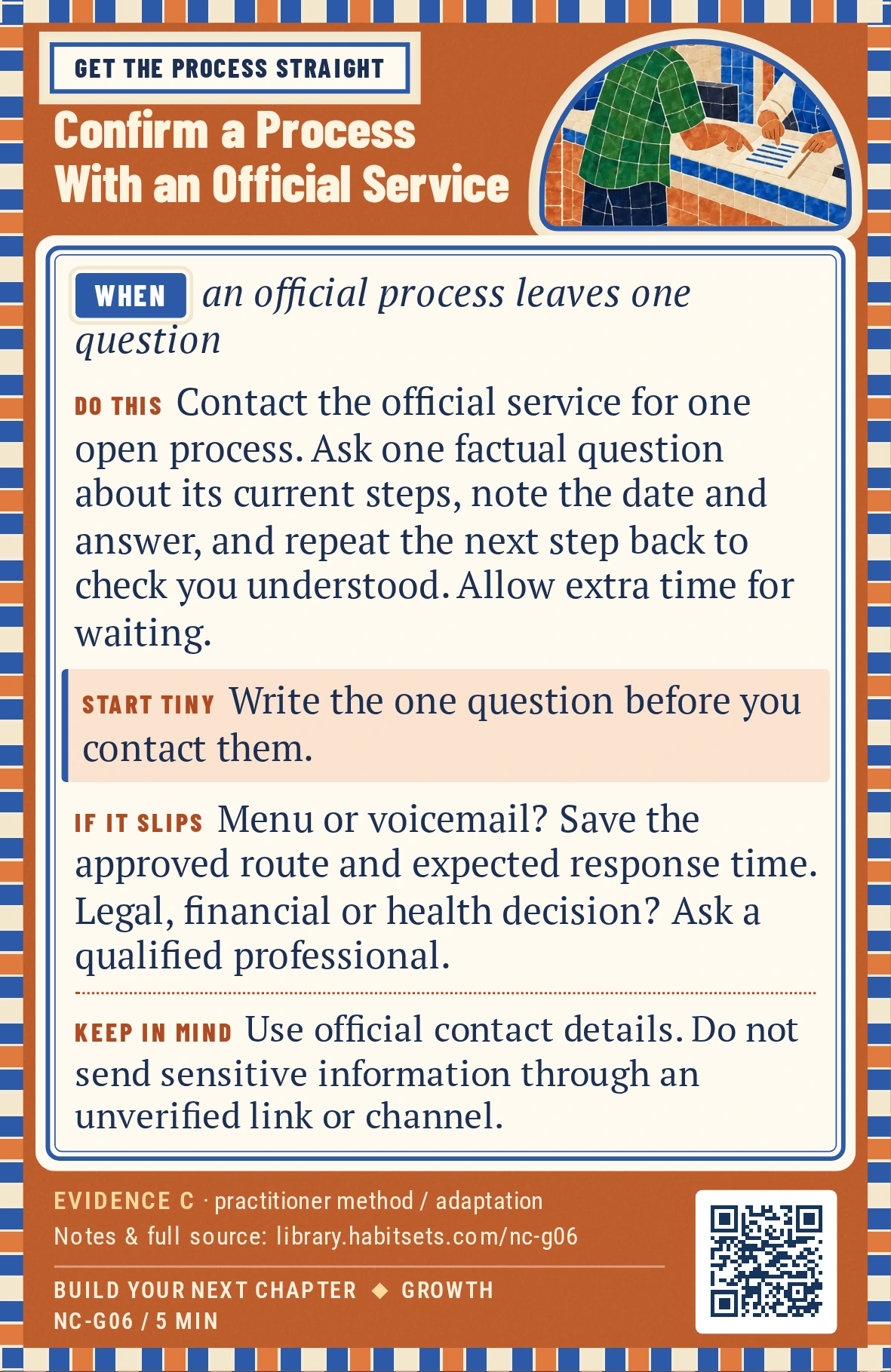
Front of NC-G06Back of card NC-G06: Confirm a Process With an Official Service. When: an official process leaves one question Do this: Contact the official service that handles one open process. Ask one factual question about its current steps, note the date and answer, and repeat the next step back to check you understood it. Allow for any wait time beyond the 15-minute question session. Start tiny: Write the one question before you contact them. Keep in mind: Use official contact details. Do not send sensitive information through an unverified link or channel.
50mm · NC-G06 · actual size
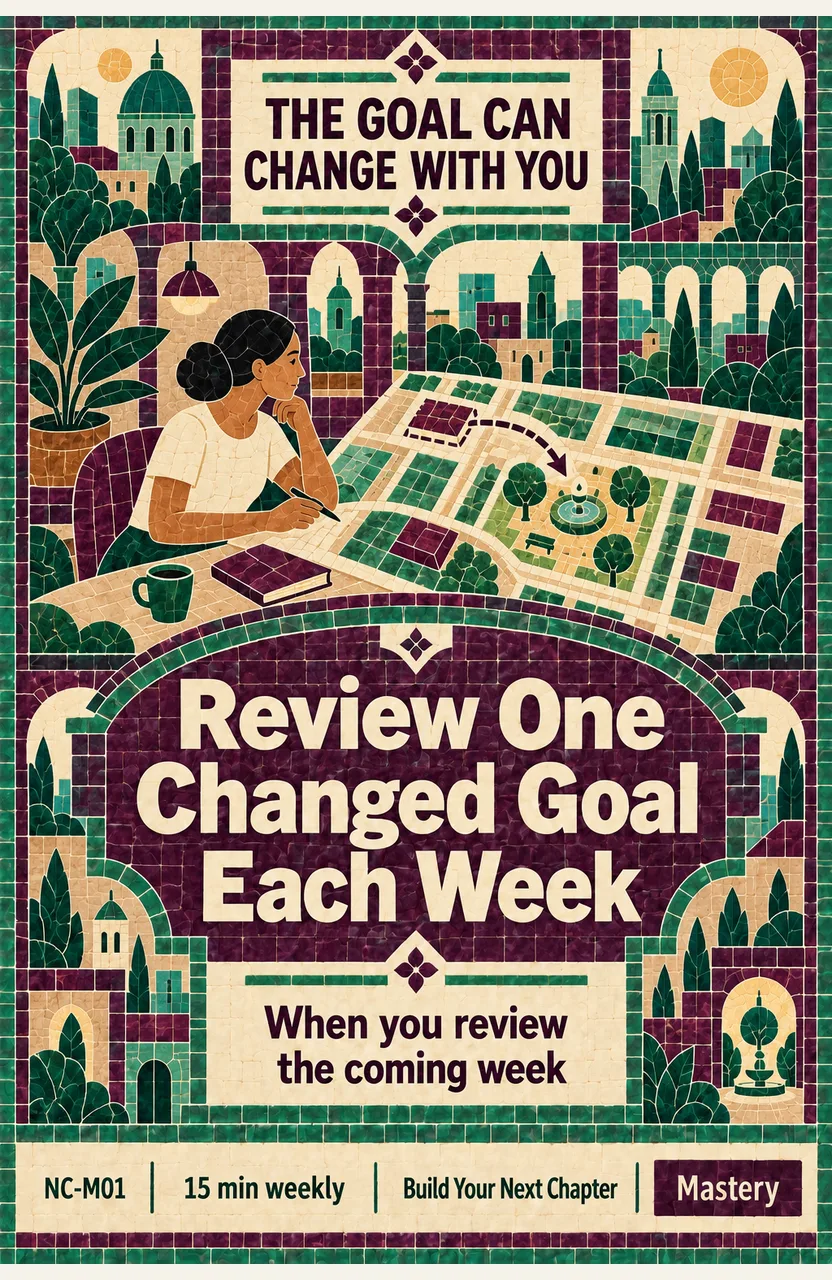
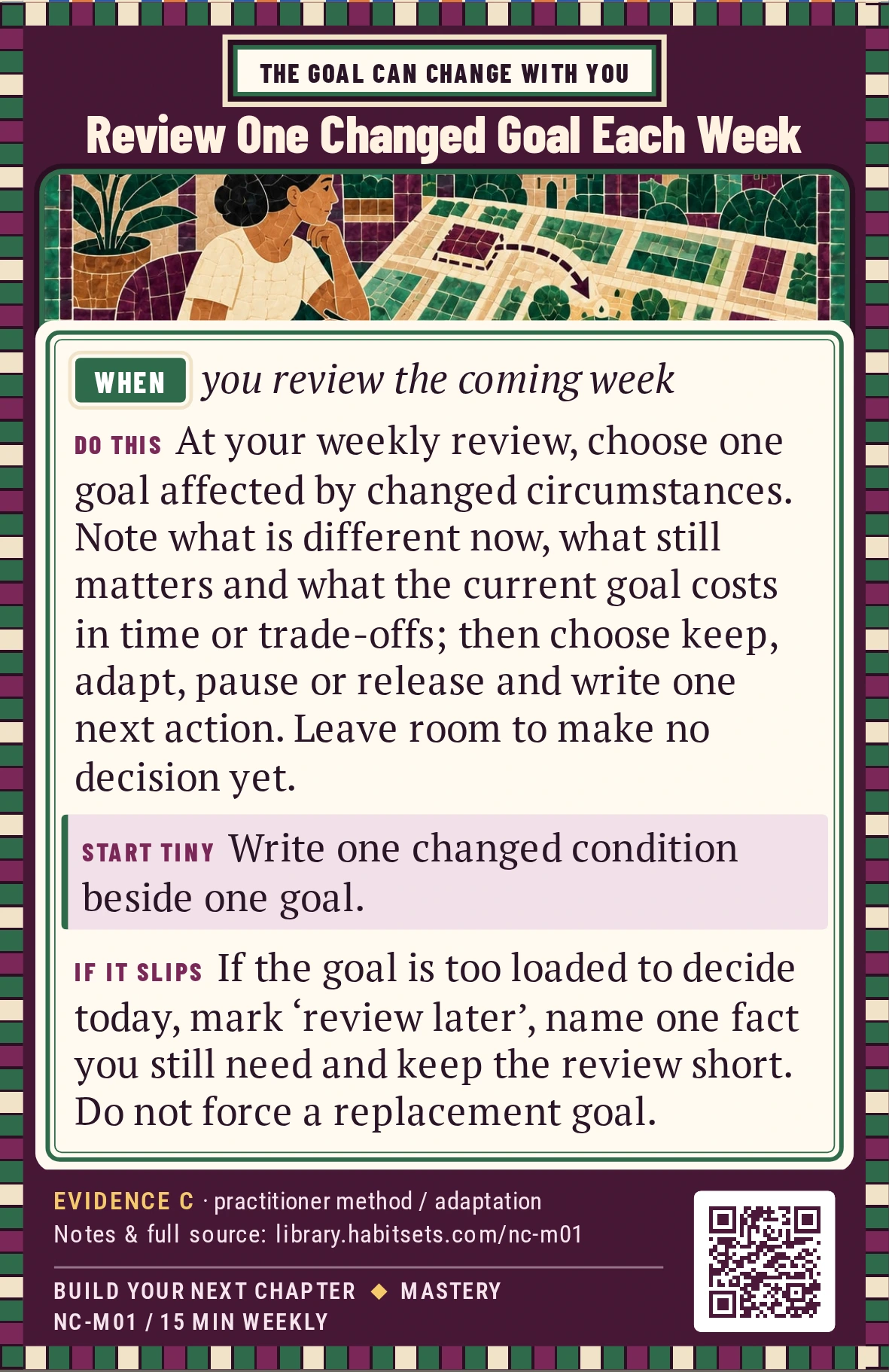
Front of NC-M01Back of card NC-M01: Review One Changed Goal Each Week. When: you review the coming week Do this: At your weekly review, choose one goal affected by changed circumstances. Note what is different now, what still matters and what the current goal costs in time or trade-offs; then choose keep, adapt, pause or release and write one next action. Leave room to make no decision yet. Start tiny: Write one changed condition beside one goal.
50mm · NC-M01 · actual size
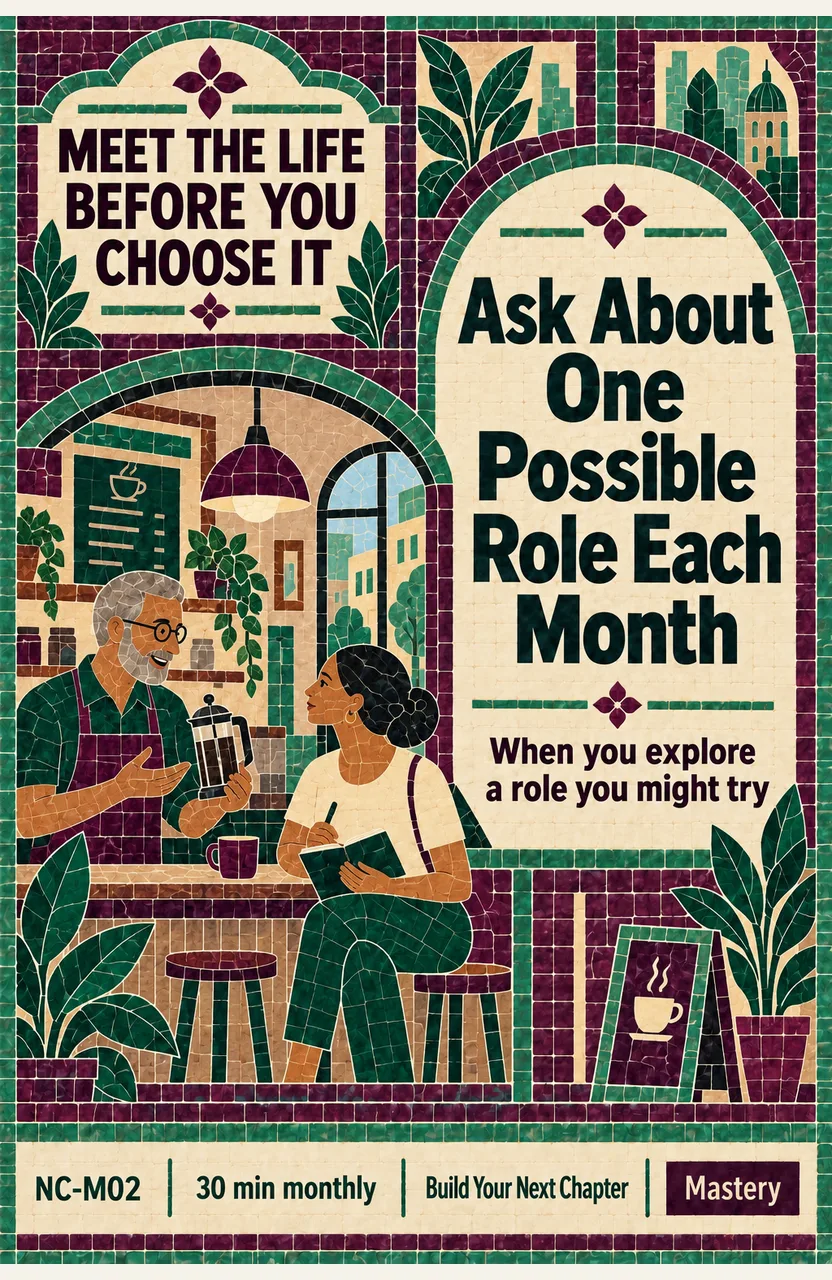
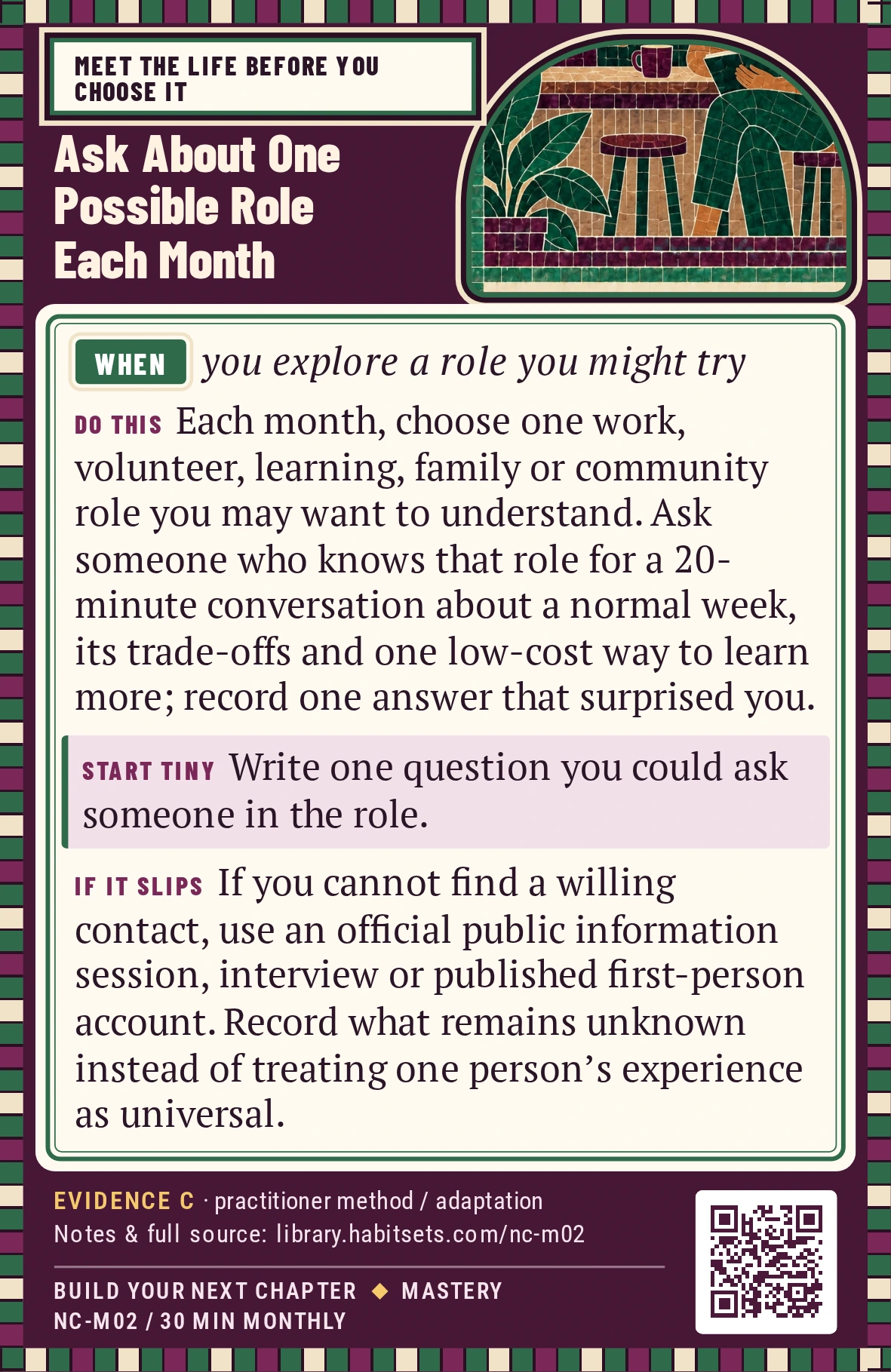
Front of NC-M02Back of card NC-M02: Ask About One Possible Role Each Month. When: you explore a role you might try Do this: Each month, choose one work, volunteer, learning, family or community role you may want to understand. Ask someone who knows that role for a 20-minute conversation about a normal week, its trade-offs and one low-cost way to learn more; record one answer that surprised you. Start tiny: Write one question you could ask someone in the role.
50mm · NC-M02 · actual size
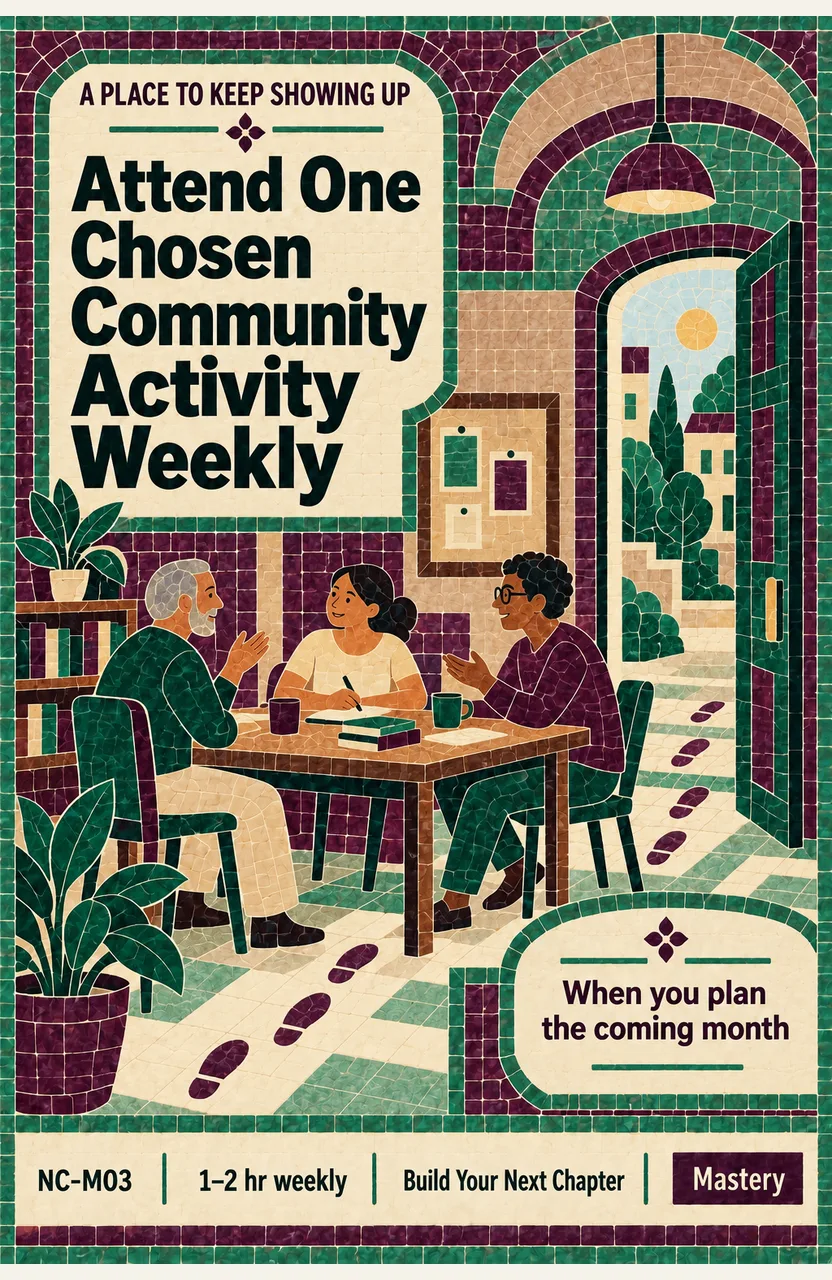
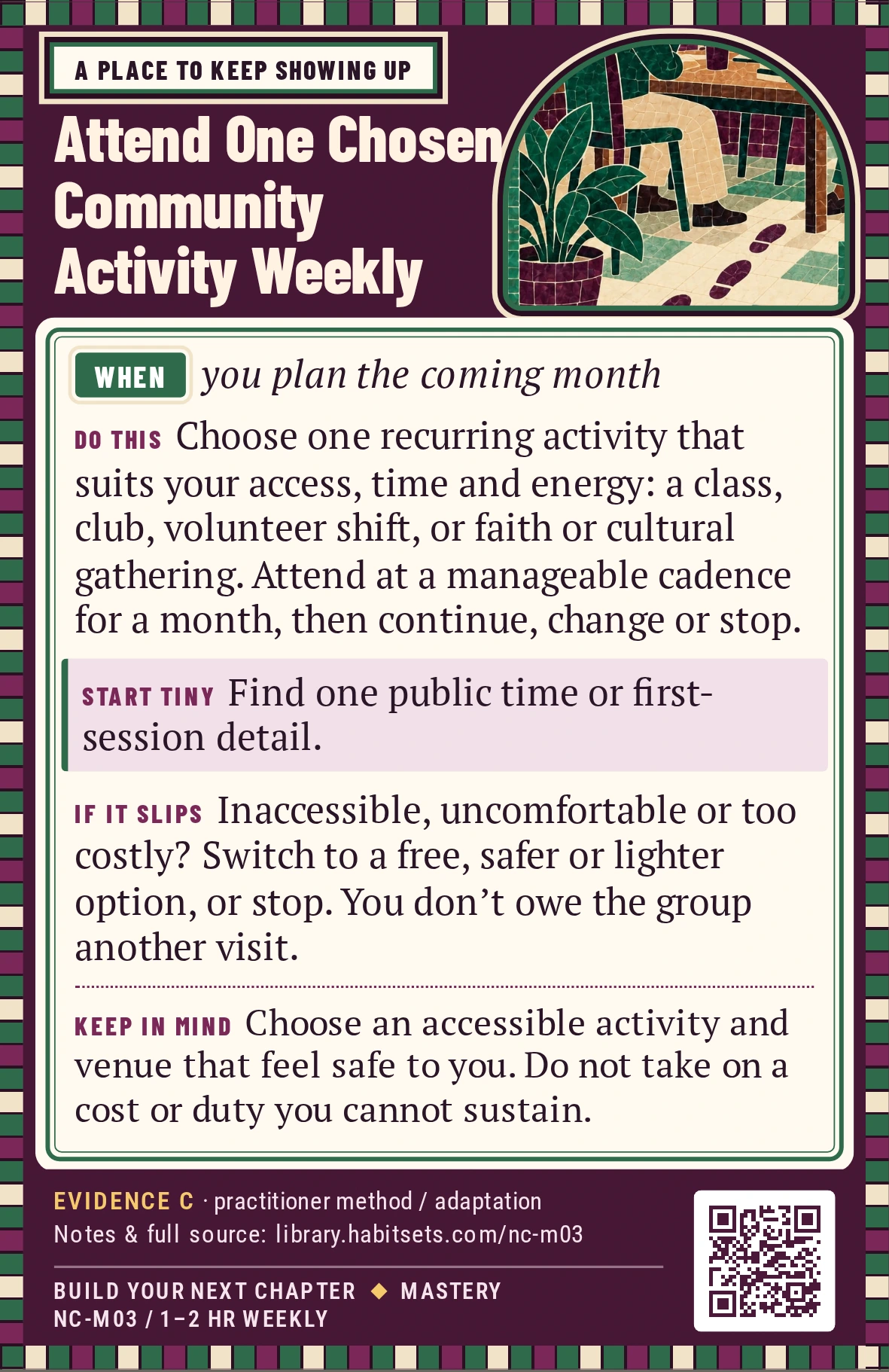
Front of NC-M03Back of card NC-M03: Attend One Chosen Community Activity Weekly. When: you plan the coming month Do this: Choose one recurring activity that interests you and fits your current access, time and energy: a class, club, volunteer shift, faith or cultural gathering, or another shared activity. Attend on a cadence you can manage for a month, then decide whether to continue, change or stop. Start tiny: Find one public time or first-session detail. Keep in mind: Choose an accessible activity and venue that feel safe to you. Do not take on a cost or duty you cannot sustain.
50mm · NC-M03 · actual size
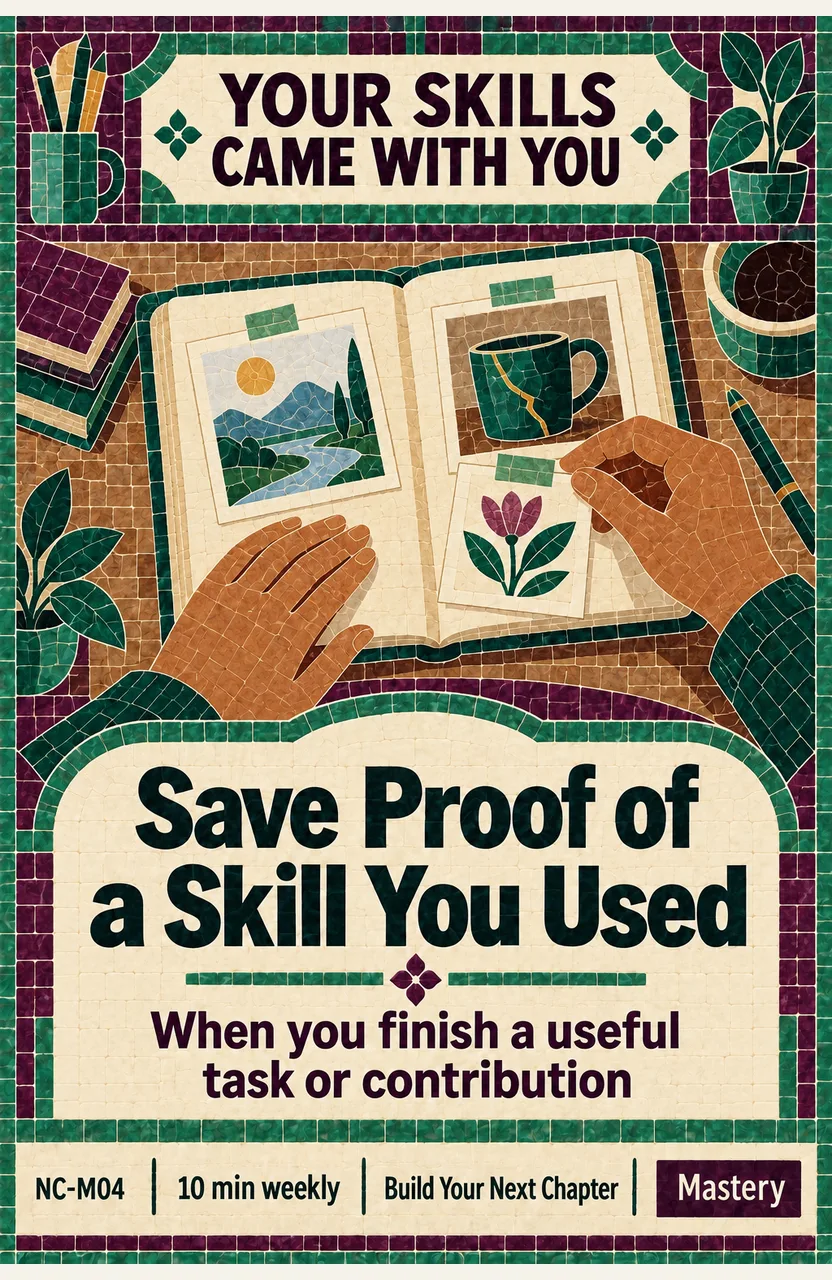
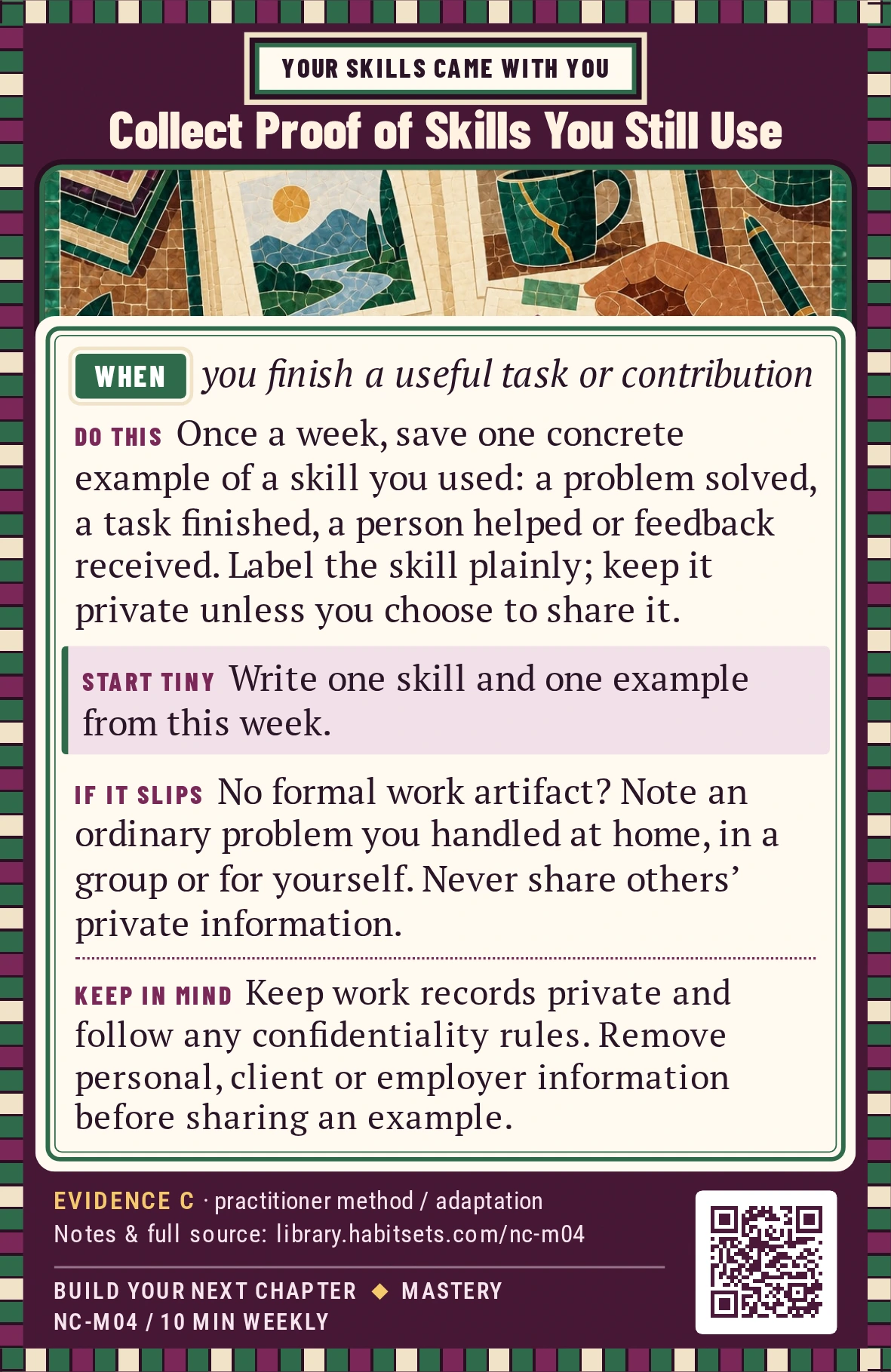
Front of NC-M04Back of card NC-M04: Collect Proof of Skills You Still Use. When: you finish a useful task or contribution Do this: Once a week, save one concrete example of a skill you used: a problem you solved, a task you finished, a person you helped or feedback you received. Label the skill in plain words and keep the example private unless you choose to share it. Start tiny: Write one skill and one example from this week. Keep in mind: Keep work records private and follow any confidentiality rules. Remove personal, client or employer information before sharing an example.
50mm · NC-M04 · actual size
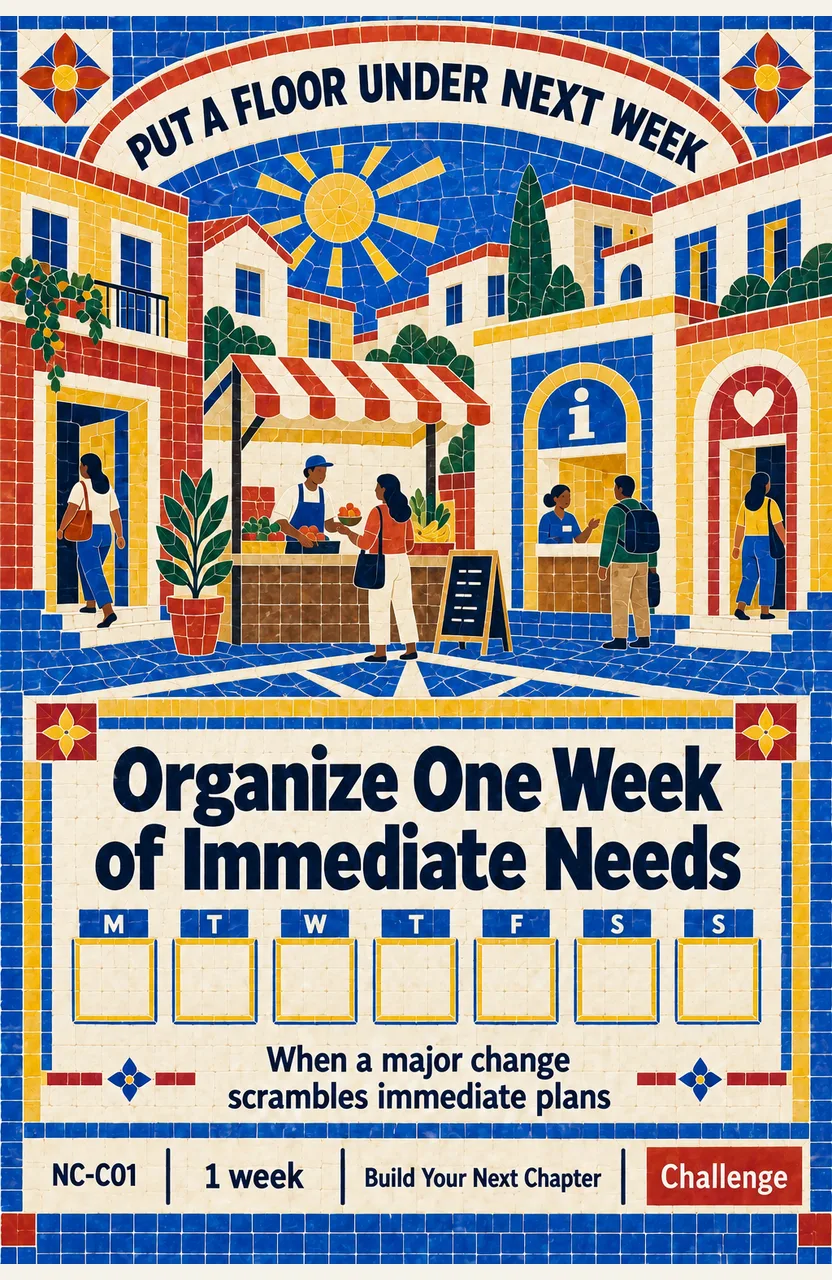
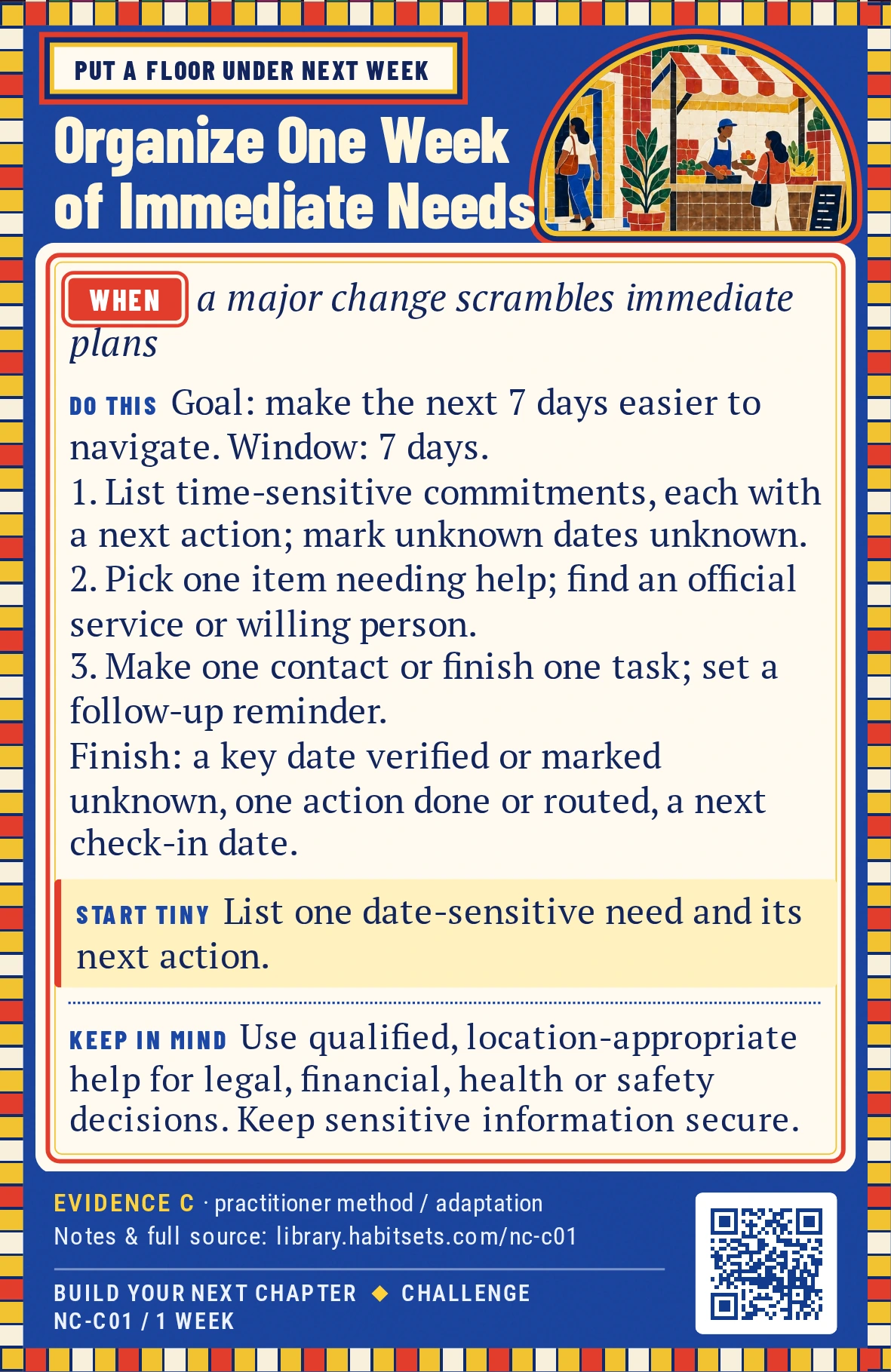
Front of NC-C01Back of card NC-C01: Organize One Week of Immediate Needs. When: a major change scrambles immediate plans Do this: Goal: make the next seven days easier to navigate by identifying immediate commitments and completing or routing one chosen next step.
Window: seven days from your first planning session.
1. List time-sensitive commitments and one next action for each; mark unknown dates as unknown.
2. Choose one item that needs information or support, and identify an appropriate official service or willing person.
3. Make one contact or complete one in-scope task, then set a follow-up reminder.
Finish when the list has one verified or explicitly unknown key date, one action completed or routed, and a next check-in date. You control those steps; another person's or agency's response is not required. Start tiny: List one date-sensitive need and its next action. Keep in mind: Use qualified, location-appropriate help for legal, financial, health or safety decisions. Keep sensitive information secure.
50mm · NC-C01 · actual size
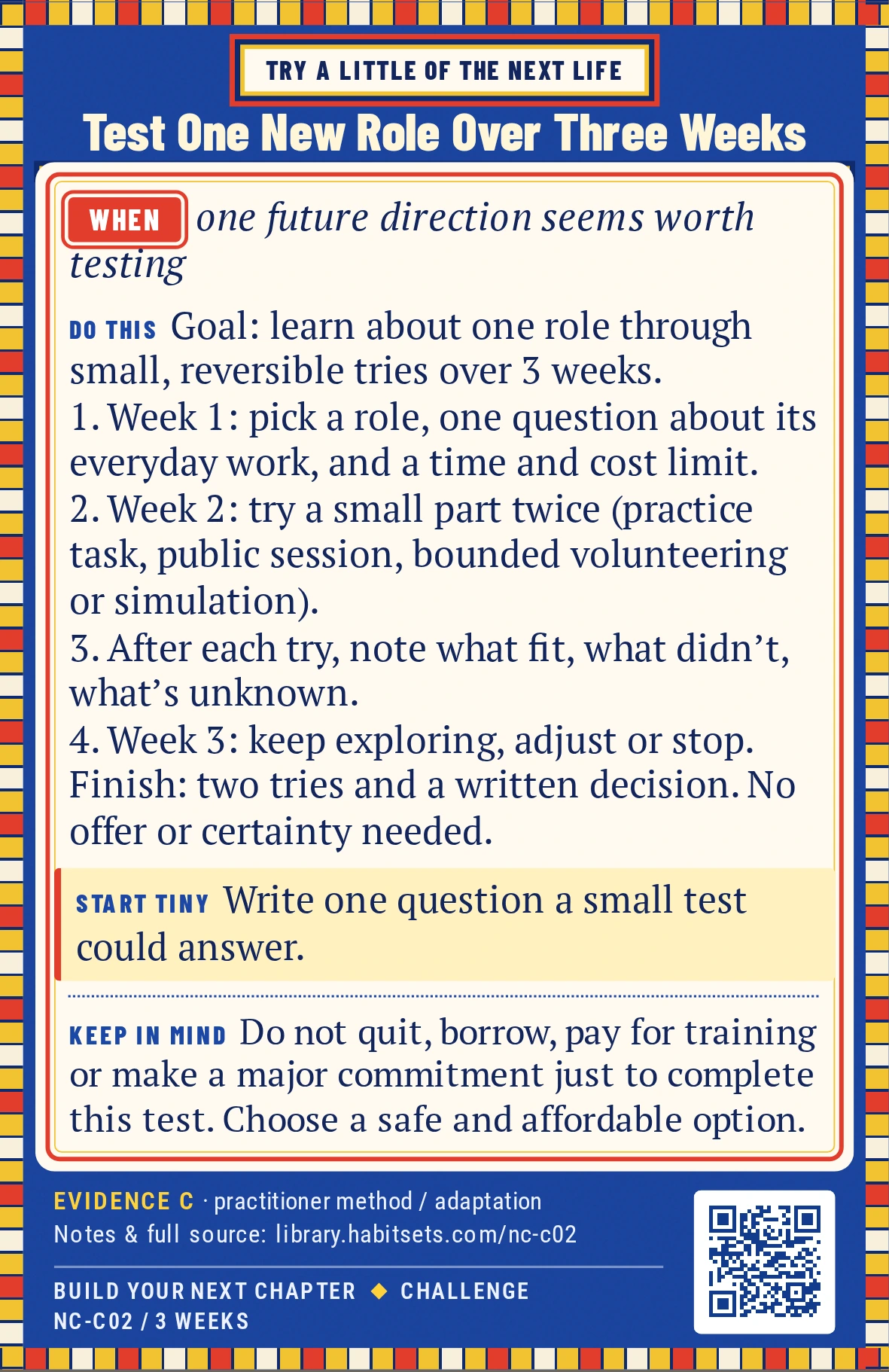
Front of NC-C02Back of card NC-C02: Test One New Role Over Three Weeks. When: one future direction seems worth testing Do this: Goal: learn about one possible role through a small experience before making a larger commitment.
Window: three weeks.
1. In week one, choose a role, one question about its ordinary work, and a limit on time and cost. Find a safe way to try it; an informational conversation can help you prepare.
2. In week two, try a small part of that role on two occasions: a practice task, public session, bounded volunteer contribution or private simulation. Keep the experiment reversible.
3. Record what fit, what did not and what remains unknown after each try.
4. In week three, choose keep exploring, adjust the idea or stop.
Finish after the two small tries and a written keep/change/stop decision. An offer, invitation or feeling of certainty is not required. Start tiny: Write one question a small test could answer. Keep in mind: Do not quit, borrow, pay for training or make a major commitment just to complete this test. Choose a safe and affordable option.
50mm · NC-C02 · actual size
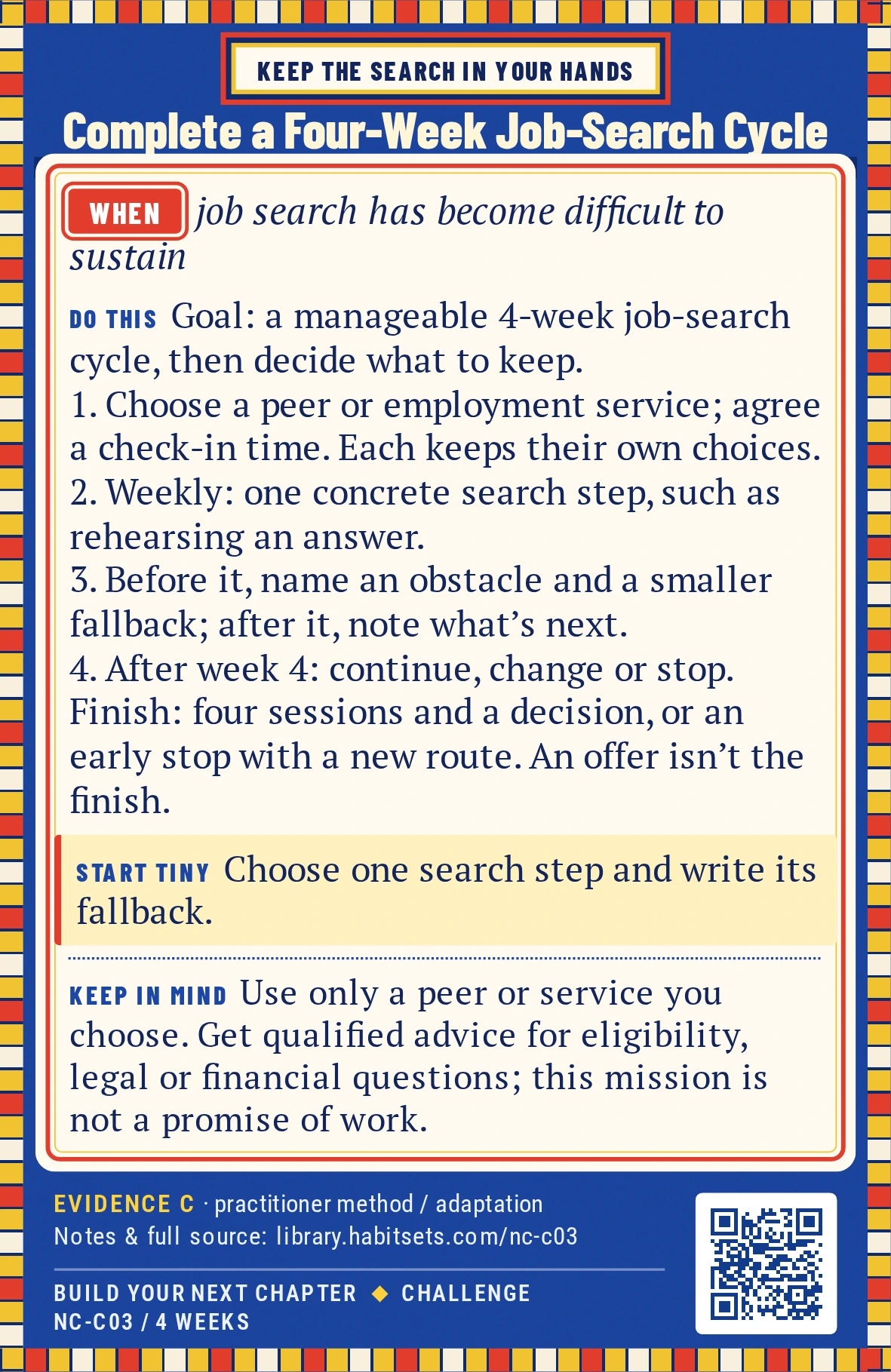
Front of NC-C03Back of card NC-C03: Complete a Four-Week Job-Search Cycle. When: job search has become difficult to sustain Do this: Goal: complete a manageable job-search cycle and decide what support or steps to keep.
Window: four weeks.
1. Choose one peer, employment service or other support route and agree on a realistic check-in time; each person keeps their own search choices.
2. Each week, prepare one concrete search step, such as tailoring a short application section, rehearsing one answer or contacting one organization.
3. Before each step, name one likely obstacle and one smaller fallback.
4. At the end of each session, note what you did and what you want to try next.
5. After week four, choose continue, change the setup or stop.
Finish after four sessions and a keep/change/stop decision. If you stop earlier, record the mission as stopped and name the route you chose instead. A job offer is not the finish condition. Start tiny: Choose one search step and write its fallback. Keep in mind: Use only a peer or service you choose. Get qualified advice for eligibility, legal or financial questions; this mission is not a promise of work.
50mm · NC-C03 · actual size
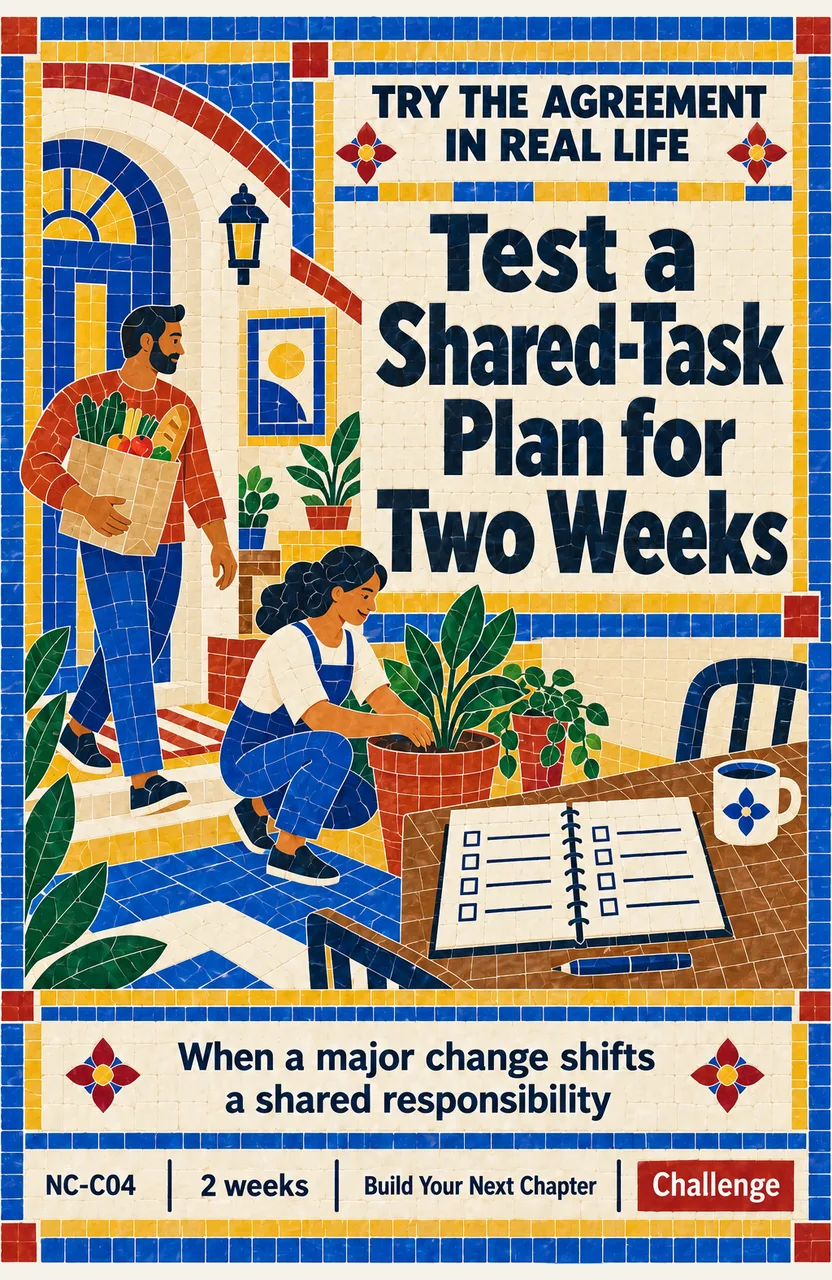
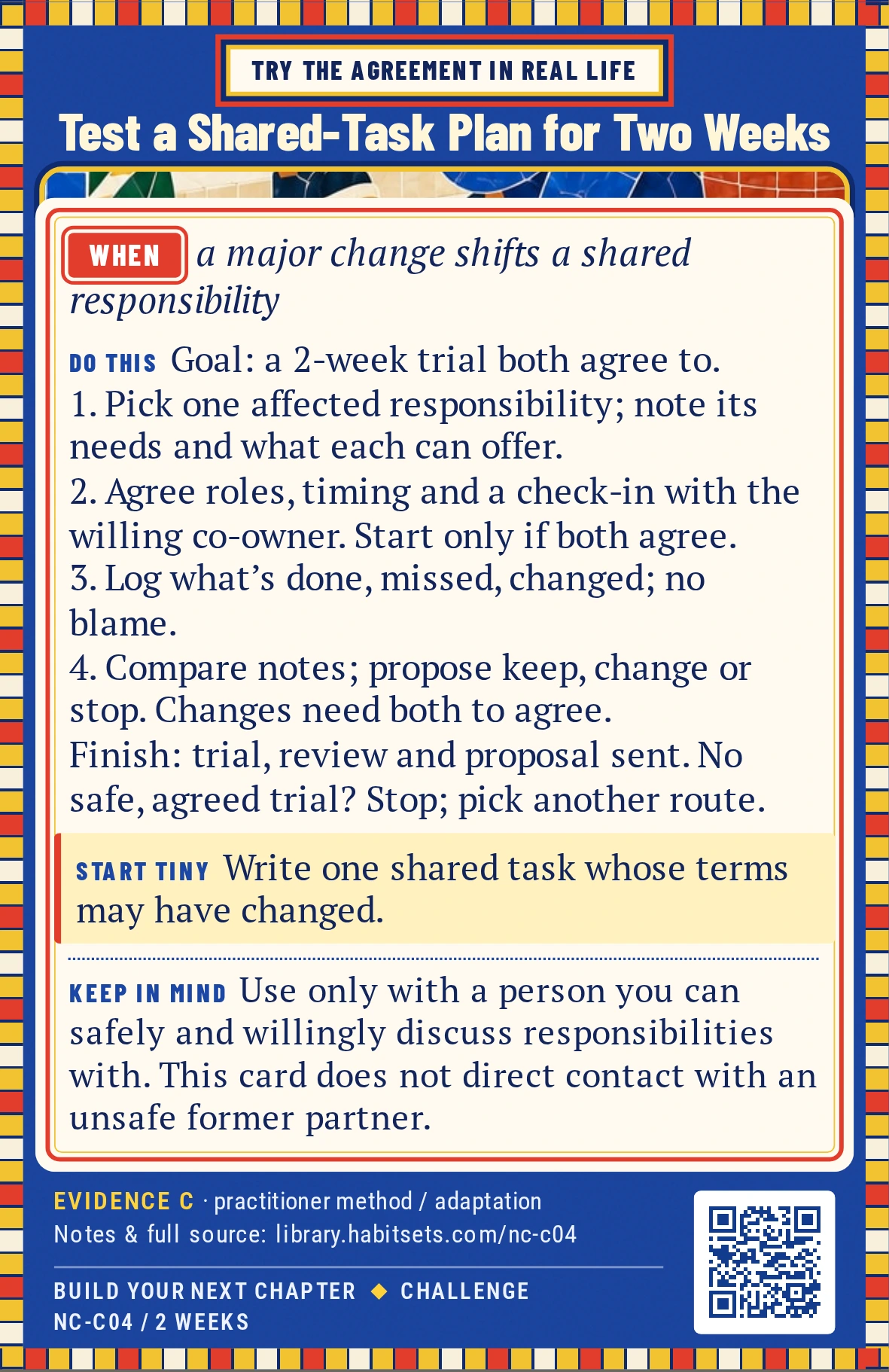
Front of NC-C04Back of card NC-C04: Test a Shared-Task Plan for Two Weeks. When: a major change shifts a shared responsibility Do this: Goal: test one adult shared-task arrangement that fits changed circumstances, then propose what should happen next.
Window: two weeks after both people agree to a trial.
1. Choose one ongoing responsibility affected by the change. Write what needs to happen and what each person can reliably offer now.
2. Ask the willing co-owner to discuss one adjustment. Agree on who does which part, the scope, timing and a check-in; only start if you both agree.
3. Try the written arrangement for two weeks. Note what was completed, what was missed and what changed, without assigning motives.
4. Review your record, invite the co-owner to compare observations, and send your keep/change/stop proposal. Continuing or changing a shared arrangement still needs both people to agree.
Finish after the trial, written review and delivery of your proposal; the other person's response is not required. If a safe, agreed trial is unavailable, mark the mission stopped and choose another route. A proposed plan is not a tested agreement. Start tiny: Write one shared task whose terms may have changed. Keep in mind: Use only with a person you can safely and willingly discuss responsibilities with. This card does not direct contact with an unsafe former partner.
50mm · NC-C04 · actual size
· Front & new back