Reuse one corrected phrase next time
Whenyour Spanish conversation ends
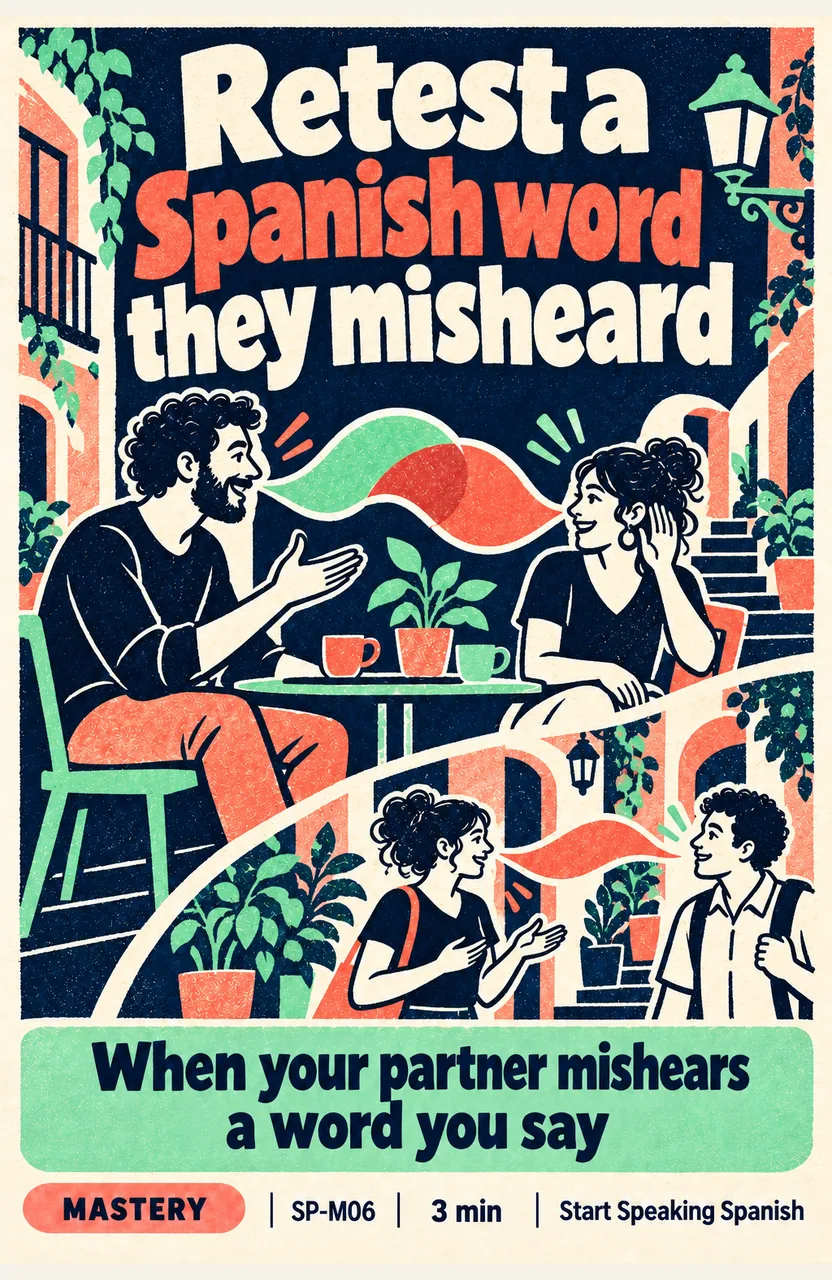
Choose one phrase that was unclear or incorrectly formed. Ask your partner for a corrected version and meaning. Use it in a new reply next exchange; ask whether it conveyed your intended meaning. Keep or revise it.
- Steps
- Example: “Me gusta café” → “Me gusta el café” (I like coffee). Check the missing article with your partner.
- Next exchange use “Me gusta el té” (I like tea), then check the same article-and-meaning criterion. If it fails, correct and try another new reply next time.
Start tiny
Save one uncertain phrase to ask about.
Lyster, R. & Saito, K. (2010), Oral feedback in classroom SLA: A meta-analysis. Studies in Second Language Acquisition 32(2), 265–302. Read the source ↗ author-hosted full text: Read the source ↗ Loewen, S. & Sato, M. (2018), Interaction and instructed second language acquisition. Language Teaching 51(3), 285–329. Read the source ↗ Maricopa Community Colleges, Español 102, Capítulo 6, 6.3 Gustar and partner-speaking activity. Read the source ↗ — Oral corrective feedback is supported by a classroom meta-analysis of 15 studies (827 learners). Partner competence, correction type and context matter; the card’s one-phrase loop and schedule are adaptations.
Mastery: Inspect your work, apply a specific correction in later practice and check whether it helped.