SP-F0730 minHave a Spanish conversation
Topic · 12 cards · draft
Start with a willing partner and a weekly conversation: 15 minutes in Spanish within a 30-minute meeting. Use printed bilingual openings, listen and reply to what you actually hear. Keep that small hand; add voice messages, a shared-time task, repair support or one targeted feedback loop when it solves a recurring problem. Finish supported scenarios and make one real low-stakes plan. Solo rehearsal is logged separately from interaction.
Your cornerstone
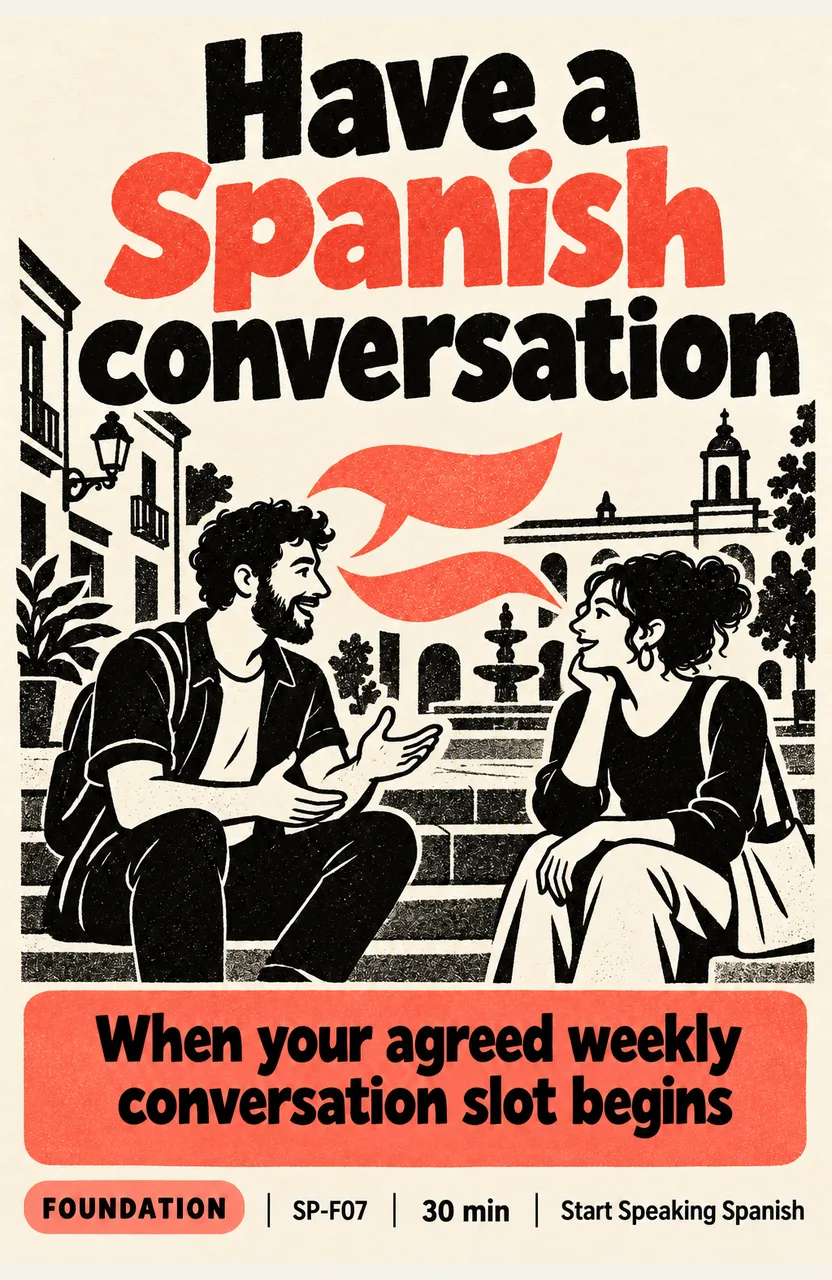
Keep one weekly SP-F07 meeting with 15 actual Spanish interaction minutes. Start with the printed topic; take turns, follow up and repair. If starting stalls, prepare a true topic with SP-G06. Keep the same small hand; optional cards address particular needs, not a rotating daily schedule.
Your starting hand
One cornerstone carries the load. Everything else on this page exists to make those repetitions easier, better or put to use.
You need a willing Spanish-speaking partner for normal interaction. Ask a known contact, a local conversation circle or a language-exchange group; availability varies. Agree a weekly 30-minute slot, a 15-minute Spanish segment, a patient pace and correction preferences. For a tandem, share the languages fairly. A phone is needed only for the optional voice-message route.
Day one
Agree the partner slot and language split before starting. Use 15 minutes for Spanish; count that segment, rather than all 30 meeting minutes.
Ask “¿Te gusta el café?” (Do you like coffee?). Answer “Sí, me gusta” (Yes, I like it) or “No, no me gusta” (No, I don’t like it). Return “¿Y a ti?” (And you?).
Listen to the actual answer. Follow up “¿Y el té?” (And tea?) if it fits. If meaning is missed, say “Otra vez, por favor” (Again, please), then listen again.
Afterward, choose one unclear phrase, confirm its corrected version and meaning, and try it in a new reply next time. Ask whether the new reply conveyed that meaning.
After that
No streak to protect. Do the usual practice when its moment comes, keep it alive on a hard day, and let each one improve the next.
Keep one weekly SP-F07 meeting with 15 actual Spanish interaction minutes. Start with the printed topic; take turns, follow up and repair. If starting stalls, prepare a true topic with SP-G06. Keep the same small hand; optional cards address particular needs, not a rotating daily schedule.
For a short live day, ask one printed question and respond to the actual answer; log the actual minutes as a live fallback, not a full 15-minute dose. If no partner is available, rehearse a printed answer aloud for up to five minutes. Mark solo rehearsal separately; it cannot complete an interaction mission.
SP-M04: inspect one unclear phrase, confirm a correction, apply it in a new reply next exchange and ask whether the intended meaning was conveyed. Choose SP-M05 instead for missed listening details, or SP-M06 for a word your listener misheard. Use one loop at a time; a saved note alone is unfinished feedback.
See what adds up
Declare weekly partner opportunities in advance. Mark each once: normal, fallback or missed. Record live Spanish minutes, active asynchronous message minutes and solo rehearsal minutes separately. Three 15-minute live segments = 45 live minutes; a five-minute recording adds 5 rehearsal minutes. Tasks inside the meeting do not add the same minutes twice.
Growth and feedback
Not a checklist. Add one when you can name the problem it solves in your practice.
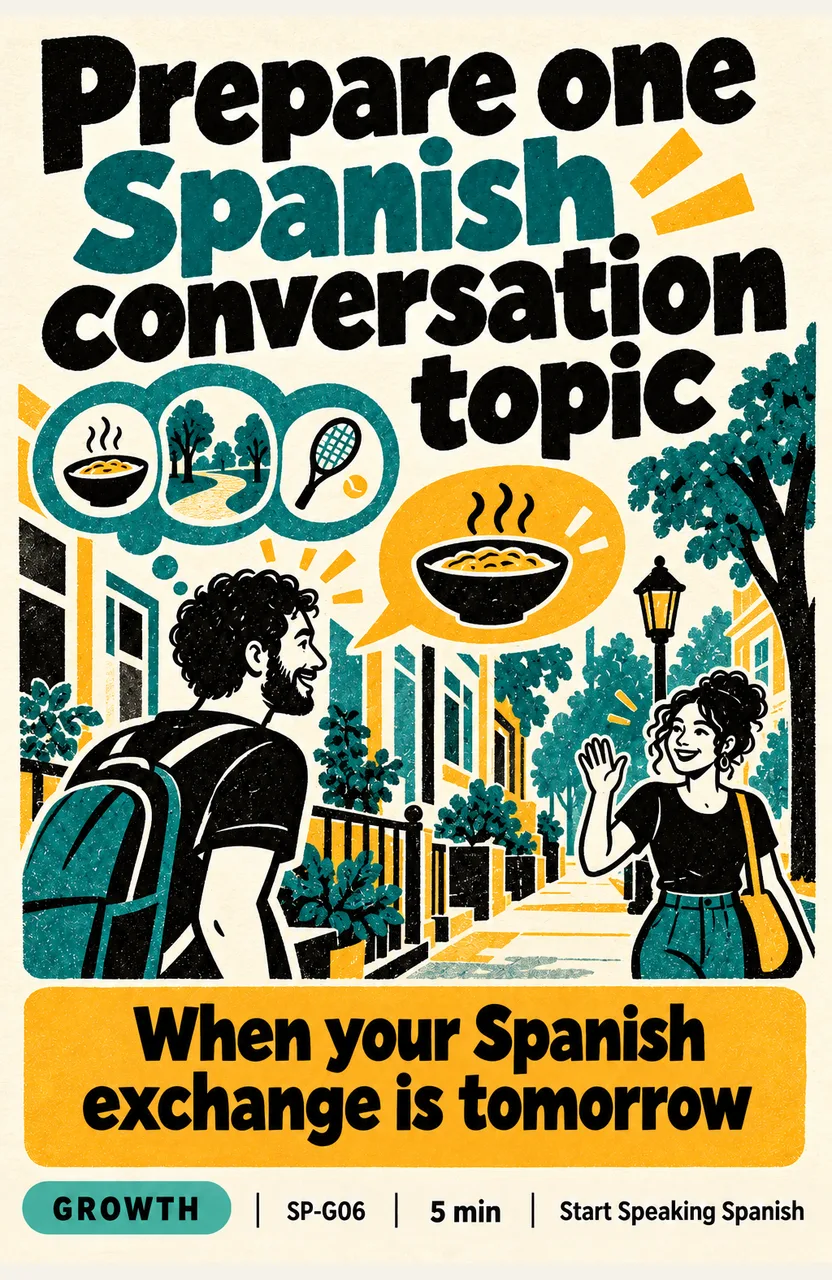
Prepare a true topic when blank starts block the next conversation.
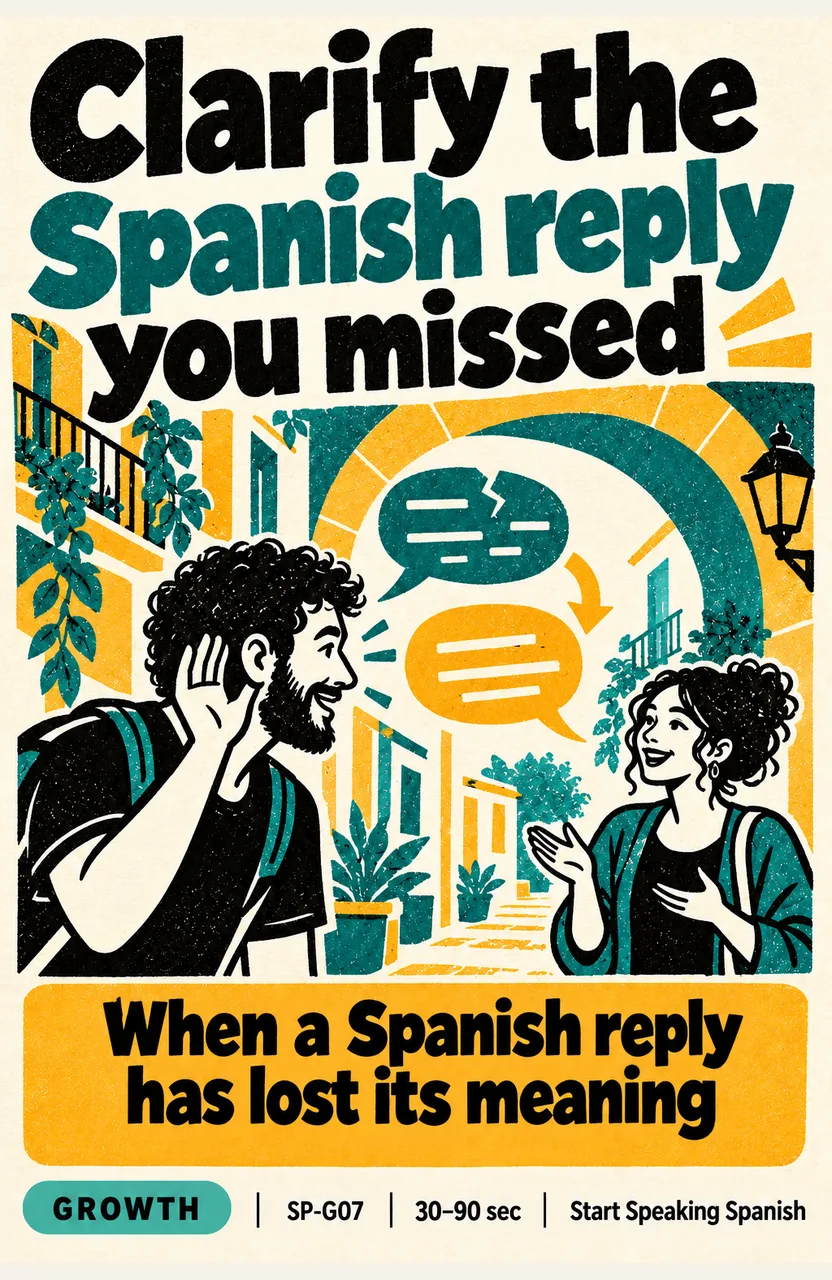
Request a repeat or word meaning when an incoming reply is unclear; confirm before answering.
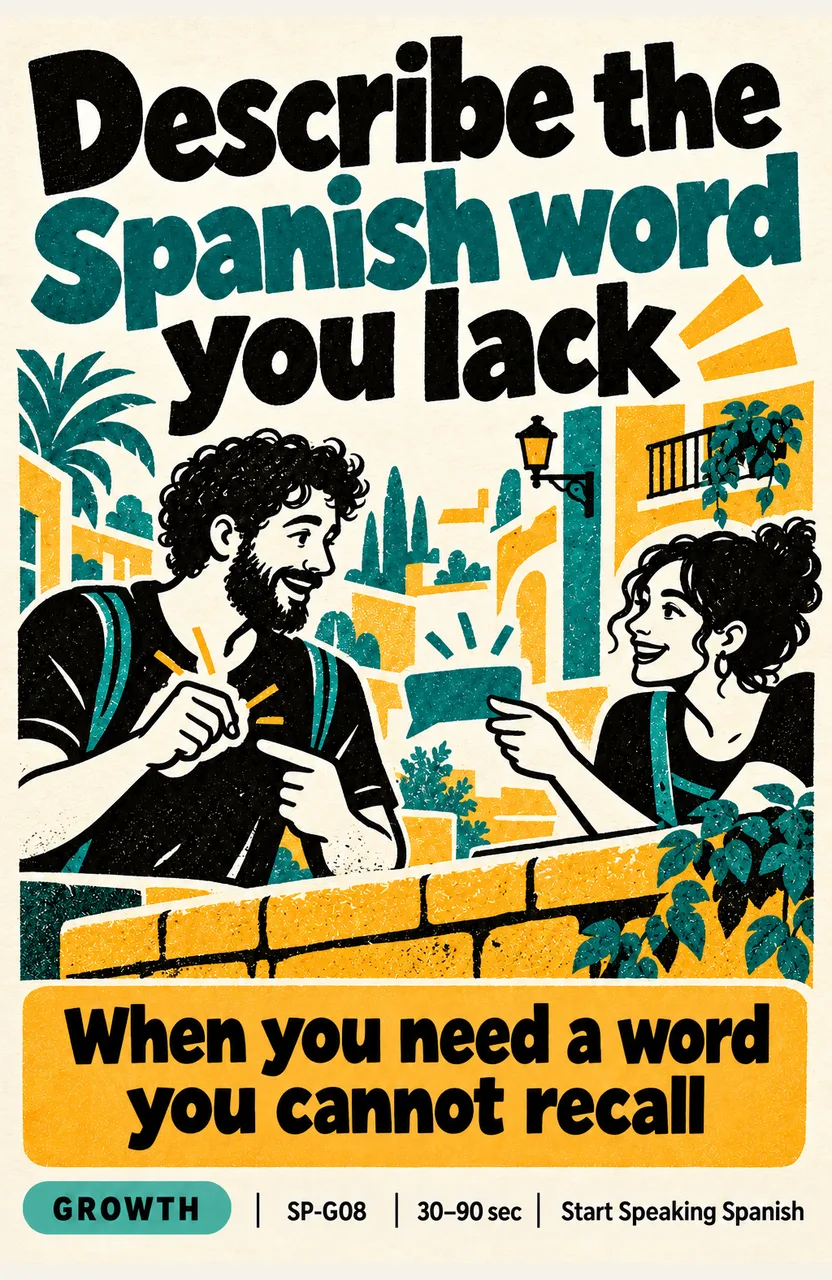
Describe or point to a missing word so an outgoing turn can continue.
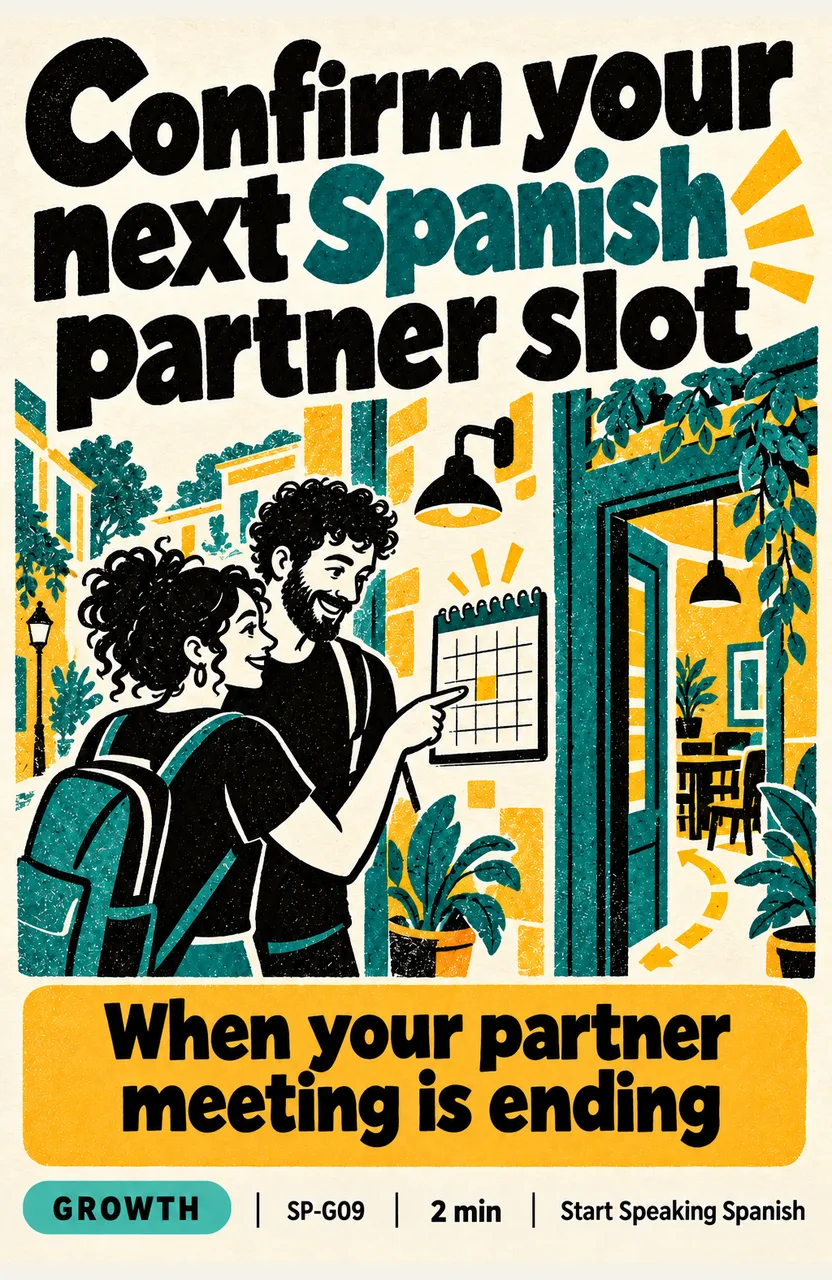
Confirm a feasible next slot and one needed adjustment before the partnership drifts.
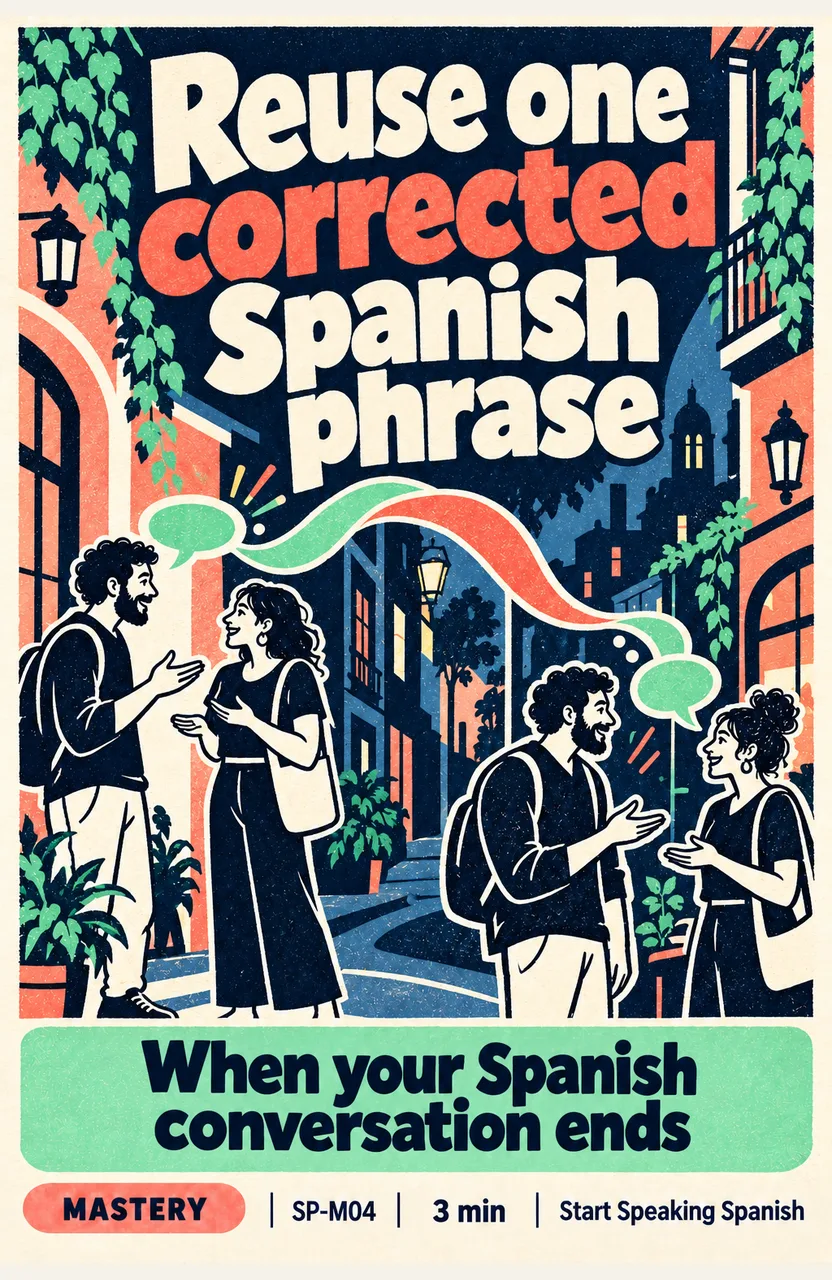
Correct one phrase and test it in a new reply next time.
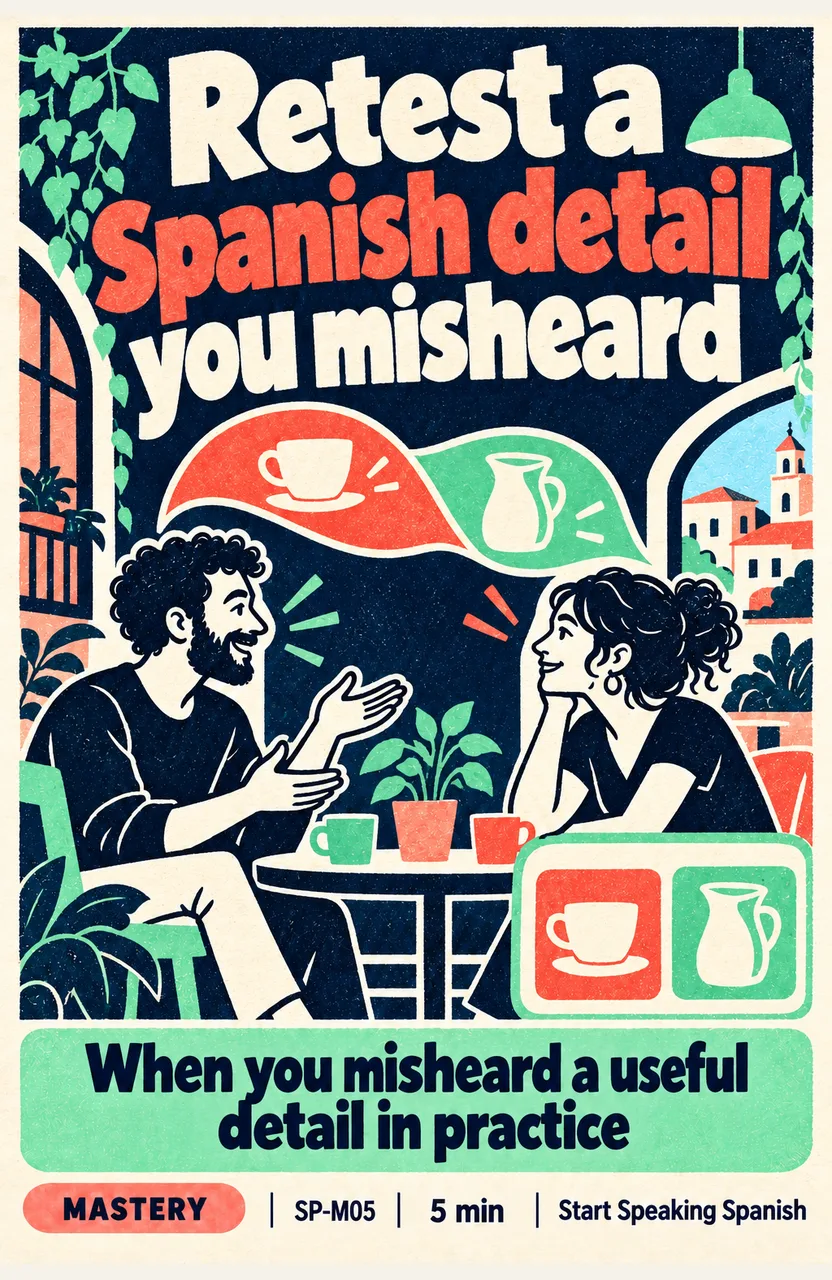
Diagnose a missed detail, apply a fix next time and compare a new two-detail reply.
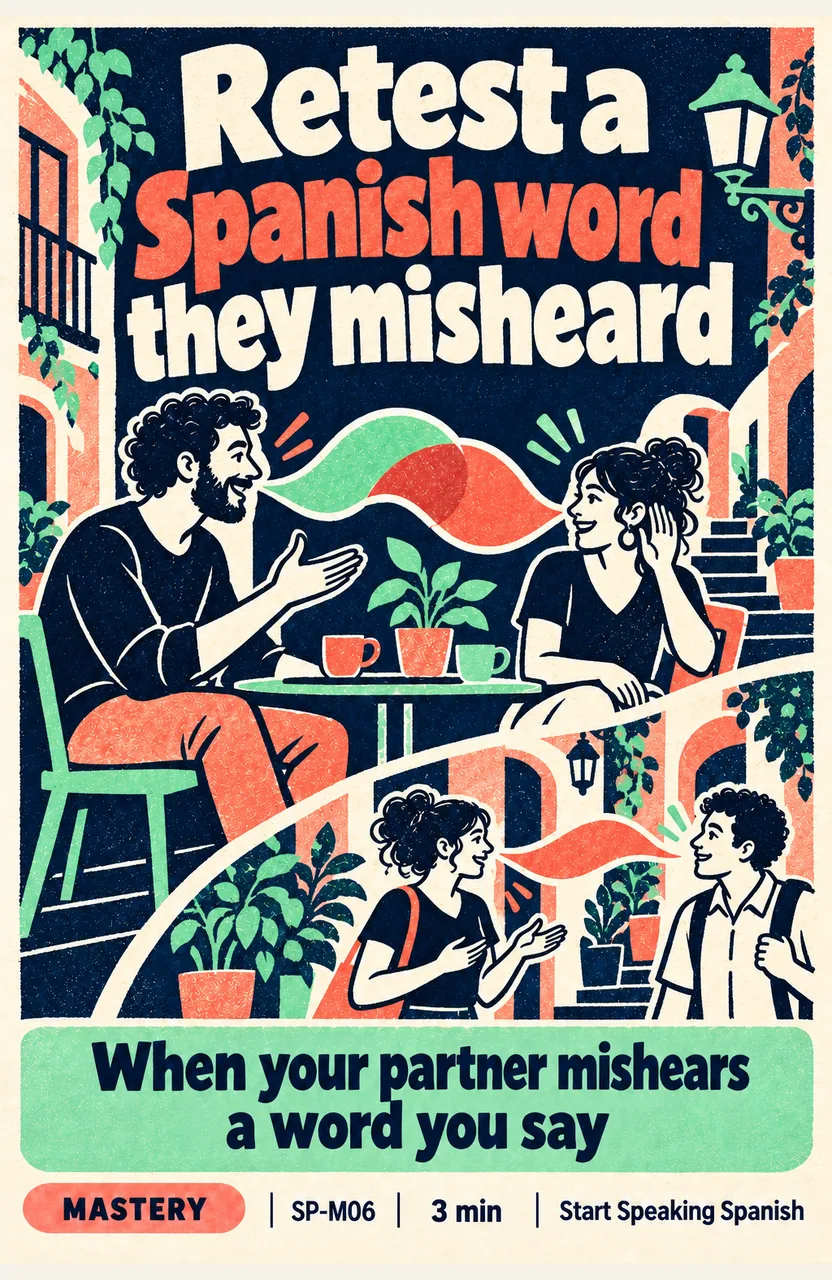
Change one misheard word’s sound or stress, then check listener identification next time.
Choose a hand for your situation
Keep a small hand active. Pick the route that matches what’s actually in front of you.
When
You have a weekly partner slot and want an easy return path.
Do this
Keep the 15-minute Spanish segment each week. Add one true prepared topic only if starting stalls. Carry one corrected phrase into a new reply next time and check its meaning.
Work towardsMore actual two-way turns, with one correction tested in later conversation.
Something to work towards
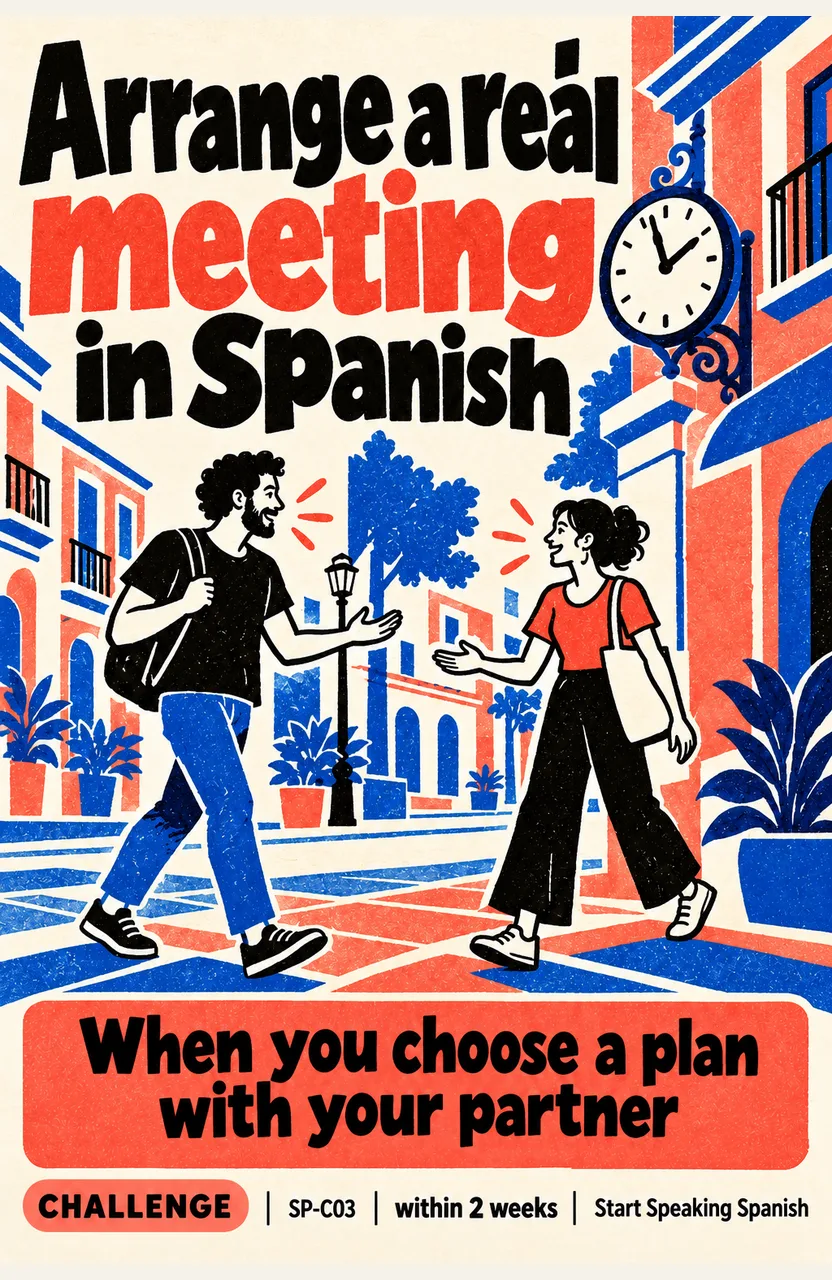
Check whether you can ask, understand enough to respond, follow up and repair in a familiar live exchange. SP-C02 checks three supported practical scenarios; SP-C03 checks whether you agree and carry out a real low-stakes plan. Keep those results separate from minutes and completion proportions.
Every card for this topic
12 cards · tap a card to flip it
The load-bearing practices you return to. Build the base and keep it in play.
Supporting habits that improve the conditions for useful repetitions: preparation, consistency or necessary recovery.
Inspect your work, apply a specific correction in later practice and check whether it helped.
A bounded mission with an observable finish, supported by the practices you use.
Sources
Council of Europe, CEFR Companion Volume (2020), oral interaction and clarification scales. Read the source ↗
Loewen & Sato (2018), Interaction and instructed second language acquisition. Language Teaching 51(3), 285–329. Read the source ↗
The Open University, Getting started with Spanish 1, Week 2. Read the source ↗
From the screen to the fridge
Library cards are free to read and print. Choose the ones you’ll use, put them where their cues happen, and keep returning to the practice. Our boxed collections are separate printed editions.