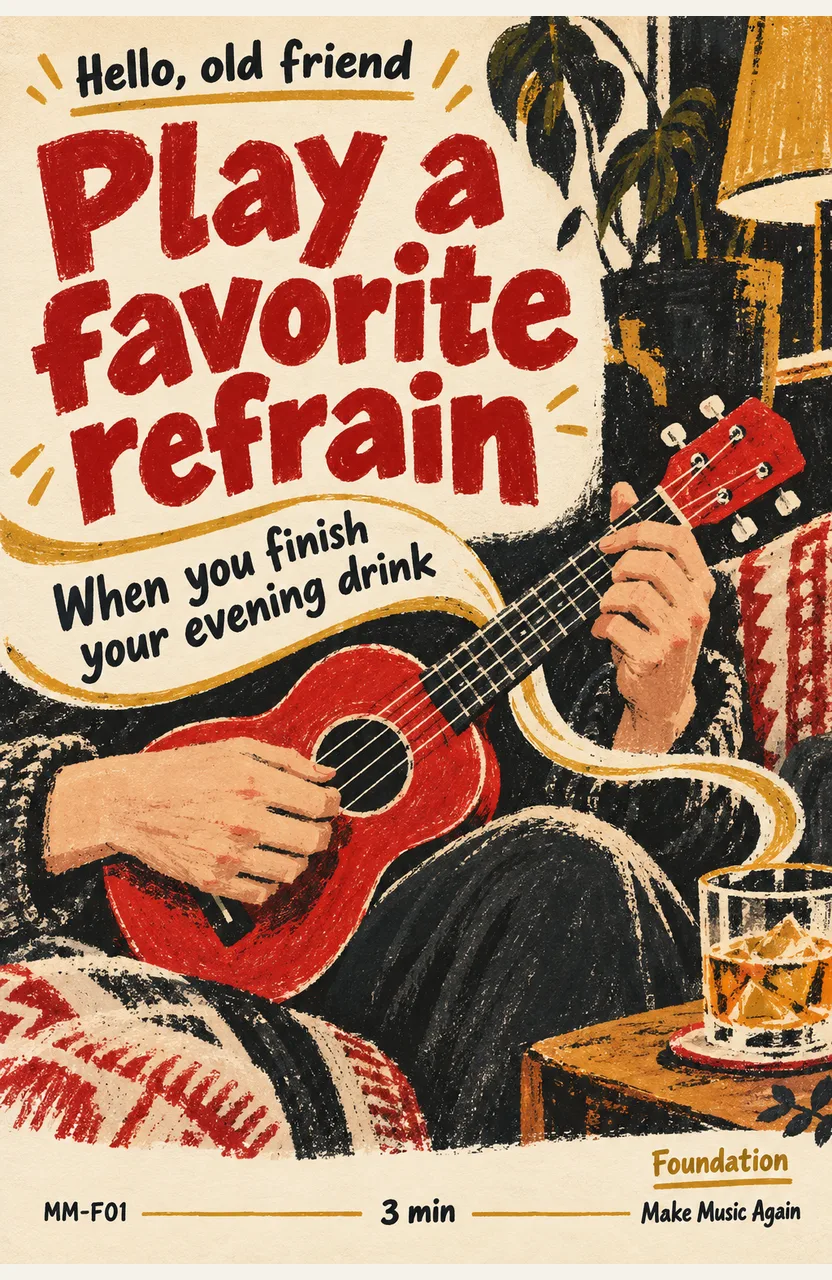
MM-F013 minPlay a favorite refrain
Topic · 20 cards · draft
Start with a familiar refrain, a rhythm you can tap and one comfortable note. Add the practice that serves the music you want to make; you do not need every card.
Cards to explore first
Read the full instructions and choose what fits your situation. Look for a repeatable practice that contributes to your goal, then keep that card in play.
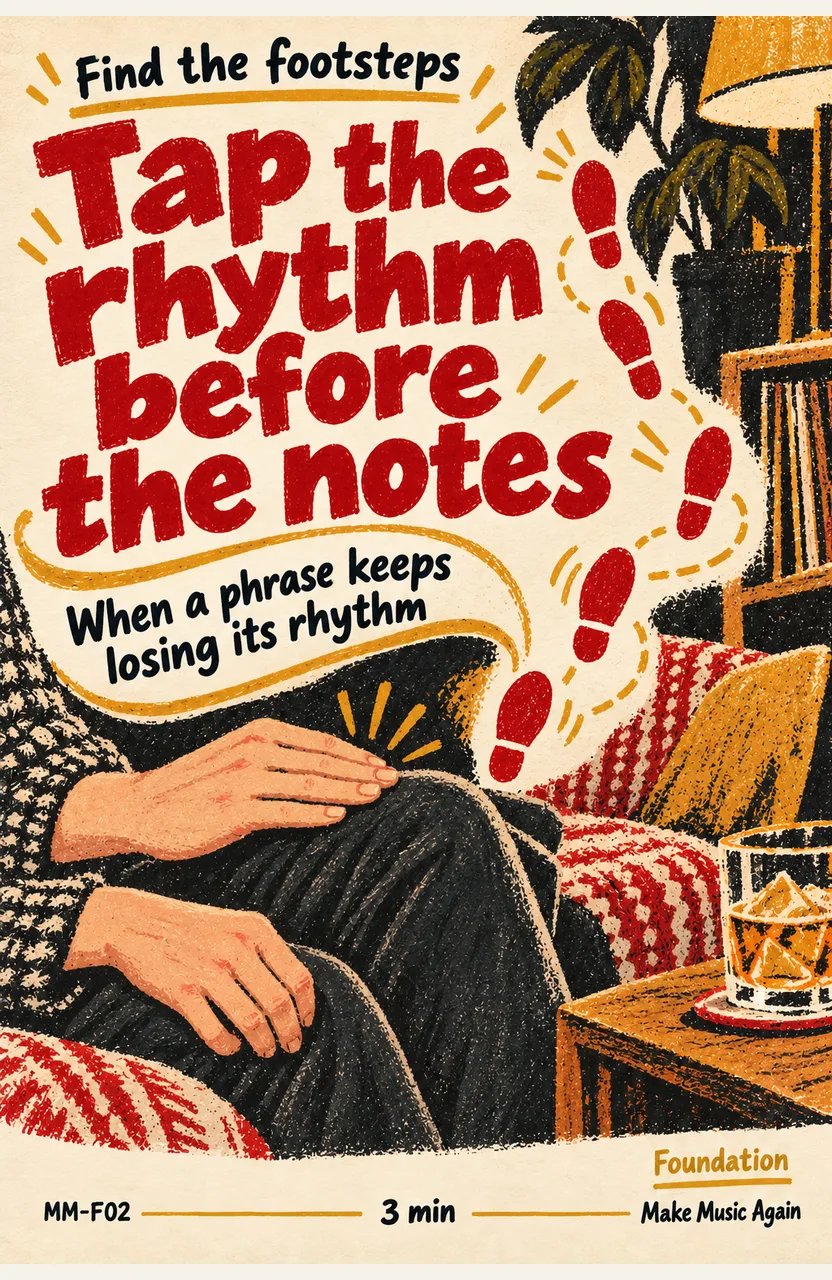
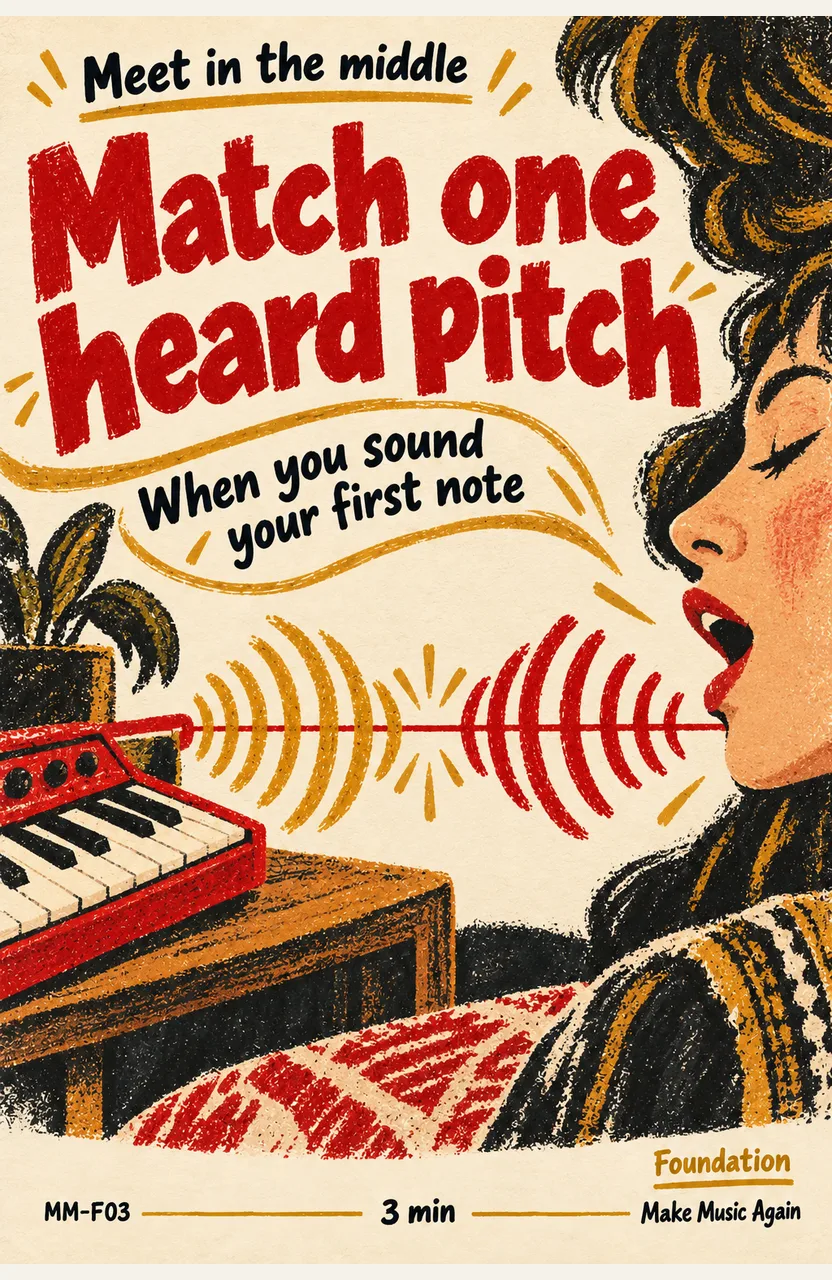
Every card for this topic
20 cards · tap a card to flip it
The load-bearing practices you return to. Build the base and keep it in play.
Supporting habits that improve the conditions for useful repetitions: preparation, consistency or necessary recovery.
Inspect your work, apply a specific correction in later practice and check whether it helped.
A bounded mission with an observable finish, supported by the practices you use.
Sources
Lucy Green (2005), The music curriculum as lived experience. Read the source ↗ Documented informal-learning methods in school pupils; the adult reminder is an editorial adaptation, not an adult efficacy finding.
Paul Harris, How to develop a new approach to music practice, ABRSM Teacher Hub. Read the source ↗ Practitioner method using small musical targets and expressive character; our cue and examples are adaptations.
Duke, Simmons & Cash (2009), It's Not How Much; It's How. Journal of Research in Music Education 56(4), 310–321. Read the source ↗ Accurate practice and error handling were associated with next-day retention in 17 advanced pianists; observational, not a guaranteed effect across instruments. Paul Harris's target-based method supplies the instructional adaptation: Read the source ↗
From the screen to the fridge
Library cards are free to read and print. Choose the ones you’ll use, put them where their cues happen, and keep returning to the practice. Our boxed collections are separate printed editions.