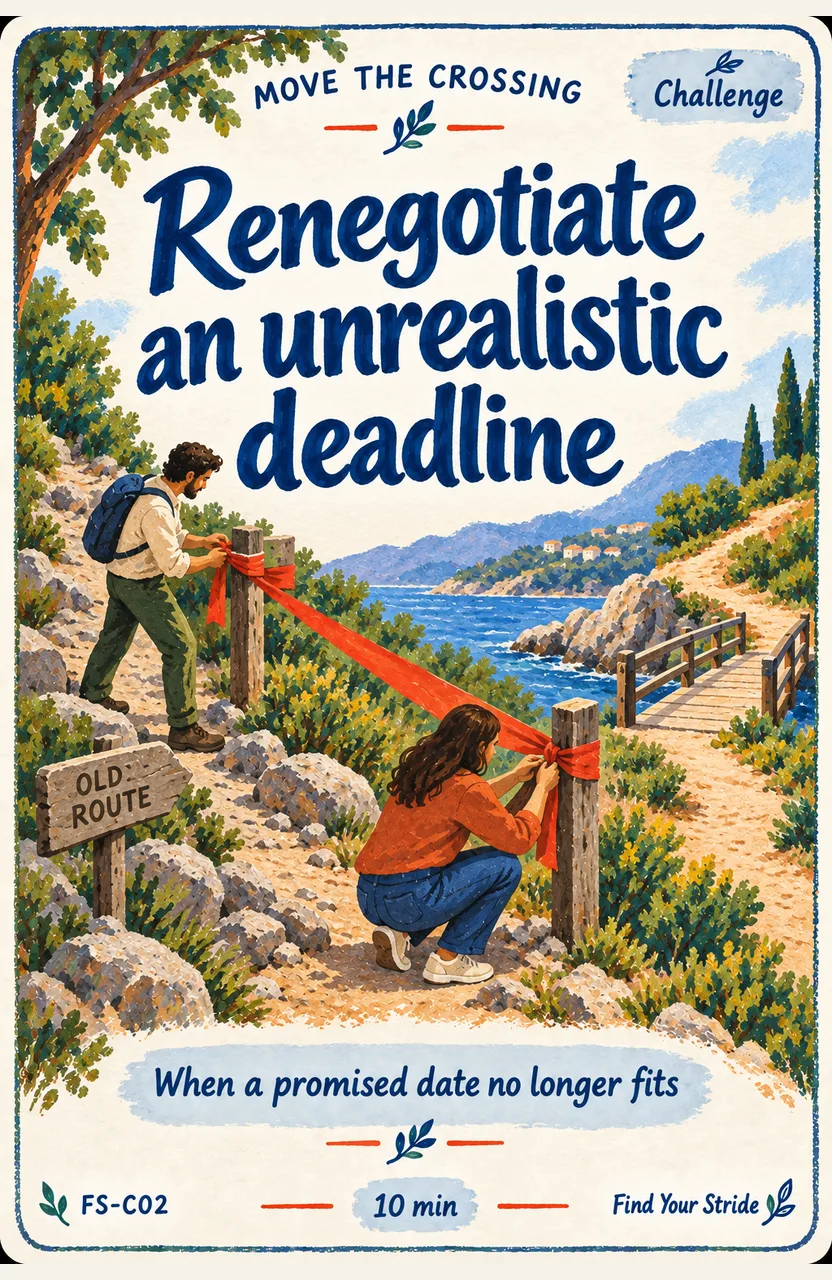
FS-F013 minMap the work already there
Topic deck · 20 cards · prefix FS
Find Your Stride
Pick up the project you stalled on, at a pace you can keep.
There's work you care about sitting half-done, a draft, a design or a shared project, and every time you look at it, restarting feels bigger than it should.
- Foundation 6
- Growth 7
- Mastery 3
- Challenge 4
14 sources citedCard evidence: 1 B · 19 C. Grades describe evidence, not deck quality.
Is this deck for you?
Where it takes you.
Pick up unfinished work, make room for changed circumstances and find a pace you can keep. Practical ways to return to projects and commitments that matter to you.
From
My project stalled and restarting feels huge
To
Back at it at a pace I can keep, finishing one usable piece at a time
What the cards have you do
- Map the work already there and write what finished means, so you restart from what exists rather than a blank page.
- Set a time to stop before you begin and match tasks to your energy, so sessions stay sustainable.
- Compare estimated and actual times at a weekly review, then finish one usable piece at a time.
- Have the conversations a return needs: agree with collaborators whether to restart, or renegotiate an unrealistic deadline.
The world of this deck
Four ways to use this deck.
The Open Trail: a humane gouache landscape atlas of returning, with winding routes, everyday work, sheltered stops and shared crossings.
Foundation
Find your place in unfinished work and make returning easier, one small step at a time.
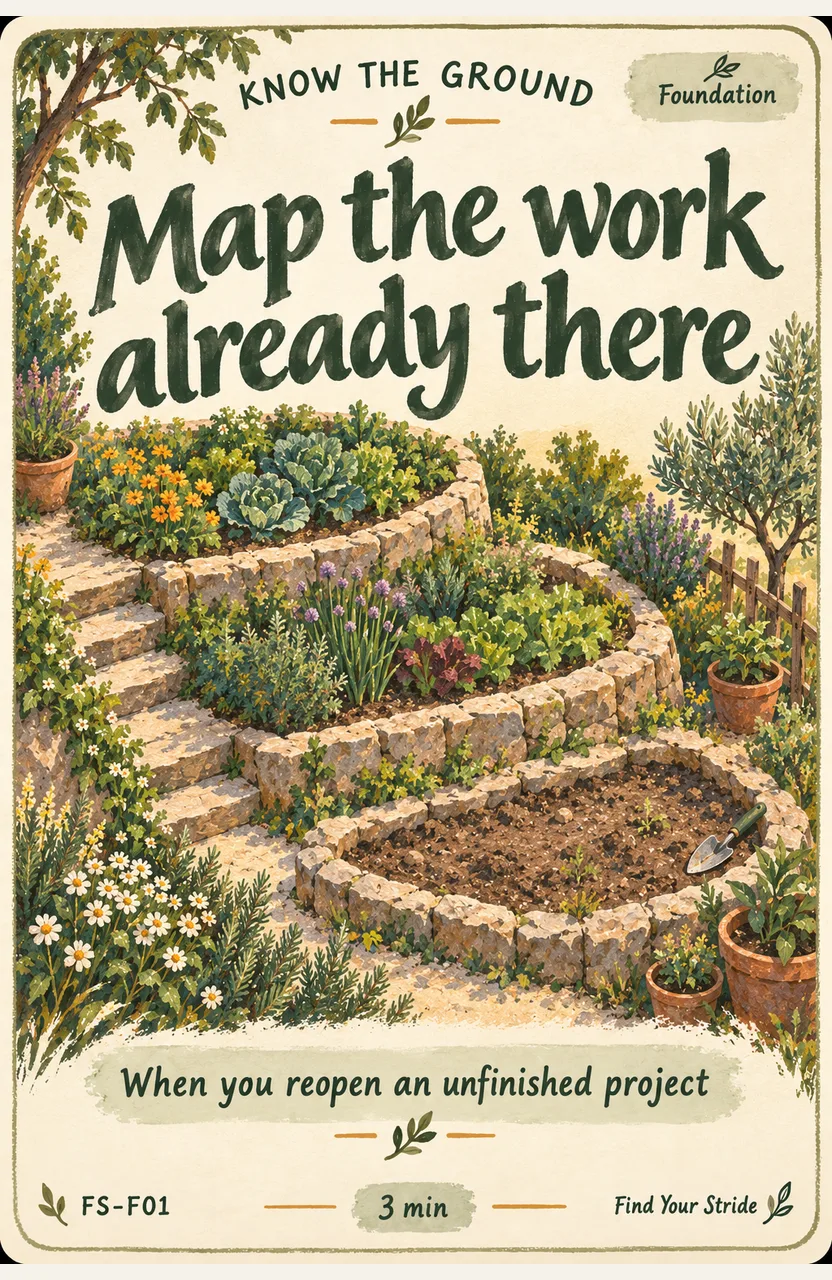
Growth
Set a workable pace and make room for interruptions.
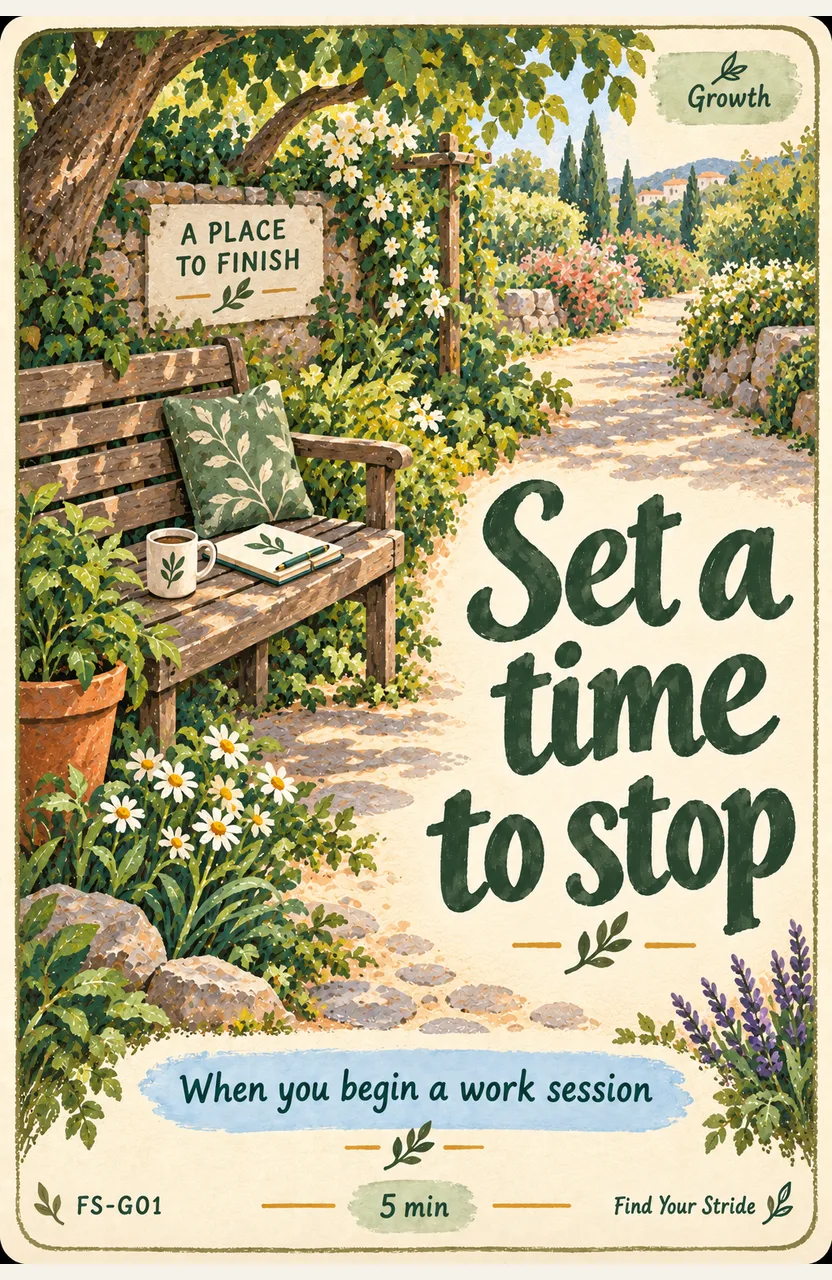
Mastery
Review commitments, adjust goals and keep useful projects moving over time.
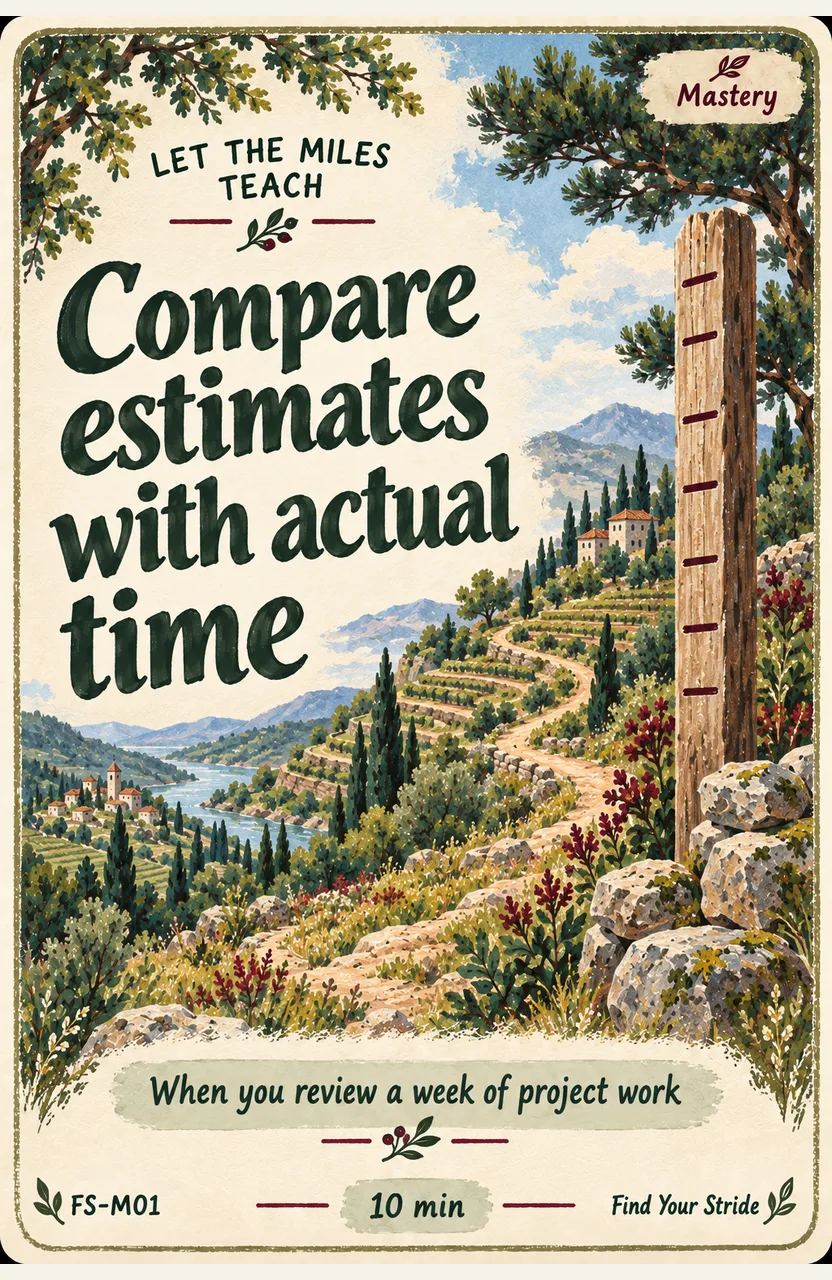
Challenge
Have the conversations that make a shared return possible.
Warm, candid and steady. Take interruptions seriously; let the reader choose meaningful work and a workable pace.
The wall
All 20 cards.
Choose recurring practices that work together, or take on a special mission. Tap any card to flip it.
20 cards · tap a card to flip it
Foundation 6
Small recurring actions with little setup. Choose anchors that fit your day.
FS-F021 minMark a gap and keep drafting
FS-F032 minWrite what finished means
FS-F042 minCheck why this still matters
FS-F052 minLabel the working version
FS-F063 minCheck the current requirements
Growth 7
Practices that need preparation, a recurring slot or a useful tool.
FS-G015 minSet a time to stop
FS-G025 minLeave time between commitments
FS-G035 minTry changes on a copy
FS-G0415 minMake a rough prototype
FS-G055 minMatch the task to your energy
FS-G0610 minCompare with a useful example
FS-G0720 minShare a quiet work session
Mastery 3
Practices you develop over weeks through skill, planning and trade-offs.
FS-M0110 minCompare estimates with actual time
FS-M0210 minSet a learning goal
FS-M0315 minFinish one usable piece at a time
Challenge 4
A bounded mission with a clear finish. It can combine practices over days or weeks.
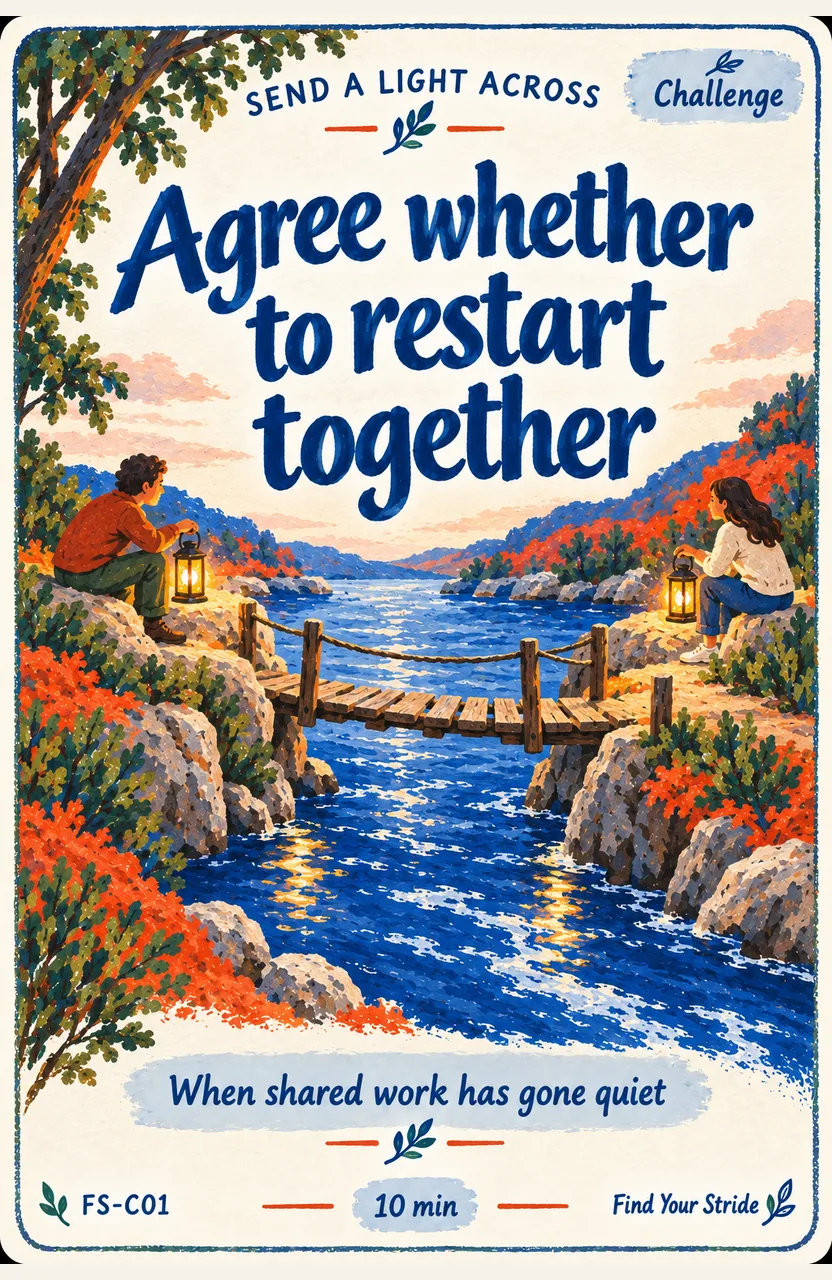
FS-C0110 minAgree whether to restart together
FS-C0210 minRenegotiate an unrealistic deadline
FS-C0315 minAsk one specific feedback question
FS-C0420 minHand over the current work clearly
Start with your situation
Ways into this deck.
Find a useful first step, with related cards from across the library.
18 cards · draft
How do I decide what still fits after my life changes?
Separate what you know from what is still open, review goals and roles against current conditions, and try a next direction at a scale you can choose. You can keep, adapt, pause or stop; none of these practices is a required stage.
15 cards · draft
How can I develop a photographic series?
Start by making one deliberate light image, framing a relationship and selecting a keeper. For a body of work, add one weekly project session and sequence a few selections; re-edit before adding more. General example, feedback and safe-copy practices are related library routes, not cards supplied in this physical deck.
9 cards · draft
How do I restart work with other people?
Check that the shared request is current, renew the arrangement and make a specific request for feedback or a realistic deadline. A handover is complete when the next person knows and accepts what they are taking on.
10 cards · draft
How do I return to unfinished work?
Find the shape of what exists, identify the working version and check the request before rebuilding from scratch. A draft can stay imperfect while you recover your place.
11 cards · draft
How do I work at a pace I can sustain?
Set an edge for the current piece, leave space in the plan and use actual experience when forecasting. Your current capacity belongs in the plan, including days when work needs to be reduced or renegotiated.
16 cards · draft
How can I make time for friends in a busy week?
Start with a personal hello, a specific invitation and a remembered follow-up. Share an ordinary errand before adding a separate social commitment. Choose one repeat slot when the first connection fits.
13 cards · draft
How do I make a clear offer and deliver my first paid work?
Check the desired result, ask clearly and agree a next step. Add a tailored quote and useful handover when the opportunity reaches that stage. A respectful no is a valid close.
22 cards · draft
How can I get better at presentations with limited rehearsal time?
Use one purposeful rehearsal and a real listener response. Add a recurring exchange or revise an explanation from audience questions when it earns its place. Challenges finish with an actual presentation, not watching a recording.
11 cards · draft
How do I start making more than I consume?
Begin with a nearby object, a pencil or a short piece of music. Make one small response before choosing a larger creative series or a finite mission.
Get the deck
Free to download. Worth printing.
The same 20 cards either way. Download and print them at home today, or get the printed edition and have them ready to pin up.
Free · digital download
Print it at home
$0
- All 20 cards, front and back
- Print on your own printer or save as a PDF
- Each card's full page online, with its source
- No account, no email
Paid · printed edition
Keep it in print
Price set before launch
- Professionally printed, full-colour fronts and backs
- Cut, stacked and ready to pin up
- QR codes that open each card's page
- Pays for the free library
Printed edition in the works · waitlist open
What's the difference between the free deck and the printed deck?
The cards are the same. The free deck is a download: open it in the print studio and print it at home or save it as a PDF. The printed edition is professionally printed, front and back, with each card's QR code, so it's ready to pin up the day it arrives.
Can I buy a printed deck right now?
Not yet. The original boxed decks are sold out, and the printed editions of the library decks are being prepared. Join the waitlist on any deck and we'll email you once when it's ready to order.
Do I have to do a card every day?
No. You can pin one card and keep at it until it sticks, or draw a card a day for variety. Both work. The point is repeating something worthwhile at a moment you already have.
What if I miss a day?
Pick it up the next time the cue comes round. In the best-known study of habit formation, missing a single day didn't measurably set people back. Every card also says how the habit usually slips and what to do about it.
Are Challenge cards required?
No. They're bounded missions with a clear finish, from one evening to a few weeks. Do one when you want a stretch, and skip any that don't fit your life or health.
From the screen to the fridge
Put the card where the habit happens.
Every deck is free to download and print at home, then pin up: on the fridge, the mirror, beside the monitor. Or get the printed edition, ready to pin up the day it arrives.