Draw one still life each week
Whenyou sit down for your chosen weekly drawing
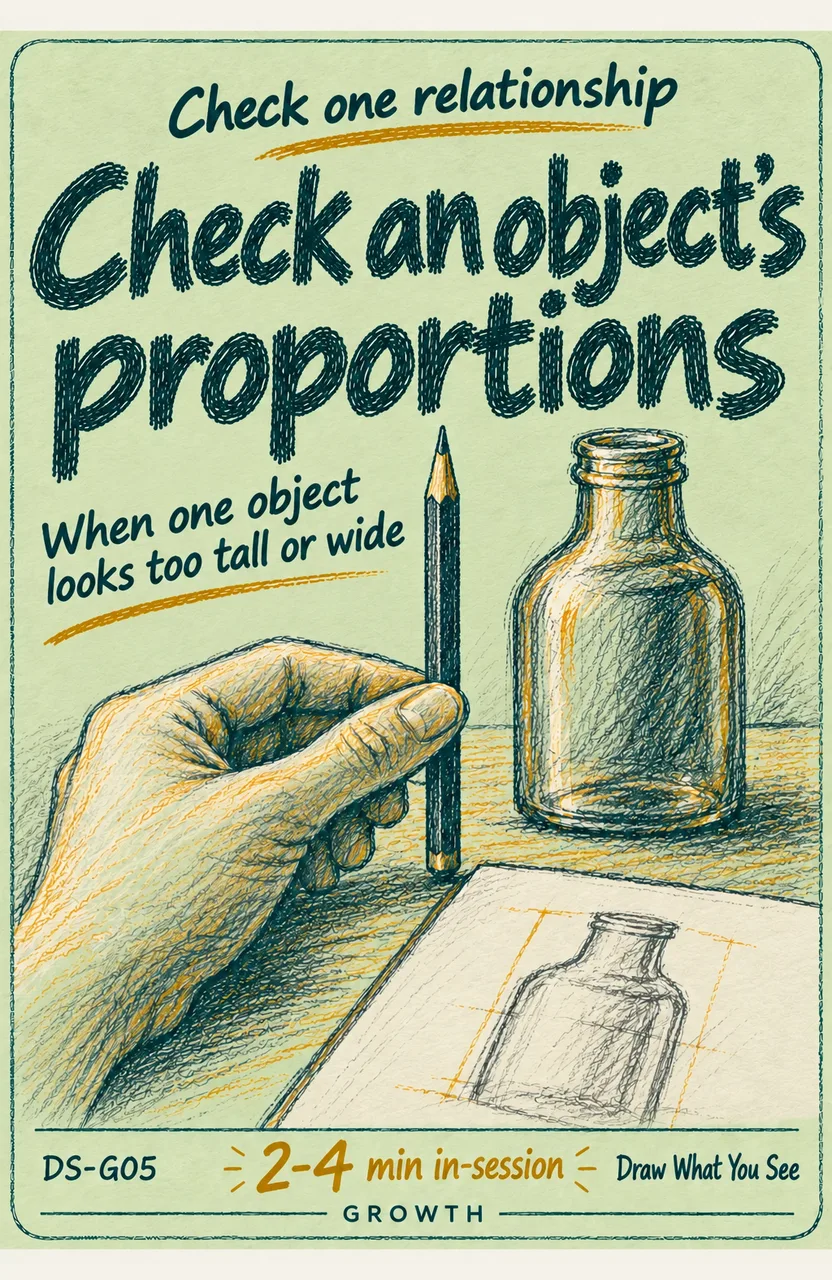
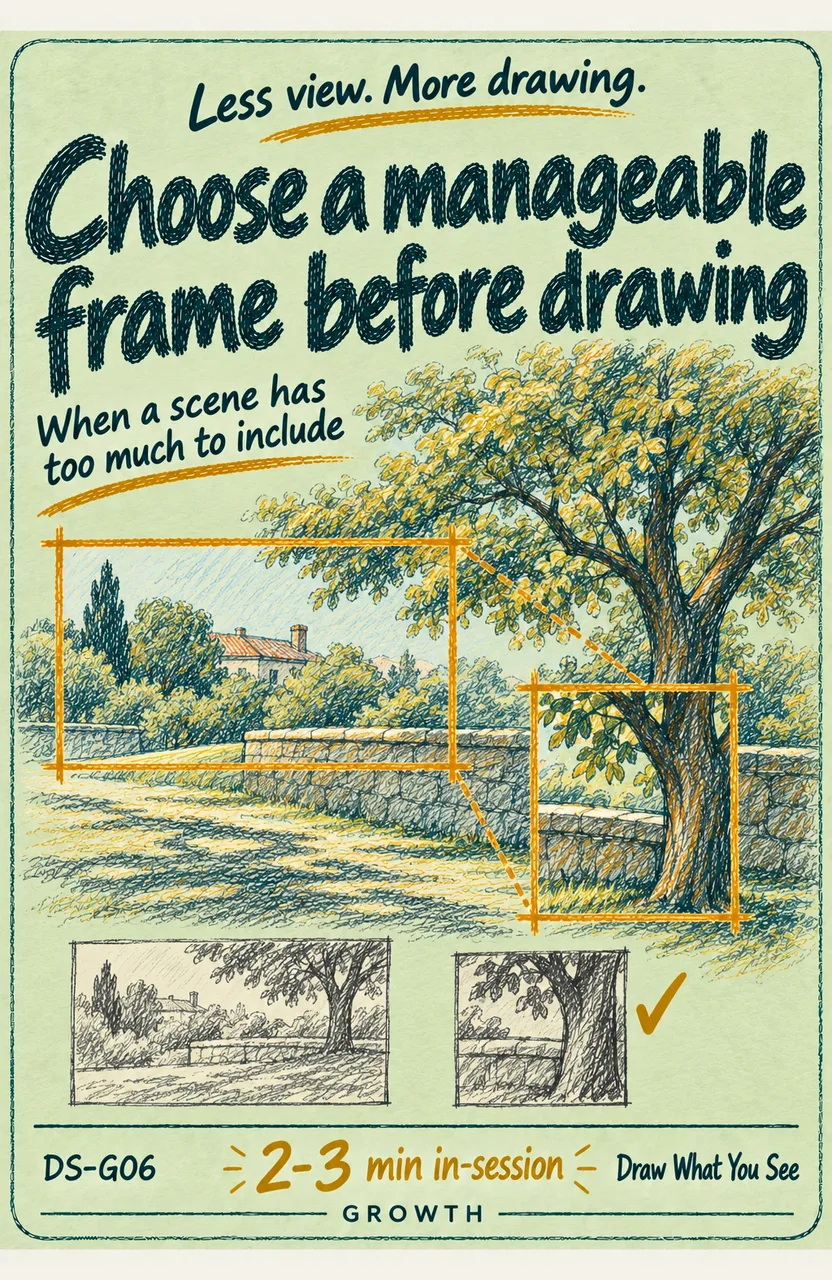
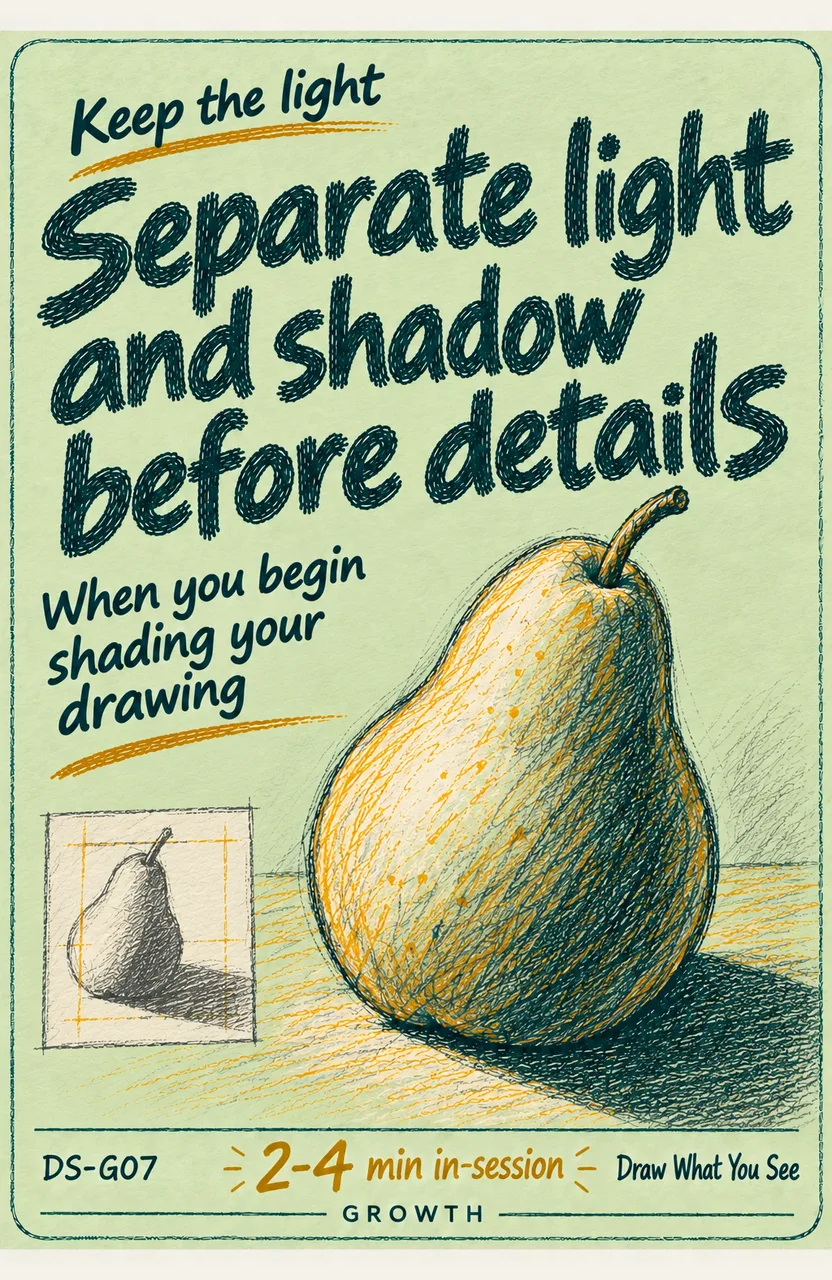
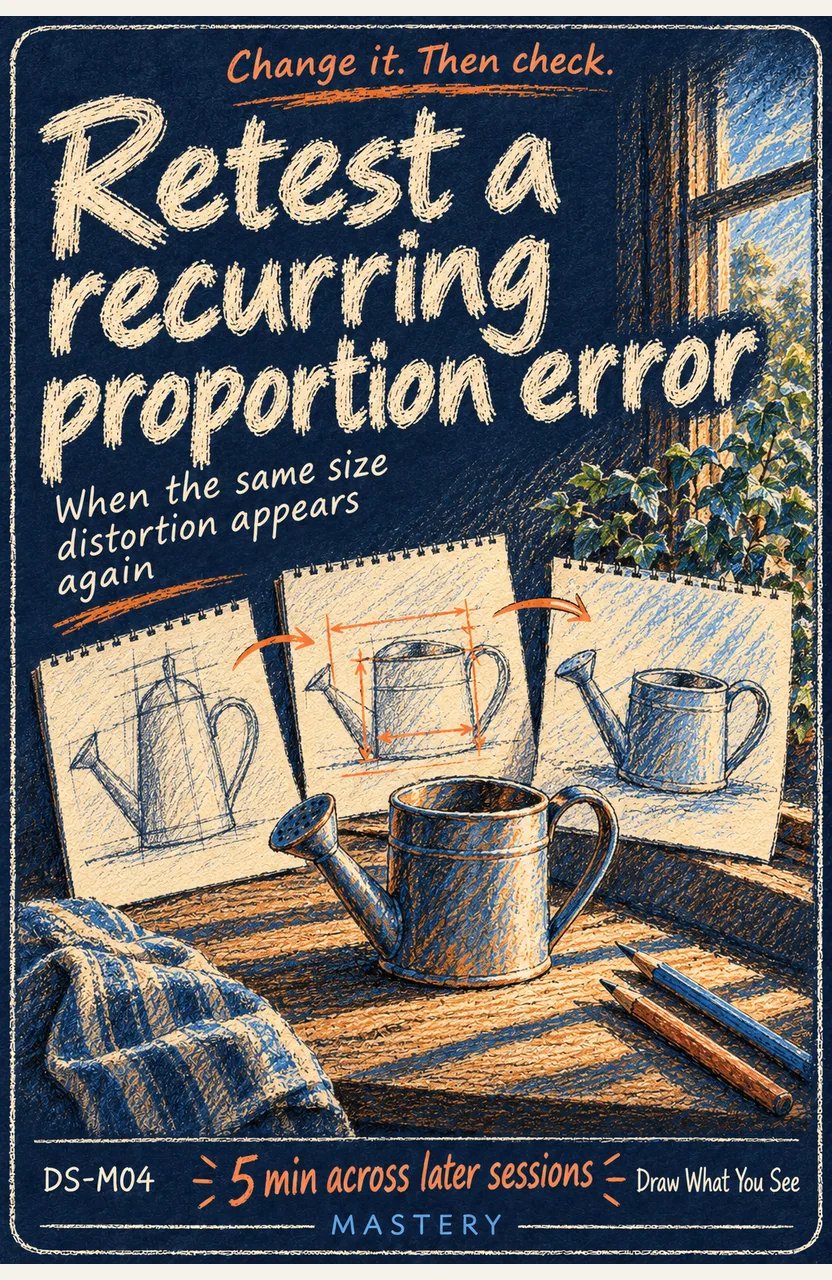
Arrange two or three ordinary objects. Spend about 20 minutes drawing their large shapes, one gap or overlap, and the main shadow. Look between objects and page. Compare one relationship, correct a mismatch and note what to check next week.
- Make it easier
- Use two simple objects; draw their large shapes and one gap.
- Progression
- When the objects fit and overlap as intended, try a more irregular arrangement next week.
Start tiny
Draw one object’s largest shape for one minute.
National Gallery of Art, Lesson: Drawing Everyday Objects. Read the source ↗ — documented still-life instruction. Vodyanyk, M. M., and Jaeggi, S. M. (2025), Promoting Successful Cognitive Aging Through Observational Drawing: A Feasibility Study, Research on Aging 47(7–8), 361–374. Read the source ↗ — one randomized feasibility study supports learning observational drawing through lessons and repeated practice. Older adults completed ten lessons and more frequent, longer practice; this weekly dose and correction cue were not tested.
Foundation: The load-bearing practices you return to. Build the base and keep it in play.