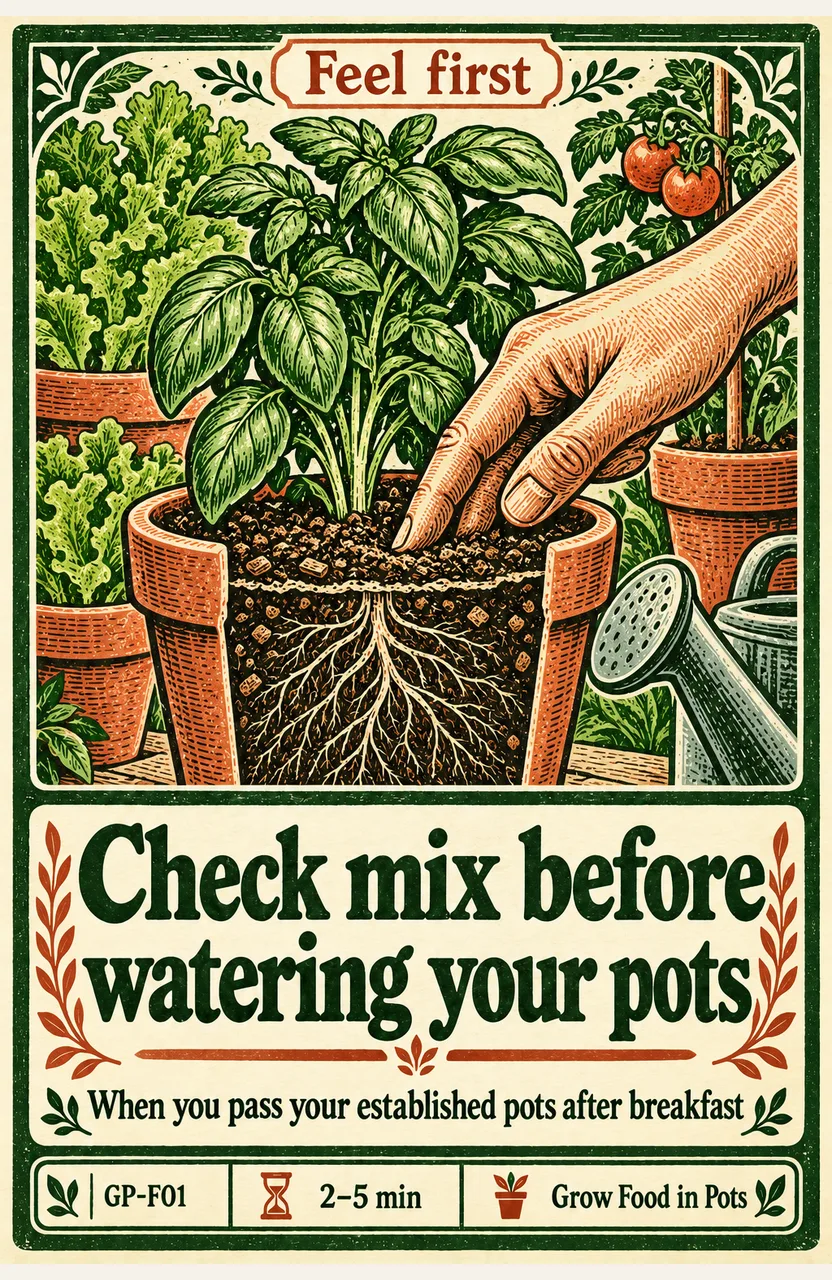
GP-F012–5 minCheck mix before watering your pots
Home & family / Free printable deck
Grow Food in Pots
Tend small edible pots and put their harvest to use
- 5 Foundation
- 6 Growth
- 2 Mastery
- 3 Challenge
16 cards · Free to print or save as PDF
01 / A place to start
Choose what you’ll
return to.
You have a suitable growing site and want a few edible pots you can care for, harvest and replenish.
- Starting point
- Uncertain watering, lost herbs and harvests you never use
- Work towards
- A small, site-matched container garden that reaches your food
Your recurring practice
Make one planned care visit per pot each morning. Feel mix and use the crop-specific GP-F01 rule; water only when needed. Add planned checks in drying weather. Harvest is a separate eligible occasion when usable food is ready and you will use it. Seed-stage lettuce uses GP-F09, not the established-pot rule.
Begin with one labelled culinary basil plant in a draining food-safe pot and fresh potting mix, clean scissors and a site with 6–8 hours of suitable direct sun or correctly installed grow lighting. Indoor winter light often needs supplementation. Optional lettuce needs a cool season and about 5–6 hours of sun; a compact container tomato needs about 8 hours, at least a 19 L pot and enough frost-free growing time. Start with one route.Your cornerstone card
Tap to read the full practice · Choose for your situation
Your starting hand
Keep this practice in play.
One cornerstone carries the load. Everything else on this page exists to make those repetitions easier, better or put to use.
Before you begin
Begin with one labelled culinary basil plant in a draining food-safe pot and fresh potting mix, clean scissors and a site with 6–8 hours of suitable direct sun or correctly installed grow lighting. Indoor winter light often needs supplementation. Optional lettuce needs a cool season and about 5–6 hours of sun; a compact container tomato needs about 8 hours, at least a 19 L pot and enough frost-free growing time. Start with one route.
Day one
Your first session
- 01
Put GP-F01 beside your plant-visit cue, such as after breakfast. Feel basil mix about 1 cm down: water to drainage only if dry, then empty the saucer. Leave moist mix alone.
- 02
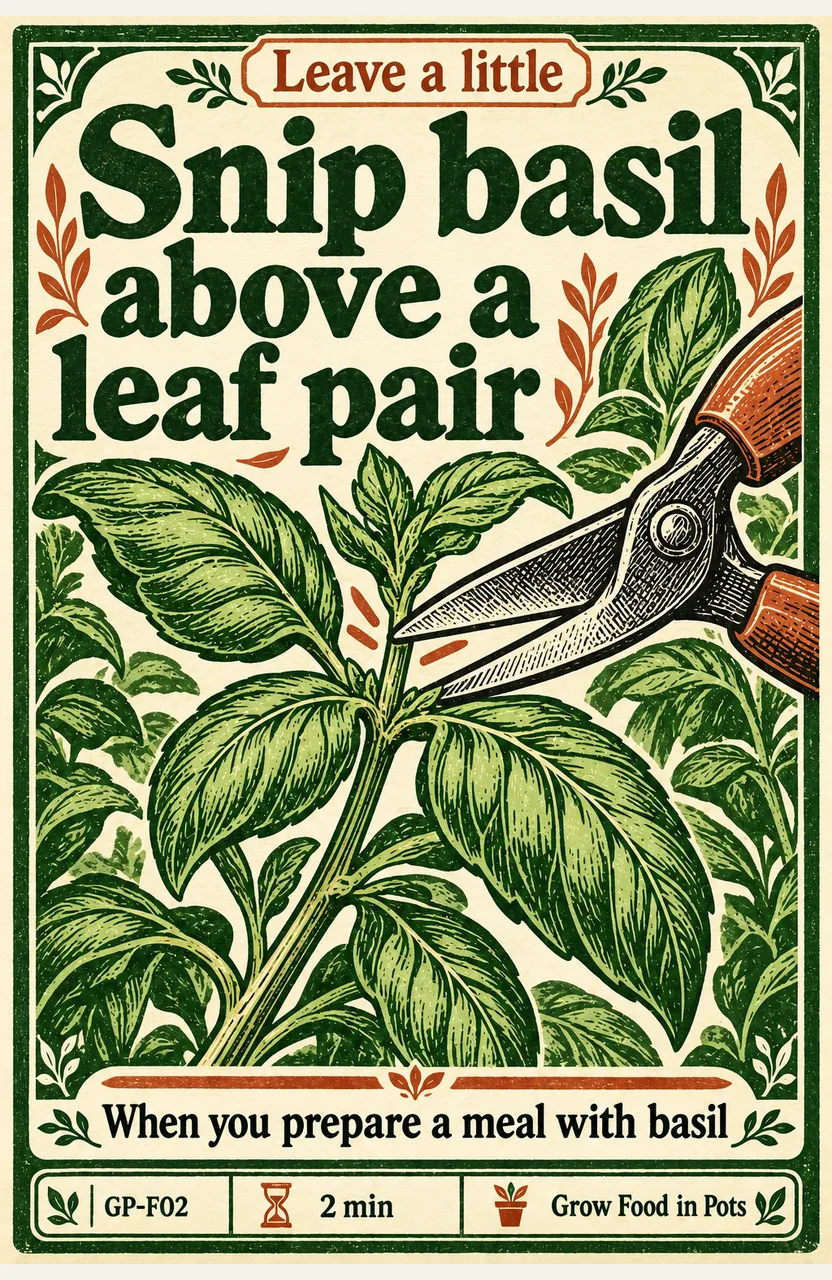
Use GP-F02 at meal preparation only when basil has several healthy leaf pairs. Snip a modest shoot above a lower pair, wash it and use it. Leave healthy growth.
- 03
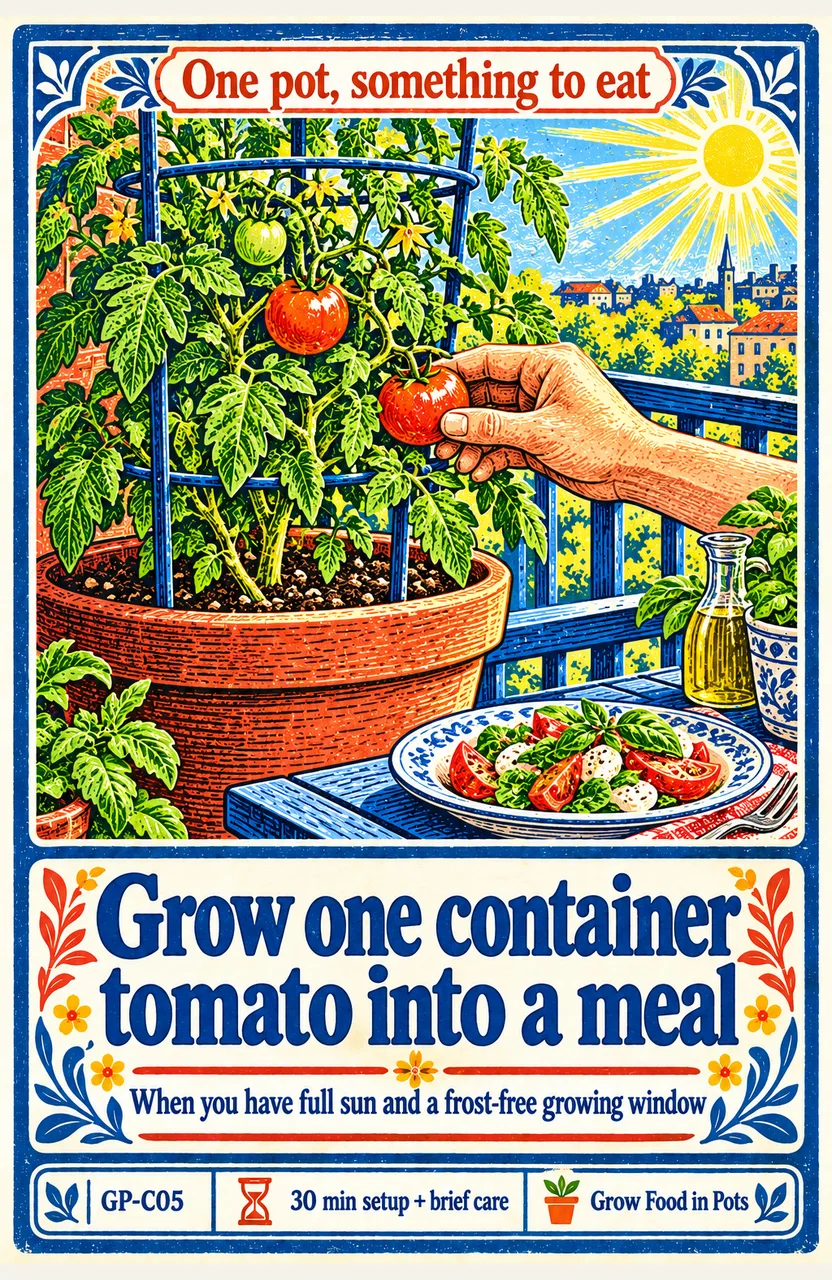
Keep this small hand. For lettuce from seed, choose GP-C04 and use GP-F09 until emergence, then GP-F01 plus GP-F07. For an established compact tomato, use GP-C05 with GP-F01 and GP-F08.
After that
The loop you return to.
No streak to protect. Do the usual practice when its moment comes, keep it alive on a hard day, and let each one improve the next.
- Your usual practice
Make one planned care visit per pot each morning. Feel mix and use the crop-specific GP-F01 rule; water only when needed. Add planned checks in drying weather. Harvest is a separate eligible occasion when usable food is ready and you will use it. Seed-stage lettuce uses GP-F09, not the established-pot rule.
- On a difficult day
Check one pot and give any needed care; count the other planned pot visits as missed. With one pot, the moisture decision is already the normal action. If absent, arrange a willing carer and record their care separately from your own visits. A glance without the moisture decision is fallback only.
- Make the next one better
Inspect leaves as you tend. If the same trouble returns, use GP-M04: name a sign, check a likely cause, change one condition in later visits and retest that same sign. For repeated seed failure, GP-M05 compares emergence in a later labelled row. New light-related growth needs about two weeks before comparison.
See what adds up
Small reps, counted honestly.
For one established pot over 28 days, 24 normal checks plus 2 glance-only fallbacks plus 2 misses gives 24/28 normal completion. Of the 24 checks, 9 might need water and 15 correctly need none: 24 inspections and 9 waterings. Record actual harvests separately; visits do not forecast yield.
- One basil pot
- Cool-season lettuce
- Sunny container tomato
Growth and feedback
Add support when it helps.
Not a checklist. Add one when you can name the problem it solves in your practice.
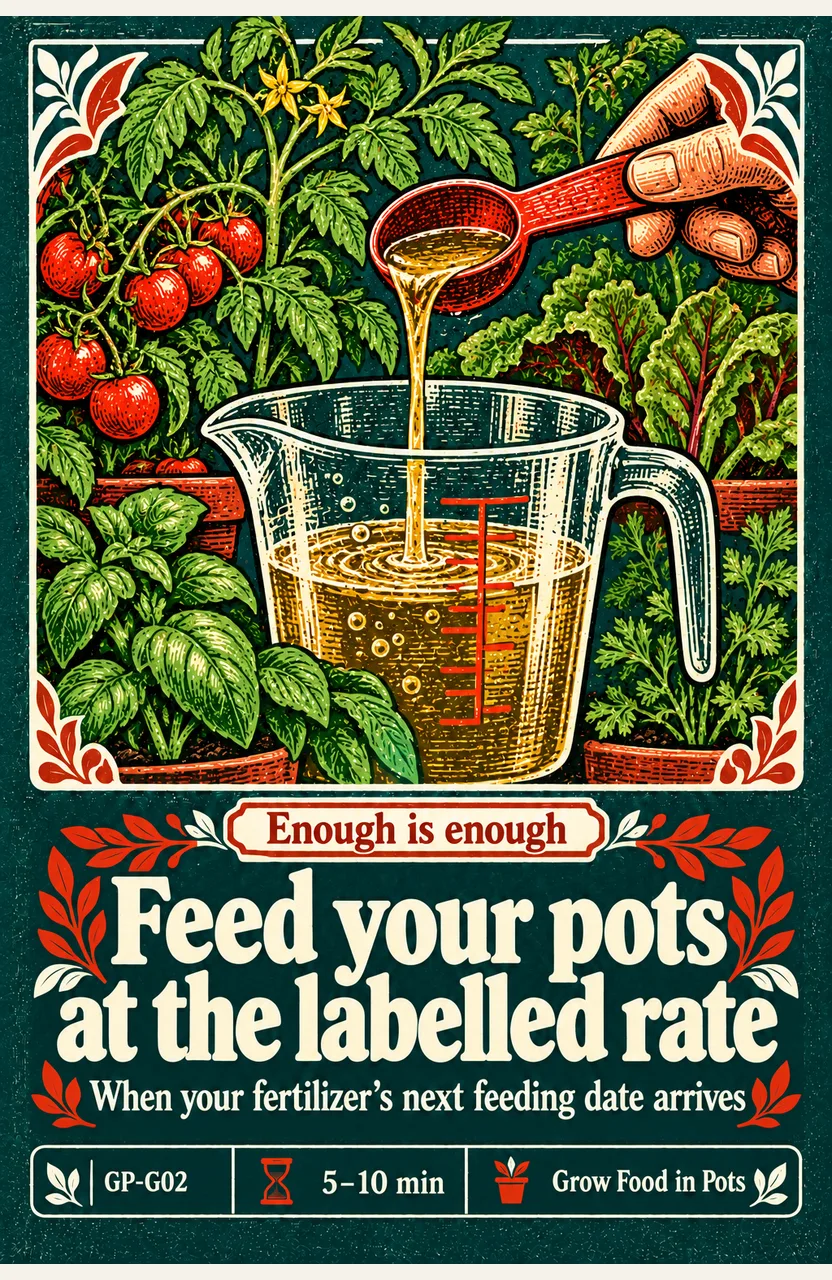
Measure feed only when the crop/product label says it is due, accounting for fertilizer in the mix.
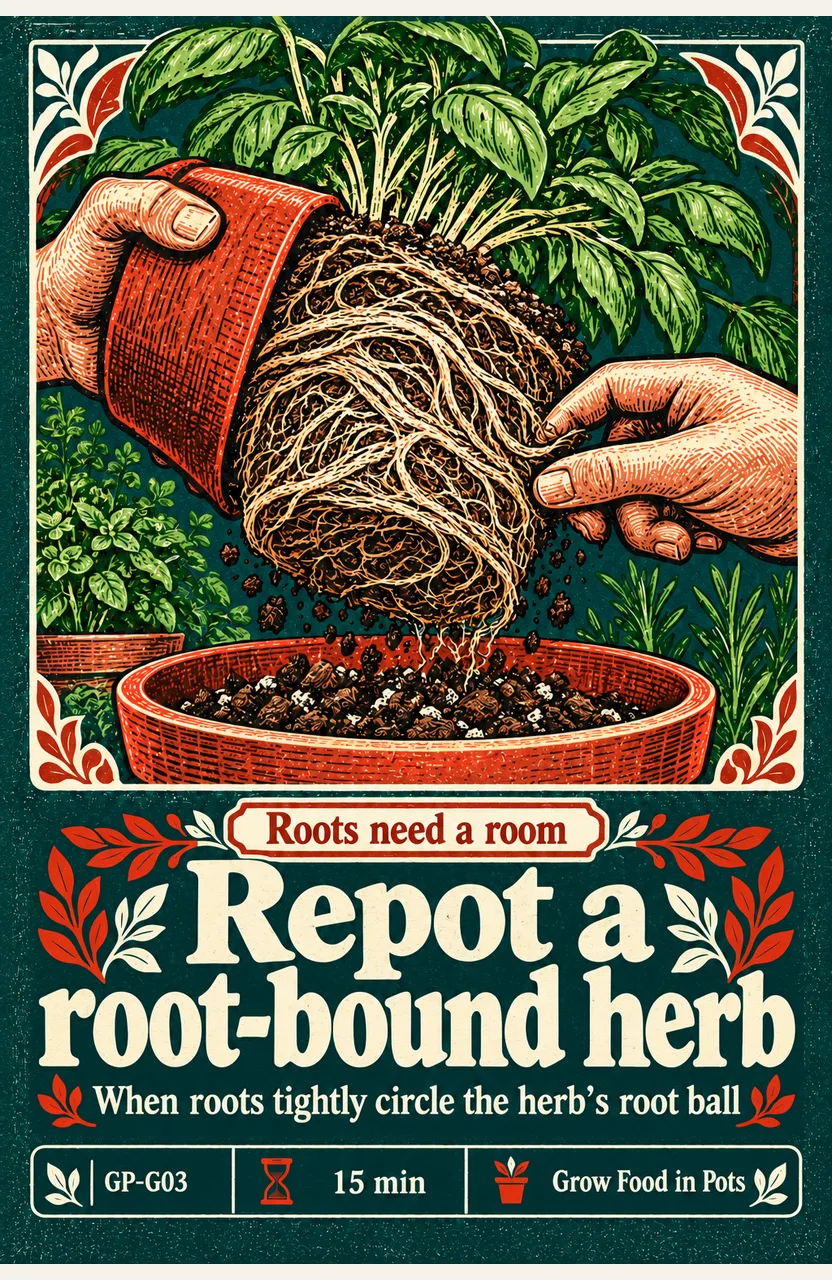
Repot an herb only when tight circling roots constrain it; this is occasional care.
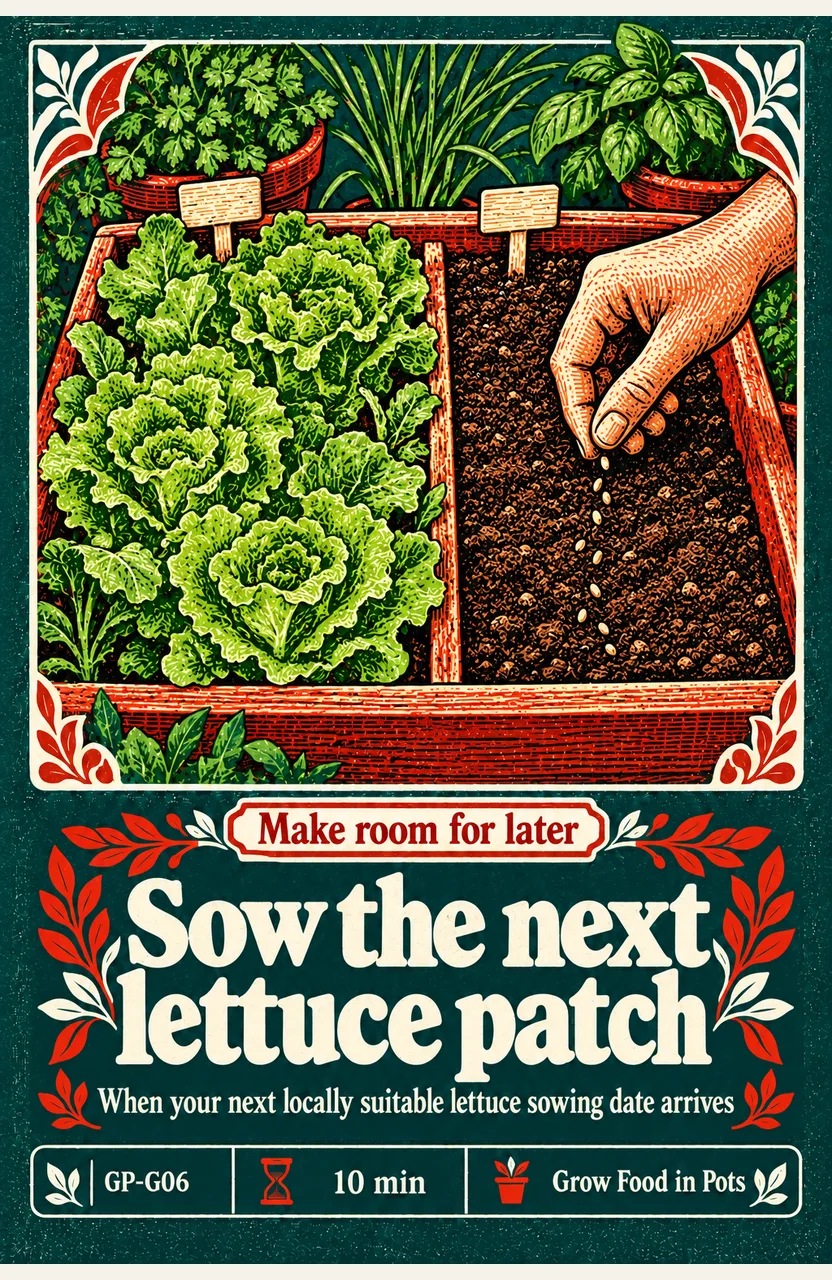
Add a later lettuce sowing only when spare space and the season support continued harvest.
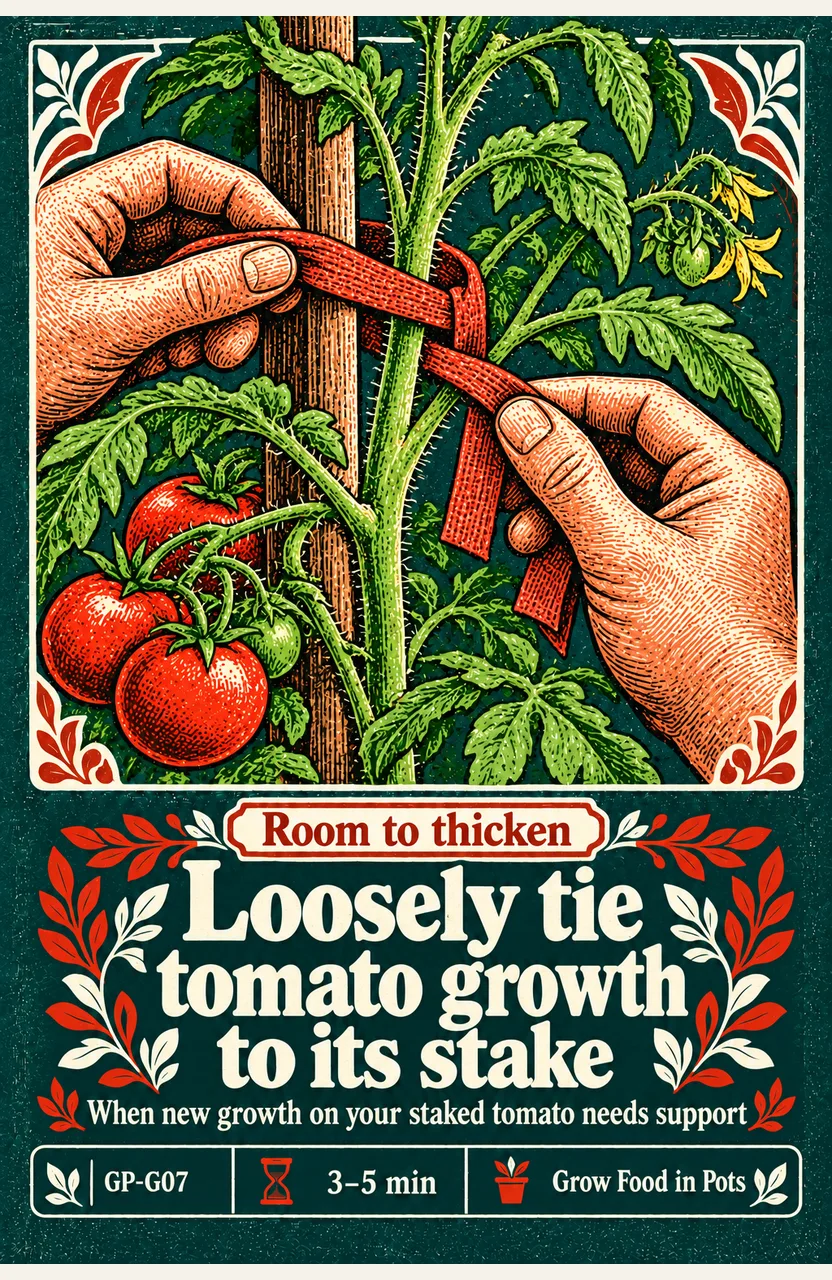
Support new growth on tomatoes that actually need staking.
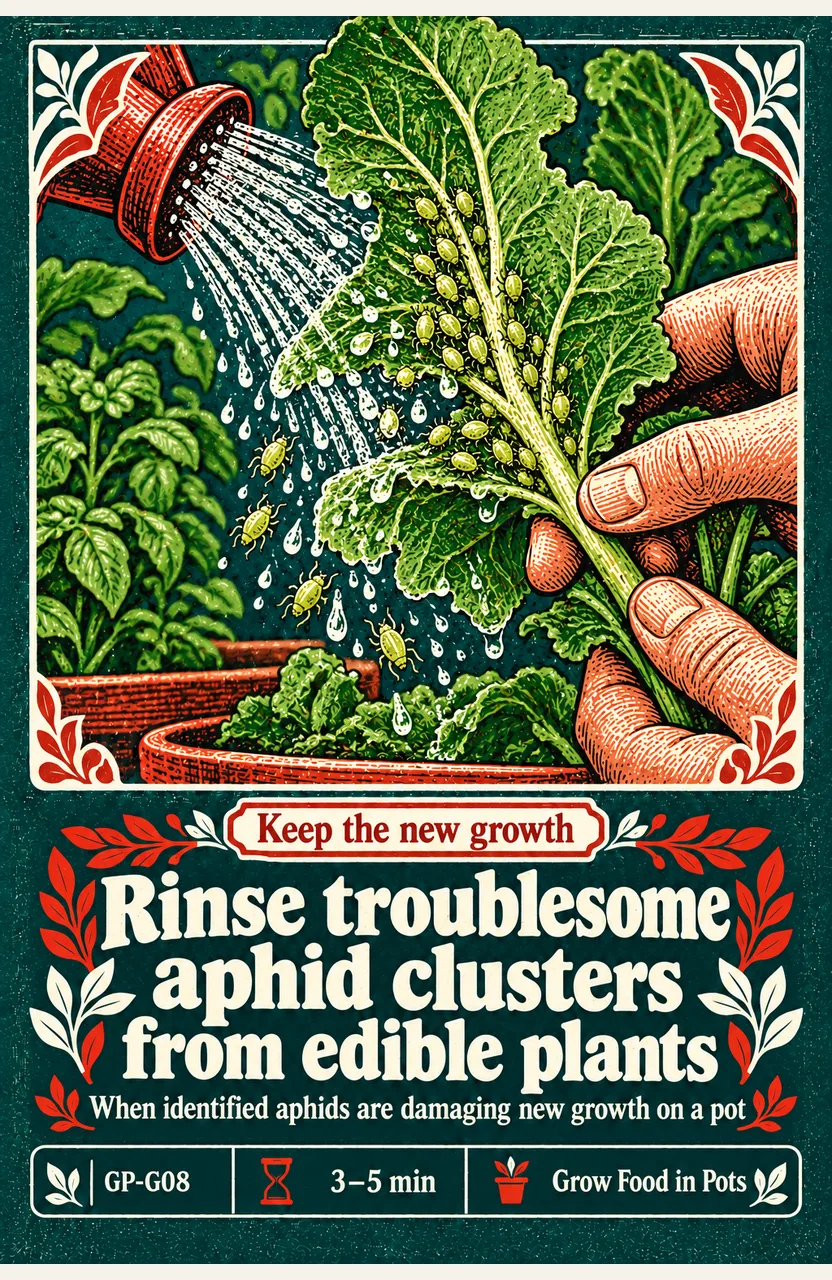
Respond to identified damaging aphid clusters without treating every insect.
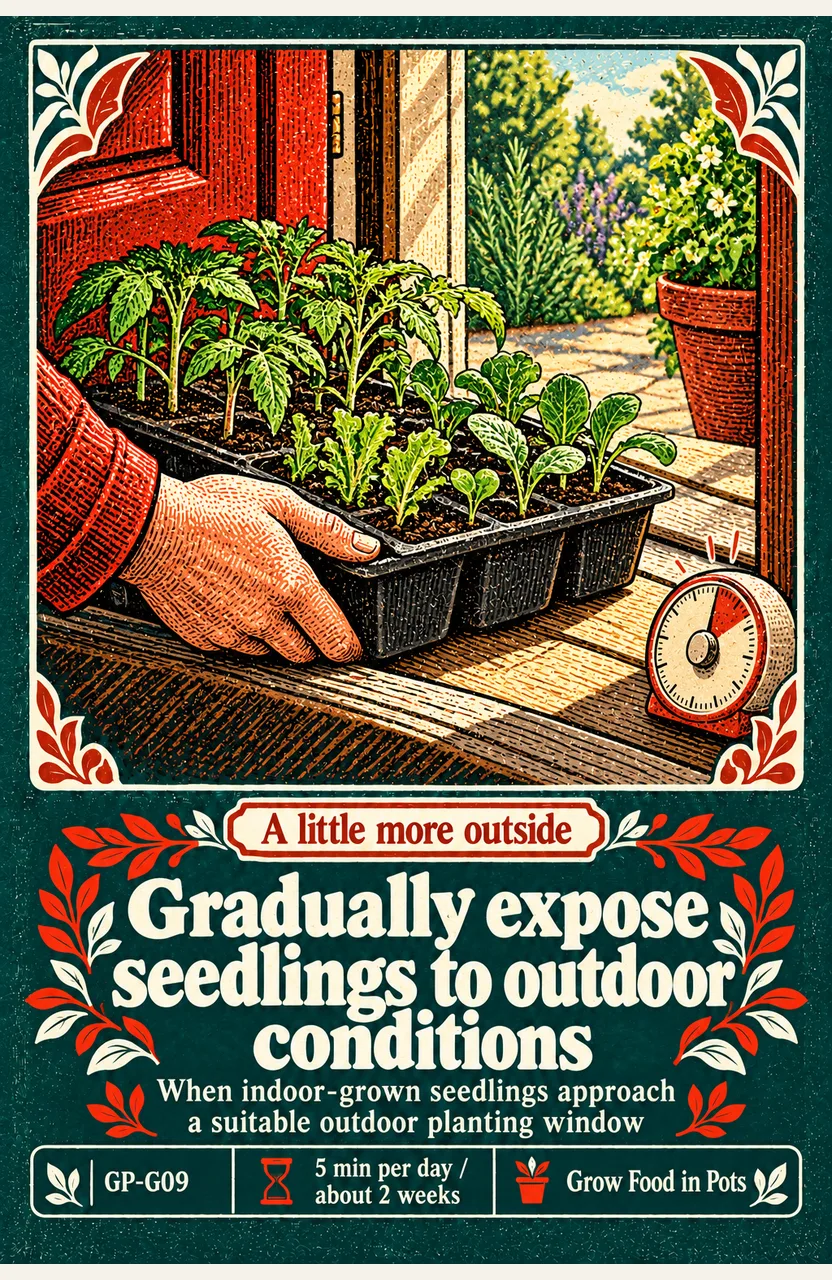
Use gradual exposure for indoor-grown seedlings moving outdoors.
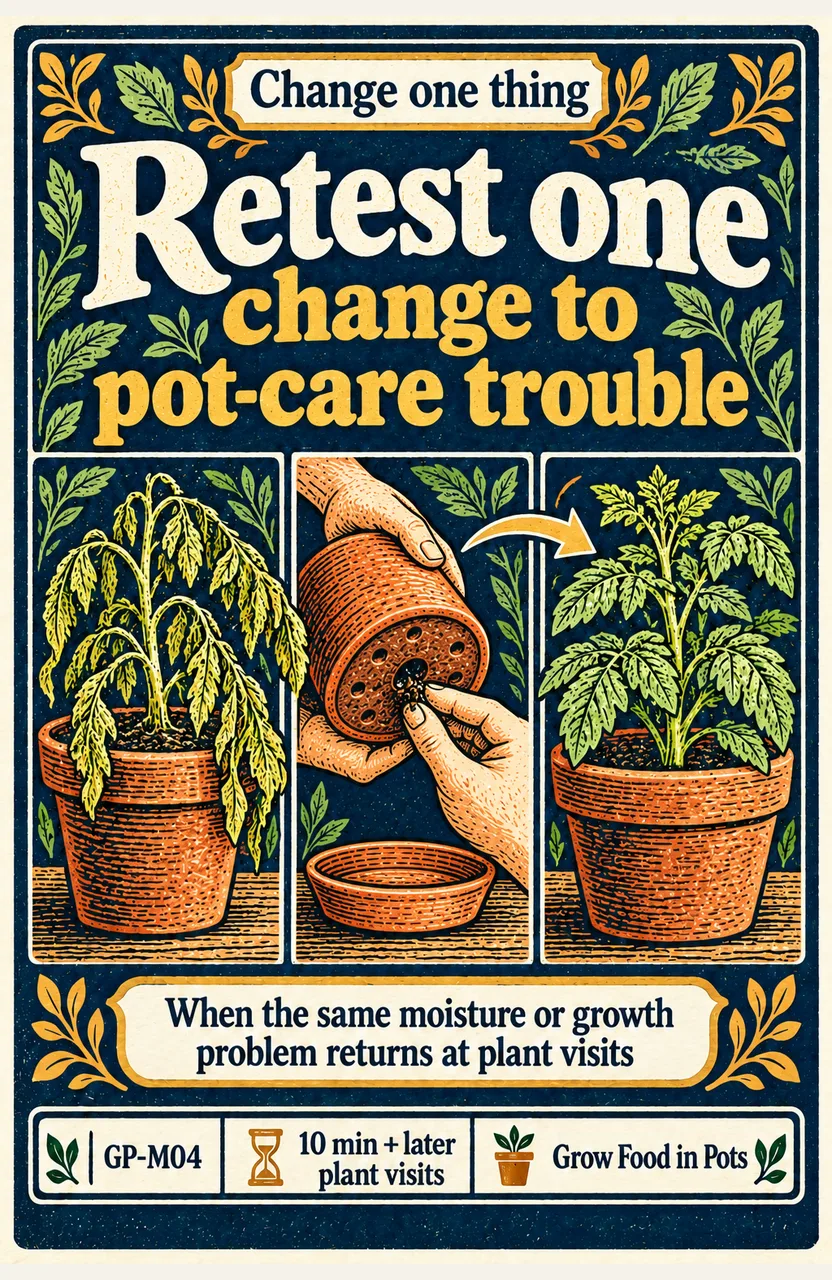
Retest one corrected care condition against the same observed sign.
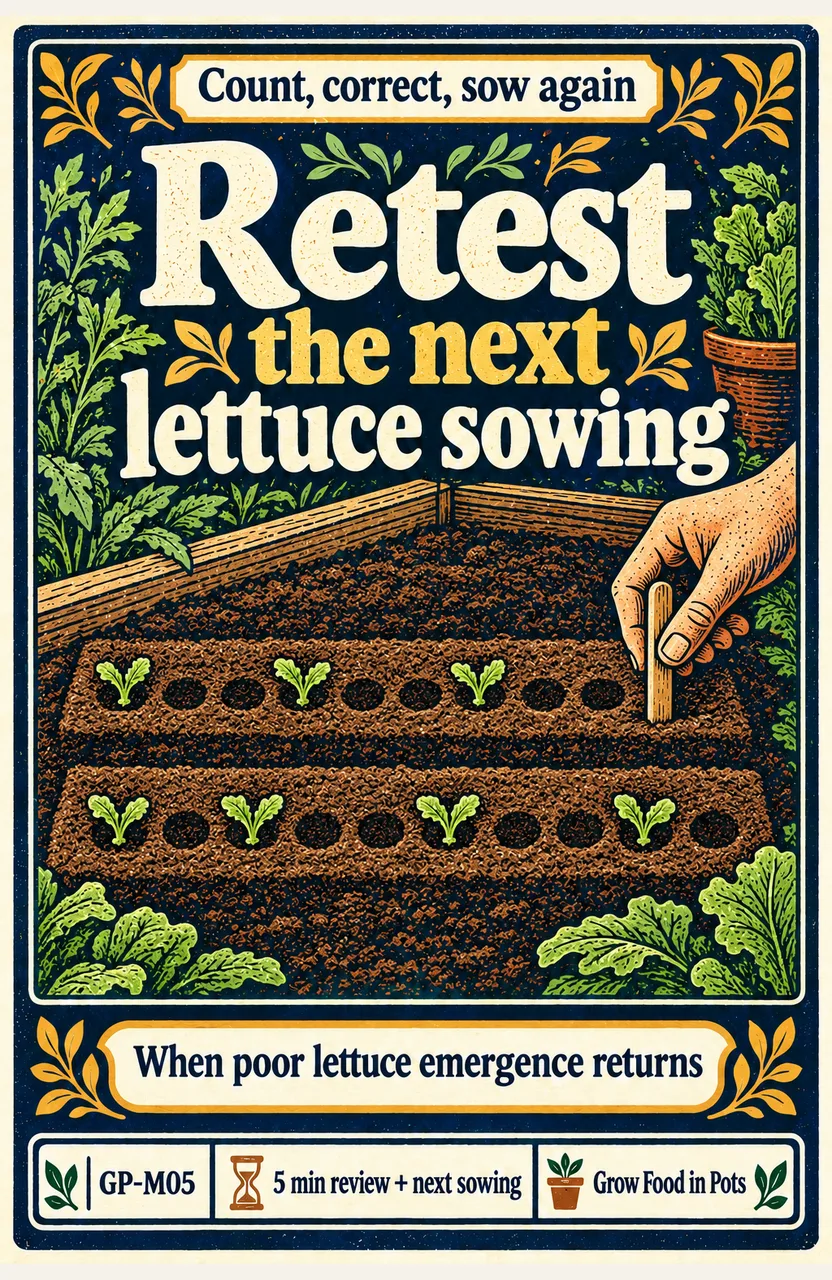
Compare emergence after a corrected later sowing, with seed count and checking interval recorded.
Choose a hand for your situation
Where are you right now?
Keep a small hand active. Pick the route that matches what’s actually in front of you.
When
You have established culinary basil and a warm, bright crop-suitable site.
Do this
Check mix at your morning visit; water only when dry about 1 cm down. At meal preparation, snip a modest shoot above a lower leaf pair only when healthy growth is ready. Leave healthy leaves.
Work towardsYour own basil is used in a meal, with the plant left growing.
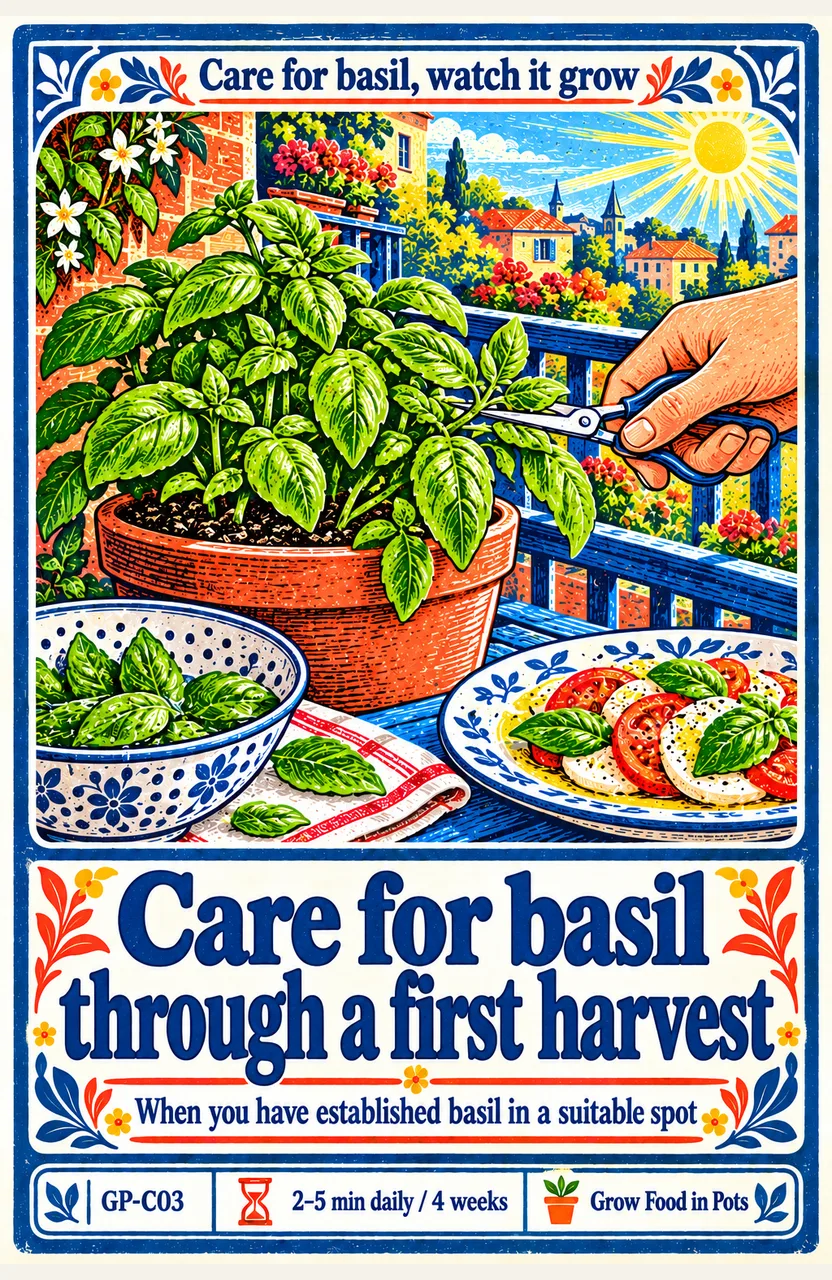
1 / 3
Something to work towards
Put the practice to use.
Use a safe harvest in food and record what was actually harvested. Keep the plants useful where possible; a spent annual or season ending is a reason to replant or stop. Basil has a four-week review, lettuce eight weeks, and tomato the locally feasible growing season; elapsed time never completes a mission.
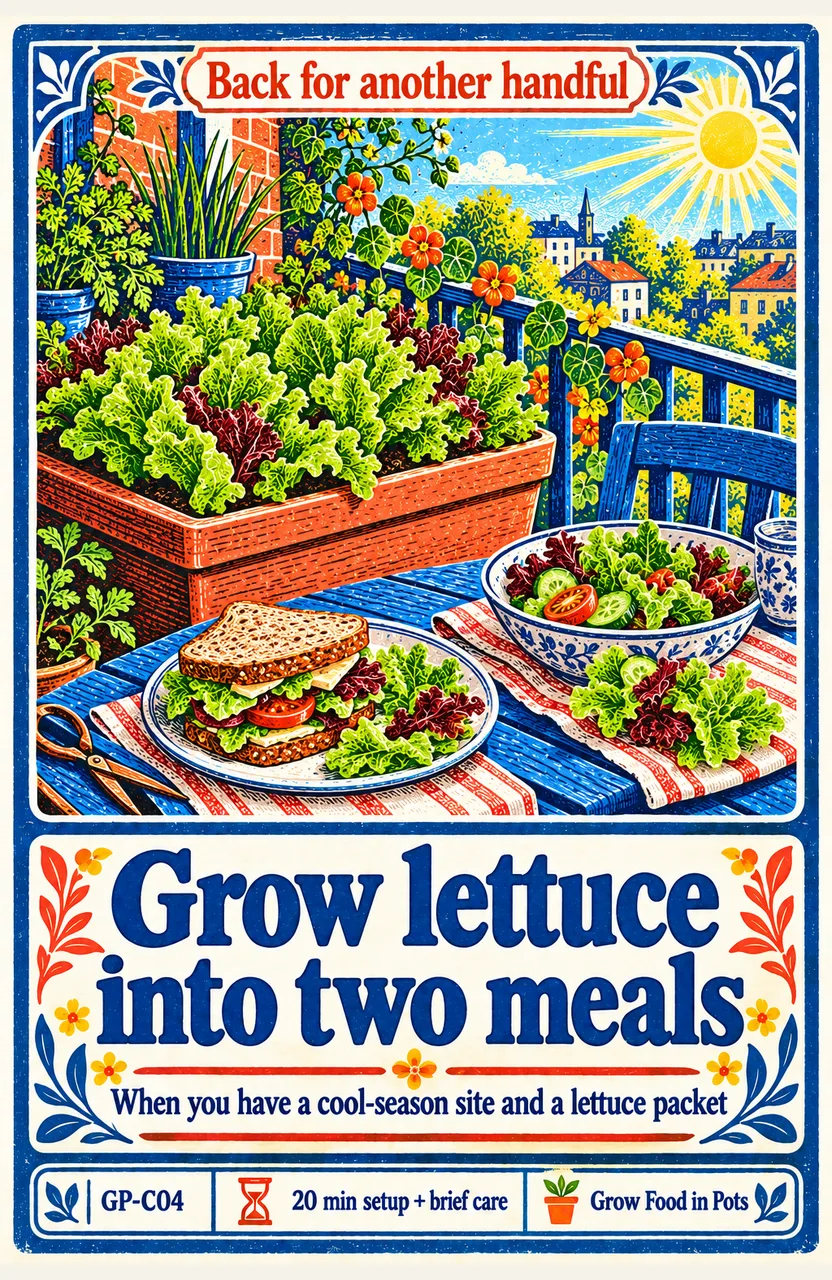
03 / Inside the deck
Find what supports
your practice.
Browse all 16 cards and read their full instructions. Choose a manageable combination; keep the core work active as you explore support or a Challenge.
Put it to use. A bounded mission with an observable finish, supported by the practices you use.
Refine through feedback. Inspect your work, apply a specific correction in later practice and check whether it helped.
Strengthen the practice. Supporting habits that improve the conditions for useful repetitions: preparation, consistency or necessary recovery.
Do the core work. The load-bearing practices you return to. Build the base and keep it in play.
Use these roles to think about your hand. Read each card’s actual action and choose the contribution you need; a tier label alone doesn’t make it right for your goal.
16 cards · showing 12 · tap a card to flip it
GP-F012–5 minCheck mix before watering your pots
GP-F022 minSnip basil above a leaf pair
GP-F072–5 minPick outer lettuce leaves for your food
GP-F082–5 minPick ripe tomatoes without pulling the stem
GP-F091–3 minKeep sown lettuce mix moist until emergence
GP-G025–10 minFeed your pots at the labelled rate
GP-G0315 minRepot a root-bound herb
GP-G0610 minSow the next lettuce patch in reserve space
GP-G073–5 minLoosely tie tomato growth to its stake
GP-G083–5 minRinse troublesome aphid clusters from edible plants
GP-G095 min per day / about 2 weeksGradually expose indoor seedlings to outdoor conditions
GP-M0410 min + later plant visitsRetest one change to repeated pot-care trouble
Showing 12 of 16 cards
12 sources citedCard evidence: 16 C. Grades describe evidence, not deck quality.
04 / From screen to everyday life
Put a good idea
within reach.
Print one card for the place you’ll use it, or make the whole deck. Choose your cards and layout in the print studio.
Open print studioFree · Print at home or save as PDF
- 01
Choose what you need.
The deck is preselected. Keep every card or just the ones you want to try.
- 02
Make it fit your space.
Choose A4 or US Letter, a card size, and fronts only or a layout with backs.
- 03
Put it where it happens.
Print, cut, and place a card where its cue will make sense to you.
Do I need to use a card every day?
Use the frequency and conditions that fit the practice. Return to the same core action when its cue happens. A missed occasion doesn’t erase earlier work; adjust the dose or cue if the same obstacle keeps returning.
When should I add another card?
Add one when it solves a problem in your practice or helps you improve. Keep the core work active. A Challenge gives that practice a bounded mission; it doesn’t require collecting every tier.
What about the sleeve in the picture?
The sleeve is a visual mockup of the collection. The print studio prepares the cards; a sleeve template is not included.
Prefer a professionally printed deck?
This deck is a free printable. Explore our separate collection of physical decks →
Something else on your mind?
Find another deck