Get Kids to Help with Chores · the new backs

Turn it over.
Everything you need to start.

Each back carries the cue, the action, the support you need and a tiny first step, at a size you can read on the fridge.

20 backs, made for the hand.
Designed at Postcard size, 100 × 154 mm. The reading pages keep the extra explanation and full citations.

Print the deck →

Tap a card to compare its front and new back. The comparison prints at 100 × 154mm; use 100% scale and check the 50mm line.
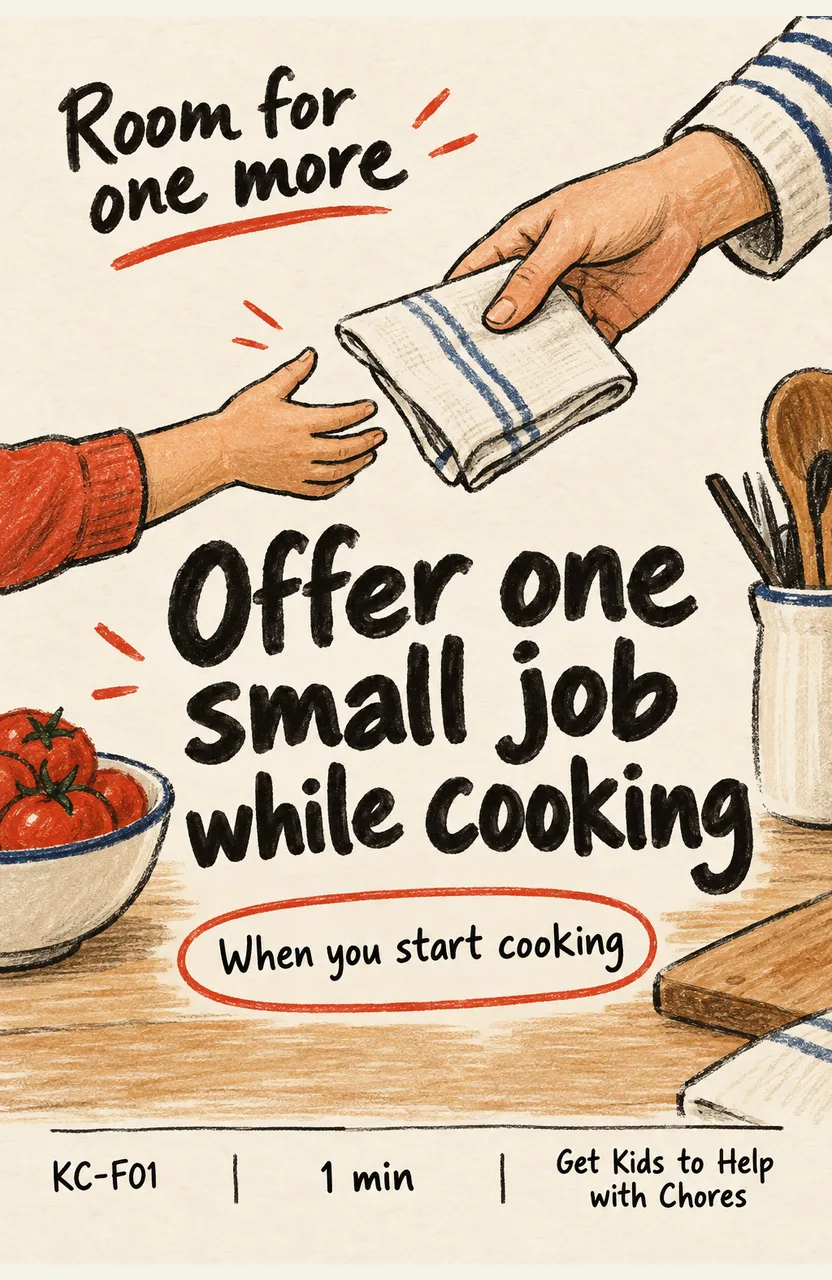
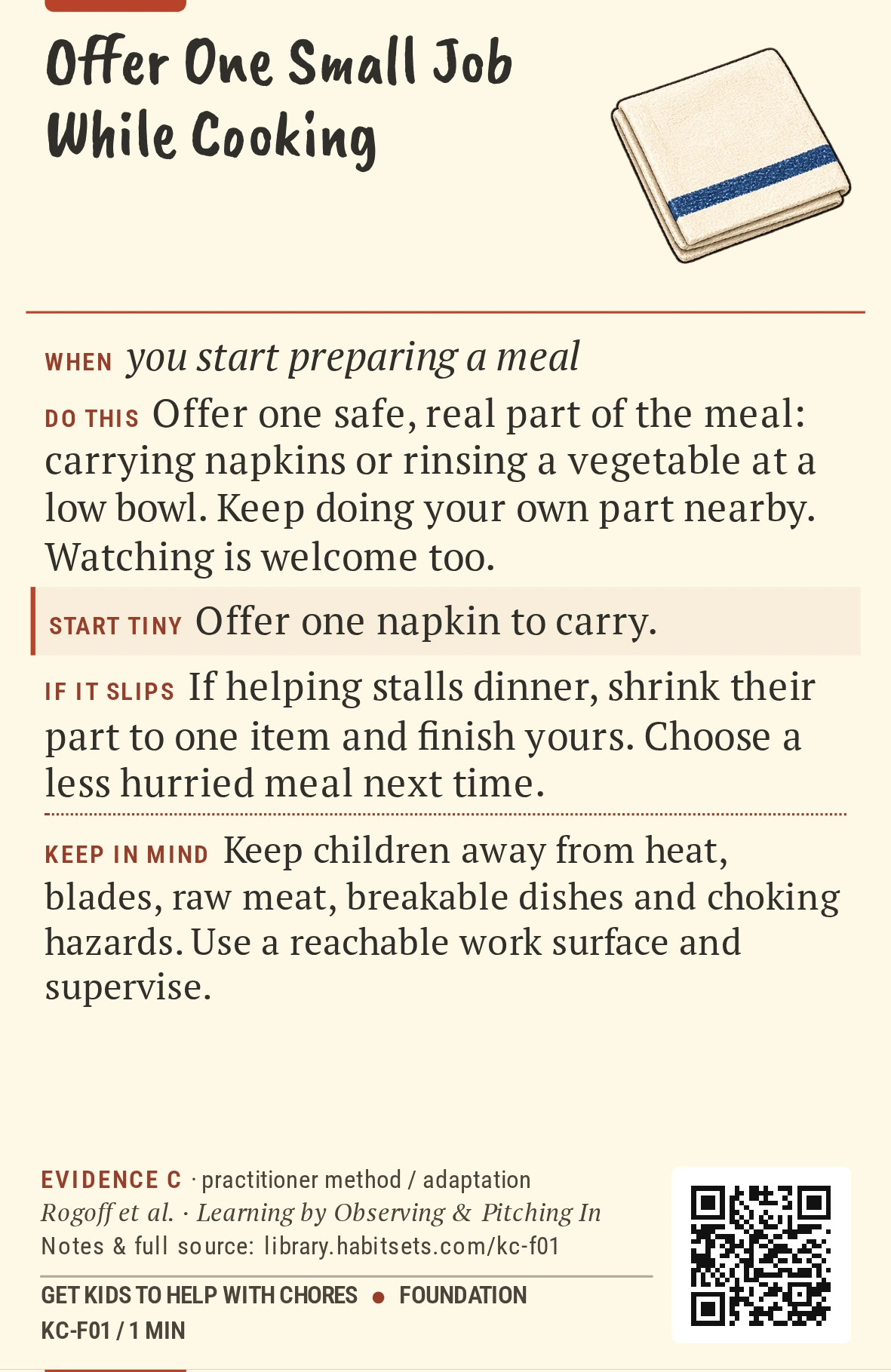
Front of KC-F01Back of card KC-F01: Offer One Small Job While Cooking. When: you start preparing a meal Do this: Offer one safe, real part of the meal: carrying napkins or rinsing a vegetable at a low bowl. Keep doing your own part nearby. Watching is welcome too. Start tiny: Offer one napkin to carry. Keep in mind: Keep children away from heat, blades, raw meat, breakable dishes and choking hazards. Use a reachable work surface and supervise.
50mm · KC-F01 · actual size
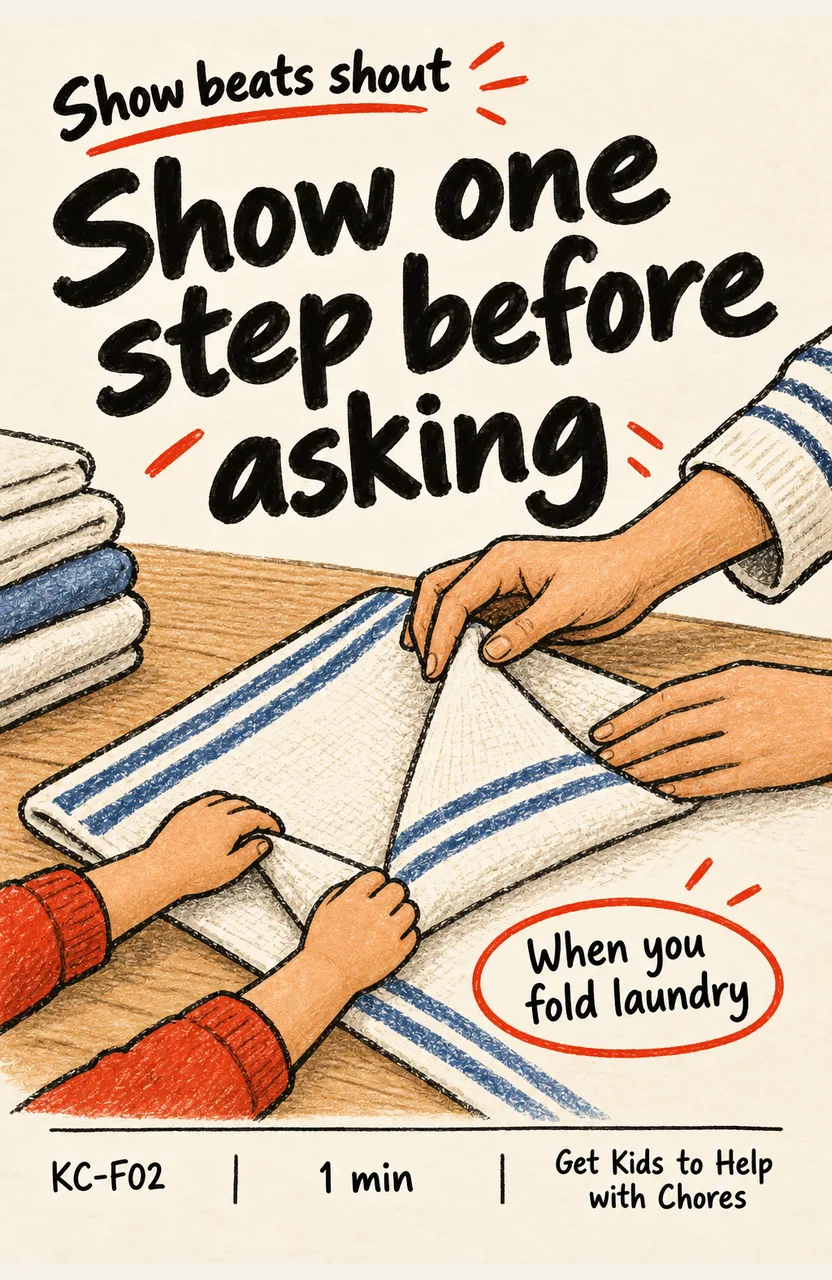
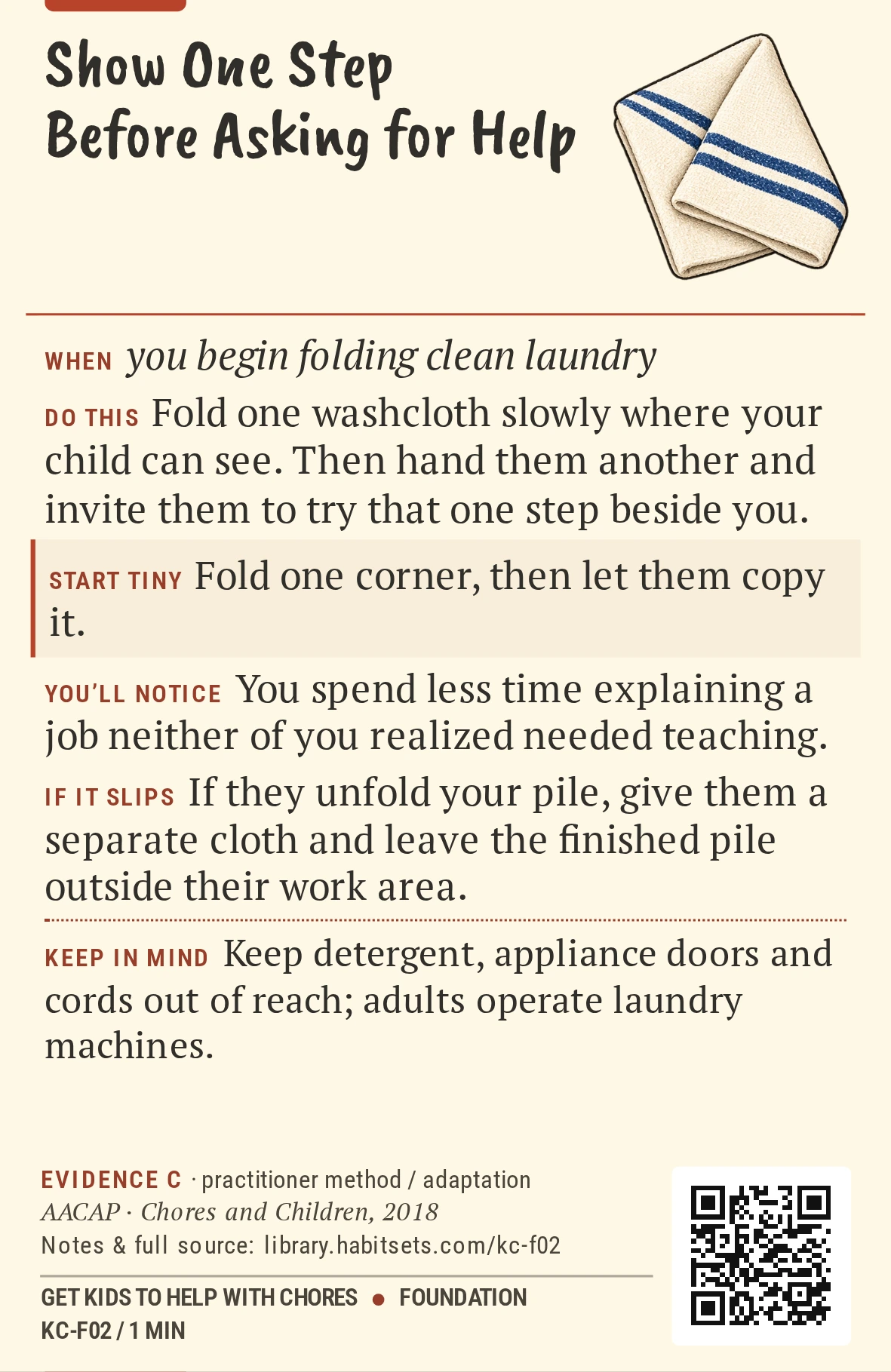
Front of KC-F02Back of card KC-F02: Show One Step Before Asking for Help. When: you begin folding clean laundry Do this: Fold one washcloth slowly where your child can see. Then hand them another and invite them to try that one step beside you. Start tiny: Fold one corner, then let them copy it. Keep in mind: Keep detergent, appliance doors and cords out of reach; adults operate laundry machines.
50mm · KC-F02 · actual size
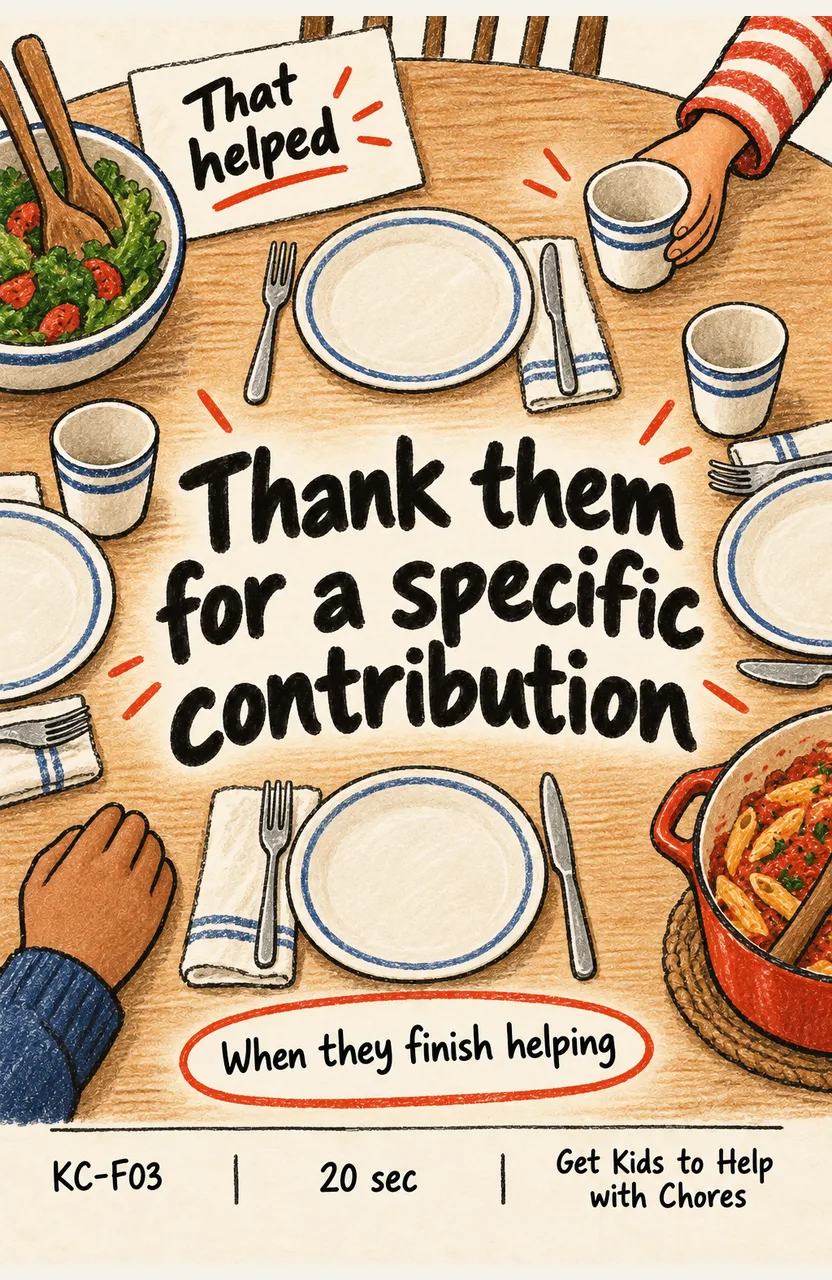
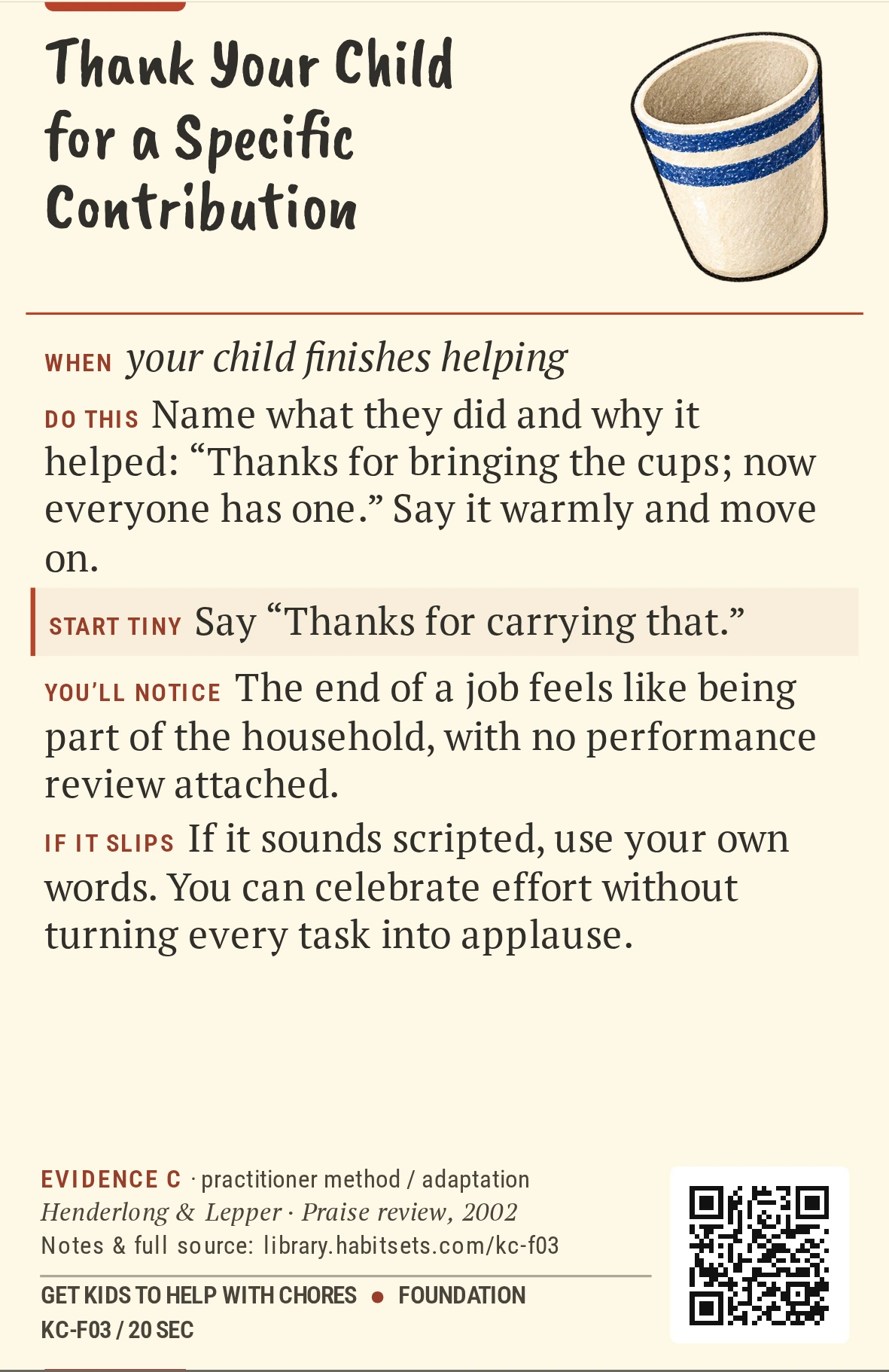
Front of KC-F03Back of card KC-F03: Thank Your Child for a Specific Contribution. When: your child finishes helping Do this: Name what they did and why it helped: “Thanks for bringing the cups; now everyone has one.” Say it warmly and move on. Start tiny: Say “Thanks for carrying that.”
50mm · KC-F03 · actual size
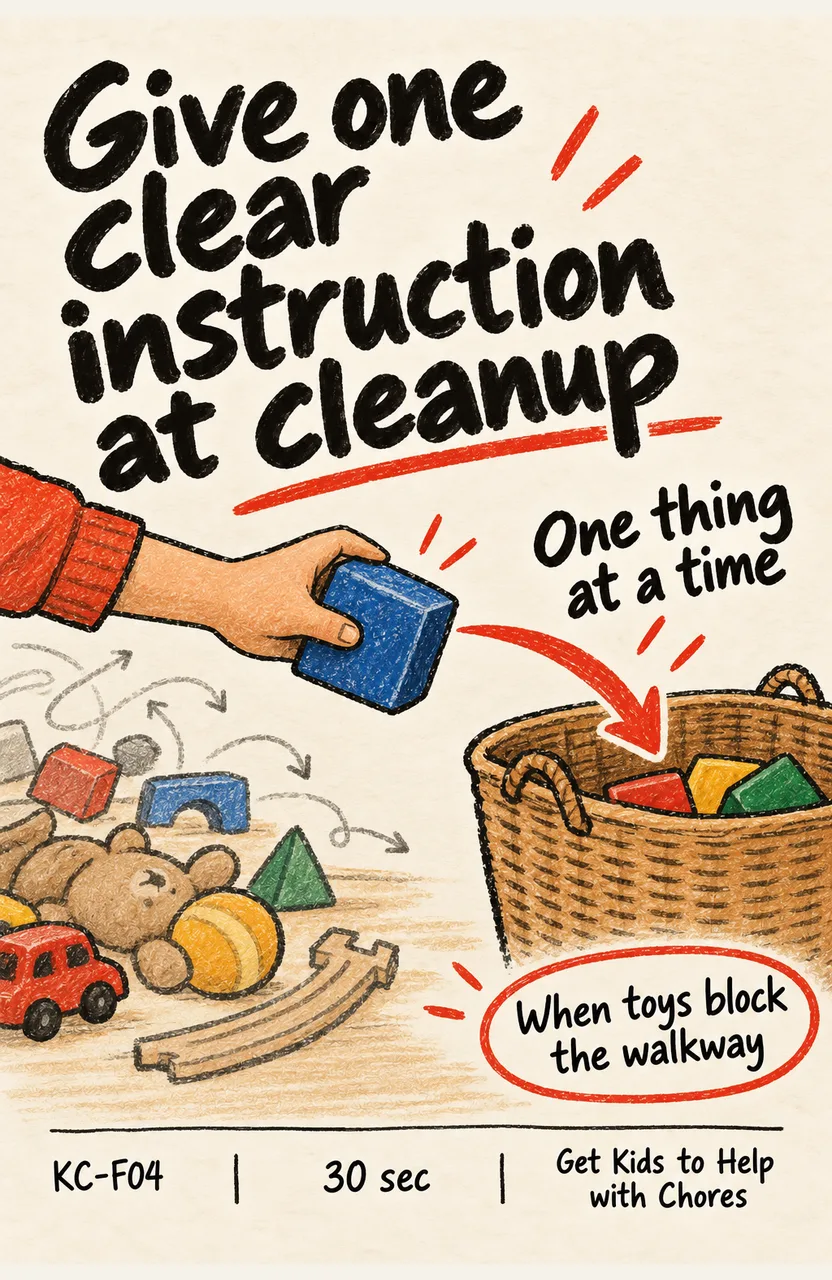
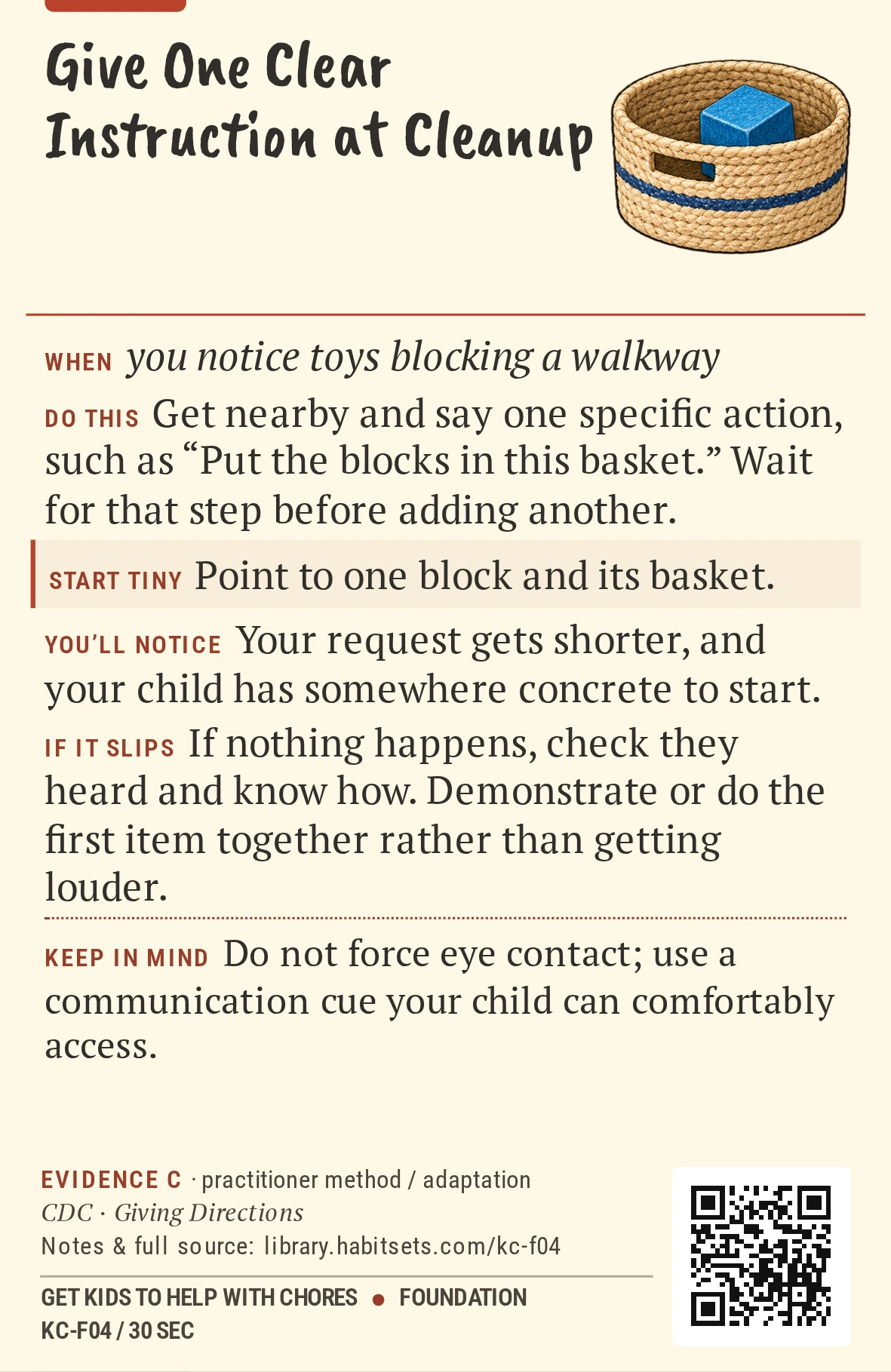
Front of KC-F04Back of card KC-F04: Give One Clear Instruction at Cleanup. When: you notice toys blocking a walkway Do this: Get nearby and say one specific action, such as “Put the blocks in this basket.” Wait for that step before adding another. Start tiny: Point to one block and its basket. Keep in mind: Do not force eye contact; use a communication cue your child can comfortably access.
50mm · KC-F04 · actual size
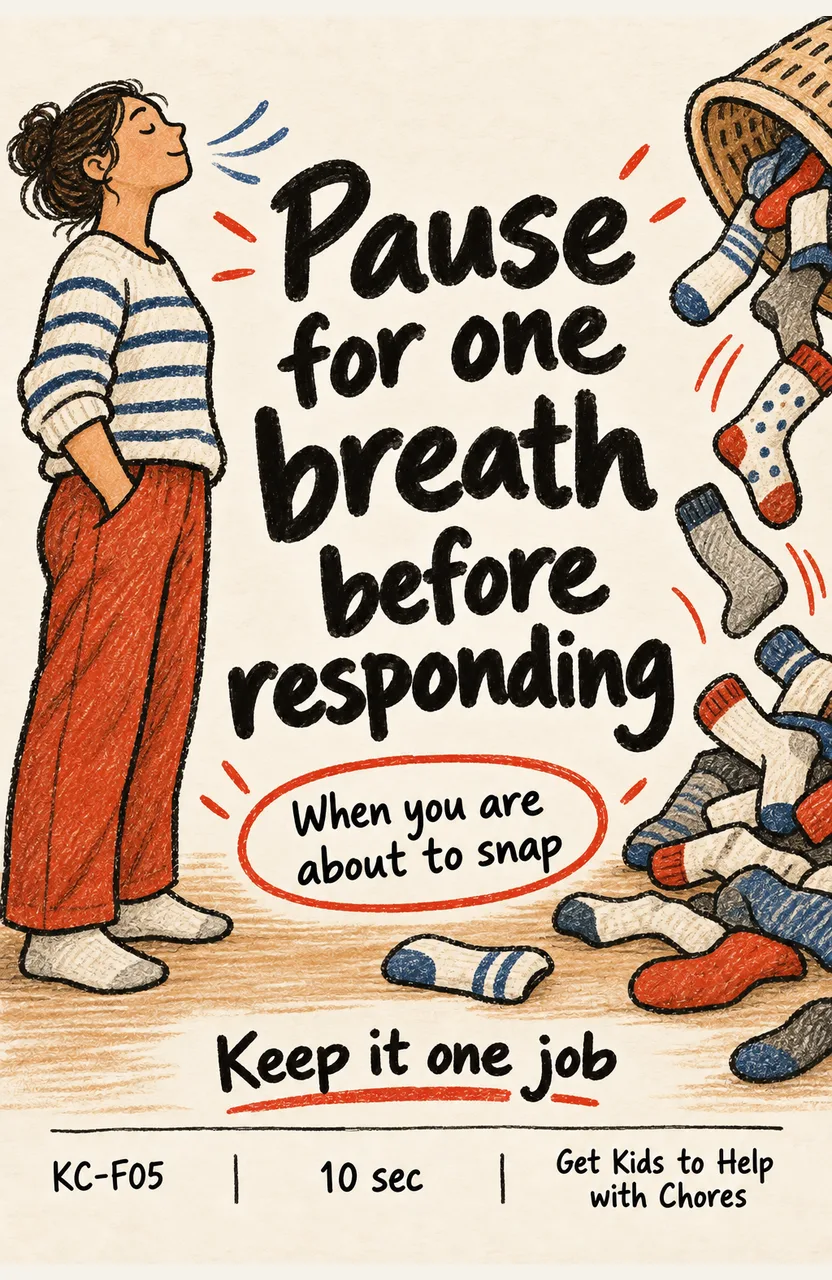
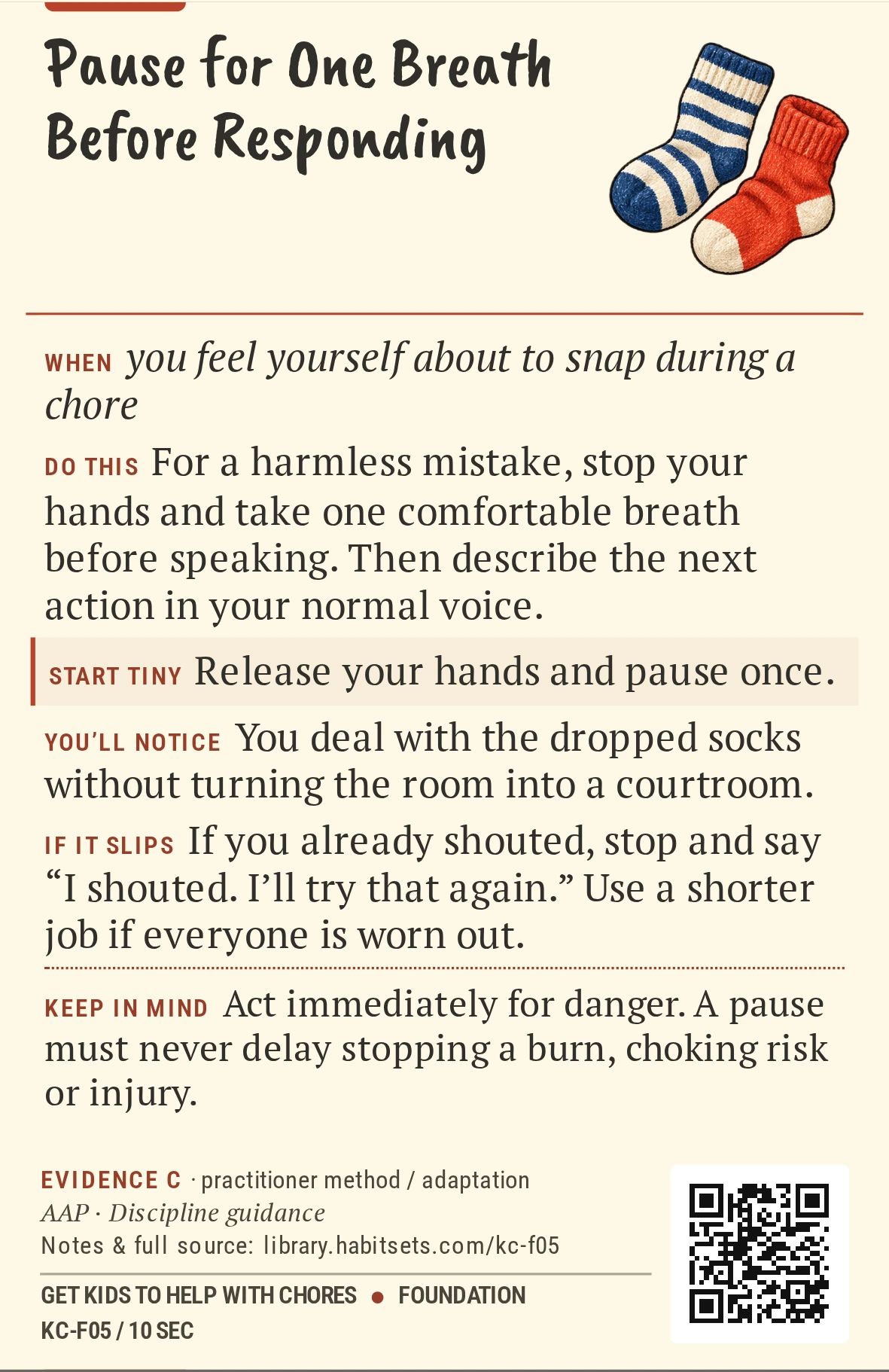
Front of KC-F05Back of card KC-F05: Pause for One Breath Before Responding. When: you feel yourself about to snap during a chore Do this: For a harmless mistake, stop your hands and take one comfortable breath before speaking. Then describe the next action in your normal voice. Start tiny: Release your hands and pause once. Keep in mind: Act immediately for danger. A pause must never delay stopping a burn, choking risk or injury.
50mm · KC-F05 · actual size
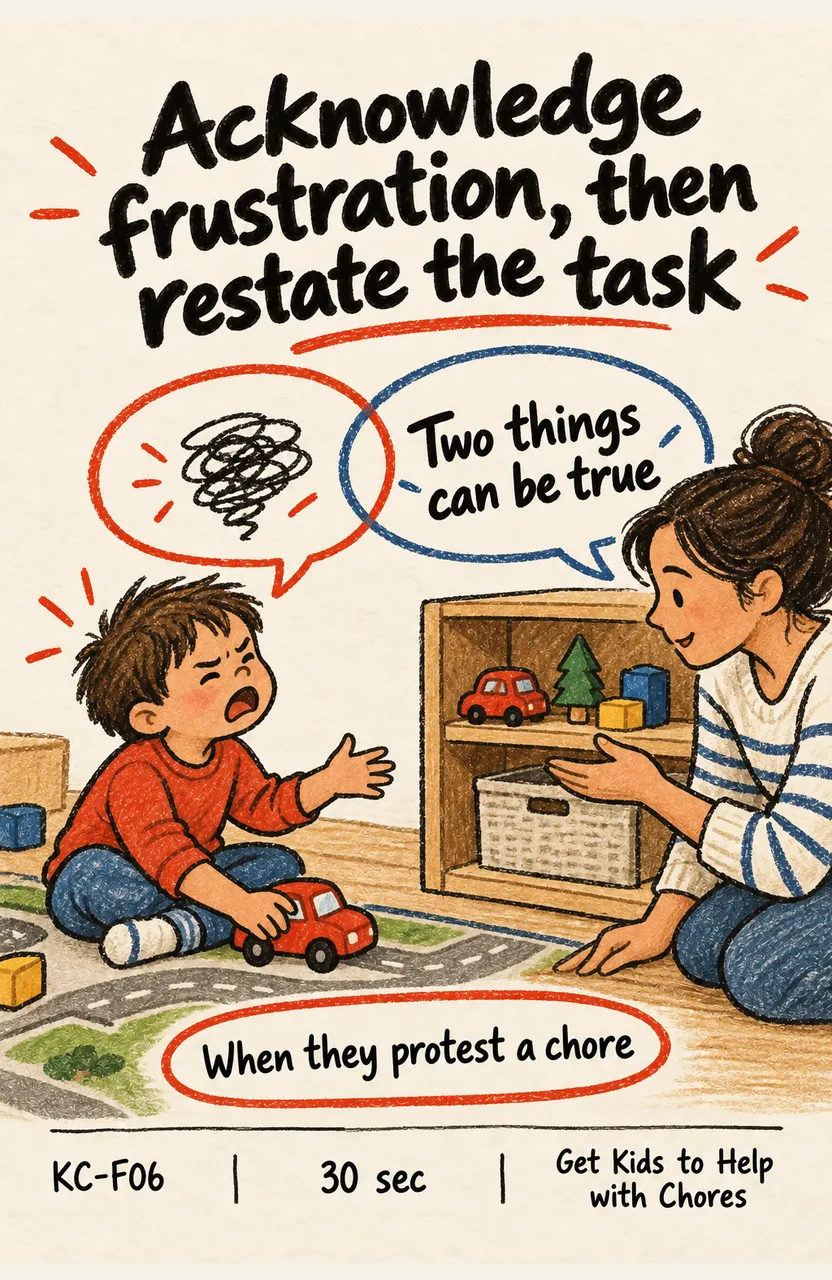
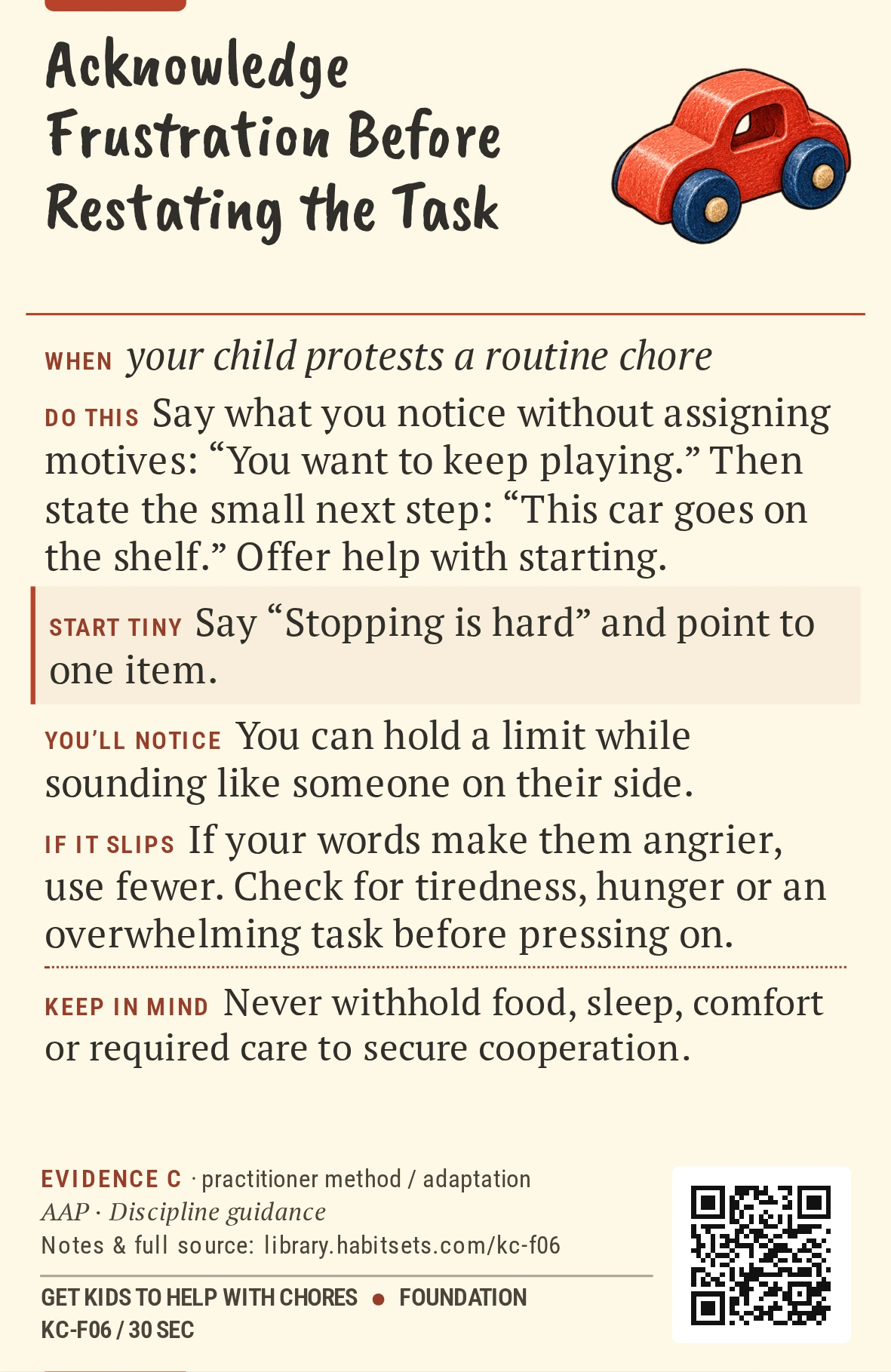
Front of KC-F06Back of card KC-F06: Acknowledge Frustration Before Restating the Task. When: your child protests a routine chore Do this: Say what you notice without assigning motives: “You want to keep playing.” Then state the small next step: “This car goes on the shelf.” Offer help with starting. Start tiny: Say “Stopping is hard” and point to one item. Keep in mind: Never withhold food, sleep, comfort or required care to secure cooperation.
50mm · KC-F06 · actual size
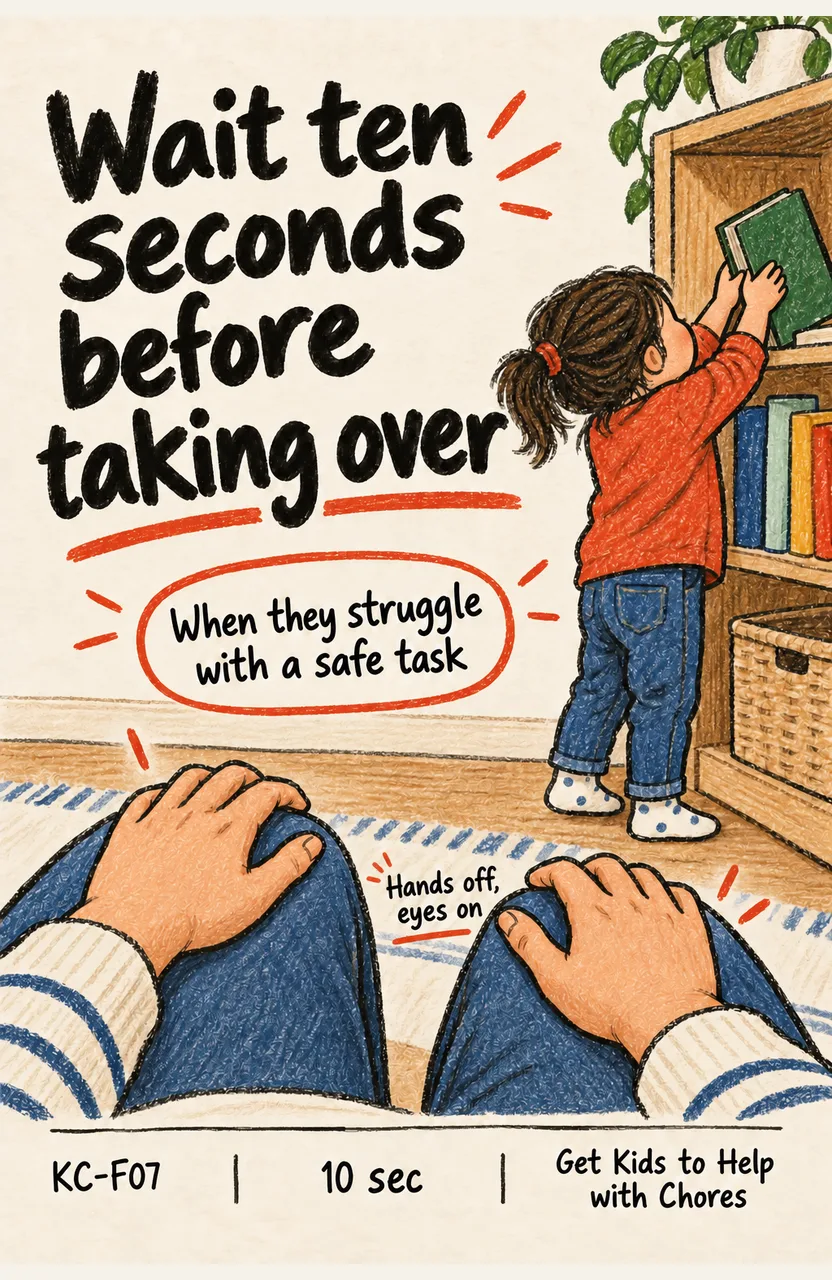
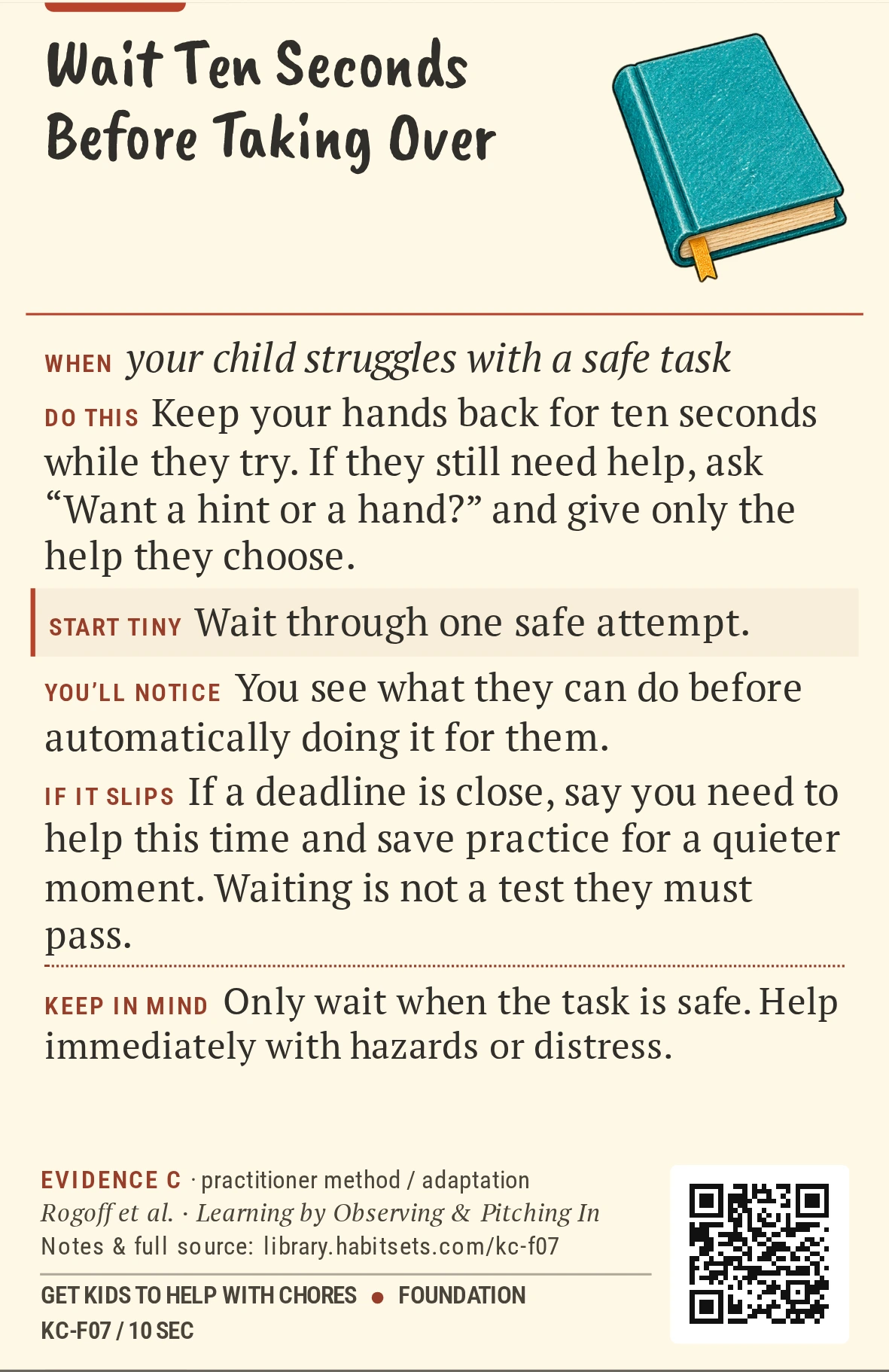
Front of KC-F07Back of card KC-F07: Wait Ten Seconds Before Taking Over. When: your child struggles with a safe task Do this: Keep your hands back for ten seconds while they try. If they still need help, ask “Want a hint or a hand?” and give only the help they choose. Start tiny: Wait through one safe attempt. Keep in mind: Only wait when the task is safe. Help immediately with hazards or distress.
50mm · KC-F07 · actual size
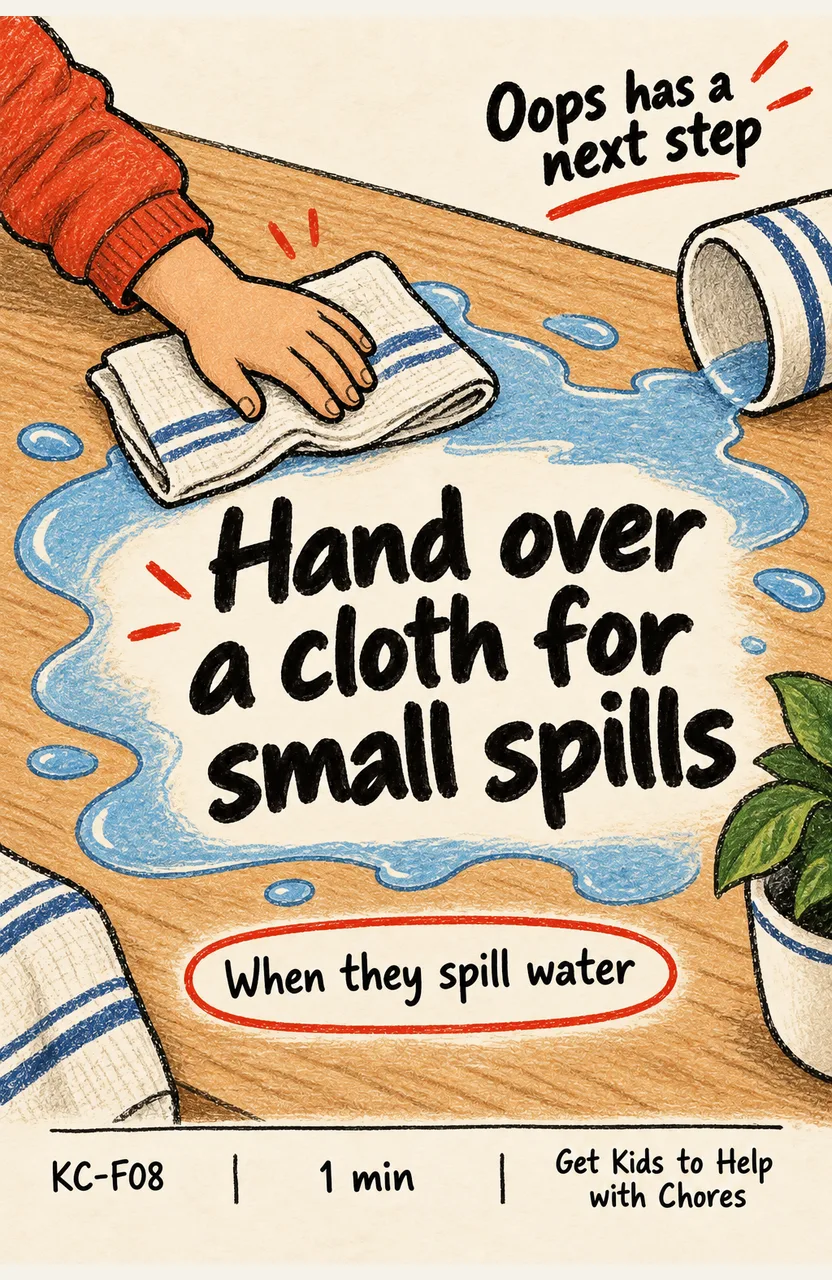
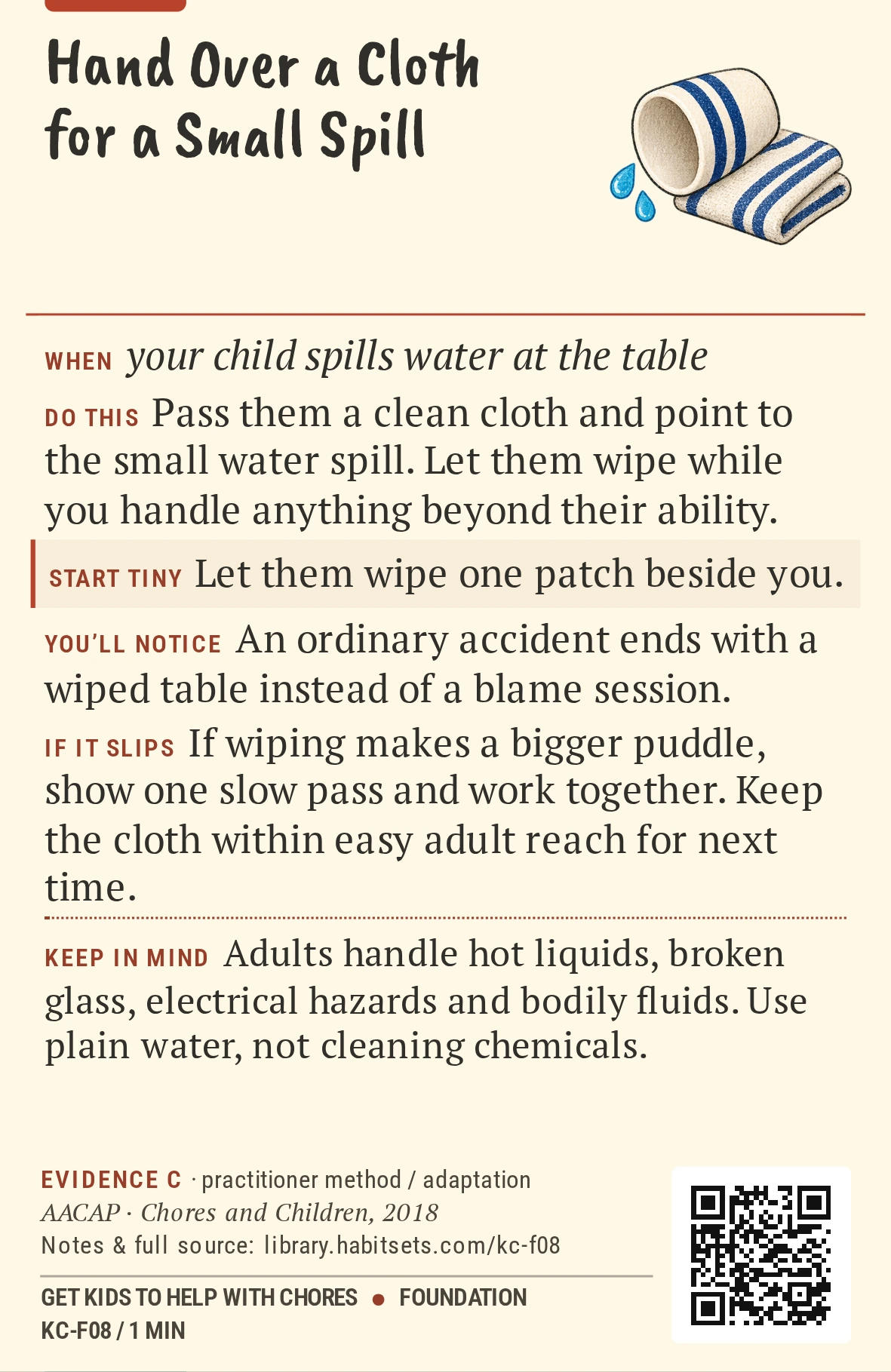
Front of KC-F08Back of card KC-F08: Hand Over a Cloth for a Small Spill. When: your child spills water at the table Do this: Pass them a clean cloth and point to the small water spill. Let them wipe while you handle anything beyond their ability. Start tiny: Let them wipe one patch beside you. Keep in mind: Adults handle hot liquids, broken glass, electrical hazards and bodily fluids. Use plain water, not cleaning chemicals.
50mm · KC-F08 · actual size
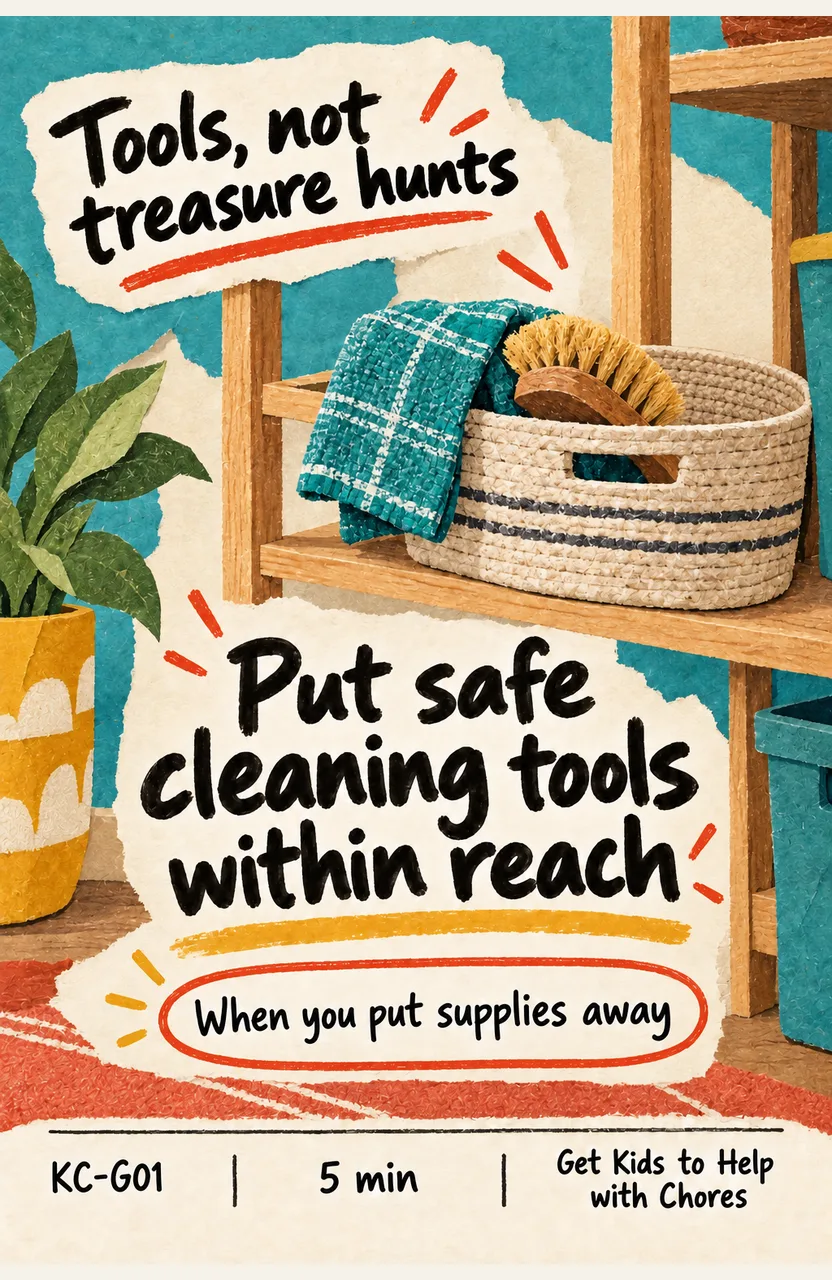
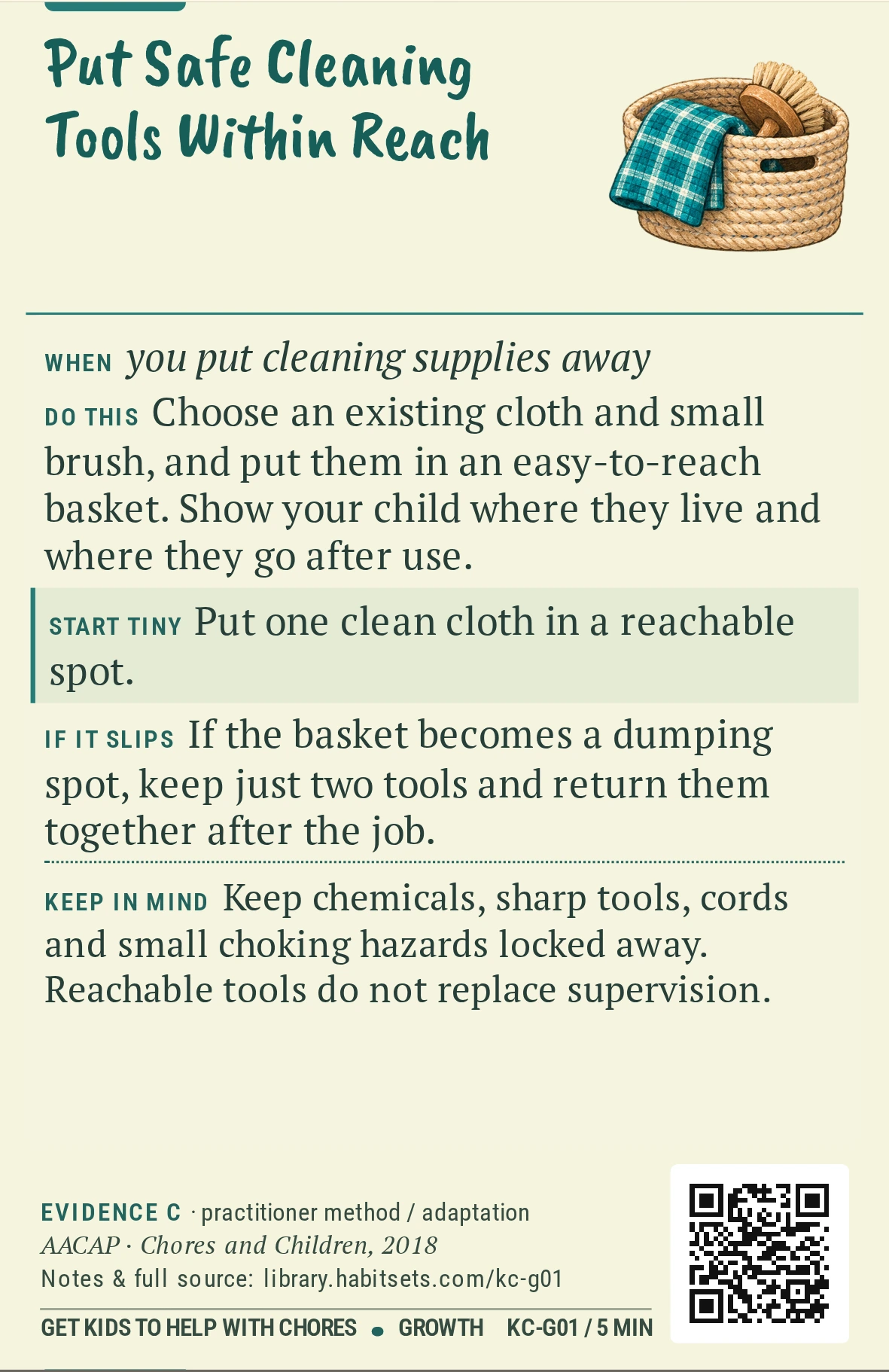
Front of KC-G01Back of card KC-G01: Put Safe Cleaning Tools Within Reach. When: you put cleaning supplies away Do this: Choose an existing cloth and small brush, and put them in an easy-to-reach basket. Show your child where they live and where they go after use. Start tiny: Put one clean cloth in a reachable spot. Keep in mind: Keep chemicals, sharp tools, cords and small choking hazards locked away. Reachable tools do not replace supervision.
50mm · KC-G01 · actual size
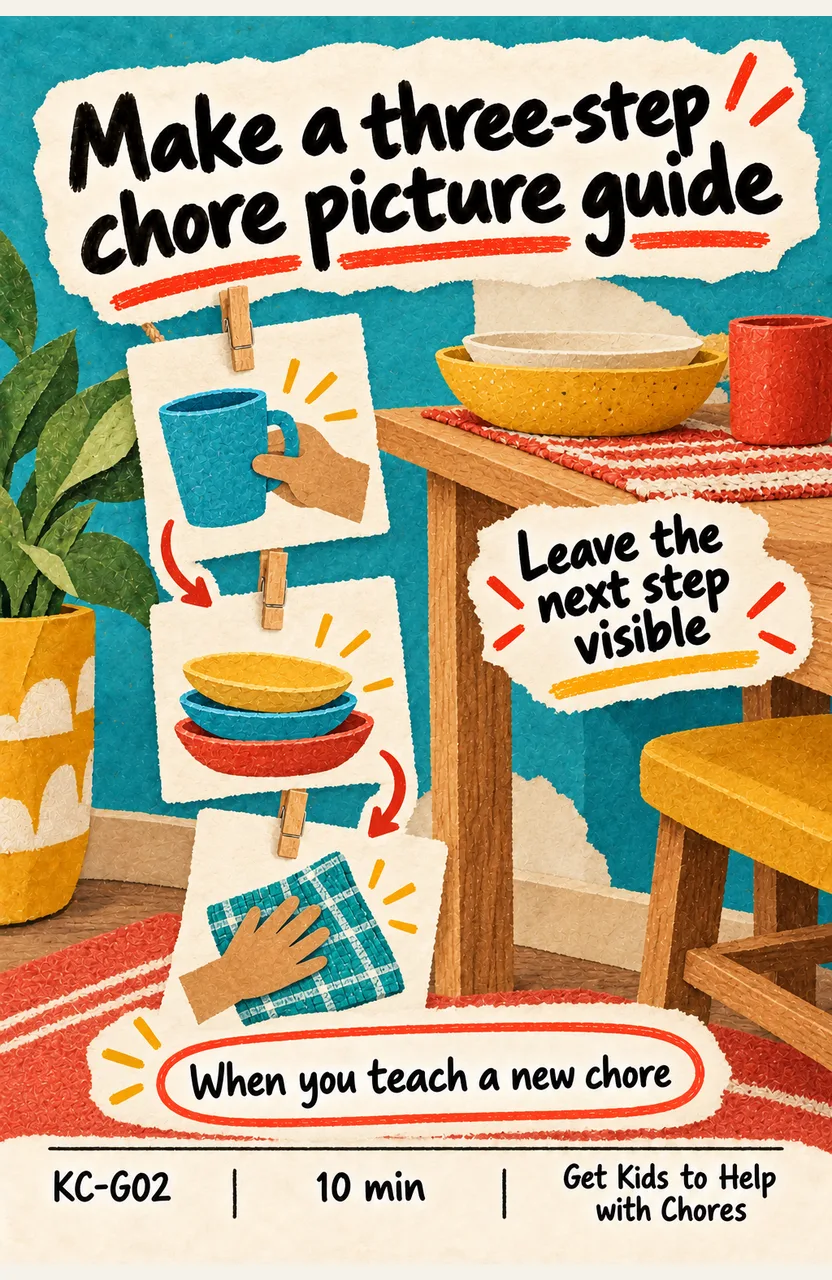
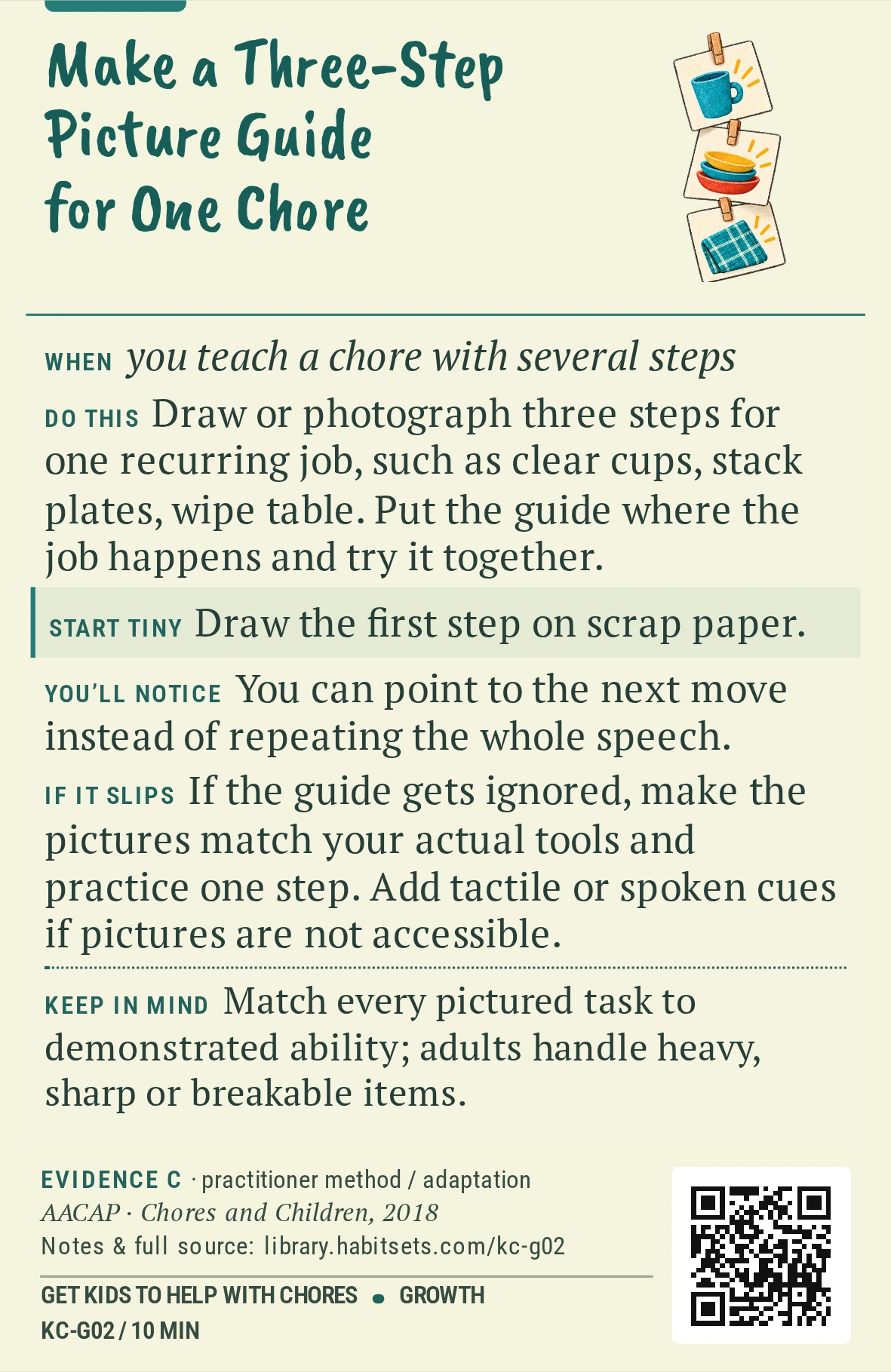
Front of KC-G02Back of card KC-G02: Make a Three-Step Picture Guide for One Chore. When: you teach a chore with several steps Do this: Draw or photograph three steps for one recurring job, such as clear cups, stack plates, wipe table. Put the guide where the job happens and try it together. Start tiny: Draw the first step on scrap paper. Keep in mind: Match every pictured task to demonstrated ability; adults handle heavy, sharp or breakable items.
50mm · KC-G02 · actual size
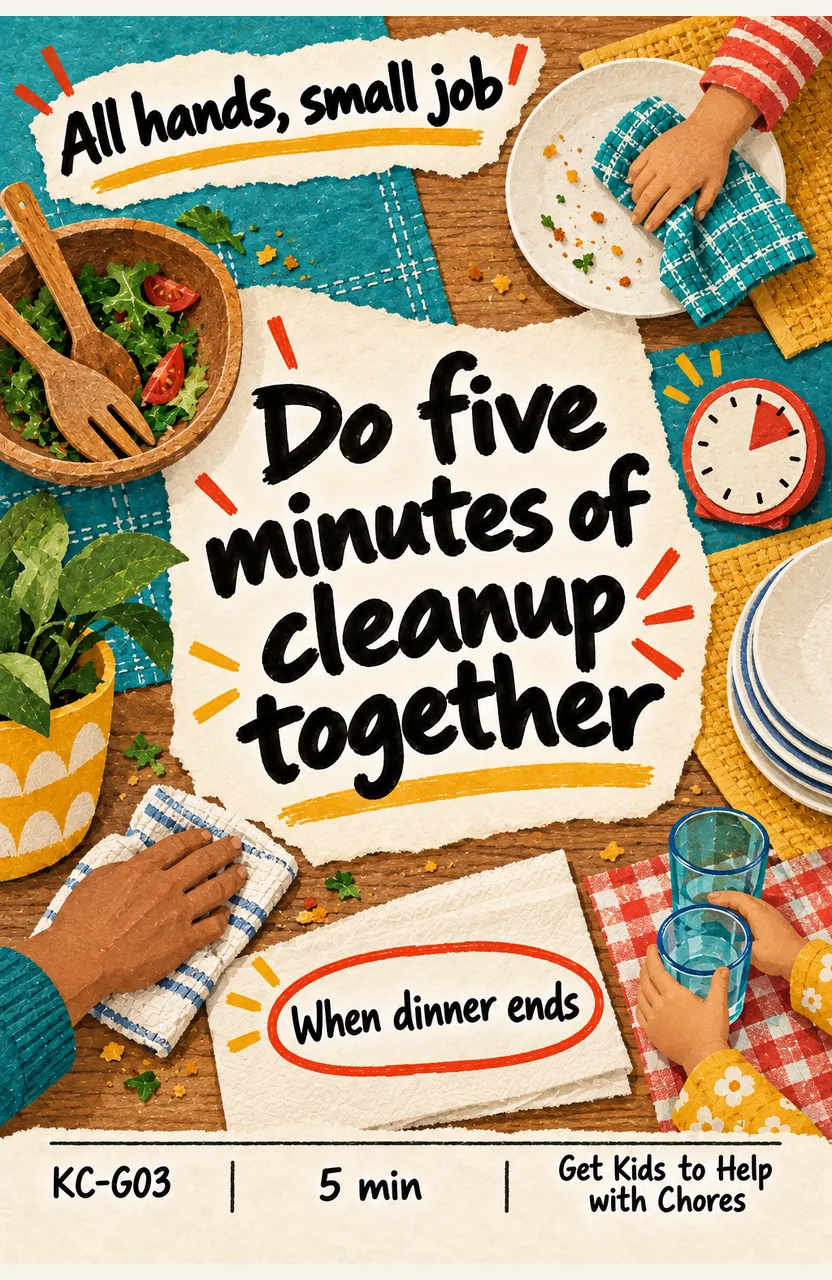
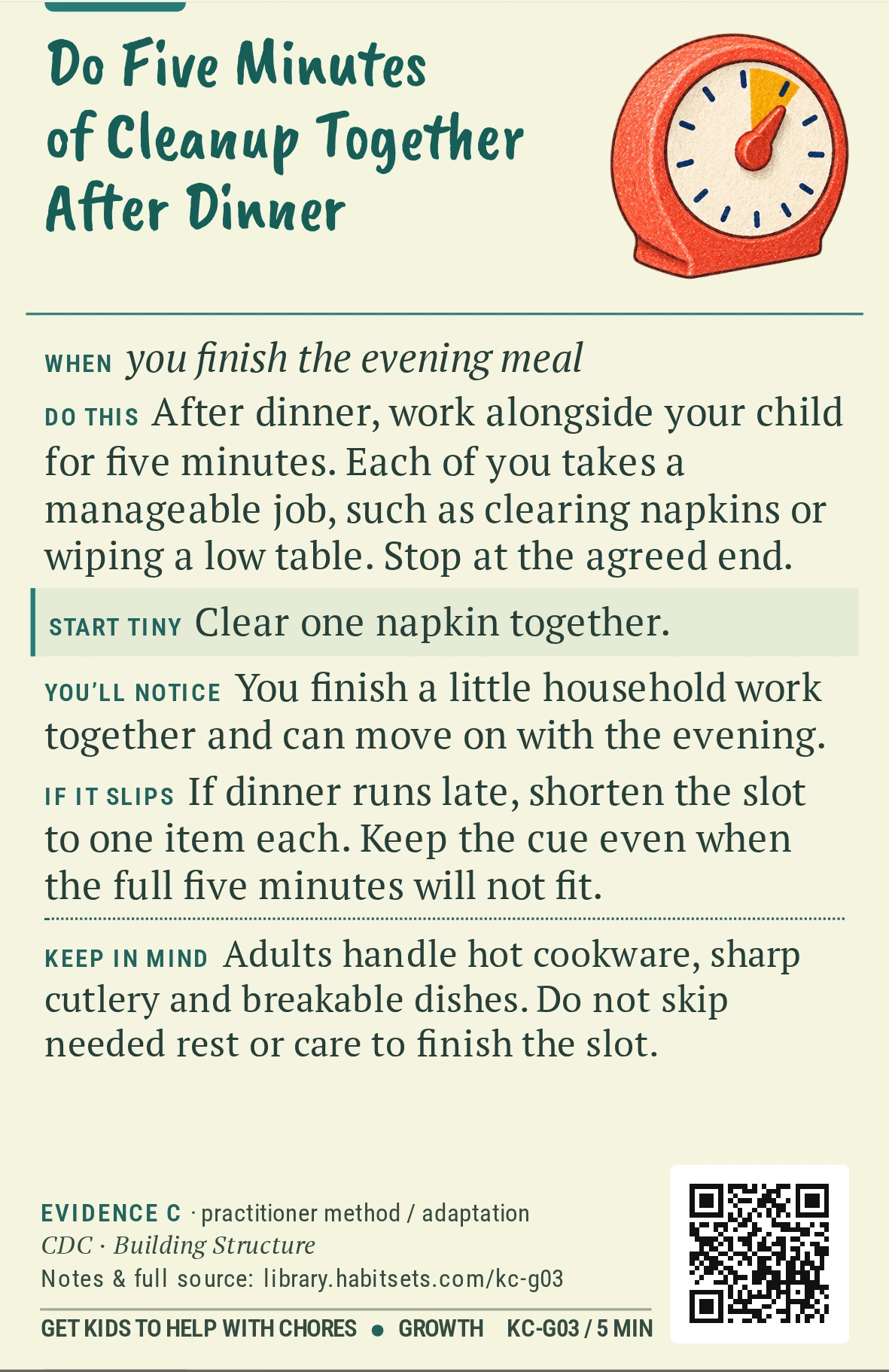
Front of KC-G03Back of card KC-G03: Do Five Minutes of Cleanup Together After Dinner. When: you finish the evening meal Do this: After dinner, work alongside your child for five minutes. Each of you takes a manageable job, such as clearing napkins or wiping a low table. Stop at the agreed end. Start tiny: Clear one napkin together. Keep in mind: Adults handle hot cookware, sharp cutlery and breakable dishes. Do not skip needed rest or care to finish the slot.
50mm · KC-G03 · actual size
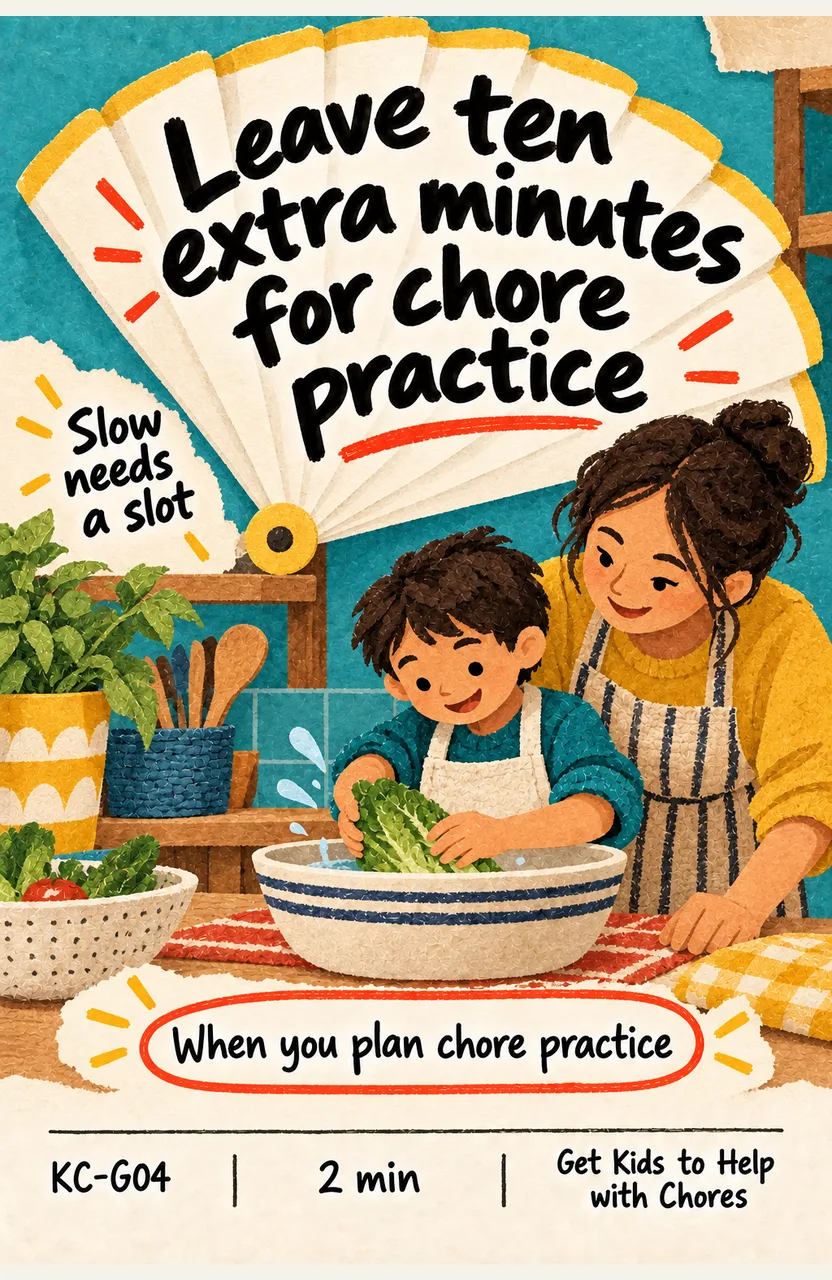
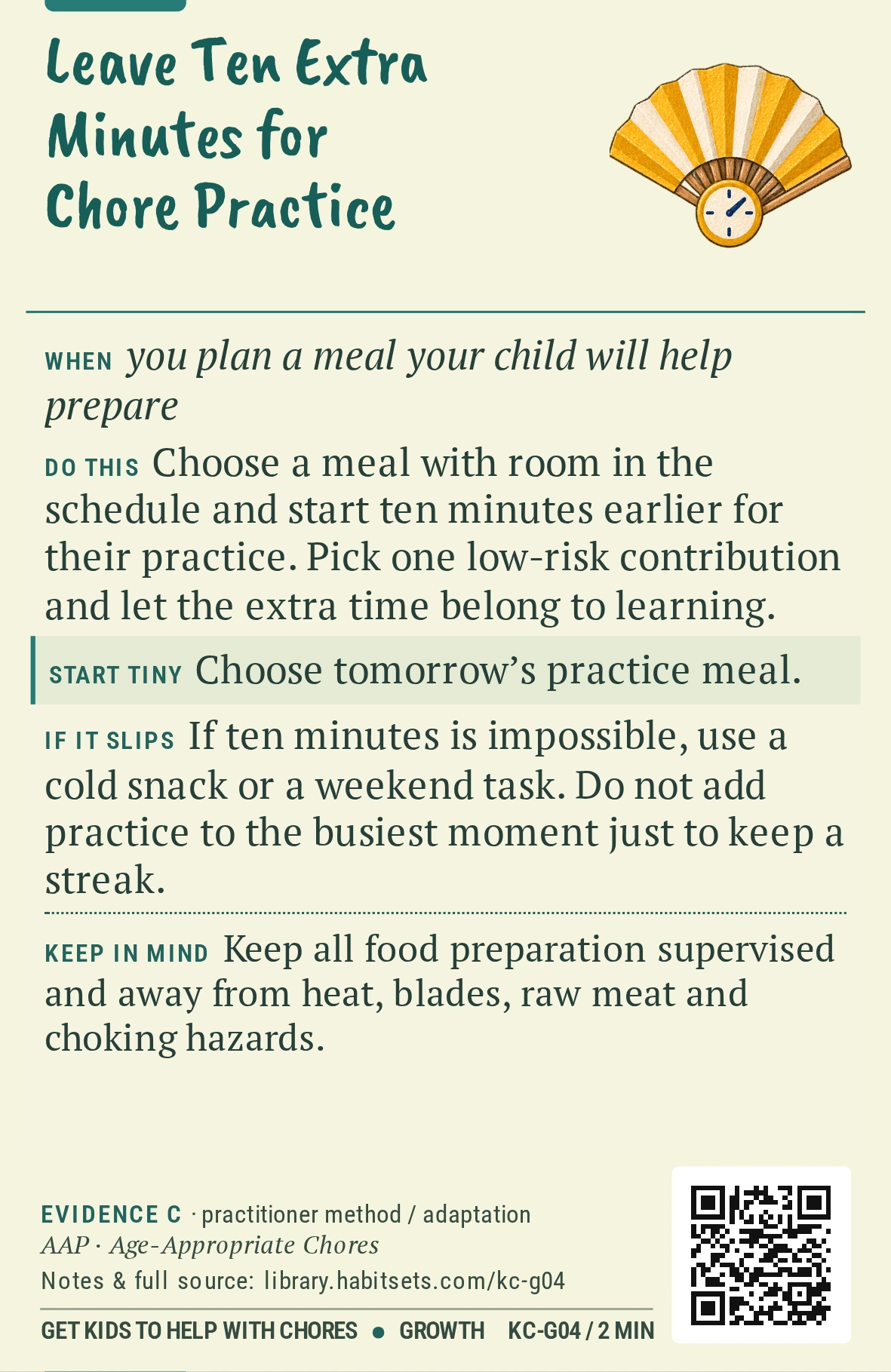
Front of KC-G04Back of card KC-G04: Leave Ten Extra Minutes for Chore Practice. When: you plan a meal your child will help prepare Do this: Choose a meal with room in the schedule and start ten minutes earlier for their practice. Pick one low-risk contribution and let the extra time belong to learning. Start tiny: Choose tomorrow’s practice meal. Keep in mind: Keep all food preparation supervised and away from heat, blades, raw meat and choking hazards.
50mm · KC-G04 · actual size
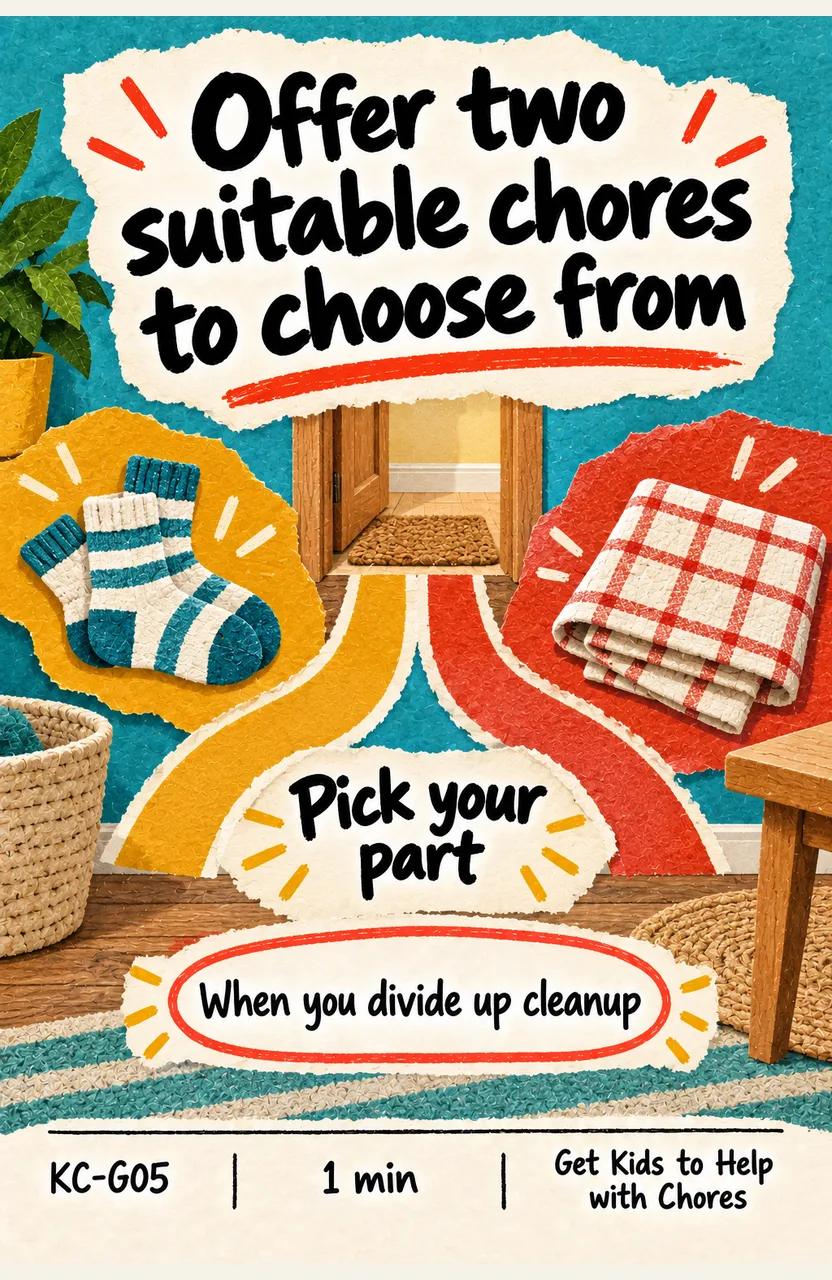
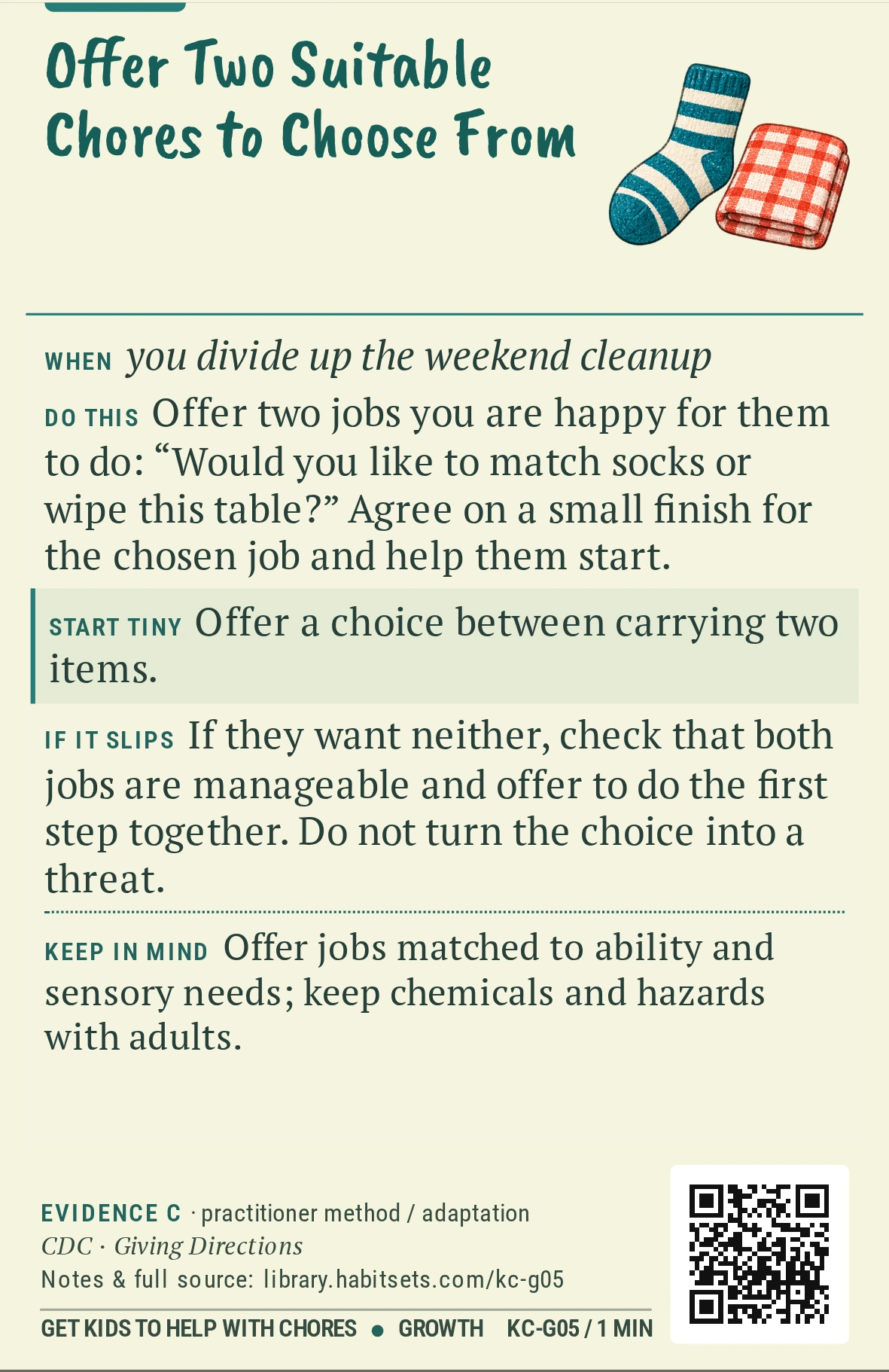
Front of KC-G05Back of card KC-G05: Offer Two Suitable Chores to Choose From. When: you divide up the weekend cleanup Do this: Offer two jobs you are happy for them to do: “Would you like to match socks or wipe this table?” Agree on a small finish for the chosen job and help them start. Start tiny: Offer a choice between carrying two items. Keep in mind: Offer jobs matched to ability and sensory needs; keep chemicals and hazards with adults.
50mm · KC-G05 · actual size
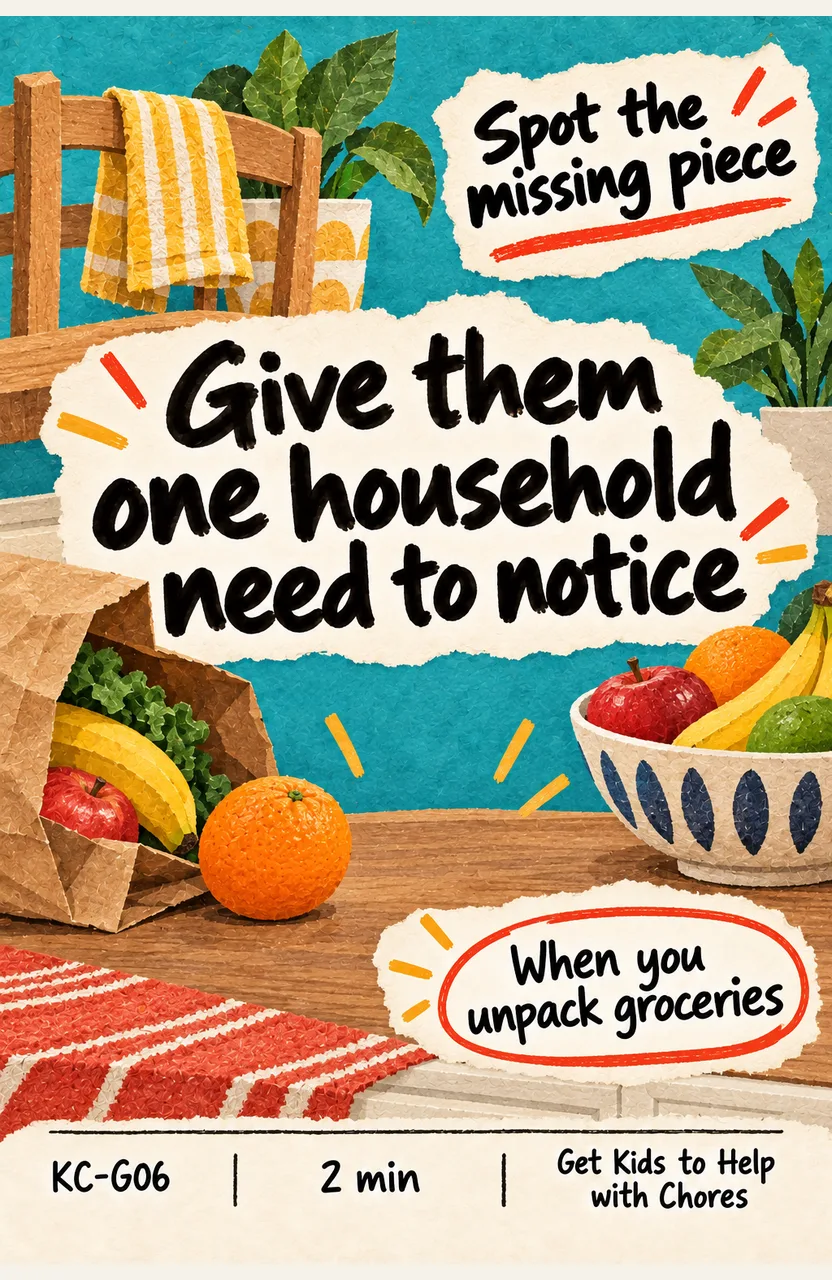
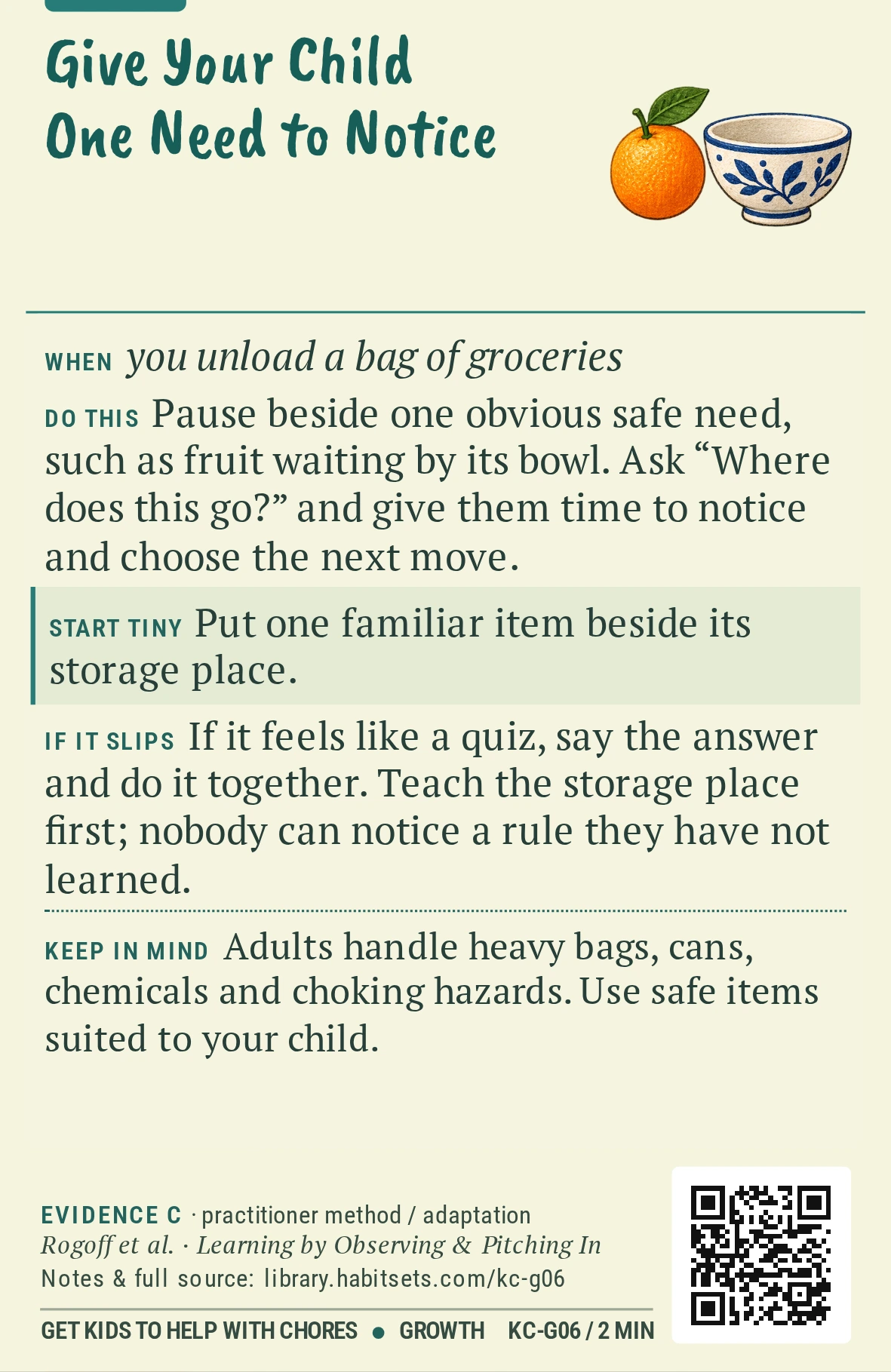
Front of KC-G06Back of card KC-G06: Give Your Child One Need to Notice. When: you unload a bag of groceries Do this: Pause beside one obvious safe need, such as fruit waiting by its bowl. Ask “Where does this go?” and give them time to notice and choose the next move. Start tiny: Put one familiar item beside its storage place. Keep in mind: Adults handle heavy bags, cans, chemicals and choking hazards. Use safe items suited to your child.
50mm · KC-G06 · actual size
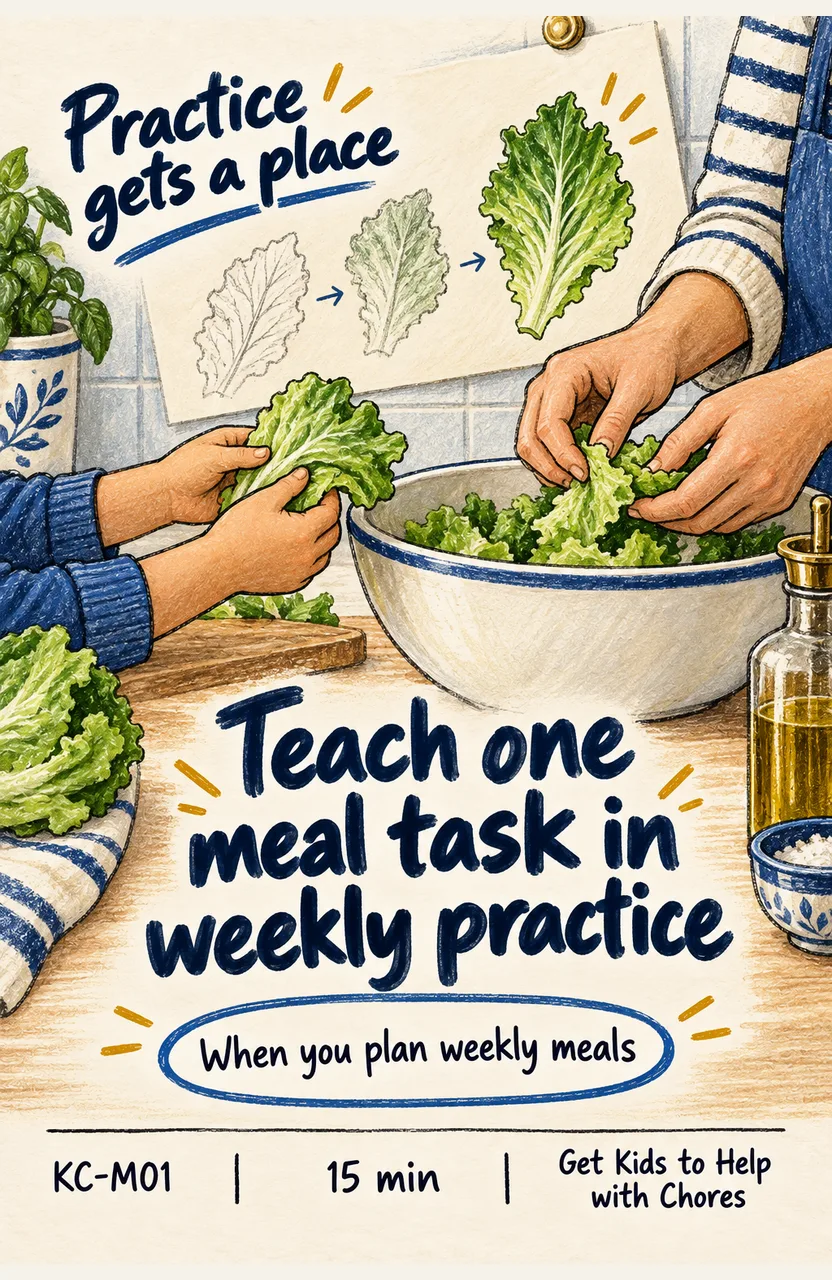
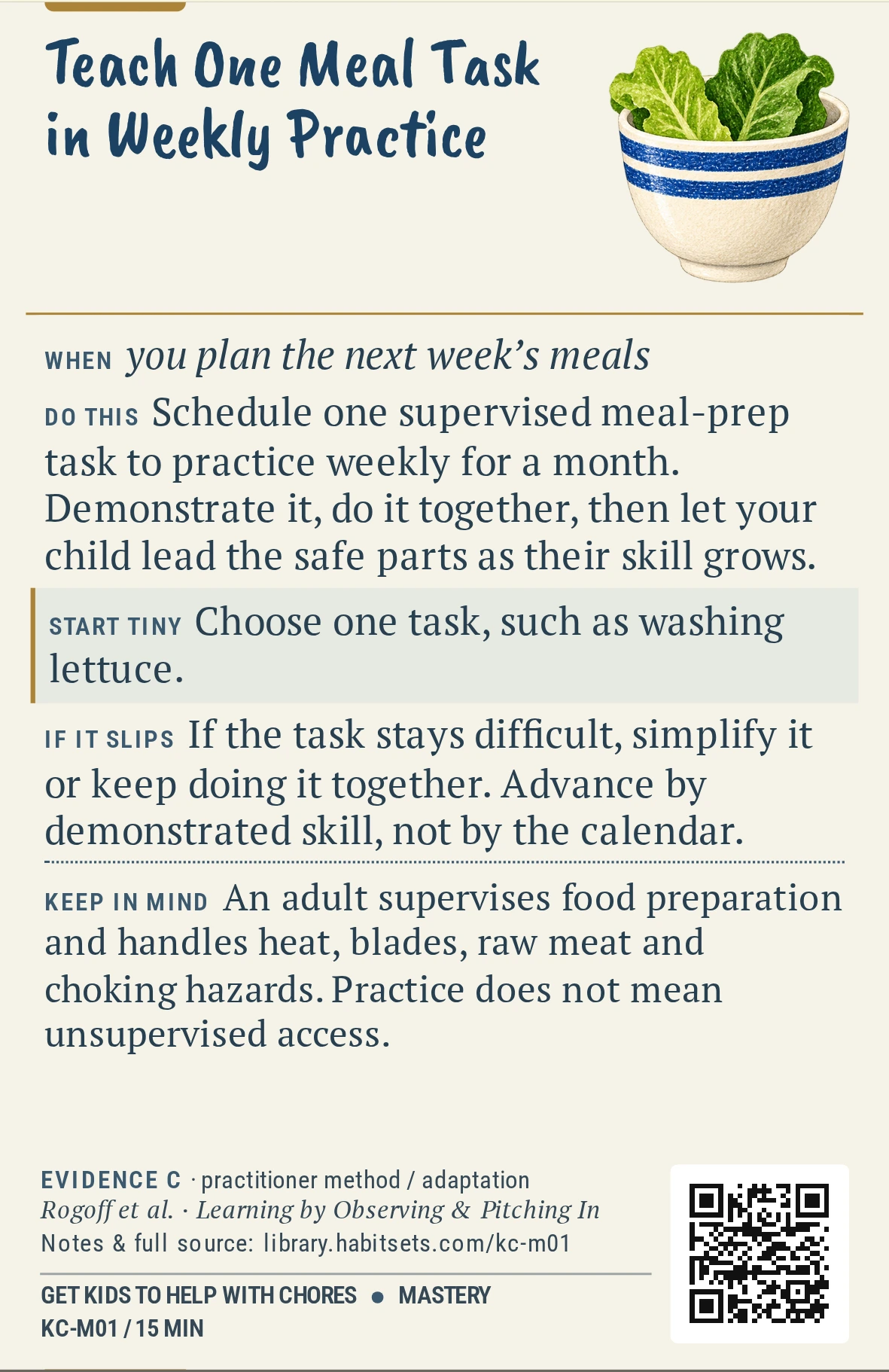
Front of KC-M01Back of card KC-M01: Teach One Meal Task in Weekly Practice. When: you plan the next week’s meals Do this: Schedule one supervised meal-prep task to practice weekly for a month. Demonstrate it, do it together, then let your child lead the safe parts as their skill grows. Start tiny: Choose one task, such as washing lettuce. Keep in mind: An adult supervises food preparation and handles heat, blades, raw meat and choking hazards. Practice does not mean unsupervised access.
50mm · KC-M01 · actual size
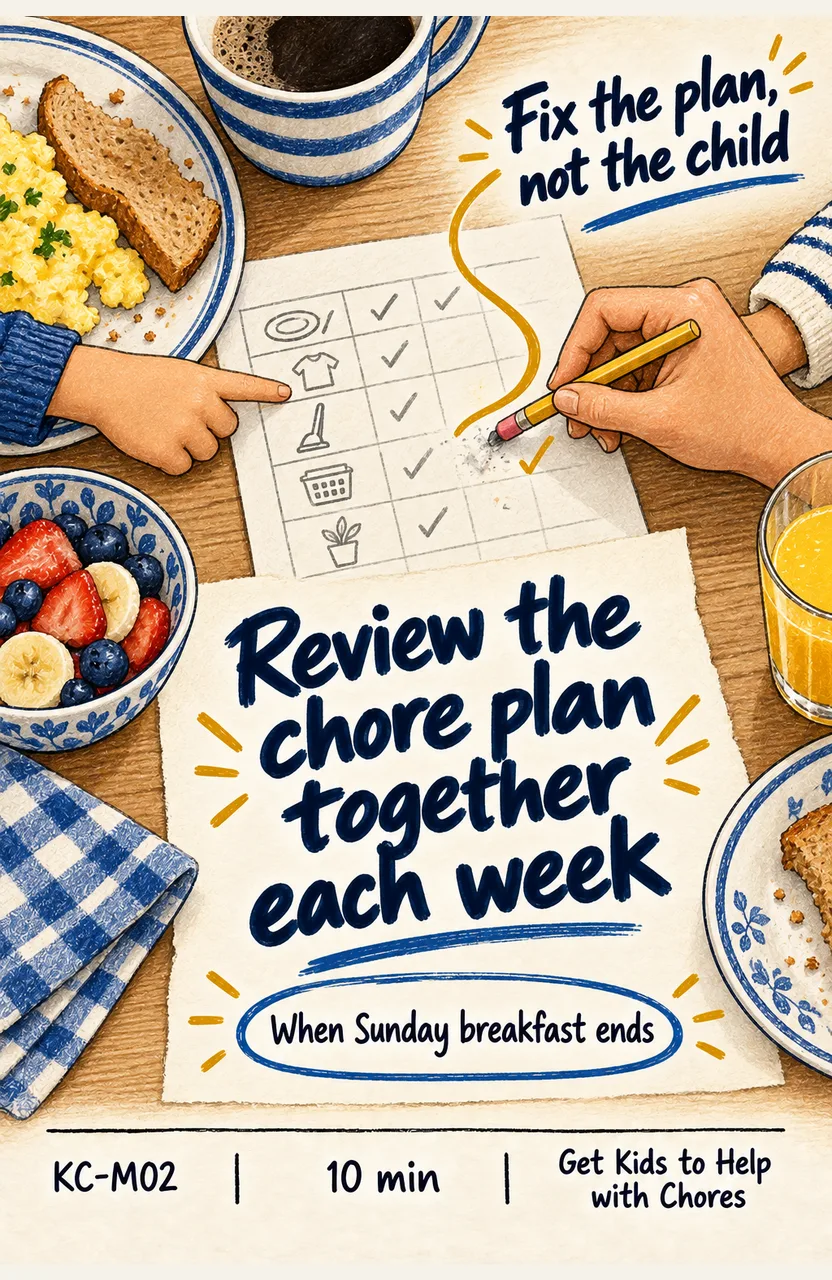
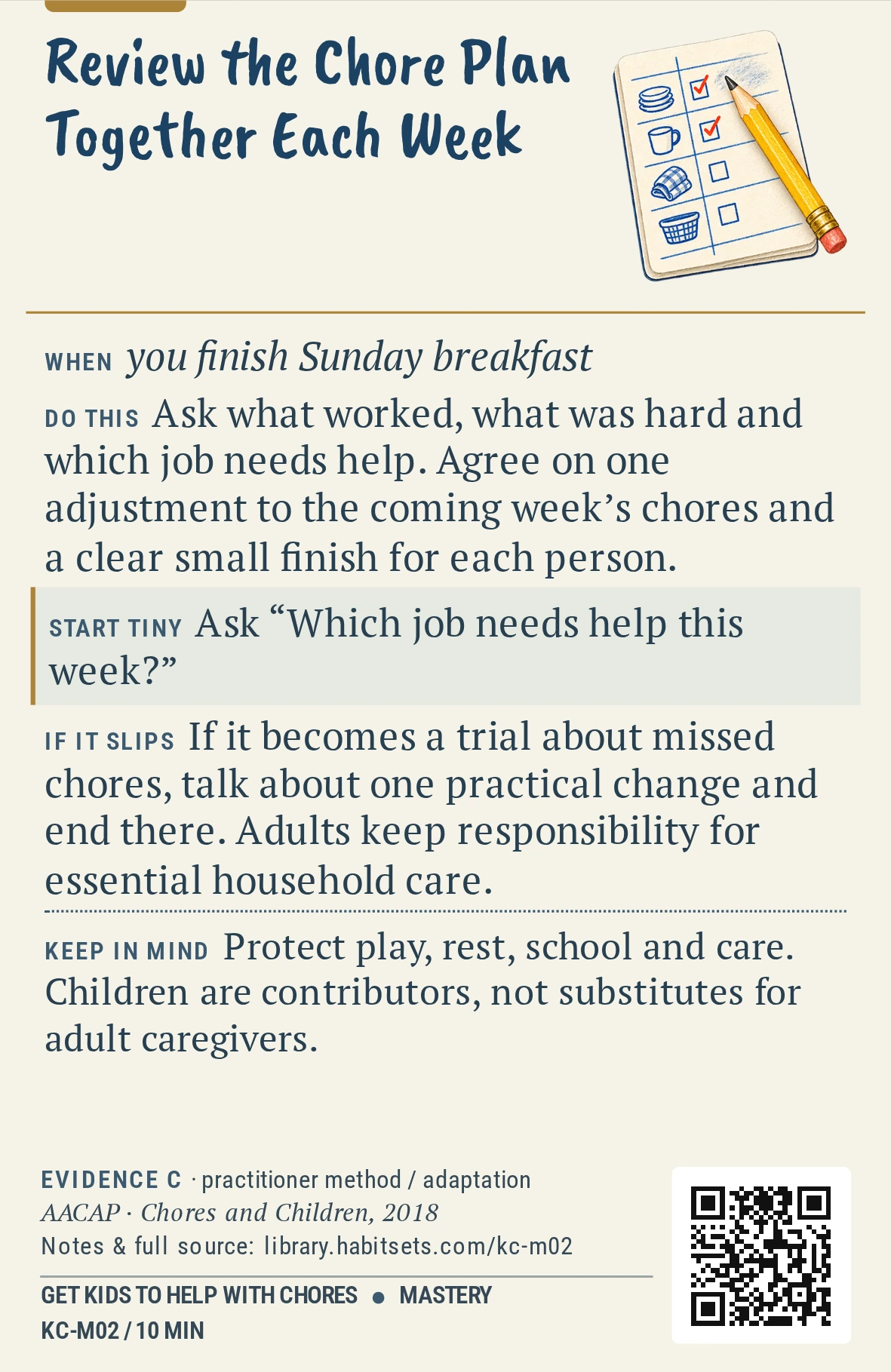
Front of KC-M02Back of card KC-M02: Review the Chore Plan Together Each Week. When: you finish Sunday breakfast Do this: Ask what worked, what was hard and which job needs help. Agree on one adjustment to the coming week’s chores and a clear small finish for each person. Start tiny: Ask “Which job needs help this week?” Keep in mind: Protect play, rest, school and care. Children are contributors, not substitutes for adult caregivers.
50mm · KC-M02 · actual size
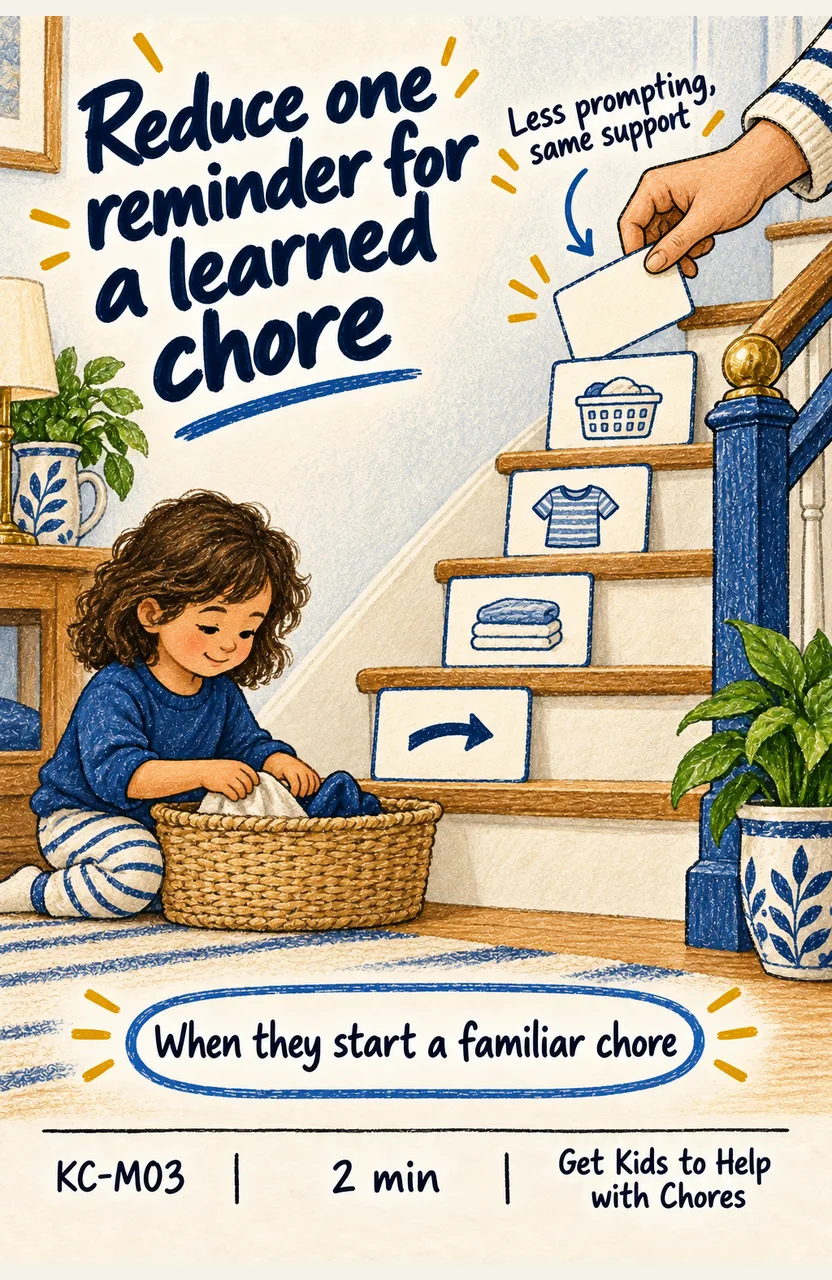
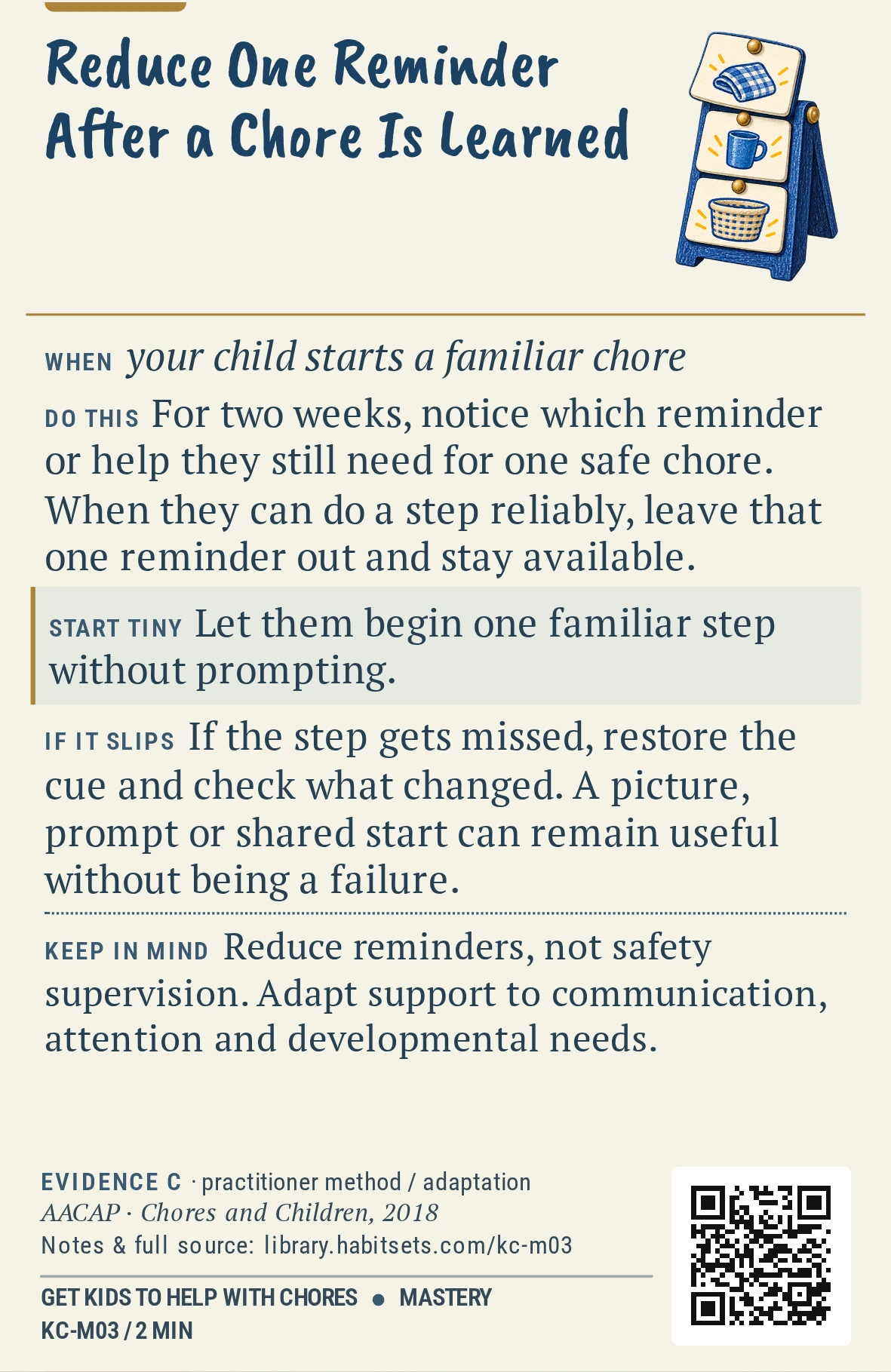
Front of KC-M03Back of card KC-M03: Reduce One Reminder After a Chore Is Learned. When: your child starts a familiar chore Do this: For two weeks, notice which reminder or help they still need for one safe chore. When they can do a step reliably, leave that one reminder out and stay available. Start tiny: Let them begin one familiar step without prompting. Keep in mind: Reduce reminders, not safety supervision. Adapt support to communication, attention and developmental needs.
50mm · KC-M03 · actual size
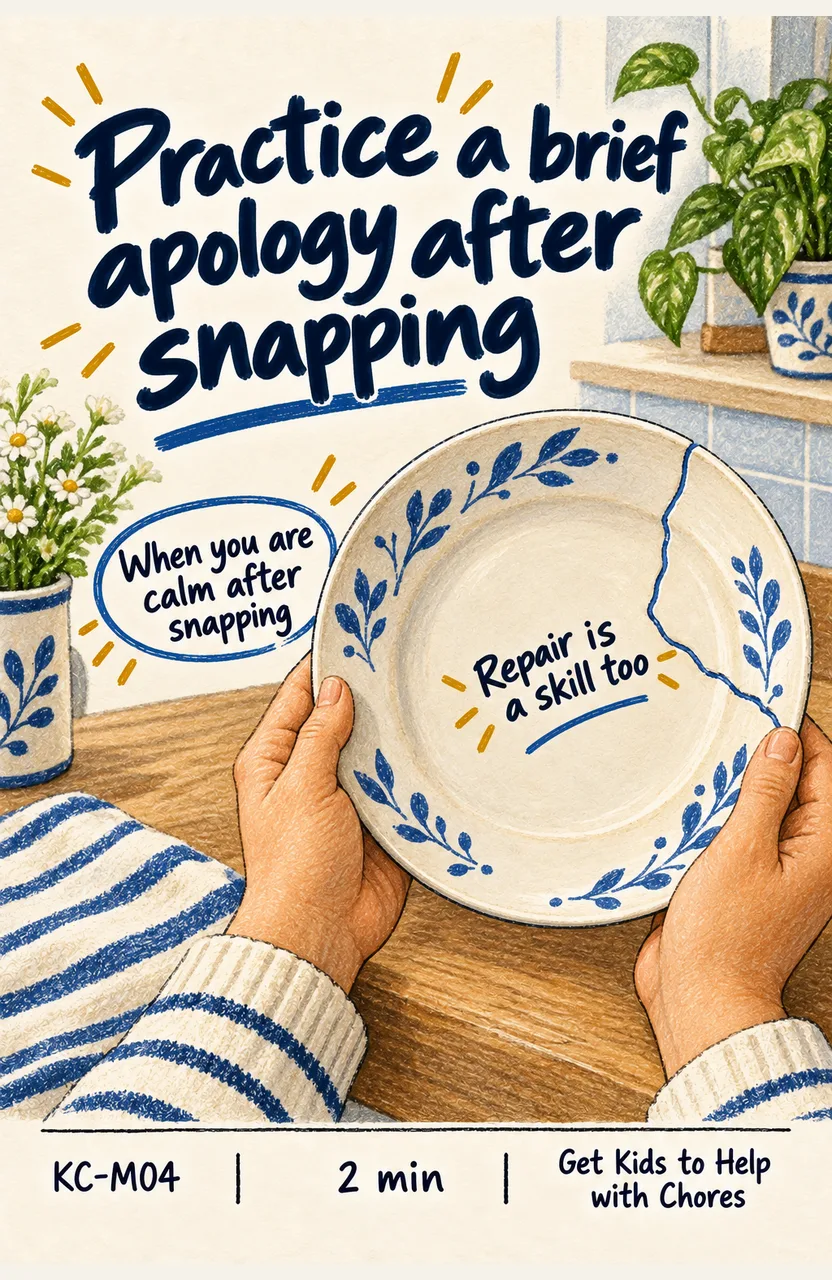
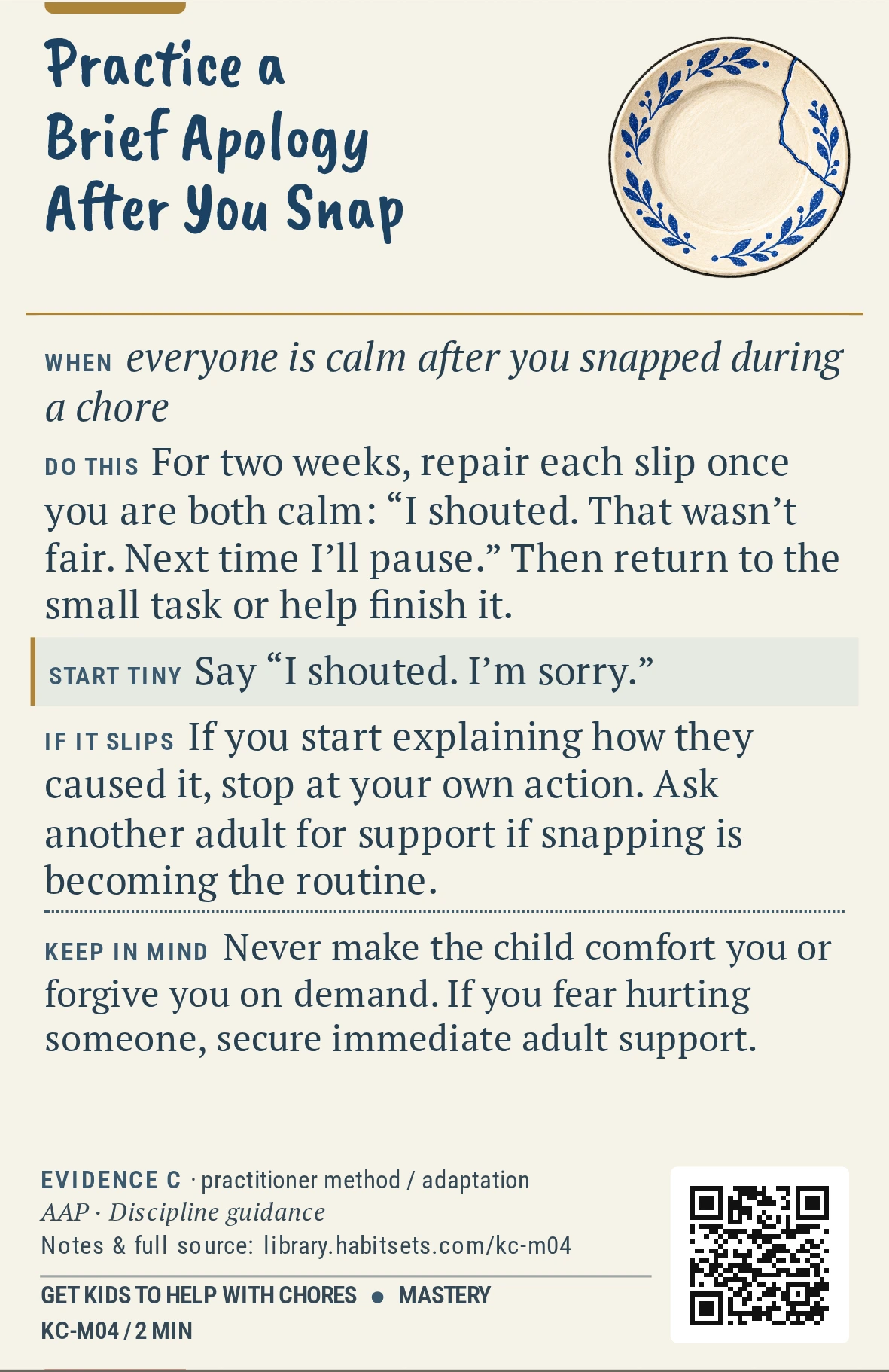
Front of KC-M04Back of card KC-M04: Practice a Brief Apology After You Snap. When: everyone is calm after you snapped during a chore Do this: For two weeks, repair each slip once you are both calm: “I shouted. That wasn’t fair. Next time I’ll pause.” Then return to the small task or help finish it. Start tiny: Say “I shouted. I’m sorry.” Keep in mind: Never make the child comfort you or forgive you on demand. If you fear hurting someone, secure immediate adult support.
50mm · KC-M04 · actual size
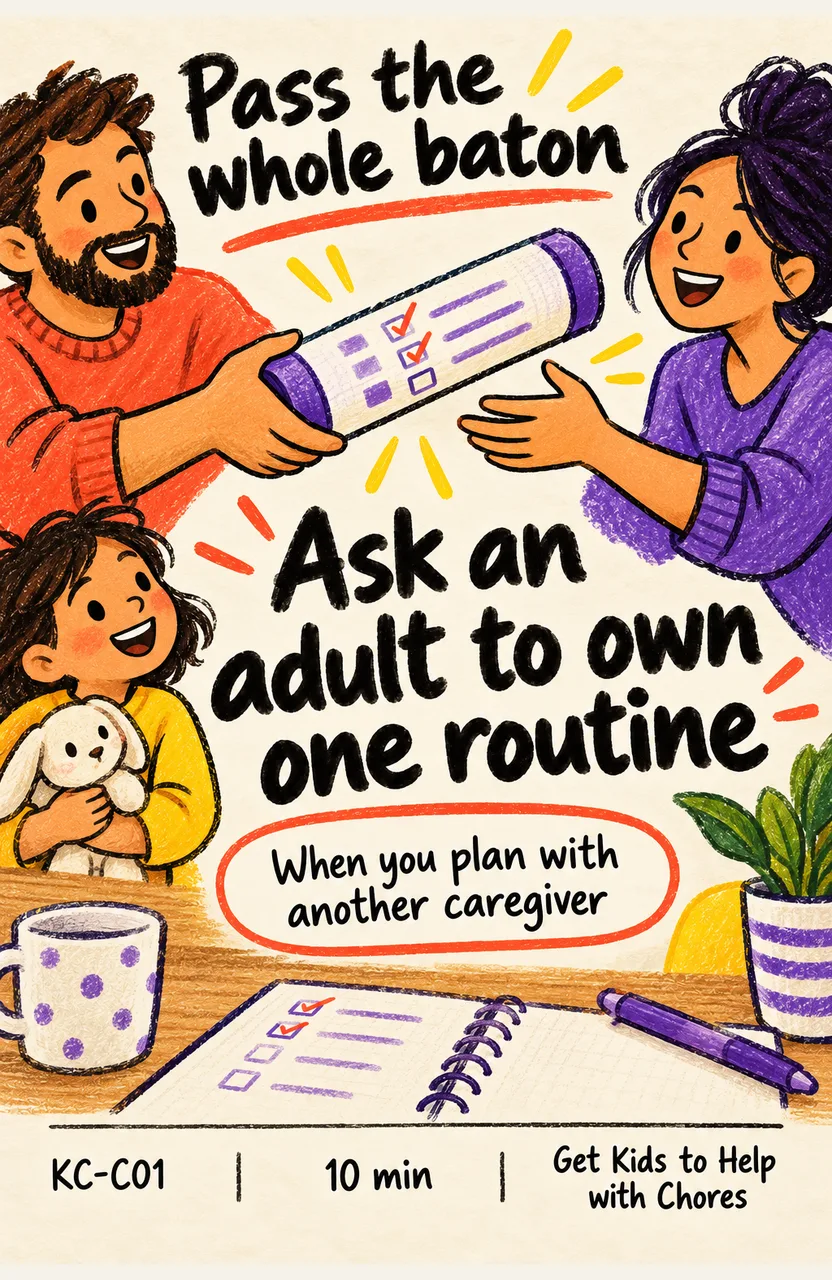
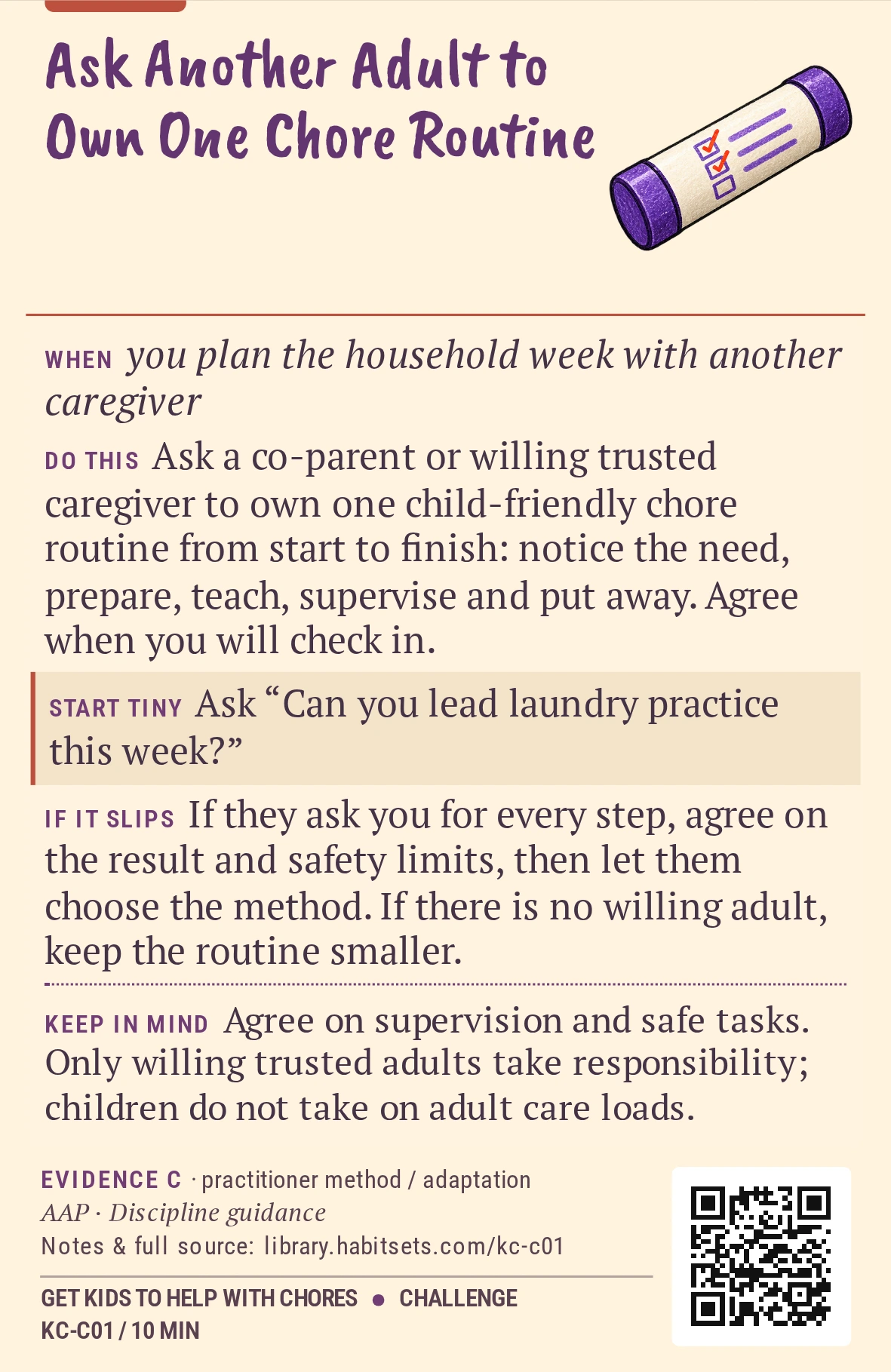
Front of KC-C01Back of card KC-C01: Ask Another Adult to Own One Chore Routine. When: you plan the household week with another caregiver Do this: Ask a co-parent or willing trusted caregiver to own one child-friendly chore routine from start to finish: notice the need, prepare, teach, supervise and put away. Agree when you will check in. Start tiny: Ask “Can you lead laundry practice this week?” Keep in mind: Agree on supervision and safe tasks. Only willing trusted adults take responsibility; children do not take on adult care loads.
50mm · KC-C01 · actual size
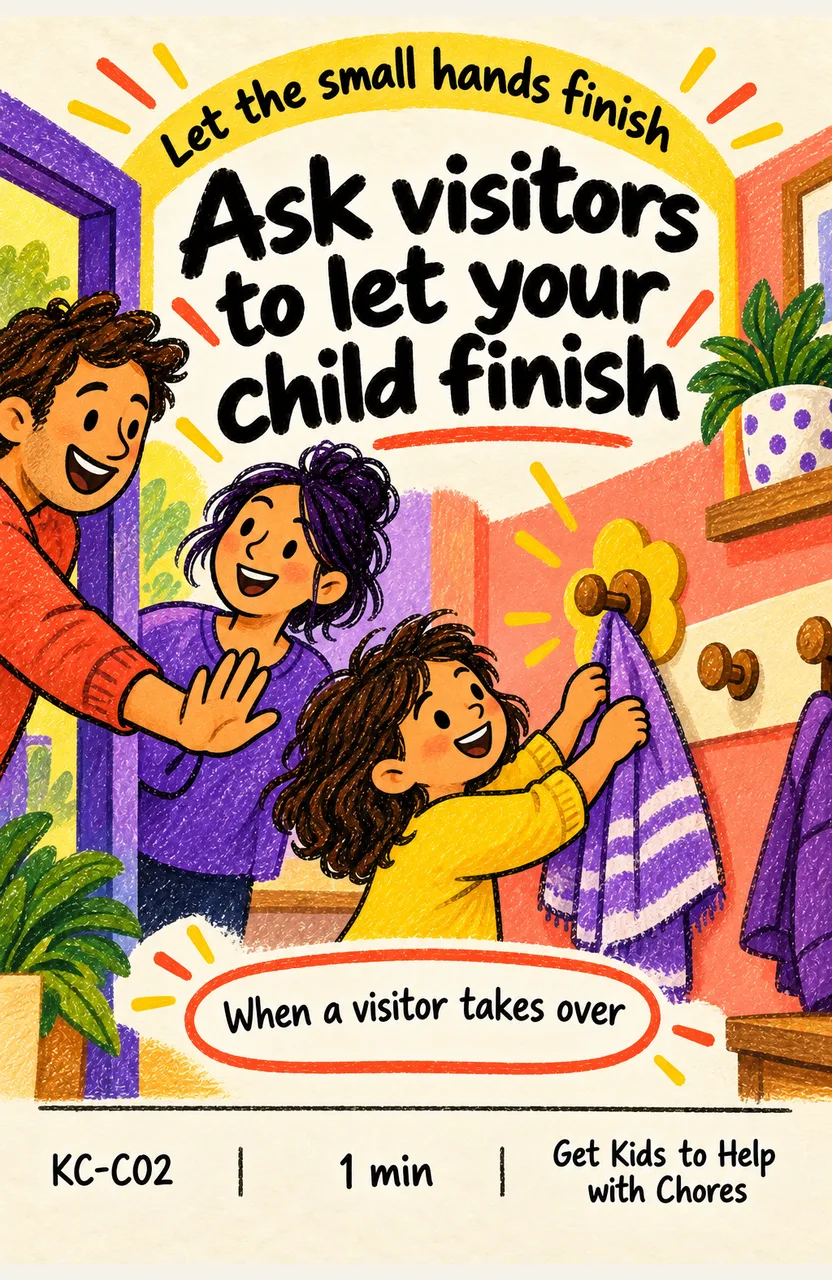
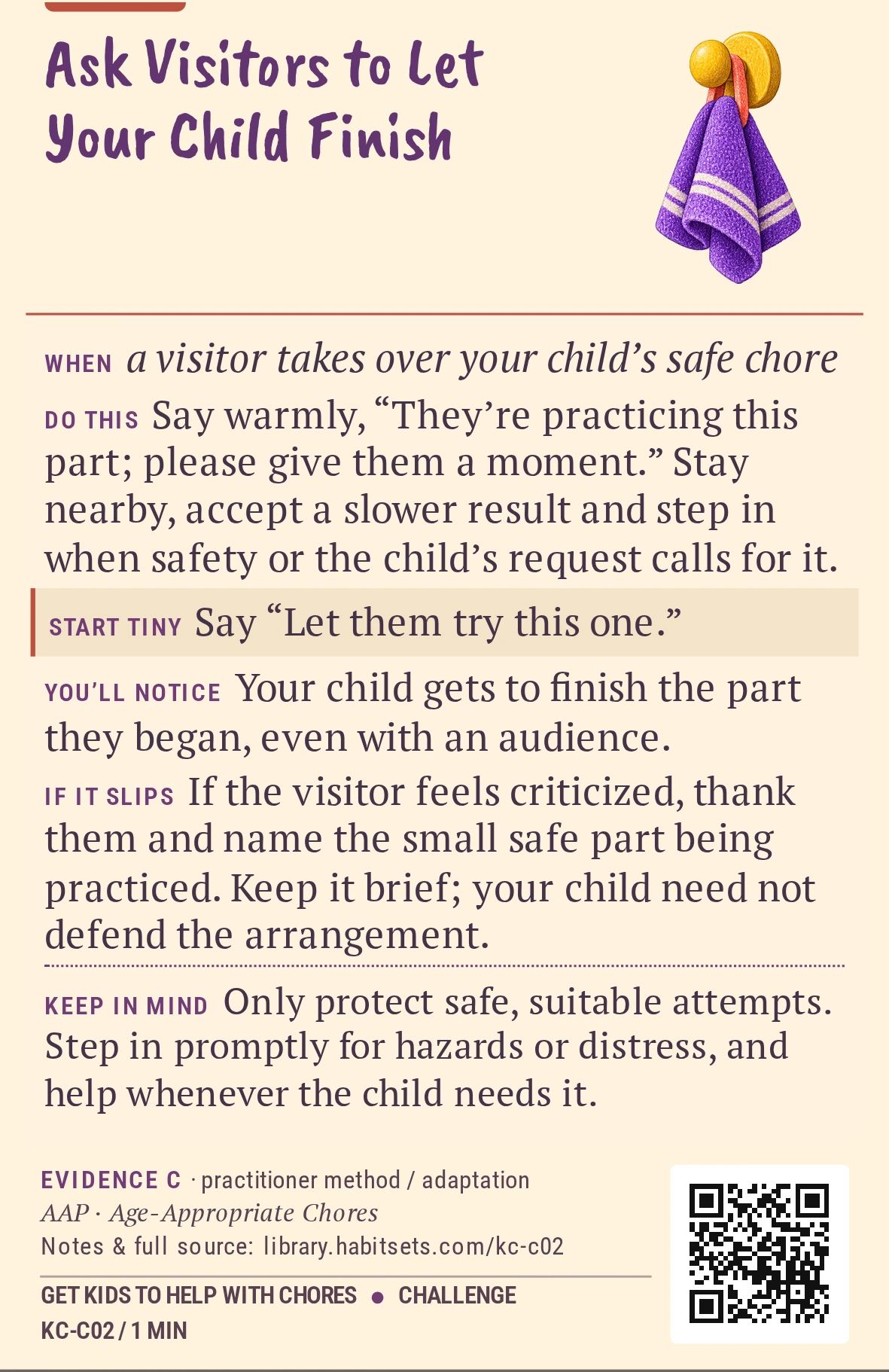
Front of KC-C02Back of card KC-C02: Ask Visitors to Let Your Child Finish. When: a visitor takes over your child’s safe chore Do this: Say warmly, “They’re practicing this part; please give them a moment.” Stay nearby, accept a slower result and step in when safety or the child’s request calls for it. Start tiny: Say “Let them try this one.” Keep in mind: Only protect safe, suitable attempts. Step in promptly for hazards or distress, and help whenever the child needs it.
50mm · KC-C02 · actual size
· Front & new back